
You know him as Logan Echolls from Veronica Mars. What you might not know is that Jason Dohring walked away from Hollywood and started Farms.
In this episode of the Don’t Do Nothing Podcast, actor Jason Dohring opens up about his career and his faith. He shares what made Veronica Mars so special, why he loves playing the “bad guy,” the craft secret that separates great actors from good ones (“it’s literally their ideas”), and stories from working alongside people like Kristen Bell and meeting John Travolta. He also talks about his late father, Doug Dohring, the man behind Neopets and ABCmouse, and what he learned from him about hard work and treating people well.
But the heart of the conversation is how Scientology shaped his life. Jason describes reading L. Ron Hubbard’s essay on professionalism at 17 and deciding to be a pro at whatever he did, the counseling at 13 that made him stop mistreating his brothers, and the Student Hat course that finally taught him how to learn (which is how he now teaches himself everything from acting to farming). He gets into The Way to Happiness, the kids’ courses that calmed his household, and the tools that he says made him a better husband over 25 years and a better dad.
Then there’s the farm. Jason breaks down why he believes food is making people sick, and how he’s growing chemical-free fruit through regenerative farming, no spraying, 40 kinds of mango, and a lot of hard-won knowledge about soil, trees, and doing it the right way.
Let us know in the comments how did you like this episode and remember:
Don’t do nothing.
In this episode:
- Playing Logan Echolls and what made Veronica Mars so special
- Why he loves playing the “bad guy,” and the audition that scared people
- The craft secret that separates great actors
- His father Doug Dohring, the man behind Neopets and ABCmouse
- Reading L. Ron Hubbard on professionalism at 17 and deciding to go pro
- The Scientology counseling at 13 that changed how he treated his brothers
- The Student Hat course that taught him how to actually learn
- How The Way to Happiness and the kids’ courses calmed his home
- The tools he says made him a better husband and dad
- Leaving Hollywood to grow chemical-free food through regenerative farming
- Why he believes today’s food is making people sick
- What Scientology is in his own words
Watch the full episode here:
Audio Version:
Apple Podcast:
https://podcasts.apple.com/us/podcast/dont-do-nothing-podcast/id1846609884?i=1000786114777
Text Version
[00:00:00] Jason: I did a show called Veronica Mars. Within 24 hours, we had a million dollars. Within- … you know, 30 days, we had, like, $6 million. It was the highest ever Kickstarter ever in history, uh, for film. And- Mm-hmm. Yes … listen to that imagination because that is your gold. The only difference between a good actor and a bad actor and a medium actor is your, their ideas.
[00:00:16] Jason: Where do you learn goodness? Because if you’re not good, you’re gonna have a tough life, too. You’re not gonna be happy. If there’s a purpose to life, it’s to help people.
[00:00:23] Aaron: How did you start in Scientology?
[00:00:25] Jason: My name is Jason Dohring. I’m an actor from Los Angeles, California. I have four kids. I live in Clearwater, Florida now, and, um, yeah, I’m here on this podcast called the Don’t Do Nothing podcast, and I’m happy to be here.
[00:00:38] Brad: Excellent Do
[00:00:39] Jason: you have any more questions for me?
[00:00:40] Brad: Yes, we- Yeah. So as- We have a lot of questions. Is that it? As… That’s perfect. As an actor, uh, what would you say your, like what, what would you say the three thing, like projects you were involved in that you’re most proud of are?
[00:00:52] Jason: Um, I, I, um, I, I did a show called Veronica Mars back in the day and, um, I was very proud of that one, [00:01:00] and I think it was cool ’cause we had a, a cast and we all came out of sort of high school, and everybody in the cast was incredible.
[00:01:06] Jason: Like the people- Yeah … were absolutely amazing at picking cast, and you’ll see people come through that show that have won Oscars now, and like- Wow … I mean, legit, like people, uh, Jessica Chastain, Armie- And Jason Dohring … Armie Hammer. Yeah.
[00:01:18] Brad: Uh-huh.
[00:01:18] Jason: Other people too. Good people. Kristen Bell, and just awesome people.
[00:01:22] Jason: Anyway- Yeah … Amanda Seyfried, like, you know, uh, Paris Hilton. Um- Oh, amazing …
[00:01:26] Aaron: played my girlfriend for an episode or two.
[00:01:29] Jason: In her heyday. It was… She was incred- she wa- she was so popular- Nice … it was unbelievable. Anyway-
[00:01:34] Brad: I just have
[00:01:35] Jason: to note- Yeah …
[00:01:35] Brad: Paris Hilton-
[00:01:36] Jason: Oh, and she was, you know, very different- … played
[00:01:39] Brad: Jason’s GF
[00:01:41] Jason: yeah. And she’s very, very smart actually, you know? Like ver- you know what I mean? That doesn’t surprise me Like with it, you know? Yeah. Yeah, that doesn’t surprise me. I know. Super cool.
[00:01:48] Brad: Okay,
[00:01:48] Jason: what’s- Anyway, she’s very gracious …
[00:01:49] Brad: what’s the next one? Veronica Mars, got it.
[00:01:51] Jason: Yeah, so that was cool because, you know, we did it for three years, and we were kind of this small show.
[00:01:56] Jason: I always say like when you’re, when you’re doing a project, before it comes out you can kinda [00:02:00] tell if it’s gonna be a hit or not. Mm-hmm. Actually, you can tell. And we were, we were making it and I was like, “Dude, this is good. Like this is awesome.” Mm. And we’d go to these malls. It was, uh, Joel Silver, uh, who produced The Matrix and, uh, Die Hard, Lethal Weapon, all that, he produced it.
[00:02:14] Jason: And so he would always like, you know, try to call in favors and stuff like that, so we’d get all these cool people on the show like, you know, Paris Hilton in her heyday and playing- Yeah … a small role, which was very nice of her. And, you know, he’d take us to these malls and, you know, we’d, we’d sign autographs, and people had no idea ’cause the show wa- hadn’t come out yet, so people were just lining up to sign up to who…
[00:02:32] Jason: It could’ve been anybody- Really? … you know? Yeah. And then it was really
[00:02:35] Brad: cool. People do that? They just sign up to get autographs for- Yeah … whatever? ‘
[00:02:38] Jason: Cause
[00:02:38] Brad: you’re fa-
[00:02:38] Jason: you’re a famous person- Oh, you just say you’re a famous person- … you know? Yeah … and they’re like, “
[00:02:40] Aaron: Yeah.”
[00:02:40] Jason: Yeah. It was, it was interesting. But then as the show started coming out, it was cool ’cause people like started being real fans, you know?
[00:02:47] Jason: And we have very, very smart audience for that show. Um, like educated females just love the show. You know what I mean? I’ve had people, and like even, even like 80 years old being like, “I love you,” on the plane, you know? And I’m like, “Oh my God. So [00:03:00] cool.” Uh, but it was just, it was so, so well done. Um, I think, you know, I’ve had other writers, not on that show, tell me that the first season is the best written season of television ever.
[00:03:13] Jason: And it’s like really quality. Um, and I got to play a bad guy, which is cool. I usually play bad guys, but, um, yeah, it’s funny ’cause my, my wife’s, uh, parents, you know, would say, you know, “Honey, is there anything wrong with this guy?” You know what I mean? Before… And they’re like, “No, he’s an actor, Mom. Geez, it’s okay,” you know?
[00:03:34] Jason: And, uh, so yeah, so but that was just really cool, and it was so popular in those three y- three years, and then it was canceled, that, uh, they- Warner Brothers said… This guy brought a proposal to Warner Brothers, and he said, “If, if we can raise a million dollars, would you guys raise another million? And we’ll do it on Kickstarter.
[00:03:51] Jason: We’ll just get it fan, fan funded.” And, uh-
[00:03:54] Aaron: Season one? Y-
[00:03:55] Jason: uh, this is after the first three seasons. Okay. And then they said, “We can do a movie. [00:04:00] If we, if we raise a million dollars- Mm … would, would Warner Brothers put up a million dollars as well?” And, you know, within 24 hours, we had a million dollars. Within-
[00:04:08] Jason: you know, 30 days, we had, like, $6 million. It was the highest ever Kickstarter ever in history, uh, for film at the time, and we got to shoot in Los Angeles ’cause we’d raised so much money instead of somewhere else where it was cheaper. Yeah. And so Kristen got to be with her family, which was really nice.
[00:04:22] Jason: And, um, yeah, it was just, it was so awesome. And that was so popular that Hu- Hulu bought it for a fourth season. So we did… It was just, like, the show that just continued and continued, you know? And it was just a fan favorite, so it’s something I’m super proud of, um, in that way. And, um, the producer of that, Joel Silver, um, after that show, he, he had a funny thing.
[00:04:42] Jason: He came up to me on the red carpet one day in the middle of Veronica Mars. He’s like, “You’re a sick fuck. I like that,” you know? It was really funny, you know? But he, he like… And I fucking like- Wait, but hold on … I tried to do so good on that
[00:04:53] Aaron: work. But that’s because you were being the bad guy or what? Like, what,
[00:04:54] Jason: why, why’d he say that?
[00:04:56] Jason: Yeah, no, I just, just good, you know? I think it was just- Oh. Yeah … you know, and he’s a legend, you know what [00:05:00] I mean? In, in film. Um, you know, so it’s like-
[00:05:02] Aaron: Yeah.
[00:05:03] Jason: But I realized early on, well, it was kind of a realization that I had, which is, I was at, I was at my first-ever, like, awards ceremony, and I was walking around, like, the back.
[00:05:13] Jason: I was going to the restroom or something like that, and this actress that I knew came up to me and she’s like, “You are amazing.” And I was like, “Oh my God.” You know? But I realized right there that good work is good work anywhere.
[00:05:24] Mm.
[00:05:24] Jason: Meaning that if you try your hardest, man, and you are awesome, then I think it’s respected from all levels, you know?
[00:05:31] Jason: Like, even the really good guys that I admire respect good work, you know?
[00:05:35] Yeah.
[00:05:36] Jason: And so I’ve had people… Yeah, it’s just really cool, so. And I, and I respect that too in others when I, when I see that, so I think that that was what was so special about- Veronica was just that it, um, we had such a young cast.
[00:05:47] Jason: Everybody was so dedicated, almost like to the point of a game where we’re trying to be the best. Like, I’m trying to be better than you, you know. And even in the very first season of the show, I started off- Like
[00:05:58] Brad: even internally you were like pushing each other [00:06:00] to be-
[00:06:00] Aaron: So who’s gonna act better? Who’s gonna make a big, a better delivery?
[00:06:02] Aaron: Kinda
[00:06:03] Jason: like- Absolutely. Or I can shit on you harder than you can shit on me in a scene. You know what I mean? Like, yeah. And, you know, Kristen Bell is so wonderful, and she’s so good at, you know… And so we were against each other to start and, you know, the ultimate antagonist, you know. I was never intended to be anything other than that, and then the writers came to us like in the fourth episode and they said, “We’re gonna put you guys together.”
[00:06:23] Jason: And we were like, “What the are you talking about?” Like, there’s no way. Plots, twists. Yeah, totally. And, you know, but it was beautiful, and then we had this cool like romantic storyline, and then, you know. So I was always like on the edge as a character, like good and bad, and, um, you know, would break up with her and whatever.
[00:06:38] Jason: But it was just really cool that a one-sided thing got to be something else, you know, so that was cool. And then Jules, yeah.
[00:06:45] Aaron: But, what, hold, wait. Don’t, isn’t it when you have like a thing it’s all written and the script is out for this whole season?
[00:06:50] Jason: Yeah. But these- Or
[00:06:50] Aaron: they write it as they go?
[00:06:52] Jason: Yeah. These writers were super cool.
[00:06:53] Jason: I think they had a couple things, ’cause it’s a murder mystery over a year. You know, she gets raped in the first episode, and she’s solving that and a [00:07:00] murder of her best friend. Mm. Yeah. And she’s, so she’s like a, it’s like a dark Nancy Drew is kind of like how it’s described. I say that and people are like, “Eh.”
[00:07:06] Jason: But then they start watching it and they’re like, “Oh my God, it’s so good.” Like, even, even today, like people rewatch it, rewatch it, rewatch it. And Um, but anyway, the producer came up to me after the Veronica Mars show was over and he said, “Kid, I’m gonna pay you double what you’re making. You’re gonna be in my next show and you don’t have to audition,” or whatever.
[00:07:21] Jason: And I was like, “Man, this is so crazy,” you know? It was- … it was really, uh, it was r- just awesome, man. It was an awesome time. Yeah.
[00:07:28] Brad: Wow. Did that… You know what that makes me think of? Do you ever s- … watch the show Firefly?
[00:07:33] Jason: I know that. I know of Firefly. I haven’t seen it- Yeah … but I know that the fan base was
[00:07:37] Brad: insane.
[00:07:37] Brad: I- are you familiar with this or no? It’s like, it, there’s, I think, I think there’s only one season, maybe two.
[00:07:43] Jason: Yeah.
[00:07:43] Brad: Um, and it’s just this random show. It’s kind of like Star Trek, Star Wars-ish.
[00:07:49] Jason: Mm.
[00:07:50] Brad: But it has like a insane, like, cult following.
[00:07:54] Jason: Yeah.
[00:07:55] Brad: Like, it… I watched it, the whole thing, uh, when I was in college ’cause my roommate and I…
[00:07:59] Brad: My [00:08:00] roommate, like, read about it on Reddit or something.
[00:08:01] Jason: Mm.
[00:08:02] Brad: And he was like, “Dude, we should watch this.” So we watched the whole thing, and the, the worst part is you get to, like, you’re really into it. It’s like a really good cliffhanger at the end of a season.
[00:08:10] Jason: Yeah.
[00:08:10] Brad: And then it’s just no more seasons.
[00:08:12] Jason: Oh, yeah.
[00:08:14] Aaron: Like, it’s
[00:08:14] Jason: just done. Yeah, ’cause you don’t really know, you know? You f- you finish the final s- ep- episode before you get announced for the next season, so you don’t know. Right. You, you- Yeah … you leave
[00:08:21] Aaron: it open, right?
[00:08:21] Jason: We did the same thing, and I think the dir- the producer on purpose made it the worst cliffhanger you could possibly make-
[00:08:27] Jason: with the hopes that somebody somewhere would be like- … “I need to know. We have to pick up this show,” you know, for the next season or whatever.
[00:08:34] Aaron: S- so I have a question about this because you said, like, you guys all started in high school or, like, right after high school, sorry.
[00:08:39] Jason: Yeah.
[00:08:40] Aaron: Uh, how did you get casted?
[00:08:42] Aaron: Like, h- how’s that process? Because, you know- The casting must have been very important, ’cause you can’t just pick out anybody right out of high school and expect to s- you know, something to be good. Yeah.
[00:08:51] Jason: Uh, yeah, totally. And so, um, you know, you have an agent, um, a- and, you know, they send out… Like, somebody who wants to do a project, like you wanna do a, a TV show [00:09:00] or whatever, and you have, you know, five main characters, and so you call all the agents and say, “I have a…”
[00:09:04] Jason: And you tell them the description. They pick their best people that they work with in their agency. Mm-hmm. And they come in and audition. And so, um, I was reading, I was, like, watching a lot of James Dean and, like, like, dark, cool stuff and whatever ’cause I just liked that stuff. And I was, like, told, like, “Don’t steal from them, but borrow from them.”
[00:09:23] Jason: You know what I mean? And so I went in originally for this part for the main good guy, you know? But I did it in this, like, cool, dark way just ’cause I wanted to do that, and I had no idea, like, how to play a good guy anyway. I just didn’t know. I don’t know. I feel like I’m not doing anything. I’m like, “What do I do if I’m just being a good guy?”
[00:09:37] Jason: And like, I don’t- still don’t understand it, honestly.
[00:09:39] Aaron: It’s because you don’t have to act ’cause you just are a good
[00:09:41] Jason: guy. I don’t know. That’s very real too. So
[00:09:42] Aaron: then- That’s very real too … and, you know.
[00:09:43] Jason: But there’s just so much more creation to do, you know, playing a bad or whatever, ’cause you do it and there’s no liability.
[00:09:49] Jason: You’re not gonna hurt anybody- Mm … ’cause it’s like, and they pay you for it. You know what I mean? So yeah. So anyway, um-
[00:09:54] Brad: Oh, wow, I never considered that.
[00:09:55] Jason: Yeah. So, uh, anyway, so you, you go on an audition, and [00:10:00] so, you know, they said you- “We’d rather read you for the darker guy.” And so I went out in the hallway and did that, and then, you know, Kristen Bell was very cool.
[00:10:06] Jason: She came in for the last couple of auditions and, like, read with me. Like, and usually the actress doesn’t, if she’s cast already, it’s like why would she do that, you know? Mm.
[00:10:14] Yeah.
[00:10:14] Jason: And she was there for every audition, and it was so, s- so great because, like, I could just connect with her and F everybody else, you know?
[00:10:20] Jason: I don’t… Like, don’t have to pay attention to the 30 suits sitting in the whatever. I can just, like, lock in and- Mm-hmm … just, like, you know, have this awesome Yeah, it was cool. It was, it was crazy. Like, um, there was a, there was a scene in there where I get burned with a cigarette lighter that never made the final thing.
[00:10:36] Jason: Like, my dad like- Mm … burns me and whatever. And I remember the producer came up in the, in the final audition right before I was gonna go in the room, and said, “We’re not gonna do that scene because you’re literally freaking people out.” Wow. Like, when you do it, like people get so scared.
[00:10:49] Aaron: Whoa.
[00:10:49] Jason: And I was like, “Wow.”
[00:10:51] Jason: I, I, I was bummed because it was such a good scene, you know? Wow. Wow. Yeah, it’s crazy, right? But yeah, they were doing it so, to make sure that you could be, I don’t know, the bad [00:11:00] guy or just you had, you know, a vulnerability or whatever in addition to that so you’re not like one-sided. So they always like, for your audition, usually give you two or three different scenes, not like all the good guy or whatever.
[00:11:10] Yeah.
[00:11:11] Jason: They’ll give you a great one with your daughter, and then a sad emotional… You know, whatever. Pick three random ones throughout the thing and just to get a, a good cross-section. Yeah.
[00:11:19] Brad: Did, did you wanna be an actor from a young age?
[00:11:23] Jason: Um, no. I actually was in… I have two identical twin brothers. I have, I have identical, a year and a half younger than me- You, you mean you’re triplets?
[00:11:30] Jason: No, I have identical t- I have- Oh, they’re, they’re- … brothers that are identical twins … they’re identical twins. Yeah. You’re not an identical twin. Yeah. Right.
[00:11:35] Aaron: Okay. Okay.
[00:11:36] Jason: So they’re a year and a half younger. I was like, whoa. Whoa. Yeah. Yeah,
[00:11:37] Aaron: yeah, yeah.
[00:11:38] Jason: Yeah. So my brothers are a year and a half younger than me, and then I have identical twin sisters three and a half years younger than me.
[00:11:44] Aaron: Wow. What?
[00:11:44] Jason: Yeah. So when, when you’re a kid, you can only work three hours. You can’t work a kid overtime. Yeah, that’s true. So if you’re an identical twin, you get six hours of work because nobody else but the family can tell which kid is who. You know? And so the eight… [00:12:00] There was a talent agent in the building that my dad’s company was in, and she heard about this two sets of twins, you know, and they’re, you know.
[00:12:05] Jason: So I was like the tag-along, you know, that like went along with the two twins. And so, uh, she was like, “I’ll represent him too,” and whatever, and I was the only one sort of that continued. But my, my daugh- uh, my sisters were the, uh, the little girl in Growing Pains for a year, which was a show a long time ago.
[00:12:21] Brad: Oh, wow. Yeah.
[00:12:22] Jason: And my brothers worked as well and, um, anyway, they do marketing and my sisters work pretty much full time at my church now and stuff like that. And so, yeah, it’s cool.
[00:12:30] Aaron: So f- Being an actor and, and actresses was literally not a, not your idea. It- Right … an, a cast person came in and said, “Hey, I wanna get you guys.”
[00:12:41] Aaron: Like, you wasn’t even in your universe?
[00:12:43] Jason: Yeah. Well, there was like a, uh… There was a time probably when I was, like, 17, and I, I read this y- thing, it was called Professionalism, and it was written by L. Ron Hubbard, and it’s talked about being a professional in anything you do. Mm-hmm. And dude, I was like, “Dude, I’m gonna do that.
[00:12:56] Jason: I’m gonna be a pro at whatever I do.” You know what I mean? And I just happened to be doing acting, so I [00:13:00] studied and studied and went to classes, like, I don’t know, three times a week when I was 16 for, like, four or five hours, like, after 12 o’clock at night. Just studied so hard, and I think, like, that was why Veronica was cool is that because o- the other actors on the show were equally like that.
[00:13:13] Jason: You know what I mean? Just, like, super great.
[00:13:15] Mm-hmm.
[00:13:16] Jason: And so it just made this awesome, cool cast, you know? And I think it even stands, stands today, but, um, yeah.
[00:13:23] Brad: Wow.
[00:13:23] Jason: Yep.
[00:13:24] Brad: Dude.
[00:13:25] Jason: Yeah.
[00:13:26] Brad: Okay, so were, were there any other major, like, film productions you were involved in that you’re, that you’re like- Mm … “Man, that one was also, like, that was so good”?
[00:13:33] Jason: Yeah, I mean, I did that vampire show called Moonlight. That was the, probably the second one to answer your first question. Mm-hmm. And then, um, there’s a bunch of other, uh, just cool things. Um, let’s see. I got to do a cool episode of Lie to Me, which is a show with Tim Roth- Mm-hmm … who’s awesome.
[00:13:48] Brad: My parents used to watch that show.
[00:13:49] Jason: Okay, cool. Yeah. There’s an episode called Beat the Devil. I play a serial killer, and it’s awesome. It was probably the best audition of my life I did, you know? It’s funny, you… In acting, there’s, like, [00:14:00] this concept of, uh, overwhelming, like, in a way where people are just like, “Oh.” And sometimes you do that in the room and you walk out and you’re like, “I got it.”
[00:14:08] Brad: Wow.
[00:14:08] Jason: You know? And, you know- Yeah. As, as good as it was in the final, I feel like my audition was even better. Wow. Yeah, it was good. It was good. W-
[00:14:18] Brad: can you talk… What do you mean when you say o- overwhelming?
[00:14:21] Jason: He overwhelmed the audience, like, where they’re just like, “Dude, I mean, what was
[00:14:25] Brad: that?” A big
[00:14:26] Jason: impact,
[00:14:26] Brad: yeah?
[00:14:26] Jason: Yeah. Just a huge, like, um… They just don’t know what hit them.
[00:14:31] Brad: Mm.
[00:14:31] Jason: You know? Like, you’re just so, so… I don’t know. I was trained to be like that, too. Don’t give them a crack to say, like, that’s not it. Just kill them. You know, just, yeah. You know, and like, you know, when you’re watching these great actors, you know, like I’d watch, like, Marlon Brando and whatever, but it’s amazing ’cause he’s comes in, coming in backwards, laughing, talking to somebody about whatever, and he’s sweating and whatever, and he…
[00:14:57] Jason: And dude, that’s a freaking set.
[00:14:59] Mm. [00:15:00]
[00:15:00] Jason: And he’s pretending it’s a bowling alley, and all his buddies are on the other side of it, and he’s half drunk, you know? But literally, it’s not… You’re shooting out of sequence.
[00:15:07] Mm.
[00:15:08] Jason: So he has to know, like, where he was or what he’s gonna do in that scene before, and then, like…
[00:15:12] Jason: It’s, it’s very awesome.
[00:15:15] Yeah.
[00:15:15] Jason: But it’s, like, such a good opportunity because other people just start the scene, right? And it’s like, no, where were you before? You know? Yeah. What mood are you in now? What just happened? You know, and then you can lead them one way and then go the other. Most, most people will just do, 95% of the actors will do it all the same way.
[00:15:34] Yeah.
[00:15:35] Jason: And you’re gonna have to say those same lines, so you have to walk down the same road, but you can lead them this way and then go that way. Like, being, like, emotional, unpredictable, whatever. Like, there’s awesome things you can do. Volatile, you know, you can do all that stuff which makes it dramatic.
[00:15:50] Jason: And sometimes when you are trained in that way, I had a great, great teacher, and then the writers come up to you and they’re like… Uh, one of the best comments I ever [00:16:00] got was a writer said, “We never know what you’re gonna do.”
[00:16:02] Hmm.
[00:16:03] Jason: And I’m like, “Yeah, that’s right.” You know what I mean? Like, you know, I’ll just be sitting on the ground in the middle of the parking lot starting the scene, and then just do…
[00:16:09] Jason: Like, I don’t know, just stuff that you just- Yeah … it’s just creative, man.
[00:16:12] Brad: Yeah.
[00:16:13] Jason: You just get these ideas and you go with it and- One of the best quotes I heard or whatever relating to art, I forget who it is, but it was like, you know, take those fleeting, fleeting means really quick- Mm-hmm … fleeting thoughts and grab onto them, or you’re gonna sit there applauding the guy who listened to his.
[00:16:30] Brad: Hmm. Oh, wow.
[00:16:32] Jason: And it’s true of acting. Totally. Almost like when you’re reading a book like Harry Potter, you can imagine how they’re talking. Mm. You imagine… You know what I mean? Mm-hmm. Yes. And, and listen to that imagination because that is, that is your gold. The only difference between a good actor and a bad actor and a medium actor is y- their ideas.
[00:16:49] Jason: It’s literally ideas.
[00:16:51] Yeah.
[00:16:52] Jason: You know, like Johnny Depp comes up with a, a mix of Pepé Le Pew and, uh, Keith Richards, and that’s his Pirates of the Caribbean character.
[00:16:59] Yeah.
[00:16:59] Aaron: [00:17:00] Mm-hmm.
[00:17:00] Jason: And you can see that, right?
[00:17:01] Yeah. Mm-hmm.
[00:17:02] Jason: You know what I mean? It’s this, like, charming, you know, kinda… You know what I mean? But what a beautiful idea.
[00:17:07] Aaron: Yeah. Because you can’t– I mean, the director can only guide so much, right? I mean, they’re gonna say, “Do s- do whatever.”
[00:17:13] Jason: Yeah.
[00:17:13] Aaron: But he can’t control ex- everybody’s mood and everybody’s emotion, right? That’s where the actors come in.
[00:17:17] Jason: Yeah. Yeah, totally. And I guess even before the director, you know, if you hire an actor who’s, you know, 95% right for the part, you’re gonna have a lot less direction to do because that guy’s already right for the part.
[00:17:29] Jason: You know what I mean? Mm-hmm. And you get a guy who, who goes that other way and does that other cool stuff. Like, you’ll see those actors and you’ll be like, “Dude, I like that guy.” You know what I mean? Yeah. There’s something about that guy that’s really cool. Yeah. I remember showing up on s- this guy showed up on set one day.
[00:17:42] Jason: His name’s James Jordan, he’s, like, a big actor now. Um, but anyway, he showed up on set and, uh, he’s doing all this cool, weird stuff and, you know, I, I was like… I told Kristen, I was like, “I like this guy.” She’s like, “He’s just like you. He’s just like you.” A little fucking weird guy, you know what I mean? And I thought it was cool.
[00:17:58] Jason: I mean, you know, like, just that, I don’t know, [00:18:00] ’cause I could t- he cared about the work, you know what I mean? And it’s like I, I just, I just really admire that. Yeah.
[00:18:06] Brad: How… W- we’ll get into kind of like your, what you’re working on today in a minute, but how, how much are you acting- Yeah … like, in present time?
[00:18:15] Jason: Yeah, about, like, three and a half, four years ago, like, I guess COVID area, um, whatever, I, I sorta got into, like, gardening, and I was like, “Dude, this is so cool.” I didn’t even notice COVID for, like, months ’cause I was, like, in my backyard and, like, just gardening and stuff like that. It wasn’t, like, a huge thing, but…
[00:18:30] Jason: And then I told my… I just got an interest in it and I’ve, I’ve kinda, the last three years have built, like, you know, I’m on my third farm now and we’re just making great food for people. ‘Cause I really realized that people are getting sick from the food that they’re eating. Yeah. And I just really wanted to, uh, change that, and the flavor of food can be so amazing and, I don’t know, there’s, uh, an art that you can create, too, like with the way your farms are built and stuff.
[00:18:51] Jason: So, um- Mm … yeah, I told my agents, “I’m just gonna go farm for a minute,” and they said, “Well, we’re still gonna send you stuff,” and I said, “Okay, fine,” and then- So, uh, you know, [00:19:00] pr- I’ll probably jump back into it at some point. You know, I g- I got a call to do somebody’s little short film a coup- little while ago, and I went and did that as a fr- as a favor to them and, um…
[00:19:09] Jason: But yeah, enjoying, enjoying that and, uh… But I, I love art, and when I get around art, even talking about this is exciting to me. Mm-hmm. Like, I’m already like, “Oh, shit, I wanna go back to it.” It
[00:19:18] Brad: shows.
[00:19:18] Jason: Yeah. Yeah.
[00:19:19] Brad: Yeah.
[00:19:20] Jason: That’s cool, man. It’s really amazing. But I think there’s something in everybody that is aesthetic, meaning beautiful or wants to create.
[00:19:29] Brad: Mm.
[00:19:30] Jason: And I think that, you know, obviously because when they see that, they feel it. So there’s something in them that resonates with that, you know?
[00:19:37] Mm-hmm.
[00:19:38] Jason: Um, so yeah, I just love it. I don’t know. I, I think it’s, uh… You know, had the opportunity to meet John Travolta, um, a couple times, and he’s just, he is beauty.
[00:19:47] Jason: You know what I mean? Like I just see the guy and he’s just flowing beauty, and you’re like, “Wow, it’s so amazing.” I, I told him, I said, “I’m, I was, for two weeks after I met you, I was a better person. I was a better father. I was a better husband, and then I went back to being myself, man.” [00:20:00]
[00:20:01] Brad: If there’s, if there’s a picture next to, next to the definition of the word cool cat in the dictionary- Oh,
[00:20:05] Jason: yeah.
[00:20:06] Brad: Yeah … definitely it’s John Travolta.
[00:20:07] Jason: Oh, totally. Yeah. Yeah. And he’s just, he’s just, yeah, just interested, very intelligent, you know? Um, very intelligent man. Yeah. He was telling me this story of, uh, he was in the middle of, uh, you know, learn- learning something about finances or something like that, and he was telling Quentin Tarantino about, about that and what he had learned.
[00:20:27] Jason: And Tarantino picked him for Pulp Fiction because of that, because there was this intellectual side of him that he had never- Hmm … seen before.
[00:20:33] Brad: Wow.
[00:20:34] Jason: And then, you know, that was that. That’s how I recall the story anyway. But yeah.
[00:20:39] Brad: Oh, that’s unbelievable.
[00:20:40] Jason: Oh, yeah. It’s cool.
[00:20:40] Brad: Who, who out of like current popular actors- Mm-hmm
[00:20:45] Brad: do you r- do you admire? Yeah. Or do you feel is like, not even necessarily… Anyways.
[00:20:51] Jason: Yeah. Yeah. I think Ryan Gosling does some awesome stuff, you know what I mean? Oh, yeah. Some of his earlier work too. I, I actually have been out of like even watching a lot of films. But you know, he did a movie called Half [00:21:00] Nelson.
[00:21:00] Jason: I don’t know if you saw that. Unbelievable. He did a movie called Lars and the Real Girl. Unbelievable. I mean, literally stuff like where you’re jealous watching it. You’re just like, “Ugh, why… I should’ve done” You know? Really. Like, “I should’ve done that,” or like, I don’t know. There’s, there’s, there’s hon- honestly man, there’s times in your auditions when y- that imagination thing happens.
[00:21:19] Jason: You’re reading the script and you’re like, “Oh my God, I should fucking cry here.” It’s not written.
[00:21:24] Mm-hmm.
[00:21:24] Jason: But I’m like, dude, like I, I, I feel that right there, you know?
[00:21:28] Yeah. And
[00:21:28] Jason: if you don’t listen to it, you feel like the worst person. Mm. You know, if you don’t listen, and I just always, I think I always except for maybe one time did it, you know?
[00:21:37] Yeah.
[00:21:39] Jason: I, he, he does it, you know what I mean? And Jeremy Renner I think is incredible.
[00:21:43] Mm.
[00:21:44] Jason: I think it’s incredible. There’s a movie called Wind River, not a lot of people have seen it. Unbelievable, man. Like, the performances. And then your old-time actors, like, you know, everybody says like, whatever, James Dean and Marlon Brando, and th- there was this guy called Montgomery [00:22:00] Clift, too, and anyway, he was an old-time actor.
[00:22:02] Brad: What’s the name, say
[00:22:03] Jason: it again? Montgomery Clift.
[00:22:03] Brad: Oh, Montgomery
[00:22:04] Jason: Clift. Yeah. And, uh, James Dean said of his, of his own style, like somebody asked, “What’s your style?” Or whatever, and he said, “I got Montgomery Clift on the one hand saying, ‘Help me,’ and I got Marlon Brando on the other saying, ‘You,’ and I’m somewhere in the middle.”
[00:22:18] Brad: Yeah.
[00:22:19] Jason: And I thought that was really kinda cool. Like, uh- That is cool … you know, and I’m somewhere in there, too. Lesser known, but yeah. Yeah. Just I love that. I love the emotional, I love the sensitive, and I love the volatile, and so those are the characters that I resonated toward.
[00:22:36] Brad: Do you feel you’re more on the you side of James Dean- Yeah
[00:22:38] Brad: or the more help me side
[00:22:39] Jason: of James Dean? I think more help me.
[00:22:41] Brad: Yeah?
[00:22:41] Jason: A little bit, yeah. But it’s always cool if there’s… Even if there’s the ability to get insane or wild, it’s exciting, even if you don’t do it. Like you look at Al Pacino, even when he’s calm, there’s always the potential that he- Mm … could go insane, [00:23:00] and so you’re always like, “Wow, this could get very…”
[00:23:02] Jason: You know what I mean? Yeah. Even if it doesn’t.
[00:23:03] Brad: Yeah.
[00:23:04] Jason: Right? It’s like kinda neat.
[00:23:06] Brad: Yeah. That’s true, actually. Yeah. That’s a good point. Whenever I see him in a movie I’m always a little bit like-
[00:23:11] Jason: Yeah.
[00:23:12] Brad: Right … what is he gonna do?
[00:23:13] Jason: Yeah. Yeah, there’s a potential there, you know? Yeah. But it’s interesting, all these things, right?
[00:23:18] Jason: Yeah. You know, talking about it. Yeah. Yeah. Yeah.
[00:23:20] Aaron: So, um, you know, I like what you said about the professionalism and, and, and doing things- Yeah … very well, and that leads me to kinda just briefly talk about your father.
[00:23:29] Jason: Oh, yeah.
[00:23:30] Aaron: Um, so Doug Dohring, uh, those of you guys who don’t know, uh, legend of a human being.
[00:23:35] Aaron: Um, created, uh, uh, um, ABC Mouse, right? That’s right. A massive, a massive platform. Uh, helped- … or created or… Not maybe created it, but was a huge part of Neopets.
[00:23:47] Yeah.
[00:23:47] Aaron: A lot of, a lot of endeavors, this guy is helping kids learn and read, and I imagine like, people that don’t know him, the guy is a legend, and wherever he is now, he’s not in this life right now, but, um, I can [00:24:00] imagine your father taught you a lot of things, right?
[00:24:02] Aaron: And was a big part of your life. So maybe you could- … kinda talk about how this, from father to son, how was that?
[00:24:08] Jason: Yeah. I mean, just being around him was very cool. Um, it’s always one of those things like, you know, he was a business guy and he had a huge heart, right? I think we shared that, like the heart part.
[00:24:19] Jason: Um, so we always got along well. Even when we didn’t get along well, it was always like we respected each other so much, you know what I mean? And we got along very well. But sometimes I would wanna… I’d be stubborn. You know, I’d wanna go off and do my thing or whatever. You know? Um, but- His heart was incredible and I always very much respected that.
[00:24:38] Jason: He was an incredible business guy. Um, yeah, just wanted to educate the world. And I think just growing up in, in, in that environment, I could al- always see him work hard, you know? Um, the way he handled people was incredible. Um, yeah, he had 15% of all kids in the US using ABC Mouse at one point. Wow. Yeah, it was just a massive company and, you know, there’s kids now in [00:25:00] their 20s that are like, “I grew up on ABC Mouse,” and it’s so cool because, like, education is a bridge to do life.
[00:25:06] Mm-hmm. Yeah.
[00:25:08] Jason: Right? Yeah. Like, you, if you can’t study, if you can’t learn things, if you can’t go on and even YouTube videos, things to learn-
[00:25:15] Yeah …
[00:25:15] Jason: you’re in trouble. Mm-hmm. You know what I mean?
[00:25:17] Mm-hmm. Mm.
[00:25:17] Jason: And then if you’re in trouble and you still need to make money, then you go to, you know, other activities that might not be, uh- Yeah Mm-hmm
[00:25:23] Jason: you know-
[00:25:24] Yeah, you
[00:25:24] Jason: go- … the society doesn’t like it. You go, go criminal … right? You’re a criminal. Yeah. Yeah, exactly, you know? So it’s like, it’s really, it was a really beautiful thing, and he had Neopets before, which was awesome. Um, where you took care of these little pets. I don’t know if you ever saw that.
[00:25:36] Jason: It was- Oh, yeah. Yeah. I got- I spent
[00:25:37] Brad: many, many
[00:25:38] Jason: hours on Neopets. Me too. I literally- I don’t know that game Many hours … dude, one time I stayed up till like 4:00 in the morning or 4:30 playing it, slept in till 12:00 the next day, and then I’m like, “I’m…” Uh, and then I did it again the next night. And I literally said, “I’m quitting video games forever.”
[00:25:51] Jason: I’ve ne- I’ve never played video games since then. Oh, since then? Yeah, since then. Wow. This was like 20 years ago. Yeah. Wow. ‘Cause it was such a w- it was so ad- it was so addicting. [00:26:00] It was, it was the stickiest site on the internet, meaning nobody spent more time per user- Mm-hmm … including Yahoo- Yeah … including anything- Mm-hmm
[00:26:07] Jason: than, than Neopets. It was six and a half hours a day on average
[00:26:11] Aaron: of people who would
[00:26:11] Jason: spend- I was, I was
[00:26:12] Aaron: higher than that.
[00:26:13] Jason: Yeah, me too.
[00:26:13] Aaron: Yeah.
[00:26:14] Jason: Yeah. Yeah. Six and a half on average? Six, six and a half hours a day. A day. 50,000 new registrations every day. Yeah, it was massive. It was a huge- How many? 50. 50,000. Yeah.
[00:26:23] Jason: Yeah. And, um, yeah, billion page views a month, something like that. Crazy, yeah. It was- And,
[00:26:29] Brad: but- … wild … but to put it in perspective also, that was so early in the internet days.
[00:26:34] Jason: Yeah, right.
[00:26:34] Brad: I mean, that was like, what, what ti- what year range was that? That had to have been 2008-ish?
[00:26:41] Aaron: Oh,
[00:26:42] Jason: no,
[00:26:42] Aaron: way earlier than that.
[00:26:44] Jason: Well, I think it was earlier, yeah. Yeah, yeah, yeah. Yeah. I think like-
[00:26:45] Aaron: Late ‘
[00:26:45] Jason: 90s? Or- … late ’90s. Yeah … yeah. That’s, yeah. ‘Cause I was 16, you know, 16, 17 something like that. I must’ve been 9 or 10 or 11.
[00:26:51] Brad: Wow.
[00:26:51] Jason: Yeah.
[00:26:52] Aaron: Probably ’99. Yeah. ’99 to 2001, somewhere in that range.
[00:26:54] Brad: Wow, I didn’t realize it was that early.
[00:26:56] Jason: Yeah.
[00:26:56] Brad: Oh my gosh, dude.
[00:26:57] Jason: Yeah. But yeah, super guy, [00:27:00] humanitarian. Um, yeah, learned a lot. Learned, learned a lot from his manner, you know what I mean? Like how he would talk to people and, uh, like just the graciousness, you know? And I really respected that, and I learned that from acting. But I notice that that’s missing a little bit today.
[00:27:15] Jason: Mm-hmm. Like the, like the appreciativeness of people. And, um, it’s interesting, you know? So-
[00:27:21] Aaron: I, I met him once. Uh, it was at a, um, fundraiser, uh, in Mexico. And, uh, some of the, some of the most, I guess- important influential people Are the ones that give you the most attention.
[00:27:38] Brad: Yeah. I’ve experienced the same thing.
[00:27:40] Brad: And,
[00:27:40] Aaron: uh, in, in, in meeting Doug, uh, it was like in that moment, me and my wife were the most important thing- Oh- … that was happening.
[00:27:48] Brad: That’s cool
[00:27:48] Aaron: You know? And just looking at me and just, like, asking me what I was into and what I was doing, and what’s these projects, and what are you working on. And I was like, wow, that…
[00:27:58] Aaron: It’s so surprising ’cause it, I [00:28:00] mean, he has his, these, these massive companies, this ama- you know, incredible family, children, grand- like, all this stuff, and he’s interested in me.
[00:28:08] Great.
[00:28:08] Aaron: And so anyway, I, I, I, I know what you’re saying about that graciousness ’cause that’s the one time that I met him. It was like, it was…
[00:28:14] Aaron: I was thinking about it for probably two weeks afterwards.
[00:28:16] Oh, wow.
[00:28:17] Aaron: So I’m like- That’s so cool …
[00:28:18] wow,
[00:28:18] Aaron: wow, this guy. And then he, and then when I asked, you know, I’m trying to ask him about stuff, and then he sent me his project that he’s doing in Texas and all these kids, and they’re using-
[00:28:27] Yeah …
[00:28:27] Aaron: whatever, AI to like, these kids are getting literacy in, like, a month, you know- Yeah
[00:28:31] Aaron: from doing nothing to l- like, all these crazy projects that he’s working on to help people learn.
[00:28:35] Jason: Yeah.
[00:28:36] Aaron: And, uh, just an incredible human being, so.
[00:28:38] Jason: Yeah. Yeah, it was cool. Before AI, he had that concept, you know, of like, you know, not every kid is the same, right? So, like, your teach- like, some kids are ready to graduate when they first get in ’cause they’re so far ahead.
[00:28:48] Yeah.
[00:28:48] Jason: So they have to sit there all school year, you know? So there’s this thing, a concept he was developing called adaptive learning, where basically you just have the kid play games, and he’d see what he was weak in and what he was strong in, and only [00:29:00] serve him the things he was weak in until he got it.
[00:29:02] Jason: And it was different for every kid. Wow.
[00:29:04] Brad: Yeah. ‘
[00:29:04] Jason: Cause you don’t know. You, you’re- Mm-hmm … I might miss B and, you know, or B and C, and you only missed B. You know what I mean? And you don’t have to… You know, so it was really cool the way… And I think, you know, there’s a lot of room for that, like, in education. Like, we could really fill people in with, with AI ’cause it was, it was the beginnings of that, I thought.
[00:29:18] Jason: Yeah.
[00:29:18] Yeah.
[00:29:18] Aaron: Yeah. And so how, you know, this podcast, right? Uh, we do talk a lot about Scientology and religion, things of this nature, and, uh, I’m assuming your dad introduced you. Like, how, how did you start in Scientology?
[00:29:33] Jason: Yeah, I mean, you know, uh, my dad and mom got in early. Um, and, but there’s always a time, I think, when you’re, you know, growing up in something where you…
[00:29:41] Jason: I, I realized it was, it, it worked for me, right? Mm-hmm. Mm. So, like, I remember, you know, I was very mean to my brothers, like, growing up as a kid. Like, I would tease them or whatever. It started that day. I, yeah, exactly. I guess it started earlier than I thought.
[00:29:54] Brad: You’re the, you’re the oldest, right?
[00:29:55] Jason: Yeah, yeah.
[00:29:56] Jason: You have siblings? Oldest, yeah. Okay. So I have twin brothers that are a year and a half younger, and [00:30:00] anyway, and then I was doing this counseling in Scientology and, um, I, I, all of a sudden, there was one day when I, I went to do what I would’ve done to my brother, but I didn’t do it. And I was like, “What?” And I knew that it was because of the counseling I had received.
[00:30:14] Jason: Mm. And I was getting, like, a little bit better as a person or whatever, and I was like, “Dude, this works.” You know what I mean? And that was, like, the first little time when I was like, “Oh my gosh,” you know? Because, like, somebody can make you do something, but that’s, like, one of the cool things about Scientology is it’s the study of knowledge.
[00:30:29] Mm-hmm.
[00:30:29] Jason: And so, like, you’re just learning about life, right? Like, so- How does life work? How do people be- why do people behave like they do? You know, and then also, like, how, how, for me it’s like how I, I can be a better person, you know? And so all of that has been incredible, you know? And I’ve been able to be a good dad and, you know, we- ’cause raising kids is tough, man, you know?
[00:30:48] Jason: Mm-hmm. Mm-hmm. Like, and to raise them good, you know, especially in today’s environment. And, you know, there’s a book called The Way to Happiness, which is a freaking amazing book, man. It’s a little book and it’s like, it’s not even a religious nature. [00:31:00] And, you know, it, it, it gives like some things about how to, how to, you know, help kids and how to help children.
[00:31:06] Jason: And dude, if I just use that, it’s great, you know? So anyway, very thankful.
[00:31:11] Brad: That’s amazing. How… And how, how did your, how did your parents, like approach Scientology with you? Like how was, how was that dynamic? ‘Cause obviously you’re experiencing that with your children. I’m going to be in the near future.
[00:31:24] Jason: Yeah. Yeah, totally. I mean, now, you know, they, they’ve even adapted some children’s courses, you know what I mean? That teach about happiness, honesty, um, you know, um, communication skills, confronting life, you know?
[00:31:36] Mm-hmm.
[00:31:37] Jason: And it’s like, these are all just great things. And so it’s so cool. My, my little girls have just finished the kids courses and they came home and they’re like, you know, I, I could handle an upset with my friend or whatever.
[00:31:47] Jason: And it’s beautiful, you know? It’s like, it, it really honestly like did coincident kind of like calm things down in our house- Mm-hmm … which is really nice, you know? Wow. Yeah. ‘Cause you give, you give somebody tools about how to handle their own life and they actually feel better, right?
[00:31:59] Yep.
[00:31:59] Jason: [00:32:00] Mm-hmm. It’s not ju- like, ’cause- Yeah, of course
[00:32:00] Jason: they can actually control their own life. Yep. Yep. You know? And so I think that that’s really cool. And I think parents are really looking for that, ’cause, you know, where do you turn? Like where do you go? And I think morals skipped my generation. Like back in, back in my parents’ generation, you know, they had churches and stuff like that and, um, mor- morality was kind of taught and accepted and if you weren’t, it was bad, you know?
[00:32:23] Jason: Mm-hmm. And so like, and, and so like where do you, where, where do you learn goodness? Because if you’re not good, you’re gonna have a tough life too. You’re not gonna be happy.
[00:32:31] Brad: Yeah.
[00:32:31] Jason: That’s true. Yeah.
[00:32:33] Brad: Totally.
[00:32:34] Jason: Yeah.
[00:32:36] Aaron: That’s great. Um, and so what age was it when you, you did this, you did a counseling-
[00:32:41] Jason: Yeah …
[00:32:41] Aaron: when, when was that?
[00:32:42] Aaron: Like what age is that? I,
[00:32:43] Jason: I was about 13 probably- Okay … when I first realized that. Yeah. And then there was another time when I was counseling another and man, I saw him like, you know, you deal with, uh- In increasing somebody’s ability, you know, you have to, they [00:33:00] have to confront things in their own life.
[00:33:01] Jason: And sometimes that’s tough, and it can make you like, until you get through it, it’s like, “Oh, this is problem in my face, problem in my face.” And then they… What’s cool about Scientology is you solve stuff for yourself. Mm. It’s not like I’m telling you, “Dude, this is what’s wrong with you,” because how could I ever know what’s wrong with you totally?
[00:33:17] Brad: Yeah.
[00:33:18] Jason: Right? And so- Too, it’s
[00:33:19] Brad: too much to even know.
[00:33:21] Jason: Yeah. Yeah. Um, yeah. But, you know, uh, so I was taking this other guy through a, a problem that he was facing, right? And I saw him go all the way down through it, and, you know, one of the things is like, keep going, ’cause like what, you know, he’s gotta get through it, right?
[00:33:36] Jason: Mm-hmm. So you keep doing that, and then all of a sudden he started to like literally come out of the unconsciousness, totally handled his problem, and I was like, “What just happened?” You know what I mean? Like- Wow. So it’s even cooler than me receiving it, right? It was like, you know, doing it on another, watching him go through that and having this massive realization, um, is similar, similar to my wife and I.
[00:33:55] Jason: We did a, we did a counseling one together, and we were… [00:34:00] I, I was the person receiving it, right? She was, she was doing it with me. Oh,
[00:34:02] wow.
[00:34:03] Jason: And, uh, so, um, we’re walking down the hallway afterward, and she’s crying, and I’m like, “Why are you crying?” You know? And she’s like, “I just know how hard you’ve worked to handle that problem, and I’m so happy for you.”
[00:34:13] Jason: And I was like, just, I like got emotional, you know, ’cause it’s like, it’s so beautiful. You know? You can actually like, here’s this technology where you can actually help another person.
[00:34:22] Mm-hmm.
[00:34:23] Jason: For real, you know? Yeah. And so- I think within a matter of like a week or two you can receive some basic counseling and just be like, you know, handle problems in your life, you know?
[00:34:32] Brad: Mm-hmm.
[00:34:32] Yeah. Yeah.
[00:34:33] Brad: Yeah. Totally. And how did you and your wife meet?
[00:34:37] Jason: Uh, in, in a private school. Yeah. Yeah, we were friends before. I always, I think that’s some of the best advice I could ever give for marriage is like marry your best friend, you know?
[00:34:47] Yeah. Yeah.
[00:34:49] Jason: Because the, the, the time you’re in your, in romantic activity is very little compared to like when you’re around them- Mm-hmm
[00:34:57] Jason: chatting with them. So you just wanna have like somebody you can relate [00:35:00] to-
[00:35:00] Mm …
[00:35:00] Jason: talk to, you know? And then, uh, there’s some other things I’ve learned along the way too, you know? But yeah, I just think it’s awesome ’cause then you always have a friend, you know what I mean? Yeah. And I always like hanging with her and it’s very real and, you know.
[00:35:11] Yeah.
[00:35:12] Jason: Yeah.
[00:35:13] Aaron: How long was it that you like were friends and then became more than friends?
[00:35:16] Jason: Um, it’s funny ’cause I think, yeah, we were friends for like a year, a year and a half, and I don’t know if you guys have had this, but you know, one of those times usually you’re hanging out and you’re like, “Oh my God, she’s kinda cute.”
[00:35:26] Jason: You know what I mean? And then you’re like, “What do I say now? I don’t know what to say.” “Oh God, I’m nervous,” you know? And whatever, so it was just funny like-
[00:35:34] Brad: You’re like, “I wasn’t nervous
[00:35:35] Jason: until now.” I know. It’s funny. Yeah. But as soon as I realize that I’m trapped, you know, I’m like, I can’t say it, you know?
[00:35:41] Jason: So anyway, uh, but then y- you know, then started, yeah, started dating and, um, we were, we were dating for five, five years and I think we’ve been married for 22 years, something like that. Yeah. Wow.
[00:35:52] Aaron: That’s
[00:35:53] Brad: beautiful.
[00:35:53] Jason: Yeah, man.
[00:35:53] Aaron: You got married at like six years old or what?
[00:35:55] Jason: Yeah, six and a half. No. No, I think I was 22.
[00:35:59] Jason: 22. [00:36:00] Something like that.
[00:36:01] Aaron: What? Uh, okay.
[00:36:03] Jason: Yeah. I, you look- Dude,
[00:36:04] Brad: you look so
[00:36:04] Jason: good … young, dude. You look amazing. Oh, thanks. That’s, that’s crazy. Thanks, man. Farming. Yeah. Yeah.
[00:36:09] Brad: Farming.
[00:36:09] Jason: Farming. I farm a little too on the side.
[00:36:12] Aaron: Wow.
[00:36:12] Brad: Okay. I, I, I’m dying to ask about the, the farm and- Mm … kinda like what the… I, I know you went into it and you got into how you got into farming, like doing, like gardening during COVID and just, you know-
[00:36:24] Jason: Yeah
[00:36:24] Brad: went off the map into your backyard. But now, like I look on your Instagram and you’re, you’re like on a, uh, freak- I, like I’m just thinking of a particular video where you said a hilarious thing at the end. Um, you said like, “If you turn around, you’ll see an app,” something like that. Oh, yeah. Which was hila- My foot buddy, my foot buddy
[00:36:41] Brad: I thought that was hilarious. But it looked like that was a huge plot of land that you were- Yeah … planting trees on.
[00:36:47] Jason: Yeah.
[00:36:48] Brad: Like, this is not a, a, a little, like- Side hobby … backyard farm. It’s not a side hobby. Right. This is like a legit, this is a operation.
[00:36:56] Jason: Yeah. And, um, yeah, and [00:37:00] you can grow an amazing amount of food.
[00:37:01] Jason: I think there was this, the family in Pasadena, they’re very famous, you can look ’em up or whatever. They were on a 10th of an acre, and they grew enough for their family and a, and like all, well, all these really high-end restaurants and stuff like that on th- like this little tiny backyard.
[00:37:13] Brad: Wow. One tenth of an acre.
[00:37:14] Jason: Yeah, one tenth of an acre. Yeah. Wow. So we made 14 acres up in West Virginia and planted about 4,000 trees. I, I planted probably 3,500 of ’em myself. And, um, we did apples, pears, peaches, cherries, nectarines, all the cold weather stuff that you can’t do here in Florida. Because trees need a certain amount.
[00:37:31] Jason: Those trees need a certain amount of cold weather to
[00:37:33] Brad: make fruit. Hold on, I’m sorry. You planted 3,500 of them yourself?
[00:37:35] Jason: Yeah, man. Yeah. I mean, this is… I went out. This is, I don’t know if you can see, but see my mangoes are in the poison ivy family.
[00:37:42] Brad: That you can probably see in the light.
[00:37:42] Jason: So mangoes are in the poison ivy family, so they, the sap, I’m allergic to the sap.
[00:37:46] Jason: So I was out planting like 60 trees a couple days ago, and I got ant bites and stuff like that. But, um, but I’m not allergic to the fruit. Some people are even allergic to the fruit, you know. Oh, wow. But mangoes in particular are probably the best fruits I’ve ever grown. We have 40 different [00:38:00] flavors that literally, literally are called fruit punch, coconut cream.
[00:38:03] Jason: They taste like coconuts. You’re like, “What the heck am I eating?” There’s no strings in them, completely fiberless. I brought you some so you could try them.
[00:38:09] Brad: Thank you. They’re, the, they’re different flavors of mango? Mm-hmm. I thought the flavor of mango was mango. That’s right. He was explaining ex-
[00:38:14] Aaron: he’s gonna explain to you-
[00:38:15] Jason: Yeah
[00:38:16] Aaron: the two parts of the, of the, of the tree-
[00:38:19] Jason: Oh,
[00:38:19] Aaron: yeah … and of the fruit because I- he taught this to me and was having lunch at my house.
[00:38:22] Jason: Yeah. Yeah. Well, there’s like s- there’s like 7,500 different kinds of apple tree with a name, like not just somebody’s random tree, you know? Yeah. And they all have different characteristics, which is really cool.
[00:38:31] Jason: Like, there’s red ones, green ones, sour ones, sweet ones. Some have both, you know?
[00:38:34] Brad: Yeah.
[00:38:35] Jason: And they all ripen at slightly different times, too. So if you’re smart, and they have this all documented, you can actually plan, like in Los Angeles, we’d planted eight different apples and had one month of apples for each month, eight months in a row.
[00:38:47] Brad: Because that’s when they would ripen
[00:38:48] Jason: and then you would
[00:38:49] Brad: pick them.
[00:38:49] Jason: That’s right. That’s right. Exactly. Oh, wow. And they’re all in different seasons. And then, you know, what Aaron was saying is that, you know, uh, when you, when you wanna get that exact, uh, same kind, the only way to get a true [00:39:00] clone or copy is you actually cut off a piece of that and, and, uh, tape it onto another, uh, root system.
[00:39:07] Jason: And then every… It has this awesome benefits of this great root system. Like, it’ll be drought tolerant, disease resistant, and then everything from there up is the flavor you want. So it’s got two organisms that are together. What?
[00:39:19] Brad: Yeah. Hold on, hold on, hold on. You cut off you cut off- They’re mutants.
[00:39:23] Jason: They’re mutants. No. Well-
[00:39:25] Brad: You cut off a, a, a- Grafting … a piece of the tree? Like a- That’s right … like a, like a, like fresh growth?
[00:39:30] Jason: That’s right. So, like, on apples, they only use one kind of root system pretty much for apple trees, but it again has all these great characteristics. It makes fruit come at a younger age, makes more fruit, more production, and the root system’s kind of telling the tree to do that.
[00:39:43] Jason: And then you put whatever flavor you want on the top.
[00:39:46] Aaron: What’s that root
[00:39:46] Jason: system
[00:39:46] Aaron: called? So it’s,
[00:39:47] Jason: it’s called a rootstock. Rootstock. Yeah, which is the, you know, the stock of the tree. Mm-hmm. But it’s the
[00:39:49] Aaron: root, rootstock with
[00:39:50] Jason: the, with the roots. And but like the good ones,
[00:39:54] Aaron: does it have a
[00:39:55] Jason: name? Oh, M111 is the, it, it’s Mallings, which is a, it was a, [00:40:00] um, I think it’s an, uh- like an agricultural development in Germany or something like that called Mullings.
[00:40:09] Okay.
[00:40:09] Jason: And so 111 is like they’re different ones, 31 or whatever, there’s like versions of it, but that one was like amazing. So most apple trees are grown on that root system But like, you know, the Granny Smith apple- Yeah … the green apple that everybody knows. So it’s from Australia, and there was literally a grandma named Smith, like her last name was Smith, and she threw a bunch of apples in her bathtub, and one grew out.
[00:40:30] Jason: She grew that tree and called it Granny Smith, and every single Granny Smith tree comes from that tree. So every one’s an exact clone of that because if you take the seed of a Granny Smith apple-
[00:40:43] Yeah …
[00:40:44] Jason: it’s half Granny Smith, but it was pollinated by something else, so it’s not gonna be a tr- uh, a tree nearby- Yeah
[00:40:50] Jason: took the pollen- a bee took pollen from there and put it on this tree, so it’s half Granny Smith and half something you don’t know-
[00:40:56] Brad: Mm …
[00:40:56] Jason: where it came from.
[00:40:58] Brad: So the seed itself. So if you grow [00:41:00] based on seeds, you’re getting mixed-
[00:41:02] Jason: Exactly, like, like your kids, right? Mm. Yeah. So it’s you and your wife, right? Yeah.
[00:41:05] Jason: It’s not you, but if you take your DNA and somehow copy that- Mm … it’s you, and you, and you, and you. You know? Yeah. So the same… So if you want the exact identical flavor or clone of that, the only way you do it to make an exact copy is taking that and putting it on, and then that, that, that’s how you do it.
[00:41:21] Aaron: And the seed… So if you do a seed- Mm … that’s what… From the seed creates the roots, and then it grows.
[00:41:26] Jason: That’s right.
[00:41:26] Aaron: Right? So it could be a seed of whatever, ’cause the root part is that seed part.
[00:41:30] Jason: That’s right.
[00:41:30] Aaron: But then when it starts going to the top, then you get rid of it. But wouldn’t some of that root system come into the, uh- Well,
[00:41:38] Jason: yeah
[00:41:38] Aaron: to the, the plant?
[00:41:39] Jason: So this one I was telling you about, that other apple one, I think it grows roots off the side, and you can pull out a piece of those roots, plant it, and grow a new root. And then you cut off a piece of the Granny Smith tree and put it on that plant.
[00:41:53] Brad: Mm.
[00:41:53] Jason: So basically- You just
[00:41:54] Brad: tape it on the plant,
[00:41:54] Jason: basically.
[00:41:54] Jason: It’s… Right. Yeah, exactly. You make sure that there’s connection. Like, it’s interesting, but [00:42:00] on a tree, if a, if a tree looks like this or whatever- Mm-hmm … and, uh, there’s this g- little green ring right here. Yep. And basically that’s, like, the only part of the tree that’s alive. The bark’s dead and inside’s dead, too.
[00:42:12] Mm. Mm-hmm.
[00:42:13] Jason: So this green ring… So if I take… If, if I’m trying to do a graft and I make sure that that has some green and it’s touching this green, then the nutrients can flow and it can make… It can, it can heal together, and then create nutrients and flow and, and fruit and everything. Yeah.
[00:42:29] Brad: How did you learn this?
[00:42:31] Jason: Uh, I, I think on YouTube and, and honestly, I just sort of, uh… You know, I learned how to study on this course. I didn’t learn how to study in school, and, um, I did this, this course, uh, in Scientology. It’s one of the first ones you do, and I think it’s the most important course you can take because it teaches you how to learn.
[00:42:49] Jason: And I used to get tired when I would study. I’d usually fall a- And the name? … fall asleep. The one I took is called The Student HAT.
[00:42:54] Aaron: Yeah.
[00:42:55] Jason: And HAT means, like, uh, you know, it comes from, like, old, old trains and stuff, when the guy who [00:43:00] drove the train had a green hat, the guy who took your tickets had a blue hat, and they each had different jobs.
[00:43:04] Yep.
[00:43:04] Jason: So depending on the color of hat, you could tell what his job was. So this is Your Student HAT teaches you how to be a student.
[00:43:09] Mm-hmm.
[00:43:10] Jason: You know? And, you know, you don’t learn that anywhere in school. Why do you get tired? Why do you fall asleep? Why do you give up a subject? You’re like, “Dude, I wanna learn photography,” and then a week later you’re like, “Ugh, I don’t wanna do that.”
[00:43:19] Jason: Mm-hmm.
[00:43:19] Brad: Yeah.
[00:43:19] Jason: Why do you do that, you know? And it sucks because you wanna follow your dreams, but it actually gets in your way if you can’t study. And so, like learning how to do that and, and there’s been, I don’t know, like great friends of mine that become professional drummers and professional boxers and pr- like of all these professions because you can actually learn, you know?
[00:43:38] Yeah.
[00:43:39] Jason: So I think like being able to watch those videos and understanding how to, how to get through them and how to actually just transfer that understanding to you fully so you can apply and do things, you know?
[00:43:50] Brad: Wow.
[00:43:52] Jason: Yeah.
[00:43:53] Brad: Okay. So I, I know you kinda talked to it earlier, but can, can you explain a [00:44:00] little more?
[00:44:00] Brad: Like, you said, uh… What did you say? You, you said you realized that people were getting sick from food? Like-
[00:44:07] Jason: Yeah. Like, I was just looking it up the other day, and it was like, you know, do you know how many people get cancer now out of 100 in the US?
[00:44:14] Brad: Oh, God, it’s gotta be-
[00:44:15] Jason: 39.
[00:44:17] Brad: What?
[00:44:17] Jason: Yeah, 39. Higher
[00:44:18] Brad: than I was gonna say.
[00:44:19] Jason: 39% of men, and a little over that for women.
[00:44:22] Aaron: That’s like- Yeah … meaning
[00:44:23] Jason: they
[00:44:23] Aaron: get it once in their lifetime?
[00:44:24] Jason: Yeah. Or a lifetime thing. Will, will get it in their lifetime. Okay. Yeah. Which is, you know, that’s like a lot, you know? And, um, I, I was always like f- freaking upset that there’s so, so much on the back end, but not so much on the preventative end.
[00:44:38] Brad: Mm-hmm. In terms
[00:44:39] Jason: of treating. So like… Yeah, like if you know what causes it, right? Or things that could possibly cause it, you’re saving that from even being a, a condition now. And so, yeah. So I, I, I know that there are things that are in foods that aren’t, you know, that are chemical oriented.
[00:44:55] Yeah.
[00:44:55] Jason: And so we don’t use any of that on our farms, even though we’re in Florida, which is like a jungle.
[00:44:59] Jason: Like, we had people [00:45:00] come out from the county saying, “Dude, you have to spray. It’s Florida.” Like, you know, Roundup doesn’t even kill that weed. You’re gonna need a special license for that. And I was like, “I’m not doing that.” So I said- Mm … I, so we, we went through like a, a three-month, like covering all of our trees with like a landscape fabric.
[00:45:15] Jason: It was a three-month job. Uh, and we haven’t sprayed once on our farm, and we’re doing it with great success. And again, ’cause I’m learning stuff, and, um, you know, L. Ron Hubbard even did some cool, uh, um, research on plants.
[00:45:31] Aaron: Mm.
[00:45:32] Jason: And I don’t know if you guys have talked about the E-meter. A
[00:45:35] Aaron: little bit.
[00:45:35] Jason: Yeah, a little bit.
[00:45:36] Jason: Yeah, yeah. Yeah. So anyway, in Scientology it’s a tool in counseling or whatever, where you can actually see the, the, the na- the stress in the mind or whatever. Mm-hmm. Yep. You can actually see the thoughts that are causing a person trouble.
[00:45:47] Brad: Yeah.
[00:45:47] Jason: And you can see if it’s a little bit of trouble, or a medium amount of trouble for the person, or it’s a massive- Mm-hmm
[00:45:52] Jason: problem for the person, right? Yeah,
[00:45:53] yeah.
[00:45:54] Jason: And there’s a test you can do, it’s amazing, on the meter. And I, I give you a pinch, right?
[00:45:58] Yeah.
[00:45:58] Jason: You can see the pain, [00:46:00] and then I say, I step away and I say, “Recall the moment of the pinch.” And then you think of it, and it goes and you’re like, “What?” ‘Cause you record that pain, right?
[00:46:08] Brad: Yeah.
[00:46:08] Jason: So anyway, he hooked a tomato plant up to a, an E-meter and put a pin in a tomato, like a pokey pin- Mm-hmm … and saw it read. Mm. Like, saw it, it registered pain, right? But he also gave some cool, you know-
[00:46:21] Brad: I’ve actually never heard that. Yeah.
[00:46:22] Aaron: Yeah, that’s in the, it’s in the-
[00:46:23] Brad: It’s in the horticulture …
[00:46:24] Aaron: the Run series.
[00:46:25] Aaron: It’s called the horticulture
[00:46:26] Jason: one. Yeah. Yeah, yeah, yeah. Yeah, the horticulture- Wow … just for people who don’t know, means the growing of plants. Yeah. Like, he’s just a learned- Yeah, yeah, yeah. But that’s the name, that’s the name. You know? Yeah, just means the growing of plants. Mm-hmm. Yeah. But anyway, he also gives like…
[00:46:35] Jason: He gave 10 different soil, um… And I already kind of had some of this, but he gave 10 different soils, and he gave a point value to each one, like how good it is for growing. Mm. And ones that were considered great aren- aren’t really great, and then there’s ones that, you know, were fantastic and that’s sorta what we use at our farm, and just had good success with it.
[00:46:51] Brad: Wow. Wow.
[00:46:52] Jason: Yeah.
[00:46:53] Brad: Dude, uh, uh- Something you said. D- did you say, uh, [00:47:00] somebody from the state of Florida came to your farm in Florida and d- did I hear you correctly and you said they said you have to spray for
[00:47:06] Jason: something? You’re gonna have to, yeah.
[00:47:08] Brad: You’re gonna ha-
[00:47:08] Jason: Yeah …
[00:47:08] Brad: okay. It wasn’t a mandate, it was like-
[00:47:10] Jason: No, but it was like, you know, everybody does it, you know what I mean?
[00:47:13] Jason: And, and, uh, you know.
[00:47:14] Aaron: But, but why? Like why do they say that? ‘Cause they’re like, “Hey, this is gonna ruin your farm,” or they’re just like, “Hey, wh- why?”
[00:47:20] Jason: Yeah. Well, if you have a tree and you have weeds around it, those weeds are taking the nutrients that you’re trying to give to the tree- Mm. Mm-hmm … and they’re taking the water, especially a newly planted tree.
[00:47:32] Brad: Mm.
[00:47:32] Jason: So keeping it weed free is very good. And it’s a little time-consuming to like pick out all the weeds- Mm-hmm … so most people don’t do it. They’ll just come in and kind of spray it.
[00:47:39] Brad: Mm-hmm. Yep.
[00:47:40] Jason: And then like, what’s interesting is-
[00:47:42] Brad: But then ob- sorry for interrupting you, but then obviously the trees, its roots are then soaking up whatever’s put in the soil immediately around it, I assume.
[00:47:49] Brad: That’s,
[00:47:49] Jason: yeah, that’s right. Yeah. Weed
[00:47:50] Brad: killer.
[00:47:51] Jason: Yeah, exactly. Yeah. So-
[00:47:51] Brad: So then… Yeah, yeah.
[00:47:52] Jason: Yeah. Yeah, the guy we’re doing our, we got, get our, our chicken feed from, he said the human body can process 200 parts per billion [00:48:00] of Roundup. And I was like, that’s a pretty small amount, 200 parts per billion- Yeah … you know, of Roundup.
[00:48:04] Jason: But he has, he’s never tested an organic feed that’s less than 5,500 parts per billion.
[00:48:10] Brad: Oh.
[00:48:11] Jason: And he said when you, when you get a certification on one of your plots of land, that same certification can actually apply
[00:48:17] Brad: to- What is
[00:48:18] Jason: an organic feed? An organic feed- It’s a feed. Like the feed is what you, what you feed them
[00:48:19] Jason: like a chicken
[00:48:20] Brad: feed.
[00:48:20] Jason: Oh, oh, oh. Chicken feed. Sorry. Yeah. Switched to animals. Yeah, yeah. But yeah. Yeah. So, you know, and if you get a, a certification of organic for one of your plots of land, it can apply to other plots of land without testing those individually. Oh.
[00:48:31] So
[00:48:33] Jason: it- Yeah … it was just interesting. But he, he became sort of like, you know, fed up with that idea and went and, you know, got a 14,000 acre farm, and so 90% of our feed comes from that organic farm.
[00:48:43] Jason: And then, um-
[00:48:43] Aaron: How much is that parts per billion?
[00:48:46] Jason: I, you know, I think he-
[00:48:52] Jason: I actually don’t know.
[00:48:52] Aaron: Okay.
[00:48:53] Jason: Yeah. I actually don’t know. He did, he did testing on it. Um, I guess I should ask him. I just trusted him, but- … uh, I [00:49:00] should definitely ask him. Those little ones are
[00:49:00] Aaron: 5,500. Mine is 10,000.
[00:49:02] Jason: No. Absolutely. It’s a, such a glaring problem that I should have asked, you know? So anyway, um, that’s crazy.
[00:49:09] Jason: But anyway, uh, but the freaking
[00:49:11] Aaron: eggs are amazing. If you, if you get, if you get the number, and we can put the, the link, ’cause someone might wanna know. No, I’m gonna find it out. So, if you grab it, we’ll put it in the show notes, and then we’ll check if you put a test on it.
[00:49:18] Jason: No, that’s okay. I’ll, I’ll provide the test.
[00:49:21] Jason: Oh my gosh, what a fool. Anyway. So, I, I just-
[00:49:25] Brad: Dude, Aaron does this to me all the time, Jason- No, no, no, that’s fantastic … where he’s like, “Did you ask blah?” And I’m like-
[00:49:30] Jason: No … “
[00:49:30] Brad: Oh my gosh, how did I
[00:49:31] Jason: not
[00:49:31] Brad: think of that?” No.
[00:49:32] Jason: Yeah. Um- I know that the feed, uh, another feed we use, I know, I know what that is, but, uh, not his particular one.
[00:49:39] Jason: Uh-huh. So anyway, um, yeah. But it, very interesting. Yeah.
[00:49:42] Brad: Yeah.
[00:49:43] Aaron: And by the way, the fact that food can cause disease, I think today it might be controversial because the word controversial means someone’s gonna argue. Almost everything in the world is controversial because people argue about nothing. I-
[00:49:54] Brad: You think food causing disease would be controversial?
[00:49:56] Aaron: Oh, yeah. Well, but here’s the w- yes. Yes. Really? Yes. [00:50:00] Oh, 100%.
[00:50:00] Brad: Oh, wow.
[00:50:01] Aaron: Like, that is a thing, and even if the way that Jason was saying, if you can notice, it’s like, well, it could cause, you know. Because it is, and which is why now, if you look at the, like, Make America, America Healthy Again movement- Yeah … is, like, attacked or whatever.
[00:50:14] Aaron: Because the word controversy means somebody is going to argue or complain or fight, and the truth is- Right … people argue and complain and fight over nothing. I can say, “Brad- Yeah … you are a man.” That’s it. That’s controver- it doesn’t, like, it- Oh. I, I don’t know. This is a table. That’s controver- like, anything can be controversial.
[00:50:30] Aaron: Mm-hmm. But the fact that food can cause disease should not be controversial because there are literally things called carcinogens. Mm. By definition, a carcinogen is something which causes cancer. That is the definition.
[00:50:44] Yeah.
[00:50:44] Aaron: Right? Like, things have causes, and I think people get wrapped around this idea of, like, all or nothing thinking, right?
[00:50:51] Aaron: I think it, that goes to, like, Aristotle, Aristotelian thinking. It’s like it’s black or white.
[00:50:55] Mm.
[00:50:55] Aaron: But the truth is-
[00:50:56] Mm …
[00:50:57] Aaron: that is not life, right? It, there’s not [00:51:00] one cause to a disease. There could be 30 things that contribute, and then you have a disease. But that i- today this is controversial.
[00:51:08] Mm-hmm. ‘
[00:51:08] Aaron: Cause it’s…
[00:51:09] Aaron: But I don’t, I think it, the way I believe is it’s not just one thing, but you can have 10 factors contributing. One of those most likely is food. Um, but anyway, I just wanna say, yes, it is controversial, but I don’t think it should be. Yeah, agreed. Like, the fact that there is a cause to things is, is kind of like…
[00:51:22] Brad: You- Sorry, dude … you’re very philosophic today. Thank you. Sorry. It’s nice.
[00:51:26] Jason: Okay.
[00:51:27] Aaron: Um-
[00:51:28] Brad: Wow.
[00:51:29] Aaron: So you’ve noticed it, and when, when and how did you notice? Like, like, what are you seeing that is the, the problems that you’re seeing?
[00:51:36] Jason: I don’t know, man. I mean, I, I, I think I walked into a Ralphs grocery store, and I don’t shop at Ralphs, but I just happened to be in there.
[00:51:42] Jason: And I literally looked, and the first three people I saw had a limp, and I was like, “What is happening?” You know what I mean? And, like, I just saw that For whatever cau-, I don’t know what the cause is, but I think that people are being literally physically disabled. Like, they’re… Like, people have disabilities.
[00:51:59] Jason: You know what I mean? Mm-hmm. [00:52:00] And very much less or very much more prevalent now than it was. Mm. You know? Like, even when I was a kid, you know what I mean?
[00:52:06] Mm-hmm,
[00:52:07] Jason: yep. And it’s, and it’s crazy, you know? And it shouldn’t, shouldn’t be that way, and I know that there are things that are being done, but I just wanted to do it myself ’cause I feel like we’re also making great flavor, too.
[00:52:15] Mm-hmm.
[00:52:15] Jason: So we’re just… Like, ’cause the flavor, the flavor in food comes from the minerals in the soil. Oh, really? And that’s a really super interesting- Hmm … point because if you’re an organic farmer and you’re just doing it for the most money you can make as an organic farmer, organic by definition is what you’re not putting in the soil.
[00:52:33] Yep.
[00:52:34] Jason: So I’m not putting synthetic fertilizer, meaning fake fertilizer, and I’m not- What
[00:52:39] Aaron: would that be by the w- Sorry. W- what is a synthetic- Like a chemical.
[00:52:41] Jason: You know, like manure would be, like, a natural one. Okay. Right? And then you can buy these- Oh, I so bad
[00:52:45] Brad: wanted you to say fake .
[00:52:46] Jason: Oh, yeah. Yeah. And, you know…
[00:52:50] Jason: But, you know, like, you can buy the little bags of chem- like the little pellets or the little beads or whatever that are fertilizer, you know- Yeah … and you just throw them on your plant. That would be, like, a chemical fertilizer, you know? But you… [00:53:00] So organic definition, you, you don’t use that.
[00:53:02] Brad: Okay.
[00:53:02] Jason: And you don’t use, like, insecticides and stuff like that.
[00:53:05] Jason: Hmm. But it’s not about what you’re contributing to the soil, right? So if you’re not adding minerals back to the soil, which is an extra expense, why would I do that if I’m gonna g- organic farmer? I would make my certification and be done. Hmm. But it’s not how you get flavor in the food. It’s not what you should do.
[00:53:20] Jason: So we’re doing what you should do and making our own, like, market for people who care about really good quality food, like a private wine club, but for exceptional food.
[00:53:29] Brad: Mm-hmm. Yeah. Wow.
[00:53:30] Jason: Yeah.
[00:53:32] Brad: Huh.
[00:53:33] Jason: Yeah.
[00:53:34] Aaron: By the
[00:53:34] Brad: way,
[00:53:34] Aaron: I’m a client.
[00:53:35] Brad: Yeah, I gathered that.
[00:53:36] Aaron: Yeah.
[00:53:37] Brad: Yeah.
[00:53:37] Aaron: Are, are… You don’t, you don’t… You can get… By the way, I’m gonna put a plug here since thank you for coming onto the show.
[00:53:43] Aaron: Um, I think it’s just for locals, right? Like, if you’re in Florida or-
[00:53:47] Jason: I mean, yeah … you’re
[00:53:47] Aaron: in
[00:53:47] Jason: Sunway- We’ll, we’ll eventually… You know, we’re a small farm, you know, so
[00:53:50] Aaron: we’re star- starting with- Okay. So for now Clearwater … build up the waiting list. If you’re in, you’re in Clearwater, Largo, Pinellas, Tampa, you can go to Doran Farms.
[00:53:55] Aaron: And just hit. Mm-hmm. Okay? And I will tell you they have incredible eggs with some amount of [00:54:00] parts per billion of Roundup that I’m gonna tell you soon, but it’s a low amount. Sorry, look. The eggs are great. Okay, the fruit is great. Um, give me the link, dude, ’cause I’ll put it in. People will go to, to the link- Yeah
[00:54:13] Aaron: and you can get food locally around here. Yeah. Uh, the most organic, the… Like, and you can go to the farm too. How do you do, like-
[00:54:19] Jason: Hmm …
[00:54:19] Aaron: is there a website for like farm tours or checking it out and being, being part of this thing?
[00:54:23] Jason: Yeah. Honestly, uh, we’re so small that we’re probably just, we have like 30 families that kind of are involved right now or whatever, and then eventually we’ll, we’ll get big.
[00:54:32] Jason: I, I, I think I heard that, you know, Elon Musk kind of developed the Tesla S, which is like the high-end vehicle, you know, so he could kinda fund the rest of the stuff- Mm. Sure … and eventually got down to everybody. So I think that that’s kind of what we’re doing, ’cause farms you have to go out and buy land and you have to…
[00:54:47] Jason: Like, it’s, it’s a lot, you know? And Lauren and I sort of put a lot of what we had into it to start it, but now we have like two farms and like we’re making probably close to a million pounds of food. In, in a few years we probably will. Wow. And so, but [00:55:00] that’s not even a lot. Like-
[00:55:01] Brad: Uh, it’s not a
[00:55:01] Aaron: lot. Yeah, correct.
[00:55:01] Aaron: Like, I can eat that in a week.
[00:55:03] Jason: Yeah.
[00:55:03] Aaron: Shut up.
[00:55:04] Jason: Yeah.
[00:55:06] Aaron: A million. Sorry.
[00:55:07] Jason: Yeah, yeah. But I was thinking, you know, like I wanna try to grow food for like 5,000 people. Like that was- Yeah … but, but that’s like not even close to a city. Yeah. Right. You know? Mm. True. And you need 8, 8 million pounds a year to grow food for 5,000 people.
[00:55:19] Jason: Wow. It’s crazy. That’s insane. Like the numbers, you know?
[00:55:22] Aaron: So, sorry, but if you wanna s- Yeah. Mm … if you wanna spend the most for a mango per mango in the world, I’m serious, like I, I’m serious, uh, we’ll put the link. Yes. Or somewhere to contact. Because it’s fine, we’re paying a lot for mangoes, a lot for eggs, but they’re the best.
[00:55:34] Aaron: So if you want the- Yeah … S class, you want the- … the Model S of fruits-
[00:55:39] Brad: Model S plaid Yes …
[00:55:40] Aaron: and eggs, uh- Yes … I’ll let you know where to get it in the show notes, so just check it out. Okay, good. Okay, cool. Continue.
[00:55:45] Jason: That’s fine. Thank you. All right.
[00:55:48] Brad: I have a super-
[00:55:49] Aaron: Go, go,
[00:55:50] Brad: go ahead. So funny. I have, uh, well, actually two things, ’cause I realized something as Aaron was talking about that, and as you were explaining, like, tonnages of food and, like, actually considering-
[00:55:58] Jason: Yeah
[00:55:59] Brad: how many people [00:56:00] have to be fed-
[00:56:00] Jason: Yeah …
[00:56:01] Brad: just on the planet.
[00:56:03] Jason: Yeah.
[00:56:03] Brad: Dude, that’s a huge undertaking to feed- Yeah … a planet.
[00:56:07] Jason: Absolutely. Yeah. It is.
[00:56:08] Brad: Like-
[00:56:09] Jason: And I think it’s being done by a bunch of big companies and very few of them, and s- you know, but I think we need… It’s becoming kind of a lost technology, like how to farm properly.
[00:56:18] Jason: Mm.
[00:56:18] Mm-hmm.
[00:56:19] Jason: And so I think that it’s cool, and I’ll probably wind up doing some courses pretty soon that kinda teach people so we can kinda get it more out. ‘Cause it, it becomes complicated. Like, you know, having done that study course, I can, like, understand what the chemicals are. I go in a dictionary and I, like, understand it, or with ChatGPT these days- Mm-hmm
[00:56:35] Jason: you can really get it. Yep. Mm-hmm. It explains to me, like, you know, very simply or whatever.
[00:56:39] Yeah.
[00:56:39] Jason: And so, but if you can teach people, they’re very interested in farming. People, one for one, like they love to get out there- Yes … and see the animals and plants. I think there’s something actually inside them that really, like, likes it and feels pleasure when things are doing good and animals are treated well.
[00:56:53] Jason: And so, you know, we try to do that, but I think if I can get that information out in a very simple way, you know, we can kind [00:57:00] of grow this, you know, for more, more and more families ’cause I, I can’t feed the whole world. But if I can, you know, show people a little bit of what I learned, then that’d be great.
[00:57:07] Brad: Yeah.
[00:57:08] Aaron: Instead of showing them how to catch a fish- Right … show them how to grow a chicken.
[00:57:11] Jason: Yeah, exactly.
[00:57:12] Brad: I have a drink in the same manner.
[00:57:12] Aaron: Gi- gi- give a give a guy a dozen eggs, feed him for a, you know, a day. Teach him how to grow a chicken, and
[00:57:18] Brad: you feed him for life. You know anybody who eats a dozen eggs a day?
[00:57:20] Aaron: I could eat a dozen eggs
[00:57:21] Brad: a day. Yeah, that’s true. I could- I
[00:57:22] Aaron: mean,
[00:57:22] Brad: uh- … if that was all I had.
[00:57:23] Aaron: Yeah, exactly correct. Like- You had no diet, you only had eggs. And you can’t get that far with just eggs. Yeah. Yeah, okay.
[00:57:30] Brad: Uh, okay, so just question related to that, kind of like a little bit hot take-ish. It… From what you’ve experienced learning to farm-
[00:57:40] Yeah
[00:57:40] Brad: uh, do you, do you feel like, uh, if we take, like a, just as an example… Well, actually I won’t name any major companies. There are some major companies, some of which-
[00:57:49] Aaron: Tyson? …
[00:57:50] Brad: get a lot of… No, I was gonna say Monsanto.
[00:57:52] Aaron: Oh, okay, okay, okay.
[00:57:53] Brad: But, but we should probably not, we should probably not include that name.
[00:57:56] Brad: Well, not- And we can talk about it later …
[00:57:57] Aaron: we, we can include Monsanto. Well, let’s… Okay. [00:58:00]
[00:58:00] Brad: Hold on. Continue. Well, what I was gonna say- Just continue. What I was gonna say is- Sorry … they get a lot of heat online. Like, they’re literally cast as extremely evil, corrupt, et cetera, et cetera. Do… Just from what you’ve seen and, like, really being in the food producing world, do you feel that that’s a correct characterization of that, you know, of that type of company?
[00:58:20] Brad: Or is it like, hey, I actually see the road they went down, and it’s like they’re optimizing, optimizing, optimizing, and eventually they get to this point to where it’s like, wow, this food’s actually crap. We can grow a lot of it- Right … for cheap- Right … and make a lot of money, but it’s terrible- Yeah … as far as food goes.
[00:58:34] Jason: Yeah, I don’t know. I don’t use those products, so I don’t know. Yeah. You know what I mean? Like, but I, I know that our flavor, and I’m learning how to grow things without that, you know? Which is great. Yeah. And even in Florida, which is tough. And it’s, it’s because it’s a jungle. Like, so much weeds and stuff grows, you know?
[00:58:47] Jason: So it’s hard to do it that way. Uh, but there’s cool little tricks you can learn, you know? And I think that the, the flavor, and I just care about making people healthy, and they seem to like what we do. And, um, you know, I think people can, I guess, research it [00:59:00] themselves. I know there’s a lot of work being done on that, you know?
[00:59:02] Jason: Yeah. And so I, I, uh… It’s just not the way that we wanted to do it, you know? Yeah. That was it. Yeah.
[00:59:08] Brad: Yeah. Makes total sense.
[00:59:08] Aaron: Yeah. Well, I, I will talk about, I’ll talk about the chicken growing, okay? Because- This ought to be interesting … the chicken growing- Yeah … did I wanna just know, like, I think we’re gonna have to put like a clip of like how chickens are raised.
[00:59:22] Aaron: And listen- Yeah … I’m guilty. I’ve eaten a lot of chickens that have had- Same … terrible lives, right?
[00:59:25] Brad: Same.
[00:59:25] Aaron: Um, just what do you think about like the, the, the aspect of the animals, right? Yeah. And like the, their life cycle and, and, and quality of life for the animals. Like how, how does that play a part into what you’re doing, uh, you know, talking about the big com- where, you know, the ch- you’ve seen these videos.
[00:59:41] Aaron: I’m sure people- Yeah … have seen at least clips or, or, or, or pictures and, and definitely I would consider it inhumane. Yeah. Um, but yet if you’re… Like, if you’ve ever had a chicken at any place, y- you’re part of it. You’re, we’re, we’re- Any fast food restaurant … unless you’re like yourself where you’re creating more chickens than you’re eating-
[00:59:56] Jason: Yeah
[00:59:56] Aaron: we’re part of the problem, I think. Um, so like, what, what’s your [01:00:00] take on this?
[01:00:00] Jason: Yeah. What’s cool is that like I, I, I f- I feel like people should come down and, and process a chicken. Like actually, you know, I think everybody should do that once in their life. You know, like come down and, and process. I mean like, you know, dispatch them, go through the whole process, de-feather them, whatever, ’cause I did it with my wife and, uh-
[01:00:14] Brad: You have such nice words to describe-
[01:00:16] Jason: Yeah.
[01:00:18] Jason: Yeah …
[01:00:18] Brad: chicken processing.
[01:00:19] Jason: Yeah. And, uh, but it’s so cool because afterward I never lo- looked at food the same. Mm. Like I, I never like would leave stuff on my plate or whatever because like it’s gonna get killed whether you buy from us or somebody or whoever. Mm-hmm. And, you know, how you, how you treat them, you know, is super…
[01:00:36] Jason: I think is super important. It makes you feel good or bad too about what you’re doing. Mm-hmm. Yeah. And so like, but there’s a lot of great stuff happening in that too. Like, you know, there’s a great guy named Joel Salatin who’s like, he was kind of the person who created this regenerative agriculture. Hmm.
[01:00:49] Jason: You know?
[01:00:50] Hmm.
[01:00:50] Jason: Rotating the animals around and like, you know, he’d run the cows on one, one acre of property for like 24 hours. They’d eat the grass almost to the dirt, but [01:01:00] not, so that it could still regrow. Moves them to a different section, then he’d move his chickens to there four days later. They’d pick the bugs out of the poop-
[01:01:08] Hmm
[01:01:08] Jason: you know, and it would keep the, the flies down on the cows.
[01:01:11] Yeah.
[01:01:12] Jason: And so it was this cool like cycle, you know, where he’d just rotate these animals around. So there’s like a lot of that stuff being done, which is really great, and it regenerates the farmland. It actually puts it in a better condition.
[01:01:21] Jason: That’s what regenerative farming is. Wow.
[01:01:22] Oh.
[01:01:23] Jason: Than it was, and stuff starts to grow. Like on his farm in Virginia, they’re growing grasses that aren’t identified anywhere in, in science.
[01:01:30] Hmm.
[01:01:31] Jason: They’re coming back now. Because he’s taking care of the land in that way, you know? And we found it on, on our farm, stuff is starting to get much better.
[01:01:40] Jason: And it’s funny, like trees, when we first planted them, we didn’t have our irrigation set up. I was so excited. I went out and planted all these trees, and I’m hand watering them all the time. Oh my gosh. Yeah. Which it was like 1,000 trees. It would take 10 hours to water it. No joke.
[01:01:54] Brad: How, how often do you have to
[01:01:55] Jason: water them?
[01:01:55] Jason: Every two days, three days. Every two … Yeah. It was crazy. You’re
[01:01:57] Brad: like, “Gonna go water the plants, honey. Okay. See you tomorrow.”
[01:01:59] Jason: Oh, [01:02:00] it was horrible. Yeah. It was- At like 8:00 AM … miserable, you know? Then I had to have somebody else do it, and he was miserable. And I’m like, “Oh my gosh.” But you get so excited, you know?
[01:02:08] Jason: I was just like, went out and bought them. Anyway, but it was crazy ’cause like, you know, I didn’t have them covered with this like, uh, you know, to keep the weeds down, so they were… They weren’t getting enough nutrients, water. They were getting eaten by bugs, right? These grasshoppers would, would go on them, and they’ll…
[01:02:23] Jason: Plants will send out a signal to take them out if they’re not healthy because it’s like nature, like survival of the fittest.
[01:02:29] Aaron: You mean like they’re trying to get themselves to, to be- Yeah … d- like-
[01:02:33] Jason: Yeah …
[01:02:33] Aaron: suicide.
[01:02:34] Jason: Yeah. Plant suicide. And s- and so, and so like once we s- covered them, we started watering them, giving them-
[01:02:39] Brad: Hold, hold, hold on, hold on, hold on W- who recei- what-
[01:02:44] Jason: Yeah.
[01:02:44] Brad: Yeah, who gets the signal? Who gets the signal? Yeah, that was the question.
[01:02:47] Jason: Well, y- yeah. So, there’s chemicals that plants can send out- Yeah … bees can send out or whatever, that tell the beehive what to do, like if there’s danger.
[01:02:58] Brad: Mm.
[01:02:58] Jason: Like we, we, we-
[01:02:59] Brad: [01:03:00] Uh-huh …
[01:03:00] Jason: we kept like 12 beehives in Los Angeles, you know, like keep beehives here, and I rescued a couple with my daughter.
[01:03:05] Jason: Yeah. Like, we’d go out and help people, like that have bees in their house. And it’s crazy ’cause like as you’re learning to be a beekeeper, sometimes you make mistakes or whatever.
[01:03:12] Brad: Mm-hmm.
[01:03:13] Jason: And what’s-
[01:03:14] Brad: My brother-in-law has had several-
[01:03:15] Jason: Yeah …
[01:03:16] Brad: hives on his farm.
[01:03:16] Jason: Yeah.
[01:03:17] Brad: Yeah,
[01:03:17] Jason: yeah. But it’s cool. It’s amazing, you know?
[01:03:19] Jason: One time I was just out in a, with, with a hive, you know, and it’s the middle of summer, which I probably shouldn’t have opened the hive because the wax melts very easy.
[01:03:26] Brad: Wow.
[01:03:27] Jason: The wax fell down. Bees are pissed off, they’re all over the place. Yeah. And when bees are very, very pissed off, they let out a smell that smells like bananas.
[01:03:37] Aaron: Oh, I-
[01:03:38] Jason: And I… And, and, and unless you have done it, you’re just like, “What?” And that’s what I’m talking about. Like, they’ll send out signals, you know? And so plants can do the same thing, where they’ll send out signals to take them out or repel bugs or disease or whatever, like bugs. And so as soon as we started taking care of our trees, watering them regularly, feeding them regularly, they weren’t stressed.
[01:03:59] Jason: All [01:04:00] of a sudden they started to grow, and the grasshoppers would sit on the tree but wouldn’t eat it. And if you come down to our farm now, you’ll, you’ll walk around and be like, people are amazed. Like literally there was this guy I pulled out of the farm maybe like eight months ago or something like that, 12 months ago, and there was this old guy and he’s like, “I ha-,” he’s like, “Are you the owner?”
[01:04:18] Jason: You know? And he’s like, “I’ve been wait- I’ve, I’ve been praying to God that the gate was open so I could come in here and see this, ’cause I’ve, I’ve been in agriculture since I was 12. I’ve never seen anything like this before.” Mm. And I, the week before that, I was telling my farm manager, I was like, “I’ve never seen anything like this before.”
[01:04:31] Jason: It was amazing the growth. And like, you know, we spray our trees with a liquid fish, a liquid seaweed, and a liquid sea salt from Mexico, and it’s the low- What, what do
[01:04:41] Aaron: you mean liquid fish?
[01:04:42] Brad: Yeah, what does that mean?
[01:04:43] Jason: So it’s basically like a l- a l- uh… They just take, take fish and they’ll put it into a- Blended or something?
[01:04:48] Jason: a li- yeah, a liquid. Yeah, exactly. And but so the, one of the best things-
[01:04:53] Brad: Your trees eat fish?
[01:04:55] Jason: Yeah, one of the best things for making fruits and flowers is fish bones, crushed fish bones. Mm. It’s one of the [01:05:00] most natural things you can use.
[01:05:01] Oh, wow.
[01:05:02] Jason: And so if you want… The, the flower always becomes the fruit, so if you don’t have fruit, or flowers, you won’t have fruit.
[01:05:08] Okay. Mm.
[01:05:09] Jason: So if you want fruits and flowers and root development, the best natural thing you can do is crushed fish bones, but you can also do a liquefied fish, and we spray that on the leaves of the tree, and the leaves can take up to nine times as many nutrients as you can through the roots.
[01:05:23] Aaron: Wait, whoa, whoa.
[01:05:24] Jason: Yeah. Whoa. It’s crazy. They have little mouths underneath the leaves, like on the bottom side, there are literally mouths that can soak it up, and I’ll notice after I spray-
[01:05:34] Aaron: Yeah …
[01:05:34] Jason: I’ll see the next day their… They call it, like, praying hands, like the leaves are, like, like, up to God, you know? It’s really amazing.
[01:05:42] Jason: And, and if I do it through the roots, I, I see it in about two weeks. Like it’s, it takes about two weeks for it to kinda, like, settle in and then it takes it. We do both, but you can do the-
[01:05:51] Brad: I didn’t get what you meant when you said the, the, the leaves. Oh. I’ve never, I’ve never seen that. They, they, like,
[01:05:55] Aaron: they, they rise, no?
[01:05:56] Jason: Well, you can tell if, like, a plant’s unhealthy, like it’s sagging- Mm-hmm … or it’s, like, growing [01:06:00] toward the sky, right? Mm. Yeah, yeah, yeah, yeah. So you’ll go and you’ll see it, and you can just see, like, you know, at our, um… A- at any sh- any healthy tree. You know? You can just see, like- Yeah … oh, wow, it’s doing good or it’s not doing good, you know?
[01:06:10] Jason: Like, part of the cool thing about Disneyland, if you’ve ever been, is the, the, the plants. Yeah. Once you start getting close to Disneyland, there’s actually, like, landscaping that’s kinda cool, and it starts to make you feel good. You don’t really realize it.
[01:06:20] Mm-hmm.
[01:06:20] Jason: It’s kinda weird. But you know, y- you know, if you go down to a cut forest or something like that, you know, you’re, you start to feel not as good.
[01:06:27] Jason: You know? If something’s- Yeah … dying, you know?
[01:06:29] Mm.
[01:06:29] Jason: And, like, it’s, it messes with your life force too. Mm-hmm. 100%. Even though it’s different. You know what I mean? Yeah. You’re, like, connected. Anyway, so people come to the farm and they get super happy ’cause everything’s, like, thriving, and it’s cool ’cause I’ve, I’ve not seen a lot of stuff like that ’cause I’m actually just kinda, like, learning myself, and so we do that every two weeks and they do well.
[01:06:49] Brad: Wow. Did.
[01:06:51] Aaron: So, and, and why do you do roots i- if, if the leaves- Mm-hmm … have nine times more absorption, why not do only leaves and not the roots? [01:07:00]
[01:07:00] Jason: I, I, I don’t know, except, you know, I know that fish bones you can’t make into, you know, liquid.
[01:07:06] Brad: Yeah.
[01:07:06] Jason: You know?
[01:07:06] Aaron: Mm.
[01:07:07] Brad: So
[01:07:07] Jason: I- we do that. We do oyster shells, you know, you can do, which give calcium, you know.
[01:07:11] Jason: Um, there’s like natural things you can do, and- Is,
[01:07:13] Brad: is that similar to like diatomaceous earth? Is
[01:07:16] Jason: that- Diatomaceous earth is like little tiny snail, snail shells- Mm … and little things like tiny snails, and it’s a, it’s a product it can, it can help ’cause it’s probably got minerals and stuff.
[01:07:28] Brad: Yeah.
[01:07:28] Jason: But they use it around like a tomato plant that’s getting attacked by slugs.
[01:07:33] Mm.
[01:07:33] Jason: They put it around, you sprinkle it around because a, when a slug goes across it, it cuts them and they die. Yeah.
[01:07:38] Oh. Oh.
[01:07:39] Jason: Yeah, so it’s like a little thing, but w- it’s not great ’cause rain can take it into the soil. Yeah. You know? So, but it is a little tool for that. But, um, but yeah, fish bones, and also like one of the best things for growing plants is a soil that’s rich in decomposed leaves.
[01:07:56] Jason: So like a forest, right?
[01:07:57] Mm.
[01:07:57] Jason: So, you know, leaves hold [01:08:00] water.
[01:08:00] Mm. ‘
[01:08:00] Jason: Cause like, if you, if you walk outside and the sidewalk’s dry after it rains, you know, and it’s dries up a bit, you kick aside a pile of leaves and it’s wet.
[01:08:07] Yep.
[01:08:08] Jason: You know? So leaves, as they break down, they’re like little sponges that soak up water.
[01:08:12] Mm-hmm. Yeah.
[01:08:12] Jason: And then they slowly release it back to the tree when it’s dry. So we’ve, we’ve brought in like five- Ooh … literally 5 million pounds of mulch into our 11 acre farm, which is insane. Like, I don’t know anybody who’s used more- 5
[01:08:25] Aaron: million pounds.
[01:08:26] Jason: Yeah. It’s, it’s crazy. How many trucks is
[01:08:27] Aaron: that?
[01:08:28] Jason: Maybe 100 semis.
[01:08:29] Jason: I don’t know. Something like that. Wow. Yeah. Yeah. I went out and literally, uh, took my own dump truck and put on a high visibility vest so people would think I was like a city worker, and I started collecting people’s bags of leaves that they put outside. Oh. Like in Florida, people get rid of their leaves- Yes
[01:08:43] Jason: and they wonder why their garden sucks-
[01:08:45] Yeah …
[01:08:45] Jason: and their plants are suffering-
[01:08:46] Yeah …
[01:08:47] Jason: because they’re ripping off the nutrients.
[01:08:49] Brad: Mm-hmm.
[01:08:50] Jason: Because a tree reaches into the ground with its roots, pulls out the nutrients, puts them into the leaves, and it feeds itself in a cycle.
[01:08:57] Brad: Oh, and the leaves fall off- Oh … and it becomes good earth again.
[01:08:59] Jason: That’s right. [01:09:00] Exactly.
[01:09:00] Brad: Mm.
[01:09:00] Jason: And then it feeds itself, does it again, you know, and we rip off all the leaves and now the sun can dry the soil. And now when we water, the soil runs right off the soil. It runs right off because- Yep … it’s dry and cracked. Yeah, yeah. So we can’t actually properly water.
[01:09:14] Yeah. And
[01:09:15] Jason: so leaves do a lot of great things like nutrients and little sponges, you know?
[01:09:20] Jason: So that’s another reason why we would, you know, do stuff to the roots to… And it keeps it like 10 degrees cooler and 10 degrees warmer too, and so it keeps it more regular- Yeah … in temperature. It’s like a little blanket on the top, you know?
[01:09:32] Brad: Yeah, yeah, yeah.
[01:09:33] Jason: Yep.
[01:09:33] Aaron: Wow.
[01:09:35] Jason: Yep.
[01:09:35] Aaron: So if you wanna grow stuff, don’t rake the leaves.
[01:09:38] Jason: Yeah. It’s actually good. Yeah. You, the leaves are very, very good, yeah, for your trees. Yeah. You can even steal your neighbor’s and, yeah, it’s great. I love it. I think it’s awesome. I collected literally thousands of bags of leaves. They’re like 150 pounds. They’re so heavy. Yeah, yeah. Like, ’cause usually they’re wet.
[01:09:53] Yep.
[01:09:54] Jason: There was only one bag I couldn’t get-
[01:09:55] Aaron: Mm-hmm …
[01:09:55] Jason: on my dump truck. So heavy. I couldn’t get it. Still remember [01:10:00] it.
[01:10:00] Aaron: And what about mulch? Does mulch- I was just gonna ask. Yeah Yeah. Like, what’s the deal with mulch then? Well, I, I don’t even know what mulch is, to be honest. No, I know. I mean, I can see it. It’s like a little piece of something, wood maybe.
[01:10:08] Aaron: I don’t
[01:10:08] Jason: know. It’s, it’s
[01:10:08] Brad: chipped. Yeah. It’s chipped wood typically.
[01:10:11] Jason: Yeah, so anything that was alive at one time. So grass, uh, leaves, sticks, uh, m- like manure used to be grass, you know? But a- if you can recognize-
[01:10:21] Aaron: Manure used to be grass. Oh, ’cause they ate it and then they pooped it.
[01:10:24] Jason: That’s right.
[01:10:25] Aaron: Not all manure, but some manure.
[01:10:26] Jason: All. Yeah. Because, you know-
[01:10:28] Aaron: Because all food is essentially grass? No.
[01:10:30] Jason: Yeah. Like
[01:10:30] Aaron: my poop- No, cow, cowsy
[01:10:31] Jason: grass No, no, no …
[01:10:32] Aaron: Yeah, but I mean my, oak is manure, but
[01:10:34] Jason: like- No, manure- … human manure … that’s not called, I don’t know if it’s called manure, but we would- Not allowed
[01:10:38] Brad: to use that.
[01:10:38] Aaron: I was gonna say, I’m like, well, but okay, okay, go ahead.
[01:10:40] Jason: No. Yeah, animal, animal waste or whatever, but-
[01:10:43] Aaron: Okay,
[01:10:43] Jason: okay … um, so if you can recognize what it is, it’s called mulch. If you pick it up and you’re like, “Oh, that’s a stick. Oh, that’s a little piece of leaf,” it’s called mulch. And if it’s more broken down than that, it’s called compost. So it’s the same thing.
[01:10:54] Aaron: Mm.
[01:10:54] Aaron: Oh, so it’s a different mulch. It’s- This is not contractor mulch like to, for landscaping. That’s a different mulch.
[01:10:58] Jason: Yeah, mulch generally is [01:11:00] anything that you can, uh, like anything that was alive at one time. So sticks- Okay … leaves, twigs, uh- Okay … bark from trees- Yeah … uh, you know, stuff like that. Straw, hay, stuff like that.
[01:11:08] Jason: Yeah. Yeah.
[01:11:09] Brad: What, what you’re thinking of as mulch is typically- Wood … from lar- yeah, it’s, but it’s from larger pieces of wood, and it’s also usually colored as well.
[01:11:15] Aaron: Right, yeah, they like
[01:11:17] Jason: dyed. It can be dyed, yeah. Yeah.
[01:11:18] Aaron: But it’s soft. You don’t have to do that. So it doesn’t seem like fully wood. Maybe it’s like wet wood.
[01:11:21] Aaron: I don’t know what’s it is it. Okay.
[01:11:22] Brad: Yeah.
[01:11:23] Jason: Yeah.
[01:11:23] Brad: Just trash, wood debris- Okay … that just had to be disposed of.
[01:11:27] Jason: Yeah. So we just use straight, just, you know, from people’s tree- tree trimming companies, you know, will give us theirs. And then- Yeah … yeah, yeah. The guy I learned it from was really cool. He had this great video, it was called Back to Eden, this documentary.
[01:11:39] Jason: Yeah. It was really amazing. This guy, he was, uh- He lived in Los Angeles with his family. He went up, he went up to Washington to farm with his… And he drilled a well, and his well was dry. And he’s like, “Oh my gosh, I just moved my whole family. The well is dry. What am I gonna do?” A very religious guy, and he looks around in nature and he kind of asks God, he’s like, you know, “How do I do this?”
[01:11:59] Jason: You [01:12:00] know? He’s like, and what he concluded that, was that everywhere man has not been, the ground is covered by something. Hmm.
[01:12:08] Hmm. Yeah.
[01:12:09] Jason: Look at a forest. Yeah. I mean, nobody ever waters it.
[01:12:12] Mm-hmm.
[01:12:12] Jason: Nobody ever feeds it.
[01:12:13] Mm-hmm.
[01:12:14] Jason: And it does amazing.
[01:12:15] Mm-hmm.
[01:12:15] Jason: Like way better than our stuff, right?
[01:12:17] Mm-hmm.
[01:12:18] Jason: And, you know, we come in and we rip off the, the soil, and it tries to build it back with weeds and all that, you know, this, and we rip it off and kill it, you know?
[01:12:25] Yeah.
[01:12:25] Jason: So he basically called all the tree trimming companies, and he brought in just loads and loads of stuff. He hasn’t watered his orchard once in 25 years. He gets the same amount of rain we got in LA, like 11 inches a year, something like that. His soil’s literally off the charts, like 10 times what other people’s are.
[01:12:40] Huh.
[01:12:41] Jason: Yeah, it’s amazing, and it’s literally just you’re repairing the earth, you know what I mean? The way it’s sort of meant to be, and it’s very simple, right?
[01:12:48] Brad: Yeah.
[01:12:48] Jason: Yeah.
[01:12:49] Brad: Wow.
[01:12:49] Jason: Cool technology to it.
[01:12:52] Brad: Okay. So how… Can we talk about the, the mango flavors a little bit? Like, what is this… You, you said there’s some- Sure
[01:12:58] Brad: like, you [01:13:00] have mangoes that taste like coconuts. Like, what, what cause… What is, what is that coming from?
[01:13:04] Jason: Yeah. There’s a, like a multi-generational grafting family, like, that literally trials different kinds and, and comes up with… Like, almost like you, you know, all dogs came from wolves, you know- Yeah … or whatever, but you can have a Chihuahua now.
[01:13:18] Yeah.
[01:13:18] Jason: So you keep kind of breeding them to be like, you know, what you like, so smaller or whatever. So you can take like a pineapple flavor and a coconut flavor and kind of blend them together, grow it out for years in a test orchard, thousands of trees, and find the best ones and the, you know. So we’ve, like, selected- Mm
[01:13:31] Jason: out of 600 different flavors of mangoes, which there are, you know, the, the 20 or 30 best in the world, and just there’s citrus ones and, you know, uh, peach ones. It’s just amazing. It’s so incredible. Uh, you’ll try a couple, but, um- Yeah … yeah, it was just very fascinating. After growing, uh, in LA for 10 or 15 years, um, the best of the best stuff, I came here and tried these, and they were just slightly better than what I had ever grown, and I was like, I structured a whole farm around them ’cause they’re that incredible.
[01:13:58] Brad: Wow.
[01:13:58] Jason: Yep. [01:14:00] Yeah.
[01:14:02] Brad: I wanna go plant something now.
[01:14:03] Jason: Yeah. I’m like- See? That’s cool … this is… Yeah, that’s cool. That’s Indy, man. Yeah.
[01:14:07] Aaron: What’s the… What’s your long-term plan? Um, I mean, I, so you already guessed I said about feeding 5,000 families, but like, what route are you taking to kinda get-
[01:14:18] Jason: Yeah …
[01:14:18] Aaron: to the bigger goal here?
[01:14:19] Jason: I think, like, um- I think I read a quote one time and it was like, you know, if there’s a purpose to life, you know, and maybe we can show this or whatever, like if there’s a finite, like having bounds purpose to life, it’s to help people.
[01:14:32] Mm-hmm.
[01:14:32] Jason: Yeah. And I was like, that’s cool, ’cause that’s what I feel like I do.
[01:14:35] Jason: I’m like, I wanna give this for free. Mm-hmm. I don’t even wanna like charge people for it, you know what I mean? And it becomes a problem, right? So I’m like- … y- yeah, but I’m learning that too, you know? But it’s like, I really honestly just wanna help people. So in whatever way, whether it’s farming, gardening, education, uh, art, you know, I just love it, you know?
[01:14:52] Jason: It’s awesome.
[01:14:53] Yeah.
[01:14:54] Jason: Beautiful, you know? So, and I love people that do that, you know? I, I think those are your people. You know, you find them and you’re like, man, that guy’s [01:15:00] such an awesome dude, you know? Yeah. Yeah. So that’s my… I, I don’t really have a plan. I, I mean that, that is what I wanna do, take care of my family, you know what I mean?
[01:15:08] Jason: Uh, help the world, you know, I think that there’s awesome things. I think people are probably unhappy in general, and I’d love to help them, you know, point them in certain ways and help ’em out.
[01:15:21] Aaron: Have you seen… So I’m gonna take this into a, since the topic of today a little bit is some controversy thing. So on food, right?
[01:15:29] Aaron: If people have problems with food, they might then have symptoms of some sort Not even necessarily like a specific disease, but if food empowers you, which you believe if good food would em- empower somebody and help them, right? Yeah. You would agree with this?
[01:15:46] Yeah.
[01:15:47] Aaron: Okay. So a lack of that food could cause the opposite effect, right?
[01:15:51] Aaron: Meaning if you have only a bad diet.
[01:15:53] Right.
[01:15:54] Aaron: And these days, often when there is poor diet and these other symptoms [01:16:00] come, there are other solutions-
[01:16:01] Right …
[01:16:02] Aaron: that people are given. Um, I mean, I think the, the, the one that’s most common, I think I, I was reading a, a paper about a few days ago, something like one out of six children age 13 to 17 are on some sort of medication.
[01:16:19] Aaron: Right. Uh, mind altering medication. Some number. I’ll see if I can pull that up and put it on here, but it’s a, it’s a pretty large number. Um, do you think, like… I guess I don’t even know where I’m going with this, but-
[01:16:34] We
[01:16:34] Aaron: can see that … do you think you can, you can help these people? Do you think that, that th- this is related?
[01:16:39] Aaron: Or, or- Hmm. Do you think you can make- No … an impact in this massive thing? Is that kind of part of it? Or you think that’s totally different and not related at all?
[01:16:46] Jason: Yeah, I mean, I, I, I did a farm in West Virginia recently. I spent about a year and a half up there, and, you know, it’s crazy up there. Like, there’s literally, there’s no restaurants.
[01:16:57] Jason: People eat at the gas station. That’s literally where you eat. Mm. The [01:17:00] gas station. And the kids that help me, like the teenagers show up with like a, a Monster, a bag of Doritos, and a Slim Jim.
[01:17:06] Brad: Yep. Mm. Yeah.
[01:17:07] Jason: And it’s
[01:17:08] Brad: pr-
[01:17:08] Jason: Slim
[01:17:08] Brad: Jim for protein.
[01:17:09] Jason: Yeah. Yeah. But it’s like, you know, and I started feeding them some of my stuff- Yeah
[01:17:15] Jason: you know what I mean? And I’d notice half the workday was better and more productive, and they were like- Mm-hmm … chilled out. Mm-hmm. And then I’ve had other things where they take, you know, an energy drink of some kind, and literally had to send the guy home ’cause his heart was going so fast. He’s like- Yeah
[01:17:28] Jason: “Dude, I can’t…” And, and he drinks them, you know?
[01:17:31] Mm-hmm. Mm-hmm.
[01:17:31] Jason: But he literally was… I’m like, “Dude, y- I don’t…” You know? I, I said, “Go home. S- Yeah … tell me when you get home,” you know? And it’s crazy, you know what I mean? It’s crazy. So, you know, I don’t know, man. How do you go through all those chemicals and know what’s in them?
[01:17:49] Mm-hmm.
[01:17:49] Jason: You know? But you know what good food is. I find that good food, it might not make you feel amazing right away, but it doesn’t make you feel bad. Yep. And you actually feel pretty [01:18:00] stable.
[01:18:00] Yep.
[01:18:00] Jason: That’s kinda what I find. Like, when I’m eating good food, I’m like, “Cool, I feel good.” You know what I mean?
[01:18:04] Yeah.
[01:18:04] Jason: And over time it’s like, cool, I feel… And, and I think people that have had a really poor diet start to feel significantly better, but I think that people are waking up to that because they get involved in sickness, right? I think like- W- I think over 50% of people in the US have two or more chronic conditions, something like that
[01:18:26] Some crazy
[01:18:27] Jason: number.
[01:18:27] Jason: But dude- Wow … like guys our age, man. Yeah. Yeah. Not, I mean, have you guys had health iss- health stuff? No. Never. You?
[01:18:33] Aaron: Uh, around cats, dude. If I get around cats- Okay.
[01:18:36] Jason: Yeah …
[01:18:36] Aaron: I’m out.
[01:18:37] Jason: Yeah.
[01:18:37] Aaron: Yeah, but- But other, like, no, I don’t have any major health issues. Yeah.
[01:18:40] Jason: Yeah, but I mean, like, you know… But do you guys do other stuff too, like to m- you use supplements?
[01:18:44] Aaron: Yeah, I do. A
[01:18:45] Brad: little bit.
[01:18:45] Jason: Yeah. You have the… Yeah, I mean, there’s all these, like, stuff that’s downstream that everybody focuses on, because there’s a big problem that’s out earlier- Mm … wrong earlier, and so y- now you need all these su- cab- cabinet full of supplements. You need all these therapies that are, you know, but nobody’s really addressing the food.
[01:18:59] Jason: That’s [01:19:00] what I found. You know what I mean? Mm-hmm. So I was like, “Cool,” like, “I’ll try,” you know? I’ll tr- I’ll- Yeah … I’ll go for it. Yeah. You
[01:19:06] Brad: know, you know what you just made me think of, Jason, is, so I spent some time in the Army, and I did a specific training called Ranger School.
[01:19:15] Jason: Yeah.
[01:19:15] Brad: And in Ranger School, like, y- you made me think of it when you talked about, um, like, people having, like, a, like, doing manual labor and having bad food and having, like- Mm
[01:19:24] Brad: a really rough time. Yeah,
[01:19:26] Jason: yeah.
[01:19:26] Brad: One thing you just made me realize is in Ranger School, you’re extr- like, the entire purpose is to deprive you of sleep and calories-
[01:19:35] Yeah …
[01:19:35] Brad: in order to, uh, put you under a very, you know, physically stressful environment, and then they add some sort of mentally stressful- Yeah
[01:19:46] Brad: event, and the intention is you, you learn how to operate- Yeah … in that environment. Yeah. Mm. Right? And you know what I ne- like, the, the interesting thing is, um, [01:20:00] there was no, you were not allowed to have any caffeine. Like, there was no caffeine.
[01:20:04] Right.
[01:20:05] Brad: You couldn’t get it anywhere.
[01:20:06] Yeah.
[01:20:06] Brad: Um, and there was also, except for you could…
[01:20:09] Brad: Actually, it’s funny. You would have no, like, junk food or, like, processed food. There s- there was the MREs, which are, like, I mean-
[01:20:18] Yeah …
[01:20:19] Brad: qua- questionable. But it, it still was whole food, like, in, in the MRE. Like, it would be, like, beef stew-
[01:20:26] Right …
[01:20:26] Brad: as an example, right? Yeah. But then the funny thing is no, no candy, no highly processed whatever other than, like, that.
[01:20:34] Brad: And I noticed that, um, people generally were actually pretty calm. Like, people were not freaking out.
[01:20:42] Mm.
[01:20:42] Brad: Like, they were just like- Going about their business- Right … doing their thing. Actually, in re- th- this is so funny ’cause you would think they were, that’s where people would act the craziest. They actually acted pretty sanely.
[01:20:54] Brad: Yeah. In the absence of all that- Wow … extra, like, stimulating stuff.
[01:20:58] Jason: Yeah.
[01:20:58] Brad: Isn’t that interesting?
[01:20:59] Jason: Yeah.
[01:20:59] Brad: [01:21:00] Yeah.
[01:21:00] Jason: Yeah, yeah. This guy I get my feed from said that the number one business in the US, I didn’t confirm this, is food flavoring. And he said it’s- Yeah, that would make total sense … about four times, like, over the next business, and I was like, that’s amazing.
[01:21:11] Jason: He said there’s one street in New Jersey that does all the flavoring. He said for chickens they’ll say it’s a, a chlorine, uh, like they’re dipping them in chlorine, but it’s actually a flavoring mechanism, and they do it once early on and then once on the packaging side too. So they’re injecting, like, flavor into it.
[01:21:28] Jason: Mm-hmm. Which I thought I’d heard that that’s where MSG comes from, which is the… MSG’s like a nerve toxin.
[01:21:33] Hmm.
[01:21:33] Jason: Yeah. So like even my brothers, they used to eat a lot of Chinese food. They can’t hold their hands still.
[01:21:38] Oh, wow. Really?
[01:21:39] Jason: Yeah. It’s super crazy. But I heard that that’s where it started was in, like, uh, World War II.
[01:21:43] Jason: Yeah. I don’t know, in Japan or something like that. But it was put, like as a powder in the- Mm … soldiers’ rations.
[01:21:48] Mm-hmm.
[01:21:49] Jason: Because it would make them feel like they were eating something flavorful. Mm-hmm. Like it tricks the body into thinking it’s like- Oh … you know. Yeah, so you’re- Mm-hmm … getting that in a bunch of chips that you know, and stuff like that.
[01:21:59] Jason: Um- Yeah. Yeah, [01:22:00] yeah. It’s crazy, you know? And that’s why it’s like addicting and like, you know. It’s, it’s funny, but I think if people get educated then they’ll have a little bit of control over it. I started teaching people about this, like even my kids up there, and they’re like, “Dude, I’m never eating that again.”
[01:22:13] Jason: You know what I mean? Yeah. They would go back to eating it, but you know, for a- Yeah … for a moment they- But, but it’s like where, well also, where do you get it? You know what I mean? Like I couldn’t even shop up there. I had to drive- Yeah … three hours to the nearest, like, grocery store that I felt was good enough.
[01:22:24] Yeah.
[01:22:25] Jason: You know? So it’s like- Wow … we gotta fix it.
[01:22:28] Yeah.
[01:22:28] Jason: Because it’s like, it’s, it’s really, uh, aff- affects people’s lives, man.
[01:22:32] Brad: Yeah.
[01:22:32] Jason: Like your, your condition that you’re gonna live in is affected by what you’re eating.
[01:22:36] Brad: Totally.
[01:22:36] Jason: Yeah.
[01:22:37] Brad: Yeah, 100%.
[01:22:38] Jason: Yeah.
[01:22:39] Brad: Wow. Now I just wanna go
[01:22:42] Aaron: plant some stuff. So they, but w- what about the chlo- chlorine dipping of chicken?
[01:22:45] Aaron: What’s this? Can you- … can you… I, I’m, I’m, uh, what?
[01:22:47] Jason: Yeah, man. I, I, I don’t know. That’s a common practice, you know, I guess, is dipping them in chlorine. You know, we don’t do that particularly with our, our birds, but um, you know- Yeah. It’s, it’s interesting. There’s a lot of stuff, you know [01:23:00] what I mean? Like, if you’re, if you, uh-
[01:23:01] Aaron: That’s to, that’s to get rid of infection or the flavoring?
[01:23:03] Aaron: What do you mean? Like, I don’t, I think that’s the point. So you said they- Kill, kill bacterias and
[01:23:06] Jason: stuff I think, yeah …
[01:23:06] Aaron: they don’t chlorinate them. They’re, they’re putting them in a flavor, but the flavor is chlorinated somewhat.
[01:23:11] Jason: Yeah, it’s like a chlorine bath, but it’s a flavoring mechanism also that’s- It’s both.
[01:23:15] Jason: Yeah, that’s right. Yeah. Wow. That’s what they claim that is. Yeah, that’s what this guy told me. Yeah.
[01:23:18] Aaron: So they want you to taste the chlorine, but if they’re gonna make it taste good.
[01:23:22] Jason: I, yeah.
[01:23:23] Brad: Chlorine- Well, the chlorine and the flavor are probably in the same thing. Yeah, exactly. They probably don’t chemically interact.
[01:23:26] Brad: Um. So you get the chlorine, like kill, like disinfects. Yeah, that’s right. Plus you’re also, like whatever the flavor-
[01:23:32] Jason: Yeah …
[01:23:32] Brad: is like actually getting in it at the same time. It’s probably one solution.
[01:23:35] Jason: Yeah. But that’s pretty common, like the chlorine dip. Have you seen it? You know? Yeah. Uh, I, I’ve not done it on my own farm, so- Fair enough
[01:23:43] Jason: you know, I have… I’ve never been to like a… You know, I’ve seen stuff on videos and whatever, but- Yeah … but, uh, yeah Yeah.
[01:23:50] Brad: How in… So you’ve, you’ve had farms in California, West Virginia, and Florida. Is that right?
[01:23:55] Jason: Yeah, that’s right.
[01:23:57] Brad: How are the… Like, uh, I [01:24:00] feel like I, I hear, and this is probably just like, kinda like media blowing it out of proportion, but I, I’ve heard different things, like especially about California, that it can be tough to do agriculture there from a regulatory standpoint.
[01:24:13] Brad: Like, the regulations are a bit-
[01:24:14] Jason: Yeah …
[01:24:15] Brad: burdensome.
[01:24:16] Jason: Yeah, I mean, I know… Like, we had a one a- a little one-acre piece or whatever, and we grew like 3 to 4,000 pounds of food in a single year. Like, my wife and I, we didn’t have a gardener. Kept bees and chickens. Like, we did it all ourselves- Yeah … which was super beautiful, um, growing fresh fruit every single day of the year by that planning thing I was telling you about.
[01:24:32] Jason: Mm-hmm. But we couldn’t drill a well on our property. We were actually in a canyon where we probably would’ve hit good water.
[01:24:37] Yeah.
[01:24:38] Jason: And even though it goes back into the land, you know what I mean, if you just use it for that, we couldn’t actually… Like, you, you can’t, m- like- You’re
[01:24:44] not allowed.
[01:24:44] Jason: Yeah, exactly.
[01:24:45] Jason: Yeah.
[01:24:45] Mm.
[01:24:46] Jason: So we caught rainwater on our roof, which was amazing how much you can collect. I think on a 2,000 square foot roof, one inch of rain is like 1,260 gallons. Mm. Something like that. It’s a
[01:24:54] lot
[01:24:55] Jason: of water. It’s a lot.
[01:24:55] Mm.
[01:24:56] Jason: You know? Yeah. So when it’s raining, we could collect like 5,000 gallons, you know, and, and the water was [01:25:00] like nine times cleaner than city water.
[01:25:02] Mm-hmm.
[01:25:02] Jason: You know? So it was, uh, it was great, but you’d s- you’d- Clean your
[01:25:05] roof.
[01:25:06] Jason: Yeah. Yeah, exactly.
[01:25:07] Yeah.
[01:25:08] Jason: But you’d run out. Yeah. But, you know, you get rid of the bad stuff first. Yeah, yeah. You know what I mean? … that kind of good stuff in. But it was like, you’d run out, you know what I mean? ‘Cause like- Mm … LA is crazy.
[01:25:16] Jason: Eight, nine months with no rain, you know what I mean? In Florida, like we get… That’s when I, when we moved to Florida, I was like, “We get infinite rain, we have infinite manure.” Like, you know, you could farm for free, really, you know?
[01:25:26] Aaron: Yeah. And you could dig a well. Oh, yeah. Or you’re not… But it’s limestone. Yes.
[01:25:29] Aaron: Can you actually dig a well in Florida? Oh, yeah. Oh,
[01:25:30] Brad: yeah. Oh, yeah. Very successfully.
[01:25:31] Aaron: Oh.
[01:25:31] Jason: Yeah, yeah. It’s actually, um, there’s a kind of well called an artesian well- Uh-huh … which means that the pressure is so great that if you poke into it, it literally just free flows up. Oh. So we had a, we had a 10-inch well that we drilled.
[01:25:44] Jason: We got a permit for that, and it was free flowing like 2 or 300 gallons a minute. Just no pump, and it’s crystal clear, absolutely beautiful. So you
[01:25:53] Brad: put… When you say a 10-inch, you put a 10-inch diameter pipe?
[01:25:55] Jason: That’s right. Yeah. Yeah,
[01:25:58] Aaron: it was- That’s a huge pipe …
[01:25:59] Jason: it was huge. [01:26:00] Because, because, you know, the definition of tropical-
[01:26:02] Brad: Yeah
[01:26:03] Jason: is those two imaginary lines- Mm-hmm, mm-hmm … between the Earth. Mm. Tropical
[01:26:06] Aaron: cancer and tropical-
[01:26:07] Jason: Yeah, exactly. Right? So if it’s in between those-
[01:26:09] Brad: Yeah, good trivia knowledge now.
[01:26:10] Jason: Yeah.
[01:26:10] Brad: Yep.
[01:26:11] Jason: So if it’s in between those, it’s tropical, so Florida is right above that, which mean… They call it subtropical. Mm-hmm.
[01:26:16] Brad: Ah,
[01:26:16] Jason: yeah.
[01:26:16] Jason: Sub means below, but, you know, right? Yeah.
[01:26:18] Brad: Almost tropical.
[01:26:19] Jason: Almost tropical. And so we actually get freezes here.
[01:26:22] Brad: Yes.
[01:26:23] Jason: So if you get freezes, your tropical trees will die. Yeah. Like, that’s rule number one. So we drilled a massive well to be able to spray our trees with warm water out of the ground-
[01:26:34] Brad: Yeah …
[01:26:34] Jason: all night long on the- Yeah
[01:26:36] Jason: two or three or four cold nights we get in Florida.
[01:26:38] Brad: Yeah.
[01:26:38] Jason: And we save our trees.
[01:26:39] Brad: Yep.
[01:26:40] Aaron: Oh.
[01:26:40] Jason: Yeah. And so it’s 850,000 gallons a night. Just, just running But it’s
[01:26:46] Aaron: just moving. It doesn’t go anywhere
[01:26:46] Jason: Just running that Yeah.
[01:26:48] Aaron: It, I mean, it, it goes back in Yeah. That’s right, ’cause it just
[01:26:49] Jason: sucks right back
[01:26:49] Aaron: down. Yeah.
[01:26:49] Aaron: Yeah. Okay, fine. Fine.
[01:26:50] Jason: Yeah.
[01:26:50] Aaron: But in California they won’t let you do that, basically. Yeah.
[01:26:53] Jason: Yeah. That’s,
[01:26:53] Aaron: that’s kind of-
[01:26:54] Jason: Yeah. But even a small well, you know, nothing. Like, you know, and we’re growing food, you know, and I think it’s, it’s, it’s [01:27:00] cool, you know? And I think that I think it was William Shatner had this idea or whatever, like up in Washington State, they have so much water it’s a problem.
[01:27:07] Aaron: Yeah.
[01:27:08] Jason: You know, and he wanted to raise like a billion dollars for a Kickstarter or something like that to actually just-
[01:27:11] Brad: Bring it to California, right?
[01:27:12] Jason: Yeah. It was like a million gallons a second going out of this one river, and it would solve the whole problem, and you just bring it down on a pipe.
[01:27:20] Brad: And it just, it basically- It was
[01:27:21] Jason: like-
[01:27:21] Brad: that river just empties into the ocean, I’m assuming. Some
[01:27:23] Jason: flood delta. Yeah, that’s right. Yeah. Exactly. Yeah. Yeah. Yeah. But I mean, like, you know, let’s get some people on it that can solve it, you know? Yeah. Like, think about it in a good way, you know?
[01:27:31] Brad: Yeah.
[01:27:32] Jason: But get some good, good minds. If there’s a, if there’s
[01:27:33] Aaron: like a, a, a petition for that, let’s put it in the links.
[01:27:35] Aaron: I don’t know if you have one.
[01:27:36] Jason: Yeah, you should make it, dude. You could- Yeah. We, we
[01:27:38] Aaron: can make
[01:27:38] Jason: one. I believe you could do it.
[01:27:39] Aaron: I mean, listen-
[01:27:40] Jason: You and Shatner.
[01:27:40] Aaron: I, I think there’s, there’s a lot of change that comes, and that being, is possible through understanding. Mm. Because if I bel- Well, yes, there are some ill-intentioned actual bad people, but that’s a very, very, very small minority, right?
[01:27:55] Aaron: And I think there’s a lot of good people in government in California that if they understood like, dude, this well, [01:28:00] well is gonna get to the tree and do it, and the people there really understood that-
[01:28:06] Yeah …
[01:28:07] Aaron: then they can make a good decision and just allow that. Like, I do think that it’s possible, but it’s…
[01:28:11] Aaron: And that’s why we’re doing this podcast, just to bring knowledge and conversation out there because sometimes people make decisions without understanding it. ‘Cause imagine you got a thing on your paper, “I’m gonna spray my trees with 850,000 gallons of water.”
[01:28:23] Brad: Every
[01:28:23] Aaron: night. And you think Ca- like, imagine you tell that to California, and they’d be like-
[01:28:26] Aaron: “No way,” you know?
[01:28:28] Jason: Yeah.
[01:28:28] Aaron: Uh-huh. But it’s because how, how many of those guys have been on the farm and done the well? I mean, if I took that job, I wouldn’t have done it, right? I would disapprove- Yeah … that if I didn’t understand and know any better.
[01:28:36] Jason: Yeah.
[01:28:37] Aaron: So I, I think anyway, that’s why we’re doing this, so-
[01:28:38] Jason: Yeah
[01:28:39] Aaron: thank you for sharing, Jason.
[01:28:39] Jason: Yeah. Yeah. It’s cool, and it’s only for, like the two nights, but you’re gonna lose your whole farm if you don’t do it, you know? Mm-hmm. So we get a per- a special permit that allows for the freezing. It’s called- Yeah … yeah, frost protection. You know, so we get a certain amount of gallons per day, and then that amount for frost protection days.
[01:28:53] Jason: So it’s actually two, two things. Mm. Yeah.
[01:28:56] Brad: Wow.
[01:28:57] Jason: Yeah.
[01:28:58] Brad: Dude, is it true that… [01:29:00] ‘Cause man, I’m like realizing I may have been given a false fact when I was a kid. Is it true that if you spray water on the cis- citrus trees, and it, but it’s just like you just spray it on, like, as it gets dark, and it freezes overnight, like the water freezes, that also will, will prot- protect the tree or the tree, or that’s not true?
[01:29:17] Jason: It’s true. Um, and they’ll do that with strawberries and- Mm … blueberries because, uh, it, let’s say, let’s say your tree can get to 28 degrees without killing it.
[01:29:28] Yeah.
[01:29:28] Jason: Whatever, or the plant you’re, you’re- Yeah … trying to save. If you- That’s
[01:29:31] Aaron: Fahrenheit, right?
[01:29:31] Jason: Yeah, exactly. All right. So if you freeze it at 32, like you’re spraying water on it, and then it goes down below 32, y- it’s already frozen, and ice is 32 degrees.
[01:29:42] Jason: It doesn’t get colder than that.
[01:29:43] Brad: Yep.
[01:29:43] Jason: So now you have an insulation of ice, so even if it drops to 20 or whatever, your tree’s not feeling that because it’s encased in ice. Mm. So it’s actually staying warmer by being frozen. It’s like how an igloo
[01:29:52] Brad: works
[01:29:53] Jason: Yeah.
[01:29:54] Brad: Yeah.
[01:29:54] Jason: Yeah, I think so. I don’t know, but yeah, yeah.
[01:29:56] Brad: It sounds like
[01:29:57] Jason: it, right? Yeah. I mean, I imagine
[01:29:58] Brad: how an acorn works is-
[01:29:58] Jason: Yeah …
[01:29:59] Brad: yeah, you, [01:30:00] you, it’s not gonna go lower than 32.
[01:30:02] Jason: Yeah. Well that’s… Yeah, exactly. Hopefully. So-
[01:30:04] Brad: Yeah …
[01:30:04] Jason: yeah. So yeah, um, mango trees are a little bit different because even at 32 it’s trouble, you know? So-
[01:30:12] Brad: Oh …
[01:30:12] Jason: so, but if it gets, you know, if they take damage, start taking damage at 38 degrees, we start covering with water and it actually heats it up.
[01:30:19] Jason: So even if it goes to 34, the plants are feeling 36 or 37. Mm. So it gives you an extra three degrees. And we actually planted them off the ground too a little bit, like on these mounds. ‘Cause if it’s 32 degrees at the ground level, at five feet it’s 33 degrees. So if we plant them up two and a half feet, we’re actually getting a half degree warmth, too.
[01:30:36] Aaron: Hmm.
[01:30:37] Jason: So we did it that way also. Yeah. What? So much thought, man. Yeah. It’s a lot. It’s cool. So interesting. Is this
[01:30:43] Aaron: something you read in a book or you just kinda thought in
[01:30:44] Jason: the- Research, you know what I mean? Like, talking to other people, learning.
[01:30:48] Aaron: Yeah.
[01:30:48] Jason: Yeah. Yeah. That’s why it’s so cool- Wow … to be able to, like, learn, you know what I mean?
[01:30:52] Jason: ‘Cause-
[01:30:52] Brad: Yeah …
[01:30:53] Jason: but that’s like, like I look at Elon Musk or whatever, I’m like, dude, this guy knows so much. Mm-hmm. You know what I mean? He knows so much. [01:31:00] And it’s like, look at the things you can make or do, you know? I’m like, yeah, it’s crazy.
[01:31:05] Brad: Yeah. Yeah, and that’s, it’s a good example, like the height of the tree thing.
[01:31:08] Brad: It’s a good example of two seemingly- Mm-hmm … unrelated ideas because one would come from like geography, right? And- Yeah … and kind of like atmospheric, like understanding that you go up off of the ground- Yeah … and the temperature changes. Then the other is growing plants.
[01:31:25] Jason: Yeah. Yeah, people even, uh, they’ll actually even hire helicopters o- on a freeze night, and they’ll actually just hover over their farm and blow that warm air down because at 15, at 15, if it’s 32 on the ground, at 15 feet high it’s 35 degrees.
[01:31:39] Jason: So they’ll actually just circulate warmer air from the higher altitude- Yeah … down on your farm, and even a slight breeze actually takes the frost away- Yeah … so you’re not getting frost on your trees. So there’s like all these different… I was just thinking like, you know, I could imagine me with like, you know, 1,000 drones one day, like all hovering-
[01:31:55] Jason: like just keeping my trees warm, you know what I mean? Portable
[01:31:57] Aaron: fence.
[01:31:57] Jason: Yeah. It’d be so funny. [01:32:00] Anyway. That’s
[01:32:00] Brad: brilliant. Wow.
[01:32:01] Jason: Yeah.
[01:32:01] Brad: Oh my gosh. Okay, so, uh, there’s one question that we ask every guest.
[01:32:07] Jason: Go for it.
[01:32:07] Brad: Uh, in your own words, what is Scientology?
[01:32:13] Jason: Scientology is the study of life in relation to other life and its goals, purposes, um-
[01:32:24] Jason: I love this example, like, you know, when you’re reading and you get to the bottom of a page and you can’t remember what you just read? You’re like blank in your mind and you’re like, “What the heck?” And you start reading it again, still blank. Yeah. Can’t figure it out. So whether you’re a Scientologist or not, that’s a piece of life.
[01:32:38] Jason: That’s, that’s something that happens in life, right? Mm-hmm. And so L. Ron Hubbard discovered a study technology that teaches you why that happens and how to handle it So we have, you know, you’d be a better doctor, a better whatever. It doesn’t matter if you’re a Scientologist or not. Like, dude, just, you know, if you, if you have data about life, you’ll be a better, a better, uh, professional, right?[01:33:00]
[01:33:00] Jason: Be better with your family, you know? Like, there’s great things about family, so it’s just the knowledge of life. And so it’s really helped me just be a better person and I, I’m, I’m literally at the beginning of… There’s so much information, it’s incredible. But I’m learning about communication, I’m learning about children.
[01:33:16] Jason: I, I, I think it’s helped my marriage, like, so much. You know? I don’t know if I would’ve made a, a, a great husband over 25 years, you know? ‘Cause there’s things you can’t help but do where like, I don’t know, if I don’t, if I don’t do the dishes when I’m supposed to do it, and I start it, I feel bad-
[01:33:34] Mm …
[01:33:34] Jason: or whatever, or I j- don’t do some- something bad, you know, that I do.
[01:33:37] Jason: Yeah. And I can’t tell my wife about it. Then all of a sudden I’m, like, withholding it. I’m not as in good communication with her, right? But there’s, like, this thing in Scientology where I can go and, like, I don’t know, it’s like a confessional or whatever. Mm-hmm. But you don’t get punished for it, whatever.
[01:33:51] Jason: But I get to, like, say it, and then all of a sudden I repair it, like, with this precise technology, right?
[01:33:56] Yeah.
[01:33:56] Jason: And then all of a sudden I handle it, and she doesn’t need to be there. Yeah. [01:34:00] That’s what’s amazing. It’s me.
[01:34:01] Yeah. Mm-hmm.
[01:34:02] Jason: It’s me that’s causing it, you know? And so I feel like I’m 100% responsible for the relationship, and she thinks she’s 100% s- responsible, and then it makes it beautiful.
[01:34:10] Jason: So it’s 50/50, dude. You’re always gonna think it’s her 50 that’s wrong. Yes. That’s right. But, and there’s, and then, and there’s no, there’s no, uh, recourse. Where do you turn if you start to feel bad about your relationship?
[01:34:22] Brad: Yeah.
[01:34:23] Jason: How do you handle that? That’s a life problem.
[01:34:25] Brad: Most people, drugs and alcohol.
[01:34:26] Jason: Yeah. Which, which does, you know, it makes it worse, right? Yes. Less
[01:34:29] Aaron: awareness,
[01:34:30] Jason: yeah. Yeah, exactly.
[01:34:31] Brad: That’s right.
[01:34:31] Jason: Which is, you know, further, further out of communication, whatever. Mm-hmm. But how do you actually repair things, you know? And that’s what’s so beautiful, you know? I have a freaking thing I can use, you know, where I can go in there and literally handle myself and my own feeling of doing something bad, and then all of a sudden I’m like, “Honey, I love you,” you know?
[01:34:49] Yeah.
[01:34:50] Jason: And it’s back, you know, and I can repair it. I mean, how beautiful is that? Or, like, with children, like, one of the little courses is on honesty, you know what I mean? I was hearing a little kid saying, like, “I, I know now [01:35:00] that I can go and say, ‘Mom, you know, please, you know, put on your hat. Your, like, job is, like, a good listener,’ you know?”
[01:35:07] Jason: “And then I’m gonna tell you something.” And then, you know, and it’s something small, you know, but the kid feels bad about it, and then, you know, you can communicate. I don’t know, it’s just beautiful.
[01:35:14] Brad: Yeah.
[01:35:15] Aaron: Amazing.
[01:35:15] Brad: Yeah. Wow.
[01:35:16] Jason: Yeah.
[01:35:17] Brad: Thank you so much for that.
[01:35:18] Jason: You guys.
[01:35:18] Brad: That
[01:35:18] Aaron: was brilliant.
[01:35:19] Brad: Thank you. Really appreciate you coming on.
[01:35:20] Jason: Appreciate what you
[01:35:20] guys are doing.
[01:35:21] Brad: All right.
[01:35:22] Okay. All right. Bump it up. Let’s go plant some trees.
Are you curious about yourself?
👉 Take a personality test: https://ddnpod.com/test
Links mentioned in this episode:
Dohring Farms (Jason’s farm, Tampa Bay area):
The Way to Happiness: https://www.thewaytohappiness.org
Age of Learning / ABCmouse: https://www.ageoflearning.com
Follow Jason:
Instagram: https://www.instagram.com/jasondohring
Follow us on other places:
https://www.instagram.com/dontdonothingpodcast/
https://www.facebook.com/DDNPod
https://www.tiktok.com/@dontdonothingpod
https://x.com/dontdonothing8
#dontdonothing #comedy #scientology

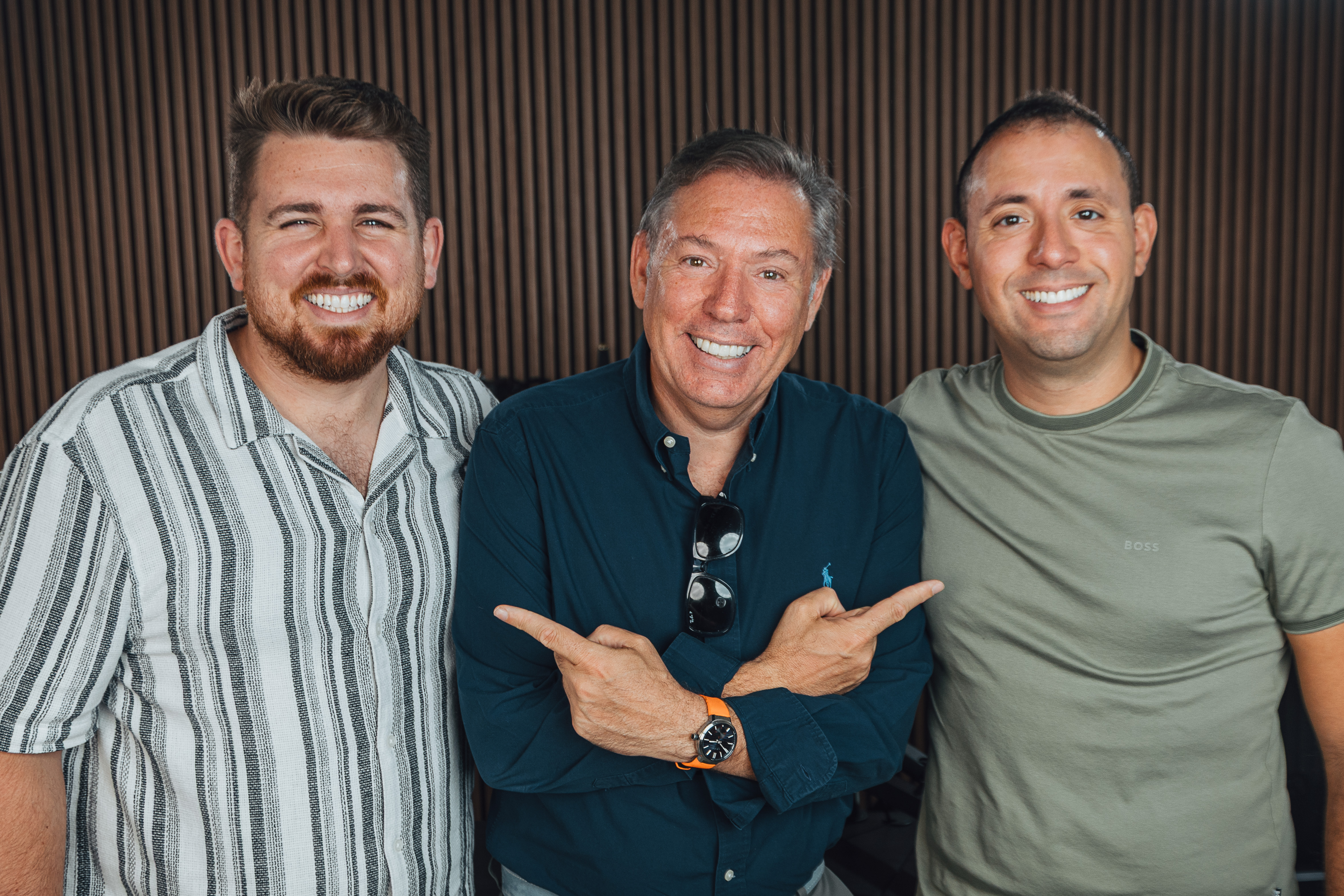

Leave a Reply