
Everyone wants the overnight success. Rafferty Pendery will tell you it only took him about nine years to get one. For a long time he worked 20-hour days and took home just $1,000 a month, and he even brought his laptop on dates. Then something changed.
In this episode of the Don’t Do Nothing Podcast, entrepreneur Rafferty Pendery shares one of the wildest life stories we’ve had on the show. As a kid, he watched his father, Scientology Freedom Medal recipient Rick Pendery, walk into Mexican prisons to get some of the most hardened criminals on the planet off drugs, over 8,000 of them, even after cartels put a hit on him. Rafferty visited prison at 14, and it set the purpose he’s lived by ever since: help people.
He breaks down how he finished high school at 14 using the Study Technology from L. Ron Hubbard, started a clothing company at 11, taught himself to build websites, and worked his way into a NASA Mars research project and the Explorers Club. Then comes the business turnaround: how he went from broke and burned out to running multiple companies, including a security business that hit a $15 million run rate in 10 months, by learning to build processes instead of grinding harder. Along the way: why most people treat their business like prison, how to trust yourself while still being willing to be wrong, and why “the guy who does right by others ultimately wins.”
Let us know in the comments how did you like this episode and remember:
Don’t do nothing.
In this episode:
- Working 20-hour days for $1,000 a month, and what finally changed
- His father, Freedom Medal winner Rick Pendery, and the prison drug-rehab program
- Story of his Father: Getting thousands of hardened criminals off drugs (and surviving a cartel hit)
- Why losing self-respect is what turns a person to crime
- Finishing high school at 14 with Scientology study technology
- Starting a clothing company at 11 and teaching himself to build websites
- How he got into a NASA Mars research project and the Explorers Club
- Building processes instead of grinding: the shift that grew his company 20x
- Why most people treat their business like prison, and how to fix it
- How to trust yourself while still being willing to be wrong
- What Scientology is in his own words
Watch the full episode here:
Audio Version:
Apple Podcast:
https://podcasts.apple.com/us/podcast/dont-do-nothing-podcast/id1846609884?i=1000787492501
Text Version:
[00:00:00] Aaron: Grew companies from zero to massive companies. They, they’re employing hundreds of people right now. A
[00:00:04] Rafferty: lot of people treat business like prison.
[00:00:05] Aaron: Oh my God, you’re right.
[00:00:07] Rafferty: You do have to trust yourself. I think you also have to be willing to reflect. It only took a whole bunch of years to become an overnight success.
[00:00:14] Rafferty: I wanna help people. That’s what I care about.
[00:00:16] Aaron: What is one book or one course that really helped you achieve a lot of the things? All right, guys, welcome to another episode of the Don’t Do Nothing podcast. Today we have an incredible human being, Rafferty Pendery. This guy started his life in a really interesting scenario, literally helping hardened druggies and criminals come off of their habits at the ripe age of 13 years old, okay?
[00:00:43] Aaron: Because as a third generation Scientologist, your father actually was awarded the highest honor, uh, in the entirety of the Scientology religion called the Freedom Medal, uh, Rick Pendery. And throughout that, just an incredible life overall. Grew companies, multiple [00:01:00] companies from zero to massive companies.
[00:01:01] Aaron: They, they’re employing hundreds of people right now. Um- NASA contractor, okay? Part of the Explorers Club. 20 years in a successful, happy marriage, and just overall a guy who’s spending a lot of his time helping people achieve success that he himself has had. So thank you so much for coming- Yeah … onto the show, Rafferty Pendry.
[00:01:20] Rafferty: Thanks for having me, guys. This is gonna be fun. Yeah,
[00:01:22] Brad: it’s exciting to have you here, dude.
[00:01:24] Rafferty: Well, it’s, it’s gonna be a blast, I’m sure.
[00:01:25] Aaron: Yeah.
[00:01:26] Brad: Yeah.
[00:01:27] Aaron: So I wanna… I just, you just have to find, like, we just have to start with, like-
[00:01:31] Rafferty: Somewhere?
[00:01:31] Aaron: Y- you started, where you grew up- Okay … and how you… Like, I think your idea of, like, parents and, and what they did is unlike almost any other person in the entire world.
[00:01:43] Rafferty: Yeah.
[00:01:43] Aaron: So, like, can we kinda start off there? Like, h- how, how did, how was your upbringing, um, and what’s… Yeah.
[00:01:49] Rafferty: Sure. Yeah, no, so, um, I’m, I am a third-generation Scientologist, and so what was interesting, though, is that my parents didn’t tell me or my brother, [00:02:00] like, that you have to believe anything. Mm-hmm. So they really left it up to us to decide what we wanted to do.
[00:02:05] Rafferty: We were wild young boys, as, you know, many of them are. And so, uh, I was actually did my first course when I was about five years old, and it was a children’s communication course. And so what was so interesting about that was when we would fight, she would have us sit down and do these communication drills, and one of the drills is that you get to basically tease the other person.
[00:02:27] Rafferty: They have to stay there and not react. When I found out about that, I was like, “I love this. This is great.” ‘Cause he has to stay in the chair and he can’t come and beat me up, you know? And so, uh, being able to, to, to have that at a very young age and then have parents who set a great example. I mean, my, uh, my mom did volunteer work and church work the majority of her life, and my dad did with getting inmates in Mexican prisons and in the US off of drugs.
[00:02:54] Rafferty: And so as a 14-year-old kid, you… It’s a little bit different to be like, “Yeah, I’m an American,” [00:03:00] going down to see guys who are in Ensenada, Tijuana, Mexico, getting off of drugs.
[00:03:06] Aaron: Mm-hmm.
[00:03:06] Rafferty: And seeing that and meeting those guys and hearing their stories, uh, you know, that sets a very interesting goal in life in terms of being a, uh, helping people.
[00:03:15] Rafferty: Mm-hmm. You know? So it really shaped my life in terms of what was possible, how people can change, and something can be done about it, which is actually why I love the name of your- … your guys’ podcast, too.
[00:03:25] Brad: Thank you. Did– In what you just said, you said, uh, so, like, sets up an interesting goal for your life of helping people.
[00:03:31] Brad: Yeah. Is that where… ‘Cause, like, we were talking about this before we started, is the majority of, like, what I see you doing is basically just helping other people. Like, just kind of just asking for nothing, just like, “Hey, here’s how you can do better,” just straight help flow. Did that come from, like, see- doing that with your dad, like, seeing your dad do that?
[00:03:51] Brad: Yeah. You
[00:03:51] Rafferty: know? Yeah, for sure. Uh, for me, for me it was very young. It was, “I wanna help people. That’s what I care about.” And that has not changed. [00:04:00] So when people ask me what I wanna do, just- I’m trying to help people. The money and the rest of the other things all have followed to the degree that I’m actually staying true to my goal and purpose to help people.
[00:04:12] Rafferty: And the interesting part is when I would get distracted or something would happen in life where I start going down a path that’s maybe, like, a business thing that has a, that doesn’t totally align with that-
[00:04:23] Brad: Mm-hmm …
[00:04:23] Rafferty: I didn’t win- Mm … and didn’t do well.
[00:04:25] Brad: Yeah.
[00:04:25] Rafferty: You know, and I, and I took the hard road on some of that, but that really was the, the sh- the thing that shaped for me, seeing that and experiencing that from two parents who set a really good example for me, and then being able to use that, uh, f- to set my goal and s- said, “Well, I wanna, I wanna help people.
[00:04:42] Rafferty: That’s what I wanna do.”
[00:04:43] Brad: Was, was there a specific instance that, like, comes to mind in terms of, like, where you really saw, like, your dad, like, help or you saw you could or something, like, interesting occurred and where you decided that?
[00:04:55] Rafferty: Yeah. I think for me, when I went down to Ensenada, Mexico, [00:05:00] and he had a program.
[00:05:01] Rafferty: It was a voluntary program. They had assigned part of the prison over to a, a drug rehab program, basically. Oh, wow. So it was voluntary though. So guys had to come from one side of the prison to go to the other side of the prison, and it was optional, and they could do it or not.
[00:05:15] Brad: Wait, so it was literally the prison was, like, split?
[00:05:17] Rafferty: Yeah. Yeah. Oh, wow. There’s, like, a whole portion of, like, a portion of the, the prison dedicated to this.
[00:05:23] Aaron: Yeah. And in theory, the prisons are not supposed to have drug use, but, but they do, right? I mean, like-
[00:05:27] Rafferty: 100%.
[00:05:27] Aaron: Yeah.
[00:05:28] Rafferty: Like, 100%. Oh, I didn’t even
[00:05:29] Aaron: think about that.
[00:05:30] Rafferty: Not even, not even drug use. But they’re
[00:05:31] Aaron: actively.
[00:05:31] Rafferty: Not even drug use, but they, like, they had gangs in the prison with weapons, all kinds of weapons. Like, we think, you know, you think of, like, a shiv in the US. You’re like, “Oh, wow, this guy, like, got really creative.” I mean, they’re unbelievably creative people.
[00:05:45] Aaron: Mm-hmm.
[00:05:45] Rafferty: You, like, if you, you just take that talent that a criminal has and you’re like, “If you just applied that in a really survival direction, man,” that was, that’d be unbelievable.
[00:05:54] Brad: Yeah. Like,
[00:05:54] Rafferty: I don’t know how
[00:05:55] Brad: you
[00:05:55] Rafferty: made this thing happen when you have, like, a whole bunch of people there who try to make you not do that, [00:06:00] and somehow you do it anyways. It’s really impressive. Uh, but, you know, but in Mexican prisons, they would have all kinds of weapons, like things that- y- they really shouldn’t be having.
[00:06:10] Rafferty: So, like, they would have full-on gang members. They had, they would, some of the guys would manufacture drugs in the prison.
[00:06:15] Brad: Oh, wow.
[00:06:17] Aaron: Geez. Yeah.
[00:06:19] Brad: How, how was the, the, the… And I want you to continue your story- Yeah … but how was the, the, like, portion of the prison that was dedicated to the drug r- like, rehabilitation program, how was that received by the prisoners, people in the prison?
[00:06:33] Rafferty: Yeah, so from, from the prisoner side, it was, it definitely didn’t go r- amazingly well right at the beginning. You really had to get the buy-in on the fact that something can be done, ’cause a lot of them, like, what, what… The reason Mexico for him was he wanted to pick the most difficult people that he could go and help.
[00:06:51] Rafferty: Like, who are the people that society has given up on- Mm … who said it’s impossible to change these people? So his requirements for the whole initial group of people was that they had to [00:07:00] be on drugs for, like, 20 years. Mm-hmm.
[00:07:01] Brad: Mm.
[00:07:02] Rafferty: He didn’t want somebody who smoked pot once or twice. He wanted hardened criminals.
[00:07:06] Brad: Mm-hmm.
[00:07:07] Rafferty: You would go down there, and you would see, like, just the, the condition that people were living in, and it was rough. And so the, the idea that these guys could come off drugs, they just didn’t even believe it. By the way, neither did a lot of the other guards or other people around there. Mm. And so when he started actually doing that, he said, “I want this to be a use case and actually show people what’s possible to help other people change,” um, you then start to see these guys start getting interested in it, and then he started getting more and more and more guys.
[00:07:35] Rafferty: And, you know, there were definitely, there were definitely people who didn’t want that to happen.
[00:07:39] Brad: Mm.
[00:07:39] Rafferty: You know, he had drug cartels try to kill him twice.
[00:07:41] Brad: Mm-hmm.
[00:07:42] Rafferty: And, um, you know, they rioted a prison, and it was pretty, pretty wild. But to walk into that, and then you see guys who had been on drugs for 20 years, and I was talking to them As a 14-year-old American in, in this place going, “Okay, I just talked to this guy,” and you can see this person has completely [00:08:00] changed.
[00:08:00] Brad: Mm.
[00:08:00] Rafferty: And the interesting part was to see those guys who had been helped ask the question over and over and over again, “How do I now help my other-” Yeah … inmates? And so they would actually, some of these guys would actually learn and assist in the program. They would ac- Because they had long sentences, you know, some of them were in there for a very, very long time.
[00:08:20] Rafferty: So they would actually learn how to help and they could take a hat. They’d get a job and a, and contribute to helping other guys get through- Wow … the program. So it’s, it’s pretty amazing, not only when you see them change, but then their desire to help another. Mm-hmm. I think, I think people have that actually underneath there.
[00:08:37] Rafferty: Sometimes it’s just a little buried.
[00:08:39] Brad: Yeah.
[00:08:39] Aaron: Yeah. If that’s, those are considered kind of the, the, the toughest and then in the scenario that’s probably the one of the worst futures you can have, and they can have- Yeah … a massive change, then that gives hope to pretty much everybody else. Yeah. Mm-hmm.
[00:08:52] Rafferty: Yeah, for sure.
[00:08:53] Rafferty: Yeah, when they have a guy who’s a hitman for the cartel and was, and goes through the whole program and, and then [00:09:00] he’s helping get other guys through the program, it’s pretty amazing to see. Like, the other guys see that and they’re like, “Okay, we kinda know who this guy is,” but now he’s like, “Hey, man, get off drugs.”
[00:09:09] Rafferty: And they’re like- … “What is going on?” Like, their f- just their minds are blown. It’s- They’re,
[00:09:14] Brad: they’re
[00:09:14] Rafferty: like, “Wait” I met him.
[00:09:15] Brad: Would… They’re like, “Wait, get off drugs or you’ll kill me?”
[00:09:17] Rafferty: Yeah, no. Valid thought process, actually. He didn’t even have to use that tactic. Yeah, of course. That was the funny part. He, he’s like, “Yeah, I kinda, kinda changed my ways.”
[00:09:25] Brad: Yeah.
[00:09:25] Rafferty: So yeah, it was interesting.
[00:09:27] Aaron: So c- what is… What… Did you deliver the program, or you helped or?
[00:09:31] Rafferty: I helped later- Later … uh, when I was older.
[00:09:33] Aaron: Okay.
[00:09:33] Rafferty: Um, so af- after I graduated school and…
[00:09:35] Aaron: Okay, nice. And, and what is this program? Like-
[00:09:38] Rafferty: Sure …
[00:09:38] Aaron: what do they go through?
[00:09:39] Rafferty: So what the program is, is a mix of the secular works from L.
[00:09:44] Rafferty: Ron Hubbard, that he had done research on how do you get people off of drugs. Mm-hmm. Drugs being just something that ruins society, ruins relationships, degrades mankind. How do you actually get them off drugs?
[00:09:55] Brad: Yep.
[00:09:55] Rafferty: And so there’s secular versions of that program, and so you have Criminon, [00:10:00] you have some various things that were basically combined together where you would address not only the drugs piece of it, but then where a person becomes criminals when they lose their self-respect- Mm
[00:10:10] Rafferty: is a fundamental principle that Hubbard had figured out, which is great. So the guy lost his self-respect. That’s the difference between somebody drops their wallet and somebody looks at that and says, “Sweet, that’s- Mm-hmm … not my money,” or somebody drops the wallet and you say, “Hey, sir, you dropped this.” That the, the difference, the difference is that one guy has self-respect.
[00:10:29] Rafferty: And so they did a whole program to help these guys really spot where they lost their self-respect and actually handle that. So completely, it, it changed, changed
[00:10:39] Brad: these guys. Wow. Dude, is it, you know what’s funny? I’ve actu- I’ve, I’ve heard that exact, like, statement of, like, person who is criminal when they lose their self-respect.
[00:10:49] Brad: But hearing it in a new unit of time, I just, like, had some realizations myself on that that’s, like, super beautiful. Nice. I had a… I- thank you. I had a question on, um, the guys who you [00:11:00] saw, like, in the prison who had long sentences- Yeah … who, like, picked up hats that you were talking about earlier- Yeah … and, like, decided to help.
[00:11:05] Brad: Was it, it almost like, um, I guess what came to mind for me when you said that, and I’d love to know if this is what you observed, is basically if you have, like, a life prison sentence, all of the external stuff, I would even say, like, including, like, drugs, like, uh, like, all that think, the stuff that you might think of as are related to people’s goals in the outside world, you’re kind of shut off from that.
[00:11:31] Brad: It’s not really an option for you. You can’t build a business. Yeah, like what’s the game? You’re not gonna make money. Exactly. What’s the game? Y- and you saw, tell me if, if I heard you correctly, you saw that once people saw that it, help could be delivered in that setting, they were like, “Oh, I have a game, and the game I’m gonna play is to help.”
[00:11:51] Brad: Like, even if they had maybe a life sentence, that w- they’re just like, “Well, I’m just gonna help.”
[00:11:55] Rafferty: 100%.
[00:11:56] Brad: Dude.
[00:11:56] Rafferty: Buried underneath all of that, the, the person is [00:12:00] basically good.
[00:12:01] Brad: Yeah.
[00:12:01] Rafferty: They want to help others. And so they start to strip off all this other stuff, and now they get to operate like them. But you’re right, when a guy has multiple life sentences, for example, he doesn’t have a whole lot of a game.
[00:12:15] Rafferty: He’s just kind of living the life of a meat sack in a way. You know, you’re just kinda, like, going along, like, until you die. Like, that’s pretty much what it’s gonna be. Now you start to actually, you get your life changed, and you start to strip off this whole personality that’s not yours. Like, when people are on these drugs, they think that these behaviors that they have, they think the thoughts they have are their own thoughts, and they’re not.
[00:12:36] Rafferty: Yep. And so they start stripping that off and they realize, “Wow, I can think clearly. I can, I, I look at things very differently. Oh, I can help another.” And yeah, it does, it gives them a game. It gives them something that they can do that they can contribute to others.
[00:12:48] Brad: Mm.
[00:12:49] Rafferty: So that was, that, that w- I would say was kind of the, the, that beginning point for me to see, okay, what, what do I wanna be doing in life?
[00:12:57] Rafferty: Like, I want to help people. And [00:13:00] this, and this whole Scientology thing and the H- and, and L. Ron Hubbard, even the things that he did that were non-religious, they work.
[00:13:09] Brad: Yeah.
[00:13:09] Rafferty: Like, there’s no, you can’t take that out of me ever- Mm-hmm … for the rest of my life and it, it was, no matter what, this works. Wow. And I see it
[00:13:21] Aaron: Was there ever Like in the prisons How many people were religious versus not religious versus like how, w- was there a correlation that you saw between that and, and rec- recovery?
[00:13:37] Rafferty: Um, sure. Yeah, so there’s, there’s quite a mix, you know, when you, you have guys who are religious, and then I would say that you have guys who believed in various things, but maybe they didn’t necessarily follow that, like they didn’t actually demonstrate it, right? Mm. So like- … there’s, there’s some fundamental principles.
[00:13:53] Rafferty: I, I mean, I’ve read and looked at. I have friends in all kinds of religions, and I have read all kinds [00:14:00] of books about all kinds of religions, and I’ve studied quite a lot. And You know, when you go down there and see that and a person says, “I am blah,” but they’re not de- necessarily demonstrating that- Mm-hmm
[00:14:10] Rafferty: it’s like, okay, are they? Okay, fine. It’s not for… Honestly, it’s not even for me to judge. I would say that what was interesting is the person having something they believe, the, the part that I would say is beneficial, having something they believe that is greater than just their physical meat body- Mm-hmm
[00:14:28] Rafferty: that they have- Yeah … uh, in my experience, not even just in that setting, but in other settings, has been, has made a huge difference. Like, I think the fact that somebody has a religion, whatever religion-
[00:14:39] Brad: Mm-hmm …
[00:14:40] Rafferty: is actually really amazing because they believe in a higher power. Yeah. They believe that there is something more important than simply this hunk of meat that we go along in life.
[00:14:50] Rafferty: Because, like for me, otherwise you just look at it and you’re like, “Great, so we basically live the life of a cow.”
[00:14:55] Brad: Yeah.
[00:14:55] Rafferty: Without anything higher power, that there is no concept of God, there is no [00:15:00] anything else, no, no s- uh, higher being, supreme being- Mm-hmm … none of that, you literally… So we’re just the same as a cow.
[00:15:07] Brad: Mm-hmm. Like
[00:15:07] Rafferty: this isn’t, doesn’t make sense to me, you know? It doesn’t make sense. Hell yeah. So you get to see it in that setting, and you get to see these people change, and you know that. And by the way, the interesting part is a lot of those guys got a lot more religious when they could actually get rid of the drugs.
[00:15:21] Rafferty: Oh. Wow. They actually became more religious in their Christianity, their w- w- a- any- anything. Mm-hmm.
[00:15:28] Aaron: Mm.
[00:15:28] Rafferty: Any religion they have, whatever it was, Christianity, Judaism, like whatever that religion was- Mm-hmm … they actually became more religious and actually- Wow … got a better relationship with God because they don’t have drugs in the middle of it.
[00:15:41] Brad: Yep. That’s awesome.
[00:15:42] Rafferty: Love that. Wow. Um, I,
[00:15:45] Aaron: I don’t wanna spend all the time on this prison, but I just have to ask questions- No, it’s, it’s, no, it’s super … ’cause I just have to ask questions ’cause it’s so interesting. It’s, it’s fine. Yeah, it’s interesting. What was the fir- when was like the first time that you walked into the prison?
[00:15:53] Aaron: Like, were you like scared, like out of your mind?
[00:15:56] Rafferty: Oh, yeah, for sure. Like, could you tell me, tell me that time. Yeah, dude. How long that took. You walk [00:16:00] in, like prisons are an interesting place, you know? Like when I… The first one I walked in, I was 14. I went down there. Uh, the doors are, like they’re intense.
[00:16:10] Rafferty: Like when you, when a door opens and then the door closes, you’re like, “Okay, I’m inside this place, and there’s a heavy metal door that just closed behind me,” you know? So I, I was definitely, uh, nervous, concerned, fearful, all the other things, and I was just like… And I, you know, obviously had to play it cool and pretend like, “Yeah, I’m all good,” and, “Yeah, it’s all good.”
[00:16:31] Rafferty: You know, my dad was checking, looking at me. I’m like, “Nope, I’m all good.” Inside I was like, like- … “Oh man, this is crazy.” Um, but you know, then, then we go into the, into that area. The interesting part was to see the people in the area who were going through the program- Mm-hmm … completely different. The whole demeanor of the people were different.
[00:16:50] Rafferty: Yeah. Because you walk through, I mean, and, and since then I’ve toured many different jails and prisons because, because when, when he started doing the program later, it was in the US- Mm-hmm … in New Mexico, [00:17:00] and I was working for him at the time. Mm-hmm. We ended up going through All kinds of prisons. And, and it is not a fun experience.
[00:17:07] Rafferty: Mm-hmm. You walk through there, like, I mean, you know, credit to the guards and the guys who have to actually deal with that on a daily basis. That’s rough. Yeah. You know, it’s rough. So yeah, the first time I walked in there, man, I was, I was like, “Oh man, this is, this is real.” And that door opens, you’re like, “Okay, cool.”
[00:17:22] Rafferty: Then you walk in, and then that door shuts, and you’re like, “Okay, that’s crazy.” You know? Like, I’m actually doing this right now. Um, but I wouldn’t change it for anything in the world, you know? ‘Cause just because I got to see something you would never expect to see in that prison. Ah.
[00:17:39] Brad: Mm-hmm.
[00:17:40] Aaron: Mm-hmm. True, true testament-
[00:17:41] Brad: Wow
[00:17:42] Aaron: to the human spirit and the
[00:17:43] Rafferty: ability to change,
[00:17:43] Aaron: right?
[00:17:44] Rafferty: Completely.
[00:17:44] Brad: Completely. What i- what is… Well, how would you describe the difference between, you said, like, di- very different demeanor- Yeah … with the guys who are on the program versus kind of the general prison populace?
[00:17:53] Rafferty: Yep.
[00:17:53] Brad: What, what… Describe the difference.
[00:17:55] Rafferty: Um, I would say- What
[00:17:55] Brad: did you see?
[00:17:56] Rafferty: Yeah, I would say that the, the guys, when you… There’s k- [00:18:00] there’s lack of hope. There’s one of two things that I saw with the guys who weren’t- Mm … doing this. One, lack of hope, just complete and utter no hope.
[00:18:08] Aaron: Mm-hmm.
[00:18:08] Rafferty: Or trying to play a game. They’re trying to cause an effect on another human being.
[00:18:13] Rafferty: Mm. So they would… Like I’ve, I saw it. When a w- woman would walk through, they would be catcalling, but, but nasty stuff. Mm-hmm. Like, just nasty. Like, not things you’d see o- on the street, you know? They’re, these guys were, they were trying to cause a pretty negative effect on people. And then when you’re not, and, and I’m just, you know, a guy walking through there, and there’s other, other people, they would be doing the same kind of stuff.
[00:18:34] Rafferty: They were just, they’re trying to push your buttons, and they’re trying to cause an effect. And that it’s just a continuation of the behavior that they were already doing. Once they actually address it-
[00:18:45] Brad: Wow …
[00:18:45] Rafferty: the difference was, oh, now I actually have some self-respect. They would have their manners in. Wow.
[00:18:50] Rafferty: They would be, you know, greeting people very, like, just very politely. They… It was just a completely different, comple- completely different game.
[00:18:58] Brad: Wow.
[00:18:59] Rafferty: It was definitely a [00:19:00] defining change for me in life to just go, wow, A, man can be helped, man is basically good, and my goal and game in life is to help people.
[00:19:11] Aaron: Right. So what, what’s, what’s… Can you tell about this riot? What happened with this riot?
[00:19:16] Rafferty: Yeah.
[00:19:16] Aaron: Were you there? No,
[00:19:17] Rafferty: I wasn’t there.
[00:19:18] Brad: Oh, no.
[00:19:19] Rafferty: No, that would’ve been crazy. But, but my dad was. He showed up at the riot. Uh, yeah, they rioted a prison to kill him, and, um, it was actually in the papers down there and, and they-
[00:19:28] Brad: What do you mean when you say they rioted a prison?
[00:19:31] Brad: Like
[00:19:31] Rafferty: what? So in, in the US, the protocol if they riot a prison, they cause a riot, they start- Yeah … breaking stuff and throwing chairs and things like that. Like, like somebody
[00:19:39] Brad: instigates a riot. Yeah. Like gets everybody riled
[00:19:40] Rafferty: up. Somebody starts it.
[00:19:41] Brad: Yeah.
[00:19:41] Rafferty: They do that. They start breaking things and, and all of that.
[00:19:44] Rafferty: The US, they clamp it down. It’s like a done deal. The guys, they, the guards go in and s- handle the situation. Uh-huh. In Mexico, especially at that point in time, uh, the guards would go out of the facil- They would [00:20:00] lock it down- They would withdraw … from the outside because it was so dangerous in a lot of cases that they just wouldn’t s- try to be inside the prison.
[00:20:05] Rafferty: Oh, no. So they would go in and lock it down from the outside. Um, but yeah, they, they… He was basically getting so many guys. He had gotten just about 10,000 guys. I think at that point it was about 8,000 or so- Mm-hmm … guys off of drugs. Mm-hmm. And these are hardened, hardened, hardened criminals, not, not your i- you know- Mm-hmm
[00:20:26] Brad: hate at
[00:20:26] Rafferty: drugs. 8,000? Yeah. Yeah. Wow. So by this point he had done that and, and he was causing, uh, some- Loss of revenues … issues, loss of revenues.
[00:20:33] Brad: Yeah.
[00:20:33] Rafferty: And you know, the cartels weren’t super happy about that, so they, they basically put out a hit to kill him, and you know, so for us, even wh- when I was younger, we primarily, he kinda kept us out of the whole picture from a safety perspective.
[00:20:48] Rafferty: Mm-hmm. Like, we spent a lot of time with our mom, not there. It was just an unusual circumstance where I actually got to go down there and see it when I was a kid.
[00:20:55] Brad: Mm.
[00:20:55] Rafferty: Um, so yeah. How did he, like, how did he get out? Like, what’s the, [00:21:00] like- Well, he wa- Yeah, that was a wild story, man. Like, you, you’d watch this, you’re like, “You can’t even write a movie script that would say that this happened,” except he told me, which is fine.
[00:21:11] Rafferty: Other people who were there also told me, which was really good because, like, I don’t know, is my dad being a little bit of a macho guy and saying- Yeah … like I was super tough? No, no. He did exactly what he said. He walked into the prison during the riot and, uh, basically went and found who started the riot, and then challenged that guy’s manhood and basically said, “You’re scared of this program.
[00:21:31] Rafferty: You don’t even know what it is,” and then got the guy to do the program.
[00:21:34] Brad: Mm. No
[00:21:35] Rafferty: way. He, yeah, so it was pretty wild. And, uh, you c- you couldn’t write a movie. You know, when you, when I, when I was younger, I’d asked him, like, “What movies really show what this stuff is?” And it was like, “Traffic” was, like, one of the most realistic movies.
[00:21:48] Rafferty: He’s like, “Most of them downplay how crazy this whole world is, like from, from that side of things.” Mm-hmm. The, the drug trade and all of that stuff, most of them just downplay it so much, so. [00:22:00] Yeah, so I had that, and then as I got older, um, you know, I finished school pretty early. Uh, I learned how to study when I was young, so that helped.
[00:22:08] Rafferty: And, uh- When, when
[00:22:09] Brad: did you finish school? How old were you?
[00:22:10] Rafferty: I was 14.
[00:22:11] Aaron: Oh.
[00:22:11] Brad: When you finished-
[00:22:12] Aaron: Oh, wow …
[00:22:12] Brad: high school?
[00:22:13] Rafferty: Yeah. Yeah. Wow. I tested out.
[00:22:16] Aaron: Oh, you, okay, you tested out. I didn’t-
[00:22:17] Rafferty: Yeah.
[00:22:18] Aaron: I don’t know that was possible. I don’t… Is that still possible? People don’t do that now, do they?
[00:22:21] Rafferty: You finish high school with that?
[00:22:21] Rafferty: I, I think you have to be a little bit older than that. Okay. But I th- I think, I think you can test out when you’re, like, 16.
[00:22:26] Aaron: Huh.
[00:22:27] Rafferty: Um, yeah, I was 14. I… The amazing part was in the school that I went to, they taught the study technology. Okay. So it was Applied Scholastics. Um, they use the Applied Scholastics program there.
[00:22:40] Rafferty: And so, you know, the funny part when you think about it is, like, we all go to school for many, many years in life, you know, 18 years, 26 for some people, et cetera. There’s one course that’s not in there. Like, you can learn rockets, you can learn, like- Mm-hmm … you know, machinery, you can learn robotics, you can learn computer programming.
[00:22:57] Rafferty: There’s, there’s a singular course that’s not taught, [00:23:00] which is how to study. Right. It’s crazy. Yeah. It’s not like- Unreal … it’s like, like the first thing these guys do, right? Yep. Insane. Yep. So when I was young, one of the other
[00:23:07] Brad: courses I- You know what I was always told about college? Huh. Sorry for interrupting.
[00:23:09] Brad: No, it’s good. But it literally, I was told, “You go to college so that you can learn how to study.” That is literally- You were told that? … what I was told- Huh … in college, is that’s why you go to college, is to learn how to study. Really? Yeah, dead, yeah, dead serious.
[00:23:20] Rafferty: Wow.
[00:23:21] Brad: Is that… And I didn’t, by the way, until-
[00:23:23] Rafferty: Yeah
[00:23:23] Brad: I did what you’re probably about to talk about. Study.
[00:23:25] Rafferty: Yeah.
[00:23:25] Brad: Yeah.
[00:23:26] Rafferty: Yeah, I did, like, at the beginning when I, I did a picture book version of this course, and I did it multiple times. You know, I did Learning How to Learn, and there’s, uh, uh- I love
[00:23:34] Aaron: that book by the
[00:23:34] Rafferty: way. Oh, it’s great.
[00:23:35] Aaron: Love that book.
[00:23:36] Rafferty: I would s- I’ll, I’ll probably do it again shortly.
[00:23:38] Rafferty: You know, it’s like Learning How to Learn, and then I did, uh, Grammar and Communication so I could actually understand some of those basics, right?
[00:23:44] Aaron: Mm-hmm.
[00:23:45] Rafferty: Later, I did a basic study manual, and it is amazing when you’re young and you do that and you know how to study, then you don’t have a backoff in duplicating information.
[00:23:54] Rafferty: Mm. You know? So for me, I was getting, like, into calculus and trigonometry, and I was like, “Guys, how much longer am I gonna have to [00:24:00] do all this stuff?” “Because I’m, I don’t know how much of this I’m actually gonna use.” Ah. Like, I get all the, the stuff. I did geometry. I was like, “Yeah, no, I get it. There’s some, some applicability in some things.
[00:24:10] Rafferty: I got it,” but like, l- like, let’s get a move on. Yeah. Funny part was I still couldn’t work and do other things, so- … you know, I still did some more, more study and just, I, I just ended up studying more and more stuff, courses and other things till I was old enough to start working, and then I did, you know? So that was it.
[00:24:28] Rafferty: I just-
[00:24:28] Aaron: And when did you start working? Oh, go
[00:24:30] Brad: ahead. I was gonna say, I just imagine you in school just being like, “Man, I can’t be up in here mensurating.”
[00:24:34] Rafferty: Yeah, I did a little bit. Or
[00:24:35] Brad: mensurating, mensurating is a calculus-
[00:24:38] Rafferty: Yeah …
[00:24:38] Brad: word. Oh. It means calculating the area under a curve.
[00:24:40] Aaron: Oh.
[00:24:41] Rafferty: So the, the funny part was that I did- This is not like, I, I did get called by the principal, like from the principal’s office.
[00:24:49] Rafferty: My dad got called from the principal’s office one time when I was pretty young and they said, “Oh no, what did he do?” ‘Cause I, generally speaking, I mean, I was, I was a bit of a rambunctious kid. Really? I wasn’t too crazy, but you [00:25:00] know, I was, I was pretty, you know- Like you would get in trouble a little bit? I didn’t always listen.
[00:25:03] Rafferty: Yeah. No, a little bit. I’m not like, you know, I’ve… Not so bad. But I was, you know, I didn’t always just listen just ’cause somebody told me-
[00:25:11] Aaron: Mm-hmm …
[00:25:12] Rafferty: to do something. And so this time- Which
[00:25:13] Aaron: is a good, good, good quality. Yeah.
[00:25:14] Rafferty: Yes, I agree. So this time the principal called and my dad said, “Okay, well, what, what happened?”
[00:25:19] Rafferty: And, uh, he said, “Well, you see what happened was in that school they didn’t allow homework to be done.” Like they only had what you do in the classroom. Hmm. They actually didn’t want kids taking the schoolwork home. Part of it was because a whole bunch of kids just a little bit ago had all taken their books home and lost them all.
[00:25:38] Rafferty: Oh. So they had no curriculum books. Wow. Like it was, it was actually a mess, so they just made this rule like, “We’re not gonna do that. You’re gonna study here.” And I was like, “No, I wanna take homework.” And the teacher was like, “No, we don’t do that. It’s the rule.” And I was like, “Yeah, we’ll see about that.” So then I went to the principal’s office and told, I told the principal, uh, “Hey, he told me I can’t do homework.
[00:25:58] Rafferty: I disagree.” [00:26:00] And so the principal was like, “So look, I’ll let him take his book home, but like can you just make sure he doesn’t lose it?” And my dad’s like, “Okay, that’s crazy. But yes, that’s fine.” ‘Cause I would take it home and do math, you know? It was just, it was what I, I loved to do. So anyways, it was funny though.
[00:26:16] Rafferty: That was my, that was me getting called by the principal’s office. I think it was the only time. It wasn’t ’cause I was like some-
[00:26:21] Aaron: It’s ’cause you did such
[00:26:22] Rafferty: great- … great kid. I just, I liked doing it. It was the challenge of doing it. Like great, how fast can I get this thing done?
[00:26:27] Brad: Yeah. Yep. I was similar by the way.
[00:26:30] Brad: In math, math was always the best- Oh yeah, me too. Me too … in competing and who’s gonna do it faster and who’s gonna get better. Yeah. And
[00:26:35] Aaron: even if you don’t… At,
[00:26:35] Brad: at that time I didn’t even know what it meant, but I just knew I can get the thing that was supposed to be the right
[00:26:38] Rafferty: answer. Mm. Yeah, if you get the right answer- Yeah
[00:26:39] Rafferty: then you’re, you’re good to go.
[00:26:41] Brad: My favorite thing was to get the right answer in a way that was different from how the teacher got it.
[00:26:44] Aaron: Yeah. Nice.
[00:26:45] Brad: Oh, yeah.
[00:26:46] Aaron: So after you finished school and everything, like what was your next move? Like did you, you go into work? You worked for your dad? You w- Yeah … like what was your trajectory after school?
[00:26:53] Rafferty: Yeah, so my first full-time job was working for my dad. So I, basically he was still doing these [00:27:00] programs and he was doing it now in the US.
[00:27:02] Aaron: And is this now he’s making income somehow from this? Is this like… Or he, this is his
[00:27:05] Rafferty: volunteer work? It’s a nonprofit.
[00:27:06] Aaron: Yeah.
[00:27:06] Rafferty: Yeah.
[00:27:07] Aaron: So how does he-
[00:27:08] Brad: Probably some, some low base pay
[00:27:10] Brad: something Yeah, you’re allowed to do like a, like something
[00:27:11] Aaron: Something, some-
[00:27:12] Rafferty: Yeah, he- Just a regular base pay … this is not where you wanna go to make a lot of money. Not super lucrative If you’re like, “Hey, I wanna, I wanna be like a gajillionaire,” doing a nonprofit would not be the way to go for that. No, no.
[00:27:22] Rafferty: Um, and so yeah, but, but he was still doing this, and so I was like, great, I’m gonna go work with him. And concurrently, while, while I did that, I, uh, ended up starting a company a little bit after as I was getting that going. Um, and for me, like as a kid, I had done… I had wanted to start a, a clothing company.
[00:27:43] Brad: Hmm.
[00:27:43] Rafferty: And so when I was 11, I had started this clothing… I found a, a s- a, an artist that could draw a cartoon, and I had this concept. I was into skateboarding, and this kid… Anyways, long story short, I, I got a cartoonist to draw [00:28:00] this design for me. I found a screen printer and negotiated with him to give me these shirts, and I was like, “Great, now how much money do I need to g- give you for that?”
[00:28:10] Rafferty: He told me, and I was like, “Great, now Mom, I need to get this money.” And she’s like, “Great, you can work for it,” which was very common. So I was like, “Okay, no worries.” So I did the dishes what felt like probably 10 billion times, and did the house and the car and everything else. Probably wasn’t that much, but like I…
[00:28:25] Rafferty: it was very long for me at that, at that age. Got them printed, and went and sold them, 25 bucks each. So this is when I was 11, so that’s like 29 years ago. I was still selling them for 20 n- 25 bucks. So I sold 100 shirts, 25 bucks. I made 2,500 bucks. And, uh- Wow … I didn’t know the whole like reinvest part and all that, so I pretty much- You just wanted to spend it
[00:28:46] Rafferty: just spent it on like candy and skateboards. Let’s go. So, you know, it was like I didn’t know the rest of it then. But because I had that when I wanted to start my own company, I was like, great, I’m gonna start a clothing thing- Mm … ’cause I’d wanted to do that when I was a kid. Came up with some designs for [00:29:00] screen printing, um, ended up basically getting these things printed.
[00:29:05] Rafferty: Uh, started going out, making the sales, you know, here and there. And then at the time I, I got into basically the… needed a website. Websites were very expensive- Hmm … back in that day.
[00:29:18] Brad: Wow.
[00:29:18] Rafferty: And I was like, great, I’m gonna teach myself how to build websites ’cause I know how to study. Oh, wow. So I literally pulled up webs- We didn’t have YouTube then.
[00:29:25] Rafferty: We didn’t have all the stuff you have today. You didn’t have, you didn’t have AI. Mm-hmm. You didn’t have all of this stuff that we got. So I just… I pulled up websites, and you’d go and look at the code of a website and learn like what the code meant, and just figure it out like that. Couple books. So I built some for my dad for his program And I said, “Hey, I wanna learn how to do it.”
[00:29:44] Rafferty: And I would also at the same time build one for me. When I built it, I was like, well, other people need websites, and-
[00:29:52] Brad: Mm …
[00:29:53] Rafferty: maybe I could try to sell somebody a website instead of selling, like, the shirt, T-shirt one-off and, and things like that. And that’s kinda what launched me into the [00:30:00] next, into actually going into that more full-time.
[00:30:02] Brad: How much did you sell your first website for? Do you remember?
[00:30:04] Rafferty: Yeah, I do. I remember because I to- I told him, “I want… Can you make an introduction to somebody?” And he said, “Yes, but I am not going to pitch this for you, sell it for you. I’m doing nothing for you on it. I just want you to understand that.”
[00:30:19] Brad: Mm-hmm.
[00:30:19] Rafferty: Like, “This is your thing, your conversation.” I was like, “Okay, that’s cool.”
[00:30:23] Brad: Yeah.
[00:30:24] Rafferty: So he introduced me to a friend of his who was a dentist. I went and talked to the guy, told him, “Look, I’ll build you the site. Here’s what it’s gonna do and here’s how it’s gonna work,” and all the rest of the stuff. And he said, “How much?”
[00:30:33] Rafferty: And I was like, at that moment, I had totally spaced ’cause I didn’t think about it.
[00:30:37] Aaron: Hmm.
[00:30:37] Rafferty: I didn’t have a game plan walking into it. And he’s like, “How much?” And I was like, “$5,000.” Yeah. And he’s like, “Okay.” I was like, “Great.” I turn around and I’m like, “Oh my God.” I turned around, I was like, “That was amazing.” I was like, “Five grand.”
[00:30:42] Rafferty: I was like used
[00:30:53] Rafferty: to selling these $20 things- … so I’m like, “Yeah, I wanna do more of that. That sounds like… That’s fantastic.” So I [00:31:00] did, and he actually had that site for, like, eight or nine years. By that point- Wow … I had done so many projects. Like, we’d done tons and tons and tons of projects. I actually went back to him and I was like, “Look, I’ll rebuild this thing for you for free ’cause you were my first customer.”
[00:31:13] Brad: Mm.
[00:31:14] Rafferty: Like, this thing is just not good now. Like,
[00:31:20] Rafferty: eight years later- Yeah, your website doesn’t say anything … you figure it out. Yeah, eight years later, and he’s like, he’s like, “Nah.” He’s like, “I like it.” And I was like, “No.” “No, we’re gonna get you a new one.” So anyways, that would kind of started my, the tech side of things, which kind of evolved from there.
[00:31:31] Brad: Oh, wow.
[00:31:32] Brad: And okay, so where did it go to? Like, what-
[00:31:34] Rafferty: Yeah, so basically I got into websites, bigger and bigger websites. We started getting into the software side of things. Um, for me, there’s a creative side that was very cool, and then the s- the software side was great because you actually solve people’s problems from their, their business side of things.
[00:31:50] Rafferty: Mm. And I did a lot of business related software. So, um, and, and so I was able to do work for Time Warner, did work for Ashley Furniture, did work for data, [00:32:00] uh, project for NASA, and, you know, that, that was… I was doing video work for them and, and a couple other things too, ’cause I worked my way into this NASA Mars research project that was happening in Mojave, uh, Desert along the way.
[00:32:16] Rafferty: And, um-
[00:32:17] Brad: On, in your spare time?
[00:32:19] Rafferty: You know, it was interesting. I, you know, I, I saw there’s, there’s a, um… Well, it was wild. I wanted, I, I, I wanted to get in the Explorers Club. It’s a club that’s been around for over 100 years. Mm-hmm. It’s very exclusive. It’s not, there’s no pay to play for that thing. You have to actually do something that actually contributes to science and exploration.
[00:32:37] Brad: Mm-hmm.
[00:32:37] Rafferty: So I just had this in the back of my mind, like, one day I’d like to be part of that club. And, uh, basically I was like, how do I do that? Like, that’s so random compared to what I’m doing right now. And a guy that my dad knew was doing a hot air balloon project, and he needed a hot air balloon crew chief.
[00:32:57] Aaron: Hmm.
[00:32:58] Rafferty: And I was like, “Sure, done. I’ll do [00:33:00] it.” Which if you ever dealt with a hot air balloon or seen them, they’re these m- they’re massive. Mm-hmm. Yeah. You know, like they, they blow up that-
[00:33:06] Brad: Have you been in one? Oh, yeah. I haven’t.
[00:33:08] Rafferty: They’re massive. Yeah. Like, they lay out on the ground. Like, getting it set up and doing that whole thing is a ton of work.
[00:33:12] Rafferty: Mm. And then when you’re the crew chief, you also have to… You’re basically in the chase vehicle, so you see this hot air balloon, and the hot air balloons don’t necessarily follow, like-
[00:33:20] Brad: You don’t
[00:33:20] Rafferty: know where they go … like a direct path. Yeah, yeah. You know? It’s kind of-
[00:33:23] Brad: There’s no steering wheel.
[00:33:24] Rafferty: It’s, there is no steering wheel.
[00:33:24] Rafferty: Yeah,
[00:33:25] Brad: yeah.
[00:33:25] Rafferty: So it’s going and where it goes, and so you’re f- in this chase vehicle.
[00:33:28] Brad: Wait, is your chase vehicle on the ground?
[00:33:29] Rafferty: Yeah, and you have to follow it ’cause you have the-
[00:33:31] Brad: Oh my God …
[00:33:32] Rafferty: where like you have to pick them up. You have
[00:33:33] Brad: to pick it up. Yep. Yeah. Wow.
[00:33:34] Rafferty: So anyways, we, uh, he, he says, “Hey, I’m doing this project out in Mojave Desert, and it’s with NASA, and it’s a analog Mars research project.
[00:33:44] Rafferty: We’re basically studying some, some, using thermal imaging, thermal, uh, like heat sensitive imagery from a hot air balloon to find cave openings.” And his name is Jim Thompson, and he’s one of my dad’s longtime friends, and he said, “We’re doing this.” And I was like, “I’m in. I’m [00:34:00] great.” Yeah. And I was like, I gotta figure out how to run the business and do that at the same time.
[00:34:03] Rafferty: But I go out there with him and, and basically become his hot air balloon crew chief. My… Because my upbringing was all very, so much more, uh, so much around value, how do you provide value, how do you provide value, I was like, “I’m just gonna do the best job that I can-”
[00:34:17] Brad: Mm-hmm …
[00:34:17] Rafferty: for him.
[00:34:18] Brad: Yeah.
[00:34:18] Rafferty: So we go out there, and we’re on a project with guys from NASA and all these scientists and all this other stuff, and I’m like, “This is awesome.”
[00:34:26] Rafferty: And this woman was having a hard time with her video camera, and I was doing some video production stuff, too. Again, study helps.
[00:34:34] Brad: Yeah.
[00:34:34] Rafferty: So I was like, “Great, well, let me help you.” And I didn’t know who she was. I just said, “Well, let me help you,” and I fixed it. And then she’s like, “Oh, could you video this thing for me?”
[00:34:41] Rafferty: And I was like, “Sure.” And I was like… And s- anyway, she ended up stealing me for a bunch of the rest of that, like, week and a half that we were out there. Uh, and then I find out, like she’s the head of all the education websites for NASA.
[00:34:53] Brad: Mm.
[00:34:54] Rafferty: And so she loved me and was like, “Hey, can you come back again, and we do another one of [00:35:00] these, uh, next year?”
[00:35:01] Rafferty: And I was like, “Yeah, absolutely.” So he came out, I came out with him, and we ended up doing that, then ended up getting invited up to Canada and working on one up there called Pavilion Lake Research Project, and that was super cool. They were using these little one-man submersibles to go underwater. And I would go for two weeks- Wow
[00:35:17] Rafferty: every summer, and they would use these one-man submersibles to look at this micro-sized life. It looks like coral- Mm-hmm … but it’s not. It’s in fresh water. Because it’s dated, like in, in the Arctic and things like that, it’s dated as like the oldest thing. Like, they’ve, they’ve dated them, like some of them like billions of years.
[00:35:33] Rafferty: Wow. What? So they figured if you’re gonna find life on other planets- you’re gonna find these structures, A, it’s gonna probably be in caves. Mm-hmm. So that was why the thermal imaging. Yeah. And then the other part is if you’re gonna find it, you’re gonna find this micro-sized life. One of the, the actual discoveries- Mm
[00:35:47] Rafferty: that they had and published during that research was that this is growing.
[00:35:52] Brad: Mm.
[00:35:53] Rafferty: It’s, it was actually alive, which was a new scientific discovery. Wow. So, uh, as I was trying to [00:36:00] help these guys, I thought, “Well, this is an awesome thing that we’re doing here.” Um, I did, uh, video work for it, and I basically was doing the video work, websites, and things like that, and I basically said, “Look, um, who- when you get people who approve a budget, is it, is it a scientist or is it, like, somebody else?”
[00:36:19] Rafferty: And they’re like, “No, it’s generally somebody else.” And I was like, “Cool. And d- do they understand these, like, really big scientific papers?” They’re like, “Not, not usually.” And I’m like, “Great. What if we-”
[00:36:27] Brad: Dude …
[00:36:27] Rafferty: what if we did a 10-minute video that showed what we were doing here? And you can bring your scientific papers and all the rest of it, but, like, what if we had, like, a video?”
[00:36:34] Rafferty: And they were like, “That’s amazing. Great idea.”
[00:36:36] Brad: Yeah.
[00:36:36] Rafferty: And so I basically got Asked and tasked with doing this, and we actually created, and I co-authored a research paper on how do you get public acceptance-
[00:36:47] Aaron: Mm …
[00:36:47] Rafferty: for scientific projects, which then also helps with things like funding, because that’s one of the biggest issues those guys run into is- Mm-hmm
[00:36:54] Rafferty: how do you actually fund this whole thing? Well, you- Yeah … getting public acceptance for it, and how do you use video and, [00:37:00] and media to actually sh- share in s- what you’re doing. Mm-hmm. Because you have to bridge that gap between people who are scientists and people who have no clue what you’re talking about.
[00:37:10] Rafferty: How do you sh- actually tell that story? And so that was what I was doing, and that was actually the, one of the research papers that I helped co-author was how do you actually do all that? Wow. Which then led me to the Explorers Club.
[00:37:20] Aaron: So, so you’re then considered a scientist?
[00:37:22] Rafferty: Me? No, I’m not that smart. No, he’s like, “
[00:37:24] Brad: No, I’m considered a published scientist.”
[00:37:27] Rafferty: Published. I’m a, I have published works. I do, but no, I’m, I’m definitely a simple-minded person. And I just, I just- I don’t know about that … helped, I helped some people. I don’t think
[00:37:37] Brad: anybody who sees this is gonna agree with that statement that you’re simple-minded.
[00:37:40] Rafferty: I just, I just wanted to help people. Yeah.
[00:37:42] Aaron: That’s… So, um, I, you know, there’s, for the people listening, right, and, and I think there’s, there’s a… In terms of the actual study that you do, like really at the church- Yeah … and the courses that you study, the books that you read, if someone’s like, “Well, for, to me to do, to do these like cool, interesting things,” like what [00:38:00] is one book or one course that really helped you achieve a lot of the things that you’re talking about here and, and, and, and going forward?
[00:38:07] Aaron: Like, just for someone, they haven’t done anything, “Hey, where, where should someone start?” Or what’s one thing that would help in achieving things that you’re talking about?
[00:38:13] Rafferty: Yeah. I think I, you know, I think there’s a couple ways you can go depending on kind of what you’re running into, right? Um, one of them I would say is a fundamentals success through communication course.
[00:38:23] Aaron: Mm-hmm.
[00:38:23] Rafferty: Communication being such a fundamental for anything you’re trying to do, uh, with a spouse, with, you know, uh, friends, with family, all the rest of it. It’s very interesting to see, like, you know, you go around in the world and you see how people interact with each other, and you’re like, “Oh, yeah, man.”
[00:38:40] Rafferty: That guy would really benefit from a communication course. Mm-hmm. You know, uh, public speaking, you get, can get a lot more comfortable doing public speaking and, you know, a lot of people are afraid of it. Mm-hmm. The vast majority of people are actually afraid of it. Mm-hmm.
[00:38:53] Brad: Mm-hmm.
[00:38:53] Rafferty: Like, if you actually… There’s surveys done- Yeah
[00:38:55] Rafferty: and more people are afraid of getting eaten by a shark than speaking on, or, or speaking on [00:39:00] stage than getting eaten by a shark. That’s
[00:39:01] Brad: crazy. Yeah.
[00:39:01] Rafferty: So, like, you know, which
[00:39:02] Brad: I understand. I’ve, I’ve heard it’s like the number one fear. Like-
[00:39:05] Rafferty: It is …
[00:39:05] Brad: more than anything else on the planet.
[00:39:07] Rafferty: Yeah. It is. That’s so strange.
[00:39:08] Rafferty: Number one- Yeah … actually fear. Mm-hmm. Like, they literally are less concerned, like they, these people are more concerned- More concerned about it, yeah … about that than getting eaten by a shark.
[00:39:16] Brad: Wow.
[00:39:16] Rafferty: Um, so yeah, it’s just, it’s wild, man. Uh, so yeah, I would say Success Through Communication is, is, is fantastic.
[00:39:23] Rafferty: There’s some introductory courses- Mm-hmm … that people can do that can help on organization and leadership communication. Um, those kinds of things is definitely where I would, where I would start. And, you know, there’s really two kind of concepts. There’s courses where you actually go and you’re studying things that give you tools that you can actually apply in life, and then you have the counseling, the auditing-
[00:39:43] Aaron: Mm
[00:39:44] Rafferty: side, which is the, this addressing the spiritual side of, of it as well. And, and when you can just remove these barriers, these issues, these challenges that you, you have from that, and you study and it gives you tools to apply, I mean, it’s a winning formula for [00:40:00] sure.
[00:40:00] Brad: Yeah.
[00:40:00] Aaron: Nice.
[00:40:01] Brad: Totally. Okay, so the, if I understand correctly, you probably made a transition at some point from the web development software side.
[00:40:11] Brad: I mean, I, I understand you still do some software now, but now your business is, is, uh, you run sales organizations- Yeah … from what I understand. How did that, how does- explain.
[00:40:22] Rafferty: So I, I was able to grow, build, kind of build up the ones that I was doing. In between there, uh, basically I was, I, I was great at putting, ramming my head into things.
[00:40:33] Rafferty: I just would- … go and ram it into over and over and over again, and probably to a fault a lot of times. I was very, uh, stubbornly going in the wrong direction. So I can go in one direction, I’ll go there flat out. Sometimes it was the wrong direction. So for me, I was going the, the side of getting a lot of effort, just exerting a lot of effort, so I was just working more and more hours of the day.
[00:40:52] Rafferty: So as I grew my company, I was just wor- basically working 20 hours a day, every day, seven days a week. Wow. And I made, like, $1,000 a [00:41:00] month myself personally. So I was not very good. What? Yeah. No. It makes no- Wait, how did
[00:41:04] Aaron: you go from, from one website for five grand and then you, and then you end up at
[00:41:07] Rafferty: a
[00:41:08] Aaron: thousand
[00:41:08] Rafferty: a month?
[00:41:09] Rafferty: You start adding people- Yeah … and you start not knowing how to- Overhead
[00:41:10] Brad: walks on two legs, that’s how. Yeah,
[00:41:11] Rafferty: yeah. Yeah. You start adding more people. Not everybody’s as smart as you, bro. I definitely had way more craziness on that. That became my problem. Like I, I was working 20 hours a day. I used to bring my laptop when I would go on dates.
[00:41:23] Rafferty: My laptop was on the table during the date, literally. Whoa. Don’t do that, guys. Don’t ever do that, okay? Just listen to me. Don’t do that, okay? So you bring your laptop when you go on dates, and I gained, like, over 100 pounds in a very short period of time. What? I was like 265. Wow. I had crazy high blood pressure.
[00:41:40] Rafferty: I was basically told I was … They were shocked. I couldn’t even get life insurance. I was … They were shocked I wasn’t in the hospital at the moment. How old did you… You
[00:41:47] Aaron: don’t even… Like, I do- what? I can’t even imagine
[00:41:50] Rafferty: this. Yeah, yeah. So I was- How old were you when, when this was happening? 24.
[00:41:52] Aaron: 24. Wow.
[00:41:53] Rafferty: So I was trying to be a responsible, like I’m married, you know?
[00:41:56] Rafferty: Yeah. Trying to be a responsible guy.
[00:41:57] Aaron: And the dates were before you were [00:42:00] married? Which you napped off the dates on, or you’re saying you laid the dates with your wife? Sounds like it was one with your wife. Both,
[00:42:04] Rafferty: dude. Oh, wow. Both. She stayed with me.
[00:42:05] Aaron: Okay. God
[00:42:06] Rafferty: love her. It was
[00:42:07] Aaron: before,
[00:42:08] Rafferty: during, and now I c- do not have to do that.
[00:42:12] Rafferty: You know? But she put up with it. It was amazing, ’cause yeah, she and I have been together over 20 years, and just these same fundamentals that, you know, I was talking about earlier that helped me in communication and all the rest of these things, helped her and us. She’s second generation, and so for her, she also did her first courses when she was very young, communication being part of that.
[00:42:32] Rafferty: And so yeah, we were able to do that. But on the business side, you know, it, it was I’m gonna go in the wrong direction. And so I really started to study and apply myself a lot more and realize that my natural instinct, my gut reaction wasn’t always right.
[00:42:47] Brad: Mm-hmm.
[00:42:47] Rafferty: And, and so if I get a little bit more training, a little more understanding of what I should be doing, then I can apply that and, and then it, then it actually became a lot more successful.
[00:42:56] Rafferty: So then I grew the company like 20 times in a short period of time. I [00:43:00] ended up getting a CEO who ran the day-to-day, and I was basically working… I was asked, “How did you do that?” Like, “How do you do that?” And people were like, “Shane, can you tell me how do you do that?” Because they knew when I was definitely not being successful, how did you make that jump?
[00:43:15] Rafferty: And so I started flying around the world doing seminars and helping people. I’ve done, in the last 10, 12, 12 years now, 12 years, I’ve done an 650 seminars- Wow … probably in person and online. But, uh, in a lot of, like there was plenty of things that were like paid things and whatever. There’s a whole lot that were not.
[00:43:35] Rafferty: Like I just went out and donated my time and I wanna help people.
[00:43:39] Aaron: I’ve attended one of those by the way, just saying.
[00:43:41] Rafferty: Nice.
[00:43:41] Aaron: Yeah.
[00:43:42] Rafferty: Yeah. No, that’s awesome. I remember. And yeah, it was like, it was, uh… I wasn’t doing that for the money. I was doing that so that I could help the people, which is an interesting one because part of the reason I got into the businesses that I am in now and the ones that I’m the CEO of today were because of that.
[00:43:59] Rafferty: One of the [00:44:00] guys, uh, that I ran into, his name’s Corey, and I was staying at a hotel and he, uh… And, and I was like, “Oh, I’m gonna go downstairs,” and I’m, I’m kinda like not dressed up. I’m definitely in my pajamas, and I was like, “Ah,” this is a very nice hotel, and I was like, “I’m-” I don’t really wanna get dressed up.
[00:44:16] Rafferty: Okay, fine, whatever. I’m gonna go downstairs, I’m gonna do this. I’m probably gonna run into the one person I don’t wanna– I wanna be dressed up for, you know?
[00:44:23] Brad: So
[00:44:24] Rafferty: I go downstairs to this, like, little coffee, tea lounge, coffee thing, and I, I walk in and, and then I hear, “Hey, you’re that guy.” And I turn around, and it’s this guy Corey and his wife, and they’re like Mr.
[00:44:35] Rafferty: and Mrs. GQ, you know? Yeah, yeah, yeah. And I was like, “Great. This is exactly what I knew was gonna happen,” you know? And so we start chatting, and we start chatting about business, and he and I became friends, and he has a wild story. You should, you guys should have him on too. Yeah, we’ll have, we’ll have him on.
[00:44:49] Rafferty: Yeah. So yeah. Yeah, yeah, get him because that’s, that guy’s, he’s awesome. Um, but he basically had at, at the beginning, you know, when we started talking, like, as we built, built this friendship, [00:45:00] he said, “Hey, look, we wanna solve a couple problems.” We had about 25 staff at– He had about 25 staff at the time, and he said, “Can you do this project to help us solve a couple of these things?”
[00:45:09] Rafferty: And so I did, and the company grew, and then he’s like, “Hey, we wanted to do another project,” which we did, and the company grew more. And then he’s like, “Hey, I wanna get you more involved.” And so I did, and I basically… My job was to basically take his vision direction, like what he was trying to make happen, because I believed in the goal.
[00:45:26] Brad: Mm-hmm.
[00:45:27] Rafferty: I believed in what he was trying to do, and it was- Mm … definitely in alignment with helping people.
[00:45:30] Brad: Mm.
[00:45:31] Rafferty: And so he said, “Hey, I wanna…” So my job was to basically take that, look at where we were really at, and go, “What are the three or four things that if we focus on most will move us in that direction?”
[00:45:40] Rafferty: And so we grew the company to about 150 staff in, like, two, a little over two years- Mm-hmm … two and a half years. Wow. Um, and then I, we started a second company Uh, to help handle the crime situation that’s happening up in Canada. And so we started that company, and I oversaw that. That ran and grew. And then, [00:46:00] uh, last year I ended up becoming the CEO for the group of companies, and, uh, I’m having, like, such a blast.
[00:46:07] Rafferty: Like, it’s so much fun. I have the tech company, which is, you know, an AI company, and I have an amazing, uh, CEO who runs that, who’s… He and I are like father-son, brother-brother relationship. Super cool guy. Like, just such a, an unbelievable human being, and he and I worked together for a long time. Are you the father or the son?
[00:46:24] Rafferty: I’m definitely the son. Oh, okay.
[00:46:25] Aaron: Oh,
[00:46:26] Brad: there we go.
[00:46:27] Rafferty: Yeah. No, I’m the son in this case. Oh, wow. But he took it over. Super, super successful guy in his own right and, and, uh, and he and I worked together for a long time, and when I was looking at this opportunity, he was, he, you know, he and I talked, and he was like, “Well, you know, what if I just took over?”
[00:46:41] Rafferty: He was our CFO for a number of years. Mm. And he said, “What if I, what if I just run it?” Wow, good on him. He has already run very, very, very successful companies. Like, this guy is- Yeah … amazing. So anyways, we, yeah, we ended up doing that so that I could actually take on this, this role of being a CEO, ’cause trying to be CEO for all three is not- It’s too much.
[00:46:57] Rafferty: Yeah … gonna happen.
[00:46:58] Aaron: That’s very crazy. Yeah. And what’s the one, your [00:47:00] company is, what’s it
[00:47:01] Rafferty: called? Studio 98.
[00:47:02] Aaron: Studio 98.
[00:47:04] Rafferty: Yeah.
[00:47:04] Aaron: That’s right.
[00:47:04] Rafferty: Yeah.
[00:47:04] Brad: That’s
[00:47:05] Rafferty: right. So it’s shifted into, like, a whole AI universe now. But it needed so much attention because, like, it’s all about literal AI s- workforce staffing, so it’s like that, and that whole world is changing so fast.
[00:47:17] Rafferty: Every day. It needs so much attention. Yeah. Mm-hmm. I was like, I cannot do that and have this other one that’s growing super fast, too. I can’t do both.
[00:47:25] Brad: Yeah.
[00:47:25] Rafferty: Wow. Like, it’s not, it’s not gonna happen. So, uh, anyways, I’ve been very fortunate and blessed with being surrounded by amazing people and having amazing friends, and I would say that honestly, the part that, where I, I was able to contribute to that is the fact that I focused on helping other people.
[00:47:41] Brad: Mm.
[00:47:41] Rafferty: And that has always… Sometimes it takes a little while for you to receive it back. Sometimes you say, like, “I’m being the nice guy and I’m getting the short end of the stick,” but you know, the guy who’s ethical, the guy who’s keeping his, his own stuff straight, the guy who’s doing right by other people, ultimately they’re gonna win.
[00:47:57] Brad: Yeah. Mm-hmm.
[00:47:58] Rafferty: Like, that’s, that’s just the, [00:48:00] that’s the thing, so.
[00:48:01] Brad: Totally.
[00:48:01] Rafferty: And you can be happy doing it.
[00:48:03] Brad: Yeah.
[00:48:04] Rafferty: Like, you get to live every life actually happy because you enjoy what you’re doing. Yeah. Like, you know? Uh, it’s a, it’s one of the big myths, I think, and it’s promoted a lot on social media today, that, you know, you see all these business gurus and all these business guys and Guys go, “Well, that guy’s not a nice guy.”
[00:48:21] Rafferty: I’ve literally had this conversation with a ton of people. Like, this guy is not ethical, he’s not nice, but he’s winning. And I was like, you see him looking like he’s winning.
[00:48:31] Brad: Mm.
[00:48:32] Rafferty: The part I would tell you is, A, he may not own that car that he’s showing on social media. That’s true. And by the way, many times those things start to fall apart and unwind, and you find out about it years later- Wow
[00:48:41] Rafferty: that it was complete total garbage and it wasn’t even true. So that’s part of it. The other side is, are they truly happy? And the reality is, so many guys die from drug overdose and all these other issues and problems in life. You find out that they had horrible marriages, they have no family life, they have all this other stuff, and you’re like, great.
[00:48:59] Rafferty: [00:49:00] So here’s the simple viewpoint. Do you have a good relationship? And I can, I can ask you, and I know. Do you have a good relationship with your wife?
[00:49:07] Aaron: Absolutely.
[00:49:07] Rafferty: Great. Do you have a good relationship with your wife? Yeah, I
[00:49:09] Aaron: do.
[00:49:09] Rafferty: Great. I have a good relationship with my wife. Do you know how rare it is to have three people sitting in a room who have a good relationship with their wife?
[00:49:17] Rafferty: Do you have a good relationship with your kids?
[00:49:18] Aaron: Yeah.
[00:49:19] Brad: Right? Oh, dude. Yeah.
[00:49:21] Rafferty: Okay.
[00:49:21] Brad: Oh my God.
[00:49:21] Rafferty: Good. If I had kids, I’d have great relationship with them too. Yeah. You know how rare it is? You know how even more rare it is to have three guys sitting in one room who have great relationship with their wife and their kids?
[00:49:32] Aaron: Yeah.
[00:49:33] Rafferty: It doesn’t, it’s… That’s not normal. Right. Like, it’s just not. Like, you’re not gonna have a h- No, I’m fortunate. Which is crazy- Yeah, super unfortunate … because it’s totally solvable. That’s the thing.
[00:49:40] Aaron: Yeah.
[00:49:41] Rafferty: So for me, when you get Scientology, you’re basically getting this cheat code of life, and it basically helps you on what are the right things you should be doing because my gut feel wasn’t always the right thing.
[00:49:52] Rafferty: You know, you’re mad at your spouse.
[00:49:54] Brad: Mm. “
[00:49:54] Rafferty: Oh, she did this and this and this and this.” Your n- the natural instinct is, “She did this and this and this and this.” Yeah. Yeah. [00:50:00] I’m not looking at myself in that p- in that situation.
[00:50:02] Brad: Mm.
[00:50:03] Rafferty: Now, there are things that I studied that, you know, sometimes I have to take a look at myself in the situation.
[00:50:08] Rafferty: I look at myself and I go- Most
[00:50:10] Brad: of the time. Yep.
[00:50:10] Rafferty: Maybe all the time. Maybe basically all of the, the times, right? Yeah. I look at myself and I go, “Okay, well, maybe I did this thing before that, that I didn’t feel so good about.”
[00:50:18] Brad: Yeah.
[00:50:19] Rafferty: And you know what? Now, all of a sudden, I don’t feel so na, na, na about my wife.
[00:50:22] Brad: Yeah.
[00:50:23] Rafferty: Right? So you can just, y- it’s, it’s amazing what we have and, and w- you know, it’s super easy to forget that sometimes that it’s just simple basics, tools that you get to actually help you improve those aspects of life.
[00:50:35] Brad: At, at the beginning of the conversation, uh, you talked a little bit about how you grew up, uh, with your parents being Scientologists- Yeah
[00:50:42] Brad: so you could say you grew up in Scientology. Yep. And, uh, you know, w- in talking to several people who have grown up in Scientology, there’s, it’s almost like there’s always, like, a different moment for each person where they’re like, “Oh, whoa, hold on. This is, like, a thing.”
[00:50:56] Rafferty: Yeah. “
[00:50:56] Brad: I’m interested in this.”
[00:50:57] Rafferty: Yep.
[00:50:58] Brad: Where, wh- where would [00:51:00] you say that occurred for you?
[00:51:01] Rafferty: I would say that the, the part that I noticed, I was probably six years old, and I noticed that my parents were just generally happy.
[00:51:11] Brad: Mm.
[00:51:11] Rafferty: And I’ve noticed, I remember the moment that I saw this other adult couple fighting.
[00:51:19] Brad: Oh.
[00:51:19] Rafferty: And then I looked at my parents and I was like, and I looked at that couple, and it was one of my friend’s parents, right?
[00:51:24] Rafferty: And they were just fighting right in front of us. And I was like, “Okay. Okay. Okay. Okay, got it.” And so I just made note of that, and I was like, “And then-”
[00:51:31] Brad: Just like differences?
[00:51:32] Rafferty: Yeah, it was- Yeah … just the ability to see that. I remember it vividly.
[00:51:35] Brad: Mm.
[00:51:36] Rafferty: And then where it really clicked for me was when I was 14 and walked into that prison.
[00:51:41] Rafferty: There’s nothing you can do to, you can take, that will take that away ever, right? And, and the, the interesting part was my parents were super cool. They did not tell my brother and I, “This is what you believe.” They literally didn’t care Whatever we wanna do, that’s totally fine. They were like, “We’re gonna live, we live our life the way that we [00:52:00] do.
[00:52:00] Rafferty: Here’s the data. Do whatever you want.”
[00:52:02] Brad: Yeah.
[00:52:02] Rafferty: And the f- I think that was really helpful in that way because I got to see them be a good example, and I got to do some of these courses, and I could actually have a good relationship with my brother when we were younger. You know, we were still brothers, so it’s still…
[00:52:14] Rafferty: I would still tease him and then run, and he would try to beat, beat me up. Yep. You know, things like that. It was normal- … normal brother stuff. But, but yeah, I think when I was about 14, just seeing that, you just go, “Okay, this, this works,” you know? And for me, the, the big drive was, was even more for my- more than for myself, was how do I help other people with this?
[00:52:35] Brad: Mm-hmm. Wow. That’s fantastic. I have a, I have a business question. So, um, it sounded like, if I understood what you were saying correctly, in the time where you were saying you were making, like, a thousand a m- bucks a month- Yeah … running a business, working 20 hours a day- Yep … to the point of, like, growing a
[00:52:51] Rafferty: 20X- Aaron just died inside a little bit.
[00:52:53] Rafferty: Like, as
[00:52:54] Aaron: a-
[00:52:54] Rafferty: It was just so bad … as a business- I’ve been, I’ve actually
[00:52:55] Aaron: been
[00:52:55] Brad: there … I just- I’ve been there too,
[00:52:56] Aaron: dude …
[00:52:56] Brad: I’ve been there,
[00:52:56] Aaron: but it was a, it was a probably period of, like, two months before I realized, [00:53:00] “What is this?” And then we flipped it. Yeah. No, see,
[00:53:01] Rafferty: you’re… That’s what I’m saying. Like- Yeah … that’s what I’m saying.
[00:53:03] Rafferty: Not necessarily, like, the, always the, you know, most intelligent guy in the room, so I, I… But I could just- How
[00:53:10] Aaron: long did that go on?
[00:53:12] Rafferty: That, for a thousand dollars, it was, like, it was, like, just a little under a year. Oh. No way. I got it- Oh, my God … it was about nine mon- it was about, it was about 10 months, I think.
[00:53:22] Rafferty: Ooh. And then I got it to 2,000. I remember that was a big deal- … because I actually made more money than my designer in Chile. And if you know anything about the economy in Chile, like, as an American, you should never be making money- Well, I’ll say they were rich. I was paying him well. He was working hard. I just…
[00:53:37] Rafferty: Man, I-
[00:53:38] Aaron: But you weren’t… You forgot to pay yourself.
[00:53:39] Brad: Yep.
[00:53:40] Rafferty: Yep. And some people would call that a good work ethic, and I would call that something that Scientology helped me handle, because it was actually something- Yeah … that needed to be fixed, man.
[00:53:49] Brad: Yeah.
[00:53:49] Rafferty: I was a martyr for the cause, and I was not not doing it the right way.
[00:53:53] Aaron: Wow.
[00:53:54] Rafferty: So I actually, I actually had help on solving that, because I thought that I’m [00:54:00] just being an entrepreneur, this is just an investment in the future, and all the rest of the stuff. No, I was just doing things the wrong way.
[00:54:05] Brad: Wow.
[00:54:06] Rafferty: Okay, sorry. What was your-
[00:54:07] Brad: No, that’s fantastic. So perfect lead into the question.
[00:54:11] Brad: What, like, if someone is in a situation where they’re trying to grow and they’re trying to add people, and they’re like, “Man, I’m adding people and I’m not making money,” ’cause, like, I’ve definitely experienced that phenomena-
[00:54:23] Rafferty: Yeah …
[00:54:24] Brad: many times- Yeah, super common … of, like, you start overstaffing and all of a sudden you just are making no money from the business.
[00:54:29] Brad: What, like, what did you do to handle that? Like- Sure … how did you handle it?
[00:54:34] Rafferty: Yeah, for, so in, in my experience, usually there’s an organizational problem that you have. So, like- Mm … like, simple things. I was just having a conversation with one of my staff about this earlier. It’s like the default is to add people because people are overwhelmed.
[00:54:48] Rafferty: Like, you know, my default became, let’s go look at the process that they’re doing and see if it makes sense. Are they actually following the process that we have? The interesting thing is they get super busy, and people [00:55:00] will tend to keep themselves busy- Yep … always.
[00:55:03] Brad: Yeah.
[00:55:03] Rafferty: Great. So now they’re super busy and they’re overwhelmed- Wait,
[00:55:06] Brad: wait, wait.
[00:55:06] Brad: Can you say what you said again? People what?
[00:55:08] Rafferty: They’ll keep themselves busy- Yeah … always.
[00:55:10] Brad: Yeah.
[00:55:10] Aaron: There’s like a law of something about time, the amount of time
[00:55:13] Rafferty: you put- They’ll use the amount of time that you give them essentially. There’s, I forget
[00:55:14] Aaron: the name of it. It starts with a P or something.
[00:55:16] Brad: Like a task- Yeah
[00:55:16] Brad: a task expands to fill the time allotted for it.
[00:55:18] Rafferty: Yeah,
[00:55:18] Aaron: yeah. Yeah. Yeah. Is that what you’re thinking of? Yeah, something like that,
[00:55:20] Rafferty: yeah. So basically what, what, what would happen is like the guy gets overwhelmed- Mm-hmm … and then my policy became-
[00:55:26] Brad: Parkinson’s Law. Is it?
[00:55:27] Rafferty: There you go.
[00:55:28] Brad: Okay. Mm-hmm.
[00:55:28] Rafferty: First, first thing, go look at what they’re doing.
[00:55:31] Brad: Mm-hmm.
[00:55:32] Rafferty: A, are there tasks that they are doing that they shouldn’t even be doing, that aren’t necessary? Sometimes it’s like, hey, we do it as business owners, we tell people, “Hey, I want you to always be doing blah,” and they’re like, “Great.” Fast-forward five years and you’re like, “Wait, why are you doing that?”
[00:55:44] Rafferty: They’re like, “Well, five years ago you told me.” I
[00:55:46] Aaron: know.
[00:55:46] Rafferty: I…
[00:55:46] Aaron: That’s the worst.
[00:55:47] Rafferty: And it’s accidental. It’s the worst. Like we do it so accidentally, don’t we? Oh, man. It’s so easy- I’ve been- … ’cause it’s just an in-passing comment and they took it as- Dude … rule of law because you’re the owner. Wait, can I say something?
[00:55:56] Aaron: Can I say something that’s worse than that? Tell me. And, and I just think people need to watch out [00:56:00] for this and, and I’m definitely a victim of it. There’s a thing called an alteration, okay? And it’s like- Yeah … the telephone game, right? So like I’ll say- Yeah … “Hey, go tell Rapherty to always wear a suit.” Hold on.
[00:56:09] Aaron: Can you,
[00:56:09] Brad: can you restart the statement without saying that you’re a victim? ‘Cause I just, I- What’d I say? You said, “I’m a victim of it.” Oh.
[00:56:15] Aaron: Oh.
[00:56:15] Brad: Can you just… Correct.
[00:56:16] Aaron: I,
[00:56:16] Brad: I- I just can’t look at you as a victim. Sorry.
[00:56:18] Aaron: I-
[00:56:19] Brad: I
[00:56:19] Aaron: just can’t do it . This occurs with, this occurs with me sometimes. Okay. Yeah, got it. Okay?
[00:56:21] Aaron: There’s a different definition of victim, but it’s okay, fine. So, um, the point is-
[00:56:31] Aaron: If you say something and then it just goes off to one person or even in the future, people will not even know what you said. Or maybe you… Like, I could have said something wrong potentially, but in most of the cases, I think I said one thing, the person understood a different thing, and then instead of saying like, “That’s what you told me five years ago and I’ve been doing it,” and it was what you said five years ago and it’s no longer right, it’s actually never something you said.
[00:56:54] Brad: Mm.
[00:56:54] Aaron: So what I’ve tr- And I, and I don’t do this all the time- Mm … but I try… This is something I, I [00:57:00] remind myself every time and I’m reminding myself again right now If I have a meeting-
[00:57:03] Brad: Yep …
[00:57:04] Aaron: and I say to do something, I’ll go back to my computer, write it o- write it down, type it up, and then send it in a chat that is recorded or an email.
[00:57:13] Brad: Mm-hmm.
[00:57:14] Aaron: Right? Or, or we’re, we’re using Slack, okay? Yeah. So Slack is a great platform. We love Slack, so. But I’ll send it into Slack, I’ll send an email, I’ll do it somewhere where there’s a record of it. Yeah.
[00:57:22] Brad: Yep. ‘
[00:57:23] Aaron: Cause they’ll be like, “You told me to do this and this,” and I’m like, “I never, definitely never said that.”
[00:57:28] Aaron: And then we look back and it was something else.
[00:57:30] Rafferty: Mm.
[00:57:30] Aaron: So what occurs, it’s, it’s, yes, it’s bad when you keep something going for maybe five years when you didn’t mean to, but it’s worse when the original thing that you said never even got understood. Was never even there. That’s right.
[00:57:37] Rafferty: Yeah. 100%.
[00:57:38] Aaron: Right?
[00:57:38] And
[00:57:38] Aaron: so that’s, that’s, that is, like, something to, to look out for, like, for sure.
[00:57:42] Aaron: Yeah.
[00:57:42] Rafferty: 100%.
[00:57:43] Brad: Okay.
[00:57:43] Rafferty: Yeah, and, and-
[00:57:43] Brad: Verbal, ver- verbal orders-
[00:57:44] Rafferty: Yeah … are
[00:57:45] Brad: dangerous. Is, is bad.
[00:57:46] Rafferty: Yeah, and the interesting part is, is like, I, you know, I used to run a lot of things that, with individualized decision-making, ’cause I was the one who had- What
[00:57:54] Brad: does that, what does that mean? What do you mean by that?
[00:57:55] Rafferty: Basically, every single time something comes up, there’s some reason why a [00:58:00] decision has to be made about how it’s gonna be handled, versus establishing something called a policy which then says, “Here’s how we handle it always,” right?
[00:58:06] Brad: Oh, I got it.
[00:58:06] Rafferty: So I was the master at individualized decision-making. “Well, no, no, no, this situation’s a little different ’cause of this.
[00:58:11] Rafferty: Ah, this is a little different because of this.” Yeah. And the problem is, how is anybody else supposed to do that?
[00:58:15] Brad: Yeah. Yeah.
[00:58:16] Rafferty: How, how can they be, even be successful? You won’t even set up your staff to be successful if you do that. So I, I-
[00:58:22] Brad: You’re, you’re building a system that requires a genius to run it.
[00:58:24] Rafferty: Correct. Mm-hmm. It requires another you, who’s an owner-
[00:58:28] Brad: Yeah …
[00:58:28] Rafferty: who is willing to work 20 hours a day and be broke, and all the rest of it, which, and
[00:58:33] Aaron: is,
[00:58:33] Rafferty: and is- Or just work 20
[00:58:34] Aaron: hours a day and, and not be broke …
[00:58:35] Rafferty: and is also a genius. Correct.
[00:58:38] Aaron: I
[00:58:39] Rafferty: just was. Yes. I don’t know what to tell you. But the, the interesting part was I started, I was treating those things like they were like projects, they were like tasks, right?
[00:58:46] Rafferty: Yeah. And I started to, to change that, where things that were projects that should actually be a process. Like, is this ever gonna happen again? Probably. Great, let’s build a process and this is how we do it, and then you empower and enable your people to be able to do it. And [00:59:00] it’s unbelievable because they want to do good.
[00:59:02] Rafferty: Like, the number of times- Yeah … I get, there’s a whole other rabbit hole we can jump down just from the business owner and the people and the staffing side of things and, you know, people… When we started this, this security company, we started it because the crime problem in Canada th-r- at this point was, was pretty bad, and break-ins, there were people who are breaking into homes and blah, blah, blah.
[00:59:22] Rafferty: Like, there, there was a, there was a big issue. We established, “Here’s how we’re going to operate,” and we built a company that grew very, very quickly, and part of what I had to do, though, was I’m not there all the time. Mm. So we ran a blue-collar business And I wasn’t there a ton of the time because I’m also here- Blue collar meaning like
[00:59:43] Aaron: a lot of laborers.
[00:59:44] Rafferty: Yeah. Okay. So guys would tell me- Yeah … oh, well, guys would say in the construction world, I mean- Uh-huh … you’ve experienced this. Guys would say, uh, you know, guys in construction, they’re just lazy. They don’t really wanna work. They’re not motivated. They, you know, it’s… I’ve heard guys are low IQ, they’re idiots.
[00:59:58] Rafferty: I’m like, are you kidding me? Have [01:00:00] you seen- Yeah … some of the stuff these guys do? Yeah.
[01:00:01] Aaron: Mm-hmm.
[01:00:02] Rafferty: The interesting part is when you give them a game, it’s kind of like in business if you treat it the same way that those guys are in prison. Mm-hmm. ‘Cause a lot of people treat business like prison. Mm.
[01:00:11] Brad: Oh my God, you’re right.
[01:00:12] Brad: Mm.
[01:00:13] Rafferty: They treat business like prison. You show up, you do your time, you leave.
[01:00:17] Brad: Wow.
[01:00:18] Rafferty: That’s it
[01:00:20] Brad: Dude, you’re right.
[01:00:23] Rafferty: It’s prison. It’s the same thing. And they’re in a place they
[01:00:24] Brad: don’t wanna be.
[01:00:25] Rafferty: They’d rather be somewhere else.
[01:00:26] Brad: They’re forced, they’re forced to be there in their mind.
[01:00:28] Rafferty: Correct. You have a rigid schedule you have to follow.
[01:00:30] Brad: The government, some overlord makes them be there.
[01:00:32] Rafferty: Totally.
[01:00:32] Brad: Holy sh- The warden’s watching them, HR.
[01:00:34] Rafferty: Yeah. Big Brother’s there. So, like that’s how people treat it, like prison.
[01:00:39] Brad: Huh. Wow. They get their yard break hour for lunch? Completely. Dude.
[01:00:45] Rafferty: But okay, so what are you doing to- Continue, continue, continue. So, so- Okay
[01:00:47] Rafferty: so, so they have no, there’s no consequence. It’s a life sentence because they know they’re gonna hate their job, every single job. They’ve always hated their jobs. Hmm. That’s the way it’s worked, and that’s what’s normal. Doesn’t have to be that way, though, right? So these guys would [01:01:00] go in, like people in, in the company.
[01:01:02] Rafferty: Like, what are they doing this for? What are they doing it towards? How do you incentivize that? Now money is one piece of it, but having a work environment that they actually wanna be in really matters. And here’s one thing that’s so funny and of- so often overlooked. People wanna be good at their jobs.
[01:01:17] Rafferty: Mm-hmm. Mm. You know what they hate doing? Knocking on your door and saying, “Sorry to bother you. How do I do this again?” But if you don’t provide as an owner where that information is that they can go and look up their own answers- Hmm … why, why are you even surprised that they keep asking you the same questions over and over and over again?
[01:01:31] Rafferty: Hmm. So the interesting piece was they like being good at their jobs. And so we, what we did was we basically built our whole program there for installing some of these products that we have, for example. We modeled it based on understanding how people study, and applying how do you study, and building that into something that we could train guys to do.
[01:01:53] Rafferty: And so guys told me, “Guys are lazy. They don’t wanna work,” all the rest of the stuff. You should see our team. That is a motivated, [01:02:00] jacked up, ready to rock and help people kind of group. Mm-hmm. Mm. But part of it is the industry average training for this space that we’re in is about two days-
[01:02:09] Aaron: Mm-hmm.
[01:02:10] Rafferty: Mm … for a certification.
[01:02:11] Rafferty: Ours is six and a half weeks.
[01:02:13] Aaron: Wow.
[01:02:13] Rafferty: Okay. So- But,
[01:02:14] Aaron: but six and a half weeks, but do they… Is that, is that full-time training, or is that half-time while they start, or?
[01:02:19] Rafferty: They’re full-time working for us. They train, and then we get them into apprenticeship and doing it step by step by step. They learn how to install part of it.
[01:02:26] Rafferty: Then they go out on job sites and help do those installs. But by the time they go out on their own, they’ve already installed like over 100 windows on the things. Wow. They’ve already installed a whole bunch of locks. Wow. We have a very extensive program. The interesting part is I can go and send somebody into a $10 million, $20 million home and have no doubt about their ability to do it because they did it.
[01:02:45] Rafferty: Now here’s the, the wild part. They love it.
[01:02:48] Brad: Hmm.
[01:02:49] Rafferty: They love it because they know what to do. They know how to handle every scenario that comes up. Yeah. They have no questions- Wow … on how to do it because one of the biggest, slowest parts, and this goes back to your earlier question on-
[01:02:58] Brad: Mm-hmm …
[01:02:58] Rafferty: how do you get [01:03:00] somebody, how do you, like, sometimes afford to hire somebody?
[01:03:02] Rafferty: Yeah. It’s an organizational problem. Sometimes they’re doing stuff they don’t need to do because they should’ve stopped doing it a long time ago.
[01:03:07] Brad: Yeah.
[01:03:08] Rafferty: Sometimes it’s because they have to make individualized decisions every single time this thing comes up, rather than knowing it so well, so, so perfectly that they can just do it over and over and over again.
[01:03:18] Rafferty: So we went from nothing to, uh, 24 inst- installers, 20 installers, 20 at that, at this point, in 10 months. Full-time technicians going out. We did in less than two years, we did 143 million square feet of this window film installed on windows that, so people can’t break through. We’ve done work for all kinds of government stuff now, some stuff I’ll be able to talk about in, in the near future.
[01:03:47] Rafferty: All of that was done and built from nothing, and I rammed my head into a business for nine years over and over and over again, and six years in, I was making $1,000 a month, and I was able to then take this company and go from [01:04:00] nothing to a profitable business doing y- over $15 million a year in 10 months.
[01:04:05] Brad: Mm.
[01:04:05] Rafferty: Because you do the right thing. You do the process. And you know what? It’s amazing ’cause the, the guys we have relationships with, the vendors, these other guys, they come in and they’re like, “Where do you find these technicians?” Mm. I’m like, “We created- You make ’em … we created this environment where- Yeah
[01:04:18] Rafferty: these guys succeed and thrive.” And sure, uh, you know, there are some guys that don’t make it. Our retention rate’s very high.
[01:04:23] Brad: Mm.
[01:04:24] Rafferty: Very high. Mm-hmm. And it’s, it’s amazing what happens when you get guys who are willing to do that. Vast majority of people are.
[01:04:29] Brad: Yeah.
[01:04:30] Rafferty: They just are. But if you start to take things, stop treating it like a project, turn it into a process-
[01:04:36] Brad: Wow
[01:04:36] Rafferty: um, it’s amazing.
[01:04:37] Aaron: I love that.
[01:04:38] Brad: Do you have the-
[01:04:38] Aaron: Wait, wait, wait. What? What, what? Is it 15 mil- You’re talking about 15 million revenue? Run rate. You’re talking about 15 million-
[01:04:42] Rafferty: Run rate, yeah.
[01:04:43] Brad: Sales?
[01:04:44] Rafferty: Yep.
[01:04:44] Aaron: Okay.
[01:04:45] Rafferty: And delivery. That’s the
[01:04:46] Brad: first 10 months.
[01:04:47] Rafferty: Yep.
[01:04:47] Brad: Wow. That’s incredible. And we’re, we’re
[01:04:49] Rafferty: growing.
[01:04:50] Brad: Do you, do you take the viewpoint on your guys that you make them?
[01:04:55] Rafferty: Yeah, I mean 100%. The, the part that was interesting is that YESA, which is our bigger [01:05:00] company-
[01:05:00] Brad: Yeah …
[01:05:00] Rafferty: is a trade school for sales.
[01:05:02] Brad: Yeah.
[01:05:03] Rafferty: So we take guys, and again, have Corey on here. He’ll, you’ll s- The, the vision that was cast, which is unbelievable, and that was the thing that got me bought, really bought into this, is you have these guys who go out and they learn how to sell.
[01:05:16] Brad: Yeah.
[01:05:17] Rafferty: And we teach them how to sell, and they learn how to sell door to door first, and then they, we have these now higher level ticket sales that they can actually move into. They start with telecom, they move into other, other things, security- Mm-hmm … fortification on homes. Our guys will go in and now, now do that and sell much higher ticket items.
[01:05:34] Rafferty: But we had to create that. Yeah. Because they go to school, they get all these crazy ideas about school, and, you know, one of the big concepts is who do you listen to? Where are you getting your advice from?
[01:05:44] Aaron: Oh, Corey told me about this- Yeah … that he doesn’t… Oh, I, I, I will let him say it. I’m not gonna-
[01:05:48] Rafferty: Yeah, yeah.
[01:05:48] Rafferty: Just let he, he’ll- Yeah, yeah, yeah … he’ll, he’ll, he’ll tell you. It’s a, it’s a really powerful concept, but the reality is so much of what happens in news today, media- Mm … you’ll get bad [01:06:00] advice from people who failed in certain areas. Totally. Um, and they’re very willing to give their advice. So be willing to look with real scrutiny at who’s giving you the advice on what topic.
[01:06:10] Rafferty: Yeah. Like, there are some people who’ve had long great relationships for 40 years, and that’s amazing. That’s really good, and they can probably give you some really good relationship advice. And then there’s, there’s people who are making $1,000 a month, $2,000, $3,000 a month. And if you wanna become a millionaire, there’s only so much you can learn.
[01:06:30] Aaron: Yeah. So, and now I have a question here. At the time, if you can kind of go back to when you’re, like, a year and a half in, a year in, making no money, working so many hours, hardly sleeping. At that moment, what would’ve been that Rafferty’s best advice, like, that you really wouldn’t wanna follow? Like, you know what I’m saying?
[01:06:52] Aaron: Like, at that point, like, give me like- Yeah, yeah … who would h-
[01:06:54] Rafferty: Okay,
[01:06:54] Aaron: almost. I almost got it … like, go, go.
[01:06:55] Rafferty: What, what would be m- the advice I would’ve given at that point? Yeah, yeah,
[01:06:58] Aaron: yeah. Yeah, yeah. The bad advice. The bad advice. [01:07:00] Right? Like, you’re saying don’t follow that guy then. Yeah. So what, what- He’s
[01:07:03] Brad: like, “You know what you should do?
[01:07:04] Brad: You should.” Yeah. Yeah, yeah, yeah.
[01:07:05] Rafferty: Yeah. I would’ve said gosh. Okay. So let me figure out how to say this exactly, ’cause I know I got the concept. As soon as you asked me, I got the concept. It basically would’ve been like-
[01:07:18] Rafferty: Like, bas- I keep persisting because even if Other people know I know better. It was basically I know better-
[01:07:32] Brad: Oh. Yeah …
[01:07:32] Rafferty: was my biggest mistake. I think that was the biggest horrible advice, is that I know better automatically. Because I had such high persistence, like that, I guess, was just a, a, a gift, right? I was willing to persist on things.
[01:07:45] Rafferty: That, that I’m very thankful I had.
[01:07:47] Brad: Yeah. Mm-hmm.
[01:07:48] Rafferty: The problem was when you just persist in the wrong direction, you can get there pretty quick. So I was gonna get wherever I’m gonna go pretty fast, it just- Right … wasn’t always in the right direction. But that, that one, I did not take [01:08:00] advice. I felt like I knew better in topics that I just wasn’t an expert in.
[01:08:05] Aaron: So what was some advice that someone gave you that was like the right advice, and you’re like, “No, no, no. What I’m
[01:08:09] Rafferty: doing
[01:08:09] Aaron: is perfect”?
[01:08:10] Rafferty: Oh, that you didn’t listen to? Yeah. So I was working 20 hours a day- … and blah, blah, blah, blah, blah. And somebody was talking about how I need to work on, um, documenting some of my training and putting that and making it available for my team.
[01:08:22] Rafferty: And I was like, “I don’t have time for that. I gotta handle payroll.” “I gotta handle payroll, man. I don’t have time. You’re talking about type-y, type-y on a keyboard? I don’t have time for that.” “That’s not gonna happen.” You know? Like there’s no way.
[01:08:37] Brad: You wanna shout out the person who gave you that good advice?
[01:08:39] Rafferty: I mean, David, who… I got this several different people. David gave it to me. He, he beat me on that one pretty hard for a number of years. And then there was, there was some even some stuff I studied from, you know, from a course perspective I studied- Mm-hmm … and talked about that, you know?
[01:08:54] Brad: Yeah.
[01:08:54] Rafferty: It’s, uh, Scott.
[01:08:55] Rafferty: Let’s see, I, I had a whole lot of people- … I could list off that basically told me the same, [01:09:00] the same thing. You know, I was like, “Yeah, no, no, no, I, I, yeah, I just don’t have time for that right now. I just gotta go solve the payroll.” But the funny part was like the payroll problem was because I didn’t do this.
[01:09:08] Aaron: Yeah, yeah, yeah.
[01:09:10] Rafferty: That, like that’s where it started to change. I was so, um, I was so adamant for looking for the, the quick fix, the pill- Mm … you could take that would solve all your problems and turn you into an overnight success, and it, it only took, you know, a whole bunch of years to become an overnight success.
[01:09:26] Rafferty: Yeah. And then it’s like, then you can start a security company and make it super successful very quickly because I learned those lessons. So the first thing I did, started documenting things and we fig- Ah … as, as we figured it out immediately. And they have things they can refer to. We have packs with all of our training in it and, you know.
[01:09:44] Rafferty: The interesting part is like most of the time we as business owners can like hearing our own voice. Like I actually, honestly, I liked the fact that I had the answers to the questions, but they were such tactical small questions it didn’t matter. I liked though that they could [01:10:00] call me and I’d be like, “Oh yeah, here’s how you handle it.”
[01:10:01] Rafferty: Like it felt like such a superstar. I was like- … “I got the answer to this. I know the answer to this. I know the answer to this.” And I was like, you know what’s even better than that? Not doing that.
[01:10:10] Brad: Yeah.
[01:10:11] Rafferty: Having them go and handle it, and I just go, “You’re amazing. Look at what you did.”
[01:10:16] Brad: Yeah. “
[01:10:16] Rafferty: That is unbelievable.”
[01:10:17] Rafferty: Yeah. “Well done.” And then they’re like, “Yes.” And you know what? They, then they wanna work for you.
[01:10:22] Brad: Yeah.
[01:10:22] Rafferty: They wanna keep working for you.
[01:10:25] Brad: Totally.
[01:10:25] Rafferty: 100%. Like, it, they get to do great, you get to do great- Yeah … everybody wins. You know, you can create an environment they love being in.
[01:10:30] Brad: Yeah. I can say that I’ve, I’ve done this, y- for me, I think about it, like, almost, like, by function or, like, by position in my company, and it’s like, as we, like, create, whenever we create a new function now, it’s like, “Okay, here’s exactly how it’s gonna work from A to Z.
[01:10:43] Brad: Any questions? Oh, it’s bu- okay, here’s more detail on exactly how this is done in writing.” And it’s like, like I think of, like, a position we created, like, a year and a half ago, and, like, we’ve had the same person for the, for the past year and a half who we trained, like, literally they ask zero [01:11:00] questions to anyone.
[01:11:01] Brad: Like, they, actually people now go to them for questions, and it’s, like, a, a young woman, she’s, like, 27, and she’s like, is… Because she just knows exactly how to do her job-
[01:11:11] Rafferty: Yep …
[01:11:11] Brad: and she produces nothing but, like, awesome products. Our clients love working with her, and it’s just, like, a, yeah. What you’re saying is totally real to me, man.
[01:11:19] Brad: It’s so, like, if I would say to anybody who hasn’t set that up for themselves, it, it is so worth the time, like, just taking the time to write down exactly what you want people to do. Yeah, 100%. Yeah.
[01:11:31] Rafferty: And it’s, and, and just, I know this is a little bit of a, an, kind of sidetrack to what our overall, like, topic and discussion- Yeah
[01:11:38] Rafferty: here, but, like, the other part is, is we, from an ownership perspective and a business owner and executive perspective, it’s so easy for us to overlook what it takes, like, i- in terms of the amount of effort it takes to do it, to put that there. It does take a lo- it takes work. It just takes consistent work.
[01:11:58] Rafferty: But then getting people to [01:12:00] actually do it is the other thing. So once you actually- Yep … document that stuff, you get people to actually do it, and then they start to win. And the interesting part is- Mm-hmm … it’s so easy to overlook the guy who’s quiet.
[01:12:10] Brad: Yep.
[01:12:10] Rafferty: So that person who just doesn’t come, but they handle their work, you’re, you’re looking at the flashy person who sometimes has a lot of drama going on, but also tends to, like, do great things.
[01:12:20] Rafferty: But you have this consistent sales guy who just kills it consistently, and we’re like, “Yeah, yeah, yeah, that’s fine. But anyways, we had this other guy, ’cause he closed two big deals last month,” and you’re, like, thinking about him- Yeah. Yeah … and you’re forgetting about this guy whose jobs are actually profitable.
[01:12:32] Rafferty: This guy’s aren’t. You know, this is just as a little side note.
[01:12:35] Brad: Totally, 100%. Super real to me.
[01:12:38] Aaron: Uh, you know, there’s, there’s, there, there’s an interesting concept which, um, it’s very not, I think it’s the opposite of instinctive. But what you said about the advice, right? Like, your old self’s advice In a way it’s kind of commonly taught, which is, you know, and, and again, this is just a, a, a funny [01:13:00] kind of area to tread, to talk into, because what you basically said is you are trusting yourself.
[01:13:08] Aaron: But also trusting yourself is not inherently a bad thing, right?
[01:13:14] Rafferty: No,
[01:13:15] Aaron: it’s a fantastic thing. But it could be a bad thing.
[01:13:16] Rafferty: Correct.
[01:13:17] Aaron: So it’s- Mm … it’s like, uh, if you could talk over the nuance of that- Yeah. Wow … because I think it’s, I think it’s very interesting because- Jeez, what a question … people, they’re gonna say like, “Yeah,” like, “I know I’m doing right in this,” and, and like Yeah, trust yourself, believe in yourself, this.
[01:13:31] Aaron: And like, you, it sounded like you were trusting yourself and believing yourself. Yep,
[01:13:34] Rafferty: totally.
[01:13:34] Aaron: So, so, but also- No, it’s good … you’re trusting yourself and believing yourself now.
[01:13:37] Rafferty: No, no, no, this is good. So, okay. I’m glad you actually brought that up. Wow. It’s a really important point. Like, that’s actually a very, very big point because you do have to trust yourself and believe in yourself.
[01:13:45] Rafferty: Like 100%, you have to. I think you also have to be willing to reflect and look at maybe I’m not trained in some topic, and that was the difference, was actually the training. Because who I got advice from, the, the reality is in just [01:14:00] generic advice that I heard, probably the majority of advice that I hear is actually not good advice.
[01:14:06] Rafferty: Mm-hmm. So I’m not saying just take random advice and we’re like, “Yeah, yeah, that’s fine. That makes sense.” I would say be a student for what works. The fundamental there was I would take something and apply it and use it, and then if it works, well, great, now that I know that works. If I do it and it doesn’t, great, then I’m, I…
[01:14:26] Rafferty: This isn’t the right direction for me. If something’s starting to get more and more and more and more complicated and it’s not getting towards the simplicity, you’re probably doing the wrong thing.
[01:14:32] Brad: Mm-hmm.
[01:14:33] Rafferty: If it’s like, great, now I need to… The way that you s- close a deal is l- blink, blink your left eye three times and the right eye once and light a candle, and then I go out into the woods and I do this thing, and I come back in and now I’ll make a sale.
[01:14:44] Rafferty: It’s like, that’s just a lot more complicated than like, wow, I actually understood the concerns that the buyer had-
[01:14:49] Brad: Mm-hmm …
[01:14:50] Rafferty: and I addressed a problem for him, right?
[01:14:51] Brad: Mm-hmm.
[01:14:52] Rafferty: So I, I would just say persisting in a direction where I was unwilling to actually [01:15:00] look at, learn data that would, would be counter to my instinct- Mm-hmm
[01:15:04] Rafferty: was probably where the difference was. Because there are plenty of times, by the way, tons and tons of times, where had I taken the advice, I would’ve gone off, off the deep end- Yeah … and it would not have worked out very well as well. I was just persistent to a fault, even when the data I looked at showed me something different.
[01:15:23] Rafferty: Right. For example, great example. Mm-hmm. You almost died when I said I made a thou- I took- Mm-hmm … my take home was $1,000 a month. Yeah, yeah, yeah. You’re like, “I don’t even understand in what universe this dude could, could end up in that situation.”
[01:15:34] Aaron: Short period of time, yes, but the two, almost two years or whatever, yeah, yeah.
[01:15:38] Rafferty: No, like dude, I, I graduated to 2,000 after like 10 months. Like, that, yeah, I just saw your face. It was awesome. Yeah, yeah. You like died. Yeah. He was just like, his whole business universe was like- … what are you talking about, dude? How is that even possible? Okay, so but I was looking at data that told me what I was doing was wrong.
[01:15:57] Brad: Right.
[01:15:58] Rafferty: And that’s what I [01:16:00] ignored.
[01:16:00] Brad: Mm-hmm.
[01:16:01] Rafferty: I, sure, I ignored advice from people who… Like, the guy who I got advice from, he had 1,100 employees. You think he knows a little bit? Yeah. And a very profitable company. Wow. Yeah, yeah. Do you think that’s a guy who maybe knows a little bit more than the guy who has eight staff- Yeah
[01:16:12] Rafferty: who’s making $1,000 a month? Yeah, yeah, yeah. Probably. That doesn’t mean that you automatically listen to all advice- Right … even from somebody like that.
[01:16:19] Aaron: Yeah, yeah, yeah. Yeah, yeah. They can be- Yeah,
[01:16:19] Rafferty: they can also give you- They can be-
[01:16:20] Aaron: Yeah … the, the worst advice. Uh, yeah, it’s not like you can trust someone blindly.
[01:16:24] Brad: I’ll give you, I’ll give you a perfect example. Mark Cuban was recently on a podcast, and somebody asked him, “How’d you get so successful?” And he’s like, “Luck, mostly.”
[01:16:31] Aaron: Yeah,
[01:16:31] Brad: horrible advice. Terrible
[01:16:33] Aaron: advice.
[01:16:33] Brad: Yeah.
[01:16:33] Aaron: Terrible. You can’t, you can’t do anything with that.
[01:16:34] Brad: Yeah, exactly. You
[01:16:34] Aaron: basically, you become to the Do Nothing podcast.
[01:16:36] Brad: Exa-
[01:16:36] Aaron: yeah, that’s right. Okay, sorry. So but here’s here’s, here’s one thing I, I, I wanna get into and, and you guys might know what the book it’s from, but there’s an article, uh, L. Ron Hubbard wrote, which is called You Can Be Right. Is that in, is that in, like, New Science of Life or-
[01:16:50] Rafferty: Ethics book.
[01:16:50] Aaron: Uh, is it in the ethics book?
[01:16:51] Aaron: I’m,
[01:16:51] Rafferty: I’m, like, 99% sure. Oh, okay, okay.
[01:16:52] Aaron: It is in the ethics
[01:16:53] Rafferty: book,
[01:16:53] Aaron: yep. So it’s called S- uh, Introduction to Scientology Ethics. We’re gonna put the link below, but guys, this article is, like, un- [01:17:00] unbelievably good. Like, it is so, so good. And I think, kinda back to what you were just talking about, what you basically said, and I know you’ve read it obviously multiple times, like I haven’t.
[01:17:10] Aaron: You probably have too. Okay. You need to trust yourself, but you need to trust yourself to the degree that you’re gonna be able to see when you’re doing something wrong.
[01:17:19] Rafferty: Yeah. Mm.
[01:17:20] Aaron: Like, you need to be able to be wrong.
[01:17:21] Rafferty: Yep.
[01:17:22] Aaron: Like, you need to be able to say, “Hey, 1,000 bucks a month is not gonna work for me, uh, and my family, and, and like I have to change,” and you have to change the things that you previously thought you were right about.
[01:17:32] Rafferty: Correct.
[01:17:32] Aaron: So it’s kind of like you need to be able to, to, to be wrong to be able to actually be right. Like, you need to know when you’re wrong, and someone who would just insist that they’re right when you know your, your, your sales are going down, your e- when everything is falling apart, and you go like, “I’m gonna trust myself and I’m not gonna change absolutely anything because I said it one time and it’s gonna be right forever,” things change, right?
[01:17:55] Aaron: So like-
[01:17:55] Rafferty: And that person’s definitely not right. That’s the funny part. That’s… Yeah. Like you’re definitely not [01:18:00] actually right. Mm-hmm. You’re, you can convince yourself that you’re being right, which by the way, was the reason that like literally from the auditing side of things, that was something I actually had to address ’cause a lot of people call it good work ethic.
[01:18:12] Brad: Mm-hmm. Yeah.
[01:18:13] Aaron: Right, exactly. Like- It’s like working hard …
[01:18:14] Rafferty: a great example, like- Oh, you work 20 hours a day and you’re only taking $1,000 a month. I was like, “I only could take $1,000 a month.” Yeah, yeah, yeah. Other people are like, “Yeah, good job, bud. Congratulations.” Oh, you keep growing your business. “You’re, you’re reinvesting in the company.”
[01:18:24] Rafferty: I was like, “This company’s not growing very fast.” “This is not, that’s not actually what’s happening here,” you know? But I had to like be able to, to, to really be willing to like put my ego aside, put that check. And I, I tell you, uh, I’ll tell you now, I am super aware and very much look at, “Oh, wow, I made a stupid decision there.
[01:18:47] Rafferty: Oh, I totally screwed that up. Nice. That’s great.” Like I was talking to one of our staff the other day and they were like newer, and they said, “Yeah, I’m gonna, I’m gonna work really, really hard, and, and you know what? I’m gonna work so hard so that I don’t make any mistakes.” I was like, “Oh, [01:19:00] no, you will And, and they’re like, “What?”
[01:19:03] Rafferty: And I was like, “No, no, you will. You’ll make mistakes.”
[01:19:04] Brad: Yeah.
[01:19:05] Rafferty: And, and, and it’s, that’s cool. Like, study this stuff, apply this stuff, let’s reduce the amount of mistakes as much as possible, but, like, you’re going to. By the way, I make mistakes, too, and my mistakes are way bigger than yours ’cause I have the authority to make decisions-
[01:19:18] Rafferty: that are significantly more zeros at the end of it than you have. Hm. And so I will also make mistakes from time to time. The interesting part is, is if we learn from it, and also the reason we have the training is so you can learn from the mistakes of the others before you.
[01:19:32] Aaron: Yeah. Right.
[01:19:32] Rafferty: So do it like that.
[01:19:34] Rafferty: You’ll re- you’ll eliminate so many of the mistakes you make. Yeah. They’re like, “Okay, cool.” And they did it, and they’re… ‘Cause I don’t also want people to be fearful that they’re gonna make a mistake like that, right?
[01:19:42] Aaron: And know when you’re- Mm … when knowing a mistake was made, that that was a mistake.
[01:19:45] Rafferty: Totally.
[01:19:45] Aaron: Mm. And be able to shift.
[01:19:46] Rafferty: And that’s okay. Like you say, “Look, I’m sorry that happened.” “Okay, great. Let’s move on and be done with it.”
[01:19:52] Aaron: Yeah. Wow. That’s awesome. Um, okay. So there’s a question we ask every guest.
[01:19:58] Rafferty: Nice.
[01:19:59] Aaron: And that is, [01:20:00] in your own words, what is Scientology?
[01:20:03] Rafferty: Uh, in my own words, what’s Scientology? This is an awesome one.
[01:20:07] Rafferty: I would say for me, it is, it’s the study and application of how do you actually win at life. You know, there’s, there’s one side about study, but it, that doesn’t matter unless it’s something you can use.
[01:20:22] Brad: Mm.
[01:20:23] Rafferty: And to me, Scientology has been essentially my… It’s a, it’s a cheat code for how I win at life. Like, how do you have a great relationship, and how do you have a good relationship with your family, and how do you have this, and how do you have that?
[01:20:35] Rafferty: How do you have a business that wins? How do you have… How are you just generally happy? Like, Scientology.
[01:20:42] Brad: Mm.
[01:20:42] Rafferty: I- that’s just, it’s my cheat code for life. So I continue to do it. I continue to help other people win and succeed, and that’s all. I just wanna help more people, so that’s… I get to do that with Scientology.
[01:20:53] Brad: Dude, you’re so awesome. Thank you for coming on today.
[01:20:55] Rafferty: Oh, you guys are awesome, too, man. Thank you. Appreciate it. This has been fun.
[01:20:58] Brad: Yeah. I agree. [01:21:00] All right, remember, don’t do nothing.
Are you curious about yourself?
👉 Take a personality test: https://ddnpod.com/test
Links mentioned in this episode:
Young Entrepreneurs Sales Academy (YESA): https://www.yesa.ca
Follow Rafferty:
Instagram: https://www.instagram.com/raffertypendery
Facebook: https://www.facebook.com/raffertypendery
LinkedIn: https://www.linkedin.com/in/raffertypendery
Follow us on other places:
https://www.instagram.com/dontdonothingpodcast/
https://www.facebook.com/DDNPod
https://www.tiktok.com/@dontdonothingpod
https://x.com/dontdonothing8
#dontdonothing #entrepreneur #scientology

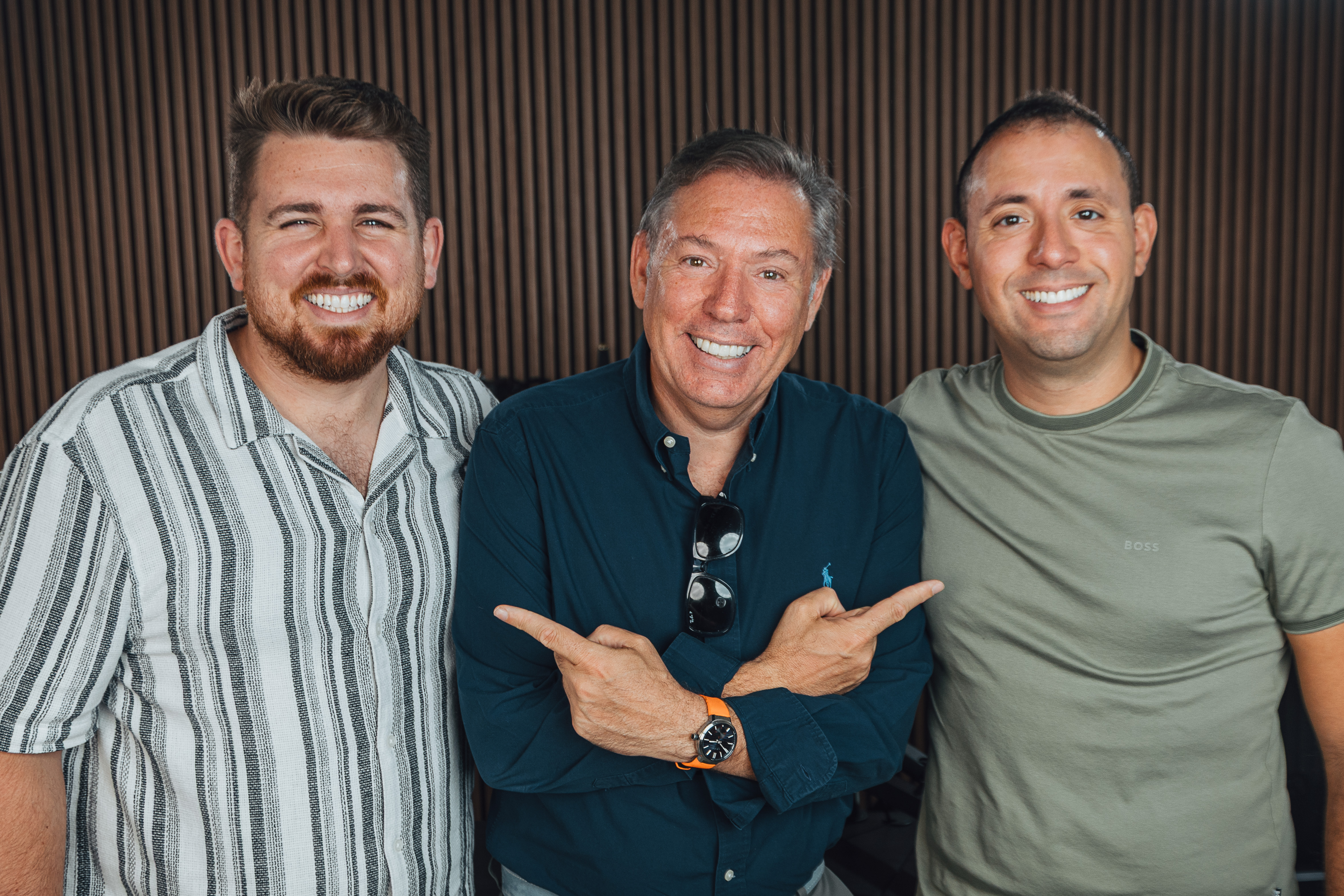

Leave a Reply