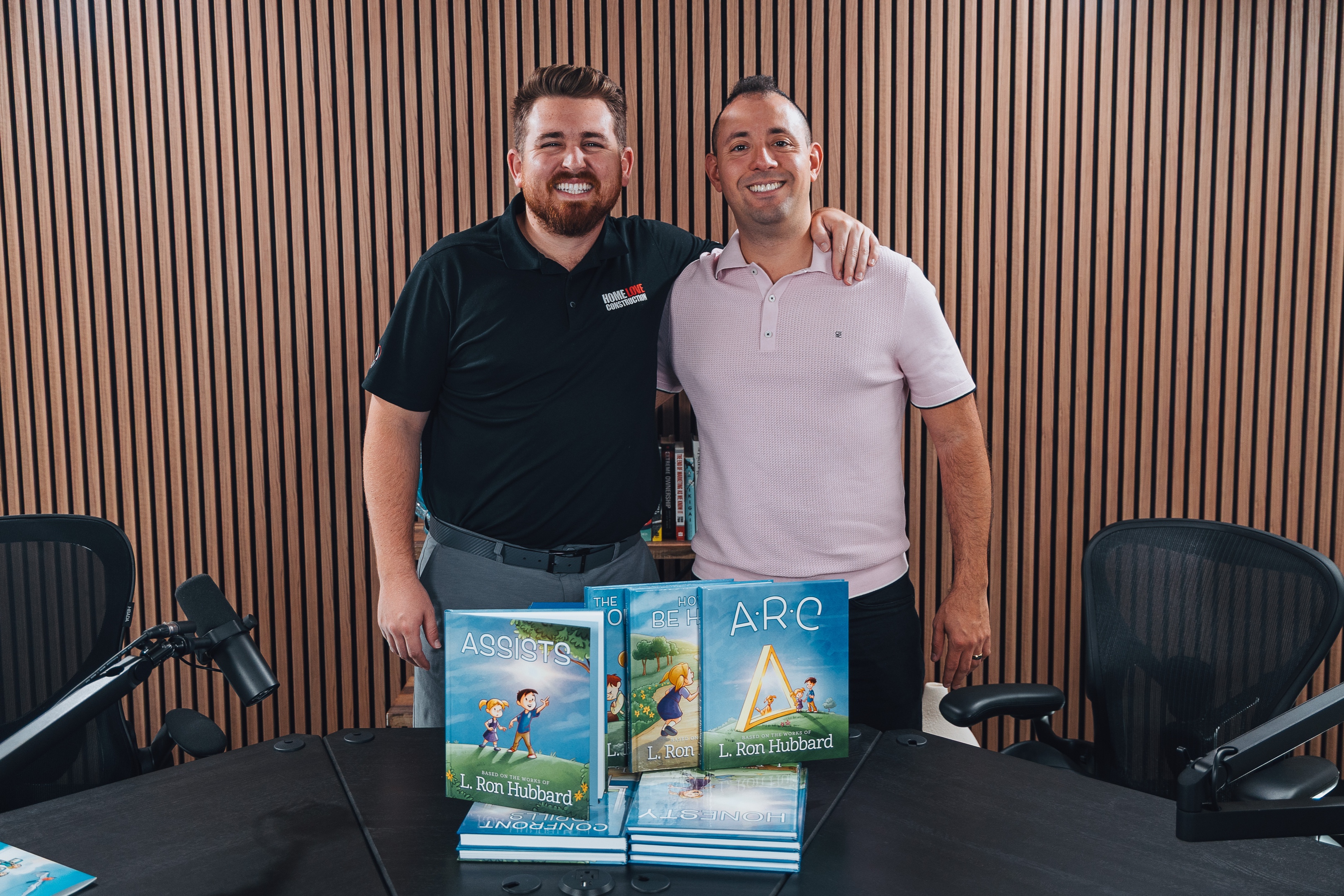
For the first time, a full set of Scientology courses and books designed specifically for children has officially been released. Not one or two concepts. A complete system covering the core ideas, now simplified, illustrated, and made understandable for kids as young as 7.
In this episode, Aaron and Brad break down what makes this release so different and why it could completely change how children learn about life, relationships, and personal responsibility.
We’re not talking about memorization or boring textbooks.
We’re talking about kids who actually want to study. Kids choosing to stay in course for hours. Kids learning how to communicate, handle emotions, take responsibility, and help others in a way that’s simple, practical, and real.
Aaron shares what he’s seen firsthand with his daughter, who is fully immersed in these courses and more excited about learning than ever before. And the biggest question comes up…
The episode dives into key concepts being taught to kids, like communication, honesty, control, responsibility, and understanding others. Not as abstract ideas, but as tools they can actually apply in real life.
This isn’t just about education. It’s about raising a different kind of generation.
If you’re a parent, this conversation will make you rethink what kids are capable of learning and how early it can start.
Link where you can find children’s books: https://bridgepub.com/newgen
Watch the full episode here:
Audio Version:
Apple Podcast:
https://podcasts.apple.com/us/podcast/dont-do-nothing-podcast/id1846609884?i=1000758668556
Text Version
[00:00:00] Aaron: Guys, this is a historic moment of all history, which is the day, the time that the full release of children’s courses covering all major core Scientology ideas. They just came out, depending on when you see this video, it have just come out, right? Right now there’s 10 courses for children, seven and up, and then there’s 10 courses, 10 books for ages 10 and up.
[00:00:30] Aaron: And it says 10 to 100,
[00:00:31] Brad: 10 to 100.
[00:00:32] Aaron: Uh, and I’ve been told I can do this. And, and, and in fact I’ve looked through some of it and there’s some information. He’s
[00:00:37] Brad: between the age of 10 and 100.
[00:00:38] Aaron: I’m, I’m, uh, guys, it, I mean, I will tell you I was there when, the moment that it was announced that it was released.
[00:00:45] Brad: Yeah.
[00:00:46] Aaron: My daughter, who is right now, 11 Luna was literally jumping up and down her seat. Was
[00:00:54] Brad: she? Yeah.
[00:00:55] Aaron: Jumping, like, literally jumping like, yay. I, I mean, I’ve never [00:01:00] seen a person like that. Like from like, Hey, here’s this book. She’s just, she was going just, she was exhilarated.
[00:01:07] Brad: Yeah.
[00:01:08] Aaron: And, and wow. And, you know, uh, at the, uh, at the Fort Harrison, um, where we’re watching, uh, this release, you know, there’s like, sometimes the kids will like watch the main event and sometimes they’re outside hanging out.
[00:01:20] Aaron: You know, they have different activities for children. Mm-hmm. She goes, all the kids who are outside not watching this right now, they’re missing out. They don’t know what’s happening right this moment. Wow. Like, she, she, dude, Luna is so cool. And she told me she wants to be the first kid done with all the courses.
[00:01:36] Aaron: Right. The official one. ’cause they, I guess they, you know, before they were out officially, some children did it. ’cause in the event they talked about these kids with their, you know, they finished it, but like
[00:01:44] Brad: Yeah. There’s pilot.
[00:01:45] Aaron: Yeah. And there’s a pilot. It’s a test and they’re, they’re seeing how it is and make sure the kids, I guess, can understand it or whatnot.
[00:01:50] Brad: Yeah.
[00:01:50] Aaron: But I don’t know that they got the same thing. ’cause I know when, uh, there was, um, when the, the basics came out, the basic books mm-hmm. And lectures. My understanding. Some people that did it, they didn’t [00:02:00] have the full, like, the covers and everything. Mm. They had like, it
[00:02:03] Brad: wasn’t the full
[00:02:03] Aaron: experience. No, no, it wasn’t.
[00:02:04] Aaron: It was kind of like, well, you’re doing this, but you don’t exactly know what’s going, ’cause you know, it’s not released or anything.
[00:02:09] Brad: Yeah.
[00:02:09] Aaron: So I don’t know that anybody actually did this full thing. Mm-hmm. Maybe they did, maybe not. But let’s just say my daughter’s going to be the first one known with all of them,
[00:02:15] Brad: and she’s
[00:02:16] Aaron: on track
[00:02:16] Brad: to be,
[00:02:17] Aaron: she is on track Tob right now
[00:02:18] Brad: by considerable margin.
[00:02:19] Aaron: Yeah. She’s, she, she’s in the front. We’ll know by the time this comes out, we’ll know. I mean, she’ll either she’ll be done or someone, I mean, I don’t know. But, um, I don’t know Brad, like, what I, I’ll tell you just my, my take on this and we’ll open some of these in a second, but
[00:02:34] Brad: Yeah,
[00:02:35] Aaron: my daughter, and we’ve talked about this, like our, our, a lot of children will see their parents, you know, doing Scientology studying, uh, and they’re like, Hey, I wanna come along and I wanna do stuff now, before these came out mm-hmm.
[00:02:50] Aaron: There was probably a handful of courses that you can do, you know, before age of like 12, like that are, uh. There’s not that much.
[00:02:59] Brad: Yeah.
[00:02:59] Aaron: Okay.
[00:02:59] Brad: [00:03:00] Yeah.
[00:03:00] Aaron: And um, so a lot of times they’ll go and they’ll, maybe they’ll finish those pretty fast. ’cause they’re, they’re not, it’s not a lot big in length. And then basically I would be helping her in, in, you know, on study because, uh, it’s kind of adult words.
[00:03:13] Aaron: Mm-hmm. It is not very easy for a child. And so it’s kind of like, okay, work with her a little bit here or there. But since this has come out and she’s there, she’s able to go on her own. Okay. The ratio is like, I mean, it’s like a supervisor helping and it’s like one to maybe three kids or four kids. Wow. I mean, it’s not like really good.
[00:03:31] Aaron: That’s not like a typical classroom where it’s like 20 kids. It’s like you really get a lot of one-on-one help. From what I’ve seen. I’ve gone in there and kind of peaked. I can’t really see exactly. It’s, uh, but like if I, if I’ll come in and check it out, um, they don’t want the parents hanging out there.
[00:03:43] Brad: Yeah, of course. Yeah.
[00:03:44] Aaron: Yeah. Like, like they’re trying to study you studying.
[00:03:46] Brad: Yeah.
[00:03:47] Aaron: But, uh. There’s a, there’s a, it’s a good ratio.
[00:03:51] Brad: Mm-hmm.
[00:03:51] Aaron: And Lona comes outta there and she’s just happy. She’s excited. Yeah. And she, she, she just wants to keep studying.
[00:03:56] Brad: Yeah.
[00:03:56] Aaron: And it’s, it hasn’t been like that for, for everything, you know?
[00:03:59] Brad: You know, what makes me [00:04:00] think of is it’s, it’s kind of like, uh, I just wanna like,
[00:04:02] Aaron: yeah, yeah, yeah.
[00:04:03] Brad: Hold in. I, I like ’em. They’re just like, nice. You know, it’s funny, it reminds me of like, you know, did your parents ask you when you were a kid, like, did you have a good day at school?
[00:04:11] Aaron: Oh, right. Yeah. Yeah.
[00:04:12] Brad: And you’d always be like, yes.
[00:04:13] Brad: Good. When in reality you actually didn’t. Right. You’re like so happy to be gone.
[00:04:17] Aaron: Yeah. Yeah.
[00:04:17] Brad: To not be there, you know, and you’re like, let’s go back the next day. It’s like, kids going, mine was
[00:04:22] Aaron: mine. My mine was like, how was school? I said, good. I mean, that was
[00:04:27] Brad: the typical, so enthusiastic.
[00:04:27] Aaron: Yeah.
[00:04:28] Brad: Yeah. Yeah. You see, like, I, I know, uh, not just Luna, but I actually have a couple friends whose kids are doing these courses Yeah.
[00:04:34] Brad: Right now here in Clearwater. And they’re, they’re, they’re like, these kids just will not stop going to course. Yeah.
[00:04:39] Aaron: Yeah. They, they, they’re
[00:04:40] Brad: like, they don’t wanna do anything else. No,
[00:04:41] no,
[00:04:41] Aaron: no, no.
[00:04:42] Brad: Which is like, they’re going reading books and they don’t wanna do anything else.
[00:04:46] Aaron: Yeah.
[00:04:46] Brad: Where. Like, where else do you even see that on the planet?
[00:04:50] Aaron: I, I have
[00:04:50] Brad: not seen that other than like with fiction books.
[00:04:52] Aaron: Yeah. But even at this age, not really. I mean, actually my daughter, yeah. I mean, some, some kids, yes. I would say yes.
[00:04:57] Brad: Yeah.
[00:04:57] Aaron: At like 11, my daughter will sit there and she can read for a [00:05:00] long time by her own some fiction books.
[00:05:01] Brad: Yeah, yeah.
[00:05:02] Aaron: Um, for sure.
[00:05:04] Aaron: But, uh, yeah, like, uh, a thing to like learn about some, I, I I don’t really see it.
[00:05:08] Brad: Yeah. No, not at all. Not at all. So I, I’m, I’ve been super impressed by what I’ve seen from like, other people’s skits. My, my daughters are a little too young to actually kind of A lot young. A lot young. Yeah. The oldest is like three and a half.
[00:05:22] Brad: But what we’re excited about is, uh, actually I need to pick mine up today. I, I’ve, I’ve had ’em at the bookstore for a couple days now, but I we’re actually excited to just start reading them to her.
[00:05:31] Aaron: Yes.
[00:05:31] Brad: Because, because, good
[00:05:33] Aaron: point.
[00:05:33] Brad: Yeah. She, like, she picks up on stuff like that. If we read her a book, if, if we’re like, if it like take a book that we read to her as a kid.
[00:05:40] Brad: If she and the, uh, the one year-old share a room, if we’re like reading a book to a 1-year-old that she’s read before she will from her bed, just say the next words that are coming up in the book. Oh, wow. As we’re reading the book. So she, she learns what’s in the book super fast.
[00:05:55] Aaron: Wow.
[00:05:55] Brad: So I’m like, oh, she’s gonna do that with these, and she’s gonna be seeing it.
[00:05:58] Brad: Sometimes we’ll go in a room and she’s just sitting there like, [00:06:00] just like looking at, at the books and the thing. So you want actually like, yeah, let’s go, go.
[00:06:06] Aaron: We can,
[00:06:06] Brad: we can share something. The, the interesting thing about these is they’re completely illustrated. That’s actually what I love. So, one, one thing
[00:06:13] Aaron: there’s about, in, in these 10, in this 10, or I think in the, in the 20 books total, there’s something like 1,900 illustrations.
[00:06:19] Brad: Yeah. Roughly. Yeah. You can, you can just see in the video. It’s literally like, it’s, every page has an illustration. Every single one. Every single one.
[00:06:25] Aaron: Is that right? I mean, I’m gonna look, I’m gonna look around. See, is there a single
[00:06:27] Brad: page? I didn’t, I didn’t see a single one that doesn’t have an illustration.
[00:06:29] Brad: It doesn’t mean there’s not, but I didn’t, I didn’t see a single one.
[00:06:32] Aaron: Wow.
[00:06:32] Brad: I saw illustrations without words, but I didn’t see any words without illustrations.
[00:06:35] Aaron: Wow.
[00:06:36] Brad: Which is like, if you think about. Helping a kid to learn there. Actually, you know what’s funny? My, my wife, uh, would always say, when we first got to that got together, she would say something about like, chapter books, Uhhuh.
[00:06:50] Brad: I’m What do you mean? A chapter book? And she’s like, well, it’s, it’s not a picture book. She’s like, there’s picture books, which are for kids. Yeah. And then there’s chapter books, which are for older kids or adults. Yeah. Yeah. She’s like a, you know, when you go [00:07:00] from reading picture books to chapter books? And I was like, well, I never,
[00:07:03] Aaron: you
[00:07:03] Brad: didn’t make, never this connection had a station.
[00:07:04] Aaron: Yeah. A chapter book. That’s the, that’s the,
[00:07:07] Brad: but yeah. But usually it’s like, the stuff that’s in little kids’ books is not, it’s like the bird walked down the tree.
[00:07:13] Aaron: Mm-hmm.
[00:07:14] Brad: The dog ate the bone. It’s like, it’s not useful data.
[00:07:18] Aaron: Well,
[00:07:19] Brad: okay. Wait.
[00:07:19] Aaron: You’re packing in. Wait, wait.
[00:07:20] Brad: The Secrets of the Universe.
[00:07:20] Aaron: Wait, wait, wait.
[00:07:21] Aaron: Yes, that’s true. That’s true. Into
[00:07:22] Brad: kids’ books.
[00:07:23] Aaron: You’re right. So let’s go into this, however, I wanna just go back a second.
[00:07:26] Brad: Okay. Yeah, yeah. Sorry.
[00:07:29] Aaron: In your house.
[00:07:30] Brad: Yeah.
[00:07:31] Aaron: Do you have the fox in socks? By Dr. Seuss. Uh
[00:07:39] Brad: hmm.
[00:07:40] Aaron: You need to get this book.
[00:07:42] Brad: I mean, we, bro, we have many Dr. Seuss books.
[00:07:44] Aaron: Okay. No, but the Foxton socks
[00:07:45] Brad: Yeah.
[00:07:46] Brad: Specifically
[00:07:47] Aaron: is the next level.
[00:07:48] Brad: Yeah.
[00:07:48] Aaron: It is such a fantastic book. I have so much fun with this book. And uh, and I have to say, one thing I love about all kids, like kid, this, this is, these are children’s books. They [00:08:00] talk about something that’s so profound.
[00:08:02] Brad: Mm-hmm.
[00:08:03] Aaron: I also think some of these, Dr. Se, but I know it like, is this what word topic today?
[00:08:06] Aaron: Do I just, I feel like I have to talk about it.
[00:08:07] Brad: Yeah. I did. It’s Kid, it’s kids books is
[00:08:09] Aaron: a topic because I love it. And it teaches something that life doesn’t have to be so serious.
[00:08:16] Brad: Mm.
[00:08:16] Aaron: Life can be fun. You can joke around, you can laugh.
[00:08:19] Brad: Mm-hmm.
[00:08:20] Aaron: You can have fun. And it’s funny ’cause like chapter books, like they, they, if you just, I remember being a kid, like, look, wow.
[00:08:26] Aaron: They, they look kind of boring. Yeah. And they aren’t. Once you get into it and you can understand they’re not, but, but it kind of gives like the. I don’t even think of like the Library of Congress and you’re like, dude, you feel like going to sleep. Like
[00:08:36] Brad: mm-hmm.
[00:08:37] Aaron: So many books and dustiness and like, oh,
[00:08:39] Brad: I think of National Treasure.
[00:08:40] Brad: Personally.
[00:08:41] Aaron: National Treasure. Okay. So
[00:08:42] Brad: sorry.
[00:08:43] Aaron: So, so I, I just, I like, I love, I love Fox and Socks Suit. You have to get the, so anybody Fox and Socks. Highly Rended. So now let’s move on to, to to to this because I think favorite is Think all children books are incredible. I think reading,
[00:08:55] Brad: are you My Mother?
[00:08:56] Aaron: I love that one.
[00:08:57] Brad: Yeah. Yeah,
[00:08:57] Aaron: that’s great. It’s great. But n doesn’t even [00:09:00] come close to Box, but anyway. Okay. Okay. So, um, let’s, why don’t we like, I, I’ll first let’s just look at what these are. So there’s this little like, uh, parents Guide to Scientology courses. Um, um,
[00:09:12] Brad: now one, there’s, there’s the books. Like what, what we’re, what you’re Seeing us Hold is the actual books.
[00:09:18] Brad: There are courses that correspond to each of these books.
[00:09:23] Aaron: That’s right.
[00:09:23] Brad: And so, like Luna, his daughter, that’s what she’s doing in the course room is she has the book and then she has a little course pack that goes with it, which is. I assume it’s little like you do like little sketches, little essays, like
[00:09:34] Aaron: it’s, it’s amazing.
[00:09:34] Aaron: It’s, it’s an amazing, yeah. And, and they have fun with the kids, so Yeah. So you can’t, the, uh, there’s like little, they practice things, right? Yeah. So like this, this, this book is Oh, called They Drill too? Yeah. Oh yeah. Oh, oh, yeah. That’s, so this is a RC guys, and if you’ve been watching this show at all, you know, a RC is a affinity reality, communication.
[00:09:50] Aaron: And like, here it is Affinity. Affinity is liking someone or something, and there’s this dog licking at this guy. Like, oh my God, he’s having a blast. Right? Look at that affinity. This is incredible. Right? [00:10:00] So that’s Affinity, right? And we have, I, I’m looking through this thing, but here’s, here’s reality and there’s multiple pages.
[00:10:06] Brad: Yeah.
[00:10:06] Aaron: Wow. This is reality means real things around you. Boom. There it is.
[00:10:10] Brad: Boys boom. Okay. What’s, and you know, what’s, what’s real to a kid? The room. Their toys. The
[00:10:14] Aaron: toys, that’s right.
[00:10:15] Brad: And the goldfish.
[00:10:16] Aaron: Then the fish, the chair. That’s amazing. And then we have communication. Mm. Boom. Communication is two people giving and receiving ideas between each other.
[00:10:26] Aaron: You are receiving an idea. Thank you. If you put a comment, I will receive an idea. Please
[00:10:31] Brad: leave
[00:10:31] Aaron: a comment. Leave a comment. Okay. So, uh,
[00:10:33] Brad: you know, likes are also communication.
[00:10:35] Aaron: That’s true as well. They communicate an idea. Yeah. We also see it. That’s true. So that’s a RC, right? Wow. This is, I mean, this is cool.
[00:10:41] Aaron: It is very cool. And they’re, the characters still the same. And then there’s a RC or they form a triangle, right? There we go. Mm-hmm.
[00:10:47] Brad: How
[00:10:48] Aaron: does it work?
[00:10:49] Brad: Ah, so good.
[00:10:50] Aaron: How does it work? Wow. I mean, look, you’re on page 66. You’ve gone through a bunch of pictures.
[00:10:54] Brad: Yeah.
[00:10:54] Aaron: But it says here, if one point of the a c triangle goes lower, the other two points will also go lower.
[00:10:58] Brad: Yeah.
[00:10:59] Aaron: So this is the [00:11:00] major concept.
[00:11:00] Brad: Yeah. Yes.
[00:11:01] Aaron: Um, this is a major concept. Now, Brad, have you, have you, I’ve tried to do this before. Maybe you have two.
[00:11:09] Brad: Yeah.
[00:11:12] Aaron: This a RC triangle.
[00:11:13] Brad: Mm-hmm.
[00:11:13] Aaron: I’ve tried to be like, let me find a scenario in life where it doesn’t work this way.
[00:11:19] Brad: Mm.
[00:11:19] Aaron: I’ve tried, I don’t know, I dunno if you guys have tried.
[00:11:21] Aaron: I’m like, let me see a scenario where I can maybe reduce my communication. Reality in Fin Won. Mm. And I’ve worked it on, I’ve done examples, I’ve written it. I’ve, I’ve, I’ve like, tried to demonstrate it. I’ve
[00:11:34] Brad: mm-hmm.
[00:11:34] Aaron: And I, and I, I can’t, can’t get to one.
[00:11:38] Brad: Yeah.
[00:11:39] Aaron: And I, and I, and I recommend I try this because I, I, this is, this is the way that I think I go.
[00:11:43] Aaron: Good. If this thing is like that, let me try to find the exception.
[00:11:47] Brad: Yeah.
[00:11:47] Aaron: I was always obsessed with exceptions in school. Yeah. Or like, oh, there’s an exception. And they’re like, yes, there’s an exception. They’re like, I, before e they’re random rules. And I’m like,
[00:11:55] Brad: bro, are you, are you a loophole guy?
[00:11:58] Aaron: Just exceptions [00:12:00] loophole, I mean, loophole a little bit sometimes.
[00:12:01] Brad: Yeah.
[00:12:02] Aaron: Depends. Listen, I, I love, I love reading like, legal stuff and being like, what? This something’s wrong here. And then I go and I’ll boom. Like somehow I I I, in another life I could have been a lawyer.
[00:12:11] Brad: Yeah,
[00:12:11] Aaron: same.
[00:12:12] Brad: Me too.
[00:12:12] Aaron: You
[00:12:12] know,
[00:12:12] Brad: it’s like I’m a big loophole guy,
[00:12:13] Aaron: you know,
[00:12:14] Brad: dude, I’m a big loophole.
[00:12:14] Aaron: It’s like, what’s happening here?
[00:12:15] Aaron: What’s it? And then, so, so I’ve tried and, and I re I recommend you guys try like, okay, so there’s easy examples, right? Like where if one goes higher, the other one goes higher.
[00:12:25] Brad: Yep.
[00:12:25] Aaron: Right? So there’s another one. Um, if one point of the RC triangle is higher, the other two points will go higher. Very simple.
[00:12:30] Brad: Mm-hmm.
[00:12:31] Aaron: And there’s a picture. Um, so a little, little girl says hi. It’s the little boy. They go, they see each other. They’re having fun. The dog is coming, and they good. So they’re, they’re happier. Very simple.
[00:12:43] Brad: Mm-hmm.
[00:12:43] Aaron: Okay. Very simple. And
[00:12:44] Brad: how to use,
[00:12:45] Aaron: how to use it. I wonder how does, mm-hmm. Oh, oh, you’re good.
[00:12:51] Aaron: So, so anyway, this is on here. I, I, I haven’t read this thing. I really wanna read it, but I, I feel like we need to be doing a podcast.
[00:12:56] Brad: Yeah. So it’s
[00:12:58] okay.
[00:12:58] Aaron: So, um, [00:13:00] I don’t know. You never tried to do that before to see, Hey, is it, is there a way, like, is there a, is there a way that this, like an example, like try to think of right now, right now, on the fly, try to think of the case if you increase communication
[00:13:14] Brad: mm-hmm.
[00:13:15] Aaron: There wouldn’t be more understanding, more affinity, more reality.
[00:13:23] Brad: Well, the first thing that comes to mind is if it’s like. Very, uh, very destructive communication.
[00:13:30] Aaron: Mm.
[00:13:30] Brad: Like, you just start, like just, you go from zero to like, you just start yelling, you just start cursing at
[00:13:34] Aaron: someone. Yeah. Yeah.
[00:13:36] Brad: But the, the thing about it is you start cursing at someone. They actually, a lot of times what I’ve observed this is so, so, man, this is crazy.
[00:13:47] Brad: They actually will usually get interested in what you’re doing.
[00:13:50] Aaron: Mm.
[00:13:50] Brad: They like come towards you.
[00:13:52] Aaron: Mm-hmm.
[00:13:53] Brad: That’s what like what I’ve observed. Mm-hmm. Because I’ve seen people do this like on the street, you, like, you see somebody start yelling and cursing the other person stops, turns around [00:14:00] and comes back to them.
[00:14:00] Aaron: That’s true.
[00:14:01] Brad: The affinity, just affinity is a willingness to occupy the same space.
[00:14:05] Aaron: Right? Yep.
[00:14:05] Brad: Also liking. Right. And they’re, they’re real to them. All of a sudden you get, if you wanna real, real to somebody. Yeah. Okay. So that’s, that’s that. I thought when I first said it, I was like, oh, that actually might bring affinity down.
[00:14:17] Brad: But when I’m thinking about actually seeing it,
[00:14:19] Aaron: sometimes people, they, they wanna fight, they wanna keep fighting.
[00:14:21] Brad: Yeah, that’s right.
[00:14:22] Aaron: They wanna get do it.
[00:14:23] Brad: Yeah. That’s right. Mm-hmm. Yeah. Yeah. They want, they, yeah. Um, man, you know what’s funny is, uh, that, that made me think about the fact that Scientology’s about looking right?
[00:14:35] Brad: Yeah. It’s not about thinkingness.
[00:14:37] Aaron: Yeah.
[00:14:37] Brad: Like, you can think about this stuff.
[00:14:39] Aaron: Mm-hmm.
[00:14:39] Brad: But the better thing to do is just go look.
[00:14:42] Aaron: Sure.
[00:14:42] Brad: And that’s actually what I really like about these books, is they give like something to look at.
[00:14:48] Aaron: Yeah.
[00:14:48] Brad: You know?
[00:14:48] Aaron: That’s true.
[00:14:49] Brad: Yeah.
[00:14:49] Aaron: Very true. So, okay, good. So that’s Air Z Triangle.
[00:14:52] Aaron: This is key in,
[00:14:53] Brad: oh, so I, so I, so that was a fail for me. I couldn’t go.
[00:14:55] Aaron: I, I’ve done, I tried, I spent I think 30 minutes at least minimum at one time, like really [00:15:00] thinking. And I’m like, what? And I go like, well, here’s another one that I thought of, like going down. So I go, you know what? Some person you get into a fight with, a lot of times you’re like, you know what, I’ll never talk to him again.
[00:15:12] Brad: Yeah.
[00:15:12] Aaron: Or like something that might happen. Like, I will, I’m this person. You’ve heard it, you’re dead to me. Right.
[00:15:16] Brad: Yeah.
[00:15:17] Aaron: They do it, and then they will, let’s say they do stop talking to each other. Mm-hmm. They go like, ah, well they’re chilled out. They’re calm. And so they like, they’re gonna like each other more, or they might like pull off.
[00:15:29] Aaron: But then you go, listen, if you don’t actually communicate with that person again, you’ll be fully forgotten. Yeah. You will forget that person.
[00:15:35] Brad: That’s right. Completely
[00:15:36] Aaron: and full forgetfulness. Unreal. And you don’t even remember like, what was that person gone?
[00:15:41] Brad: Yeah.
[00:15:41] Aaron: Like it doesn’t even, there’s no communication where you don’t even have a memory.
[00:15:44] Brad: Mm-hmm.
[00:15:45] Aaron: And so you think like anger is higher than no memory.
[00:15:49] Brad: Mm-hmm.
[00:15:49] Aaron: You see? Mm-hmm. If you’ve had a fight with someone and you actually know, you know more about them than if you literally didn’t even know they existed.
[00:15:55] Brad: That’s right.
[00:15:55] Aaron: Which would be closer to, uh, non existing or, or an apathy. Right. That we kind of, it actually [00:16:00] explains apathy in the other one over here.
[00:16:01] Brad: Well, you’re done.
[00:16:01] Aaron: Yeah. So, so like, so the thing is if you’re like, I’ll just not talk to him and then things will cool up, but like, no. There’s zero understanding and you literally go into full forgetfulness. Mm. So how so, how so, so no communication about that
[00:16:15] Brad: concept?
[00:16:15] Aaron: Yeah. What’s
[00:16:15] Brad: that? Is a RC is between two people.
[00:16:18] Aaron: Yes.
[00:16:18] Brad: Like you’re this, and so I, I deliver seminars, which you know about Yes, yes. About the a RC triangle.
[00:16:24] Aaron: Yeah, yeah. Yeah.
[00:16:25] Brad: And one thing that people confuses is like, yeah, like a RCI feel better. And it’s like, but it has nothing to do with the person. Mm-hmm. It’s like, I, I go away from them and I feel better.
[00:16:33] Brad: Mm-hmm. And it’s like, mm-hmm.
[00:16:34] Aaron: Mm-hmm.
[00:16:34] Brad: Okay. But that’s not, a RC is between two people.
[00:16:37] Aaron: Correct.
[00:16:38] Brad: It’s between, it’s about personal relations.
[00:16:41] Aaron: That’s correct.
[00:16:41] Brad: It’s not about how you feel.
[00:16:42] Aaron: That’s
[00:16:42] Brad: right. It, it plays into,
[00:16:43] Aaron: and it is, I mean, it, it can be, but it’s of course a, you can’t, you could communicate yourself, I guess You can talk to yourself fine.
[00:16:49] Brad: Yeah,
[00:16:49] Aaron: totally.
[00:16:49] Brad: But
[00:16:50] Aaron: typically communication with some other person, exchanging ideas. That was the definition we just looked at.
[00:16:53] Brad: Yep.
[00:16:53] Aaron: Uh, so yeah. Correct. It’s with, with somebody.
[00:16:56] Brad: Mm-hmm.
[00:16:57] Aaron: So you might be relaxed and not [00:17:00] angry, but then you might get angry at someone else. I mean, like, it may,
[00:17:03] Brad: yeah. Yeah.
[00:17:04] Aaron: So, um.
[00:17:05] Brad: Yeah.
[00:17:05] Brad: Like if, like in your exact example, if you go away from somebody and you chill out, that doesn’t mean your a RC with the person increased,
[00:17:13] Aaron: correct? Not at all.
[00:17:14] Brad: And if you stop thinking about them and they become unreal to you.
[00:17:17] Aaron: Yeah.
[00:17:18] Brad: The a r C’s going down shrinking to nothing.
[00:17:20] Aaron: 100%.
[00:17:21] Brad: Yeah.
[00:17:22] Aaron: So, so here’s a trick, right?
[00:17:24] Aaron: This is a, this is the how to make it bigger. Okay? If, if the, if the ERC is going lower, you’re having a problem with somebody, it says here, find something you like about that person. Something you have mm-hmm. About that person you have affinity for. Communicate what you like about the person and this will make you really higher.
[00:17:39] Aaron: So guys,
[00:17:40] Brad: that’s right.
[00:17:40] Aaron: This is, this is, this is a trick. This is like a tool. Find something you like about somebody. That’s a lot of times, you know, the criticism, the fights and stuff.
[00:17:49] Brad: Mm-hmm.
[00:17:49] Aaron: You guys talk about things that you don’t agree in.
[00:17:51] Brad: Mm-hmm.
[00:17:51] Aaron: Right? If you don’t agree in politics, don’t talk about politics.
[00:17:54] Aaron: You don’t agree about. Don’t talk about that.
[00:17:55] Brad: Yeah.
[00:17:55] Aaron: Talk about the thing you do agree in.
[00:17:57] Brad: Yeah.
[00:17:57] Aaron: You do. You both like this food. Talk about the food. You both love [00:18:00] Florida. Talk about Florida. And, and, and and what’s real to both of you? Communicate. And then you’ll have a better relationship. So this is the thing, and, and I’ve seen this like, uh, sometimes I’ll say like, agree to disagree or something, or I dunno, but don’t talk about the things that you really don’t agree with somebody.
[00:18:13] Brad: Yeah.
[00:18:13] Aaron: Or you really don’t like about them. Don’t, don’t be like, and, and you know what, that’s the definition of like nagging,
[00:18:18] Brad: unless you wanna mess up your life. Well, there do it. There
[00:18:21] Aaron: you go.
[00:18:21] Brad: This, this, these, these books in Scientology do have the base assumption that if someone is looking at them, they want to improve their life.
[00:18:26] Aaron: That’s true. That’s true.
[00:18:27] Brad: Yeah. That is a base assumption.
[00:18:28] Aaron: Yep. You could, if you, if you really want to have a terrible relationship, never talk about something that you like about the person. Yeah. Only things you don’t like about them. That’s right. That’s the opposite. You’re gonna make everything worse.
[00:18:35] Brad: That’s right.
[00:18:36] Aaron: Um, and what’s interesting about that too, about the, now back to this thing that we’re trying to like break it off, if you communication is the ideas going back and forth.
[00:18:45] Brad: Yeah.
[00:18:46] Aaron: So if you’re continually getting the idea that someone else is bad, your’re, affinity so low, but your idea will not reach them.
[00:18:52] Aaron: This the, the reality like communication. Sorry, your idea doesn’t reach them. They have a different idea. And they [00:19:00] can bring themselves down and you can, anyway, whatever. Well, mm-hmm. I don’t wanna get dark here saying, guys, this has meant to do a, a good thing. So, so, so anyway, um, that’s the first one.
[00:19:09] Brad: Yeah.
[00:19:10] Aaron: Core, core idea in Scientology. Uh, this is for ages seven and up, so let’s go to the next one.
[00:19:14] Brad: Okay. I have a question before we go to the next one. So, since Luna has done most of them at this
[00:19:17] Aaron: Oh, yeah, yeah, yeah.
[00:19:18] Brad: She’s done, what, six
[00:19:19] Aaron: more than, yeah. Six, at least. Yeah. She, I think she is on six or finished six.
[00:19:24] Aaron: Yeah.
[00:19:25] Brad: So, and what she’s working on seven today?
[00:19:27] Aaron: Yeah, I think so. Or maybe six. I’m not, I’m not sure which,
[00:19:30] Brad: which one is her favorite?
[00:19:32] Aaron: She said her favorite was called from, from the 11-year-old. I’ll say. I’ll say this one. Her favorite one, and I’ll put it up. I don’t have that one here. Here. ’cause i’s not this smaller one.
[00:19:41] Aaron: It’s, it’s this, it’s called the Eight Parts of Life. Oh. And this is her favorite so far. And another one is called the Eight Dynamics, as we actually call it Dynamics. So, yeah. But at the seven Plus, they don’t call it dynamics, they just say the parts. Um, this is her favorite so far.
[00:19:52] Brad: Yeah.
[00:19:54] Aaron: So this is this, this concept why it’s her favorite.
[00:19:56] Aaron: I didn’t really discuss it in depth with her.
[00:19:58] Brad: Mm.
[00:19:59] Aaron: Um, [00:20:00] but I’ll tell you why I think this is so important. You wanna hear my, my, my perspective.
[00:20:04] Brad: I do
[00:20:08] Aaron: thi this right here, a RC for example, is, is very, it’s a simple idea and it can change your relationships with others, right? Mm-hmm. But this eight parts of life, mm-hmm. In a way, it’s so shattering to past ideas. You really understand this and you fully can grasp the concept. You cannot succeed all on your own.
[00:20:39] Aaron: You cannot be good if your group is bad, if you don’t have a good relationship with your family. If you’re not in any groups, if you’re isolated and you’re living outta the mountain all by yourself, there’s no way to have a good life. Like, yeah. That’s not what’s taught, I don’t know. Not in movies, not in stuff.
[00:20:59] Aaron: Like, [00:21:00] okay, this person, you know, they go live by themselves. In
[00:21:03] Brad: fact, quite the opposite is taught It’s
[00:21:04] Aaron: the opposite. Right.
[00:21:05] Brad: It’s like, go buy a ranch in Utah.
[00:21:07] Aaron: Exactly.
[00:21:07] Brad: Be away from everyone and live by yourself.
[00:21:09] Aaron: Yes. And and that idea
[00:21:10] Brad: that’s like the goal.
[00:21:11] Aaron: Yes. Mm-hmm. The bunker, the blah, the whatever, like
[00:21:14] Brad: mm-hmm.
[00:21:14] Aaron: No.
[00:21:15] Brad: Can I see that?
[00:21:16] Aaron: Yeah. See this? Keep, keep going. So, so I, for me, when I, when I, when I got this idea and I really grasped, and I think it, it is gonna talk about a lot about it in there, right? Uh, by the way, if you wanna get these books, you are gonna go to bridge pub.com/new Gen for New Generation, NEW, gn.
[00:21:34] Aaron: The
[00:21:34] Brad: guy
[00:21:34] Aaron: with links. Richard comes Cash’s on the box. There’s another one.
[00:21:37] Brad: He didn’t even have to look that up. It’s not like we cut and he looked it up. He didn’t look it up before the episode. He just knew it.
[00:21:42] Aaron: It’s, that’s in the us If you’re in Europe, you have to check new air publications. Uh, and I don’t know what the link for that one, and I’m not gonna look it up since he told me not to look it up.
[00:21:49] Aaron: So it’s fine. It’s all good. So, so what, what I wanna discuss about this idea is like, for me personally, when I, when I got that concept and I go like, [00:22:00] man, in order for me to do well, I need to improve my relationship with my family mm-hmm. With my groups. Mm-hmm. Funny enough, in my school, right? Mm-hmm. With my teachers, and I know we’ve talked about this and homeschool, and I really believe in homeschool for sure.
[00:22:23] Brad: Yeah.
[00:22:23] Aaron: But if you’re in school, that’s your part of your group. Yeah. Like, uh, so, so don’t, you know, absolutely don’t fight and don’t run away from it. You need to actually improve it and become better at it. Or your church, your community, your church. Mm-hmm. If you work somewhere, your employer, your business, your coworkers.
[00:22:36] Brad: Yeah.
[00:22:37] Aaron: Mankind. This idea that like, you can do something and obviously this podcast is called Don’t Do Nothing because at Oh man, I just, I, I’m, I’m just re reliving a moment when I really realize that you can do something. Because at every moment, I’ll, I’ll tell you one of the biggest, and we, people don’t talk about it a lot because it’s, [00:23:00] it is the biggest danger that exists, period on this planet right now.
[00:23:04] Aaron: Worse than any type of drug.
[00:23:06] Brad: Mm-hmm.
[00:23:07] Aaron: Worse than anything you can think of.
[00:23:09] Brad: Yep.
[00:23:10] Aaron: The atomic bum.
[00:23:11] Brad: Yep.
[00:23:12] Aaron: Uh, in some, in some combination of actions, there are some individuals who could destroy all life on this planet. Yeah. That is a T fact. Yeah. And you might look at that and say, I can’t do anything. And I remember having that thought and, and, and, and I’m listening to our hub and he’s talking about you can always do something.
[00:23:34] Aaron: Mm-hmm. And I remember thinking, well, what if you just make a group? What if you just have a podcast and you just mention guys, there’s no need to ever create any weapon that destroys mass life.
[00:23:45] Brad: Mm-hmm.
[00:23:45] Aaron: That there’s no need to do it. I don’t believe in it. War is is not a solution to anything.
[00:23:51] Brad: Yeah.
[00:23:52] Aaron: But if you join a group that just talks about having peace, what if you mention, Hey, go watch a documentary called Without a Shot [00:24:00] Fired.
[00:24:00] Aaron: Uh, it’s about the Costa Rica, uh, president where he dismantled the military and his country’s totally fine. And see that guy. He’s a Noble, noble Peace Prize winner. Um, I think it is. Anyway. Oh
[00:24:13] Brad: wow.
[00:24:14] Aaron: Amazing documentary.
[00:24:15] Brad: Yeah.
[00:24:15] Aaron: Talks about, anyway, so sorry. Eight parts of Life. Okay. You can improve mankind. Can put Yeah.
[00:24:23] Aaron: Nuclear weapons
[00:24:24] Brad: are not any of the eight parts of life.
[00:24:26] Aaron: No. A a nuclear weapon is a, is a total destruction. It is, it is a thing that can destroy everything.
[00:24:30] Brad: Mm-hmm.
[00:24:30] Aaron: Can destroy absolutely everything. Right. Nuclear weapons. And so you look at that and you go, okay, there’s no need to ever make one. Right. What if you write a book that talks about that and how to solve it without using nuclear weapons.
[00:24:43] Aaron: Weapons? Um, A Harper did do that.
[00:24:45] Brad: Yeah.
[00:24:46] Aaron: Did you read Battlefield Earth?
[00:24:47] Brad: Yeah.
[00:24:49] Aaron: So there’s a, at, at the end there’s a solution. And the thing, and it’s
[00:24:52] Brad: to be fair, he did use nuclear weapons in Battlefield Earth.
[00:24:55] Aaron: Well, but, but hold on.
[00:24:56] Brad: But they also kind of effed up the whole planet.
[00:24:58] Aaron: Well, but okay. Anyway, so what I’m [00:25:00] just saying, at the end of the, at the very end
[00:25:01] Brad: Yeah.
[00:25:02] Aaron: If you see the, the total conclusion of the thing
[00:25:04] Brad: Yeah, yeah, yeah.
[00:25:04] Aaron: The ultimate solution included not using them.
[00:25:08] Brad: That’s right.
[00:25:08] Aaron: Right.
[00:25:09] Brad: Yeah.
[00:25:10] Aaron: Anyway, that’s just a small one thing you can do. Write a story about it.
[00:25:12] Brad: Yeah.
[00:25:12] Aaron: Talk about it. Like there’s something you can always do. And so, and, and when you look at you and improving the entire society that you live in mm-hmm.
[00:25:20] Aaron: It’s a role that not, not only do you have. But until you are involved in it, you’re not living your full potential.
[00:25:26] Brad: Yeah.
[00:25:27] Aaron: And that little concept, I mean, uh, is, is is big. I dunno. And even animals, you, and you can see like all living things.
[00:25:35] Brad: Mm-hmm.
[00:25:36] Aaron: Every living thing matters, you know? So eight parts of life guys a dynamics, that’s my daughter’s favorite.
[00:25:42] Aaron: So I don’t know if I, is that, are we, are we good on that? Did it? Yeah.
[00:25:44] Brad: Yeah. A hundred percent.
[00:25:45] Aaron: Okay. Good.
[00:25:45] Brad: Good. Yeah, dude, you know, you know which one, which one of these jumped out at me is the assists one.
[00:25:51] Aaron: Ooh.
[00:25:52] Brad: Figure
[00:25:53] Aaron: that one.
[00:25:53] Brad: So, so assists
[00:25:54] Aaron: right here.
[00:25:55] Brad: You have it over there. So assist. Maybe I can just give a quick definition of assists.
[00:25:58] Aaron: Yeah. Let’s see what is, so what it [00:26:00] says,
[00:26:00] Brad: see what it,
[00:26:01] Aaron: what this,
[00:26:01] Brad: oh, here we go. So it says assist Mean. Assist means help and assist is something you do to help another person or yourself. An cyst can be done when a person has pain or is upset.
[00:26:16] Aaron: Mm.
[00:26:17] Brad: So we, my wife and I use cyst with our kids all the time.
[00:26:21] Aaron: Yep.
[00:26:22] Brad: Like on a gna MA’s daily basis. ’cause kids like hurt themselves constantly. Like it’s just a reality. It’s so true. It’s, it’s
[00:26:29] Aaron: so true. They
[00:26:29] Brad: constantly stub their toe, they cut themselves on something, they fall, they hit their head, whatever. As
[00:26:34] Aaron: they get older, you’ll see they, they sometimes hurt each other.
[00:26:37] Brad: That has started to occur with this one. Uh, they hurt each other, whatever. Sometimes the little one hurts The big one. The big one hurts the little one. It’s all, it’s, it’s crazy. So cysts are, you know, there there’s, there’s, there’s something simple like a, a touch assist where you can help someone handle, touch assist is
[00:26:53] Aaron: probably not in that one.
[00:26:54] Aaron: It’s in this, it’s
[00:26:55] Brad: a
[00:26:55] Aaron: 10 plus. I have
[00:26:55] Brad: it over there. It’s in the 10 plus.
[00:26:56] Aaron: Yeah. Yeah.
[00:26:57] Brad: Oh. But there’s things like, anyways, I, I won’t, I won’t get into the [00:27:00] specific ones ’cause I wanna, I wanna, you should actually look it up. If you, if you don’t know what a assists are, you should actually get this book. Also, it’s like,
[00:27:07] Aaron: and if you’re not, if you’re not gonna buy the book, dude, you can go to the website scientology.org/assists.
[00:27:12] Aaron: Okay. Just letting you know. You can check it out. Link, man. Yeah, yeah. It’s in there. And you have the full video, which talks about both, all, all those assists.
[00:27:17] Brad: Yeah. So the, the reason I love this, and Luna’s already studied this one. Right? I thought you mentioned it earlier. I think
[00:27:22] Aaron: she’s either on it or done with it.
[00:27:24] Brad: She had fun with it. Yeah. Or she’s, she was having fun
[00:27:26] Aaron: with it. I have to see when I was there. So last night she was starting it.
[00:27:30] Brad: Yeah.
[00:27:31] Aaron: And so as of, you know, she’s probably in the middle of it right now.
[00:27:33] Brad: Yeah. That’s awesome. So, because we do assist so much with our kids, like, you know, one, one we do a lot is a, is a locational
[00:27:41] Aaron: Yes.
[00:27:42] Brad: That’s
[00:27:42] Aaron: in there.
[00:27:42] Brad: Just gets a person just back into, into the space, into present time. You just do it by looking at stuff, just directing their attention to things. It’s super simple. So we’ve done that with our kids since they were babies. Mm-hmm. You can anyways, so, uh, our kids will try to give each other [00:28:00] assists.
[00:28:00] Aaron: Yeah. Yeah.
[00:28:01] Brad: Without us being around. We’ll walk. And the three-year-old will be pointing at stuff and telling the baby to look at it.
[00:28:07] Aaron: Yeah, yeah, yeah.
[00:28:08] Brad: You know, and sometimes the baby will even be doing it. She’ll see the older one fall down and she’ll start pointing at things. So like kids, one thing that I know about kids is they love to help.
[00:28:20] Aaron: That’s true.
[00:28:20] Brad: They live, they live to help. Dude. They’re, they’re like, you know, it’s so funny. Oh, one time I was, I was looking at this, I was, I was doing some counseling at the church and I was looking at, um, there’s, there’s this precept about, uh, anyway, there, there’s a book called The Way to Happiness.
[00:28:37] Brad: There’s one of the precepts in it is about, oh wait. Oh, wow. Okay. So here’s the kid’s version of that book. Lemme see if there’s a, I think there’s a glossary.
[00:28:46] Aaron: Uh, the, the 10 plus one is called 21 Steps to Happiness.
[00:28:50] Brad: Yeah.
[00:28:50] Aaron: This one, I haven’t looked at. This one. I, it says How to be happy.
[00:28:52] Brad: This is a beefy How
[00:28:53] Aaron: many
[00:28:53] Brad: pages?
[00:28:55] Brad: 232 pages. It’s 40 bucks. Every page is illustrated [00:29:00]
[00:29:00] Aaron: by a, by a very masterful,
[00:29:02] Brad: yeah.
[00:29:03] Aaron: Illustrator or a multiple actually, it’s a team of illustrators.
[00:29:05] Brad: Yeah. It’s amazing. I’m looking for the one, uh, about your parents. Do you know what, which number that is?
[00:29:09] Aaron: Yeah, I think it’s like two or three or,
[00:29:12] Brad: oh, it’s early on.
[00:29:12] Aaron: It’s early. Yeah. Yeah, yeah.
[00:29:13] Brad: Oh, okay.
[00:29:15] Aaron: Maybe four.
[00:29:16] Brad: Okay. We’re gonna find the parents one, so I wanna read it. Oh yeah. Respect and help your parents. Respect means be kind and treat others as well.
[00:29:26] Aaron: Oh,
[00:29:26] Brad: your parents take care of you. They want the best for you, so try to get along with them. Make sure, oh, they’re the only parents you have, make sure you respect and help them.
[00:29:34] Aaron: Wow.
[00:29:35] Brad: Dang. So I was reading that.
[00:29:37] Aaron: Is that, is this, that’s the whole chapter? No, is that it? That’s the whole
[00:29:38] Brad: chapter.
[00:29:39] Aaron: Wow.
[00:29:39] Brad: That’s the whole chapter.
[00:29:40] Aaron: So simple guys.
[00:29:41] Brad: Yeah.
[00:29:42] Aaron: What a powerful, simple idea.
[00:29:43] Brad: So I was, I was doing the, the big kid version of that. Yeah,
[00:29:47] Aaron: yeah,
[00:29:47] Brad: yeah. The act, the the mm-hmm. Book adult one the way happiness the adult one.
[00:29:50] Brad: Yeah. Yeah. And uh, I got to that precept and I had a realization as, as I was reading that, and it was like, oh my gosh. When my, at the time my [00:30:00] 3-year-old was like one and a half. I was like, oh my gosh, when she freaks out at us, it’s because we’re not letting her help us and she wants to help us. And I started, I realized it was only in places where she wanted to do something, but it wasn’t something that she thought would be fun.
[00:30:13] Brad: It was something that she thought would help.
[00:30:14] Aaron: That’s
[00:30:15] Brad: right. Like open the door.
[00:30:16] Aaron: Yep.
[00:30:16] Brad: Right. Like things she could do.
[00:30:17] Aaron: Yeah. Yeah. And if you’re like, sorry honey, we don’t need you to do that right now. She’s like, she doesn’t
[00:30:21] Brad: loses her mind. Loses her mind, blocks her ability to help. Yep. The thing that I love about these books is I’m really excited for my kids to, to do these courses because selfishly just honestly, they’re gonna be so much more well behaved afterwards.
[00:30:34] Aaron: Yeah. Yeah.
[00:30:35] Brad: Because like kids, kids in my experience, freak out and lose their mind when they don’t know what to do.
[00:30:41] Aaron: Right.
[00:30:41] Brad: Or they don’t have anything to do.
[00:30:43] Aaron: Right.
[00:30:44] Brad: Right. These books literally are like, oh, you see somebody that needs help, how do you help them specifically? That’s true step by step.
[00:30:50] Aaron: That’s
[00:30:50] Brad: true.
[00:30:51] Brad: You know, in a way they can really understand and do it.
[00:30:53] Aaron: Yep. Yep.
[00:30:55] Brad: Dude, it’s, it’s crazy.
[00:30:56] Aaron: It’s awesome. It’s very good. Uh, I will say. [00:31:00] Um, I have, I, my daughter Luna is, is so on fire on these things. She just, she, she’s so excited. I love excitement. I, I’m a, I’m like the excited, fun, happy type of dad and, uh, even, even, even Erin’s
[00:31:19] Brad: just an excited guy.
[00:31:20] Aaron: Yeah. And I’ll tell you, I’ve not seen my daughter this focused on anything since she was born.
[00:31:31] Brad: Wow.
[00:31:31] Aaron: Like, literally, she wants to, she wants to do this every moment the course room is open.
[00:31:36] Brad: Mm-hmm.
[00:31:36] Aaron: She wants to be there like 12 hours straight and just get, I, I’ve, I’ve just, I’ve just not seen it.
[00:31:42] Brad: Mm-hmm.
[00:31:42] Aaron: Now she has had stints of something, boom, or she, like, she’ll be drawing for.
[00:31:46] Aaron: Six hours.
[00:31:47] Brad: Yeah.
[00:31:48] Aaron: Or doing a painting and she’ll get very focused. Boom. And then she’s done with that and she goes the next time. But this one, since it’s like a longer thing mm-hmm. But she gets each one. And you work with other students, you help other students too, because the other, the other kids in the classroom need help and you work with [00:32:00] each other on different things.
[00:32:01] Aaron: She’s just, she’s literally on fire. Mm-hmm. She’s so, not literally empire, but, uh, uh, um, it’s incredible to watch. Anyway, so I wanna say this thing too. I just wanna put the other, the other perspective. If anybody’s watching this, I’m not gonna read it all, but respect and help your parents, but then the one bit right before is love and help children.
[00:32:16] Brad: Mm-hmm.
[00:32:17] Aaron: Because it goes two ways, guys.
[00:32:18] Brad: Yep. That’s
[00:32:19] Aaron: right. Children need love and help. Try to be a friend to young children. Listen, when they talk to you about their lives, help them when you can and let them help too.
[00:32:29] Brad: Mm-hmm. Yeah.
[00:32:31] Aaron: That’s what you’re just about. But look, that’s so, that’s right. So, so, boom.
[00:32:34] Aaron: That was a whole idea. And the pictures are really beautiful. Yeah.
[00:32:37] Brad: Yeah. I love the pictures.
[00:32:38] Aaron: This is, this is condensing a, a concept, which, you know, the way it happiness by the way, is not a religious book.
[00:32:44] Brad: Right.
[00:32:45] Aaron: In fact, it protects all religions in the book. Mm-hmm. But it is 21 ideas, 21 steps means that’s
[00:32:51] Brad: in
[00:32:51] Aaron: there.
[00:32:52] Aaron: Oh yeah. It must, oh, it must be in here. Yeah. Oh, let’s check it out. That should be like number 19 or something like that around there. Yeah. I
[00:32:56] Brad: think it’s 19.
[00:32:58] Aaron: Um, that’s, I wonder how they, [00:33:00] how they write. Write.
[00:33:00] Brad: I’m so interested to hear this. Uh,
[00:33:04] Aaron: well you look at that, I’m gonna just go over there. I’m just gonna go all these like rabbit fire, just, you guys can see it.
[00:33:07] Aaron: So it’s for the, for the seven. Oh,
[00:33:09] Brad: okay. I got
[00:33:09] Aaron: it. Oh, go listen.
[00:33:10] Brad: Interruption. So it says, respect what others believe in. Boom. Number 18, respect
[00:33:14] Aaron: what others believe in.
[00:33:15] Brad: It says religion is what people believe about life, about how people should live and about what o what happens after our bodies die.
[00:33:23] Aaron: Wow.
[00:33:24] Brad: People have different religions and beliefs. You do not have to believe the same things, but it is never right to try to fight or harm someone because of their religion.
[00:33:34] Aaron: Wow.
[00:33:35] Brad: When people have their own beliefs, respect them, and then it shows the kid shaking the hands with like. You know, the monk, and then it’s gone.
[00:33:43] Brad: Those people. Wow.
[00:33:46] Aaron: That is incredible.
[00:33:47] Brad: Mm-hmm. You know, you know what I love? Like, this might sound, hopefully, this doesn’t sound weird, but you know what I love about this is there’s not somebody in here who’s like, oh, that’s the Scientologist
[00:33:58] Aaron: guy. Right, right. True. It’s true.
[00:33:59] Brad: You know what I mean? Yeah, yeah.
[00:33:59] Brad: It’s a [00:34:00] Scientology book and it only features other religions.
[00:34:03] Aaron: That’s true. That’s true.
[00:34:05] Brad: I mean, it’s just, in my mind, it’s practicing.
[00:34:09] Aaron: True. That’s true. Uh, this is,
[00:34:11] Brad: that’s a good, that’s,
[00:34:12] Aaron: that’s
[00:34:12] Brad: a freaking amazing
[00:34:13] Aaron: one, guys, if, if, like, truth is, not everyone is gonna be a Scientologist, and you don’t need to be a Scientologist.
[00:34:19] Aaron: That’s,
[00:34:19] Brad: yeah.
[00:34:20] Aaron: I do have to say though, this book, this literally will not talk about Scientology.
[00:34:26] Brad: Mm-hmm.
[00:34:26] Aaron: I, I, I don’t think it will, does it? I mean, I, I can open it like, uh, apple Life, the word Scientology is not in here.
[00:34:33] Brad: Probably not.
[00:34:34] Aaron: This book has nothing to do with Scientology.
[00:34:35] Brad: Yeah.
[00:34:35] Aaron: Other than, I mean, it was, it’s based
[00:34:37] Brad: on the works of our number.
[00:34:38] Brad: It’s not anywhere in the middle. Check the end.
[00:34:38] Aaron: No. Nowhere. No, no. Okay. It has the website on the back.
[00:34:40] Brad: Yeah.
[00:34:40] Aaron: Scientology do org, the website. Okay, good.
[00:34:42] Brad: Yep.
[00:34:42] Aaron: Cool. That is,
[00:34:43] Brad: well, I mean, nutritional Scientology did fund the creation.
[00:34:46] Aaron: Yeah. Correct.
[00:34:47] Brad: To be fair.
[00:34:47] Aaron: But, uh, okay. And then the back, it shows all the other 10 books.
[00:34:51] Aaron: Yep. That’s it. Okay. But this book, if you want your child to just be a good human being mm-hmm. [00:35:00] This is huge. Yeah. This is unbelievable. I mean, what you just read, I love, like, if, if every, I think if everyone in the world just had that one idea that you never just read
[00:35:07] Brad: Yeah.
[00:35:07] Aaron: We would have a better about
[00:35:08] Brad: the world.
[00:35:08] Brad: Yeah.
[00:35:09] Aaron: Immediately.
[00:35:09] Brad: A hundred percent. And you know what else I like about, about this in particular? What I like about the way happiness and what I, what I love about this being in a kid’s book is, uh, it’s not like, you know how people having their Instagram bio like, be kind. Yeah,
[00:35:25] Aaron: yeah, yeah. How do you be kind?
[00:35:26] Aaron: Right.
[00:35:26] Brad: It’s like, bro, how,
[00:35:27] Aaron: how do you, how do you, how do you practice that? No. Yeah. Is that, is that what you’re gonna
[00:35:30] Brad: get to? Yeah, exactly. It’s just like, it’s like. Generic. You like tripe? Mm-hmm.
[00:35:34] Aaron: Yeah. Yeah, yeah, yeah. Yeah. It’s,
[00:35:35] Brad: it’s
[00:35:35] not
[00:35:35] Aaron: actionable.
[00:35:36] Brad: Yeah. What do that, I mean, it’s a little
[00:35:37] Aaron: actionable. Like, I think it, I look Well, I understand where you’re coming from, dude.
[00:35:43] Aaron: Yeah. And I, and I fully
[00:35:44] Brad: setting up
[00:35:44] Aaron: book test
[00:35:45] Brad: around here.
[00:35:46] Aaron: Idea. Um, I do believe that like, in absence of nothing.
[00:35:50] Brad: Yeah.
[00:35:51] Aaron: It is something. And I think it could be helpful to something,
[00:35:53] Brad: something
[00:35:54] Aaron: now.
[00:35:54] Brad: Yes.
[00:35:55] Aaron: Now, let’s see. Actually, you know what? Let’s go, let’s see the, let’s see what the, [00:36:00] the other part is. ’cause there’s, there’s, uh, another one here.
[00:36:03] Aaron: Okay. There’s
[00:36:04] Brad: one about not harming others.
[00:36:05] Aaron: All the different things here. How to use this book. Let’s see here. No, no, no. Here, here we go. Be happy and do well. Mm-hmm. Ooh. This one, this one, this one, this one, this. Oh, guys, I, I have to read this one.
[00:36:19] Brad: Yeah, yeah. Do it.
[00:36:19] Aaron: I’m gonna read this book right now. This is, this is chapter 20, or not.
[00:36:24] Aaron: It’s not a chapter. It’s section or part 20. Treat others. No. Try to treat others. How you want them to treat you.
[00:36:31] Brad: Mm-hmm.
[00:36:32] Aaron: Almost anyone can work out what it means to be good. Just think about how you want others to treat you. You would want people to be fair to you. You’d want them to be honest with you. Oh my gosh.
[00:36:44] Aaron: You might want people to be kind to you and to not mean.
[00:36:48] Brad: Mm-hmm.
[00:36:49] Aaron: Okay. When it gives an example of kindness here, but then like, I mean, I do think be kind is part of a good thing. Like I’m just like,
[00:36:55] Brad: absolutely.
[00:36:56] Aaron: Um, and I think you’re a kind person, Brad’s [00:37:00] not
[00:37:00] Brad: to say, oh, thanks bro. Yeah, you do.
[00:37:01] Aaron: You might, you might like others to care about how you feel.
[00:37:05] Brad: Yeah.
[00:37:06] Aaron: If you made a mistake, you would like people to forgive you and not be angry with you.
[00:37:10] Brad: Mm-hmm.
[00:37:11] Aaron: You would want people to respect you, not say things to hurt you.
[00:37:14] Brad: Mm.
[00:37:14] Aaron: And by the way, you’re missing all the illustrations here guys, but like telling Oh, the illustrations to people. I’m telling you. But that’s why, I mean, that’s in the book.
[00:37:19] Aaron: You gotta get the book. I can’t, it’s a copyright. If I show you the whole book, I can’t do that. Uh, you might want others to be polite to you. You would maybe like others to be friendly to you.
[00:37:29] Brad: Yeah.
[00:37:30] Aaron: From some people you might want love. If people treated you this way, you would be happy.
[00:37:36] Brad: Mm.
[00:37:36] Aaron: A person is usually treated the same way they treat others.
[00:37:40] Aaron: George is mean to Carlos. So Carlos is mean to George. Mm. George is friendly to Carlos. So Carlos is friendly to George?
[00:37:46] Brad: Yep.
[00:37:47] Aaron: You’ve seen that?
[00:37:48] Brad: Yep. If
[00:37:49] Aaron: you treat other people how you want them to treat you, what do you think would happen? What would happen if you are fair, honest, kind, caring, forgiving, respectful, polite, friendly, loving.
[00:37:57] Brad: Well see that’s the, that’s the issue that I think with be [00:38:00] kind is it leaves out all the other positive attributes, like just kind. I’ve seen people who are kind and also completely evil. I’m just saying. I’m just saying. I’m just saying bro, like they will make sure they always recycle, but then they’ll like murder animals in their spare timers.
[00:38:17] Aaron: Oh no.
[00:38:18] Brad: Like,
[00:38:18] Aaron: right, right, right, right. I got you. I got you.
[00:38:21] Brad: Yeah.
[00:38:22] Aaron: Okay.
[00:38:22] Brad: Try this a little dark.
[00:38:23] Aaron: That’s fine. No, no, no. It might take a while, but others will start treating you the same way. Mm-hmm. You can begin by choosing one of these each day and doing it, keeping doing one each day. Soon you will be doing them all.
[00:38:34] Aaron: When you treat others how you want them to treat you, life becomes happier for everyone. That’s the end of the, the section. So like, how to be happy. This, and by the way, this is at the end of all this. So you, you do everything, you get into it and this is the, the, the ending. Mm-hmm. The big, the grand finale.
[00:38:48] Brad: Mm-hmm.
[00:38:48] Aaron: Um, so let’s go through all the real fast. So yeah, we have a RC, we have the tone levels, sky’s the emotional, the emotions in life. Um, this one’s huge.
[00:38:55] Brad: Yeah.
[00:38:56] Aaron: Uh, we have body, mind, Satan. [00:39:00] Okay. You are not your body. Oh, this is oh,
[00:39:02] Brad: some fire right there. Whoa.
[00:39:03] Aaron: How
[00:39:03] Brad: do they
[00:39:04] Aaron: say that to a kid? Whoa, whoa, whoa, whoa.
[00:39:05] Aaron: Here you can look at it. You can look at that one. Look at that one. I’ll go through the end of it. You pull that together.
[00:39:09] Brad: Yeah.
[00:39:09] Aaron: How the mind works. Okay. Um, then after that, after How the mind works is a cyst, which we solve over there. It’s right there. Then it’s called confront drills. How to confront it, be there comfortably with somebody or something.
[00:39:23] Aaron: Um, this one is huge. Oh, I had a huge realization.
[00:39:27] Brad: What, what?
[00:39:28] Aaron: Start changing and stop. Alright.
[00:39:30] Brad: Right.
[00:39:30] Aaron: Honesty.
[00:39:31] Brad: Mm-hmm.
[00:39:32] Aaron: Huge. How can you have a good life without honesty? How to be happy? Those are, those are the 10. Okay. Those are the 10. Now I’ll read them all real fast. A RC tone levels, body. Maintain eight parts of life, how the mind works, assist, confront.
[00:39:44] Aaron: You start saying stop honesty, how to be happy. Uh, you can grab ’em all. Um, this is, and and the truth is we can all get better at this. Even just reading, just reading this right here with you. I’m like, okay, dude. Even this is for seven year olds or eight year olds or nine year olds. Like I’m learning stuff here.
[00:39:59] Brad: Yeah.
[00:39:59] Aaron: [00:40:00] Okay.
[00:40:00] Brad: Yeah.
[00:40:00] Aaron: So, uh, read it with your children. I love the fact that you’re gonna read this with your kids.
[00:40:04] Brad: Yeah.
[00:40:04] Aaron: Right. I will do. I’m gonna do the same thing.
[00:40:06] Brad: These are the new bed stories.
[00:40:07] Aaron: Yeah.
[00:40:08] Brad: So it goes through, it goes through body, then it goes through your mind. Then it says, Fatton, you are a life.
[00:40:12] Brad: You are a Satan, you a fatton, have a body and a mind. You are not your body. You are not your. You look at the pictures in your mind, you make your body move, and it goes through a huge explanation of all the different things you do with your body in your mind. Think of a time you theon made your body move.
[00:40:32] Aaron: Mm.
[00:40:33] Brad: And then it says, how do you theon? Use your mind and body notice. And then it, it says, notice your body.
[00:40:40] Aaron: Mm.
[00:40:40] Brad: It is sitting in a chair. Does your arm move if you don’t make it move? No. You, the fayton Choose to move your body. Now move your arm. Who moved your arm? You did. You, the fayton can look at pictures in your mind.
[00:40:58] Brad: Close your eyes. Think of a cat [00:41:00] and get a picture of a cat. That picture was in your mind. You looked at the picture and it, it, it keeps going. Oh, I gotta just read this. You use the millions of pictures in your mind to make choices and work things out.
[00:41:15] Aaron: You’re not your body. So here’s a message, guys.
[00:41:17] Aaron: Amazing. I’ll say, I, I, uh,
[00:41:18] Brad: amazing.
[00:41:19] Aaron: We just released one of the podcast episodes, uh, we just did last week, uh, whatnot. Um, but, uh, Andy Holmes was on here and, um, from Scientology, San Francisco.
[00:41:28] Brad: That
[00:41:28] Aaron: was so, and he was, and it was so good. And he was talking about how listen, religion and Jesus Christ Yeah. And all the religions of the past.
[00:41:37] Aaron: I had one message that is so powerful
[00:41:38] Brad: mm-hmm.
[00:41:39] Aaron: Which is you are not your body.
[00:41:40] Brad: That’s right.
[00:41:41] Aaron: And like, I I, I just find that so powerful guys. I, I, I’ll tell you, when I, when I came to that realization, it was wow. ’cause if it’s, if, if all you have is just this life, if there is nothing else, if there’s no lost your life, there’s no reincarnation.
[00:41:55] Aaron: There’s no heaven there. If there’s nothing after,
[00:41:57] Brad: yeah. Yeah.
[00:41:58] Aaron: It’s pretty depressing.
[00:41:58] Brad: Yes.
[00:41:59] Aaron: It means like, [00:42:00] who can, like it incredibly
[00:42:00] Brad: depressing.
[00:42:01] Aaron: There, there is something that I, that I believe
[00:42:03] Brad: mm-hmm.
[00:42:05] Aaron: There are some people who are not ready for Scientology. Absolutely. Okay. Now, who are the people who are not ready for Scientology?
[00:42:16] Aaron: Uh, first of all, hold on. If I don’t know which one covers this big one, but let’s go to the CYS one. Let’s go to the CYS one, okay?
[00:42:25] Brad: Mm-hmm.
[00:42:25] Aaron: That one, if you cannot help anybody,
[00:42:28] Brad: yeah.
[00:42:28] Aaron: If you have a ze, if you do not feel that anyone can get better, if you have been convinced by psychologists that no one can change, mm-hmm.
[00:42:39] Aaron: Nothing can be helped. You are worthless and you can do nothing, and you truly believe that, why would you ever be interested in Scientology?
[00:42:46] Brad: Yeah.
[00:42:46] Aaron: Probably any religion for that matter. Why? Why would you go to a higher power, a higher source, to look for help, to look for inspiration, to become better if you don’t think that help is possible.
[00:42:59] Brad: Yeah. [00:43:00]
[00:43:00] Aaron: Right. So you need to be able to believe. Assistance is possible.
[00:43:04] Brad: Mm-hmm.
[00:43:05] Aaron: For others, for yourself. You agree with this?
[00:43:06] Brad: Yeah.
[00:43:06] Aaron: Without this, a hundred percent cannot be essential.
[00:43:09] Brad: Yeah.
[00:43:10] Aaron: Um,
[00:43:11] Brad: and, and there would be no reason for you to be
[00:43:13] Aaron: Yeah. Correct. I like why would you But
[00:43:15] Brad: yeah,
[00:43:15] Aaron: like if you, if you don’t think you can improve mm-hmm.
[00:43:20] Aaron: Or
[00:43:20] Brad: others
[00:43:21] Aaron: or, or can or others can improve
[00:43:23] Brad: mm-hmm.
[00:43:24] Aaron: Then why, why would you be part of any movement? Yeah. Any, any improvement of any kind or, or
[00:43:28] Brad: Yeah.
[00:43:29] Aaron: Why would you even go to work? Why would you even do anything? Why would you even have children? Like, you get what I’m saying? Like, don’t, don’t, like, it’s hard, but I’m just saying help is possible.
[00:43:37] Brad: So there’s a guy named Rick who, who works at the church, has worked there for a long time.
[00:43:41] Aaron: Yep.
[00:43:41] Brad: And he, he told me something that I thought was so profound. He said, you know, if you’re considering talking to someone about, about Scientology, he’s like, personally, there’s two questions that I always ask them.
[00:43:51] Brad: Mm-hmm. He’s like, before I would give them a book specifically, they would ask one, do you read books? Mm-hmm. Before you give ’em a book. Great question to ask, by the way. Yeah. Because you give, give [00:44:00] somebody a book who doesn’t read. Yeah. Doing no good. But then the second question blew my mind, he said, do you believe that people can improve themselves?
[00:44:09] Aaron: Yep.
[00:44:10] Brad: And if they say no, probably not worth it. It’s probably no point in giving them.
[00:44:14] Aaron: That’s right.
[00:44:15] Brad: Because they can’t improve. Others can’t improve. Others can’t help others improve it. It’s just you can’t help yourself to improve it. Mm-hmm. It’s just, uh,
[00:44:22] Aaron: nothing can be done.
[00:44:23] Brad: Nothing can be done about
[00:44:24] Aaron: it.
[00:44:24] Aaron: You should just do nothing.
[00:44:25] Brad: That’s right. Which is the opposite of the name of the podcast.
[00:44:29] Aaron: Oh boy. You see? So, so appropriate. So the next thing covered in this book, this one’s called Stretching Stop. The, the 10-year-old is called what, uh, what would this equivalent there? Seventh one. How
[00:44:42] Brad: Control Works.
[00:44:43] Aaron: How Control Works.
[00:44:44] Aaron: Okay. Start Chain. Stop. How Control Works. This is a key idea, um, that is necessary actually to, to, to be able to be interested in any, anything related to angle.
[00:44:53] Brad: Mm-hmm.
[00:44:54] Aaron: Um, and start chain Stop. This is basically the steps of control.
[00:44:57] Brad: Mm-hmm.
[00:44:59] Aaron: If you believe all [00:45:00] control is bad
[00:45:00] Brad: mm-hmm.
[00:45:02] Aaron: Then you also cannot really be a Scientologist.
[00:45:06] Aaron: Like
[00:45:07] Brad: Yeah.
[00:45:07] Aaron: Uh, you also should not have a personal trainer. You also shouldn’t have a tutor. You also, you shouldn’t
[00:45:12] Brad: have a car.
[00:45:12] Aaron: Like Right, exactly. Because the
[00:45:15] Brad: truth is, and by and by the way, no one, no one, as much as they may like, claim that they say all control is bad and they don’t wanna control anything or anyone, if you drive a car, you’re in control of the car.
[00:45:25] Brad: And if you don’t wanna, or you’re not control of the car, please mail me your driver’s license so that it can be disposed of. Because you should not be behind the wheel of a car if you’re not controlling the car. You know, that’s what driver school.
[00:45:36] Aaron: That’s true. That’s true.
[00:45:37] Brad: So every, everybody and people, people for some reason get weird when it comes to controlling other people.
[00:45:43] Brad: But there’s like, guys, we all love Amazon. I know you definitely love Amazon. I’m starting to learn to love Amazon. Amazon, how many employees does Amazon have?
[00:45:54] Aaron: About two. Over 2 million employees.
[00:45:55] Brad: 2 million employees. So if Amazon, if the CEO of Amazon, I don’t who it’s now [00:46:00] with Jeff Bezos
[00:46:00] Aaron: company, uh, Jassy.
[00:46:01] Brad: Jassy. If he wasn’t he Right, if he wasn’t controlling those 2 million people, you wouldn’t have Amazon.
[00:46:08] Aaron: They have to run payroll. They have to show up on time. They have to deliver your packages. They have to, I mean, process work.
[00:46:12] Brad: And they deliver the right packages.
[00:46:13] Aaron: The right packages
[00:46:14] Brad: on
[00:46:14] Aaron: time. And, and guess what?
[00:46:15] Aaron: If they don’t, they do get fired.
[00:46:17] Brad: Yeah,
[00:46:18] Aaron: they do get fired.
[00:46:18] Brad: Yeah.
[00:46:19] Aaron: But that’s a control. You, you, you start start them on the job.
[00:46:21] Brad: Mm-hmm.
[00:46:22] Aaron: Put them through it, and if they don’t do the job, then you stop and you end the job.
[00:46:25] Brad: Yep. Or
[00:46:26] Aaron: if someone can’t
[00:46:26] Brad: do this job completely, you pay them and boom, then start the new one.
[00:46:30] Aaron: So, so this is a, a requisite in all life. And, and, and this happens with, with, with, with parents. Okay. Mm-hmm. Because unfortunately, I think that if there’s a first person to ever have used what’s, what we call bad control, which is really called no control, if someone does not successfully start, change and stop one.
[00:46:51] Aaron: They can try to stop it. They can try to change and they don’t, and they fail at it. It could seem that you don’t like their control, but they did not actually control you. Let’s give an example, [00:47:00]
[00:47:00] Brad: right?
[00:47:01] Aaron: Um, I’ll give you a real example. Oh, okay. A real example with, with my life. So my mom, uh, was like, you need to go and brush your teeth, right?
[00:47:14] Aaron: And I’m like, uh, okay. And then I didn’t go brush my teeth and the next day she’s like, go brush your teeth. And I’m like, uh, and I didn’t brush my teeth. And the next day she’s like, when’s the last time you washed your teeth? And I’m like, I dunno. Almost maybe five days before. I dunno. It must have been six or seven.
[00:47:27] Aaron: I don’t know. I was not really brushing my teeth.
[00:47:29] Brad: Yeah.
[00:47:30] Aaron: And uh, and then I’m like, maybe it was yesterday. Lying. Lying.
[00:47:37] Brad: Yeah.
[00:47:38] Aaron: And then she’s like, well, um, okay, um, why don’t you go brush your teeth then? Are you sure it was yesterday? I’m like, uh, no. She’s like, uh, and what happens is you go like. My gosh. And, and it becomes this like thing where you could just be searching up.
[00:47:52] Aaron: It’s like, let’s go to the bathroom.
[00:47:53] Brad: Mm-hmm.
[00:47:54] Aaron: Pick up the toothbrush, brush your teeth.
[00:47:56] Brad: Yeah.
[00:47:56] Aaron: Because it was interesting ’cause I lived, I lived most of the time in Miami and sometimes I would live [00:48:00] in Venezuela with my grandma and my grandma. I showered every day, brushed my teeth like twice a day. I did. Like, somehow I just walked into my grandma’s house and I knew that I had to do these things, or otherwise she would be on me, but not like nagging or Yeah.
[00:48:15] Aaron: Or anything. She would just be like, it’s time to sh it’s time to shower. I saw that you didn’t shower today. Get in the shower. And I know I’m, I have to go and do it, so just follow what she says.
[00:48:24] Brad: Mm-hmm.
[00:48:25] Aaron: And so it was like, I just did it and there was no nothing about it.
[00:48:29] Brad: Yeah.
[00:48:29] Aaron: But then it can happen where if, if, if it doesn’t, if you don’t take it to a completion.
[00:48:36] Aaron: Mm-hmm. But then later on, okay, mom did get me to brush my teeth and then this, and, and, you know, then I started brushing my teeth and I brush my teeth at least once a day. Not twice, but I the dentist some of day she just brushed five times. I was like. That’s, that’s, I don’t know, whatever enough of that, it’s fine.
[00:48:48] Aaron: So here’s the point. Okay. My mother on the other hand, okay, there’s, oh, I’m gonna talk about another very good example of this. Okay. And it’s funny because on my wife came on the [00:49:00] podcast, uh, Whitney, and on her podcast, she has criticism her because she really worked with my mother, actually.
[00:49:08] Brad: Mm-hmm.
[00:49:09] Aaron: To convince me to have a child with my wife.
[00:49:11] Brad: Mm-hmm.
[00:49:12] Aaron: And now we have four babies, and I asked her for another baby. Mm-hmm. So, you know, and so she, and I didn’t want a baby in this. I support that. And she was, she was, I was so against having a baby ’cause I was so scared. But rather than talk about it and nag at me in this, she’s like, what do you need to have the baby?
[00:49:29] Aaron: I’m like, uh, we need money. We’re gonna end up under the bridge. And she, and she couldn’t she in in, in like one week
[00:49:35] Brad: drinking the water?
[00:49:37] Aaron: Yeah, yeah, yeah. From the water, from the, yeah. Yeah. That was my, yeah, that’s right. So I, I told her, I’m like. I can’t do it. So instead of her nag at me for three or four years or talking or just letting it drag out, she called my mom and she said, Zula, go talk to your son.
[00:49:51] Aaron: Mm-hmm. Because he doesn’t wanna give me a baby. Mm-hmm. She made the phone call, my mom called me. Mm-hmm. [00:50:00] She handled my consideration. Mm-hmm. My, my, my, my reservation, my objection to having a child that wouldn’t have money. And I learned, I learned more recently, statistically, the more money a family has, the less children they have, statistically speaking.
[00:50:15] Aaron: Yes. You can look it up, guys. Check out if you have that graph, put it up on the thing.
[00:50:18] Brad: Wow. Really
[00:50:19] Aaron: the less money someone has, the more children they have.
[00:50:22] Brad: What?
[00:50:23] Aaron: Yes. Yes. Uh, go check it out. But this let’s just
[00:50:25] Brad: So there’s an inverse, meaning an inverse opposite correlation. Yes.
[00:50:27] Aaron: Yes.
[00:50:27] Brad: Between,
[00:50:28] Aaron: yes.
[00:50:28] Brad: So as money goes up, children goes down.
[00:50:30] Brad: Yes.
[00:50:32] Aaron: Because the thing is, if you really have the idea, I need money to have babies,
[00:50:34] Brad: is trying to single-handedly change that correlation.
[00:50:39] Aaron: Here’s the one as here’s, here’s the one, here’s the point. So, so I got me on the phone, changed my idea.
[00:50:45] Brad: Yeah.
[00:50:45] Aaron: Got rid of my idea that we’re too poor to have babies. I didn’t look at the study or this thing, but I, but I got the idea like the world will not end if we have a child.
[00:50:54] Brad: Yeah.
[00:50:55] Aaron: So my idea was fully controlled, gotten rid of, I was [00:51:00] controlled because yes, I was fully controlled. My idea was changed from being I cannot have a baby to let’s have a baby and not began the process of not just us being, having our happier life, a more together marriage, but becoming wealthier. Not just in money, but in happiness with children in the future and the eight parts of our life all improving through that.
[00:51:22] Aaron: But it took control. Mm-hmm. It took start, change and stop. And what’s funny is on that episode of my wife, they go, how dare you this. What’s happening is they’ve probably been through the bad control, which is like, why won’t you have a baby with me? Why? Yeah. Yeah. And they yell and yell and yell. Your idea does not change.
[00:51:39] Aaron: Yeah. You guys get divorced and you go, that lady was a control freak.
[00:51:43] Brad: Yeah.
[00:51:44] Aaron: But she never controlled you, she never actually got you to change your mind. ’cause that would be control. So would be good controls. You actually change your mind. And I have way I’m upset, I’m not upset. Mm-hmm. I’m, I’m so happy to do that.
[00:51:52] Brad: Yep.
[00:51:53] Aaron: But if you didn’t get controlled, that’s where you get upset. So guys, control’s, control’s necessary without control, nothing happens. You [00:52:00] can’t drive a car, you can’t be on a plane.
[00:52:01] Brad: Mm-hmm.
[00:52:01] Aaron: You won’t have a business, you don’t have hours yet. There’s, there’s nothing.
[00:52:04] Brad: Yeah.
[00:52:04] Aaron: So if you, you need to understand a bit of control and you might be a little more calm for it because you understand the times that you really fought against control, you probably were fighting against no control.
[00:52:14] Brad: Yeah. I, I wanna bring up one other thing on this, on this control point is if you look at the most successful people on the planet. They are constantly being controlled by others. And I don’t mean in a bad way.
[00:52:28] Aaron: Mm.
[00:52:29] Brad: I mean, if you look at the really prosperous successful business guy, almost all of them are gonna have an assistant.
[00:52:34] Brad: Mm-hmm. And you know what? That assistant, if they’re a good assistant, you know what they’re doing. They’re not running you getting coffee.
[00:52:38] Aaron: It’s spliting the schedule.
[00:52:38] Brad: They’re running the freaking schedule and they’re like, Hey, I need you for the next meeting. You got three minutes? We got two minutes, we got, I need, I got it.
[00:52:45] Brad: Come on. They’re like bringing him notes. Like, I’ve seen this and you’ve seen this in person.
[00:52:50] Aaron: Oh yeah.
[00:52:50] Brad: Right. I’ve, I’ve seen this with you. It’s like, you know, it’s like, Hey, Whitney comes down, we gotta go. You know? Yeah. It’s like my wife does it to me. It’s the, the more you have going on, the [00:53:00] more control has to go in on your life.
[00:53:02] Aaron: Yep.
[00:53:02] Brad: It’s a good thing. It helps you.
[00:53:05] Aaron: Yep.
[00:53:05] Brad: You know?
[00:53:06] Aaron: Yep. Absolutely. So this idea is covered in this book, guys. So I’m just saying, I was looking at these and I was realizing if you believe they can, you can be helped.
[00:53:14] Brad: Oh. If
[00:53:15] Aaron: you understand control.
[00:53:15] Brad: I just realized something. I’m gonna totally interrupt. Please, please.
[00:53:18] Brad: You know what I just realized? So whether you’re a Scientologist or not, you should get this book for your kid. For one simple reason. If your kid understands start, change, stop, which is the anatomy of control and the cycle of action in this universe, cycle of action just means doing something. Uh, they will be able to get you to get them what they want, like toys, whatever, in a way that doesn’t annoy you.
[00:53:43] Aaron: Oh, interesting. ‘
[00:53:43] Brad: cause that’s actually bad control.
[00:53:44] Aaron: Mm.
[00:53:45] Brad: If your kid is trying to get something from you and you don’t like it,
[00:53:47] Aaron: then you never get it
[00:53:49] Brad: and they never get it. It’s bad control by your kid.
[00:53:52] Aaron: True.
[00:53:53] Brad: This will make your kids get stuff from you in a way where you’ll like it.
[00:53:57] Aaron: Wow.
[00:53:57] Brad: Agree or disagree.
[00:53:58] Aaron: Sure. [00:54:00] That could be, that could be one effect achieved with this
[00:54:03] Brad: number, number one, number one best. Yeah, exactly.
[00:54:04] Aaron: Good, good, good.
[00:54:05] Brad: Okay.
[00:54:05] Aaron: I mean, I,
[00:54:07] Brad: I’m not speaking for any organization, but I personally would say of course, if you didn’t get that, I mean,
[00:54:12] Aaron: you, you good
[00:54:13] Brad: control. You like it.
[00:54:14] Aaron: I’m with you.
[00:54:15] It’s
[00:54:15] Brad: like, you know.
[00:54:16] Aaron: Okay. Next one, next one, next one, next one. Excellent. The next piece that is required for you to actually,
[00:54:21] Brad: oh, here we go.
[00:54:22] Aaron: Believe,
[00:54:22] Brad: oh, here we go.
[00:54:23] Aaron: There’s this guy, this, this bad boy right
[00:54:25] Brad: here. Mm-hmm. What do you mean? To believe?
[00:54:27] Aaron: To believe into, to, to believe that. To be so, to be interested in life.
[00:54:35] Brad: Yeah. I
[00:54:37] Aaron: think to believe, be in an improvement.
[00:54:38] Aaron: To believe to, to to truly be a part of, to be part of a religion.
[00:54:42] Brad: Yeah.
[00:54:43] Aaron: To be well in life. To, to just succeed. Succeed. Just to have a good freaking life. Succeed.
[00:54:46] Brad: Just to have a good life.
[00:54:47] Aaron: You believe help is possible.
[00:54:48] Brad: Yeah.
[00:54:48] Aaron: You believe control is acceptable. Not all control is bad. That good control does exist.
[00:54:53] Brad: Yep.
[00:54:54] Aaron: I need to be able to communicate. And there’s one thing that stops people from communicating. Yep. Which is covered in this book. And if you learn this at seven years [00:55:00] old, guys and I, I, uh,
[00:55:02] Brad: did the kids that did that get this information this early and start practicing it and drilling it this early,
[00:55:07] Aaron: wow.
[00:55:08] Brad: They’re gonna be, they’re gonna, when they get into like our age with a bit like, dude, we need to get way out ahead of these kids, or like. Partner with them or something. ’cause if they compete with us, they’re gonna blow us away.
[00:55:18] Aaron: Brad, read this aloud.
[00:55:20] Brad: Honesty. Honesty is telling the truth and having nothing to hide.
[00:55:25] Brad: Nothing to hide.
[00:55:26] Aaron: Wow.
[00:55:26] Brad: Yeah.
[00:55:27] Aaron: Wow.
[00:55:28] Brad: A person who is honest does not lie. A person who is honest tries to do the right thing. An honest person tries to get others to do the right thing. Oh, they’re lighting fireworks and they shouldn’t. So cute. And then it goes, think of an honest spirit. Wow.
[00:55:42] Aaron: There’s nothing to hide.
[00:55:42] Aaron: When you have nothing to hide. You can talk about things you’re not worried about. What if they say, what if they do this? And here’s the thing, like if, if you’re in, if you’re in, most religions have a way of speaking about your life and you need to actually communicate, which is back, back to, back to this very first book.[00:56:00]
[00:56:01] Brad: Yep. Yep.
[00:56:02] Aaron: Nowadays, people just want to get, Hey, take this pill. Don’t have to talk about it.
[00:56:06] Brad: That’s right.
[00:56:07] Aaron: Just take the pill and you’ll get better. That’s not true.
[00:56:08] Brad: In fact, it can be a secret.
[00:56:09] Aaron: Secret.
[00:56:09] Brad: In
[00:56:09] Aaron: fact,
[00:56:10] Brad: it’s in your medical record. So it has to be kept a secret.
[00:56:12] Aaron: That’s a good secret.
[00:56:14] Brad: So crazy.
[00:56:14] Aaron: So, so here’s the thing.
[00:56:15] Aaron: So in this case, you actually need to communicate about it. And if you are honest and you have nothing to hide, then there’s, you can communicate about anything. Damn. So when you, when you get into this and you understand that idea and you know that hiding things that you are not happy about is not good for yourself, it’s not good for anybody.
[00:56:33] Aaron: And you get into this, this is amazing. Have another night. If you have nothing to hide, if you believe help is possible, you believe con not all control is bad, and you believe that you can communicate and you have nothing to hide. Excitement is sure to follow. Mm-hmm. And, and, and you can pursue different things.
[00:56:47] Aaron: You can get interested because, you know, listen, I’ve seen people change in front of my own eyes. The guest that we’ve had on the show
[00:56:52] Brad: Yeah.
[00:56:53] Aaron: That had gone from the bottom of the bottom to the top of the top. It is possible for people to get help. Yeah. And you could just see it over and over and over and over and you can’t, you can’t be [00:57:00] subscribed to the show.
[00:57:00] Brad: Yeah.
[00:57:01] Aaron: And, and and, and not see these stories and be like, wow, people can change
[00:57:05] Brad: again and again and again and again.
[00:57:06] Aaron: Over and over. Mm-hmm. And over
[00:57:08] Brad: it, it, every time I hear it from somebody, I’m. Constantly surprised Reinspired sold on the idea that people actually can’t change. Actually doing this actually every week increases my faith in people.
[00:57:21] Brad: Funny enough.
[00:57:22] Aaron: Wow.
[00:57:22] Brad: It’s a positive effect this had on me.
[00:57:24] Aaron: Absolutely.
[00:57:24] Brad: Yeah.
[00:57:24] Aaron: I hope if that’s had a positive effect in you, please give a comment.
[00:57:26] Brad: Leave a comment. Okay. Before, before we go into the next one, there was, um, something you said I wanted to comment on. You’re like, when you are honest and you have nothing to hide, be exci, things can get exciting.
[00:57:39] Aaron: Yes.
[00:57:39] Brad: My viewpoint on that is that exciting things are happening to you all the time, and if you’re dishonest, if you have things to hide, you’re gonna see something exciting and you’re gonna be like, that might, that might get me to open up too much.
[00:57:51] Aaron: Wow.
[00:57:52] Brad: And somebody might find out something I don’t want them to know.
[00:57:54] Aaron: Yeah.
[00:57:55] Brad: I see. I see it with people. I see it with salespeople.
[00:57:58] Aaron: Wow.
[00:57:59] Brad: They’re like, I’m [00:58:00] like, just talk to the guy in the, I can see the, I can see their wheels turn around. Like, what if I talk to him too much and then he finds us? It’s like, if you’re just honest, you can talk, you can talk to whoever you want. You don’t have to worry about
[00:58:11] Aaron: it.
[00:58:11] Aaron: That’s
[00:58:11] true.
[00:58:11] Brad: What do you, what do
[00:58:12] Aaron: you have? What can happen?
[00:58:13] Brad: Yeah. And
[00:58:14] by
[00:58:14] Aaron: the way,
[00:58:14] have
[00:58:14] Brad: fun.
[00:58:15] Aaron: This is another thing that could be occurring.
[00:58:17] Brad: Bam.
[00:58:18] Aaron: If you’re there comfortably, that’s no big deal.
[00:58:20] Brad: You know what I wanna see, I wanna see, we haven’t really talked about this one much, I don’t think we have at all actually.
[00:58:25] Brad: But I’m so interested as to learn what confront is. And I’m so interested that they said confront drill.
[00:58:32] Aaron: Mm-hmm.
[00:58:33] Brad: Isn’t that so interesting?
[00:58:34] Aaron: Mm-hmm.
[00:58:35] Brad: That the word confront was the one that was used for that.
[00:58:38] Aaron: There wasn’t another one. The other one is, uh, what they have for the seven plus they call communication drills.
[00:58:44] Brad: Communication drills,
[00:58:45] Aaron: yeah. Probably communication. A, a, a bigger, longer word.
[00:58:47] Brad: Yeah.
[00:58:48] Aaron: No, that’s my guess.
[00:58:49] Brad: Yeah. Yeah. Does it start with, uh, skip right past it drills.
[00:58:56] Aaron: By the way, lemme just give you a little guidelines while B Brett’s looking at that. Here’s the guidelines [00:59:00] for the parents, um, through these courses.
[00:59:02] Aaron: Um, this is the guide to help your child take care of their first steps to freedom. Wow. Schedule, um, figure out the schedule, guys, back to the start. Change and stop, like mm-hmm. Hey, you start, you go, you go on study at this time. You need to be on time, have sufficient sleep, nutritious food, no food or drink into the course room, no electronics in the course room.
[00:59:25] Aaron: I want to bring your course, um, pens, pencils, everything else is already in the C room. You just need to bring the book and you’re all good. And those are the guidelines. Guidelines are very easy. Yeah. Super easy. Yeah. Super easy guidelines. And then you have all these courses. So,
[00:59:39] Brad: dude, the, this is incredible.
[00:59:42] Brad: So it gives a, a great definition for confront, which it makes sense when I read the kids’ definition.
[00:59:46] Aaron: Yeah, yeah, yeah.
[00:59:47] Brad: Confront means be able to face someone or something without wanting to look away or run away.
[00:59:55] Aaron: Wow.
[00:59:55] Brad: Yeah. That Now I understand why they did confront drills and now [01:00:00] there’s a drill towards the back of the book.
[01:00:03] Brad: The drill is drill, confront anything. Now you’ll drill, confront anything on this drill. You will use the drills, be there and confront.
[01:00:12] Aaron: Whoa, whoa, I’ve never heard of this one.
[01:00:13] Brad: Be there and confront at the same time.
[01:00:14] Aaron: No, no. Confront anything.
[01:00:16] Brad: Confront anything.
[01:00:17] Aaron: But what do you confront? Oh, oh, oh. That’s where they go.
[01:00:19] Aaron: Crazy on you? Yeah.
[01:00:20] Brad: Mm-hmm.
[01:00:21] Aaron: Oh, wow. The coach confront
[01:00:23] Brad: anything. You have your eyes open, you look at it. The coach is gonna do a bunch of stuff to try to make you, oh, anything. What does he say? What does he try to make you react?
[01:00:29] Aaron: Whatever they say, they say no. They say no to the sales call. They say no, blah.
[01:00:32] Aaron: They call you funny. They call you. This is trying to make you laugh.
[01:00:35] Brad: Trying to make you
[01:00:35] Aaron: react. Any childhood, who does this is so ahead in life.
[01:00:40] Brad: Beast. That’s amazing. They’re gonna be little beasts. Yeah. Yeah. I love this. Because they’re gonna, they’re gonna be able to walk up to an adult and anything the adult says, if they, once they’ve drilled this, whatever the adult says to them, if they apply what they learned on that, they’re just gonna be like, okay.
[01:00:58] Aaron: Right. Hold [01:01:00] happened to my dad. Hold on, hold on, hold on, hold on, hold on. Hold. Luna.
[01:01:04] Brad: Yeah.
[01:01:04] Aaron: This was crazy. She came to me ’cause I took her, I picked her from course.
[01:01:07] Brad: Yeah, yeah, yeah.
[01:01:08] Aaron: She was so happy and excited and this, and she said it was funny ’cause this, again, this is the level of the, of the children. This is the, the, the, the things that they’re involved in.
[01:01:17] Aaron: And we get involved in things like this too. But
[01:01:19] Brad: yeah.
[01:01:20] Aaron: So she’s again, like on course number seven, she’s ahead of everybody.
[01:01:27] Aaron: And she said, daddy, today one boy, we, uh, we were doing a drill together. Yeah. And, uh, he came to me, he said, I’m gonna finish before you. Ha ha Right. And Luna said, okay. And I just, and, and, and that’s it. And then, and, and, uh, and she, she, she’s telling me this. And I’m like, wow, cool. And then she says, and then after that he looked at me and he’s like, what?
[01:01:54] Aaron: Why wasn’t I reacting in this? And, and then he kind of, he, he stopped and he just like kind of [01:02:00] stopped talking about that. I was so excited. I’m like, wow. Because we’ve talked about it, but like now she’s on it and she’s just, okay. You say whatever you wanna say. You could say your face is hideous. You look like a monster.
[01:02:15] Aaron: You whatever. Yeah. And you just go, alright. Or like, it doesn’t matter.
[01:02:20] Brad: Yep.
[01:02:21] Aaron: And I’ve seen before, I will tell you before this would’ve happened, and she’d be like, what? And then boom, instant fight.
[01:02:26] Brad: Mm-hmm.
[01:02:28] Aaron: She’s growing up, man.
[01:02:29] Brad: Yeah. Yeah.
[01:02:30] Aaron: She’s growing up. It’s crazy. Yeah, it’s absolutely, I mean it’s, it’s, it’s, I’m, I’m watching it like right now.
[01:02:35] Aaron: Right now I’m feel like her growth, I’ve, I’ve not seen it like this. Yeah. In, in, in another time.
[01:02:41] Brad: Now I want, I want, I wanna point something out that I’ve seen where, where kids who learn stuff like this early, I, I think there could be kind of like a, a, you know, people who aren’t really familiar with this, they could be like, shouldn’t they just be kids?
[01:02:55] Brad: No, no, no. Listen. This allows kids to be [01:03:00] 100 x. The kid that, like, literally they’re, they become like 100 X kids, 10 x kids. They were like, I was not trying to say kids, that’s its own thing, but I was, but literally it makes them even more of a kid and it also allows them to enjoy their childhood.
[01:03:18] Aaron: Mm-hmm.
[01:03:19] Brad: It actually allows ’em to enjoy the childhood because learning this stuff makes kids not have to be effect of everything that happens around them.
[01:03:27] Brad: Mm-hmm. Mm-hmm. They can identify things that are happening,
[01:03:29] Aaron: confront
[01:03:29] Brad: anything. They can confront anything,
[01:03:31] Aaron: not have to run away from anything.
[01:03:32] Brad: They can handle weird situations, uh, you know, uncomfortable situations where other kids might come up with some solution that then winds up harming them or others.
[01:03:42] Brad: Or they, you know, they have this thing that where they never confront this in their childhood and then they avoid it the rest of their life. It’s like, this actually makes for very happy kids. Not just successful kids. I actually think this makes for very happy kids.
[01:03:57] Aaron: Of course.
[01:03:57] Brad: And, you know, comes in fact, and
[01:03:58] Aaron: know comes 21 steps to happiness comes,
[01:03:59] Brad: you know, what [01:04:00] comes out.
[01:04:00] Brad: Happy kids,
[01:04:01] Aaron: uh, grandchildren.
[01:04:03] Brad: Yes. Yeah. Sorry. You’re right. I mean,
[01:04:05] Aaron: I don’t know.
[01:04:06] Brad: I literally speaking that is what happens. But dude, parents are, when my kids are happy
[01:04:12] Aaron: Oh, of I’m happy. Of course. Yeah. That’s true. That’s true. True. That’s true. That’s true. I’m,
[01:04:14] Brad: I’m like, I, I like, I, I I love sin. I’m so excited for my kids to do it.
[01:04:18] Brad: Half for a selfish reason.
[01:04:20] Aaron: Right.
[01:04:20] Brad: Because
[01:04:21] Aaron: yeah, the kids say happy life, happy wife, happy life. But happy children. Happy wife.
[01:04:25] Happy
[01:04:25] Aaron: children. Happy children. Make happy wife and happy dad. And happy family. Yes. And, and potentially more kids, and you can have more children. Guys, we do need to populate the earth.
[01:04:33] Brad: That’s right.
[01:04:34] Aaron: Um, I, I really, I really believe children, it, having children make brings out the best in people, or it can, it doesn’t always Right. If you have all these issues, if you don’t think health is possible, if you don’t, all control is bad, maybe, and you have children, you might have a bad experience with having.
[01:04:49] Aaron: So there, there are, like again, take it out. It’s not like it was for everybody, but I do believe that even if some, even if you don’t, even if some people believe, like, I didn’t believe I was ready for the children.
[01:04:58] Brad: Mm.
[01:04:59] Aaron: And it [01:05:00] happened and I, and then it just brought me up to another level. And now I’m like so excited seeing this and, and sharing this knowledge with, with kids.
[01:05:05] Aaron: Mm-hmm. And it’s a way they can get it right. Like, like a few sentences, seven pictures, boom. Guys, you, you can’t be, you can’t be part of any, any sort of spiritual group, any religion really anything. And be like, it is not helpful to have nothing to hide If anybody told you it’s good to do bad things that you have to hide.
[01:05:26] Aaron: I don’t think that, I don’t even know if that field of, of exists. Does anyone even say that you should do that? I don’t know. Like, I dunno, but I’m just saying like, yeah, this is a, a core concept that every, I really think anybody can agree with. If you yourself have nothing to hide and you can be okay with it.
[01:05:43] Brad: Yeah.
[01:05:43] Aaron: You can teach people, guys. Just have nothing to hide. Yeah. So easy.
[01:05:47] Brad: Yeah.
[01:05:47] Aaron: Be truthful. Yeah. Be honest.
[01:05:49] Brad: Yeah.
[01:05:49] Aaron: Who doesn’t want to have honest children, honest friends, honest associates. Honest spouse.
[01:05:54] Brad: Yeah.
[01:05:54] Aaron: So it’s like, let’s talk about honesty early on, you know?
[01:05:57] Brad: Yeah.
[01:05:58] Aaron: Nice. Anyway, so, [01:06:00] so you have, you have the guide, you have the books.
[01:06:03] Aaron: We, we looked, we showed you the books from seven and up. Um, anybody can read the books. The, the 10 and Up is for skilled readers. So once they, once they have a bit of a better vocabulary and can read better.
[01:06:13] Brad: Yeah. So it’s a clar. Just to clarify that point, there’s these 10 books are for the kids’ version of the books.
[01:06:20] Brad: There’s another set that we haven’t shown in this episode.
[01:06:23] Aaron: Yep.
[01:06:23] Brad: That, like Aaron was saying, is basically the advanced version of the same concept. It’s
[01:06:28] Aaron: the same concepts. Yep. Same concepts. Uh, and it’s, it’s like reader. We have a boxing mode
[01:06:32] Brad: there
[01:06:32] Aaron: thinking,
[01:06:33] Brad: thinking
[01:06:33] Aaron: about, I have it, I’ll bring it. I didn’t, we didn’t unwrap it or anything.
[01:06:35] Brad: Bam.
[01:06:36] Aaron: But, um, it says Scientology books for the new generation, 10 to 100, so 10 years old plus. And uh, there you go. So. That’s, this is the, the packet of books we, you put down how to get Them, which is bridge pub.com/yeah. New gen.
[01:06:49] Brad: Yeah.
[01:06:50] Aaron: Okay. Um, put any comments below, guys. I, I think this is the start solve of huge new movement of [01:07:00] people learning things fast.
[01:07:01] Brad: Yeah.
[01:07:02] Aaron: Simple. And it’s just like, I, I’m just, I’m, I’m, I’m so happy about this. Yeah. I’m very excited about it, but my children are way more excited than I am.
[01:07:10] Brad: Yeah.
[01:07:10] Aaron: Okay. That is just the truth.
[01:07:12] Brad: Yeah. I, I, I wanna, my, my last thought of it is, you know, there’s, when, when I’m, when I’m at a church, there’s a lot of people who have been Scientologists a long time.
[01:07:22] Aaron: Mm-hmm.
[01:07:23] Brad: And you know, when my, my belief, and I know many other Scientologists share this belief, is that when you die, when your, your body dies, you don’t die. Right. You continue and you’re gonna wind up in a new
[01:07:35] Aaron: body. You are not a body. Yeah.
[01:07:36] Brad: Yeah. You’re not a body. So you’re gonna continue, cycle of life continues.
[01:07:39] Brad: You’re gonna go be a baby next, like right. Jump back in.
[01:07:43] Aaron: You know what’s interesting? I’ll tell you one thing.
[01:07:44] Brad: Yeah.
[01:07:45] Aaron: My grandmother, who is not a Scientologist and she’s very Catholic.
[01:07:47] Brad: Yeah.
[01:07:49] Aaron: She believes the same thing.
[01:07:49] Brad: Mm-hmm.
[01:07:51] Aaron: Like Catholic, this is not a, like,
[01:07:53] Brad: there’s about
[01:07:53] Aaron: a full Catholic, like very, and, and I just wanna say she’s like, and, and I don’t know, I haven’t like dug into it [01:08:00] fully, but it’s like, listen.
[01:08:01] Aaron: Yeah. And there’s this and there’s laughs and she’s like, listen, you talked to this person, you knew they were something else. This last life and this and blah doesn’t mean you don’t, you don’t believe in heaven now.
[01:08:08] Brad: Yeah.
[01:08:08] Aaron: But like, there is a way where you could be many multiple lives and maybe at some point you go to heaven.
[01:08:14] Aaron: Yeah. I don’t know exactly. Like, again, I, I, I am not the theologist here, but I can tell you from my personal family, my grandma was talking to me about past lives before I even knew the word sal.
[01:08:25] Brad: Yeah. And there’s about a billion Hindi people in India who think, who agree.
[01:08:31] Aaron: Yeah.
[01:08:31] Brad: Like, you’re coming back.
[01:08:32] Aaron: Yeah.
[01:08:33] Brad: So the, the thing that I, I thought was super cool about this is, this is basically setting up anybody who’s like looking for this to be able to find it super.
[01:08:42] Aaron: There you go. So
[01:08:43] Brad: it’s beautiful
[01:08:45] Aaron: dude. Thank you for doing this podcast with me. And guys,
[01:08:47] Brad: thank you for, for the book. This is Aaron’s set of books, by the way.
[01:08:50] Brad: Mine, I still have to pick up. I’ve got two sets I got, yeah. One for home and one for my parents’ house.
[01:08:54] Aaron: And remember, if there’s a little thing we can do to make the world better, which is show children [01:09:00] good core sound principles to make their lives better. It is one thing we’re doing to help one other part of our life, which is mankind.
[01:09:08] Brad: Mm-hmm.
[01:09:08] Aaron: Which is our future, which is in next generations, which is a society and this little bit of something. And that is not doing nothing. It is doing something. That’s
[01:09:17] Brad: right.
[01:09:17] Aaron: So thank you for the show, for being on, for listening. And uh, please share it with somebody.
[01:09:23] Brad: Yeah.
[01:09:23] Aaron: Right. Just share this with somebody.
[01:09:25] Aaron: Hopefully it can help them. And that would also be doing something, doing a share, doing a, like that’s doing something. It’s doing nothing. It’s not
[01:09:30] Brad: doing nothing. That’s right.
[01:09:31] Aaron: Sending yourself to a friend. Share
[01:09:33] Brad: a like or comment. Yeah.
[01:09:34] Aaron: It’s something sharing. It’s something. Yeah. It’s always doing something.
[01:09:38] Aaron: Just, just, just get out there, repost to whatever Guys, thank you for being part of us. Thank you for staying all the way to the end. If you, if you must be a hardcore listener, you’ve this Yeah. If you watch all way, watch
[01:09:48] Brad: the way the end.
[01:09:48] Aaron: Wow.
[01:09:49] Brad: Yeah.
[01:09:49] Aaron: I congratulate you. Thank you. Bye.
[01:09:50] Brad: Yeah. Thank you. What.
Links mentioned in this episode:
Link where you can find children’s books: https://bridgepub.com/newgen
Follow us on other places:
https://www.instagram.com/dontdonothingpodcast/
https://www.facebook.com/DDNPod
https://www.tiktok.com/@dontdonothingpod
https://x.com/dontdonothing8
#scientology #dontdonothing #entrepreneurship #mindset #spirituality
Leave a Reply