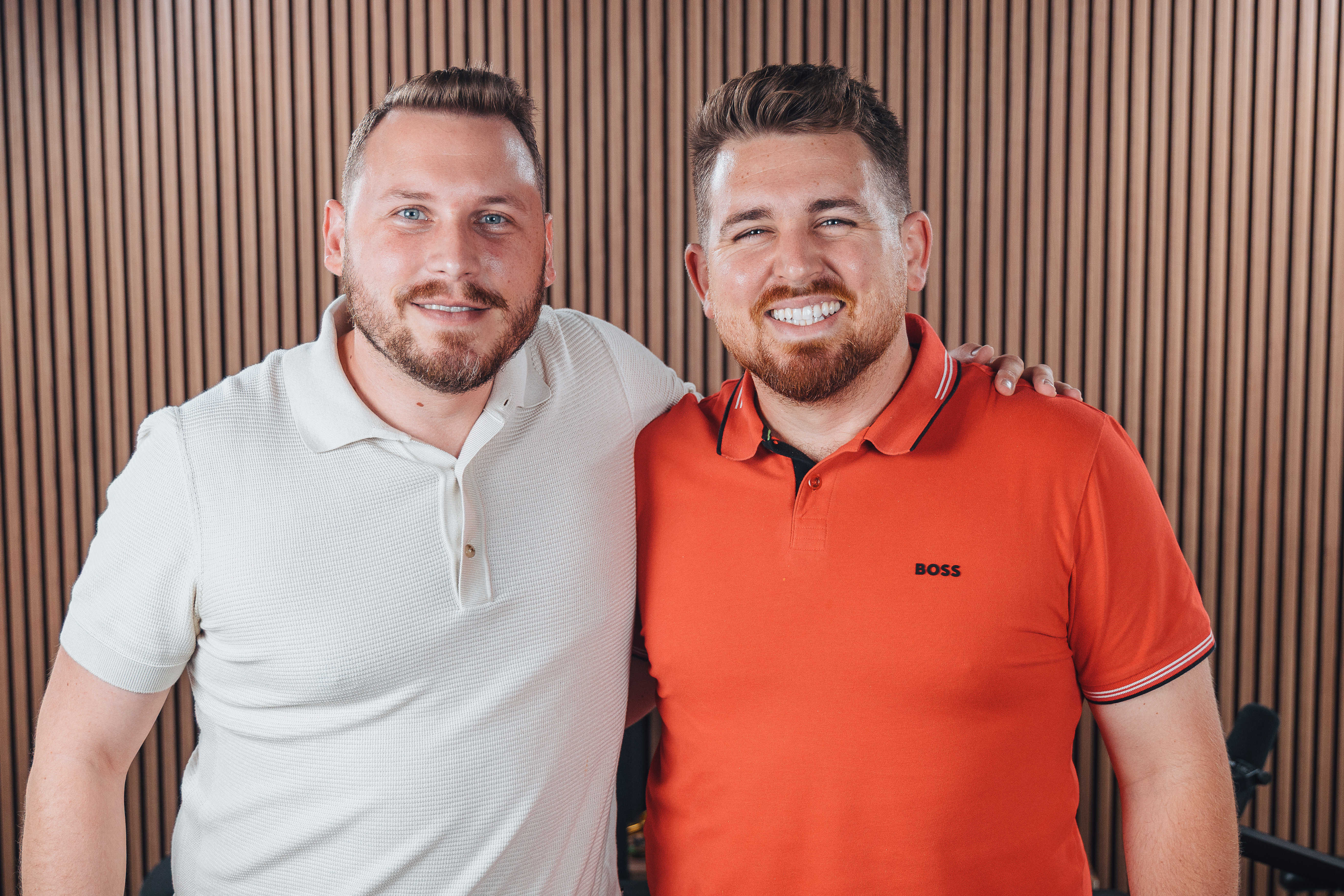
Aaron Siepierski joins Don’t Do Nothing for one of the most powerful comeback stories yet.
Aaron grew up in a trailer park in Michigan surrounded by drugs, violence, addiction, police visits, and chaos. By 14 years old, he was smoking, drinking, using drugs, getting institutionalized, and headed down a path that easily could’ve ended in prison or death.
Then everything changed.
After being sent alone to Narconon in California at 14 years old, Aaron rebuilt his life using Scientology Study Technology, personal development, and relentless work ethic. Today, he runs multiple companies that are on track to do over $40 million in revenue this year, including estate sales, auctions, home staging, and real estate businesses with more than 45 employees.
In this episode, Aaron breaks down how he went from addiction and psych wards to building a massive business empire, the lessons he learned from Scientology, why environment matters more than people think, and how applying simple formulas completely changed his marriage, family, and business success.
He also shares unbelievable stories from the estate sale world — finding gold bars, $35,000 paintings, hidden collectibles, Motown memorabilia, and running auctions worth hundreds of thousands of dollars.
This episode is about recovery, business, purpose, education, family, survival, and what can happen when someone finally decides to change their environment and take control of their life.
Watch the full episode here:
Audio Version:
Apple Podcast:
https://podcasts.apple.com/us/podcast/dont-do-nothing-podcast/id1846609884?i=1000769865725
Text Version
[00:00:00] Aaron: We didn’t have much money, grew up in a trailer park. I was a pretty good kid until I wasn’t a good kid. Yeah. And then I was like, “Okay, how bad can we be?” By 12 I was on drugs.
[00:00:08] Brad: Were you friends with a single person who wasn’t doing drugs at that point?
[00:00:11] Aaron: Absolutely not. Education is the most important thing on this planet.
[00:00:14] Aaron: Mm-hmm. And schooling does not give you education.
[00:00:17] Brad: What’s the single craziest item you’ve sold?
[00:00:19] Aaron: I was selling, like, coffee tables for $20,000. Let her have wins. Somebody asked me the other day, like, “Why do you go so hard in business?” And it’s because I win at it.
[00:00:27] Brad: All right. Welcome back to another episode of the Don’t Do Nothing podcast.
[00:00:30] Brad: Today I have, uh, a good friend of mine. Yes. Mr. Aaron Sapirski is here on the show with me today. We’re flying solo. Aaron’s, Aaron’s doing, uh, good husband things. But, uh, I’m super introdu- super excited to introduce Aaron Sapirski. He is the founder of Aaron’s Estate Sales, Block… It’s Block Auction House, right?
[00:00:47] Aaron: You got it.
[00:00:47] Brad: Yeah. Uh, also Stage Detroit, and most recently an Aaron’s Estate Sales real estate sales branch, which is absolutely crushing it so far. That’s right. Is on track for a huge year. Uh, his businesses do [00:01:00] over $40 million in revenue, is what they’re gonna do this year combined. He has f- over 45 employees.
[00:01:07] Brad: He’s also a husband. a father to a, a lovely daughter and a cat. And, uh, the cat’s really fluffy, right?
[00:01:15] Aaron: Yeah. I remember it. He’s a Maine Coon. He’s huge.
[00:01:17] Brad: Yeah. I see him on Instagram. Yeah. And, uh, he’s also happens to be a Scientologist.
[00:01:22] Aaron: That’s right.
[00:01:23] Brad: Proudly. So Aaron, welcome. Thanks for being here, dude.
[00:01:26] Aaron: Hey, thanks for having me.
[00:01:27] Aaron: I really appreciate it.
[00:01:28] Brad: Yeah, so, uh, you know, we were, we were talking a little bit beforehand, and I know your story a little bit, but I don’t necessarily actually know the full story. So like, if I, if I talk about, you know, like your, uh, I said come up earlier, but like kinda like the, how you came to be where you are.
[00:01:47] Aaron: Yeah.
[00:01:47] Brad: You’re a very successful guy. Where did, where did this journey start for you? Like, what do you feel like was the starting point of what is now your life?
[00:01:55] Aaron: Absolutely. So I grew up, um, we, we didn’t have much money. [00:02:00] Grew up in a trailer park. And I remember distinctly a- You
[00:02:02] Brad: did?
[00:02:03] Aaron: Yeah, yeah. And, uh, for, until 14 years old, so basically my whole childhood life.
[00:02:09] Brad: Wow.
[00:02:09] Aaron: And, um, I remember at two years old, my mom grabbing me- Do you
[00:02:12] Brad: know I also grew up actually in a, in a trailer?
[00:02:14] Aaron: I didn’t know that.
[00:02:14] Brad: Yeah.
[00:02:15] Aaron: Look at us. We made it. Oh. Yeah. Well, that’s awesome. Um, I mean, I remember my mom grabbing me at two years old. She was leaving my father, and abuse of drugs, all tho- those things were a part of my life from very early.
[00:02:28] Aaron: And, um, she grabbed me and she’s like, “We’re going to find a place to live today.” And so me and my mom- When
[00:02:33] Brad: you, when you were
[00:02:33] Aaron: two … I was two years old. Wow. And I was in the backseat, and I remember her telling me this. And, uh, and we went and found a little trailer to live in, and, uh, with her, my sister, and myself.
[00:02:43] Aaron: And so that was really the start of it, and then my mom had other relationships through my childhood that were abusive and, and things like that. And so as a kid, um, I had one really good opportunity, which was to go to a really good school. We lived in this trailer park, but the half of the trailer park [00:03:00] I lived in got to go to a really good school district.
[00:03:02] Brad: Seriously?
[00:03:03] Aaron: Yeah. Like, the
[00:03:03] Brad: whole thing was split in
[00:03:04] Aaron: two? It was literally split in two, and- No way … part of the trailer park went to a not great school district, and part of it went to one of the best school districts in Michigan. And that was the reason why- Wow … my mom kept us there, because that was the only thing she could afford that would allow her kids to go to that school.
[00:03:19] Aaron: And, um-
[00:03:21] Brad: Oh, so she knew that by being in the exact-
[00:03:24] Aaron: Place- …
[00:03:24] Brad: trail- Yeah … the exact place you were in, you’d be able to go to the good school.
[00:03:27] Aaron: Exactly. Mm. Exactly. But at the same time,
[00:03:30] Brad: I would- You know, I met, I met your mom. Smart lady.
[00:03:32] Aaron: Yeah. That’s all right. That’s all right. She loves you, you know? Yeah. So she has to be a smart lady.
[00:03:37] Aaron: Yeah. Um, but I think that part of that was that we got, um, we got made fun of a lot for living in the trailer park- Really? … ’cause I went to this really rich school. And, um, and w- Oh, it
[00:03:48] Brad: was also a, a school where the rich kids went?
[00:03:49] Aaron: Exactly. Yep. Oh. Exactly. So there was a lot of, um, times throughout my childhood where I would get made fun of, or just, like, I wasn’t very [00:04:00] popular.
[00:04:00] Aaron: I, I wasn’t making it, you know? And then seeing my mom dealing with domestic violence and other things, police were over at our house every other night, and then seeing my sister sort of start to use drugs and get in with the wrong crowd- Yeah … was definitely eye-opening for me, and I knew I didn’t wanna go in that path.
[00:04:18] Aaron: And I even was offered drugs at, like, 11 years old, and I turned it down. And I would break her cigarettes. And then by 12 years old-
[00:04:25] Brad: You would break her
[00:04:25] Aaron: cigarettes? I would, like, break my… My sister is 13 years old with cigarettes, and I’m sitting there breaking them and trying to get her to stop smoking, and that flow.
[00:04:33] Brad: Yeah.
[00:04:33] Aaron: But by 12, I was on drugs, and so myself. And- Wow … it went that quickly from, like, “I hate this. You shouldn’t do this,” to, “Hey, let me try that.”
[00:04:44] Brad: What, what, what do you think caused that? Like, for you, what-
[00:04:48] Aaron: I think for me it was a sense of wanting to, you know, get into the right cr- or get, like, be liked by the people I was hanging out with- Mm
[00:04:55] Aaron: and not be lame, I think is very… The first night that I smoked weed for the first [00:05:00] time, that was what I experienced. I was like, I didn’t want to be seen. I told them I had done it already. I was trying to be cool. I was trying to have that, you know, the prestige in that group. Like, I, I’ve already done it and, um, so then it just started from there.
[00:05:14] Aaron: Uh, but it was a stepsister of mine that introduced… Like, actually I did drugs with the first time and, uh, which was a daughter of the, one of the, my mother’s husbands that was a little abusive, so- Yeah … it was just a bad scene, and it went down a down- downward spiral really fast- Yeah … at that point.
[00:05:31] Brad: Yeah.
[00:05:31] Aaron: Yeah.
[00:05:32] Brad: And so it started with, with smoking weed- Mm-hmm … and how, how far along, how far down the road did you go?
[00:05:39] Aaron: Yeah, so that was 11, and then by 14, so I was, I started smoking cigarettes.
[00:05:45] Brad: Mm.
[00:05:45] Aaron: Started drinking at that point. And my mom was-
[00:05:47] Brad: When you were 13?
[00:05:48] Aaron: When I was 13, yeah. Wow. Because my mom had separated.
[00:05:51] Aaron: She had left that relationship- Yeah … and got her kids, myself and my, my sister, to a better scene. She moved us out into a different trailer [00:06:00] park, but she kind of was able to get us out of that situation. But from there, I was, you know, able… My mom wasn’t around. She was working and trying to provide for us, so it was just, I started smoking weed, started drinking, started smoking cigarettes.
[00:06:15] Aaron: I got to the point at 12, 13 years old, I was smoking a pack a day. And, uh, by 14- Wow … I’d started… So there’s a-
[00:06:23] Brad: How were you buying that many cigarettes?
[00:06:25] Aaron: I w- I was just, like, friends and also… I wasn’t really buying anything. I didn’t… Like, I was just around these people who would just give me stuff, you know?
[00:06:33] Aaron: Wow. And, um, I remember I would go to my friend’s house, and he would make me a pack of cigarettes from his mom’s cigarettes and give it to me, you know? And it was just, like, it was- Wow … crazy. But it was just everyone I was around. All the entire group of every single person I was around- was my age and was doing things like that- Mm-hmm
[00:06:52] Aaron: in this trailer park setting. And so it just wasn’t going good. Mm. And then there was this one person, now what I know, there was [00:07:00] this really suppressive person that came into the group.
[00:07:02] Brad: Mm.
[00:07:02] Aaron: And he started giving everybody methadone because he was a heroin addict, and he was given h- methadone. He had methadone, and he gave all my friends methadone.
[00:07:11] Brad: Wait, how old was this, was this kid?
[00:07:13] Aaron: This kid was probably 18, 19, 20 years old or something. Okay, so much older
[00:07:16] Brad: kid.
[00:07:17] Aaron: Right.
[00:07:17] Brad: Okay. Yeah, yeah.
[00:07:18] Aaron: Yep. That was the big changing point when I started to see everything go really, really bad. So he started giving… I never took any, which was like a saving grace for me.
[00:07:29] Aaron: But I started walking into my friends’ houses, and they were just completely doped up on methadone. And it got to the point where he gave methadone pills to two girls that were my best friends. Yeah. And they ended up in the hospital. They almost died. And he skipped town, and it got blamed on me, and it had nothing to do with me.
[00:07:48] Aaron: I had never even taken any. And, but the whole thing landed on my shoulders. I’m 14 years old at this point.
[00:07:53] Brad: Yeah.
[00:07:53] Aaron: And, um, so I got really sick and, you know, stopped going to school, and it just got a little hairy-
[00:07:59] Brad: Yeah …
[00:07:59] Aaron: for [00:08:00] me.
[00:08:00] Brad: I, I think you, you mentioned something earlier. You, you referred to him as a suppressive person, right?
[00:08:05] Aaron: Yeah.
[00:08:05] Brad: Yeah. We should just clarify what that, what that means.
[00:08:07] Aaron: Absolutely. Yeah. So I mean, for me a suppressive person means, uh, somebody who wants to see others do poorly, who actively does things to make his environment go down, and that’s what this kid was doing. He was literally going from person to person giving drugs, giving drugs, and everything was just crumbling around us.
[00:08:27] Brad: Yeah. And the, and the funniest… It’s not funny, but, like, the interesting- Right … thing about people like this is a lot of times people make excuses for them as to like-
[00:08:37] Aaron: Right … “
[00:08:37] Brad: Oh, he just, he’s just trying to help,” or, “Oh, he just, he just actually thinks that drugs are good.”
[00:08:43] Aaron: Yeah.
[00:08:43] Brad: And when you actually dig into it, it’s like no, no, this guy’s actively trying to keep others down.
[00:08:49] Brad: Down. Hold them down.
[00:08:50] Aaron: Exactly. Exactly.
[00:08:51] Brad: So that they are not a threat to him-
[00:08:53] Aaron: Right …
[00:08:54] Brad: is basically the idea.
[00:08:55] Aaron: And that was something I learned, you know, a few months later when I ended up getting into Scientology. Yeah. So [00:09:00] yeah, which was crazy. And to be able to see it so clearly, the whole scene from stepping out of it- Yeah
[00:09:05] Aaron: which I’ll get into in a second. But it was just like, wow, that was- Yeah … that’s really awful.
[00:09:10] Brad: Yeah. What, so one, one question before we get into that. Mm-hmm. When you were in the situation where, like, all of your friends were recreationally using drugs-
[00:09:19] Aaron: Yeah …
[00:09:20] Brad: right? Like, I, I… You mentioned, did you know a single person at that point, or were you friends with a single person who wasn’t doing drugs at that point?
[00:09:27] Aaron: Absolutely not.
[00:09:28] Brad: So you know what’s crazy about that- Yeah … is, uh, a couple, a couple weeks ago, it should be a couple weeks when this comes out, so Elena Cardone was- Yeah … on the show. She said the exact same thing.
[00:09:40] Aaron: Really?
[00:09:41] Brad: About at a certain point in her life-
[00:09:42] Aaron: Yeah …
[00:09:43] Brad: there was literally, she did not have a single friend who wasn’t using recreational drugs.
[00:09:46] Aaron: That’s wild.
[00:09:47] Brad: Isn’t that wild?
[00:09:47] Aaron: Yeah, it’s crazy. And I can only imagine that’s what it still is like, you know, for a lot of kids out there.
[00:09:52] Brad: Yeah, imagine how many people are in that situation.
[00:09:54] Aaron: Right now. Yeah. Yeah. Which is sad.
[00:09:57] Brad: Actually, you know what? I’m thinking about it. [00:10:00] I’m thinking about like for me, probably back in 2020 Damn.
[00:10:08] Brad: I’m not sure that I had a single friend except for maybe like, you know, if you consider, if I consider maybe like my parents.
[00:10:13] Aaron: Yeah.
[00:10:14] Brad: Every single person who’s a friend of mine or I knew closely was doing drugs back… Wow. Actually, that’s true for me as well.
[00:10:19] Aaron: Yeah. It’s, that’s, that’s crazy. Yeah. And it’s a crazy world out there, and right now it’s being pushed so heavily.
[00:10:24] Aaron: Drugs are being pushed so heavily as normal and normalizing every drug. Yeah. Basically, you know, they start with marijuana and normalizing that, and then next it’ll be hallucinogens, it’ll be mushrooms, it’ll be LSD, it’ll be… And at every interval you’ll just keep seeing society going down and down, down, and it’s, it’s really sad.
[00:10:41] Aaron: It’s not okay. And that’s why it’s really important for people like you and I to s- to draw the line in the sand, say, “Hey, guys, this isn’t normal.” You know? Mm-hmm. “This isn’t actually… Like, escaping from life, escaping from your responsibilities or what’s real is not a normal thing for a human to do.” Yep.
[00:10:59] Aaron: [00:11:00] You know? It’s a very much effect and it’s, it’s not a good place for the society to, to be in either.
[00:11:06] Brad: Yeah.
[00:11:06] Aaron: So.
[00:11:07] Brad: Yeah, and the, the cra- the oddest thing about, like for me, my experience doing the little bit o- of drugs that I did, like, ’cause I like… I, in high school I, like, smoked weed. I think I like once like drank a whole bottle of cough syrup or something stupid.
[00:11:21] Brad: Yeah.
[00:11:21] Aaron: Yeah, yeah.
[00:11:22] Brad: Uh, and then I did, uh, like psychedelic mushrooms one time, and in all of that, all those… And then alcohol several times. You know, got drunk- Of course … many times. Right. Um, probably stopped drinking alcohol around like 2017. Uh, but in all of those times, whenever I thought that it would give me like an escape or something like that, it made everything worse.
[00:11:42] Aaron: Yeah.
[00:11:42] Brad: Like, the biggest, like, escape that I thought I was experiencing was when I did mushrooms. Mm-hmm. And that was like for, you know, probably like 36 hours I was like, had no attention on current life problems, and then when I kinda like snapped back into reality, it was like for whatever reason my entire, [00:12:00] like my relationship with my girlfriend had ended.
[00:12:02] Brad: Uh, I had literally become like obsessed with like another girl who was a huge druggie.
[00:12:09] Aaron: Yeah.
[00:12:09] Brad: Like, weird, you know? Like, I was like, uh, I hadn’t gone to like swim practice in a week. I was a super competitive swimmer
[00:12:16] Aaron: at the time. Okay.
[00:12:17] Brad: Like, hadn’t done any, like any of my schoolwork. Yeah. It was just like everything was just like
[00:12:21] Aaron: pff.
[00:12:21] Aaron: Just like that.
[00:12:22] Brad: It wasn’t like escape, it was like, it was like I had just like started to let everything kinda slip. Yeah. So then I had to do all this work to put things back together after that.
[00:12:32] Aaron: Were you given those mushrooms or did you seek that out?
[00:12:35] Brad: Uh, more offered. I was definitely super like interested and willing- Yeah
[00:12:40] Brad: ’cause I was looking for something. Right. I was like, had an idea of like, “Okay, uh, there’s something spiritual going on here. I don’t know what it is.” Yeah. Like, I was raised Lutheran, uh, so I was in a Lutheran church, and it’s very like… It’s not very… It… I actually love Lutheran churches and I really enjoyed going to church as a kid, ’cause I always, like, I was like, “Okay, this Sunday’s the day I’m gonna get the thing that’s [00:13:00] gonna help me.”
[00:13:00] Aaron: Wow.
[00:13:00] Brad: Ev- every Sunday.
[00:13:01] Aaron: Yeah.
[00:13:02] Brad: And I loved the people that were there. I just needed, I just needed more. I needed, like, tools to actually use.
[00:13:07] Aaron: Right.
[00:13:08] Brad: Right? So that’s why I was, like, really interested. I was sort of, like, on my youth council and all that stuff. But, uh, yeah, I was… It was given to me, but I was looking for something.
[00:13:16] Brad: I thought, I was like, “Oh, maybe, like, psychedelics- Yeah … are, like, the way to, like-
[00:13:19] Aaron: Yeah, yeah …
[00:13:20] Brad: escape this reality and become enlightened,” you know?
[00:13:22] Aaron: Yeah.
[00:13:23] Brad: Uh, definitely not. That is not what I experienced. That is not
[00:13:25] Aaron: how that works.
[00:13:25] Brad: At all, at all.
[00:13:26] Aaron: Yeah. Yeah. It’s really unfortunate that that’s what’s being pushed, you know, by psychiatry and all of that is just a huge issue right now-
[00:13:33] Brad: Yeah
[00:13:33] Brad: for
[00:13:33] Aaron: sure.
[00:13:34] Brad: Yeah. Yeah. Okay, so we almost got to Scientology. So how did that- Mm-hmm … come into the picture?
[00:13:40] Aaron: Well, I was, uh, I started doing, um, I started doing ecstasy at that point as well, and so that was more of an offered thing as well. Mm. And, you know, started staying up all night. And I guess the thing about the drugs is, is it, for me, it was, like, really good and fun until it wasn’t, until things started…[00:14:00]
[00:14:00] Aaron: Like, I- it was a slow roll for me to… And then seeing all of the chaos and upset around me And so that’s when I got really sick. I think it was a, a combination of the situation of having all this pressure as a young child, really, at 14 years old of like, “Hey, you almost killed these girls. They went to the hospital,” even though-
[00:14:21] Brad: Oh, yeah, let’s talk…
[00:14:22] Brad: Can we dig into that for a second? Yeah. So what, how did that actually go down? How did that get p- like how- Yeah … did that end up getting pinned on you?
[00:14:29] Aaron: So it was, I mean, you’re young, and so we were doing ecstasy, and we went over to these girls’ house, this girl’s house to get- Who,
[00:14:36] Brad: like you and your buddies?
[00:14:37] Aaron: Yeah, me and my buddy and this guy who had methadone.
[00:14:39] Brad: Oh, the older guy.
[00:14:40] Aaron: Yep, the older guy. Did
[00:14:41] Brad: that guy give you the ecstasy?
[00:14:42] Aaron: He was, I think, he wasn’t the person that gave me the ecstasy, but he was in that group, right?
[00:14:47] Brad: Yeah.
[00:14:48] Aaron: And so we went to this girl’s house for, like, strobe lights and black lights and, like, just to get a bunch of stuff from them and borrow it for the night to do ecstasy.
[00:14:56] Aaron: Yeah. And while I was doing that, he gave it to those girls. I was there with him. [00:15:00] Mm. So that’s how it got pinned on me. It was like me and him went to their house, and then he gave it to them. I didn’t even see him give it to them, but he gave it to them. And, um, and then I didn’t think anything of it. We left, and then the next day, I have, uh, people pretty pissed off at me.
[00:15:16] Aaron: Yeah. He, like, skipped town. He left- Yeah … completely at that point, and that was the last time I’d ever seen him.
[00:15:20] Brad: Yeah.
[00:15:21] Aaron: Um, and so at that point, I stopped going to school. I got really sick. I was coming down off the ecstasy, and I, I didn’t go to school for, like, two or three weeks. And, um, meanwhile, my mother is, like, dating a Scientologist.
[00:15:35] Brad: Oh,
[00:15:36] Aaron: wow. Or she had just started dating. She had met this guy, and, um, and he is, like, seeing all of these things happen. To rewind on that, me and my sister were also on psych drugs at that point, and we were also institutionalized at that point from-
[00:15:51] Brad: What?
[00:15:52] Aaron: It was just chaos. It was complete chaos.
[00:15:54] Brad: Whoa.
[00:15:56] Aaron: So there’s, like, a lot going on.
[00:15:57] Aaron: Okay, how did
[00:15:57] Brad: that,
[00:15:58] Aaron: how did that… What? I don’t know, man. It was like, I mean- [00:16:00] Wow … I was, I was a pretty good kid until I wasn’t a good kid. Yeah. And then I was like, “Okay, how bad can we be?” You know?
[00:16:05] Brad: Yeah.
[00:16:06] Aaron: And sneaking out at night, skipping school, smoking weed before school, like, drinking before school. And I’m talking, like, seventh, eighth grade- Yeah
[00:16:14] Aaron: you know, at this point, not, not like I’m in, a senior in high school or something. I’m- Yeah … I’m, like, young and doing all of these things and, and seeing all of this. So my mom, you know, she would take us to the c- school counselors, and then they referred us to a psychiatrist. And then, you know, from there- Oh, wow
[00:16:29] Aaron: it was like, “Yeah, your kid has ADHD,” and put it, put me on, uh, whatever you call it, Adderall, which Adderall didn’t really do much for me or do anything to me, but my friends would all snort my Adderall. I never did that either. So I was, like, a little aware that there was things that I was too scared to do.
[00:16:46] Brad: Yeah.
[00:16:46] Aaron: But everyone around me was doing those things that I was scared to do.
[00:16:49] Brad: Wow.
[00:16:50] Aaron: So I was seeing all of that, and then-
[00:16:52] Brad: Did, did you… Sorry to interrupt, but- Yeah … when you, when you were prescribed the Adderall, did you take the amount that you were supposed to be taking?
[00:16:59] Aaron: Pretty much. Pretty good. [00:17:00] Yeah. Yeah, I mean, I took it, and then- But I guess, I guess it did start extreme emotional swings at that point is what- Yeah
[00:17:08] Aaron: started happening.
[00:17:09] Brad: Yeah.
[00:17:09] Aaron: And I remember sitting there-
[00:17:11] Brad: Like getting really upset or like-
[00:17:12] Aaron: Really, really upset. Really, really emotional.
[00:17:15] Brad: Yeah.
[00:17:15] Aaron: I remember screaming at my, like fighting with my mom started and then- Yeah … I remember just like locking myself in my closet, screaming, crying, and she’s sitting there, doesn’t, don’t know what to do, so she’s like trying to push the drugs underneath the door for me to take, thinking that that’s the solution.
[00:17:30] Brad: When really that’s-
[00:17:31] Aaron: That’s what’s causing it. Yeah. And my skin was itching from the inside. I would like be, my fucking blood- Are you serious? … was boiling. Yeah. It literally felt like my skin was itching.
[00:17:40] Brad: Dude, you know what’s so crazy about that? What’s that? I’ve never heard someone say that about Adderall.
[00:17:44] Brad: I had a friend, uh, when I was a kid, when I was probably… I knew this kid from the time I was like, we went to the same church growing up since we were like- Yeah … eight years old till probably, I think he moved with his family to Wisconsin when they were like fif- when we were 15. So like then I go up and say we’re like best buddies, [00:18:00] and he was on Adderall like the whole time that I knew him, and this was like a, like the sweetest kid in the world.
[00:18:06] Brad: Yeah. Like super sweet. And, um- He, he’s one of those people who just never grew up. Which, which is, I, I mean that in a good way. Yeah. Like, he’s just, like, very- Okay … like, a sweet guy. But this one time I remember he told me, he… I was, like, calling and talking to him, he’s like, “Yeah, the crazy thing happened.”
[00:18:24] Brad: He’s like, “I have these scars on my knuckles.” And I was like, “What do you mean you have scars on your knuckles?” And he’s like, “Yeah, I, I, uh, I… This one day, like, I just was outside, and all of a sudden, like, my skin was bur- it was like I was burning alive-
[00:18:34] Aaron: Mm …
[00:18:35] Brad: in the sun.” He’s like, “I had to go and, like, dunk myself in the pool, and then for some reason the chlorine made it worse or something like that.”
[00:18:41] Brad: Geez. And he’s like, “It felt like I was, like, on fire from the inside.”
[00:18:44] Aaron: Yeah.
[00:18:44] Brad: I’ve never heard anyone, like, the… But he was on Adderall the whole-
[00:18:48] Aaron: Interesting …
[00:18:49] Brad: the whole time.
[00:18:49] Aaron: Interesting.
[00:18:50] Brad: Yeah.
[00:18:51] Aaron: Yeah, don’t know if… That’s crazy.
[00:18:52] Brad: And I remem- Dude, I remember. Were your Adderall pills, like, a br- very brightly colored?
[00:18:57] Aaron: They were blue.
[00:18:58] Brad: They looked like candy?
[00:18:59] Aaron: Blue, yeah.
[00:18:59] Brad: Yeah. Were they blue and [00:19:00] yellow?
[00:19:00] Aaron: I, I don’t think they were yellow.
[00:19:01] Brad: No? No. Just blue? His, his… I remember when I would, like, stay over, like, ’cause we would go, like, on a two-week trip with his family-
[00:19:07] Aaron: Yeah …
[00:19:07] Brad: uh, to their cabin in Wisconsin every summer, and I’d fly back.
[00:19:10] Brad: It was so much fun. But I remember one time his mom, he was like, she was like, “Hey, can you bring these, can you bring these to him?” And I remember I looked in the, in the cup, and I was like, “These kinda look, those kinda look cool.” I was like, “They kinda look like candy.” Yeah. I remember having that thought-
[00:19:23] Aaron: Yeah
[00:19:23] Brad: uh,
[00:19:24] Aaron: in my- That’s intentional. That’s intentional. Yeah. That’s, that’s crazy.
[00:19:27] Brad: Okay. Yeah. So psych drugs.
[00:19:30] Aaron: Psych drugs, kicked out of school. I started getting a, I started getting in a lot of trouble at school. Yeah. I started getting suspended a lot from school, and I remember being in seventh grade and literally, like, having the police, like, take down everything out of my locker and search through it, and finding drugs and paraphernalia and things like that.
[00:19:47] Aaron: Did
[00:19:47] Brad: you say when you were in seventh grade?
[00:19:49] Aaron: Seventh grade. I remember I was, like, had, like, a water bottle that was filled with orange juice and vodka in seventh grade. Like, it was r- at school. Like- Did they find
[00:19:56] Brad: it?
[00:19:56] Aaron: They did, actually, as we were going down to the- … [00:20:00] whatever. But they didn’t find that, but I had, like- You tossed
[00:20:02] Brad: it, you
[00:20:02] Aaron: tossed it to a friend.
[00:20:02] Aaron: I did. I had holes in my pockets or whatever, so I had stuff st- stashed throughout my jacket. Yeah. And so I was, like, pushing it back there, and they just happened to pull it out far enough where they were like, “What’s this?” Yeah. And they found everything that I was stashing.
[00:20:15] Brad: Yeah.
[00:20:16] Aaron: And it just wasn’t good.
[00:20:17] Aaron: It wasn’t… You know, my mom started to have to come and pick me up from school every other week and, you know, I’d go home and then, and then it just kind of was less and less school, and to the point where she was like, “I don’t know what to do.” She’s a single mother. She’s like, “I don’t kn-“) She hadn’t met a Scientologist at this point yet, but she’s like, “I don’t know what to do.”
[00:20:34] Aaron: So then she took us to, like, a children’s center, a, I forget what it was called, children’s village or something like that. Mm. Where it was, like, a psych hospital for kids.
[00:20:42] Brad: Really?
[00:20:43] Aaron: And yeah, and stuck me in there. And of course, insurance only paid for seven days, so I was in there for seven days. But I remember distinctly sitting there in the, in that home, and they would have people come in and talk to you, like, different counselors.
[00:20:55] Brad: Mm.
[00:20:56] Aaron: I remember this guy walking in. He’s like, he looks around, he’s like, [00:21:00] “Goddamn, you guys are more drugged up in here than you would be out there.” I remember that stuck with me. Like, even a counselor was saying that about these kids that he was seeing in the, in this home. Mm. So, got out of that and it just- What
[00:21:11] Brad: was- Yeah
[00:21:12] Brad: what was the, like- Like, what was happening in the cell? Like, what was the, what was the desired outcome for
[00:21:20] Aaron: that? I, I mean, I don’t know, you know? That’s a great question. Yeah. They’d put you on drugs, they’d have you in, you know, you’d, you’d go line up f- to get your drugs, you’d sit there in group counseling sessions or whatever.
[00:21:32] Aaron: And, and people of all sorts of different issues. Mm. Obviously there’s people with, like, cuts all over their arms, there’s people, you know, not doing good in whatever it is. I don’t, I don’t know. But there was no product. Mm. Like, that, that’s a great question- Mm … of, like, what is the desired outcome here? Was never a communication, you know, of like- Mm
[00:21:52] Aaron: here’s what, here’s what the plan is, here’s what the goal is. Yeah. And, um, and that changed, you know, when I, yeah, the, when [00:22:00] I got further in life and went to an actual rehab center- Yeah … which was a Scientology rehab center- Yeah … and/or that had techniques, I guess, used by Scientology, and that had a very specific outcome.
[00:22:11] Brad: Yeah.
[00:22:11] Aaron: And so that, that was pretty amazing.
[00:22:13] Brad: And okay, so what, so you’re in there, it was only seven days?
[00:22:17] Aaron: Yeah. Seven days is all insurance will pay for. Wow. Whatever insurance will pay for-
[00:22:20] Brad: Yeah …
[00:22:21] Aaron: is how that system works.
[00:22:22] Brad: Wow.
[00:22:22] Aaron: And so a 21-day program, a seven-day program for kids, whatever it is, like, it’s just, that’s- Oh, ‘
[00:22:28] Brad: cause they’re kids it’s seven days-
[00:22:29] Aaron: I guess so, yeah
[00:22:30] Brad: it’s like, ’cause they get through it faster or
[00:22:31] Aaron: something. Yeah. Exactly.
[00:22:32] Brad: Wow.
[00:22:33] Aaron: But it didn’t, obviously it didn’t do anything. I just got out of there and I was like, “All right, where’s my friends at?” And g- being around, like, that’s like, the school thing is very interesting because there’s a lot of issues with school.
[00:22:43] Aaron: I failed basically all of schooling at that point. And but one of the biggest challenges is-
[00:22:49] Brad: That’s so crazy too, ’cause you’re a very intelligent individual.
[00:22:51] Aaron: Well, thank you. I appreciate that.
[00:22:52] Brad: Well, you are. I j- yeah, I know kinda the, the basis of your business and I’ve- Yeah … see how you run them. You’re a very intelligent guy.
[00:22:59] Aaron: Yeah.
[00:22:59] Brad: You [00:23:00] have 40-plus staff at this point. You run executives at this point.
[00:23:03] Aaron: Right.
[00:23:03] Brad: Make a lot of money.
[00:23:04] Aaron: Yeah.
[00:23:05] Brad: Like, you’re a smart dude. But you failed the hell outta school.
[00:23:07] Aaron: Yeah, exactly. Yeah. And, and that’s the thing, like, education is the most important thing on this planet. Mm-hmm. And schooling does not give you education.
[00:23:15] Aaron: Schooling does not actually educate you in a way that actually makes you able to do anything, and that’s the biggest challenge is school will just sit you there, you’ll be, you know, talked to or somebody’ll be up speaking, but it’s never, like, how school should work is, “All right. Here’s a piece of data that’ll help you do this.
[00:23:31] Aaron: Do you understand it? If you don’t understand it, okay, what don’t you understand about it? Okay, now that you have the understanding, how can we apply this and then apply it to whatever that is in life?” And then great, that person has that skill. Mm-hmm. We do it in business all the time, and
[00:23:45] Brad: I’ve- And, and did you, and did you get it done?
[00:23:46] Aaron: And, and did you get it done, and can you do it? Yeah, yeah. Exactly. Exactly. And I’ve sat there in your office while you guys are training your staff. Mm. And you do exactly that, like, can you produce this product? And business does it every day. So why are we failing our children [00:24:00] so much on, like, here’s this math problem or here’s how to, you know, whatever it is, learn how to spell or whatever the skill is.
[00:24:07] Aaron: Mm-hmm. And why are we not seeing- stopping when the person, when the child doesn’t understand.
[00:24:14] Brad: Mm.
[00:24:14] Aaron: And there’s a lot of different elements in school. One of the biggest
[00:24:18] Brad: s- Stopping meaning like- Yeah … like pausing and like making sure they actually get it before you move
[00:24:21] Aaron: on. Ex- exactly. Yeah. Exactly. And one of the biggest challenges I ran into in school is I couldn’t really read when I was in fifth grade, and they would just make you stand up and start reading in front of the class.
[00:24:32] Aaron: So then it becomes a massive amount of pressure and embarrassment that they put on the children in that moment- Mm … instead of saying, “Okay, let’s help this one person read. Start with books, start on a gradient, pull back the gradient,” meaning go to a easier type of book and then- Yeah … make them able to do that, and then, uh, upgrade- Yeah
[00:24:49] Aaron: what they’re reading. But instead of doing that, they’re just like, “Oh, you’re getting laughed at if you can’t read.” Yeah. You know? And, um, it wasn’t that I couldn’t read. Yeah. It wasn’t that I couldn’t learn. Yeah, yeah. It was just [00:25:00] that I didn’t, I missed something- Yeah … at some point. And luckily, later in life I was able to pull that back-
[00:25:06] Brad: Mm
[00:25:06] Aaron: and handle that, and then be able to learn, and now I can learn anything.
[00:25:10] Brad: Yeah.
[00:25:10] Aaron: And so it’s, it’s a whole different world. But that’s why I realized education… I used to just like fight against the school system so hard and, like, just protest it so much, and it wasn’t learning or education that I was protesting, it was, “Hey, I need help- Yeah
[00:25:27] Aaron: over here. Like, I, I don’t understand. I…” Obviously you can’t communicate it in those words when you’re 13 years old, you know?
[00:25:34] Brad: Yeah.
[00:25:35] Aaron: So it shows up in different, uh, phenomena- Yeah … if you will.
[00:25:38] Brad: Yeah. Yeah. And al- also, oftentimes like you said, you’re made wrong if you don’t understand. Like, it’s like- Yeah … “Oh, you don’t get it?
[00:25:45] Brad: Perfect. Come up here and do it in front of the whole…” Like- Yeah … “Let’s go to a way steeper gradient- … when you’re not even getting it here.” Yeah,
[00:25:50] Aaron: exactly.
[00:25:51] Brad: You made me remember something. I, I just, y- you made me literally recall the first time that I w- like, actually kind of like got the reading thing, and this is gonna s- Mm
[00:25:58] Brad: this is so crazy, it’s so opposite [00:26:00] of what you just described. It was, I had this wonderful kindergarten teacher, and her husband would come in and help teach the kids. And I remember he would, he would read books with, with me in particular. I just remember for whatever reason, her and her husband, like, really took a lotta time and attention on me.
[00:26:14] Aaron: Yeah.
[00:26:15] Brad: And, uh, and they loved my parents. They still talk to my parents. Like, it’s crazy, my kindergarten teacher.
[00:26:19] Aaron: That’s
[00:26:20] Brad: awesome. But, uh- He would read with me and he would, like, have me read during nap time when everybody else was… There, there would be, like, one or two kids that are awake- Sure … but nobody was looking at me.
[00:26:29] Aaron: Mm-hmm.
[00:26:30] Brad: Like, it was just basically me and him. Like, we’d be, like, in the middle of the room, kids sleeping, whatever, but we’d just be looking at, I’d be, like, reading a book. But it was the complete opposite. It was like no pressure, like nobody’s looking at you. Yeah. It’s just you and him. It’s like, who cares?
[00:26:41] Aaron: Yeah.
[00:26:42] Brad: Yeah. Which-
[00:26:43] Aaron: And with that you don’t have, you don’t have any of… You can just be and exist. Mm-hmm. And there’s no, there’s no make wrong. There’s no any of that. And that, that I think is one of the biggest challenges. And I get it. Like, they have one teacher to 40 or 30 or 20 kids. Like, how are they going to stop?
[00:26:59] Aaron: Like, the, [00:27:00] just the system is set up in a way for people not to be able to succeed, and obviously we see that in our educational numbers- Mm-hmm … you know, in this, on this, in this country. And it’s no- It’s crazy. Nobody’s like, “Let’s solve it,” or, or anything. It’s just like it is what it is. That’s how we teach kids.
[00:27:16] Aaron: That’s how we’ve taught kids. They learn less than they did back in the day. We’ve taken away a lot of the features like wood- woodshop and like- Mm-hmm … my daughter is in… She’s 11 years old. She’s in woodshop, gardening, cooking, dance, you know? She’s in all of these things- Yeah … because I made sure that she was going to be put into a school system that would teach her things.
[00:27:33] Aaron: When she has a- Yeah … test on how to measure something, she has to go out into the field and measure it for the test. Wow. And, and these types of things. So it’s just a whole different world than the standard educational system which is unfortunately broken, but- Yeah … we definitely need to do something about.
[00:27:49] Brad: Yeah. Dude, that’s ba- that’s badass. I love that.
[00:27:51] Aaron: Yeah.
[00:27:51] Brad: Yeah. Um, so okay. You wanna dive into-
[00:27:54] Aaron: Let’s dive in.
[00:27:55] Brad: Let’s go … I, I feel like psychology’s the next thing on the, on the ti- on the time tr- The next thing we’re going into- Yeah, exactly … on the [00:28:00] timeline here.
[00:28:00] Aaron: Exactly.
[00:28:01] Brad: Okay. So what, what happened after that? You come out of the- So-
[00:28:03] Brad: out of the home, right? Mm-hmm. Mm-hmm. You’re back to my friends, crazy whatever lifestyle.
[00:28:09] Aaron: Yeah.
[00:28:09] Brad: But now your mom is dating this guy.
[00:28:11] Aaron: Yep.
[00:28:12] Brad: Right? Yeah. Is that kinda how-
[00:28:13] Aaron: It’s basically how it happened. She’s dating this guy, and I was home sick for several weeks. I wasn’t going to school anymore basically. Um-
[00:28:21] Brad: Oh, oh.
[00:28:21] Brad: I, sorry. I had another question- Yeah … on the sickness thing.
[00:28:23] Aaron: Yeah, yeah.
[00:28:24] Brad: You, you said earlier that it was h- you assigned the sickness, the, you assigned the cause for the sickness as the ecstasy.
[00:28:32] Aaron: Right. Two things.
[00:28:34] Brad: Yeah,
[00:28:34] Aaron: yeah. Two causes. Really at that time I thought it was the ecstasy- Mm … in coming down, and really you just feel so dull after you come down off ecstasy.
[00:28:43] Aaron: Yeah. You just feel like you’re dumb, dumb as bricks at that point. And-
[00:28:46] Brad: Oh, you do?
[00:28:47] Aaron: But, yeah, absolutely. It’s just like a dumbness that, I mean, that’s how I felt at least. Yeah, yeah. And, but at the meantime I had all of these people that were upset with me, and I’ve never had that type of pressure from what happened with [00:29:00] these girls.
[00:29:01] Brad: Mm.
[00:29:01] Aaron: And so I, I really know that I was sick because I was avoiding that, confronting that situation, and made myself deathly ill, where I, like, literally couldn’t go to second, uh, to school anymore. And at that time, you know, my mom started dating this guy who happened to be a Scientologist, and he told her about a program called Narconon, which isn’t religious based at all.
[00:29:24] Aaron: It’s not Scientology, but they use tools that Mr. Hubbard made, um, to help improve a condition, to help improve people’s lives. So, um, my mom leaves for work one day- Yeah … and she leaves this, um, like, piece of paper on the counter, and she’s like, “Hey, while I go to work, check this out.” And I look at it, and it was Narconon.
[00:29:43] Aaron: It was something about a rehab. And at that time, I’m, I’m a kid, right? Mm-hmm. So I… And I’ve never been anywhere in my life. So I Google it on the computer, and the first thing I see is a big pool with palm trees. I’m like, “Sold. Let’s go.” Like- So, so yeah, that’s how she got me to go to [00:30:00] this rehab. And what was amazing about it is that this man paid for it, who was dating my mother.
[00:30:05] Aaron: Wow. And it was probably, like, 25 grand or something like that. Insurance maybe paid for a little bit of it. But the thing about Narconon is they don’t just keep you there for your insurance time length. You’re there throughout the program to get it done. Mm-hmm. I think I was there for two or three months.
[00:30:20] Brad: Mm-hmm.
[00:30:20] Aaron: And until you finish every step of the program there. And it’s really life-changing. Mm-hmm. It’s incredible program. So I basically told her when she came home, I was like, “Yeah, sure. I’ll go.” And within, like, 24 hours, I was on a plane to California. Wow. At 14 by myself, the first time I was on a plane.
[00:30:37] Aaron: And I definitely, at that moment, it also gave me a lot of independence from the pressures around you. You know? It’s just c- completely relieved, and I was able to go out there and go through the whole program and really, like, become a contributing member of society. Mm-hmm. That’s their product. Yeah. Like, “Hey, we’re going to take these people that are on drugs or, you know, criminals, basically, [00:31:00] and take them and turn them into contributing members of society that are clean and able to control and live their life.”
[00:31:07] Brad: Wow.
[00:31:07] Aaron: So that was for me. I get people all the time that, that come to me and they’re like, “Aaron, I can’t believe from where you were to where you are now, that you made it.” I’m like, “That moment right there- Mm … was the point, was the break, the make, break point of my life that completely, completely sent me on a different path.”
[00:31:25] Brad: Yeah.
[00:31:25] Aaron: Yeah.
[00:31:25] Brad: Wow.
[00:31:26] Aaron: So.
[00:31:27] Brad: And one thing I was gonna ask about the Narconon program, ’cause I’ve, I’ve, you know… I didn’t come in through Narconon, but I’ve done some of the constituent steps. Like, I’ve done the purification program.
[00:31:39] Aaron: Right.
[00:31:39] Brad: I’ve done objectives, which is a part of it. Right. And then also some of the courses, right?
[00:31:44] Brad: The Tools for Life courses. Yeah. In different forms of them, right?
[00:31:48] Aaron: Sure.
[00:31:48] Brad: Uh, but, but similar. And I was gonna ask is, you know, you were talking about you’re there until it’s, until the program is done- Mm … and you’ve done the steps.
[00:31:57] Aaron: Right.
[00:31:57] Brad: Is that… And, you [00:32:00] know, is that, like in the question of like getting a product, like getting a full done-
[00:32:05] Aaron: Yeah
[00:32:06] Brad: was it to, you know, the Narconon staff’s satisfaction or your own satisfaction, or both?
[00:32:13] Aaron: So I guess that you do all of the courses, all of the steps, right? Mm-hmm. You do everything, and the objectives really change your whole perspective on life and living this. Um, and then after you leave, there’s like a six or eight month guarantee that you can go back free, uh, if you relapse within that timeframe and- There is?
[00:32:31] Aaron: handle and clean up. Well, there was when I went. Oh, wow. Yeah, absolutely.
[00:32:34] Brad: Yeah, yeah,
[00:32:34] Aaron: yeah. Um, and so- Wow … which I didn’t need, you know- Yeah … but luckily. Um, but it really threw that whole thing. Like, you just become a whole different person. Yeah. And I can’t even tell you, like, I don’t wanna lie. Like, I wasn’t the best kid while I was there either.
[00:32:50] Aaron: I ran away while I was there. I was literally using drugs on my purification program while I was there. Wow. Like, it was… I was not the best kid, and it still got [00:33:00] a pr- it still helped m-me- Wow … change my entire life. Yeah.
[00:33:04] Brad: And what, what was that like? Like, what did you do after that? What was that like?
[00:33:08] Aaron: Yeah.
[00:33:08] Aaron: Well, luckily my mom- ‘Cause
[00:33:09] Brad: like, what a change. Like-
[00:33:11] Aaron: Yeah … just
[00:33:11] Brad: like… Sorry.
[00:33:12] Aaron: Massive change. Yeah. Wow. And luckily my mom married this guy- Uh-huh … while I was there. And, um, and she moved in with him, and so we were completely separated from that old environment that I was in.
[00:33:23] Brad: That, yeah, that was my question.
[00:33:24] Aaron: That’s the biggest change. Yeah. Because I literally went back a couple times to see friends, and I could see they were just still stuck in the same issues, the same drugs, the same things. And y- you don’t know how to handle that, you know? Or you don’t know how to help them when you’re 16, 15 years old.
[00:33:40] Brad: Mm-hmm.
[00:33:41] Aaron: But that’s what I saw. And I had a friend of mine who was from elementary school, and he starts, we started talking online- after I got back and he’s like, “Hey, let’s hang out. I got this big way that we’re getting money, like blah, blah, blah.” And next week he went to prison for the rest of his life.
[00:33:57] Aaron: And so if I would’ve went to see and hang out, [00:34:00] I would’ve been just sucked right back into what they were doing. Wow. He ended up murdering a, a woman and it was just like, that was the scene, that was the path for every single one of those people on that road. So- Wow … I luckily, they ripped me out of that environment and I would say that it’s so therapeutic to change someone’s environment in that process- Mm-hmm
[00:34:19] Aaron: when they’re going through hell or when they’re in a situation that they shouldn’t be in, is just like take them out of it completely and then they’ll be able to get some space. Yeah. Super important.
[00:34:29] Brad: Wow.
[00:34:30] Aaron: So that was like coming back and, um, then I started volunteering. Uh, my mom started letting me… I asked, I was like, “Hey, can I do these other courses at the church?”
[00:34:39] Aaron: Yeah. So I started at like 15 doing other courses and, and things like that.
[00:34:44] Brad: Yeah. So. And what, like what were the courses on?
[00:34:48] Aaron: Yeah, so courses were on like, uh, personal efficiency or like how to… ups and downs in life and more so, more of similar that I did at Dworkin on, but really helping me. Uh, my [00:35:00] mom put me in that environment, which was like a sane environment at the Church of Scientology- Mm-hmm
[00:35:04] Aaron: where I could do courses and be around people that were all, all trying to make something of themselves and do better in life. Mm. Which was huge compared to my, the other people I was around that were drinking drugs and trying not to do anything with their life and actually destroying their life. So- Mm
[00:35:20] Aaron: it was a completely diff- different scene.
[00:35:22] Brad: Do you think they’re actively n- trying not to do anything with their lives? I’m curious.
[00:35:26] Aaron: Yeah.
[00:35:26] Brad: It’s- I go back and forth
[00:35:27] Aaron: on this. No, that’s a good question. I think that everyone inherently wants to do good.
[00:35:31] Brad: Mm.
[00:35:32] Aaron: I feel like everyone wants to, and then you get all of these weird ideas and strange things that pop in from the universe that we’re living in.
[00:35:41] Aaron: You know, this planet that we’re living in is a little bit crazy sometimes. And you get parents, you get people who have parents that are doing drugs or whatever. And so I think it’s just a systemic, like generation after generation, like just kind of keeps getting worse and worse in terms of… And then there’s also people that aren’t.
[00:35:59] Aaron: I, I ha- [00:36:00] I saw, being in that rich school, I saw kids that weren’t on drugs. I saw kids that weren’t- Mm … doing all of these things, and they were getting As and they were doing well in school. Mm-hmm. And it just seemed so far away. It just seemed so impossible, you know, from where I was at in my life. Wow. So I don’t think that…
[00:36:16] Aaron: I don’t have this viewpoint that the whole world is screwed up or anything like that. Yeah. But I think that there is, I think that there’s things made in the environment that- drive people down for sure.
[00:36:26] Brad: Why do you think it seemed so far away when you were a kid?
[00:36:29] Aaron: I think that growing up in the trailer park and not having any money, which was fine.
[00:36:34] Aaron: We, we di- I didn’t really need money. I saved up $7 to buy my first Pokemon card pack from pop bottles and whatever else- Yeah … you know? Um- Did you get any
[00:36:42] Brad: good
[00:36:42] Aaron: ones? No. Yeah, I got, I had a lot of good ones, and then I left them out in the rain. Um- I had amazing cards, for sure. And, um, but I think that just seeing my everyday life What you co- you only see what you can see, right?
[00:36:56] Aaron: So, like, even seeing those kids that were doing well was, [00:37:00] like, an indicator or an idea in my head that there’s something else, you know? Mm. And then as I started to get around people that had more money or that were doing better in their life- Mm-hmm … I was like, “Wow, there’s something else that’s really exciting here to be had.”
[00:37:14] Aaron: Mm. And when I started to go into the church, I started to be around people that were very wealthy or people that have made something from nothing, a lot of business owners that came from nothing. Mm-hmm. And I was like, “Wow.” And seeing even my mom’s husband at that time, he had a business. Mm. And he didn’t have the same problems in life that we had.
[00:37:33] Brad: Oh, wow.
[00:37:34] Aaron: And I was able to say, “Man, there’s something to this business thing. There’s something to creating your own income and your own money and your own wealth that’s very powerful.” And so, but you don’t see that unless you expand y- what your view, you know? Mm-hmm. If you just see this your whole life, if you just see drugs and, and domestic violence and issues and upsets and fights and all of this and no money and…
[00:37:56] Aaron: That’s, that’s, that’s your blinders. It’s just like- Yeah … being a horse. You’re just, like, [00:38:00] walking on that line and that’s all you know. Yeah. So I think it’s really important to expand your view, expand your viewpoint with that.
[00:38:08] Brad: Okay, and so how did you come into being the estate sale-
[00:38:12] Aaron: Yeah …
[00:38:13] Brad: dominator of the state of Michigan and
[00:38:15] Aaron: beyond?
[00:38:15] Aaron: Let’s go. Yeah, it’s really cool. Um, I love, you know… I lo- I always… I’ll tell you what, when I was in the trailer park, I was like, people would call us trailer trash, and looking back on it, maybe we were, you know? But I remember being a kid and, like, dumpster diving behind the stores- Really? … was a big thing that we used to do, yeah, and, like, trying to find stuff ’cause we’re like, “Whatever.”
[00:38:34] Aaron: I’m not gonna say that we were little rats, but, like, we’re, like, young, broke, poor kids in the trailer park. Like, we’re, we’re jumping in and out of dumpsters. We’re having fun. But i- what I realized is it was always treasure hunting, you know? It was always looking for something, looking for something else.
[00:38:49] Aaron: And so I ended up, like, for several years volunteering, and I was a whole different person by the time I turned 18, 19 years old. But my neighbor had d- been doing [00:39:00] estate sales, and he’d- Oh, wow … he had done estate sales for, like, 30 years, my, my mom’s new husband’s neighbor. And so when we moved to this space- Wow
[00:39:08] Aaron: he needed a kid to help him clean out houses and do work and things like that. Mm. And so I didn’t have a job at that point, and so I started working for him. The first day that I worked for him, we were shoveling stuff into a dumpster, and, um, I was shoveling stuff into a dumpster, the whole garage. Like, he- He wasn’t.
[00:39:25] Aaron: No.
[00:39:25] Brad: That’s why he had you.
[00:39:26] Aaron: Exactly. Exactly, which I now know is very important, you know? Um, but, you know, he… And he paid me well. He would pay me- Why support
[00:39:32] Brad: the, the shoveling into the dumpster?
[00:39:34] Aaron: Yeah, exactly. Yeah. Or having other people do it for you. Yeah, yeah, yeah. Just kidding. It’s important to do the work and then be able to know how, what to expect from others, for sure.
[00:39:42] Aaron: Yeah. But, um, he found in that basement a jacket that was this old 1910s railroad jacket, and it was… Like, he put it on eBay- that night and he sold it for $8,000. And I was here- Damn … killing myself-
[00:39:58] Brad: Yeah …
[00:39:58] Aaron: for 100 bucks, you know? [00:40:00] Like, shoveling stuff into a dumpster, which was totally fine. I had a blast, you know?
[00:40:04] Aaron: Yeah. And I’ve done many, many more clean outs since then- … um, of homes, and I loved every second of, of it. He was so kind to me and teaching me things. But when I saw that, I was like, “All right. I need to know what this guy knows.”
[00:40:15] Brad: Yeah.
[00:40:16] Aaron: He’s, he has data that I don’t have that made him able to ta- It’s just like a doctor has data that you don’t have that ma- makes him worth all the money, you know?
[00:40:24] Aaron: Yeah. So same thing in the antiques and collectibles world is that there’s certain things that you would think is trash- Mm … that I would know is valuable. Mm. And since I know, I can then, you know, ha- make money on that item.
[00:40:36] Brad: Mm.
[00:40:36] Aaron: So I started learning everything from him, and he would get things sent to him from around the country jewelry collections, different antiques, and I was selling online for him.
[00:40:47] Brad: Mm-hmm.
[00:40:47] Aaron: And that’s how I really learned everything that I knew at that time about antiques, is I would sell things and then every time I would find something, I would buy a book on it. So my first, like I would find like he would have these vintage purses, right? Yeah. So I bought [00:41:00] a book on antique purses and I learned everything about it.
[00:41:02] Aaron: What? Yeah. So I was like-
[00:41:04] Brad: There’s books on an- well, I
[00:41:04] Aaron: guess that makes sense. There’s, there’s books on everything. I mean, and there’s still, I have books right now that the data is still not on the internet for patterns and different things- Really? … about lamps and all sorts of, every item, uh, can be worth something.
[00:41:17] Aaron: Yeah. So you have to, you have to be able to research in books still a little bit. Yeah. You can find a lot on the internet, but that’s how I started learning everything. So could, so that’s
[00:41:25] Brad: when you’re like 19, 20- Yeah … like that kind of timeframe? Yep. G- were you literate by then?
[00:41:30] Aaron: I was definitely literate because- Yeah
[00:41:31] Aaron: I, I’d done Scientology study courses at that time.
[00:41:34] Brad: Okay, so let’s talk about that. Yeah. ‘Cause when you, when you started doing the course obviously at, up to that point, my understanding of the story is you- Yeah … basically you were kind of like illiterate when you were 14, 15.
[00:41:44] Aaron: Exactly, yeah. Is that true?
[00:41:44] Aaron: Failing school. Absolutely.
[00:41:46] Brad: Yeah.
[00:41:46] Aaron: Yeah, I couldn’t, and like I’m so good at math now that I don’t have to think about it and I just give an answer, uh, sometimes. But don’t, don’t, don’t quiz me on that. But in school- … I failed math every s- that was my worst subject. Wow. And I wasn’t bad at [00:42:00] math, I just didn’t have, even like the biggest thing is that there has to be a purpose- Mm
[00:42:05] Aaron: in schooling to do schooling. Mm-hmm. So when you’re teaching calculus or you’re teaching math and there’s no purpose behind how you’re going to use it, somebody can’t retain that data because they have no reason to. Yeah. So it doesn’t matter what you teach a kid, if they don’t have the reason behind how they’re going to apply that, it’s just going to go in one ear and out the other, maybe pass a test, and that’s it.
[00:42:24] Aaron: But what I learned was, that was one of the courses I did at Narconon was a study course. I did a small study course there. And then when I came back I did a larger study course and I did how to use a dictionary course, and I did grammar and communications course, and I did, you know, the basic study manual and all these things that are like picture books.
[00:42:41] Aaron: Mm-hmm. But they literally teach you how to study. And that right there is probably the most valuable thing that I’ve ever received in my life, was how to actually learn something. Because once you know how you can learn something and you’re confident in your ability to learn- Mm … you can literally learn anything.
[00:42:57] Aaron: You could go and study airplanes, you can go and study [00:43:00] engineering, electrics, electricity. You can do anything that you want. But- Only if you know that you can study it and learn it and retain it and use it, you know? Mm-hmm. So that’s what the s- basic study manual and those courses did for me. Yeah. So by that time, once I found a reason to use it, like, I got really excited about the opportunity to make money from stuff.
[00:43:19] Aaron: Mm. And so I just used that study technology in every part of my life at that point, and I’m s- I still use it every day, obviously.
[00:43:28] Brad: Yeah.
[00:43:28] Aaron: Because in business, usually somebody has a skill set. You’re a great example. I’m guessing that you probably know how to do construction, right? Yeah. And you started with a skill set, right?
[00:43:37] Brad: Yeah.
[00:43:38] Aaron: That skill set… And people are like, they’re plumbers, and they’re like, “Oh, I’m gonna start a plumbing business.” Well, the skill set to do plumbing in a plumbing business- Mm-hmm … is like a 10th of the actual skill sets that you need to run a plumbing business. Mm-hmm. And so you need to be able to hire, fire, manage people, build great teams.
[00:43:55] Aaron: You need to be able to sell, market, advertise. You need to be able to do finances, profit and loss, [00:44:00] balance sheets. You need to have all these other skills. You need to be able to do quality control, and that’s a skill set- Mm-hmm … that you have to learn. And so the only way to become good in business is to be able to learn all of those things.
[00:44:12] Aaron: Yeah. And that’s what the study technology of Scientology helped me be able to do.
[00:44:18] Brad: Mm. Absolutely. Dude, that’s amazing.
[00:44:19] Aaron: Yeah.
[00:44:20] Brad: And the books, what’s, what’s an example of, like, you said there’s books that you have- Yeah, yeah, yeah … that, where the data in them is not on the internet yet.
[00:44:27] Aaron: Yeah, I have these huge old books that have information about daggers and weapons from the 1400s, right?
[00:44:36] Brad: Oh, wow.
[00:44:37] Aaron: That data is not sitting on the internet. It’s sitting in this book. And so literally- Mm … it’s black and white. A lot of these old antique books, they- kind of suck, uh, because they’re all black and white and- … or they’re all just lists of stuff. Yeah. And you have to, like, know what the thing, like the, the mass of the object- Mm-hmm
[00:44:55] Aaron: which is taught in study technology, is really, really important. And that’s why [00:45:00] whenever you find an item-
[00:45:01] Brad: Mass meaning, like, the, like, the physical
[00:45:02] Aaron: thing … the actual physical thing. Yeah. If I’m going to learn about anti- And that’s why every time I found an item- Mm-hmm … I would buy the book on it because I would have the thing to look at.
[00:45:11] Brad: Oh, oh, oh, I got it. Okay. S- So most people are like, “I’m gonna learn about a tractor”- Right … and they would read a book about a tractor. You would be like, “Oh, I have a tractor. Let me go learn about this thing.”
[00:45:20] Aaron: Exactly.
[00:45:21] Brad: Exactly. And you found that easy ’cause you had the physical thing to compare it to.
[00:45:24] Aaron: Exactly.
[00:45:24] Brad: So you never ran into that phenomena of, like, it becomes unreal, and it’s freaking floating above your head, and it’s like doesn’t connect to anything real.
[00:45:31] Aaron: Yeah, 100%. ‘Cause you
[00:45:32] Brad: started with the real thing.
[00:45:33] Aaron: Yeah, exactly. Mm-hmm. And that’s the biggest challenge in trying to train people on my business, is that we have all…
[00:45:39] Aaron: We have hundreds and hundreds of books now for every subject you can think of. Lit- And the way we try to teach pricing is that every single item has a value range. So you could have a dollar store wallet, or you could have a wallet that costs $5,000. You could have- Yeah … a Timex, or you could have a Audemars Piguet.
[00:45:56] Aaron: You could have every item on this planet has a scale like [00:46:00] that. This desk, you could buy a desk that’s a $50 desk from the Salvation Army, or you could buy a desk for, like, 50 grand if you wanted to. Mm-hmm. And so when you walk into a house, every single item has that scale, and you have to know where it sits on that scale.
[00:46:14] Aaron: Oh, wow. And you can’t know that unless you have books or you have the data on w- or you’ve purchased items that are worth $50,000. So it’s a big challenge in our- Yeah … in our business, is how do you train that? And so we try to use a lot of those things of m- having the mass of the item, having the actual items there- Mm-hmm
[00:46:31] Aaron: to teach them about a lamp or things like that.
[00:46:34] Brad: Yeah. Do you like… I feel like this, uh, Gary Vee really made this popular, where he’s like- Yeah … he, he loves do- doing this garage sale-ing thing. Oh, yeah And then there’s all the people really popular for spoofing him for doing the garage sale
[00:46:46] Aaron: things. Yeah, yeah, yeah, yeah, yeah.
[00:46:46] Brad: You know what I’m talking about?
[00:46:47] Aaron: Yeah, totally. So when I… Basic- I worked for this guy for a f- couple years doing estate sales. Yeah. And then I ended up quitting. Yeah. And that next day, I needed a job. I had no money, you know? Mm-hmm. And [00:47:00] so I went to, like, a FedEx Kinko’s and I printed up signs that say, “We buy antiques,” and with my phone number on them, and I put every, everything that I knew something about.
[00:47:09] Aaron: Dolls, purse, whatever the antique, gold- Yeah, yeah … silver, jewelry.
[00:47:12] Brad: You’re like, “God, I hope I get a call about one of these
[00:47:14] Aaron: and not something else.” Dude, I hope I get a call about one of these things. And I literally, like, I printed up a few thousand of them and I got some spray glue- Yeah … and I went down every single street in Detroit.
[00:47:23] Brad: Oh my God.
[00:47:24] Aaron: Because the other thing I knew is that Detroit has a lot of history. Mm. Detroit was booming in the 1920s, and so there’s still attics and basements all over the city that are filled with treasure.
[00:47:34] Brad: Gold, yeah.
[00:47:35] Aaron: Gold. Yeah, yeah. And so-
[00:47:36] Brad: Not literally. Well, sometimes probably literally gold.
[00:47:37] Aaron: Maybe they could be gold.
[00:47:38] Aaron: But yeah. So I would put these signs, I would put these little flyers at every liquor store, every gas station. I’d spray glue them to the gas pumps. I’d get run out of gas stations. They’d be so- … pissed at me. This was not good to do. And I would even put them- … in people’s mailboxes, you know? Mm. And I remember driving down this one street one time and I was putting them in these mailboxes, which is illegal.
[00:47:56] Aaron: Don’t do that. Um, and I remember- Were you
[00:47:59] Brad: spray glueing them [00:48:00] into
[00:48:00] Aaron: the mailboxes? No. Thank God. That would be really bad. Definitely would get some calls. I got, definitely got not great calls- Yeah … then I got, I got really good calls. Yeah. And, um, but I remember driving down this one street and I was thinking, like, “Maybe I could do an estate sale in this neighborhood one day or do work in this neighborhood.
[00:48:13] Aaron: Maybe I could…” And I was, like, so… Driving down the street, and then, like, two years later, I bought a house on that same street- Wow … that I had that viewpoint, which was really cool. But yeah. Dude,
[00:48:22] Brad: that’s amazing.
[00:48:23] Aaron: Yeah. It was, it was a really cool kind of story. I went from, like… And then I would go to garage sales and estate sales.
[00:48:28] Aaron: Yeah At night, I would show up. I would only go to an estate sale if I would be the first person in. Oh, yeah, yeah. And to be the first person at an estate sale, you have to get there at midnight sometimes. You used to. Midnight
[00:48:36] Brad: the night before?
[00:48:37] Aaron: The night before- Stop … it opens. Are you serious? So yes, yes.
[00:48:40] Aaron: That’s the only way I would do it is- And
[00:48:41] Brad: they honor where you are in line?
[00:48:43] Aaron: I would… You would do the numbers. So in Michigan, there’s something called street numbers. And so I would go- Mm … and with sticky notes, I’d be number one. I’d take number one for myself, and I would start passing out the, the numbers to the people that comes, and then I get to be number one because I’m passing out numbers is how it works.
[00:48:59] Aaron: So I would always go for, [00:49:00] like, it’s- Hold on. Hold on. Hold on … it’s a crazy subculture. The estate sale world is a little
[00:49:04] Brad: bit- The public, the p- there’s just a person who just takes responsibility for the line. Yeah, yeah. And if you’re that person, you get to be first in, but then you have to give out the numbers to the rest of the people.
[00:49:11] Brad: You
[00:49:11] Aaron: have to stay there, yeah. And everyone else can go get coffee, go to the bathroom, do whatever, but you have to stay there and be number one.
[00:49:18] Brad: That sounds- Wow
[00:49:20] Aaron: It sounds wild Good on you. Yeah.
[00:49:21] Brad: You’re, like, doing God’s work.
[00:49:23] Aaron: Yeah, exactly.
[00:49:23] Brad: I never knew that estate sales were, like, God’s work.
[00:49:25] Aaron: Well, when you get to run in- I’m just thinking about that, I’m like-
[00:49:27] Aaron: and make money, you know?
[00:49:29] Brad: Yeah, but bro, you’re sitting there from midnight- Yeah … until, what? It opens at 8:00 AM?
[00:49:32] Aaron: At nine.
[00:49:33] Brad: 7:00 AM?
[00:49:33] Aaron: Yeah.
[00:49:33] Brad: Nine, nine. Oh my gosh. Yeah, yeah, yeah. You’re lazy too, don’t open till 9:00 AM.
[00:49:37] Aaron: Yeah. What I would do is I would- Wow … like, game the system and I would keep number one, two, and three.
[00:49:41] Aaron: And so I would hand them- Ah … out and then if somebody I knew came, I’d be like, “Hey, I’m going to get coffee. You do the numbers and you get to be number two.” So whatever. Smart, smart. So I, I had a whole thing, and then I would sell number three sometimes.
[00:49:52] Brad: Yeah?
[00:49:52] Aaron: Like for- How much? … 20, 50 bucks.
[00:49:53] Brad: Okay. Oh, that’s pretty good.
[00:49:54] Aaron: Yeah. And so, but the idea would be if number one, if you go the right way into the house- [00:50:00] Yeah … you can get the thing that you’re gonna buy and make five grand on- Yeah … or 1,000 bucks on or 500 bucks on. Would you bring a basket? I wouldn’t necessarily. Yeah. I would always just, I was always very specific. I would always go after one single item.
[00:50:11] Brad: What? Uh- Did you already know what you were looking for?
[00:50:13] Aaron: Yeah, it would be different depending on the sale. I would go for mid-century modern lamps. Actually, I was always hit gold in silverware drawers. I would always find sterling silver flatware or mid-century- Hmm … flatware. And a mid-century flatware set from the ’50s by the right maker could be $1,000.
[00:50:28] Aaron: And it’s just sitting in a f- drawer, so the estate sale company would overlook it.
[00:50:32] Brad: Yeah.
[00:50:32] Aaron: And they would be like, “Oh, 20 bucks.” You know? Yeah. And that’s, that’s how you make money in that world.
[00:50:36] Brad: Wow.
[00:50:37] Aaron: So it’s a whole… So yeah, I was doing that, like the Gary Vee thing.
[00:50:40] Brad: Yeah.
[00:50:40] Aaron: And, but I was doing it on a big scale where I’d make, like, 1,000 bucks by, you know, by 11:00 AM, and I’d be done for the day.
[00:50:47] Brad: Wow.
[00:50:47] Aaron: So that was, that was how I was surviving. But then what would happen is I- But
[00:50:52] Brad: you can only do that once or twice a week,
[00:50:54] Aaron: right? You could, you could do it- Or you could do it every day … Thursday through Saturday. You could do it- Thursday,
[00:50:57] Brad: Friday, Saturday?
[00:50:58] Aaron: Yeah, basically. So three days
[00:50:58] Brad: a
[00:50:58] Aaron: week. Three days a
[00:50:59] Brad: week.
[00:50:59] Brad: Oh, so three [00:51:00] grand a week. Okay.
[00:51:00] Aaron: And then the other days I was, like, handing out flyers, and I was going in and buying stuff from people. Oh,
[00:51:04] Brad: and you’re just buying direct without having to- Exactly … so there’s
[00:51:06] Aaron: no competition. It’s just you and them. Exactly, exactly.
[00:51:08] Brad: Oh.
[00:51:09] Aaron: Which definitely was good. I was selling all of this on eBay, and I was making decent money.
[00:51:14] Brad: Yeah.
[00:51:14] Aaron: But there was one problem, and the biggest problem was every- and if you call me- Mm-hmm … and you have something to sell- I have to now buy it for as cheap as I can-
[00:51:24] Brad: Mm-hmm …
[00:51:24] Aaron: to make a profit. Mm-hmm. And so, and you don’t know what it’s worth, so I have a leg up on you. Mm-hmm. And so it’s almost, it felt like taking advantage of people.
[00:51:32] Aaron: Mm-hmm. So you didn’t know you had these dolls or whatever. I just say dolls ’cause there was one instance where I bought a doll, I had no idea what it was worth. Yeah. I made, like, $6,000 on it.
[00:51:40] Brad: Oh my
[00:51:41] Aaron: God. And I didn’t like this feeling, and so that’s what got me into estate sales.
[00:51:46] Brad: The feeling of like, “I’m buying this for $2, and I’m literally gonna go sell it for a grand.”
[00:51:49] Aaron: Exactly. Yeah. Exactly. Funny. So b- for me, that was a big mental dilemma. And so estate sales are different because if I work for you doing your estate sale, making you [00:52:00] money, as much money as possible-
[00:52:01] Brad: Yeah …
[00:52:02] Aaron: and I get to get paid on it-
[00:52:03] Brad: Yeah …
[00:52:03] Aaron: it’s totally a beautiful flow. Yeah. You know? Now I get to help people.
[00:52:08] Brad: Yeah.
[00:52:08] Aaron: And which is what I always wanted to do in my life- Yeah … is help people. Yeah. So that’s how I got into estate sales was-
[00:52:13] Brad: Wow …
[00:52:14] Aaron: was through that.
[00:52:15] Brad: And so is the, uh… I can almost kinda see like the, the idea, like the mock-up being like, uh, “Hey, I know everything. I know what all this is worth. I’ll bring you in on it.”
[00:52:25] Brad: Yeah. “Just give me whatever percentage,” right? Like I’ll, like I’ll bring you in and get you a crazy amount of mon- like more than you think you’re gonna get- Yeah … for the junk in your attic.
[00:52:32] Aaron: Exactly, yeah.
[00:52:33] Brad: And I just take a cut.
[00:52:34] Aaron: And I just take a cut.
[00:52:35] Brad: Oh, that’s great.
[00:52:36] Aaron: So it’s a beautiful thing and, and-
[00:52:37] Brad: And you do all the freaking work too
[00:52:39] Aaron: do all the work, man. Yeah. All the work. I made a lady… The other day we had a lady who I, we’re doing an estate sale for. Yeah. And she… We, we signed the estate sale. She found some jewelry, and she took it to this massive jewelry store- Mm-hmm … to look at. They offered her $10,000 for the jewelry. I said, “Don’t sell it until you talk to me.”
[00:52:56] Brad: Yeah.
[00:52:56] Aaron: And this jewelry store is very well known. They buy a lot of gold and silver. [00:53:00] She took it to me and, or she told me what they were gonna pay. I told her, “Do not sell it. I can get you a great price.” Mm-hmm. I was like, “Just come to my office in the morning.” This was last week. And I had her come in, and within 30 minutes I had s- helped her sell it for $32,000.
[00:53:15] Brad: Wow.
[00:53:15] Aaron: So she had got offered 10,000, and I had helped her get 32,000. Yeah. So I was able to get $7,0000 commission on that.
[00:53:23] Brad: Yeah.
[00:53:23] Aaron: She was able to get 25,000- Yeah … which was 15,000 more than what she was offered-
[00:53:28] Brad: Yeah …
[00:53:29] Aaron: all by me being able to help her.
[00:53:30] Brad: Yeah.
[00:53:31] Aaron: It was beautiful. It’s a beautiful cycle. And same thing, like I’ve been to all the jewelry stores, and I, they, they don’t pay you- Mm
[00:53:37] Aaron: on that stuff. They, they have to make money. They have overhead of course. It’s not a bad thing, but there’s just, with the estate sale, we can help people maximize the value, which is the whole purpose- Yeah … and then we get a nice cut of it-
[00:53:49] Brad: Yeah …
[00:53:49] Aaron: for sure.
[00:53:50] Brad: That’s awesome.
[00:53:51] Aaron: Yeah.
[00:53:51] Brad: And how did the… So you also have the Block House Auction Company.
[00:53:55] Aaron: Right.
[00:53:57] Brad: What is, is that running auctions? Is it online [00:54:00] auction? Like what, how does that- Yeah … how is that set up?
[00:54:02] Aaron: So there’s a house in Detroit. So Detroit is the history, has Motown history- Mm … which is obviously Motown Records, Berry Gordy- Yeah … you know, Jackson 5, all, all, all of the Motown artist. And so Berry Gordy, who’s the founder of Motown, he had this house called the Motown Mansion.
[00:54:17] Brad: Mm.
[00:54:18] Aaron: And it’s this mansion in a historic neighborhood in Detroit, and when he sold it, he sold all the contents to a woman, and in there was a lot of history- Mm … from him and Diana Ross when they lived there together.
[00:54:29] Brad: Oh, wow.
[00:54:29] Aaron: And so there was… And also they had a bowling league, so there was- That’s Rick
[00:54:32] Brad: Ross’s mom,
[00:54:33] Aaron: right?
[00:54:33] Aaron: Yeah, right.
[00:54:34] Brad: Sorry.
[00:54:35] Aaron: Nice. Sorry,
[00:54:35] Brad: sorry, sorry.
[00:54:36] Aaron: Um, so whatever. So there was all this Motown memorabilia- Mm … that he left in the basement, and there was a whole bowling alley that had, like, Jermaine Jackson’s bowling ball in it, like, and it was engraved. So I, I walked in, and she interviewed 25 different companies, and we were the only company that w- was like, “We’re going to do a worldwide auction of these items- Mm
[00:54:56] Aaron: and make it a huge event.” And, um, found like Hazel [00:55:00] Gordy and, um, and Jermaine Jackson, I believe they got married in the house. There was, like, items from there as well. So, and there was, like, an original org- organization board of Diana Ross and The Supremes, the, of the, how they were setting up that company basically.
[00:55:14] Aaron: Really? Yeah, it was crazy. So I told her, “We’re going to do this auction. It’s going to be successful.” She hired me over anyone else. Mm-hmm. And within 30 days, I put on a massive event and a worldwide auction, and I’d never done an auction before.
[00:55:27] Brad: Mm.
[00:55:27] Aaron: But I flew out, the next day after signing the deal, I flew out to LA, and I have a friend that does auctions there.
[00:55:33] Aaron: So I literally sat there and learned every single thing that he does-
[00:55:37] Brad: Mm …
[00:55:37] Aaron: and how to run auctions. Mm-hmm. And went back and implemented this, and it was massively successful.
[00:55:42] Brad: Yeah.
[00:55:43] Aaron: And we held this big event. We had 150 people in the room. We had thousands of people online all over the world. I promoted it all over the world, so we had na- you know, uh, worldwide news coverage on selling these items, and that’s how we launched the auction house.
[00:55:55] Aaron: Mm. And I also did branding and marketing. I had that all set up so that that day that we [00:56:00] launched, that we did that auction, it was like, “Introducing Blok Auction House.”
[00:56:03] Brad: Mm.
[00:56:03] Aaron: So now we do more online rather than events, but- And that’s what kicked that off, was just the opportunity to take higher priced items- Oh, I missed that.
[00:56:13] Brad: Wait, wait, wait.
[00:56:14] Aaron: Yeah, yeah.
[00:56:14] Brad: That was a, that was a in-pers- it was a in-person event?
[00:56:16] Aaron: It was an in-person live event with, like, 150 people in the room-
[00:56:20] Brad: Oh,
[00:56:20] Aaron: oh, oh … bidding. And I have pictures of, like… So there was, like, this, uh, wall piece, and I have a picture of Michael Jackson standing in front of it, and we were selling the wall piece or whatever.
[00:56:29] Aaron: Yeah. So I have, like, it set up as a photo booth and,
[00:56:31] Brad: like- Oh, but then there’s a picture-
[00:56:32] Aaron: Yeah …
[00:56:32] Brad: of Michael Jackson standing in front of that
[00:56:34] Aaron: scene. Exactly. Oh, that’s cool. The- so there was a lot of stuff like that- Yeah … around this house that we were selling. It was just a really, really cool experience to be able to bring all of those things to market.
[00:56:42] Brad: Yeah.
[00:56:43] Aaron: Um, but that’s how we started the auction house.
[00:56:45] Brad: What was the, what was the total? What, how much did the auction bring in?
[00:56:47] Aaron: A few hundred- Yeah, that’s- … a couple hundred thousand. Okay. You know? It wasn’t, like, w- it wasn’t millions of dollars, but it was a good auction, for sure. Yeah. To be your first auction, it was pretty crazy.
[00:56:55] Brad: Yeah.
[00:56:55] Aaron: Yeah.
[00:56:56] Brad: And it, I, I have to imagine, like- au- like, [00:57:00] what’s the, w- is that, would you say that’s the craziest, like, auction situation you’ve been in?
[00:57:04] Aaron: I’ve done, I did a half a million dollar auction like- Yeah … a couple years later where this guy hired me and he had a house in Palm Springs, in Beverly Hills, in- Mm
[00:57:13] Aaron: in, in Michigan. So I had to fly out to LA and pack up this whole house, and I was selling, like, coffee tables for $20,000 and, like, crazy stuff. Wow. And so that was a cool situation, but that was crazy because when I got out there, I had a moving quote. I was gonna bring all of it back to Michigan. I had a moving quote for 10 grand to move- Yeah
[00:57:30] Aaron: all this stuff. I had four days to do it, and the moving guys walked in and they’re like, “Yeah, this is gonna be 75 grand.” It changed from 10 to 75- Yeah … like that.
[00:57:37] Brad: Classic.
[00:57:38] Aaron: Yeah, and I, so I had to move it all myself basically.
[00:57:40] Brad: Oh,
[00:57:41] Aaron: my God. Which was crazy, so I got… And, and that was right after COVID, so there was, like, no U-Haul or Penske trucks in California.
[00:57:48] Brad: Yeah. Yeah, they
[00:57:48] Aaron: were- So it’s- They
[00:57:48] Brad: all had gone …
[00:57:49] Aaron: they all had gone, so. Wow. So that was fun, but I’ve had a lot of interesting things like found gold bars in houses and hidden jewelry and hidden guns and every day [00:58:00] is a new experience in the estate sale world. Yeah. So it’s pretty fun. Um, but I also get to help people, and then we do the auctions.
[00:58:06] Aaron: And then a couple years ago, I bought the company Stage Detroit. Yeah. That was a cool experience being able to buy a company. Actually, it was crazy. I did a course on buying companies. Yeah? And, like, next week that fell in my lap to buy that company- Dude, that’s awesome … which is crazy. Yeah, it was wild.
[00:58:19] Brad: Wow, that’s
[00:58:20] Aaron: wild.
[00:58:20] Aaron: So that was cool, and then now we’ve, we’re doing the real estate thing, and we’re going to scale and, and ba- basically make that a national franchise.
[00:58:27] Brad: Yeah, and you, you have, uh, this, like, amazing, from, from what I understand ’cause we’ve talked about this a bit, is you have this amazing situation where you have tons of leads.
[00:58:37] Brad: Like, you’re basically- Yes … like, the step before the person hires a realtor.
[00:58:41] Aaron: You got it.
[00:58:41] Brad: So because you’ve, you’re now dominating the estate sale area-
[00:58:45] Aaron: Yeah …
[00:58:46] Brad: especially in, in Michigan, and also don’t you operate in other surrounding areas? So
[00:58:49] Aaron: outside of Michigan, don’t you? So we’ve done a lot in several other areas.
[00:58:52] Aaron: Yeah. But we, we are, like, the franchise is the way that we get to reach those successfully-
[00:58:56] Brad: Mm …
[00:58:57] Aaron: which is why we’re working on that, which is-
[00:58:58] Brad: Yeah …
[00:58:59] Aaron: crazy experience. [00:59:00]
[00:59:00] Brad: Yeah.
[00:59:00] Aaron: It’s- ‘
[00:59:01] Brad: Cause you’re actually doing, like, l- like an actual franchise, not just, like, fly by night. You’re actually-
[00:59:06] Aaron: Yeah …
[00:59:06] Brad: creating a whole franchise
[00:59:08] Aaron: system.
[00:59:08] Aaron: Yeah, so I’m like 40,000 deep into lawyers before I even start. Like, and I’m, like, reviewing a 250-page document, which is awful. And regulation on the- That is awful … real estate side state by state have a lot of regulation. So when I started my company, it was very easy. It was estate sales, you know? It’s not regulated.
[00:59:26] Aaron: You can, you can start it up, whatever. But now I’m like- Taking the next big state Oh, estate sales aren’t
[00:59:30] Brad: regulated.
[00:59:31] Aaron: No. Ah. No. Which is good and bad, because bad because there’s a lot of fly-by-nights and people- Yeah … that take advantage of
[00:59:36] Brad: people. No, uh, no sales tax?
[00:59:38] Aaron: No, in Michigan there isn’t a sales tax- In Michigan
[00:59:40] Aaron: for that, but other states there is.
[00:59:41] Brad: Is there in Florida?
[00:59:42] Aaron: I don’t know. I don’t think so.
[00:59:44] Brad: Wow. Yeah. Yeah. Well that’s, that’s exciting.
[00:59:46] Aaron: Yeah, I don’t think so. Wow. Because it’s basically like we’re, we’re… They’ve already bought it. It’s like they’re selling it. We’re just selling it on their behalf, so we never take ownership.
[00:59:54] Aaron: The second that we take ownership of it- Mm … we would have to then pay sales tax. Um, but since- That makes- It’s just like you [01:00:00] doing a garage sale- Yeah … and we’re just brokering that for you.
[01:00:03] Brad: Wow.
[01:00:03] Aaron: Yeah.
[01:00:04] Brad: Oh, that’s smart. Okay, and so how… A- actually I wanted to ask you one other thing before we move off- Yeah, yeah
[01:00:09] Brad: the estate sale topic If you, if you had to pick one thing, what is the craziest thing that you’ve had to sell? For, I know you have some crazy estate sales.
[01:00:19] Aaron: Yeah. Everyone asks me this question, and I love it. Um, I mean, I, I remember a sale, I- there’s a lot of different crazy things, but the one thing that blew my mind was I had this sale and there was this artist, Hunt Solomon, and we had these paintings, and we priced them at, like, $25,000.
[01:00:36] Aaron: At an estate sale, you know? Yeah. And we had a guy that- It’s
[01:00:39] Brad: not, like, some fine art guy.
[01:00:40] Aaron: Yeah, no. Just, like, normal people are just coming in there. This is, like, someone’s random house. Yeah. It’s, it’s a, it’s a massive, and people, estate sale people hate this, so I shouldn’t say this, but it is a massive garage sale essentially.
[01:00:50] Aaron: Mm. And, um, because it, um- Estate
[01:00:52] Brad: sale people hate that?
[01:00:52] Aaron: Yeah, ’cause they feel like it degrades what it is, but let’s just call it- Well- … what it is, you know? Yeah, exactly. Um, and so we [01:01:00] get this guy, he’s just driving by and he sees the sign. And he l- he was like, “Hey, will you take $35,000 for them?” You know, and it was the last day.
[01:01:09] Brad: Yeah.
[01:01:09] Aaron: And we sold them off the wall, 35 grand, one swipe, at an estate sale for these pieces. So- Wow … you, I, I try to tell people, “Don’t write off selling things in an estate sale. You never know what you can sell.” We’ve sold, we did an estate sale in four days, did, like, quarter of a million dollars, 250 grand.
[01:01:26] Brad: Crazy.
[01:01:27] Aaron: And this is literally a garage sale- Yeah … doing 250 grand. We did another one la- last year. It took, like, two or three years to get through.
[01:01:35] Brad: Mm.
[01:01:35] Aaron: It was this massive toy collection. The guy had toys from floor ceiling in his house. And these are all toys from, like, the 2000s, so, like, 2000 Star Wars toys.
[01:01:42] Aaron: Wow. They’re all brand new in box. And we crushed it. We sold so much toys. But after, like, three sales in the house, the neighbors were like, “We’re done. You can’t do this anymore.” Really? And so, yeah, so we had to take it all back. We got storage units. We had to rent an extra building, actually. And just a house of stuff.
[01:01:59] Aaron: Just [01:02:00] for the toys? Yeah, and we were selling it on eBay for, like, two years.
[01:02:02] Brad: Oh my gosh.
[01:02:03] Aaron: All this stuff. We did, like, a half a million dollars in toys.
[01:02:05] Brad: Wow.
[01:02:06] Aaron: So there’s all sorts of crazy stuff out there.
[01:02:08] Brad: And so what’s the, what’s the single craziest item you’ve sold? Yeah. Like, but, like, weird. What’s the weirdest item you’ve sold?
[01:02:13] Brad: The
[01:02:13] Aaron: weirdest. I’ve had a lot of things in formaldehyde that I don’t want to talk about. Um, there’s- Like,
[01:02:19] Brad: like, things in jars?
[01:02:20] Aaron: Yeah, yeah, yeah, yeah, yeah. There’s a lot of that. There’s, there’s, there’s all sorts of stuff that people have in houses-
[01:02:26] Brad: Really? …
[01:02:26] Aaron: and, yeah, that we don’t need to get into. Some people are so weird.
[01:02:30] Aaron: People have some weird stuff, man. Yeah. And, and we don’t ever judge, you know? As long as it’s legal, we, we sell it. It’s not on us to… It’s, we’re just bringing it to market, you know? Yeah. And for different things that are a little more sensitive, we find a lot of, a lot of the GIs in World War II sent back care packages and- Mm-hmm
[01:02:45] Aaron: or brought back a lot of German World War II items, which are obviously not ideal. Um, but- It’s depending on what you look at it When you
[01:02:54] Brad: say German World War II items, you mean they literally are Nazi paraphernalia basically?
[01:02:57] Aaron: Yeah, I was using a better term, my friend, but yes, [01:03:00] exactly.
[01:03:00] Brad: Oh, okay. If we need to cut that, we can cut that.
[01:03:01] Brad: But, uh,
[01:03:02] Aaron: It’s all good.
[01:03:03] Brad: Well, no, I, I, uh, my, my in-laws, um, they’re, they’re into… They’re, like, resellers. Like, they’ve been shoe reselling for a long time. Yeah. So they do some other stuff and, like, flip houses and whatever, and they found this, like, china set, and literally it’s like, on the u- underside of it there’s, like, a freaking, you know, like, Nazi symbol.
[01:03:18] Brad: Yeah. There’s, like, a swastika on the underside of it. Yeah. And they’re like, shockingly, super valuable.
[01:03:22] Aaron: Yeah, super valuable. And,
[01:03:23] Brad: and it is, there’s, like, a market for that.
[01:03:25] Aaron: Yeah. I was at a s- I was at my friend… He, he has an auction house, so we just ship that stuff to a specific auction house. We don’t usually deal with that stuff- Yeah
[01:03:32] Aaron: um, because we wanna respect the community that we’re in. But my friend was having this auction and he had German Christmas ornaments.
[01:03:39] Brad: Mm.
[01:03:39] Aaron: And so you have this, like, Christmas setup, and obviously Christmas is a very beautiful thing.
[01:03:44] Brad: Yeah, yeah.
[01:03:45] Aaron: And then there’s all these swastika ornaments.
[01:03:47] Brad: Wow.
[01:03:47] Aaron: And it was like, it was kind of hard-hitting, you know?
[01:03:50] Aaron: Like, that whole, that whole thing is crazy- Yeah … obviously, and not okay. But- Yeah … but it’s history, and we have- Yeah … to present the history in- Mm … in my business. We have to take, [01:04:00] as long as it’s s- something legal, we have to be able to find… It’s not our stuff. It’s our clients’ stuff. Yeah. So we have to find out where do we sell these items for
[01:04:06] Brad: them.
[01:04:07] Brad: Yeah, yeah, yeah. You know? Wow, that’s wild. Yeah. Okay. So, uh, how, in terms of your business, like, and your life now, like, you know- Yeah … your marriage, being a father, like, how does Scientology play into-
[01:04:20] Aaron: Yeah …
[01:04:21] Brad: your
[01:04:21] life?
[01:04:21] Aaron: Huge. I mean, about… I, I would say that, like, I was, I was introduced to Scientology so young and it changed my life.
[01:04:28] Aaron: And then for a big chunk of time there I wasn’t necessarily applying it and things weren’t going as well as they could have. And then about eight years ago I kind of were like… I, I woke up and I was like, “Hey” I should like sort out all my life and like handle things. Mm-hmm. So I started doing more courses.
[01:04:46] Aaron: Me and my wife did marriage course, and we did marriage counseling, and then I started actually doing and applying Scientology. Yeah. And my business quadrupled 150 X, you know, from that. My, my family life is [01:05:00] amazing, and my wife is doing so well, my daughter’s doing so well, that it just has completely altered our trajectory, and now we have this happy family that we’re growing and, and it’s been amazing.
[01:05:12] Aaron: So- Yeah … there’s a lot of different courses. I was thinking about before we came on this, I was like, man, the thing that I did when I started my business, the first day I started my business, I actually went into the Scientology course room and I did a course that you have right there called Ups and… or not Ups and Downs, Formulas for Living.
[01:05:28] Brad: Mm.
[01:05:28] Aaron: And I did that course- Mm-hmm … as I started my business. So I was look- Well, talk a little about you. Nice. So I was looking at this, and um, I did this course, and it has a step in there called the Nonexistence Formula.
[01:05:40] Brad: Yeah.
[01:05:41] Aaron: And the formulas, they teach you how to… the steps to take to better that part of your life, right?
[01:05:48] Aaron: Mm-hmm. My business, I was in complete nonexistence. Nobody knew who I was. Mm-hmm. I didn’t… I just registered my business with the state. Yeah, you’re no- you’re nobody.
[01:05:56] Brad: You know? You’re nobody. Yeah.
[01:05:56] Aaron: And I did this, and I apply it, I still apply that formula [01:06:00] every single day of my life. Yeah. And every morning, I would wake up early at like 4:00 AM and I would spend three, four hours on, “How am I going to apply this formula today?
[01:06:08] Aaron: How do I get known? How do I- Every
[01:06:10] Brad: day.
[01:06:10] Aaron: Every single day.
[01:06:11] Brad: Wow.
[01:06:12] Aaron: And for at least many years of my business, you know? Yeah. Um- Well,
[01:06:15] Brad: eventually you get out of that condition-
[01:06:17] Aaron: Exactly … where you no
[01:06:17] Brad: longer, it’s, it’s not
[01:06:18] Aaron: a thing. And I don’t really know if you get out of that, like, because you get into- Sure … like maybe in Metro Detroit, I don’t really think so.
[01:06:24] Aaron: Because there’s like, you know, you’re, you have a business. Yeah. Like, you need more people to know who you are, even locally.
[01:06:30] Brad: Every day.
[01:06:30] Aaron: So I feel like when I talk to people about estate sales in Metro Detroit, I’m the estate sale celebrity. Uh, everybody knows Aaron’s Estate Sales. And but there’s like four million people in Metro Detroit, and probably realistically 3,500,000 of those have never even heard that we exist.
[01:06:46] Aaron: So it’s my job- Yeah … to get known in that space. And so then when you get into a bigger, when you decide to scale nationwide, it’s like you’re going right back into that nonexistence. Mm. Nobody knows who you are. And of course, you do move up, you do go into normal, and you [01:07:00] get into affluence, and you start to grow your business.
[01:07:02] Aaron: But you still have to sit there and be like, “How do I get known? How do I, how do I more people know who I am, what we’re doing?” Yeah. And that’s been the key to my business success, was doing this course. Mm. And being able to really move out of the conditions and move up in conditions. Yeah. Every, uh, everything in your life is in a condition.
[01:07:20] Aaron: Mm-hmm. And that’s what this teaches you, and then it teaches you how to improve every part of your life’s condition. So whether it’s marriage, whether it’s business, whether it’s your, your family, your kid, your bu- whatever, your work, y- it teaches you how to increase and improve those. Yeah. So it’s been a game changer for me.
[01:07:36] Brad: Yeah. And when you were figuring out- You know, how do I get out of non-existence? Like-
[01:07:41] Aaron: Yeah …
[01:07:42] Brad: how do I make myself known, you know?
[01:07:44] Aaron: Yeah.
[01:07:44] Brad: Finding communication lines. What were some of your successful actions at that time that you actually, like, worked on and took-
[01:07:51] Aaron: Yeah …
[01:07:51] Brad: that worked?
[01:07:53] Aaron: So in here, I think it says, “Find a communication line and then make yourself known.”
[01:07:57] Aaron: Yeah. Right? That’s the first two steps of that. [01:08:00] Um, and so find a communication line. You have… Back when I first started, you had the phone book even. That’s why I put my name as Aaron’s Estate Sales because it was AA. So I was trying everything I could, man, to make it, to make it go right. I’m really not good at naming companies, but, um-
[01:08:15] Aaron: but, you know, I was doing Google, I was doing Google Ads at that point. I would… Every day, I would try to get on a new listing service. So just applying that to actual life and y- the different parts- Oh … of your business. Mm-hmm. And then real estate agents was a huge thing for me that I actually learned from another company that I sat down with at an, at a conference, and I was like, “How are you guys so successful?”
[01:08:35] Aaron: And they were like, “We put a list of…” And this is my secret that I’m telling everyone right now.
[01:08:39] Brad: Oh, here we
[01:08:39] Aaron: go. They were like, “We put a list of every single realtor in our area on a hit list, and we didn’t stop until we were best friends with every single one of them.” And that’s how they built their estate sale company, because- Oh
[01:08:50] Aaron: real estate agents have- Yeah … the leads. They’re, they have homes that need to be cleared out all the time. Mm-hmm. So that’s what we did. And they, they actually said they took the top 10, and so I took that [01:09:00] and I was like, “If you’re gonna hit the top 10, I’m gonna take all of them.” Like, “I want every realtor in my city to know who I am.”
[01:09:05] Aaron: Yeah. So that’s when I used Instagram, and I was, like, DM’ing, and liking, and commenting. I put someone on that project. I was like, “You’re gonna like, comment, and DM every single real estate agent in Metro Detroit and get in communication with them.” So-
[01:09:17] Brad: Roughly how many is that?
[01:09:18] Aaron: I mean, it’s thousands. It’s thousands.
[01:09:20] Aaron: It’s a lot. And I don’t know that I’ve got- And you gotta
[01:09:22] Brad: hunt ’em down too.
[01:09:22] Aaron: You gotta hunt ’em down. Yeah. But luckily, what’s crazy is that real estate agents love Instagram. That’s where they spend most of their time. Yes, they do. So it was a lot easier. Before that, we were trying to cold call. Yeah. And, like, trying to be like, “Hi, let me introduce myself,” and that was really hard.
[01:09:34] Aaron: But with Instagram, like, they, they’re on it, so- Yeah … they’re already there. So find a communication line, right? Yeah. That’s what it says in the book, and then make yourself known, and then find out what’s needed and wanted from that person. Yeah. So if you just repeat that cycle over, and over, and over again, that’s what I’m doing right now with seniors through Facebook, through advertising and things like that.
[01:09:53] Aaron: And now, like at that time, and up in, for the last 14 years, I’ve been going after, in my business, like, the people who are ready to [01:10:00] have a sale now. Mm. But now we’re starting to cultivate the next six to 12 months, and then we’re gonna cultivate the next two to five years. Yeah. So build the pipeline of not just, well, who needs something right now- Mm
[01:10:11] Aaron: but really educate, using education as a way to drive leads, you know, in the future. I don’t know if we were still talking about leads or how we got on that, but-
[01:10:18] Brad: No, no.
[01:10:18] Aaron: Yeah. It’s…
[01:10:18] Brad: Yeah, it
[01:10:19] Aaron: makes sense. It all comes from here, you know? Yeah. And that’s, like, that’s one piece of the business, right? That’s marketing and sales.
[01:10:24] Aaron: Yeah. That’s one skill set that you need to have to be able to run a business, but this teaches you, kind of gives you the guide of what are those steps.
[01:10:31] Brad: Yeah.
[01:10:32] Aaron: So that’s…
[01:10:33] Brad: Yeah. A- And, and I find for me, ’cause I’ve, I’ve also done this course, um, the… there’s other books that this kind of, like, pulls pieces from.
[01:10:42] Brad: Yeah. And I go through, like, the, the conditions formulas is the basic thing, like you talked about. Right. I’m, I’m looking at that on a, a daily basis of like, okay- What condition am I in? What do I need to do next? Like, what’s the next step? Yeah. What’s the next step? What’s the… And it’s literally just like boom, boom, boom.
[01:10:57] Brad: B- it’s, it’s just lays it out what [01:11:00] ABC. Exactly. And I’m a very simple guy. Yeah. I’m like, give it to me simple. Yeah,
[01:11:02] Aaron: exactly.
[01:11:02] Brad: You know?
[01:11:03] Aaron: And the thing about it is, is you can do that with all parts of your life- Yep … which is amazing. You can do it with your work. You can do it with like y- every, your relationship with your significant other is in a condition, whether it’s a great condition or a very poor condition or an all right condition.
[01:11:17] Aaron: So how do you improve that? And how do you keep improving? Because one of the very simple things that I learned, which is really a scientific thing, is that if something isn’t improving, it’s degrading. That’s right. You know? And just like this desk, the particles and the atoms in this are slowly falling apart.
[01:11:32] Aaron: Mm-hmm. And you see it in paper. You see it in a lot of different things. So it’s like that in every part of your life as well. If you’re not improving it, then it’s being destroyed or it’s degrading. And so I think it’s really important to look at all the different aspects of life and be like, “All right, how do we apply it?”
[01:11:47] Aaron: Yeah. How do we keep improving it? How do we keep improving it? You know, keep expanding. The universe is expanding. I love that analogy. The universe is expanding, and so you should be expanding too along with it spiritually, you know?
[01:11:58] Brad: Yeah. Universal inflation.
[01:11:59] Aaron: Yeah, [01:12:00] exactly.
[01:12:00] Brad: You mentioned cultivating, like, the, the future.
[01:12:02] Brad: What does, what does that look like in your business? Like, how are you- Like building out your pipeline, you said via education?
[01:12:09] Aaron: Via education, yeah. Yeah. So for us it’s like people, our clients, when we sit down with somebody- Mm … they’re trapped in that situation. They’re trapped in their home. They’ve been living there 60, 50 years or whatever.
[01:12:20] Aaron: They have all this stuff, all this memories, all this life around them. Yeah. And some of it they need to keep and some of it they need to g- let go- Mm … so that they can go and live in a senior center or move to Florida or whatever they’re going to do next. But they can’t go up and down the stairs anymore.
[01:12:35] Aaron: They can’t- Mm … like keep living like that. So they don’t know what to do. Mm. They don’t know how to do it. They don’t know how do you, what do you do first, you know? Um-
[01:12:45] Brad: Do you, sorry for interrupting- Yeah … but do you run into like a lot of emotional situations-
[01:12:49] Aaron: 100% … in what you
[01:12:50] Brad: do?
[01:12:50] Aaron: Yeah, when we’re sitting down, we’re signing our contracts, it usually- Yeah
[01:12:53] Aaron: is coming with tears.
[01:12:54] Brad: Yeah.
[01:12:54] Aaron: And so when you’re signing, well our salespeople have to be really, really good with people. They have to [01:13:00] have a lot of empathy-
[01:13:01] Brad: Yeah …
[01:13:01] Aaron: for the people that they’re dealing with because, uh, someone just lost a loved one and they have to clear out the house. Oh. Or, you know, they, they’ve
[01:13:09] Brad: been- Is that a co- is that a common situation?
[01:13:10] Brad: Oh,
[01:13:10] Aaron: yeah. For sure. For, is it an
[01:13:11] Brad: estate sale?
[01:13:11] Aaron: Yeah, absolutely. Oh, wow, then
[01:13:13] Brad: they gotta get rid of their stuff
[01:13:13] Aaron: too. They have to get rid of their stuff, or someone’s been living in the home and they can’t, the p- the kids don’t have the time to keep coming over and check in. They want to help that, that family member move on- Yeah, yeah
[01:13:25] Aaron: and do their next adventure. And some of these houses are in disarray. Some of them need a lot of work. Some of them are filled with incredible collections. So every house is different. And so I think that, you know, us going in and helping them with that is, is the, is the biggest piece.
[01:13:40] Brad: Yeah. Yeah. Yeah.
[01:13:41] Brad: That’s amazing. Okay, so, uh, a question that we ask every guest.
[01:13:44] Aaron: Yes.
[01:13:45] Brad: In your own words, what is Scientology?
[01:13:47] Aaron: Yeah, I love that question. Um, Scientology to me means the ability or the tools to be able to be in full control of every single part of your life. And I think it’s very [01:14:00] simple. Um, uh, obviously Scientology means knowing how to know, and it’s education, it’s spiritual education.
[01:14:07] Aaron: But for me, it’s allowed me to be in control of every single thing of my, in my life and around my life and to improve my conditions. So that’s what Scientology means to me, and also has a deep spiritual meaning because- Mm-hmm … everything in your life w- that you’re doing actually is a spiritual thing.
[01:14:24] Aaron: Everything that you create, everything that you’re, you know, your family that you’re creating or the life that you’re creating comes from you as a being.
[01:14:33] Brad: Mm.
[01:14:33] Aaron: And so if you improve your condition as a spiritual being, you’re able to improve the conditions around you.
[01:14:37] Brad: Yeah. And- If by some chance, you know, you got to talk to, not necessarily like younger Aaron, but like, you know, a kid who’s, say, 13, 14 years old, he’s on a similar path to what you were on-
[01:14:53] Aaron: Yeah
[01:14:54] Brad: having a rough time in life, really having a rough go of it-
[01:14:57] Aaron: Yeah …
[01:14:57] Brad: what, what advice would you give that [01:15:00] 12, 13-year-old kid?
[01:15:01] Aaron: Yeah. I would, I would… I don’t know if I have advice or doing this as like I’d have like, “Hey, you need to go and do this thing, you know, you need to…” But I- that’s a great question, man.
[01:15:13] Aaron: That’s a hard question. Um, I, I wasn’t-
[01:15:16] Brad: Well, I figure if it’s yourself, you would be like-
[01:15:17] Aaron: I wasn’t in a position of taking advice, you know? Like, I didn’t wanna hear from anybody else. Mm. I didn’t wanna, you know… I think it took me getting hit with it to actually pop out of it. Like, sometimes you have to be in need of change.
[01:15:30] Aaron: But I think if someone else is going through that, I think it’s important to, don’t do drugs, you know? And don’t… Like, get away from those people- Mm … is probably, you- we need to find you some new friends. We need to- How
[01:15:40] Brad: do you identify those, those people? That, I feel like that’s can be the hardest thing.
[01:15:44] Aaron: Yeah.
[01:15:45] Brad: Like, especially when you’re, you’re young and you don’t have necessarily experience of like who’s good and who’s bad. You can’t just like look and be like, “Oh, that’s a good person. That’s a bad person.”
[01:15:52] Aaron: Yeah.
[01:15:53] Brad: Like-
[01:15:54] Aaron: One of the things I do with my daughter or that I try, that I’ve tried to do with my daughter is- Yeah
[01:15:58] Aaron: put her in, in [01:16:00] situations or in environments that are safe.
[01:16:03] Brad: Yeah.
[01:16:03] Aaron: And taking her out of, like taking her out of environments, that’s why we moved down to Florida, that are not necessarily safe. And I don’t mean un- that we had her in an environment that was unsafe, but having her in an environment where there’s going to be kids that are doing bad things or doing drugs or whatever, and moving her into a place where-
[01:16:20] Brad: Well, yeah, I mean, just straight up, that is a dangerous environment.
[01:16:23] Brad: Like-
[01:16:23] Aaron: Exactly …
[01:16:24] Brad: most cities in the United States are dangerous environments at this point in time.
[01:16:28] Aaron: Right. Exactly. And so I think that that’s the biggest thing that you can do for a kid, is like put them around people that are trying to do better or succeeding or even creative and doing more activities.
[01:16:39] Aaron: And I think that if you have a kid that’s sitting there in a k- situation that they’re not doing so well, give them something to win on. Mm-hmm. Give them some activity. What are they interested in? Uh, you know, my, my wife wants my daughter to play piano. My daughter doesn’t wanna play piano, but she loves making things with crafts, and she loves soccer, and she loves…
[01:16:57] Aaron: Like, each kid is different.
[01:16:58] Brad: She doesn’t wanna play piano.
[01:16:59] Aaron: She don’t [01:17:00] wanna necessarily. She does a little bit- … but she’s, but my wife is like, “I want her to play piano.” And I’m like, “Dude, that’s you. That’s your thing.” Like, “It’s all good.” You know? Yeah Just let her do, but let her have wins because that’s…
[01:17:11] Aaron: Somebody asked me the other day, like, “Why do you go so hard in business?” And it’s because I win at it. Yeah. Because this is the first thing that I can win at, and I win at marriage, and I win at my family. And because of this, I can win at all of these things. But you need to give a kid something they can have wins at, and like see that will keep them busy-
[01:17:27] Brad: Yeah
[01:17:28] Aaron: and keep them as active as possible. Yeah. Don’t put them on drugs. Don’t put them, you know, in front of a TV. Don’t just give them an iPad. Like, put them into something. Get them communicating with others is the biggest thing.
[01:17:38] Brad: Yeah.
[01:17:38] Aaron: And having fun and winning on something.
[01:17:41] Brad: And they’re so happy when they do that, too.
[01:17:42] Aaron: They’re so
[01:17:42] Brad: happy. You see their energy come up. Yeah. They get all, yeah, excited. Okay, so super tough question. I know it’s really hard to answer.
[01:17:50] Aaron: Yeah.
[01:17:50] Brad: But if you had to put a number on it, what percentage of your success would you attribute to-
[01:17:56] Aaron: Yeah …
[01:17:56] Brad: being a Scientologist?
[01:17:57] Aaron: About 98% of my success. [01:18:00] Damn. For sure.
[01:18:00] Aaron: Yeah, yes. Because I would’ve been in jail most likely- Oh, shit … or not alive, or in a different sit- situation if I wouldn’t have gotten pulled out of that- Mm … and shown and given tools to be able to improve my own life, and do things for myself, and learn myself. All of the things that Scientology teaches you is how you can do things for you, how you can improve your life, how you can learn things, or whatever it is, you know?
[01:18:26] Aaron: So I think that that’s where I would’ve been. So I, I… There’s a lot of my success, and I do courses all the time. I do more and more Scientology. And my success, when I was doing the objectives that you were talking about earlier, my business in that timeframe, in that six months-
[01:18:42] Brad: Yeah …
[01:18:42] Aaron: literally three X’d.
[01:18:43] Aaron: And I was struggling before then. And like, all of a sudden it was just like, it was crazy. So I definitely know that that’s the successful- How long ago was that? … action. That was right before COVID, actually. Wow. So I was like not really winning before COVID, and I was… I did [01:19:00] like, I did that, that auditing, basically, that spiritual counseling.
[01:19:04] Aaron: And all of a sudden, everything just lined up. I stopped fucking around, doing stuff I shouldn’t be doing. And I was like, “All right, let’s go.” Yeah. And my business just took off from there.
[01:19:14] Brad: Yeah. Amazing.
[01:19:15] Aaron: So yeah.
[01:19:15] Brad: Bro, thank you so much for being here today.
[01:19:17] Aaron: I appreciate you having me. Thank you. Yeah. You’re amazing, and Aaron’s amazing, too.
[01:19:21] Aaron: Sorry he couldn’t be here today. I’ll tell him. You guys are ruthless, I’ll tell you. You guys are hilarious.
[01:19:28] Brad: We, we played a very, very, uh, hilarious prank- Yeah … on Aaron before we started recording today.
[01:19:34] Aaron: Yeah.
[01:19:34] Brad: Was it good?
[01:19:34] Aaron: It was very good.
[01:19:35] Brad: Did he, did he fall for it?
[01:19:36] Aaron: He definitely
[01:19:37] Brad: fell for it. Just getting it on record, he totally
[01:19:38] Aaron: fell for it.
[01:19:38] Aaron: Yeah, he, he sure did. You guys are wild.
[01:19:41] Brad: Okay, brother. Yeah. Thank you so much for being here. Thank you. Remember, don’t do nothing.
[01:19:45] Aaron: Do something
Narconon Drug Rehab Program:
https://www.narcononus.org/
Follow Aaron Siepierski
https://www.instagram.com/aaronsiepierski/ https://www.facebook.com/AaronSiepierski
Follow us on other places:
https://www.instagram.com/dontdonothingpodcast/
https://www.facebook.com/DDNPod
https://www.tiktok.com/@dontdonothingpod
https://x.com/dontdonothing8
#scientology #dontdonothing #entrepreneurship #mindset #spirituality
Leave a Reply