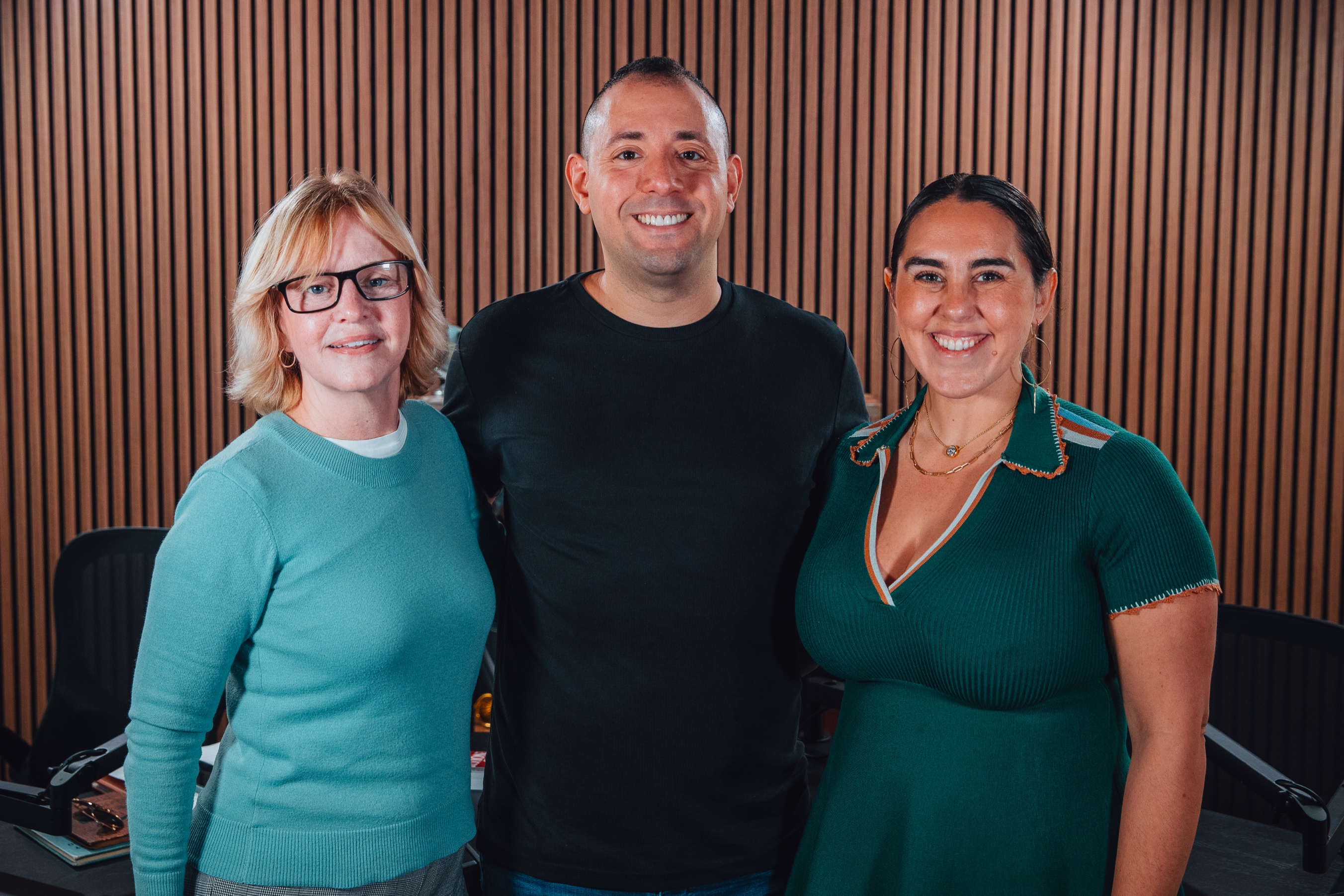
In this eye-opening episode of the Don’t Do Nothing Podcast, Barbie Rivera explains why she made the difficult decision to pull her own children out of public school. Drawing from firsthand experience inside the education system, Barbie breaks down what parents aren’t being told about modern public schools and why so many families are losing trust in the system meant to protect and educate their kids.
Barbie shares the moment that changed everything for her as a parent, the red flags she began noticing in classrooms, and how institutional pressure often overrides a child’s individual needs. She also discusses why labeling, medication, and standardized solutions are failing children—and what parents can do instead to take responsibility for their kids’ education.
Throughout the conversation, Barbie explains how applying practical principles from Scientology helped her think independently, trust her observations, and make decisions based on what was actually working for her family. This episode speaks directly to parents who feel something is off but haven’t yet found the words—or courage—to act.
If you’re a parent questioning the public education system and looking for real-world insight from someone who’s been inside it, this conversation will challenge assumptions and empower you to think differently about your child’s future
Are you curious about yourself?
👉 Take a personality test: https://ddnpod.com/test
Watch the full episode here:
Audio Version:
Text Version
[00:00:00] Whitney: And why did you decide to go from public school to a homeschool situation?
[00:00:03] Barbie: The second Friday of first grade, the teacher pulled me aside and they said, your son is mentally handicapped and will most likely need medication for the rest of his life to learn. If I would’ve done what the experts told me to do, I guarantee you my son would be addicted to drugs right now and him and I would not have a relationship if a child from that environment is getting targeted.
[00:00:26] Barbie: We are lost as a country. And I’m like, what medication she’s on? She goes, how can you tell? I’m like, how can you not? She had been prescribed Prozac when she was three.
[00:00:36] Aaron: This is probably the one that’ll get this episode canceled more than anything else.
[00:00:39] Barbie: Early 19 hundreds, the focus of the school was to make.
[00:00:43] Barbie: Fast thinking, God fearing men who could lead families and women who could raise family and contribute to society. That’s no longer the purpose of school.
[00:00:53] Whitney: I wanna introduce to you our incredible Barbie Rivera. She is a single mother [00:01:00] of four children, plus she adopted an 8-year-old on top of that
[00:01:04] Barbie: unofficial, unofficial adoption.
[00:01:05] Barbie: But yeah, I raised another boy.
[00:01:07] Whitney: Yes. And then you, she’s also started homeschooling all of her children and then became a micro school, not only accredited What?
[00:01:17] Aaron: Accredited,
[00:01:17] Barbie: yeah. I’m a private school, but I qualify. Like micro school didn’t exist when I was started. Okay. Because you think private school, you think like Delphi and I’m definitely not that.
[00:01:27] Barbie: Okay. I’m, but I’m a private school. Yeah. And it’s accredited.
[00:01:30] Whitney: Incredible.
[00:01:31] Barbie: Thank you.
[00:01:31] Whitney: Yes. And then not, and then also she is an author of. Enough is enough. Okay. This is an incredible book. I’ve already read the back of it. If you haven’t bought this yet, you should definitely buy it and read it. Um, and then she’s also an advocate for children that are falsely labeled, uh, that have disabilities and can’t learn.
[00:01:53] Whitney: Okay. And, and are medicated. So she’s an active advocate of those children. [00:02:00] Um, and she’s also been in Scientology for over 40 years.
[00:02:03] Barbie: Yes.
[00:02:04] Whitney: All right. So we’re gonna be hearing all the incredible, juicy stories that we have. Good. From Amazing Barbie.
[00:02:10] Barbie: Thank you.
[00:02:11] Whitney: Thank you for being here today.
[00:02:12] Barbie: Thank you for having me.
[00:02:13] Whitney: Alright, so I was just wondering, you know, you the, at first I was like, oh, every single one of these subjects are very, very interesting to me. And I wanna start off with the fact that you’ve been in Scientology for over 40 years.
[00:02:24] Barbie: Yes.
[00:02:24] Whitney: 40 years ago. It was like at the very beginning. Like the beginning years.
[00:02:28] Whitney: So how did you find out about it?
[00:02:30] Barbie: Okay. So the way I found out about Scientology was actually quite by accident. I was 14 and I found a Dianetics book, and I thought, this is a lot of information about volcanoes. You know, like, can we, you know, I’m like a kid and I look at it and I couldn’t understand, or I couldn’t read, I couldn’t read it, you know.
[00:02:51] Barbie: But in the beginning it said, you can always write to me El Ron Hubbard. And I’m like, I love getting mail. Like I’m, I’m still a letter writer,
[00:02:59] Whitney: [00:03:00] okay?
[00:03:00] Barbie: Anybody who writes me gets a letter back always. And with stickers and some success stories, something, right? So I wrote to El Ron Hubbard and I remember the first letter I wrote, uh, my dog Boots was about to turn 10, and she was a beagle mix, gorgeous little girl.
[00:03:16] Barbie: And I go, dear l Ron Hubbard, the Best Rock group. That’s the Best Rock album that has ever been recorded Is close to the edge by yes. Period. And my dog boots is about to turn 10. Your sincerely. Barbara Brown and he wrote me back and he wrote me back, happy Birthday boots. So we went back and forth for years.
[00:03:43] Barbie: Like I told him about when I dyed my hair pink and he wrote me back. He’s like, that sounds like a hairdo. And I’m like, who says hairdo these days? When it was like hilarious. And many of the letters were hand signed and my letters were nonsense. They were like a [00:04:00] teenager.
[00:04:00] Aaron: Mm-hmm.
[00:04:00] Barbie: You know, oh, I really like Joe, but he doesn’t like me.
[00:04:03] Barbie: Any advice? And you know, and it would, you know, it was like whatever. And he always wrote to me, I sent him a sticker. He sent me a sticker. And I still have that sticker. I still have the letters.
[00:04:15] Whitney: Wow.
[00:04:15] Barbie: Anyway, when Damon was born, uh, El Ron Hebard was still alive and he was like, welcome Damon. And by that time I was a Scientologist.
[00:04:24] Barbie: But I’ll tell you the one thing that really, um, fascinated me. About all run Hubbard not knowing anything about Scientology was, I was writing to him realize I’m a, a dramatic teenager. Right. You know, and I’m blaming everything on my parents and my mom is so unfair and my dare dad is this. And it’s, you know, he never once said anything bad about my parents.
[00:04:47] Barbie: Never once, never once did he try to get me to go to the church.
[00:04:54] Whitney: Wow.
[00:04:55] Barbie: Never once was there. Oh, there’s a course you can do or, [00:05:00] ’cause I, I’m, it’s not like I’m the opposite, but if somebody tell, like, if one of my kids, Hey, the neighbor made a face at me, I’m like, where are we going? Get in the car, we’re going, you know.
[00:05:10] Barbie: Yeah, yeah, yeah, yeah. I’m on it. You know, I’m not that. Oh, okay.
[00:05:14] Aaron: Well, thank you for telling me that.
[00:05:15] Barbie: I’m not that person. But anyway, and I found that fascinating because here I am pouring my heart out to this man, and he’s just handling each letter as its own communication. Telling me that you know, I will, you know, it will get better.
[00:05:31] Barbie: I’ll make it better. That’s
[00:05:33] Whitney: beautiful.
[00:05:33] Barbie: You know, it was very encouraging. At the same time it was also silly ’cause I’m like, I got my driver’s license. In fact, I’ll tell you the, the, I’ll end on this one. The longest letter I got from LRH was when I was 16. And I’m like, I’m a straight A student at school.
[00:05:51] Barbie: Gli like couldn’t. When I graduated I realized I knew nothing.
[00:05:56] Whitney: Okay.
[00:05:56] Barbie: Knew nothing. Like I was so unprepared. [00:06:00] But I wrote him this letter. I’m like, I got an A in driver’s ed. I am a newly licensed driver. And the letter I got was like this long. And he’s like, well, while as are wonderful, you need to back up.
[00:06:16] Barbie: Uh, the theory with the skills of driving. Mm-hmm. And I was basically got schooled ’cause it was like. When you do the student hat course, the major study course in Scientology, you find out that the certificate really doesn’t matter. Mm-hmm.
[00:06:32] Whitney: Right.
[00:06:33] Barbie: It’s can you do it
[00:06:34] Whitney: right.
[00:06:34] Aaron: That’s right.
[00:06:35] Barbie: Right. That’s true. So he was like, I just pictured him like, okay, here’s his pink headed teenager gonna drive off a cliff in Cincinnati, Ohio.
[00:06:43] Barbie: So he took the time to write me of like, make sure you can define the words and can practice, you know? And I was like, okay, thank you. That’s, anyway. That
[00:06:53] Whitney: beautiful.
[00:06:54] Barbie: Yeah.
[00:06:54] Whitney: That’s incredible.
[00:06:55] Barbie: That was really, yeah. That was really, and that’s how I got started.
[00:06:58] Aaron: That’s amazing.
[00:06:59] Barbie: Yep.
[00:06:59] Whitney: [00:07:00] What was your first course that you actually did in Scientology?
[00:07:03] Barbie: Um, the first course I did was a seminar given by Kevin Wilson, who’s now in charge of Sterling Management.
[00:07:11] Whitney: Okay.
[00:07:12] Barbie: He had a weekend seminar, it was called a Past Life Seminar.
[00:07:16] Whitney: Hmm.
[00:07:16] Barbie: And basically you went, he went, sounds
[00:07:18] Aaron: interesting.
[00:07:18] Barbie: It was, well, it was. You know, we’re going back to the seventies ’cause I was 14 and I wanted to, I’m like, oh, let me go see what this is.
[00:07:26] Whitney: So at 14 years old that was
[00:07:27] Barbie: your first I went in service, that was my first service. Oh wow. I did two and that’s all I could do. ’cause my parents weren’t into it. Okay. And I was a kid and they were $10 each.
[00:07:35] Whitney: Okay.
[00:07:36] Barbie: So I did this thing, it was called the Past Life Seminar. And in it like, you know, like the Scientology website now, it has all these courses you can do for free.
[00:07:45] Barbie: Mm-hmm. Mm-hmm. Basically you got an introduction to all of that.
[00:07:49] Whitney: Mm.
[00:07:49] Barbie: You got an introduction to Affinity, reality, communication, understanding. You got an introduction to the mind. Uh, you did communication drills and it was nine to six. Saturday at [00:08:00] nine to six, Sunday, and there were like 20 people there.
[00:08:02] Whitney: Mm-hmm.
[00:08:02] Barbie: And I said, I swear, I walked in on Saturday morning an introverted like the way I was before Scientology to the way I am now. It could be two different lifetimes. Wow. ’cause I’m too, I, I could, if I describe myself, I’m describing an introverted cousin. Wow. ’cause it’s not me. I couldn’t look people in the face.
[00:08:24] Barbie: I couldn’t complete a sentence. I was super shy, super introverted, bullied. You know, it’s like I pulled all of that negativity in and when I walked out on Sunday, I was like, I own my space.
[00:08:36] Aaron: Wow.
[00:08:36] Whitney: That’s incredible. Yeah. From that complete like introverted little girl to this incredible powerhouse that you are today for children, plus an adopted, but not fully adopted child.
[00:08:48] Whitney: Yeah. And a bestselling author. An actual accredited school. Like you’re a very accomplished person.
[00:08:54] Barbie: Thank you.
[00:08:54] Whitney: Yes.
[00:08:55] Barbie: Thank you.
[00:08:56] Whitney: So, you know, when did you start having children? [00:09:00]
[00:09:00] Barbie: I started young. I was 20 years old when I turned. I think I, I had Damon four weeks after I turned 20. But the thing with kids, like I come from a large family, so when my, my grandmother passed away at the age of 97, she had 13 children.
[00:09:18] Whitney: Wow. Okay.
[00:09:19] Barbie: So my mother was like,
[00:09:21] Whitney: were they like Catholic or what
[00:09:22] Barbie: was No, no, no, no. Just that’s what you did back then. No tv, no internet, you know? Yeah.
[00:09:29] Aaron: Lots of kids. Yeah.
[00:09:30] Barbie: So my mom, I think was third from the youngest. So my mother, when she was born there were already grandchildren. My mother was born an aunt.
[00:09:40] Aaron: Mm-hmm.
[00:09:41] Barbie: Wow. You know, so when my grandmother passed, there were five generations of us and there were 101 grandchildren.
[00:09:48] Whitney: Wow. That’s so beautiful.
[00:09:50] Barbie: No, it was great. Like we had, uh, growing up we had my one cousins, they were Jehovah Witnesses, and they had seven kids in six years, no twins. [00:10:00]
[00:10:00] Whitney: Whoa.
[00:10:01] Barbie: And they lived on a small farm about a half an hour from our house.
[00:10:05] Barbie: And once a year the parents would go on a weekend retreat. So my mom and dad would go to the farm with my brothers and sisters. There were five of us and we were all comparable in ages. Right. And we would be in this huge farmhouse. And my mom and dad’s, like my mom’s, my dad would call my mom, mom. She’s like, Jerry, kitchen duty.
[00:10:28] Barbie: And they would make like 150 pancakes, the bacon, the this, the that.
[00:10:32] Whitney: Wow. We would have
[00:10:34] Barbie: boys and girls. It was 12 kids around the table. And some of these are strapping boys. Yeah. You know, my cousins, my brothers, my older brothers. I’m one of the youngest in my family Anyway. And then my dad would take ’em out to the backyard and they’d set up targets in the cornfield and they would shoot BB guns and
[00:10:50] Whitney: Wow.
[00:10:50] Whitney: That’s
[00:10:50] Barbie: a’s so a fun fish. Fun. Yeah. And then at lunchtime come back, it’s like, okay, brown, come on, jar. You know? And then they would make grilled cheese sandwiches. And then at [00:11:00] dinner we would have dinner, and then everyone pile into this massive living room and we’d watch scary movies. You know,
[00:11:07] Whitney: my goodness.
[00:11:08] Barbie: And then we’d all sleep in the same, but you know, it’s like terrified. Some of the girls would all sleep in the bed, the boys would all sleep. And we, anyway, fantastic. And we brought our dog, you know, it was like, I loved it. I loved having that kind of family. So I wanted that kind of family. I actually wanted eight children.
[00:11:24] Barbie: Oh my goodness. That was my, my goal because I mean, and now looking back, I wish I would’ve done it, um, because my kids are,
[00:11:34] Aaron: they’re incredible.
[00:11:35] Barbie: They’re really good. They’re really good. But they were, I’m gonna tell you, they were raised with Scientology technology.
[00:11:42] Whitney: Okay.
[00:11:42] Barbie: Like, and it makes all the difference.
[00:11:44] Barbie: Like they’ve never had interest in drugs, never had interest in alcohol. And there’s not a lot of people that can say that these days.
[00:11:50] Whitney: That is very true. Now, how did you know that you needed to, were they ever in a normal, like a public school?
[00:11:56] Barbie: Yes.
[00:11:56] Whitney: Okay. So. Can you explain like, what, what [00:12:00] happened there?
[00:12:00] Whitney: Like when, what was the transition? Why did you decide to go from public school, public education to doing it yourself at to a homeschool situation and environment?
[00:12:10] Barbie: Okay, so Damon was six and he was entering first grade. He did a few months of kindergarten. ’cause I attempted to homeschool him.
[00:12:18] Whitney: Mm-hmm.
[00:12:19] Barbie: But it was a lot because I had, Morgan was two, I was pregnant with Adam and Damon’s gonna go into kindergarten.
[00:12:26] Whitney: Okay.
[00:12:26] Barbie: Now I’m thinking that the school system is gonna be what I went through. ’cause it’s only 20 years difference.
[00:12:34] Whitney: Mm-hmm.
[00:12:34] Barbie: And the kindergarten that I experienced in a very poor section of Cincinnati, Ohio is what should be held to the standard today. It was playtime, but it wasn’t like uncontrolled play.
[00:12:46] Barbie: It was in the morning. We’re gonna do the please and thank you drill where everybody gets crackers and cheese and we say please and we say thank you and we learn manners.
[00:12:54] Whitney: Mm-hmm.
[00:12:54] Barbie: And then there’s gonna be story time, and then there’s gonna be arts and crafts. It was not [00:13:00] academic.
[00:13:00] Whitney: Mm-hmm.
[00:13:01] Barbie: It wasn’t academic at all.
[00:13:03] Whitney: Right.
[00:13:03] Barbie: It was basically getting a Perth, getting a child able to start change and stop.
[00:13:09] Whitney: Mm-hmm.
[00:13:10] Barbie: On a schedule.
[00:13:11] Whitney: Yeah.
[00:13:11] Barbie: Now at 10 o’clock we, every hour we would line up to go to the bathroom whether you had to or not. Mm-hmm. If you didn’t, you know, it wasn’t run like a, a military camp, but it was very loose.
[00:13:23] Whitney: Mm-hmm.
[00:13:23] Barbie: So Damon, I’m like, they’re gonna love him.
[00:13:26] Whitney: Okay. ‘
[00:13:27] Barbie: cause he’s so well mannered.
[00:13:28] Whitney: Yes.
[00:13:30] Barbie: Kindergarten wasn’t horrible, but first grade, the second Friday of first grade, the teacher pulled me aside and they said, uh, your son is mentally handy. And will most likely need medication for the rest of his life to learn.
[00:13:45] Barbie: And I’m like, this is just false. I go, my son’s bilingual. I’m not bilingual. Damon speaks two languages. Well, he confuses the B, the D, the G and the P. And I’m like, because they look alike. Like he does not [00:14:00] confuse a cow and a horse.
[00:14:01] Aaron: Mm-hmm.
[00:14:01] Barbie: Exactly. He doesn’t confuse a cat and a dog. He’s going to, he will get it.
[00:14:05] Barbie: But where do we practice? Like what?
[00:14:07] Aaron: What year is this?
[00:14:08] Barbie: This is 1991. 1990. 1991.
[00:14:14] Aaron: And in a week they said he had to be medicated.
[00:14:16] Barbie: Two weeks. Two weeks. Yeah. Two weeks. That was it. They were like, we wanna move forward. I’m like, we’re, I’m not gonna give you the okay to move forward. Then they said, well, he also confuses the six and a nine.
[00:14:24] Barbie: I go, again, it looks the same.
[00:14:27] Aaron: Mm-hmm.
[00:14:27] Barbie: Where are we going with all of this perfection?
[00:14:30] Aaron: Mm-hmm.
[00:14:30] Barbie: At the, at the start. Why are we doing that? Why am I not freaking out about what I’m gonna wear to his wedding? Where’s this venue? You know? I’m like,
[00:14:38] Whitney: yeah, exactly. Like we have
[00:14:40] Barbie: time.
[00:14:40] Whitney: Exactly. We have time. And he was only seven, right?
[00:14:42] Whitney: Six. Six.
[00:14:44] Barbie: And then I told she, and he had just turned six, and I told the teacher I was making a joke. She goes, well, he confuses the six in the nine. I’m like, well, as soon as I get home, I’m taking Damon off of all check writing responsibilities
[00:14:59] Barbie: because I can’t [00:15:00] have my son running the household finances when he doesn’t know the difference between six and nine. And she got mad at me. What? I don’t think this is a joke. I go, I think what you’re telling me is a joke. Yeah.
[00:15:13] Whitney: Yeah. She’s teaching the little, little ones.
[00:15:15] Barbie: Right.
[00:15:15] Whitney: How could she not be light?
[00:15:16] Whitney: Right? She needs to be light with those kids,
[00:15:18] Barbie: right? No, but so should
[00:15:19] Whitney: be serious.
[00:15:20] Barbie: Right? So I wish I could say that I took him out at that point, but at that point, I’m pregnant with the youngest one. So now I have a 1-year-old, a 3-year-old Damon. I’m due to give birth in November and I’m like, okay, I’m gonna keep him in school and I’m gonna be the good mom.
[00:15:37] Barbie: I’m gonna work with him after school. Six years old, he had three hours of homework. I didn’t get homework when I was growing up until the fifth grade. And it was right spelling words five times each, or maybe practice your multiplication. It was, it was 15, 20 minutes. Mm-hmm. Right. And all that that was supposed to do, it really wasn’t about the homework, it was about [00:16:00] instilling a bigger responsibility for the student because now they had to remember, they needed to do this on their own time at home, but it wasn’t supposed to be all home.
[00:16:11] Whitney: Right. All
[00:16:12] Barbie: the time. Like we were expected to be on baseball teams. We were expected to help with the dinner. We were expected to help with the family chores growing up, which that’s the family, they, that’s the contribution. Right. Anyway, so Damon was given three hours of homework and I was being the good mom and I’m helping with it the meantime.
[00:16:30] Barbie: I have a 1-year-old and a three-year old that want me to play with them. Mm-hmm. Where, and I’m like, this is just, this is a nightmare.
[00:16:36] Aaron: Mm-hmm.
[00:16:36] Barbie: Like we’re losing that. And that was like realization number one. And I’ve had a few, I go, this school’s not about kids anymore. They’re about destroying the family.
[00:16:47] Aaron: Mm.
[00:16:48] Barbie: Because here I am, being a good mom. Right. But I’m actually being a horrible mom because I’m not paying attention to all my kids. I’m doing this. What? So he can get a grade on a paper.
[00:16:57] Whitney: You’re right.
[00:16:57] Barbie: Plus the things which I brought one. [00:17:00]
[00:17:00] Whitney: Okay. I’m sorry. I have to lean
[00:17:01] Barbie: out. This is this week one of my teachers tutors, this is the homework.
[00:17:11] Barbie: So the skill is 12 times 2.8. There’s a way to do that. Easy old books used to teach it. This is how they’re teaching it now. You have to build a.
[00:17:24] Aaron: This is a common core.
[00:17:25] Barbie: Oh, I hate, I don’t even understand that. They don’t call it common
[00:17:28] Aaron: core. They don’t call it common core, but it is. No, you guys can check.
[00:17:30] Aaron: Hopefully it’s, hopefully it’s logged in there so you guys can see that.
[00:17:32] Barbie: Well, you guys can make a copy of it.
[00:17:33] Aaron: Yeah. Yeah.
[00:17:34] Barbie: But it’s awful. So you have to make a, uh, what’s a mo, an area model and partial products. I’m like, what the hell are we doing? What the hell are we doing? Mm-hmm.
[00:17:46] Whitney: It’s very complicated.
[00:17:47] Barbie: Right. And this was what Damon was getting. Not to this extreme. This is this week, 1991 in Miami.
[00:17:52] Whitney: 1990. No, when what, what year?
[00:17:54] Aaron: This is right now. This
[00:17:54] Barbie: is right now. 19 nine. This is right now. Okay. This is this week. But now as [00:18:00] confusing this, this is kind of jumping ahead. Every subject is like this. Every single one.
[00:18:05] Barbie: But you’re
[00:18:05] Aaron: saying this is not common Core?
[00:18:06] Barbie: Well, no, because all common Core. Common Core was garbage, but it was garbage before common core.
[00:18:11] Aaron: Mm.
[00:18:12] Barbie: So that’s a whole other thing. And I’m gonna put a plug in here. Chapter three. I go over exactly the time, place, form an event. Of what happened with American education and it started being infiltrated in 1920.
[00:18:24] Aaron: Mm.
[00:18:25] Whitney: Wow.
[00:18:26] Barbie: Yes.
[00:18:26] Whitney: That’s pretty early on.
[00:18:27] Barbie: That is pretty early on. And it went in at a college level by, um, Rockefeller Junior because he was importing the psychological ideologies from Germany that we are only mud and we are stimulus response. So that’s when all of that happened. And now how does that filter down?
[00:18:46] Barbie: Now parents want their kid to have an a that’s a stimulus response. Mm-hmm. It has nothing to do with can they do it
[00:18:52] Whitney: right? Mm-hmm.
[00:18:53] Barbie: Even the school system, like I, I could have brought a ton of things I speak. There’s a group [00:19:00] in the church, it’s called the International Association of Scientologists, and there are people that go around and they brief about what’s the current.
[00:19:09] Barbie: Like drugs. What are the, what’s the current pharmaceutical? And they, and they speak to ruins of society.
[00:19:15] Whitney: Mm-hmm.
[00:19:16] Barbie: So you’ll have, oh, look at these ads that are being promoted by alcohol. Or look at how many movies have alcohol in them now. Mm-hmm. Yeah. And you see the statistics of alcoholism going, or alcohol sales going up.
[00:19:29] Barbie: So you have this group that they do research and then they brief Scientologists on the current data. I’m one person who briefs in terms of the school system. And one of the things that I bring up is in school you have this, every state they have it. It’s called an IEP, an individual educational plan.
[00:19:50] Barbie: Sometimes it’s called a program, but it’s basically the same document. And after a child gets labeled, which is done by checklist, which it’s also I go into where the [00:20:00] checklist came from.
[00:20:00] Whitney: Okay.
[00:20:01] Barbie: Um, which was Nazi Germany. Um. So after a, a student is checklist by so much
[00:20:07] Whitney: suppression,
[00:20:08] Barbie: so much
[00:20:09] Whitney: on
[00:20:10] Barbie: the, on these
[00:20:10] Whitney: beautiful children, you
[00:20:11] Barbie: know?
[00:20:11] Barbie: Yes. Yeah. These potential, whatever. Our future. Our future, yes.
[00:20:16] Whitney: Future generation.
[00:20:17] Barbie: So on the IEP, there’s uh, like student objectives, again, it might be called something different, but it’ll say, and I’m almost gonna quote it word for word. Uh, I’ll use your name. When given grade level math, arithmetic problems, Whitney will be able to solve with 70% accuracy.
[00:20:39] Barbie: And then they go through the subjects when given grade level passage. Whitney will be able to solve comprehension questions with 70% accuracy when given vocabulary words. Whitney will know, will be able to know the words with 70% accuracy.
[00:20:53] Aaron: Essentially it being a robot?
[00:20:54] Barbie: No. Well,
[00:20:54] Aaron: okay.
[00:20:55] Barbie: I’m like, so I had a psychologist in my room and I was arguing on this ip.
[00:20:59] Barbie: I’m [00:21:00] like, this is garbage.
[00:21:00] Aaron: Mm-hmm.
[00:21:01] Barbie: Uh, she goes, why? I go, okay. And I looked at this woman, makeup done, nails done. I go, when you go get your nails done, are you happy with the 70% accuracy? When you get your hair done, are you happy with the 70% accuracy? When your daughter gets her wedding photos, are you gonna be happy with the 70% accuracy?
[00:21:20] Barbie: And you saw her like shift. I go, so why in the hell are we going to, first of all, my son was gonna be labeled because he was inaccurate with his alphabet letters.
[00:21:31] Whitney: Right?
[00:21:31] Barbie: So now the standard after we drug him is a C minus below average student.
[00:21:36] Aaron: Mm-hmm.
[00:21:36] Whitney: Right?
[00:21:36] Barbie: I’m like, come on, at least show me something. At least teach me some, enlighten me.
[00:21:41] Whitney: Right.
[00:21:41] Barbie: How is that the goal? And for anyone who doesn’t know, like you’d have to be a DO courses at the church, like in like the church, you have introduc, you have free courses, you have introductory courses, and then you have what’s called the academy. And when you get in the academy, it’s no nonsense.
[00:21:59] Barbie: Mm-hmm. [00:22:00] You read a reference. Somebody’s gonna sit across from you and ask you what’s the definition of the word lesson? And you better have the answer right there. Mm-hmm. With an example or a usage sentence on how that applies. Mm-hmm. Right? And they’re gonna ask you however many words they ask you, right?
[00:22:16] Barbie: Yeah. So that you know the information and can apply it. And can apply it.
[00:22:21] Aaron: And if you have a 70% accuracy,
[00:22:23] Barbie: the church would, could you imagine if you,
[00:22:26] Aaron: well, what happens? Because a lot of people might not know.
[00:22:28] Barbie: No, you would close. Yeah, we would close if a restaurant. Uh,
[00:22:33] Aaron: but I mean, on the, on the, you’re getting a check and you get one wrong,
[00:22:36] Barbie: right?
[00:22:36] Aaron: What, what, what happens?
[00:22:38] Barbie: What do you mean a check?
[00:22:39] Aaron: Like you’re doing the checkout test? Yeah. Yeah. And the person
[00:22:41] Whitney: doesn’t know the definition
[00:22:42] Barbie: of word. Oh, Scientology. Or can’t show the example.
[00:22:45] Aaron: You say
[00:22:45] Barbie: Flunk. Flunk. Go tudy.
[00:22:47] Aaron: Yeah.
[00:22:47] Barbie: Find your word and tudy, right? You
[00:22:50] Aaron: have, and whats the standard? And what’s the standard of the church?
[00:22:52] Barbie: A hundred percent. Yeah. Absolute. It’s a hundred percent or nothing. It’s not 99.9%. It’s a hundred percent. [00:23:00] And that, I’m just gonna tell you that standard does not exist anywhere. And I’ve been out in the world. Mm-hmm. I’m on the front lines of educational suppression. Most of the people I deal with are not Scientologists.
[00:23:13] Barbie: I don’t care.
[00:23:15] Whitney: Right.
[00:23:15] Barbie: Mm-hmm. I don’t, that’s not my mission is to turn people in. Scientologists, they have questions. Watch the TV show. I’ll send them, I’ll tell ’em a book. Yeah. Or whatever. That’s not my
[00:23:25] Aaron: mm-hmm.
[00:23:25] Barbie: My personal, that’s not your mission. That’s not my mission. My mission is to help people the way I help my son.
[00:23:31] Whitney: Right.
[00:23:31] Barbie: Because my son, if I would’ve done what the experts told me to do, I guarantee you my son would be addicted to drugs right now.
[00:23:39] Whitney: Mm-hmm.
[00:23:40] Barbie: And him and I would not have a relationship because he was already resisting when he was six. And then I didn’t take him outta school. He stayed in school for the full year.
[00:23:50] Barbie: Okay. With me advocating being the good mom, being the horrible mom. Right. But me thinking I’m being the good mom and what happened? To my son’s [00:24:00] personality, his self-worth, it just tanked. Right? And at the end of the year, he said these words to me, I am stupid. And there’s no 6-year-old special needs or not.
[00:24:15] Barbie: Who should ever utter those words or feel that? That just makes me wanna cry even Absolutely. Right now. Absolutely. And I feel like, again, this is like another of my huge regrets, not having a bigger family and then this one not taking him out sooner because I felt like I knew he wasn’t doing well there.
[00:24:32] Barbie: And I left my son in a burning building because I was pregnant and I needed more sleep. And I had two in diapers now and a 3-year-old. Right. And I’m like, okay, well guess what, Barb, you need to get over it. Mm-hmm. You need to save your son. So that’s when I started homeschooling and then I told people, I’m like, yeah, Damon’s not gonna go to second grade, and Morgan’s not gonna go in school.
[00:24:56] Barbie: None of my kids will be, will ever set foot in school. They did [00:25:00] this to a very bright, well-behaved boy. And I’m not saying it because I’m the mom.
[00:25:06] Whitney: I understand.
[00:25:07] Barbie: Mm-hmm. He was, he’s bilingual.
[00:25:09] Whitney: Yes.
[00:25:10] Barbie: You could take him anywhere he would go, like if you, you know, if we were family, you’re like, Hey, we’re gonna go fishing in the keys.
[00:25:16] Barbie: Can Damon come like absolutely anything I should know. Nope. He’ll, he’ll tell you everything. He doesn’t like spicy foods, you know, like the normal things. But he’s not gonna throw a fit. He’s not gonna hit you with something. He’s not gonna throw rocks at you. Right. He’s not gonna embarrass you. He’s not gonna throw himself on the floor.
[00:25:34] Barbie: He’s not, he’s not into that nonsense.
[00:25:37] Aaron: And what school was this at?
[00:25:39] Barbie: This was a public school. It was, uh, Carver, it, it, it’s located actually about 10 minutes from the Church of Scientology in Miami. It’s still there in Coconut Grove.
[00:25:49] Aaron: Oh, great. Okay.
[00:25:49] Barbie: Yeah.
[00:25:50] Whitney: Wow.
[00:25:51] Barbie: Yeah.
[00:25:52] Aaron: And, and do you think this is like specific to that?
[00:25:56] Barbie: Oh, definitely not. I think this is the United States of America [00:26:00] right now. Okay. So I’m gonna jump into this. So I wrote, enough is enough to let people know exactly what they’re up against because, okay. So it was mainly because I’m, I’m pretty successful as an educator and as a tutor.
[00:26:17] Whitney: Mm-hmm.
[00:26:17] Barbie: Like my students loved me.
[00:26:18] Barbie: The parents pretty much love me. You have a couple of people very here and there. Okay. Whatever.
[00:26:22] Whitney: Mm-hmm.
[00:26:23] Barbie: And I’ve raised my four kids and I’m like, pat on the back. Good job. Everybody’s great. We made it through, but I can’t really sit back and relax ’cause I see what’s happening. It’s like I’m on a battlefield.
[00:26:37] Barbie: My children made it through the war and they’re now drafted out or aged out. But now what do I do with all of these other kids, right? So, um, when you’re a Scientologist, you are, you know, Scientology isn’t something you pray to. We don’t have a Bible. You can believe in God, you can, you can be Jewish, you can be Catholic, you can be anything.
[00:26:58] Barbie: Um, in fact, I tell a [00:27:00] story ’cause some people have asked me, so doesn’t this affect you believing in God? I go, no. Let me give you an example. Thanksgiving. I love Thanksgiving. That’s like, I don’t cook often, but I love Thanksgiving. So I’m gonna have, if my family, all the kids are in town, I have a full house.
[00:27:22] Barbie: I can pray that everything goes right. Please make this dinner go right or I can reach for my 1965 Betty Crocker cookbook. C how to make mashed potatoes, cranberry sauce, and turkeys, because I’m using this as a source, does not make me any less a believer in God.
[00:27:46] Whitney: Right.
[00:27:47] Barbie: So to me that’s what Scientology does.
[00:27:50] Whitney: Mm-hmm.
[00:27:51] Barbie: It gives me a solution. And I will give you an early, um, example of how, you know, ’cause I’ve had many points where I’m like, oh my [00:28:00] God, that was amazing. So one of my children, I won’t mention names, when they were a toddler, they had chronic ear infections. Mm-hmm. I’m talking chronic and I’m at the pediatrician probably once every three months.
[00:28:13] Barbie: Sure. And you do the antibiotics, you know, you do the same thing. Yeah. Um, and I’m like, okay, let me step back. What is this? What’s happening here? Here’s a, all my kids were well-behaved. Um, here’s a child who normally gets along great. And then as soon as it gets to nighttime, mom, I want a cup of water. No, it’s too hot.
[00:28:34] Barbie: No, I want cold water. Like they’re being a little punk. And then the blanket wasn’t right, and then the This wasn’t right. None of this wasn’t right. I’m like, okay, I’m just noticing things. I’m not putting anything together yet. Right. But the ear infections, I’m like, I don’t know where this is coming from because none of the other kids are getting them.
[00:28:53] Barbie: It’s not like it’s swimming, you know? Right. Whatever. So in the church, you have [00:29:00] a library and it has all the writings of l Ron Hubbard, and there are these blue books. They’re like encyclopedia. It’s called Research and Discovery. And it’s basically after he wrote, wrote Dianetics that he kept evolving things.
[00:29:15] Barbie: And again, the same way phones evolve, like the first phone was a breakthrough.
[00:29:20] Whitney: Right.
[00:29:21] Barbie: Scientology has evolved.
[00:29:22] Whitney: Mm-hmm. Right?
[00:29:23] Barbie: Right. Over the years. And he finds easier ways to do things or, oh, we didn’t look at this, or, oh, so things evolve. So I just went to an index on ear aches, ear infections, and it taps, it’s like, so you don’t have to read the whole volume, but it taps, it’s like page 187, paragraph seven, like thank you L Ron Hubbard, you know?
[00:29:45] Barbie: And it was like basically restimulating or re-experiencing birth. The conditions of birth can cause one to have sinus problems, ear infections, throat problems. [00:30:00] And I’m like, holy moly. He acts exactly like I did in labor. This child of mine acted exactly like I did in labor. Oh, honestly, goodness. It’s a wonder my children weren’t born like cursing sailors because, you know what I’m saying?
[00:30:15] Barbie: I was like, you know, EL hub’s like it’s best to have a silent birth. I’m like, well sir, I did not apply that. You know, the whole hospital ward, the whole floor heard me. Anyway, so I installed a dimmer in the room. I didn’t turn the lights out ’cause that was the trigger. The lights went out. Wow. And my son would start being uncomfortable.
[00:30:40] Barbie: And then he ended up with ear, you know, it was like two, three days later, he’d have an ear infection. I installed a dimmer. He stopped complaining at night and he had no more ear infections. Wow. And I’m like, thank you. I’ll take it. That’s incredible. Yeah. So I’ve had a few of those. Wow.
[00:30:57] Aaron: And And by dimmer you just mean like you left the light on, but not [00:31:00] all the way.
[00:31:00] Barbie: Well, it, yeah. ’cause you have a switch that’s on or
[00:31:03] Aaron: off. Yeah, yeah, yeah. There’s
[00:31:03] Barbie: no, there’s no gradient.
[00:31:05] Aaron: Mm-hmm.
[00:31:06] Barbie: So I turned it to where it was low romantic lighting.
[00:31:10] Aaron: Yeah, yeah, yeah, yeah, yeah.
[00:31:12] Barbie: And slept through the night. Wow. No more ear infections.
[00:31:16] Aaron: Pretty good.
[00:31:16] Barbie: Yeah. That was like, but anyway, but that takes, you know, okay.
[00:31:20] Barbie: So now we take a look at that. That takes kind of like being aware enough that you’re gonna look for the problem and it’s like, I realize I was part of the problem because I’m part of that birthing ground, you know? It’s like he’s gonna have to live with me for a long time, so we gotta get over this. But it was the darkness.
[00:31:39] Barbie: Mm-hmm. That really was the trigger. And so if I would’ve done something else, and I’m not, say I did the medical route.
[00:31:45] Aaron: Yeah.
[00:31:46] Barbie: Because obviously if you have a broken arm, go to the hospital. Absolutely. If you have heart pain in your chest, go to please go to the hos. Call 9 1 1. Yeah, right. Yeah. But if you want, maybe there is something behind it after you [00:32:00] solve the, whatever the emergency is right now, like I’m not, oh, I’m never gonna send him to a doctor.
[00:32:05] Barbie: That is not my policy at all. Anyway, that was like one of those moments where I’m like, okay, alright, this, this really works.
[00:32:15] Aaron: Mm-hmm.
[00:32:16] Barbie: And it’s so simple actually. And it’s actually so brilliant that this man came up with that. You know, it’s,
[00:32:23] Whitney: it’s incredible that you, that you were open enough to even think of going to look in the research and discovery volumes.
[00:32:28] Whitney: I haven’t even thought of that once.
[00:32:30] Barbie: No, that, that I’m gonna, it’s a great
[00:32:31] Whitney: idea.
[00:32:32] Barbie: We’re gonna have a dimmer in
[00:32:32] Aaron: the house tonight.
[00:32:34] Barbie: Well, I, I think there’s like a hundred bot, it’s like an encyclopedia, but I’m gonna tell you it has, whenever I’ve had a problem.
[00:32:43] Whitney: This is such great, uh, great advice if your child has frequent ear infections or
[00:32:49] Barbie: research it.
[00:32:49] Whitney: Yeah,
[00:32:50] it’s
[00:32:50] Barbie: great. Yeah. Research. What does LLRH say about ear infections? And I would, I mean, you can go to, you can go
[00:32:55] Aaron: and so guys to understand like the word risk stimulation and Graham was a couple things that she said. Like, there [00:33:00] is a book called How to Use Dietetics and it’s gonna go over these things.
[00:33:03] Aaron: So you can always, you can check it out. Um, I’ll put a link below so you can look at that. But yeah, these concepts, like, again, she’s not going very deep into it, but it’s, it’s in there. Okay. It’s just basically there’s, there’s just, just go to the videos. Just go through that,
[00:33:16] Barbie: check it out. Well, like stimulation would be a negative reaction to a current situation.
[00:33:22] Whitney: Yeah.
[00:33:22] Barbie: And to blinking you to the past.
[00:33:25] Aaron: Mm-hmm.
[00:33:25] Barbie: Similar to, I mean, this isn’t negative. When you smell Turkey, you’re transported to Thanksgiving. Mm-hmm. When you smell a pine tree, you’re transported to Christmas. Mm-hmm. So that’s an easy transportation.
[00:33:35] Aaron: Mm-hmm.
[00:33:37] Barbie: You walk down the street, suddenly you’re pissed off.
[00:33:40] Barbie: Ah, something, something around triggered something, and it might not make any sense at all. Right. But it’s probably not your neighbor.
[00:33:49] Whitney: Mm-hmm.
[00:33:49] Barbie: Or, you know, whatever. Anyway, so I, I ended up solving it and I was very happy that I solved that. It made sense to me, and, and I ended up solving [00:34:00] Damon’s inability to determine the difference between the B and the D when he’s a baby.
[00:34:07] Whitney: Right.
[00:34:07] Barbie: By using Clay Playdoh, put it in Play-Doh, put it in Play-Doh, you know, and, and, and again, against the education system, you know, it’s like I have, I raised four boys. How many times my daughter was like, perfection. My daughter, she is just like totally opposite the boys. She was very into her handwriting.
[00:34:28] Barbie: She completed homeschool kindergarten in eight weeks. Right. And I had to have her at the opposite end of Damon. ’cause she would look at his handwriting that A, looks like an apple that was run over by a school bus. And I’m like, oh my goodness. I was like, because she had the perfect circle and would practice it.
[00:34:45] Barbie: And he was just like, whatever. Right. Um, anyway, it’s like how many times a day does a parent have to tell a child, doesn’t matter, boy or or girl to brush their teeth. And [00:35:00] then for how many days a week and then for how many years until they do it on their own. We’re talking thousands of times. Mm-hmm.
[00:35:07] Barbie: That’s absolutely correct. Mm-hmm. Thousands of times. Yep. So my son was expected to get the letter B and D first day.
[00:35:15] Whitney: Mm.
[00:35:16] Barbie: I’m like, it doesn’t work that way. No way. It does not work that way. And again, my kindergarten teacher, if my principal, Mr. Glenn, who I wore his pants up to here, big, thick glasses. If someone would’ve told Mr.
[00:35:31] Barbie: Glenn, Hey, the first graders are gonna start getting three hours of homework, he would’ve laughed in their face. He goes, no, we don’t do that the first grade. We’re not gonna ruin the children.
[00:35:38] Whitney: We don’t wanna ruin their childhood.
[00:35:40] Barbie: That’s right. But that’s the difference between my education, which was already on the downline.
[00:35:47] Whitney: I see.
[00:35:47] Barbie: Because I was, I think I did kindergarten in 19 69, 19 70 in my little brother, when he entered kindergarten, it was almost, you had to go through a psyche value to even get into [00:36:00] kindergarten, which my mother was like livid about like, why do they have these psychologists? You know? That’s rough. Yes.
[00:36:08] Whitney: I didn’t experience that because I grew up in Scientology.
[00:36:10] Barbie: Yeah.
[00:36:11] Whitney: So my parents, I was in an applied scholastic school in El Cerrito, in Be. California.
[00:36:16] Barbie: Nice.
[00:36:17] Whitney: Yeah. So I didn’t, I was, I was very lucky.
[00:36:21] Barbie: Yes. Yeah.
[00:36:24] Whitney: No.
[00:36:24] Barbie: And my other three kids, they never thought they were stupid. Like they never had that within themselves.
[00:36:29] Whitney: Mm-hmm.
[00:36:30] Barbie: Because it wasn’t
[00:36:32] Whitney: because you protected them.
[00:36:33] Whitney: You were their mother and you’re advocating, advocating for them. You made them environment so that they were able to actually flourish.
[00:36:38] Barbie: Right. Well, and again, that comes down to a basics of sci, a basic of Scientology, um, which puts it like this completely opposed to psychology and psychiatry. Mm-hmm. The teacher was only focused on Damon’s disability.
[00:36:54] Barbie: Oh, he can’t do this. He can’t do that. He can’t do that. All of the checklists or can’t do, can’t do, can’t do [00:37:00] Scientology. The whole theory of why auditing works is you take what the, what the person can do and you expand upon it.
[00:37:07] Whitney: Absolutely.
[00:37:07] Barbie: And l Ron Hubbard knows not everybody going in session goes in at the same point.
[00:37:13] Barbie: You know, you’re gonna have a win
[00:37:16] Whitney: for sure.
[00:37:17] Barbie: But the win of somebody, let’s say, coming off of a drug rehab and my win, they’re, they, they might be of a different magnitude, but it doesn’t invalidate this person’s win. Maybe this person decides for real, Hey, you know what, I’m not gonna do drugs anymore. Right?
[00:37:35] Barbie: Good. I never really had to make that decision, but I had to make other decisions. Right. So he gets better, I get better, and this person contributes this way and I contribute that way. But it’s based on like, I think the reference is accent on ability. Right? And the school, all they did was tear my son apart, which that, and, and it’s not my son.
[00:37:57] Barbie: I’m like, if we target Damon and I [00:38:00] figured, you know, I read to my kids every night for nine years. I read a story to my children every night for nine years. I’m like, okay, bath time. You this, you that. Okay. Schedule, schedule, schedule, you know? Mm-hmm. While they’re this big. And I’m like, if a child from that environment is getting targeted, we are lost as a country.
[00:38:25] Whitney: I agree with you, Erin and I, we also started homeschooling our children recently.
[00:38:30] Barbie: Nice.
[00:38:30] Whitney: Yes. And I, I’ve seen drastic, uh, changes with the way that our children are, um, specifically our oldest. Our oldest. And how old? She’s 10. About to be 11.
[00:38:40] Barbie: Nice.
[00:38:41] Whitney: And, um, she wasn’t doing very well. She wasn’t happy, like her general demeanor.
[00:38:46] Whitney: She was always upset. And now that she’s been homeschooling, she’s actually generally happy.
[00:38:53] Barbie: Yeah.
[00:38:53] Whitney: And there’s no more, she’s talkative. She’s very open. So it’s, it’s, it’s very drastic. [00:39:00] The, the, the vast difference between Yeah. Going to school and homeschooling and, you know, I feel like there’s, it’s more of a, of an environment where they feel safe that they can actually flourish and they can be themselves.
[00:39:10] Barbie: Yes.
[00:39:11] Whitney: Without being invalidated. Yes. In any way.
[00:39:13] Aaron: I think one of the things is no matter what school, there’s a lot of influence from other children.
[00:39:17] Whitney: That’s true.
[00:39:18] Aaron: Right? I mean, there’s, there’s the group and, and I don’t know that dynamic, you know, growing up everyone has had a different experience and the school experience is not, no matter what school you’re in, the school experience is not similar to like, socializing in any other environment.
[00:39:34] Aaron: There’s no other place, and that’s, maybe you’re in prison where you’re gonna have to sit next to someone for like eight hours and not really be able to do anything. You’re not supposed to talk, you’re not supposed to play. I mean, like,
[00:39:44] Barbie: right.
[00:39:44] Aaron: Where, where does that occur? Right? If that’s like learning how to make friends, like that’s a little strange.
[00:39:49] Aaron: You know what I’m saying? So I don’t know what your take on is, like how much is it curriculum? How much is it planned? How much is it that like just attention or. What are the, like important factors you think that you’ve [00:40:00] seen, right? People coming in to your school, right? I know it’s a, it’s a small school and you do a lot of tutoring.
[00:40:04] Aaron: Like what are those factors that you think are, are mostly affecting children right now?
[00:40:08] Barbie: Well, there’s a, there’s several, it’s not a one answer question. Mm-hmm. Because there’s several, one. Um, I think that, sadly, I think that my children, and I’m gonna say children from the eighties and early nineties, is the last generation that turned refrigerator boxes into spaceships because now they’re all on phones.
[00:40:31] Barbie: Mm-hmm. Right? And you go into, like, I, I’ll tell you this story. I have a, I had a student that was just like, first of all, he was medicated on three different drugs because Oh, he can’t study. He’s antisocial 12.
[00:40:45] Whitney: No,
[00:40:45] Barbie: we’ve had, I’ve had them twin girls, five years old come in and my name’s Barbie and my office, you know, you guys have this?
[00:40:54] Barbie: Mm-hmm. I have one or two. Devoted to Barbie. Mm-hmm. I have Barbie dolls. Mm-hmm. I have a Barbie pink [00:41:00] car. I have the Fisher-Price Barbie. So kids come in, they’re like, oh, you’re the principal. I’m like, yes. And my name is Barbie. Usually it’s like, oh, like I’m an instant celebrity. Yeah,
[00:41:10] Aaron: yeah,
[00:41:10] Barbie: yeah. Right. So, and they all wanna touch.
[00:41:12] Barbie: And you have blue eyes and blonde hair. I know. It’s basically, basically the same. Um, I’m, although I’m no longer eighties Barbie, I am going into the, the pre old folks Home Barbie. Uh, anyway, so I have this display and this mom brings in these twin girls. They’re five. One of them is like, oh, can I, blah, blah, blah.
[00:41:35] Barbie: The other one is sitting like this, nothing.
[00:41:39] Whitney: Oh,
[00:41:39] Barbie: her skin is like a manila folder.
[00:41:43] Whitney: Mm.
[00:41:44] Barbie: It’s like this yellowish gray. There’s no pink, there’s no change in tone. And I’m like, what medication she’s on? She goes, how can you tell? I’m like, how can you not? She had been prescribed Prozac when she was three,
[00:41:58] Whitney: what?
[00:41:58] Whitney: Three years old?
[00:41:59] Barbie: [00:42:00] Three.
[00:42:00] Whitney: Oh my gosh.
[00:42:00] Barbie: Because of early intervention. That’s so painful in the, in the daycares. And that’s like, again, when I do my briefing, I go into that because I am, I see it, it’s horrible. Kids come to me, I’m like, what are you doing? Like, again, with, with my son, they wanted to give him, it’s called CNS medication, central Nervous System.
[00:42:24] Barbie: That’s the, the Adderall, the Focalin, the Ritalin. It attacks the central nervous system. And I’m like, you wanna kill my, you wanna alter, permanently, alter my son’s central nervous system before his teeth fall out, thinking that that’s gonna teach him to read better or that’s gonna get him to know the difference between B and D or as an adult, that’s gonna make me be able to bake a cake better.
[00:42:47] Barbie: I’m like, no. That’s not one of the worst.
[00:42:50] Whitney: It’s so sick.
[00:42:52] Barbie: It really is. And again, I go into it, I go into it. Mm-hmm. This is illustrated, which the person who published it, it’s like, you know, books typically aren’t [00:43:00] illustrated. I go, yeah, I know. And I don’t want it indented and I want space. All
[00:43:04] Whitney: right. So I have a question for you.
[00:43:05] Whitney: Sure. Now that we’re on the subject of, of psychotropics.
[00:43:08] Barbie: Yes.
[00:43:08] Whitney: If anybody has their children on psych drugs that’s watching this right now, today, and maybe you have an idea that they shouldn’t be, what, what, what can we tell them to do?
[00:43:16] Barbie: You go to your doctor, what resource you need to go to your doctor and you need to say, I really wanna try homeopathic approach.
[00:43:25] Barbie: Please help me get them off. Because some of these drugs are more dangerous to come off of. Okay. Like, so you have to see
[00:43:32] Aaron: most of them. I think
[00:43:33] Barbie: most,
[00:43:33] Aaron: I think the withdrawal effects. Yes. Like a lot of, I mean the documentary just came out Prescription for violence. Yes. Um, which shows a lot of the shooters are actually on drugs and a lot of them aren’t withdrawal.
[00:43:43] Aaron: And they go really crazy when they’re on the withdrawal of the drug.
[00:43:46] Barbie: Well, or they’re they’re on the drug.
[00:43:48] Aaron: Yeah.
[00:43:48] Barbie: Or on it. And they, and it just enhances that.
[00:43:51] Whitney: And, and in your, in your experience, um, I’m sure you’ve helped a lot of children get off of psychotropic drugs, right?
[00:43:57] Barbie: Well, I actually don’t because I would [00:44:00] have to be a medical, I would have to be a nurse to monitor that.
[00:44:03] Barbie: But what I do do is prior to, like you talk about that DVD, which I’m sure you’ll link here mm-hmm. The prescription for violence, there’s an earlier documentary by Citizens Commission on Human Rights called Dead Wrong.
[00:44:17] Whitney: Mm-hmm.
[00:44:18] Barbie: And it was released in 2006 and it was, um, funded by the International Association of Scientologists.
[00:44:25] Barbie: And when these documentaries are done, many of them are done in my space because I lend stories. To this anyway, this particular documentary is about, uh, all American woman, like, you would want this woman as your mother. You would want her as your aunt, you’d want her as your neighbor, all American family.
[00:44:47] Barbie: And she lost her high school football, all American boy to suicide after he started taking Lexapro.
[00:44:56] Whitney: Mm-hmm.
[00:44:56] Barbie: And he was on the drugs and he was fine. And it [00:45:00] was like, yeah, I’m gonna go see my brother. And he killed himself on the way and no one saw it coming. And so in my school, if you’re gonna enroll in my school, you have to watch that documentary or I will not enroll.
[00:45:12] Barbie: Mm-hmm. So that’s, and you know, DVDs aren’t really a thing anymore, but years ago when they were, I got donations of them by the hundreds and I would distribute them. Over and over. We had, uh, one of my, uh, former students, her grandfather was a emergency room nurse at Jackson Hospital, which Jackson Hospital in Florida, in Miami is the hospital.
[00:45:38] Barbie: If you don’t have insurance, you can go to this hospital and these nurses to get their continuing credits and certified, they have to take psych classes. You have to, whether you agree or don’t agree. Mm-hmm. So he brought the dead wrong. DVD, the psychiatrist teaching the class showed it. Then he calls me up, he goes, I need 80.
[00:45:59] Barbie: Wow. [00:46:00] So they, I was like, perfect. So they distributed 80 of those DVDs in the psych class, which was great. Anyway, so that’s what I do. I cannot, I don’t advise one way or the other because that just puts me
[00:46:13] Whitney: in a
[00:46:14] Aaron: liability risk. It’s a risk. The the point is. The withdrawal symptom is actually deadly. Like it’s actually deadly.
[00:46:20] Aaron: So, so that’s the thing. Once you’re, the, the best solution is never to get on it. But if they’re on, then there are people who specialize. I mean, you could also like the way you find the doctor to do that. Because if you go to your normal doctor,
[00:46:31] Barbie: that’s what I was,
[00:46:32] Aaron: they may not, they may not have the right solution.
[00:46:34] Aaron: So you might want to go like, go on social media, go someone find specialist in with, uh, uh, coming off of and put the drug you’re on.
[00:46:42] Barbie: Yeah.
[00:46:42] Aaron: And you’ll probably find a a, a more equipped doctor. Yes. ’cause your general md, you don’t get, I mean, as far as I understand, you don’t get trained like how to withdraw people from this.
[00:46:51] Aaron: So people specialize in that and they learn how to do it. There’s dosages, they’ll take the pill and then like in, if you take one a day, they like put 80% of the pill. They’ll put into liquid [00:47:00] and they’ll give 80% of it. And you do that for a week and then they do it and then they, 50% of the pill sit 40% of the pill.
[00:47:05] Aaron: There’s other things that you do because it, coming off of it is, is actually like all and you
[00:47:08] Whitney: have to get medical.
[00:47:09] Aaron: It is, yeah. You
[00:47:10] Barbie: have, you have to do it medical medically.
[00:47:13] Whitney: Makes sense.
[00:47:13] Barbie: Yeah, because really, but again, what you said, it’s like not to go on the DR on the drug in the first place. To me, that just doesn’t make sense to me.
[00:47:22] Barbie: We’re going back to middle school of like, oh, I’m gonna be in a school play and I’m really nervous. Oh, I’m gonna smoke pot to calm me down.
[00:47:29] Whitney: Mm-hmm.
[00:47:29] Barbie: Okay. We’re not in middle school anymore. Right. Like, we’re not gonna do that. But by the way, speaking of pot, it’s not pot, but, okay. So now that I have a private school, even if it’s small, as soon as I set up as a private school, I think it was like 1996, I’m now on the mailing list of Children’s Psychiatric Institutes experts, this, that, everything you can imagine, right?
[00:47:57] Barbie: I’m on the mailing list and there [00:48:00] is a psych, uh, research company run out of New York Child Mind Institute psychiatrists. Their fundraising is outrageous, like they rake in millions, which just like. Anyway, they, in October, I was invited to an online conference, which I don’t do the conferences, but I like to see what they say.
[00:48:23] Barbie: And it was basically about childhood anxiety as a, a condition, a psychiatric condition that has taken a backseat to A DHD for years and years and years. So they wanna bring childhood anxiety to the forefront. And they have two breakthrough technologies that they are so proud to talk about. The first one is deep brain stimulation.
[00:48:47] Barbie: So they electrically implant a child. So when they start feeling anxiety, they get electrically shocked. This is FDA approved, you can look this up. This is what you can look this up. And I’m like, and realize [00:49:00] I’m a middle school teacher and I keep my middle school and high schoolers, uh, kept up to date on what, what’s being aimed at them.
[00:49:09] Whitney: Mm-hmm. Mm-hmm. And
[00:49:10] Barbie: I’m like, okay. So first of all, what’s anxiety? Oh, feeling nervous. Feeling afraid. I’m like, good. When is anxiety good? When do you feel it? And you know, I have athletes. Oh, when? Last week when I was, you know, the game winning shot was on my shoulders. I go butterflies. I go, right? So now if you were, if you had those butterflies, you would be getting electrically shocked so that you’re like, there’s no urgency.
[00:49:41] Barbie: There’s no reality on like, what’s happening? A hurricane’s coming. There’s
[00:49:45] Whitney: no more adrenaline rush.
[00:49:46] Barbie: There’s no a adrenaline rush. There’s a hurricane coming. I guarantee you your parents get anxious because they want you safe. They have a lot to do. They have to board up the windows. They have to do that.
[00:49:54] Barbie: Now imagine that they are, take that, that attention or [00:50:00] urgency is removed from them permanently. You guys could get seriously hurt.
[00:50:05] Whitney: Mm-hmm.
[00:50:06] Barbie: And, and they’re like, yeah. I go, what about the first kiss? Oh, you say that to boys at middle school? Oh man. Ha ha. I’m like, exactly. They’re going to electrically shock you.
[00:50:16] Barbie: Or why do you ride a rollercoaster? Because you know you’re gonna have a near-death experience. That’s the whole point. You go to the haunted houses, you do this, you, you wanna get scared. The
[00:50:26] Whitney: adrenaline.
[00:50:26] Barbie: Yeah. You go to an escape room blast. Mm-hmm. Right? But you’re gonna feel that adrenaline. Well, no, the psychs wanna take that away.
[00:50:33] Barbie: So the first one, breakthrough is the deep brain stimulation. The second breakthrough is LSD.
[00:50:41] Whitney: What?
[00:50:41] Aaron: No.
[00:50:42] Barbie: Yes. When is this? When did this happen? It’s been there,
[00:50:46] Aaron: this is like a few months ago. No, this,
[00:50:47] Barbie: this is, no, no, no. This is, this has been there. Like even
[00:50:51] Aaron: But you said this, this like that conference. When was that conference that you attended?
[00:50:55] Barbie: I did attend, but I, in OR two was a year ago.
[00:50:58] Aaron: A year ago, yeah.
[00:50:58] Barbie: Yeah. But I [00:51:00] order for, I’m just gonna tell you, in order for LSD. To come to the forefront. Now, I guarantee you the research is like 15 years.
[00:51:09] Whitney: Oh my gosh.
[00:51:11] Barbie: It’s not just, Hey, let’s, let’s try pot. They’ve already been doing it, you know what I’m saying?
[00:51:16] Whitney: Mm-hmm. So, anyway, the people, people are looking for answers. They’re looking for solutions, I guess, you know, on how to handle their children. And they think that the psychiatric, the, the psychs are gonna help them handle their children and tame their children or make them more easier to, to deal with.
[00:51:33] Barbie: Right. Well, and you have a couple of points there, which goes back to like, modern system. First of all, the education system has never been worse. Right. Like, my children know that when they start having kids, their kids won’t set foot in a daycare, a government daycare, or a school. Right. They just know it.
[00:51:51] Barbie: They’re like, either they’ll go to my school
[00:51:53] Whitney: mm-hmm.
[00:51:53] Barbie: Or they’re gonna set up a homeschool. Mm-hmm. And that’s it. Mm-hmm. Right? Right. They also know that their kids aren’t gonna have devices [00:52:00] because those devices between the school. This is what’s wrong with your kid and the parent who would rather be on a phone than, oh my God, have a conversation.
[00:52:08] Barbie: Mm-hmm. Like now the cars have movies in them.
[00:52:10] Aaron: Mm-hmm.
[00:52:11] Barbie: Because heaven forbid a child have to sit for 20 minutes. I agree
[00:52:16] Whitney: with you. Mm-hmm.
[00:52:17] Barbie: I absolutely
[00:52:18] Whitney: agree with you
[00:52:18] Barbie: deal with boredom. It’s, it’s a problem. Like we have to have them entertained, have to have ’em entertained. Oh, let’s go to dinner. I’ll give them the device so they don’t interrupt.
[00:52:27] Barbie: I’m like, oh, if you take them to dinner, they’re part of the dinner.
[00:52:32] Aaron: Mm-hmm.
[00:52:32] Barbie: If you don’t want them part of the dinner, which not every dinner, should they be at get the babysitter.
[00:52:37] Whitney: Mm-hmm. That’s right. You put them in an environment where they can flourish.
[00:52:42] Barbie: Yeah. And you put, yeah. And sometimes you have to say the word no,
[00:52:45] Whitney: that’s right.
[00:52:46] Barbie: You know, another one of my kids love SpongeBob, turned 10. I got him a big. Cheeseburger cake. And he got some money. He goes, mom, I wanna get facial tattoos. I’m like, that’s a hard no. When you’re 18, you can do whatever you want. You can do whatever [00:53:00] you want.
[00:53:00] Aaron: Like
[00:53:00] Barbie: an actual
[00:53:00] Aaron: tattoo. Yeah. Okay.
[00:53:01] Barbie: Like real tattoos.
[00:53:02] Barbie: I’m like, when you’re 18, you can do whatever you want, but under my roof, that’s a hard no. Yeah. And next, and he’s like, like, there’s no negotiation. There’s no, well, that’s really his reality. I’m like, I don’t really care what his reality is.
[00:53:15] Whitney: I
[00:53:15] Barbie: agree. His reality is, is he wants ice cream for breakfast, lunch, and dinner.
[00:53:18] Aaron: Yeah.
[00:53:18] Barbie: His reality doesn’t count.
[00:53:20] Aaron: Yeah,
[00:53:20] Whitney: I agree.
[00:53:21] Barbie: I’m the parent.
[00:53:22] Whitney: Just like when the kids are asking for their cell, uh, cell phone that has internet access, it’s like, uh, no. What are you gonna do with that? Uh, social media and looking and seeing what other people are doing. No, thank you. No, thank you.
[00:53:34] Aaron: There, there, there’s a topic, which this is probably the one that’ll get this episode canceled more than anything else.
[00:53:39] Barbie: Good. Let, let’s all get
[00:53:40] canceled.
[00:53:41] Aaron: But the, because you’re in the front lines. I, I’ve only, I mean, I’ve can see what I’ve seen on my own social media, on my own, whatever, but like. If the kid, you know, they say, Hey, you know, I want a tattoo. But what about these days where they’re told, you know, Hey, maybe you shouldn’t have been born a woman or a [00:54:00] man or the changes whole gender thing.
[00:54:02] Aaron: How, how is that approaching? Are you seeing that any of that in I’m
[00:54:06] Barbie: not seeing any of that in my school. ’cause I don’t think anyone would approach me like that.
[00:54:09] Aaron: Mm-hmm.
[00:54:09] Barbie: Like, I’m in the process of rewriting my website. I thought my reps, my website, it isn’t brutal, but I feel it’s honest.
[00:54:18] Whitney: Mm-hmm.
[00:54:18] Barbie: Because I’m like, if you’re the type of parent who your child, you know, it’s like high schoolers, they do get some homework again, it’s not gonna be hours and hours.
[00:54:26] Barbie: Mm-hmm. If it’s hours and hours, a kid’s doing something else, I guarantee he’s not doing homework.
[00:54:30] Whitney: Right.
[00:54:30] Barbie: Um, but if you’re the type of parent that I’m like, Hey, your son didn’t bring his, didn’t complete his math for homework. Oh, did he really understand? I’m like, you’re, you’re doing, you’re not being a parent.
[00:54:46] Barbie: You’re not being a parent. Your son knew. Because I’ve had kids, they come to school, they’re wearing $400 Nike shoes.
[00:54:53] Whitney: Mm-hmm.
[00:54:54] Barbie: They don’t do their homework ’cause there’s no pencil at the house. I’m like, give me a break. And then, and [00:55:00] sometimes you have the right mom who’s like, what the hell are you even talking about?
[00:55:04] Barbie: Give me your phone. You’re grounded. It’s you’re grounded for two weeks, which I appreciate because that’s accountability. And then you have some moms like, well, yeah, I was just busy and we didn’t have pencils. I’m like, what else? That makes no sense, is that, that’s like, it’s a pencil.
[00:55:21] Aaron: Right, right, right.
[00:55:21] Barbie: I can’t imagine you have a
[00:55:23] Whitney: child.
[00:55:23] Whitney: How
[00:55:24] Barbie: do you not
[00:55:24] Whitney: have a pencil? You have
[00:55:25] Barbie: pencils, crowns, supplies, a Dollar
[00:55:27] Aaron: Tree,
[00:55:27] Barbie: school supplies, uh, daughter general. I’m like, it’s not, that one’s not hard to find. You know what I’m saying? It’s absolutely, it’s not, this isn’t Hogwarts where you had to go get potions or something. You know what I’m saying?
[00:55:38] Barbie: It’s like, it’s pretty, pretty standard, right, that when you have a child
[00:55:43] Whitney: It
[00:55:43] Barbie: is. They have to have supplies, they need to have food. So I don’t.
[00:55:48] Aaron: Don’t, you
[00:55:49] Barbie: don’t get
[00:55:49] Aaron: into it. I don’t. Okay, good, good. Well,
[00:55:50] Barbie: don’t get into it. That’s,
[00:55:51] Aaron: that’s good. That’s good.
[00:55:52] Barbie: Right?
[00:55:52] Aaron: Not if you get into it, but like
[00:55:53] Barbie: No, no, no, but no one has.
[00:55:55] Aaron: Okay, good.
[00:55:55] Barbie: Oh, and one high school boy, and he was, he was joking with [00:56:00] me. He comes into my, like my, again, my school’s like one big classroom. Mm-hmm. Right? My high school area is somewhat sectioned off, and I walk in and he’s like, miss in front of everybody. He goes, I’ve decided I identify as a flamingo. And I’m like, well, we only have two restrooms, boys and girls, and you’re in the boys flamingo bathroom.
[00:56:25] Barbie: And he was like, okay,
[00:56:27] Whitney: that’s great. You don’t get serious about it.
[00:56:29] Barbie: No.
[00:56:29] Whitney: You know, that’s the biggest thing is I think people sometimes get too serious about things and then it becomes more solid.
[00:56:35] Barbie: Yeah.
[00:56:35] Whitney: Right. Like you were saying with your son, this teacher was so serious mm-hmm. About mixing up the six and the nine and the B and the D, but in your mind, you’re like.
[00:56:44] Whitney: And then, and now he’s just gonna go home and write my checks or,
[00:56:47] Barbie: right.
[00:56:47] Whitney: Right. So, and you were very light about it, whereas the teacher thought that that was a horrible analogy that you had just given. Yeah. So I love the way that you, that you’re just so light about it, so it becomes [00:57:00] no longer solid. And it can just be, oh yeah, I’m a fla, a boy flamingo.
[00:57:05] Whitney: And then they can probably decide to let go of that.
[00:57:07] Barbie: No, he was just joking. He was joking about it, but I’m like,
[00:57:11] Whitney: but even if he wasn’t Yeah. Being more lied about it like that and just being like flippant.
[00:57:16] Barbie: Yeah.
[00:57:16] Whitney: It can, the, the whole subject can kind of disappear.
[00:57:20] Barbie: Yeah.
[00:57:20] Whitney: Because you’re not being so solid about
[00:57:22] Barbie: it.
[00:57:22] Barbie: Yeah. Well, exactly. And that’s the whole again, but that’s the whole thing. Like, I’ll tell you, when I was growing up, when I was growing up, when you went to school, girls had to wear a dress. And in Cincinnati it gets cold in the wintertime. And so in the wintertime, I would tell my parents my name was Todd.
[00:57:40] Barbie: Because I don’t wanna wear a dress. Right. In this day and age if I would do that. And I didn’t have my parents, because my parents are like, your name is Barbara and that’s it.
[00:57:49] Aaron: Yeah,
[00:57:50] Barbie: yeah. Put the dress on, you know? Yes. Whereas we’ll get you some leggings underneath it or whatever, but in this day and age, you would be sent to a [00:58:00] therapist or whatever.
[00:58:00] Barbie: And now the schools don’t even have to tell you that. Um, back in, my gosh, it was in the early two thousands, I worked with Citizens Commission on Human Rights on a case I was tutoring a boy. And the parents ended up suing the public school system in South Florida. The kid was 10, he couldn’t read. And he came home one day and he told his mom, when do I start taking the pills?
[00:58:25] Barbie: She goes, what are you talking about? And it turned out he had been getting psychiatric counseling since he was five. And the parents didn’t know. And when the parents subpoenaed his records, he had 19 different labels. Psychiatric labels, so I
[00:58:41] Whitney: That’s outrageous.
[00:58:42] Barbie: No, it’s
[00:58:43] Whitney: horrible. It can be hap it can happen behind the parents’ back and the parents don’t even know about it.
[00:58:47] Barbie: Right. Well, we changed the law. I work with CCHR, we went to Tallahassee, and I’m like, so now there’s like informed consent in informed consent, however, and
[00:58:56] Whitney: the state of Florida alone. Right.
[00:58:58] Barbie: But still [00:59:00] mm-hmm. Murder is against the law. Does that mean Oh, murder doesn’t happen in Florida? Correct. Correct. You know what I’m saying?
[00:59:05] Barbie: Yeah. It’s like, yeah, yeah. We just put it on the books. It doesn’t mean that it’s not happening. So
[00:59:11] Whitney: thank you for doing that for
[00:59:12] Barbie: Thank you. Yeah.
[00:59:13] Aaron: And that’s why the, the thing about the homeschool that I really like is that that will never happen. Right. Do you understand? Right. You’re, you’re not gonna put yourself in a scenario where there’s even a potentiality of someone labeling, counseling, whatever to your child, like without you knowing.
[00:59:30] Aaron: Right. ’cause you’ve, you’ve actually trusted the school, you’ve said. This school is responsible for the education and future of my child.
[00:59:36] Barbie: Yeah.
[00:59:37] Aaron: And the second you do that, like the, actually I had this question, when, when did this like public school system thing start? Was it like before it just used to be like everyone homeschooled and then something happened.
[00:59:50] Aaron: How, what’s the history here?
[00:59:51] Barbie: Well, okay, so don’t, I did write it here.
[00:59:54] Aaron: Yeah.
[00:59:54] Barbie: Don’t put me totally on the spot with the dates and everything, but yeah. So you’re, [01:00:00] you’re actually gonna lead into why I brought these. Mm-hmm. Okay. So let’s go. The earliest statistic I could find in statistics prior to 1900 or a little bit difficult publishing a book prior to 19 hundreds.
[01:00:15] Barbie: A little bit difficult to find ’cause we didn’t have the technology we have today. But like in 1910, I found a quote in a book that the schools public school system of the United States of America was so. Effective that we posted a 97% literacy rate and our reading protocols were so strong, we could wipe out a literacy worldwide.
[01:00:43] Barbie: So then in comes Rockefeller with these, now we have the superior, uh, information. Were not godly. ’cause like again, I have to, now I have to go back. Early 19 hundreds, the focus of the school [01:01:00] was to make fast thinking God fearing.
[01:01:04] Whitney: Mm-hmm.
[01:01:05] Barbie: Uh, men who could lead families and women who could raise family. Okay.
[01:01:11] Barbie: There’s another cancel thing right there. Mm-hmm.
[01:01:13] Aaron: Mm-hmm.
[01:01:13] Barbie: Right. Um, and contribute to society. That was the purpose of school.
[01:01:19] Aaron: Wow.
[01:01:20] Barbie: That’s no longer the purpose of school. Right. So, and I don’t care what your religion is, but. Like it. And actually this came up in school once, you know, and I’m really careful about the religion question ’cause I’m like, okay, when you’re talking about founding fathers, it’s like their belief was in God.
[01:01:38] Barbie: I do not say that every, I don’t, I’m not trying to attack or approach challenge anybody’s.
[01:01:44] Whitney: Mm-hmm.
[01:01:44] Barbie: Right. But it’ll come up in, let’s say a history book. He mm-hmm. He was a god-fearing man.
[01:01:49] Whitney: Mm-hmm.
[01:01:50] Barbie: And the kid’s like, what does that mean? I go, okay, well what does fear mean? It’s like, well, you’re afraid. What are you afraid of the consequences?
[01:01:56] Barbie: I’m great. So let’s say your mom has her favorite lamp [01:02:00] and you break it. Are you now in fear? Like, I’m in fear for my life and I go right now, that’s the correct way to feel.
[01:02:09] Aaron: Mm-hmm.
[01:02:10] Barbie: So let’s take it on a lower scale. Why don’t you guys, like, let’s say I call up your mom
[01:02:19] Whitney: Yeah.
[01:02:19] Barbie: Right now, and I say, Hey, your son just.
[01:02:22] Barbie: Said F this, F that he’s not doing school anymore. Mm-hmm. He’s tired of the math.
[01:02:27] Aaron: Mm-hmm.
[01:02:28] Barbie: And their faces all were like, ah. I go, why wouldn’t you? Who here likes doing the math? Like is looking forward to it? Mm-hmm. Like, come on, you all wanna be basketball, football? Mm-hmm. I get
[01:02:38] Whitney: it. Mm-hmm.
[01:02:39] Barbie: But who would say that?
[01:02:40] Barbie: I go, no, miss we none of us. I go, exactly Why? Because my mother would kill me. I go, exactly. You fear your mother.
[01:02:47] Whitney: Mm-hmm.
[01:02:48] Barbie: So that is actually a point that she’s teaching you that there’s certain things that you have to do in life that you don’t like and you need to do it. So am I [01:03:00] harassing you in math? Am I telling you you’ll never learn it?
[01:03:02] Barbie: Am I making you less of a potential man or woman? Like, no, no, no. I’m like, good. So now we have God fearing, right? So if, what do you think that we have to suppose this, that God, any religion would want of the people that look up to him? Is he gonna want them on drugs? Stupid. Unable to produce? Is he gonna want them to be embarrassments for their family?
[01:03:31] Barbie: No. I go, but now let’s go back to the family. Do you know any of your friends who do not fear their parents?
[01:03:38] Whitney: And they’re like,
[01:03:39] Barbie: oh yeah. I go And how are they doing? Not well. Mm-hmm. I go, right, because the parent, they could break a vase and the parent doesn’t care. Right. They can come home late, the parent doesn’t care.
[01:03:51] Barbie: So that kid is not doing well. So when you have this, this God, or whatever you wanna call it,
[01:03:58] Whitney: mm-hmm. Mm-hmm.
[01:03:58] Barbie: That you feel that [01:04:00] you need to be right with, that’s what this country was founded on.
[01:04:04] Whitney: That’s
[01:04:04] Barbie: right. Right. And then you have the psychologists that come in that say, that kind of doesn’t exist.
[01:04:09] Barbie: You’re only an animal. And I’m like, I love my dogs, but my dogs are not capable. Right. Of what I’m capable of.
[01:04:18] Whitney: Mm-hmm.
[01:04:20] Barbie: The kids are like, wow. And we came across this in the word, uh, profanity. And it came from the pilgrims. We were studying about the pilgrims on the Mayflower. And that here you had this religious group, women, children, and they were on the Mayflower with all of these sailors.
[01:04:36] Barbie: And there was one sailor that was just basically a jerk
[01:04:40] Whitney: mm-hmm.
[01:04:40] Barbie: Who was very profane. And I’m like, let’s look that word up and it’s vulgar. Mm-hmm. And the derivation basically means standing on a shrine in front of God and giving him the finger.
[01:04:53] Aaron: Wow.
[01:04:54] Barbie: It’s rough. That’s bad. So, and I go, so when you hear profanity, the kids are like, oh, that’s like cuss words.[01:05:00]
[01:05:00] Barbie: I go, right. That’s like, nowadays you get mad, you’re gonna go barn down target, like that’s basically standing on the shrine. Mm-hmm. And giving the finger. So two days later we have a, the weekly math, whatever, and this kid got a. He’s like, well, normally I’d wanna cuss, but I don’t wanna upset God over my knee.
[01:05:26] Barbie: And I’m like, that was a good choice, Ozzy. That was a good choice. He goes, I’m not gonna go up on that shrine. I’m like, good. What do you think you should do? I think I should just study more. I’m like, good, because you could do this anyway. That was like, but that comes from the words.
[01:05:43] Whitney: Yes.
[01:05:44] Aaron: Beautiful.
[01:05:44] Barbie: Yep.
[01:05:45] Aaron: So how, what’s the maximum, like, I dunno if you have other teachers or it’s just you at, but like teacher student ratio, what do you do in, in
[01:05:52] Barbie: I try to keep it one to 10.
[01:05:53] Barbie: And what’s the name of
[01:05:54] Whitney: your school?
[01:05:54] Barbie: Help Miami.
[01:05:55] Whitney: Okay.
[01:05:56] Barbie: Okay. So again, I don’t know how much time we have, [01:06:00] so I wanna go to the end here. So this is gonna ruin you.
[01:06:03] Whitney: Mm-hmm.
[01:06:04] Barbie: Everything that we talked about plus more. And it’s gonna, it’s gonna make you laugh too, because I write the way I talk. So I talk about some things my dad would say that he didn’t want my mom to know.
[01:06:15] Barbie: And some of it’s hilarious. And I talk about Damon and how heartbreaking that was, and then what the school system is doing. And then at the end I go into the solution. ’cause I’m very lucky that, I mean, I worked hard, so it’s not luck. I work very hard to have the family that I have. But again, now I’m looking back and I’m like, what do I do?
[01:06:37] Barbie: Right? I have this small school, I need a bigger school. I need a campus. When you’re talking purchasing property in Miami, you’re talking millions of dollars, right? I don’t have that. I want to, my huge mission in life, like really what I wanna do is retire as an educator, turn the school over to my daughter, get a building, get that building so that [01:07:00] they can expand a hundred kids.
[01:07:02] Barbie: I don’t want a huge thing. I want it still intimate because like right now, I know all the grands, all the grandfathers. I know the dogs, I know the cats and that I love, right? Mm-hmm. That part I love. I’m there in my office every day. Love that. But going back to that statistic of in 1910, we had a 97% literacy rate, and the United States of America was number one educationally in the world.
[01:07:32] Barbie: I’m like, okay, so l Ron Hubbard has this business datum. The cause of the affluence is capable of causing it again. Mm-hmm.
[01:07:45] Whitney: Right? Mm-hmm.
[01:07:46] Barbie: So I started collecting old textbooks from that time period. We were number one, and I have about 450 of them, and I wanna bring these back. This is 1883, [01:08:00] elementary, third and fourth grade.
[01:08:01] Aaron: Well, that could, that’s, that’s a public domain. I mean, that could be published. We can publish it right now.
[01:08:05] Barbie: That’s not gonna work because it’s it like, I’m just gonna tell you it needs to be changed because it’ll be like,
[01:08:12] Aaron: yeah, but what I mean is there’s no copyrights here. Once something is a hundred years old, you can publish it.
[01:08:16] Barbie: No. So like,
[01:08:16] Aaron: okay,
[01:08:17] Barbie: I a hundred percent. But you have, like, Tom went to the store and got a whistle, a tire for his bike for
[01:08:24] Aaron: 10
[01:08:24] Barbie: cents and lunch for 10 cents. Right. Or Dave and Gary went to a gay party and I’m like, okay, we, that has a different meaning now, so we’re gonna, anyway, it needs to be, this doesn’t have study tech in it.
[01:08:36] Whitney: Mm-hmm. Mm-hmm.
[01:08:37] Barbie: So I wanna embed study tech in it. Mm-hmm. And I’ve started it. Right. So to take this back, and there’s a couple of really interesting, uh, really interesting viewpoints from the books of that time. And one was they didn’t get, they did, they frowned upon giving textbooks [01:09:00] to. Anybody below third or fourth grade because they felt that they would ruin the child’s natural want of learning.
[01:09:08] Aaron: Mm.
[01:09:08] Barbie: The whole learning process was built around life skills and games.
[01:09:14] Whitney: That makes sense. That’s what the kids want,
[01:09:16] Barbie: right?
[01:09:17] Whitney: They want
[01:09:17] Barbie: games. And kindergarten was a ratio of 90 to 10, so whatever time you have that kindergartner in class, 90% of it was exploring out of his seat. 10% was to his seat where he’s practicing coloring or he is doing something sitting down, but only 10% of the day.
[01:09:37] Barbie: So the teacher had to work out her lesson of, okay, in the morning we’re gonna play this game. We’re gonna go for a walk, we’re gonna collect leaves, we’re gonna turn the leaves into woodland fairies, or whatever they’re gonna do.
[01:09:50] Whitney: Mm-hmm.
[01:09:50] Mm-hmm.
[01:09:50] Barbie: Right? So directions have to be followed, bodies have to be controlled.
[01:09:55] Barbie: Now we’re gonna get in a circle, we’re gonna hold hands and we’re gonna sing a song, like whatever it is. [01:10:00] Mm-hmm. But only 10% of the day for a 5-year-old in kindergarten, that was, it was limited to seat time. And kindergarten could last from four o’clock. From four years to seven years, depending on the child.
[01:10:15] Aaron: Wow.
[01:10:15] Barbie: Because they didn’t wanna introduce academics. First grade was the slow introduction to academics. So that was
[01:10:24] Whitney: in 1910.
[01:10:25] Barbie: 1910.
[01:10:27] Aaron: And that’s, you read that in this book? Or where? What is
[01:10:29] Barbie: that? Well, no, it’s in several. ’cause I have like 450 of these. This is 1883 elementary, and it says, uh, the how and why of of mathematics are taught so that there is an easy and gradual introduction to the student.
[01:10:45] Barbie: I’ll take it over that crap that I showed you, you mm-hmm. At the beginning. Mm-hmm. It’s two different philosophies. It’s two different philosophies. This is how reading used to be taught. This is the student’s handbook. I mean, how [01:11:00] gorgeous is this? They didn’t start knowing the whole alphabet. You did it bit by bit, by bit by bit.
[01:11:07] Barbie: And then you had, like, they had the sound out, the letters in red. And then as they built their, their knowing of the alphabet, then they could start making words.
[01:11:19] Whitney: Mm-hmm.
[01:11:20] Barbie: And I have the teacher’s addition to this, which is about this fix, which gives you the advices on how to do this properly.
[01:11:26] Whitney: Mm-hmm.
[01:11:27] Barbie: I wanna take this, I wanna add the study technology to it.
[01:11:31] Barbie: Not, oh, you have to do a basic study. I don’t want any of that. I want this to be back in the 18 hundreds, 16 year olds were turning out graduates, right?
[01:11:40] Whitney: Mm-hmm.
[01:11:41] Barbie: In one room, school rooms. Right. So what I wanna do is create this where we have the definitions of the words. We have the proper balance of, in the church, it’s proper balance of mass insignificance, right?
[01:11:56] Barbie: You learn the theory of baking the cake, and then the [01:12:00] mass or the pans, the cake, the eggs, the this. You have to balance it out. And what the schools now is they overwhelm the kid with significance and significance. They never give him the mass. Mm-hmm. Or the application. Mm-hmm. So when you’re teaching fractions, you always have to bake the cake or bake the pancakes.
[01:12:17] Barbie: Mm-hmm. Or have them, ’cause that joins it, or you use money, right? Like what’s half a dollar? Oh. And you put all this money on the table and they work with it, and you’re not gonna get it in one shot. You do it every day over and over and over and over and over and over. That was another thing from this time period, is that when a child would be introduced to something new, let’s say a first grader is learning subtraction for the first time, 10% of the lesson.
[01:12:45] Barbie: Would be subtraction. And let’s say we start five minus, everything’s gonna be five minus whatever, but then 90% is gonna be review of what he’s already learned. So there’s a lot of wins can do it. So there’s a lot of wins, right? [01:13:00] Which accents on ability, accents on ability. And then back in, in the sixties, uh, El Ron Hubbard’s kids were homeschooled and he wrote a reference called the teacher’s hat, which is phenomenal.
[01:13:10] Barbie: And on that he even talks about this gradient and going over it and over it and over it. We also have, in this, in the study course, the student hat number of times over the materials equals certainty and, and results. Like you’re not supposed to be able to get it the first time.
[01:13:27] Whitney: Mm-hmm. Right?
[01:13:27] Barbie: You have to go over it and over it and over it and over it to perfect it.
[01:13:32] Barbie: You know, you guys have been practicing this place is impressive.
[01:13:34] Whitney: Mm-hmm.
[01:13:35] Barbie: That didn’t happen overnight.
[01:13:36] Whitney: Yeah.
[01:13:36] Barbie: You evolved it today.
[01:13:39] Whitney: Yeah.
[01:13:39] Barbie: Right. So anyway, that’s what that, my dream of dreams is that this book does well enough that it can fund a school building my staff and this, because I also wanna come up with a teacher training.
[01:13:52] Barbie: And what this would do is it supplies homeschoolers with the materials and the homeschoolers, which [01:14:00] right now most people are younger than me that are homeschooling. If they’ve been in the public school, they were incorrectly educated, right? So now we’re gonna take ’em back. And when they teach someone about pilgrims, they’re gonna have the definition of the word.
[01:14:14] Barbie: They’re gonna have the derivation very simply so that they have their own realizations, like, oh, this is interesting. And then there’s gonna be the lesson that they can teach. If they wanna add God to it, add it. If they wanna add diff, it’s gonna be very flexible. But I will provide the basics of it, and it’s gonna be aesthetic like.
[01:14:39] Barbie: I’m not, this is not gonna, this to me, this is gonna be the Cadillac or the Jaguar mm-hmm. Of homeschooling materials because it’s gonna have everything in it.
[01:14:48] Whitney: Thank you so much for taking so much responsibility for all of these children. You know, it’s like such a huge, there’s like a lot of weight there, you know?
[01:14:56] Whitney: Yeah. Well, it’s gotta
[01:14:57] Barbie: get done.
[01:14:58] Whitney: You know, those children, they need her, they need [01:15:00] help.
[01:15:00] Aaron: Yeah.
[01:15:00] Whitney: Yeah. So thank you.
[01:15:01] Aaron: That’s true. And, um, when, when, like, why, you know, when I was in school I was taught so many times over and over, like the separation between church and state. Like the church is over there, the state is over here and this, and I mean, it was really indoctrination.
[01:15:17] Aaron: Like I heard that. I’m like, okay, cool. That seems good. You know? And, and I was taught that like many times, probably like second grade, third grade, like many times. Like that was this idea that was like so strong and good and I kind of adopted it. And then later, as I, I guess got older and I grew up and I’m like, like, why?
[01:15:33] Aaron: This doesn’t, like any church that I know of has good lessons. Like when, do you know how that became a thing that’s like, so like preached now? I mean the, the, the state kinda has
[01:15:45] Barbie: a, well, you have different religions, right? And, and to me that makes sense. But the, the, the problem with just giving data and giving data, giving data, giving data is you don’t get the, you don’t ever ask that the child make up his own mind.[01:16:00]
[01:16:00] Whitney: Mm-hmm.
[01:16:00] Barbie: Mm-hmm. Because that’s really, that’s what I strive as a teacher. I want them to have judgment. My kids don’t know who I vote for. Mm-hmm. My kids don’t even know my favorite color because I don’t wanna sway them.
[01:16:09] Whitney: Mm.
[01:16:10] Barbie: Right. But if, um, like when we did a lesson on the Constitution and the high schoolers, one of their mass and significance, they learned about the constitution.
[01:16:22] Barbie: They learned about how to put a law into effect. And so they had to do something at the school. It’s like, okay, so who is the president of the school? And their high school teacher was just like, oh, well bar. It’s like, good. So you need to give her a proposal on a law. Like they’re just doing a drill. Yeah.
[01:16:42] Yeah.
[01:16:42] Barbie: It was a ridiculous proposal that they gave me. So they come in, it’s like five high school boys, and they, they tag this boy Meza. They go Meza, he’s the smartest one in the group. He, he wrote it out. Right. And it was, we, the [01:17:00] people of help Miami high school demand equal rights with the kindergartners.
[01:17:06] Barbie: We want a nap time and a snack. And I look at it and I’m like, I am rejecting your proposal.
[01:17:15] Aaron: Yeah.
[01:17:15] Barbie: We is not capitalized and people is misspelled. And they were like, darn it. But the, the point was, is they got the idea right. You know, they get the idea. We had, you know, and it’s, and you get these kids, we did this great thing and I write about it here.
[01:17:33] Barbie: It was like. One of those moments where you’re like, oh, I love the kids. Were learning about different forms of government and you know, you hear, oh, oh, communism’s the way to go. And the teacher’s like, well, communism really only works in the family where mom and dad make the money and they decide who gets what and they set you up.
[01:17:52] Barbie: That’s really a communistic living arrangement. The kids aren’t paying their own rent that know whatever. That’s a [01:18:00] hundred percent. So,
[01:18:01] Aaron: uh, okay, okay.
[01:18:02] Barbie: General. General, but
[01:18:03] Aaron: there’s also like general Yeah, yeah, yeah. It’s
[01:18:05] Barbie: just general. Right. So my school is in a shopping center. 50 feet from my school was at Bally’s Total Fitness.
[01:18:17] Barbie: They’ve since gone out of business and every day they had elderly classes. So there were like 25 elderly Latin people that would go to their class and then they would come to my school and they would, under the awning, would have their Cuban coffees afterwards. One day it’s storming really bad and everybody’s getting soaked.
[01:18:38] Barbie: So I’m like, come in, come in. So I bring all of these 20 people in and the storm was gonna be like 30 minutes. And they’re like, oh no, and my school’s small. I’m like, okay, well you can do flashcards with this when you can do this. And so they did it. They had their coffees and it was great. So at the same time, my high schoolers are [01:19:00] learning about government, and I’m like, okay, we’re gonna do a, we’re gonna do a lesson.
[01:19:06] Barbie: So I asked these elderly people, I’m like, my kids are gonna interview you in groups. And they had to have their questions approved just so it wasn’t something silly. Um, and their questions are like, when did you come to the United States? What was the government? What country? What was the government? What was the condition?
[01:19:26] Barbie: How did you vote when you got here? How do you vote now? What are your, you know, it was like things like that.
[01:19:32] Whitney: Mm-hmm.
[01:19:33] Barbie: And no one’s getting triggered or all of that nonsense. It was just data. Yeah. So that day you see these groups of teenagers with these elderly people, a box of tissues in the middle, and they are all like sharing the stories.
[01:19:52] Barbie: And this one man, he goes, well, I came first and then because I was found [01:20:00] out, my wife and child were murdered in my country. What? Yes. Because that was the penalty for me coming over. And the kids were like, what? And then another one with he goes, no, I sent my wife and I didn’t meet my son until he was five.
[01:20:19] Barbie: And I came over here and. I went, I thought that this was the right government, and then I just changed my mind to this type of government. And I work really hard, you know, it was like all of these heart wrenching stories.
[01:20:31] Whitney: Wow.
[01:20:31] Barbie: And these kids were like, you know, writing and they had to put together a report about whatever, however we made that an academic exercise.
[01:20:39] Barbie: But the communication back and forth was phenomenal because there would’ve been no, um, situation where those two generations would’ve met.
[01:20:49] Aaron: Mm-hmm.
[01:20:50] Whitney: Yeah.
[01:20:50] Barbie: There would’ve been no other like, connection. Right. Good word. Um, and afterwards these, [01:21:00] like when the, these people would come to their class, they would knock on the door and come in and they would tell us, high school, you’re doing your homework over there, Edward.
[01:21:07] Barbie: And, you know, it’s like, it was like a big part of the family, but it was such a learning experience for my kids. And they, they learned more from those people than what is being preached on. Mainstream media
[01:21:21] Whitney: Yep.
[01:21:21] Barbie: As this is the right time of government or ’cause the kids would say, yeah, but in the, in the history book, it says that the country was against this president.
[01:21:31] Barbie: ’cause that was not true at all. Not true at all.
[01:21:35] Aaron: Yeah. His history books say whatever
[01:21:36] Whitney: they say they have, they have been altered.
[01:21:37] Barbie: Yeah. Of
[01:21:38] Whitney: course. To a certain, to sway in a certain direction. However, it’s wanting
[01:21:42] Barbie: well,
[01:21:42] Whitney: however they want them to be. Thank you.
[01:21:44] Barbie: Absolutely. Anyway, so that’s why I wrote this Okay.
[01:21:47] Barbie: Is because I want this to go big. I’ll fund it myself. I just need the funds.
[01:21:52] Whitney: Yeah.
[01:21:52] Barbie: So if this goes big and I, it is sold on Amazon and I, I put
[01:21:56] Aaron: a link in the, in the, in the description.
[01:21:58] Barbie: Yeah. [01:22:00] Um, and it was, it just came out in Spanish. Anyway, that’s the plan, because then I would have, there would be a resource for homeschoolers where the words are defined.
[01:22:13] Barbie: The lessons are put out there for reading, writing, spelling, math. We’re gonna bring back handwriting. ’cause handwriting isn’t taught anymore either.
[01:22:22] Aaron: Okay. Now there’s a question we ask every guest.
[01:22:24] Barbie: Sure.
[01:22:24] Aaron: Um, which is, in your own words, what is Scientology?
[01:22:30] Barbie: In my own words, Scientology is a philosophy that you can apply to your life to get exact results.
[01:22:36] Barbie: It’s a science.
[01:22:38] Whitney: Well, thank you.
[01:22:39] Barbie: Yep.
[01:22:39] Aaron: Excellent. Love that. Yeah.
[01:22:41] Whitney: Well, thank you very much for coming and sharing. Thank you for having me and sharing all these stories with us today. Uh, it’s been definitely very eyeopening. Uh, I can’t wait to read this book. Enough is enough. I mean, we have a lot of work to do.
[01:22:55] Barbie: Yes, we
[01:22:55] do.
[01:22:56] Aaron: And thank you very much. And I just have to say, one of the reasons I’m [01:23:00] here is actually because of your son. Um, Damon, I was having a rough time and he helped me and kept me on the road and I, I, and uh, it really helped me out a lot. So, honestly, whether you knew it or not, uh, a lot of what’s here is.
[01:23:14] Aaron: Through the help of you because your son helped me, and so thank you for being a superlative mother.
[01:23:20] Barbie: Thank you. Okay. That’s nice to hear.
[01:23:22] Aaron: Yeah. All right. Thank you guys. See you, man.
Apple Podcast: https://podcasts.apple.com/us/podcast/dont-do-nothing-podcast/id1846609884?i=1000748271555
Links mentioned in this episode:
Get Barbie’s Book: https://barbierivera.com/
https://www.cchr.org/prescription-for-violence/watch/prescription-for-violence.html
Follow Barbie Rivera:
https://www.facebook.com/barbara.brownrivera
https://barbierivera.com/
Follow us on other places: https://www.instagram.com/thedontdonothingpodcast/ https://www.facebook.com/DDNPod https://www.tiktok.com/@dontdonothingpod https://x.com/dontdonothing8
#scientology #dontdonothing #entrepreneurship #mindset #spirituality
Leave a Reply