
Every time you get into an Uber or a Lyft, someone checked that driver’s criminal record. Timothy Baxter’s company has done millions of those checks, and it all started with a favor for a friend and a $60 flyer.
In this episode of the Don’t Do Nothing Podcast, Aaron sits down with Timothy Baxter, founder of Baxter Research. Timothy shares how he went from a church staff member earning a little extra on the side to building a background check business from scratch: teaching himself the bankruptcy court with library books, running his company on an Excel spreadsheet, and working 80 to 100 hour weeks alongside his wife. He explains how criminal background checks really work, whether AI will replace them, and how his company helped close a gap in Massachusetts where felony records were going unchecked.
Timothy also tells the story of how he found Scientology. He had a brush with it in Sydney at 19 and walked away, then suddenly developed claustrophobia after an accident abroad. He turned down medication and tried Dianetics with a friend instead, which uncovered a childhood memory that had shaped how he saw women. Later, a single Dianetics session at the church finally ended his fear of flying. He also shares how his mom found Scientology on her own and how he met his wife Sarah on church staff.
Let us know in the comments how did you like this episode and remember:
Don’t do nothing.
In this episode:
- How a favor for a friend became a background check business
- Starting a company with a $60 flyer and the Yellow Pages
- Running background checks for Uber and Lyft drivers
- How criminal background checks actually work
- Will AI replace background checks?
- How his company helped close a records gap in Massachusetts
- Developing claustrophobia after an accident abroad
- How Dianetics sessions helped him overcome claustrophobia
- How his mom discovered Scientology for herself
- Meeting his wife on Scientology church staff
Watch the full episode here:
Audio Version:
Apple Podcast:
https://podcasts.apple.com/us/podcast/dont-do-nothing-podcast/id1846609884?i=1000804070680
Text Version
**Aaron:** [00:00:00] Guys, I sat down with the one and only Mr. Timothy Baxter. This man has created a legacy with millions and millions and millions of background checks, okay, done through his company. He’s checked and kept the whole country safe, okay, from unlawful situations. He has built companies that have employed hundreds of people.
An amazing family, great marriage, just an upstanding guy, and the story is I was destined to meet him because when I got my first for-profit job, uh, at Employment Screening Resources, uh, one of the managers, when he found out I was a Scientologist, said, “Oh, man, how’s Timothy?” And I, and I go, “I, I don’t know who Timothy is.”
He’s like, “What? I, I thought you were a Scientologist.” And I said, “Well, we don’t all know each other,” like, you know what I mean? And, uh, but it turns out later, um, here in Clearwater where Timothy is here and I’m here, and now that we’re in, in the Clearwater community, we met each other and that was so brilliant.
But anyway, [00:01:00] it was a long time coming, and we talk about deep into his background check services and how he’s protecting the country, and how he did all of this while he was volunteering at the Church of Scientology. This interview with Timothy Baxter is one you will love. So how did you get in both in this, this world?
So- Like, I did it by accident, but- …
**Timothy:** so I was a staff member.
**Aaron:** Okay.
**Timothy:** And I needed to make a little extra money on the side. Um, you know, I think we wanted to start a family, you know? I think I was, like, 33 at the time. But I, I had a friend who needed a favor. Um, he needed me to… He had a company called Legwork, and it was a legal support services.
Mm-hmm. So he wanted me to take a document, like, across the bay, I lived in San Francisco, across the bay to the East Bay and just give it to a court. And so I did that. I had a car.
Mm-hmm.
**Timothy:** So I did that, and then that was all I ever did for him. Then I came to here, to Florida, to the church here, and I trained for a year to become a supervisor- Mm-hmm
a course supervisor. And then I went back home, [00:02:00] and I needed to, you know, make a little extra money ’cause basically I was half a volunteer- Mm-hmm … you know, what, on church, on church staff. And so I, um, I called him back and I, and I said, “Hey, do you happen to need…” I didn’t even get the words out of my mouth.
He goes, “You’re hired.”
**Aaron:** Oh my gosh.
**Timothy:** So the first thing that he put me on, a background screening company, which was not his normal clientele, contacted him out of the blue and said, “We’re putting in a Costco,” which is there to this day in San Francisco. “We’re putting in a Costco and we need background checks done.
Can you help us?”
Mm-hmm.
**Timothy:** So he said, “Sure,” and he had no idea how to do it. So he gave that to me, and I went down to the courthouse and figured it out. So we did all these background checks of all these, you know, prospects for applicants, employment applica- applicants for Costco. And that’s how we got started.
I worked for him, and I started covering San Francisco doing criminal background checks. I started to move down to San [00:03:00] Mateo, move down to Santa Clara. Things were going great, you know? Um, I remember, you know, a fly rod, fly fishing rod. The ones that I wanted at the time were, like- $720 for a fly rod, you know?
**Aaron:** Wow. That seems like a lot.
**Timothy:** Yeah, so in my mind I’m like, “Okay, uh, I do this many background checks, that’s a fly rod.” You know, that was kinda like my unit of account.
**Aaron:** Uh-huh.
**Timothy:** So I could, like, start buying fly rods. And, um, um, it went great, you know? I was able to… I had some personal debt. I was able to pay off my personal debt right up to the point where he started going insolvent and he started having trouble, and then he couldn’t like-
**Aaron:** Insolvent or…?
**Timothy:** Insolvent. Okay. He couldn’t really pay me, so he was just not that good with finance, and ultimately he came up with the idea he was gonna sell the company, but he just was gonna sell it to somebody else. And so I kind of got, um, you know, left without a job.
Hmm.
**Timothy:** And, [00:04:00] um, I just decided to Put together my own little flyer.
The one thing I, I did not do, I knew all of his, um, clients- Mm-hmm … because I would talk to him on the phones. He built up quite a little background screening business.
Mm-hmm. Mm-hmm.
**Timothy:** But I was not gonna, you know, um, take advantage of any of that because that was his business, right? And so I had to start from scratch, and I didn’t know much about the industry.
Somebody had told me that there’s a concentration of background screening firms in Florida-
Hmm …
**Timothy:** and in Texas, and I found out that you can go to the public library and you can get phone books, like Yellow Pages, for anywhere in the country. So I went to the library- Mm-hmm … San Francisco Library, and I looked up phone books for, I think it was Dallas, Texas, uh, Houston, Texas, uh, Fort Lauderdale, Florida, maybe Miami, maybe Tampa, and I looked, uh, for any employment background screening, anything to do with, like, [00:05:00] human resources, anything that looked like they would be my clients- Mm-hmm
and I created this little $60… That I was in debt again. Mm-hmm. I created this little $60 trifold with a little Sherlock Holmes on it, and I sent it to- Like a, like a,
**Aaron:** like a promo piece, like
**Timothy:** a little- Yeah, yeah, yeah …
**Aaron:** trifold was, like a thing
**Timothy:** that
**Aaron:** folds- Yeah … twice. Mm-hmm.
**Timothy:** Yeah. Like a trifold.
**Aaron:** Mm-hmm.
**Timothy:** And I, and I mailed it out, a little mailer, and I mailed it out to these companies.
And I remember the first company that called me back didn’t want anything. It was noth- nothing to do with what I had been doing, like criminal background checks. Mm-hmm. They wanted to, they wanted me to do research in the bankruptcy court. I didn’t even know what the bankruptcy court was.
**Aaron:** Okay.
**Timothy:** Before cell phones- I still don’t
**Aaron:** know what bankruptcy court is.
**Timothy:** Okay. Well, that’s good. You don’t wanna do that. You don’t wanna know. Okay. Uh, it w- uh, I- it was before, before cell phones, so I had a pager. Mm-hmm. And so I got, I got the, I got the page. You know, I gave my pager number, I got the page. I went to the phone booth. I remember I called, and this lady was at the other end, and she was sort of like, “We need you to go to the bankruptcy court,” and she started l- speaking [00:06:00] Phoenician.
You know, like, she started listing off all these documents they needed. I had no idea what she was talking about, so I just told her- And by
**Aaron:** Phoenician, it’s a language you don’t understand?
**Timothy:** Yeah.
**Aaron:** Okay. Like Chinese or
**Timothy:** French or something like that. Yeah. Yeah, exactly. So I, I, I just told her, “Well, look, I’m out of my office right now,” which was, like, my apartment.
Yeah. “I’m out of my office right now. If you can fax this to my office, I’ll be there in, in, like, 20 minutes. I’ll pick it up, and I’ll get it done for you.” You know? And I had no idea what I was doing,
**Aaron:** so- You’d never done anything like that?
**Timothy:** No.
**Aaron:** You didn’t even know what it was.
**Timothy:** No.
**Aaron:** Okay.
**Timothy:** No, but it was my first call, so- But
**Aaron:** you agreed.
You said, “Yes, I’ll do
**Timothy:** it.” Yes. I was in a big scarcity. I had to, I had to get a client. Mm-hmm. So I remember rushing home and taking my bicycle, putting it on BART- Mm-hmm … and going into the city and, uh, getting off At, uh, downtown and taking my bicycle, rode my bicycle to the B. Dalton’s, and- What is that?
It’s a bookstore.
**Aaron:** Okay.
**Timothy:** And I went down to the basement of the B. Dalton’s, and I went through the legal section and found bankruptcy books, and went to the- Hmm … glossaries and tried to start clearing up these words-
**Aaron:** Mm-hmm …
**Timothy:** that are in [00:07:00] this, uh, order, right? The Phoenician. And I was able to find some of them, and then, then I found out where the bankruptcy court was, and I rode my bicycle down there, ’cause I took my bicycle everywhere.
Rode my bicycle down there, and the clerk helped me put the order together. I made all the copies. I put them in FedEx. Sent, sent it there. They were happy with my first client.
**Aaron:** Wow.
**Timothy:** Yeah. Second client- Do you
**Aaron:** remember how much you got paid for that?
**Timothy:** Yeah, it was, like, probably $35, I
**Aaron:** think. So you, so what was it that you delivered?
**Timothy:** I
**Aaron:** still don’t understand,
**Timothy:** so- Well, they wanted documents out of a bankruptcy file. So they wanted certain documents, they wanted a Schedule C and a this and that and the other thing, and-
**Aaron:** And to get it you just, you go to the library and you ask for it? You use
**Timothy:** public records. So you go in, you order the file, and you-
**Aaron:** Where?
Where do you go in?
**Timothy:** The bankruptcy court. There’s a federal bankruptcy court. Okay, it’s a physical place. Yeah. It’s a, it’s a federal courthouse. Yeah. And so that was the first client. And the second client that called me, they wanted to do, like, public record research and retrieval. Still not criminal background checks.
Hmm.
**Timothy:** So I did their job. [00:08:00] They were happy. So now I had two clients, and after a while I had three clients, then four clients. But it was all basically doing something other than what I wanted to do- Hmm … which was criminal background checks.
Hmm.
**Timothy:** Right? And so I grew that little business, and I think I, man, I got my income up to, like, $1,400 a month or, you know, which was a godsend back then, you know?
Yeah, right. Paying my rent. And then, uh, the first, uh, background screening firm fell in my lap, and then it just started to go from there. And-
**Aaron:** And, and so that was the work you were looking for. Mm-hmm. Right, e- eventually you got to that- That was the work … original
**Timothy:** idea. Yeah, and that, and I kinda ended up with two companies.
The one was basically public record research and retrieval, very general, any kind of public records, you know, grant or grantee index, just different, different aspects of public records- Mm-hmm … versus criminal. Criminal records or in some cases civil records. So that was all kind of, like, the company I wanted to create.
Mm-hmm.
**Timothy:** And so that company got going, and I, it was… And then it was just, like, going between both of them, trying to handle them in the morning, and [00:09:00] then doing my job at the church in the afternoon and evening.
Mm-hmm.
**Timothy:** And it got to the point where I was so busy I had to, like, give away one of the companies.
So I gave away the research and retrieval company and stuck with the criminal background- Oh, you did? … company. Yeah, because I couldn’t… You know, they kinda go like oil and water. It’s very hard to do both, you know? Just they don’t go together. ‘Cause the one you need to be sitting in the criminal court the whole time, the other one you need to be all over town.
So I, I ended up, um-
**Aaron:** You gave away the one that you had to be all over
**Timothy:** town. Yeah. Yeah, I gave it away. It was a little company. And then I-
**Aaron:** Did it, did it, did it, did that fail eventually or-
**Timothy:** No …
**Aaron:** that’s still somebody? Well, yeah, I think the person was not into it that I gave it to. Okay.
**Timothy:** Yeah, I know her to this day.
Okay. She’s a good, she’s a friend. And so, um, yeah, and it just sorta took off. And then I pulled my wife into it, kinda kicking and screaming because in a way I was, like, ruining our lives. We had this nice quiet life, you know. We were just on staff at the church. It was great. It was very rewarding and now chaos.
But we’re [00:10:00] expanding, like, rapidly. And I remember I got to the point where I had all this paperwork all over the place and I’m just thinking, “I need a mind for the business.” You have to have a mind. You can’t just have- You know, not be able to find a piece of paper, go back, ’cause it… You write a report, uh, give it to a client, the client might call you back and go, “About this report,” or it might show back two weeks later and you have to know exactly what that report is.
So I remember the first big thing I did was I created a whole filing system.
**Aaron:** Mm-hmm.
**Timothy:** And that became the mind.
**Aaron:** And that was… You’re talking about physical. This is like-
**Timothy:** Yeah,
**Aaron:** physical … this is pre-iPhone, pre whatever. Yeah. This is like- Computers were around. Computers were around.
**Timothy:** Yeah. Computers were around, and I had- What year is this actually?
What, like roughly? This is 1992. Okay. Yeah. ’93. Yeah, so of course computers are around, but I don’t really know computers that well, and I ended up basically creating a system, um, to handle all this on an Excel spreadsheet, like I’m sure many people did, right? But, uh- But
**Aaron:** Excel [00:11:00] spreadsheet, that, that was kind of new technology at that time.
**Timothy:** Yeah, it was newer, but I, I basically ran my business on it. Okay. You know? Until somebody gave… let me know about relational databases.
**Aaron:** Mm.
**Timothy:** And then I had a system built, you know, out of Access, and that became our first system. And so that made life a lot easier. But my wife got totally involved, and she helped me totally build the business, and she– we got over that hump where we weren’t making anything, but we started to hire people, and they were making all the money we weren’t, and, you know, had to go through the whole entrepreneur cycle.
Yeah,
**Aaron:** that happens at the beginning
**Timothy:** usually. Yeah. Yeah. So, um, yeah, and that was the beginning of Baxter Research, and then I did that for eight years while I was still on staff, so I was kind of leading a double life.
**Aaron:** Wow. So the re- like kind of the reason you did it was ’cause one person just said, “Do a job for me,” and then you just kept on that.
I mean- Yeah … essentially. Does
**Timothy:** that sound correct?
**Aaron:** Yeah.
**Timothy:** You know, kinda find a niche and fill it, basically.
**Aaron:** And, and so- [00:12:00] You know, in, in the day-to-day, there’s like the Uber, right? I mean, Uber, they have U- Uber Carrier now.
**Timothy:** Right?
**Aaron:** Like- I do
**Timothy:** background checks for Uber, by the way.
**Aaron:** Oh, that’s great.
**Timothy:** And Lyft.
**Aaron:** Oh, that’s incredible.
**Timothy:** Very good. I’ve done millions and millions of background checks on Uber and Lyft drivers.
**Aaron:** Wow.
**Timothy:** Yeah.
**Aaron:** So how… I have a new question- Yeah … but I’m gonna try to- Yeah, yeah, yeah … converse that with my other question.
**Timothy:** Yeah.
**Aaron:** So, um, Uber and, and Lyft, they have like this, the retrieval part of going to the courthouse.
I’m sorry, not, Uber doesn’t have that, but like they have now pick up a package from downtown and bring it to me. Yeah, that’s right. They have that as like on the Uber.
**Timothy:** Yeah, like courier stuff.
**Aaron:** Yeah. So if the job, like just layman, I’m a layman here, I know nothing about this. If I want a, a thing from the courthouse, could I just not ask Uber like, “Hey Uber, go to the courthouse and grab me this document and send them?”
Like could that work these days, you think?
**Timothy:** Yeah. Yeah. You know who has traditionally done that are those guys, uh, messengers, those guys on bicycles.
**Aaron:** Mm-hmm.
**Timothy:** That’s why I rode a bicycle in San Francisco. I just blended right in with all the messengers. They were riding all over the place [00:13:00] on bicycles. They had their courier bags.
You could send them anywhere. They knew how to go in, pull documents. I mean, they’re essentially… But they were probably more expensive than me, I’m guessing.
**Aaron:** Oh.
**Timothy:** But yeah. And a lot of them, I think they’re, you know, they’re working for doing corporate documents and, you know. But you s- I would see them all the time, not necessarily in the criminal court, but in the civil courts, you know, bankruptcy courts.
**Aaron:** Okay. So this was already like that part was an industry, but you let that go and you moved on to more on the background check part.
**Timothy:** Mm-hmm. ‘
**Aaron:** Cause that is, ’cause it’s easier, ’cause I guess you don’t have to… Like that, that courier part, I’m just thinking you’re just basically doing the, the physical body picking up a thing, bringing it back.
That’s the, the heavy work? Or no, what is like-
**Timothy:** Yeah, you’re doing- What’s like the heavy work? You’re doing some research, but you’re basically being told to go find documents that are in public record files, and then you’re copying them and assembling them, and then typically FedExing them.
Mm.
**Timothy:** Attorneys need stuff like that.
You know, I would go into sometimes like, hmm, well, you know, another aspect of that, like legwork, the company I [00:14:00] first worked for, they would go into like, it’s like legal attorney services, so they would do the legwork for attorneys. So they would go in and copy things, hospital records, stuff like that for lawsuits.
You know, very similar stuff. Basically, I wouldn’t call that public record, but very similar stuff. But yeah. Yeah, that’s, um, that’s… But then when you start to, you know, um, research, it’s a little bit different, you know, versus just being told what document to go get and getting the document- Mm-hmm … and then sending it.
So what’s the research like? Well, you just have to know more, especially when you get into criminal research, right? It’s just different. You have to like research the records versus be told what to go get. You have to find them yourself. Does that make sense?
**Aaron:** No, it doesn’t. I don’t… What?
**Timothy:** Well, basically I got into criminal background checks.
**Aaron:** Mm-hmm.
**Timothy:** And so- The general, I guess the general area that I’m in is public record research. Okay. But I specialize in criminal background checks. Mm-hmm. I think your question’s like why did I get into that?
**Aaron:** Or like-
**Timothy:** Why did I focus on that?
**Aaron:** Well, well, no, the last one is [00:15:00] what’s, what is the job like, like that part.
You said there’s research. It’s not just grabbing this document. What is that research? What does it consist of?
**Timothy:** So you, you have an applicant, and let’s just say you have a person who wants
**Aaron:** to-
**Timothy:** Aaron Cordoves. Yeah. You wanna, you wanna apply for a job
**Aaron:** at,
**Timothy:** uh- Yeah. I wanna work at Uber … Les Rosen’s Co- okay, Uber.
**Aaron:** Yeah.
**Timothy:** Yeah. And so you’re gonna fill out a job application, and on that job application, like, you’re gonna have a section where you indicate whether you have a criminal record or not. Right. So my job is to verify what you put there.
**Aaron:** Okay.
**Timothy:** If you say that you have a criminal record, I verify that. If you say you don’t have a cro-cri- criminal record, I verify that.
Okay. And so that’s just a matter of, like, first you have to… Well, this all happens above me. You know, I’m a wholesaler.
Mm-hmm.
**Timothy:** I’m sort of like bringing the flour to the baker. The baker is making the bread. So the baker, the pre-employment background screening company- Mm-hmm, mm-hmm … will handle you.
They’ll handle your application, and then they’ll have people like me work on your application to verify different aspects of it. [00:16:00] So I’m kind of one of them, one of the parts of that behind the scenes, but I’m doing criminal background checks specifically.
**Aaron:** Mm-hmm, mm-hmm.
**Timothy:** You might have, like, your references being checked.
You know, you might have, like, you put down you have a college degree. That gets checked. Anything else that you say, you know-
**Aaron:** That’s the, at the employment company, not on your level.
**Timothy:** Yeah,
**Aaron:** that’s, that’s handled- Yeah … that’s being handled by other people like me, but, but, but they’re all, they’re all, you know, contributing to your, to your overall background
**Timothy:** check.
Mm-hmm.
**Timothy:** But each of us has their own part, and I do the criminal background check. So I have to go to the criminal courts. I have to check criminal index. I have to see if you’re on the criminal index or anybody like you is on the criminal index. Anybody close to your name or close to your ID, I have to research and find out and verify whether it’s you or not, if you have a record.
Is that because-
**Aaron:** If you don’t- … now you, because let’s say instead of Aaron Cordoves, I’m gonna say I’m, like, Adam Cordoves and I’m lying about my name.
**Timothy:** Mm-hmm.
**Aaron:** Could that be, like, where you’re saying you search similar?
**Timothy:** Yeah. Yeah, you have to pay attention to similarities, not just identities. You got- Mm-hmm
differences, similarities, identities. [00:17:00] Mm-hmm. Differences you consider clear of. The person’s clear, no criminal record. Similarities and identities you have to, you have to research, determine whether that’s your record or not.
**Aaron:** Oh. Now, wouldn’t you ch- be able to know in the ID? So, like, let’s say, don’t you have to check my ID before and- Let’s say I put Adam Cordovas to try to get away from, I don’t know, I-
**Timothy:** Yeah
**Aaron:** something happened and I wanna hide it, and I put Adam Cordovas.
**Timothy:** Yeah.
**Aaron:** But then my ID wouldn’t match that, right? So…
**Timothy:** No. So there, a lot of that happens at the level above me.
**Aaron:** Yeah.
**Timothy:** You know, at the, for with the background screening company. So they have lots of ways and means of checking your identity to see if you really are who you say you are, et cetera.
**Aaron:** So then how come you’d have to check someone similar, right? Like, if they’ve checked that.
**Timothy:** Well, I do.
**Aaron:** Yeah.
**Timothy:** Yeah, I do. Because sometimes, uh, you know, criminals will alter. They’ll, they’ll tell the police a different address. So how does that happen? They’ll, they’ll steal- How does that happen? They’ll steal somebody they know.
They’ll steal a relative’s driver’s license. They’ll do all kinds of things- Oh … and end up on the index under another name. And before that gets sorted out, maybe it doesn’t get [00:18:00] sorted out, so you have identity theft, you have all kinds of things going on. So you just have to be… That’s where you do your research to figure out whether if there’s a name that’s similar, and sometimes, you know, you can alter your, your, your name.
Sometimes the, sometimes there’s mistakes inputting your name into the system, the court system.
**Aaron:** Mm.
**Timothy:** You know, there can be all kinds of little things that change a number, change a letter, so you have to look for similarities.
**Aaron:** Interesting.
**Timothy:** Mm-hmm.
**Aaron:** So with, uh, with this, all this AI happening and also going to internet age-
**Timothy:** Mm-hmm
**Aaron:** do you think there’s gonna be a time in the near-ish future where this sort of j- what you do is kind of like automated?
**Timothy:** You know, I thought that the first, the first six months I was in this business, I told my wife, “I can see ourselves doing this for three years, and I think all this is gonna go away.”
And that was, what, 27 years ago?
**Aaron:** Okay.
**Timothy:** Yeah. Uh, 27 years ago, like, I thought it was gonna go away 27 years ago.
**Aaron:** Okay.
**Timothy:** [00:19:00] It hasn’t yet. But, um, yeah, for sure, I think AI is entering into our industry. I just completely… Like, literally tomorrow, I replace my entire system and all my systems with an AI-powered system.
But as far as, like, being able to use AI to completely replace what my industry’s doing, I don’t know. It’s hard to say.
**Aaron:** Yeah.
**Timothy:** Yeah.
**Aaron:** Like, I mean, you wanna, you wanna check because if you leave it to a computer and then something happens, I mean, this is… I mean, people’s lives are at risk in this kind of industry, right?
Is would you-
**Timothy:** Well, yeah, like if you get it wrong-
**Aaron:** Yeah …
**Timothy:** if you say that somebody has a criminal record that doesn’t have a record, I mean, you’re messing with the guy, the person’s life. So- Mm-hmm … you know, I, I feel like it’s a big responsibility to make sure that I get it right because on the one hand, you wanna be able to protect honest employers and honest employees from criminality in the workplace, but the last thing you wanna do is, uh, you know, report a criminal record on somebody that does- doesn’t belong to.
**Aaron:** Right.
**Timothy:** So you have to [00:20:00] be, you know, competent. Yeah. And then there’s legal repercussions if you’re not competent.
**Aaron:** Right.
**Timothy:** Yeah. Yeah. W- Potentially …
**Aaron:** working at the, uh, at ESR, uh, I learned more about the federal, uh, the Fair Credit Reporting Agency-
**Timothy:** Fair Credit Reporting Act …
**Aaron:** Act.
**Timothy:** Yeah.
**Aaron:** Uh, Fair Credit- FCRA
Reporting Act than I, than I wanted to know. Yeah. Um, and I saw all sorts of legal, legal, like, lawsuits over things that seemed I, I would have not thought it would ever become a lawsuit.
**Timothy:** Yeah.
**Aaron:** You know? So there’s little things and, and from my, from my memory, right, this is a bit ago now that I was kind of in that area.
But, like, if let’s say you report someone has a criminal record-
Mm-hmm …
**Aaron:** then the employer doesn’t hire them for that reason.
Mm-hmm.
**Aaron:** Well, first of all, it has to be a reason that is, uh, admissible.
Mm-hmm.
**Aaron:** Right? If you have, like, a bus driver that’s working with kids, and they have, like, a, uh, some sexual whatever problem, of course you can fire them for that or not hire them because of that reason.
**Timothy:** Yeah.
**Aaron:** [00:21:00] But if they’re, let’s say, I don’t know, they were digging ditches, and their job i- you know, they’re just digging ditches, and their, their record is, again, sexual assault or something, you’re not really allowed to not hire them for that ’cause they’re not doing anything related. They’re not even with…
Like, no. Is that not… Is that, is that… Does that sound correct?
**Timothy:** Yeah. Well, that’s true. The, the, the purpose of doing a background check or handling the results of a background check if it’s positive isn’t necessarily to not hire the guy. It’s just to make sure is he gonna be in the right position. Mm-hmm.
Like, if you have somebody in a finance position that you find out has embezzled in the past, you probably don’t want him on that post. Right. Put him on another post, not responsible for handling money.
**Aaron:** Mm-hmm.
**Timothy:** But, uh, but yeah, very much so. It’s all about placement as well.
**Aaron:** And then further, if you say, “I’m not hiring them because of this record”-
**Timothy:** Mm-hmm
**Aaron:** you actually have to let the person know.
**Timothy:** Yeah. “
**Aaron:** I am not hiring you because on your, uh, background check”-
**Timothy:** Yeah … “
**Aaron:** this came up.”
**Timothy:** Yeah.
**Aaron:** And that is the reason. And if you [00:22:00] don’t let them know and you use it as a company, you’re legally liable. Yeah. That’s, that’s illegal.
**Timothy:** Yeah.
**Aaron:** Correct? Does that sound correct?
**Timothy:** Well, it’s interesting ’cause you were at the retail level, and I’m at the wholesale level, so in a sense you probably have more experience than I do-
**Aaron:** Oh, on this.
Okay … at
**Timothy:** that level. Yeah.
**Aaron:** Okay. Okay, fine. Yeah, ’cause you, you do the report, send it. Yeah. What happens there? Okay.
**Timothy:** Yeah.
**Aaron:** So we’re at, we’re at the other level. Yeah, that’s how I understood it.
**Timothy:** Mm-hmm.
**Aaron:** Um, fine. So at the wholesale level, what are like, what are some crazy things that you encounter when doing these background checks?
Like, what’s the, I don’t know, top craziest thing that you saw on, like, background checks?
**Timothy:** Um, oh, just pretty wild crimes, I guess you could say. Um- Uh, there was, I almost don’t wanna say it, but there was one guy who was on record in, um… This is years and years ago. I th- I forget which California county it was, but they were, they were a flasher.
Like, a serial flasher. Mm. They’d just go around, so they had these serial records of [00:23:00] flashing, and, and if I remember right, the guy had changed his name, uh, tried to change his name, or he did change his name to, it had God in his name.
Oh, no.
**Timothy:** And, and his, and yeah, this is almost like urban legend in my industry.
Mm. This guy’s record.
Mm-hmm.
**Timothy:** And, and the guy, his whole purpose was he wanted to show women the power of God. So it’s like, that was probably the most bizarre thing I ever- Okay … encounter. Okay. Okay.
**Aaron:** So he’s bec- he’s becoming more infamous right now. And that’s fine. Okay. Okay. And, and you don’t know, like, when you do these checks, you don’t know what it’s for particularly, right?
‘Cause you’re, you’re the wholesaler, right? You do the check, you send the info. You’re not like in- you don’t know what the person’s even going for or anything like that.
**Timothy:** No, I mean, uh, of course I do know with, um, you know, we do so many, um, network transportation background checks. Mm. So I typically know,
**Aaron:** I often know a lot of them are for that [00:24:00] purpose.
Okay.
**Timothy:** Yeah. But no, I don’t necessarily know. Yeah.
**Aaron:** Okay. Okay. So now, uh, anyway, uh, what do you think is a big benefit? Like, what have you brought, you know, these decades of working in this industry? What do you think is, like, the benefit, what you’re contributing, uh, you know, in your words? Yeah. Like- What does your company do, like, in the end of the day?
**Timothy:** Yeah. Well, I feel like, uh, what my company does, we would know it as in inspections and reports, right? Mm-hmm. On our org chart.
**Aaron:** Mm-hmm.
**Timothy:** So I feel like my company does a couple of different things. On the one hand, they help employers and employees, um, you know, kind of avoid or maybe prevent criminality in the workplace.
Mm-hmm. So help protect them against criminal in the workplace.
Mm-hmm.
**Timothy:** Which is pretty big. And then also I feel like I help the applicants, um, complete their background checks as quickly as possible because they’re in a kind of a race. You know, they, they’ve applied for this job, they’re waiting to [00:25:00] get their background check done, and in some cases, if you can’t get their background check done, or if you can’t get the criminal background check component of their background check done, you can delay that for, like, a, a week.
And so in the meantime, they’re possibly being overlooked for applicants who can get their criminal background check done.
Hmm. Mm-hmm.
**Timothy:** So I feel like I’m helping applicants complete their mandatory criminal background checks by being able to go as fast as possible and getting that background check done as fast as possible so that they have a fair chance at getting that job.
**Aaron:** Nice.
**Timothy:** I feel like we do that. In general, you know, we, we kind of… My company feels like we made Massachusetts a safer place. Yeah. What, well, how come Massachusetts? Well, it’s kind of a long story, but Massachusetts has 14 counties, and they have 84 criminal courts. 14 of those courts are superior courts.
Mm-hmm.
**Timothy:** They handle [00:26:00] felony convictions. They’re the most serious crimes.
Mm-hmm.
**Timothy:** But then there’s another 80, so 78 lower courts. In 14 counties, 78 lower courts. Every single one of those lower courts handle felony convictions. Hmm. They have original jurisdiction and final jurisdiction over the majority of the state’s felony convictions.
So traditionally, in, in Massachusetts, it just wasn’t feasible to do a check on all those courts because they were all completely isolated from each other.
Hmm.
**Timothy:** Middlesex County is a really good example. Middlesex, Massachusetts. There’s one criminal court and there’s 12, what are called district courts, lower courts.
So the cookie cutter search product that’s been done there for decades is you check the superior court and you check one of the district courts, and you leave the other 11, [00:27:00] completely ignore them.
Oh.
**Timothy:** So you have 11 courts there, all have felony convictions in them. So I would say up until 2019, um, it was a great place to commit crimes and have them be undetected.
**Aaron:** Wow.
**Timothy:** Because literally 56 criminal courts in the state were being completely ignored from any kind of like employment background check- Mm-hmm … or even tenant screening, for tenant screening as well. So, you know, in 2019, in the fall of 2019 They changed the criminal index and made it possible for the first time to search every single one of those courts.
But you had to search every single one of those courts. It wasn’t one comprehensive, you know, put in the guy’s name and you can search, um, all of them.
Mm-hmm.
**Timothy:** So it took a lot of work to put the name in over and over and over again. So a lot of the research community just wanted to stick with the old [00:28:00] fractional search.
Mm.
**Timothy:** So we were the first ones to do a complete countywide search to confront the effort it took to do that. And so for the first time, since 2020, we’ve ultimately since then changed the whole local culture that, and, and pretty much I think almost most of everybody is now doing a full countywide background check.
Wow. But it was a weird thing, you know? It was like this little invisible hole in the universe for, um, employment screening in, in Massachusetts. And it was interesting because those felony convictions that are housed in those courts never showed up in a database, never showed up anywhere, ’cause they just never really saw the light of day.
**Aaron:** Wow.
**Timothy:** So that’s why I feel like, especially for, you know, the network transportation companies, you wanna make sure Uber drivers and Lyft drivers are not gonna be a liability to the people they give rides to.
**Aaron:** Yes.
**Timothy:** So we made Massachusetts a safer place.
**Aaron:** Nice.
**Timothy:** Yeah.
**Aaron:** Well, thank you for that.
**Timothy:** You’re welcome.
**Aaron:** Very nice.
Okay. So now let’s get into, um, you know, let’s get into [00:29:00] Scientology.
**Timothy:** Mm-hmm.
**Aaron:** Let’s get into how you started. Mm-hmm. So, uh, you, you, you did tell me that you are first generation, meaning you found it on your own.
**Timothy:** Mm-hmm.
**Aaron:** And, like, how did that start?
**Timothy:** Yeah, that was kind of an interesting story. I think the, my first brush with, um, Scientology, I’m not sure which came first, but I think it was, uh- I think I was 19, I, I left home and kind of went around the world.
Um, my mom worked for the airlines.
**Aaron:** Oh.
**Timothy:** So when I was 17, I discovered I could go anywhere in the world I wanted to go, and I just got this bug to travel. So I think I was either 18 or I was 19, and I was, uh… I’d gone all the way around the world. I was in Sydney, Australia. I was coming back, you know, from the east.
No, I’d gone east, I was coming back from the west. And I was in Sydney, Australia, and I was just standing [00:30:00] there, and some guy comes up to me and he says, um, “Can I ask you three questions?” And I’m like, “Sure.” And the first question was, “If you could have anything in the world, what would you have?” And I thought, “Huh.”
I don’t remember what I answered, but I thought it was an interesting question, so I answered it. And his next question was, “If you could do anything in the world, what would you do?” And I thought… I, I answered that one. And then, and then he said, “If you could be anything in the world, what would you be?” And then I answered that, and I was pretty intrigued by all three questions.
Mm-hmm. And so then he, he said, “Well, would you like to find out more about yourself?” And I’m like, “Sure. I’m not doing anything else.” So I follow him into a Church of Scientology. And, um, and so he, he has me do a- an OCA, like a personality test.
Mm-hmm.
**Timothy:** And I remember there was one other guy in there, clearly an Australian guy, and he was just sort of like, you know, kinda nattering and just complaining, [00:31:00] and, “I don’t know why I’m doing this,” and, and yet he’s doing it.
Yeah. Right. Right. Right. Right.
**Timothy:** He’s sitting across from me. So I’m just doing my pers- I’m, I’m answering, like, all of my questions, 200 questions. I’m answering my personality test, and he’s answering his, but he’s grumbling about it.
Mm-hmm.
**Timothy:** And, uh, and so then, uh, a girl, uh, evaluated it for me, and I’m kinda, like, falling in love with this girl.
Like, she just- Okay. You’re 17,
**Aaron:** hormones are high …
**Timothy:** I think I’m 18 or 19. 18, okay.
**Aaron:** Okay.
**Timothy:** But, but it’s not really so much that, it’s just like she has this aura-
**Aaron:** Mm …
**Timothy:** around her. I mean, I, I wish I kinda knew who that was to this day because she was so… I was just totally, uh, drawn to her space.
Oh,
**Timothy:** I see. She seemed like…
It was hard to describe, you know? Um, you know, for me then. You know, I understand it now. And so, and then she evaluates my, my test and, and it was like a tomahawk in the forehead. Mm-hmm. It’s like, how do you know this about me, right? And [00:32:00] it was so… Like, by that point, I was so kind of, like, impinged upon and blown away that somebody reached into my universe and knows what’s going on with me.
Mm.
**Timothy:** I was, like, all ears.
Mm-hmm.
**Timothy:** And so she just said, um- You know, if you wanna talk to one of our auditors, it’s like 15 Australian dollars.” I’m like, “Yeah, I’m in.”
Mm-hmm. Mm-hmm.
**Timothy:** So I was totally interested, and so they went to arrange it, and then I keep talking to her. And, and now I’m, like, looking at this book, and she– this Dianetics, I said, “L.
Ron Hubbard, is he, is he the guy who, you know, he’s, he d- he, he’s behind all this?” And she said, “Yeah.” And I said, “Oh, okay. Wow. So, and he’s an American?” “Yeah, he’s an American.” Um, “Wow. So he went to college?” “Yeah, he went to college. He went to university.” I’m like, “What university?” And she couldn’t answer my question.
Hmm.
**Timothy:** Man, that was it. Like, the reactive mind turned on, built a, like, an entire brick overcoat, and then that was it. They couldn’t get me, they [00:33:00] couldn’t get me to go do the auditing. They couldn’t get me to talk to the auditor. Couldn’t even sell me a book. I wasn’t mean, I was, I was just, you know, it’s just my reactive mind took over.
It was like, “Thanks, but no thanks.”
**Aaron:** Because, because she didn’t know the university. Yes. That was, that was
**Timothy:** your reasoning at that moment. Yeah, she didn’t– she did not know the answer to my question. Something just clicked in. Wow. So that was it, man. Like, the shields went up, and I completely lost my opportunity.
I can see now I completely lost my opportunity to get help then, you know? And so I ended up walking out of there, didn’t buy a book, didn’t do anything. So, so
**Aaron:** the lady lost her aura
**Timothy:** I mean, she, she kept her aura, but unfortunately she turned on my, like it, her just the fact that I turned on my own reactive mind, and then that was that.
Uh-huh. Not interested. Isn’t that interesting? And I was fascinated up until that point. I mean, I was reaching, and then in comes my reactive mind, boom, full stop. And so that was my first brush. My second brush I remember was really unusual. The church used to publish [00:34:00] this book in the ’70s apparently. It was, like, this big, that big, it’s black, and it was like comparative religions.
It compared Scientology, I think, and Buddhism, and Christianity, and there were verses from, you know, from Dianetics or, or from Scientology, and then there were these verses or quotes from, from the Bible and-
**Aaron:** Wow.
**Timothy:** Yeah. I want
**Aaron:** that book.
**Timothy:** I’ll show it to you. Okay. It’s cool. I still have it. And I came home one day, my mom was a member of a professional, women’s professional group called the Soroptimist or Soroptimist International, or Women Helping Women.
And, and some- one of these women had given my mom this book.
Hmm.
**Timothy:** And she said, “I think your son would be interested in this.” Totally random. So, so she gives me this book, and I remember opening it, and I thumbed through it a little bit, and I got to the creed of the Church of Scientology, and I read, like, some of it, and I remember just thinking, “Wow, that’s sane.”[00:35:00]
Mm-hmm.
**Timothy:** And that was it. I closed it. I was really into books. I like books, so I kept it, put it on my shelf, and then forgot about it. And I kind of forgot about the rendezvous in, you know, in Sydney.
**Aaron:** Did you connect the, the Sydney thing to this book
**Timothy:** or no? No. I don’t even think I connected the two.
**Aaron:** Huh.
**Timothy:** Yeah.
I was pretty oblivious. And the… I mean, I understand now. I look back now, my memory’s better, right? But, uh, so the next thing that ha-
**Aaron:** And when, what year was that? Or like-
**Timothy:** Uh, that was, uh, that was in, I don’t know. I mean, I think I was 19, right? So that was ’80, ’81. ’81, ‘8- So that was all like- Oh, ’18. That was ‘
**Aaron:** 81
that all, that all happened, that all happened within a short amount of time of each
**Timothy:** other? Yeah. ’81, ’82. Yeah. Yeah, and I can’t, I can’t remember quite which one went first.
**Aaron:** Sure. Okay.
**Timothy:** And then, then I think in ’82 I was in Istanbul I was in Izmir, Turkey, and [00:36:00] I was staying there, and I was watching a movie and, uh And it was kinda like, uh, I had had an accident.
I’d fallen down a cliff. You’d fallen off a cliff? I’d spent some time in a hospital. Yeah. Oh, in Spain, and, uh, and so I had had some, like, uh, like physical shock, and I was just overcoming that, and I remember I had … I, I went from Spain to Switzerland to Turkey. So I, I was still recovering from that, and, um, something
I was just… I don’t know what happened. Something changed in my universe, and, like, I understand now what happened. My reactive mind moved in on me for, like, the first time.
Mm-hmm.
**Timothy:** And, um, I’ll tell you, I ended up … I was close to going home, and I ended up going home, and on the plane home, I, for the first time in my life, and I’ve been all over the world on planes, I felt claustrophobic.
Mm.
**Timothy:** And to me, it was [00:37:00] terrifying because this is what I wanted to do. I wanted to travel. And the concept that I’m suddenly, like, the effect of something that I don’t know what is turning on, I don’t know what happened- Mm-hmm … I don’t know what changed. I went from being this relatively free traveler to, like, can I get on a plane again?
Wow. It was really strange.
**Aaron:** After the accident?
**Timothy:** Yeah. Mm-hmm. Yeah. And before, before I, uh, I decided to go home, because this, this thing just changed. Like, my whole universe changed. Something just came in on me for the first time in my life, and it was very uncomfortable. I was, like, anxious. I had anxiety. I didn’t…
You know, I wasn’t like that before.
Mm-hmm.
**Timothy:** So it was just a real, like, eclipse. And so, um, I remember, um, I had a friend there who, who was, uh, who was associated with, uh, NATO. He was, uh, in the, in the … He was an American. He was in the military. And he said, “Well, why don’t we go in and see… There’s an [00:38:00] American doctor.
You can go see him.”
Mm. ‘
**Timothy:** Cause I told him about it. And so I went to see this American doctor, and I kind of explained to him what was going on. And the guy says, “Well, what happened, what’s happened is your brain, um, chemically has, has, has jumped out of its groove.”
**Aaron:** Okay. Okay. Uh, okay.
**Timothy:** And-
**Aaron:** This a nor- normal medical doctor?
**Timothy:** Yeah, normal medical doctor, MD. So your brain has jumped out of its groove, and the way to get it back into its groove is to take, um, this medicine, and it was basically Prozac,
**Aaron:** I think- Okay …
**Timothy:** or it was an antipsychotic, right? Mm-hmm. Mm-hmm. And it was funny because at this point, you know, I had been self-educating.
I’d been educating myself, and I just happened to read this book called, uh, The Road Less Traveled- Mm-hmm … by a psychologist named M. Scott Peck. Okay. And I remember that to be a, a good book- Mm-hmm … because, you know, he kinda says there’s two roads you can go. You can go on this road, or you can go on the road less traveled.
And the road [00:39:00] less traveled basically involved rolling up your sleeves and going to work. And the other road was drugs or whatever, like some easy remedy The
**Aaron:** normal
**Timothy:** psychologist thing. Yeah. And so I had leaned toward this roll up your sleeves and go to work viewpoint, right? Huh. And so thank God because…
And I don’t know if I ever would’ve taken the drugs anyway, ’cause I was not into drugs per se. Mm-hmm. Recreational drugs, yeah, like that’s one thing but but, but not, not this, right?
**Aaron:** Mm-hmm.
**Timothy:** And so I just said, “Thanks, but no thanks,” fortunately. I remember that. Anyway, it was like hell flying home. I mean, when I got on that plane, it d- really turned on.
**Aaron:** Wow.
**Timothy:** Yeah. And it was so, like, um, personally interbulating because I could just see my future was going away. Like I, I wanted to just keep doing this. I wanted to keep traveling. I absolutely loved it. So I, I got home and, um, it took me like a few months to get out of it. It was crazy.
Hmm.
**Timothy:** But I got a job as a, in construction as a [00:40:00] laborer, started off as a laborer, ultimately became a carpenter.
You know, it was probably the best thing I could’ve done ’cause I’m just working with the physical universe and just pulling myself out of my head, right?
**Aaron:** And this is in South Carolina?
**Timothy:** No, this is Reno, Nevada.
**Aaron:** Okay.
**Timothy:** Yeah. And so, um, ultimately I kind of got myself back, but that whole time I’m just wondering like, “Is this gonna happen again?”
So I’m a little bit shell-shocked. ‘Cause you didn’t get on a- ’cause you, ’cause you didn’t go on a plane again. You’re just- I didn’t go on a plane again. Was a little bit shell-shocked. Uh, but I did get back to the point where I felt like life was more normalized. Uh-huh. Whatever that was, you know, I kind of had some space from between it and me.
**Aaron:** Mm-hmm.
**Timothy:** And, um, and so I, I, um- I remember, um Going on a, I remember, I remember my mom, um, got this opportunity to do this little trip up to British Columbia and go out with a professor and a group and, and intermingle with [00:41:00] this, with the killer whales, with the orcas.
**Aaron:** Wow.
**Timothy:** Like, on a kind of, like, a scientific basis, right?
Sounds
**Aaron:** fun.
**Timothy:** Okay. So, so I decided I wanted to go do that. So that’s probably the first time I flew, right? And so, uh, um, I went to my, my… one of my good friends, uh, I went to his house, and I asked him if he wanted to go ’cause I had a second slot, and he’s like, “No.” Uh, but, but another guy that I knew from my high school, his name is Jim, was sitting on the couch, and it was his roommate.
And so I kinda looked over at him and said, “Well, what about you?” And, and he’s, he’s like, “Yeah, sure. I’ll go.” And he’d just come back from the Marine Reserve training- Mm-hmm … you know, he was just sitting on the couch. And so I flew up to Seattle. It went okay, right? In fact, I, I went up to Canada, and I saw a friend of mine that I met when I was traveling.
I hitchhiked back down. I hitchhiked up and down, I remember Vancouver Island.
**Aaron:** Wait, hitchhike? Okay, tell me about that. I, like, I guess, was… Is that common back then or no?
**Timothy:** Oh, yeah. That’s how I used to… When [00:42:00] I was on the ground, I used to- You do the, the, the- I used to hitchhike …
**Aaron:** thumb for it
**Timothy:** like this? Yeah.
Yeah. Yeah, yeah. On the ground- When I was on the ground, I used to hitchhike.
**Aaron:** Definitely didn’t run a background check before you got on the car.
**Timothy:** Well, you know, when I was traveling, it’s like my family didn’t have a lot of money. My mom worked for the airlines, but I was on a shoestring budget, so I was literally, my…
I was trying to live off, like, 10, 15 bucks a day-
**Aaron:** Uh-huh …
**Timothy:** when I was traveling, you know? Um, and so I would hitchhike a lot. Um-
**Aaron:** Wow.
**Timothy:** The weirdest place I ever hitchhiked was Japan because people just didn’t hitchhike in Japan. Mm. But I’m such a tall, obviously, to them, maybe American English-speaking guy that the people would pick me up.
Like, most people would just like You know, not come near me. Mm-hmm. But the people who would pick me up are the people who wanted to learn English.
**Aaron:** Wow.
**Timothy:** And so it was fascinating because they’d pick me up, and then they would really wanna hang onto me, you know? So they would invite me to come to their house- Mm-hmm
to stay with them, stay, stay, you know, s- like, “You could stay in the spare bedroom,” or whatever. They would take me out to dinner, and I always remember most of the time they would wanna go to a Chinese dinner for some reason [00:43:00] instead of a Japanese dinner — … this Chinese restaurant. And, and they, and they would even try to give me a little m- money.
Mm-hmm. You know, ’cause I knew a few words. I remember, like, takai and yasui was, like, cheap and expensive, and then when I would explain why am I hitchhiking, I would say, “Well, you know, Shinkansen or train takai.”
Mm-hmm,
**Timothy:** mm. You know, hitchhiking yasui or whichever- … whichever one it was, right? So then they get the idea I was poor, right?
And they wanna try to help me, and it was wild. And so I hitchhiked all over Japan. Wow. And it was fun ’cause I met a lot of people, and only the people with a little bit of broken English would, would, you know, would, uh, would pick me up typically. But, um- Okay, so you’re, so you’re hitchhiking in Canada. Yeah, so I, I- So you went from Canada up to- So I hitchhiked down, I hitchhiked up to, remember, up to Port Hardy and then hitchhiked back, and somehow met, you know, Jim at this place called Campbell River right at the exact same time, and we- The guy
**Aaron:** who didn’t wanna come.
**Timothy:** Yeah. No, no, no, no. His, his friend- Oh, his friend … who did, yeah. And so we went over Spent two weeks, three weeks, I think, on this island, an uninhabited island. It was amazing. We were, like, kayaking among the [00:44:00] orcas and listening to them- Oh, wow … and watching them, and it was fascinating. And then, uh, and on the way home, we had a long drive home ’cause he drove out there by himself.
I just kinda noticed that, uh, my story at least, he, he… I think his got a slightly different story, but from my perspective, as I recall, he was just a little sullen, a little, like, down.
Mm-hmm.
**Timothy:** And by this time, you know, uh, I had also gone through, like, layers of cultural shock ’cause, I mean, I’ve been to third-world countries.
I’ve seen things that no American sees. Mm-hmm. You know? Like being on the streets of India and seeing what the mothers do with their kids to literally break their bones and make them look mangled so they can get the, they can get… It’s, it’s pretty awful. And so I, I’ve kinda, like, been out of my bubble as an American and exposed to things that are actually in the world- Mm-hmm
at the time. I think today things are much better. This is a long time ago.
Mm-hmm.
**Timothy:** And so I had kind of gotten depressed. I had basically, you know… I mean, I remember it was surreal. I tried to go to college for [00:45:00] a few semesters. I, I tried to join a fraternity. I went- before I, you know, before I traveled, when I came back, I was, there was no way I was gonna go back and j- it was just, I couldn’t go back to that world, you know what I mean?
Mm-hmm. It was like after seeing what I’d seen. So I had to, I went through my own stuff, and so I knew that, you know, if you read self-help books, that’s why I read, uh, The Road Less Traveled.
Mm-hmm.
**Timothy:** I knew that if you could read self-help books, you could kinda, it could help you, right? Mm-hmm. And so I, I, I, I told my friend I was gonna take him, his name’s Jim, I was gonna take him to a, you know, a, a, a bookstore.
The first bookstore we get when we get back in the United States, we’re gonna go get you some self-help books.
**Aaron:** Wow.
**Timothy:** So, so I remember he bought three books, and I remember one of the books that we didn’t buy, it was, it said, it was, uh, If You Meet the Buddha on the Road, Kill Him.
**Aaron:** Oh my gosh.
**Timothy:** Yeah. I’m curious about what that book- That was in the self-help
**Aaron:** section?
**Timothy:** Yeah. Okay. Yeah, it was in the self-help section. And so, uh, so he bought three books, and then he started reading them on the way home, and I noticed that, you know, he [00:46:00] was a little bit, like, lightened up. Mm-hmm. You know, he was a little bit less, you know, down, right? We get back to Reno, and he disappears, and apparently at some point he ran out of those books.
He went into a bookstore, and it was either that time or the next time, buys Dianetics.
Mm-hmm.
**Timothy:** So now he buys Dianetics. Now he reads Dianetics, and he, he gets my friend, the original friend, one of my best friends who didn’t wanna go on that trip- Mm-hmm … gives him the Dianetics book. And I’m hearing about this, and then, and then I hear he comes home- empties out his bank account and then leaves, and he’s gone to Sacramento.
Huh.
**Timothy:** And that was it. I never saw him again. Uh, I mean, I did, but not for a while. And I found out he got involved with Scientology, right? Mm-hmm. And so, um, but he got my other friend to read Dianetics, and now my friend, after reading Dianetics, was [00:47:00] totally on fire. He’s like, “This is what he’d been looking for.”
It explained it, explained a lot. And so he gave me the Dianetics book. Um, and, and I was like, um, I was not connecting this to my problem at all.
Hmm.
**Timothy:** And I’m like, “Well, I’m happy for you. I’m glad it’s helping you. Not for me, thanks.” And how come, how come, how come it wasn’t
**Aaron:** for you? What was… Like, what-
**Timothy:** Well- Did you
**Aaron:** know anything
**Timothy:** about it?
the simple question was my reactive mind. I had already shut it down once, remember?
**Aaron:** Yeah.
**Timothy:** And so, and I don’t even know if I remembered- Oh … this earlier brush with Dianetics. Mm-hmm. Mm-hmm. It was so wild. I mean, we’re talking like a couple years apart, right?
Mm-hmm.
**Timothy:** But for whatever reason, I don’t know, I was just pretty oblivious.
Yeah. You know? I was just oblivious. What can I say? And, um, and so, uh, I just passed. No, thanks.
Mm-hmm.
**Timothy:** And I don’t know, fast-forward maybe three or four months, [00:48:00] now I’m getting ready to try to travel again. I’m gonna go overseas.
Mm-hmm.
**Timothy:** In fact, I’m gonna go to University of London-
Mm-hmm …
**Timothy:** that’s my next step, and do a program there.
So just any excuse to go, right? So I found this program at the University of London, I can go to school there. And so now I’m starting to worry about my claustrophobia and travel. And so I just happened to talk to my friend, Harold was his name. Mm-hmm. I, I happened to talk to my friend Harold, and I just, I told him a little bit about what I was experiencing- Mm-hmm
and he says, “Well, let’s try some auditing.” And I’m like, “Okay.” I was offered auditing, what, like two and a half, three years earlier, right?
Yeah.
**Timothy:** But this time, like, I have a reason.
Yeah.
**Timothy:** Right. And I have a ruin, and I was kinda missing the ruin before, right? So I had no real ruin other than the fact that- That moment when I got my personality test evaluated for me, tomahawk in the forehead, how they, you know, that moment I [00:49:00] was like ready to go.
Mm-hmm.
**Timothy:** But, but obviously not since then until then. And so, um, I decided, okay, let’s… Why not? Let’s try it.
Yeah.
**Timothy:** And so he came over to my house, my family home, and in my bedroom Four days in a row came back and gave me, like, one and a half, two hour Dianetic sessions.
Mm-hmm.
**Timothy:** The first one was interesting. I went back into my past, I looked at past experiences.
I mean, no great shakes, but interesting. And- No great shakes, that’s, what does that mean? Sorry, I may- very American of me, I think. Uh, it didn’t, it didn’t rock my world or anything- Okay.
Okay, okay …
**Timothy:** but it was interesting.
Okay.
**Timothy:** Right? I’m just remembering things in my… I’m going back and looking past experiences, right?
I’m going back in my, into my past. That’s, that’s the Dianetics procedure.
Mm-hmm.
**Timothy:** And the second session I had, um, I went earlier. So the [00:50:00] first thing we started off with was plane, the claustrophobia. I’m looking at all that. It was helpful, but I’m not getting to the bottom of it. Right, right. Right? And so the second session, we go further and further and further back-
Mm-hmm
**Timothy:** and now we’re starting to get to the, closer to the bottom of all that, right? Um, and then I think it was on my third Dianetic session, it completely blew my mind. I went all the way back to, um, when I was four years old, and I had no idea this had even happened. I knew I had a scar.
**Aaron:** Uh-huh.
**Timothy:** I know I’d fell.
I know I remembered around it- Uh-huh … but I didn’t remember… I mean, you’re talking about it’s not a memory, it’s a recording- Yeah … in your mind-
**Aaron:** Yeah …
**Timothy:** that has a lot of power over you-
**Aaron:** Yeah …
**Timothy:** unless you dig it up and look at it and turn it back into a memory. Mm-hmm. So I did not remember it. It wasn’t a memory, but I knew that I had had this accident when I was a kid.
So I fell off my bike and cut myself [00:51:00] across my bottom of my chin, and I remember… Well, I didn’t remember, but I found out in the Dianetic session, I w- I rushed from, you know, the street into my, into our, into our house and my mom was sitting at a table with another lady I didn’t know, probably, I guess, a neighbor.
Mm-hmm. I don’t know, I don’t know if I ever knew who she was. And they were talking, and I come in and I’m screaming. And so my mom kinda, like, comes over to try to help me and calm me down, and then she goes into the bathroom and she gets this thing called Mercurochrome. Mercurochrome? Mm-hmm. It’s like a, a antiseptic.
It’s like a yellowish liquid- Mm-hmm … with a glass bottle and, you know, and she puts it on my chin. And you think I was crying before. Now I’m screaming and I’m absolutely livid at her because she’s not helping me at all. Yeah. She just… It’s like, it’s, it was so painful. And, and then all she did was like, she herself reacted to me, turned around and walked back and started talking to her friend again, completely [00:52:00] ignored me.
Mm-hmm.
**Timothy:** And so when I found that and I un- uncovered it, you know, first of all, my attitude toward women changed. Wow. Because that was another issue or a problem I was having.
**Aaron:** Oh, wow.
**Timothy:** And so, yeah, I was having trouble with women. So I mean, it straightened out so much in, in just handling that one painful incident that I did not fully remember.
So, um, that was my first big, “Oh my God, I do have a reactive mind-
**Aaron:** Mm-hmm …
**Timothy:** and I can get rid of it.”
**Aaron:** Wow.
**Timothy:** Right? So I knew then that Dianetics worked. I knew then this is what I wanted to pursue. And so… And this is my friend. He had never formally been trained in Dianetics. He stepped foot, I think, in the church in Sacramento for a few hours, and that was it.
So the guy was a genius. He read the book. He understood it. He applied it to me. He applied Dianetics to me. It was kind of a, a miracle for me, right?
**Aaron:** Wow.
**Timothy:** And so by the time we did the fourth [00:53:00] session, I was just, um, like my life was changed.
**Aaron:** Wow.
**Timothy:** Like, completely changed. And, and, um, uh, I remember I was in a– I was, I was still trying to do a, a, a semester at college.
I was in a Shakespeare class, and there was another guy in the Shakespeare class, uh, that I kinda knew. I didn’t really know him that well, but I knew he was going to, to London on this program, right? And so, uh, he came o- He, it was literally the last– This is almost the end of the semester. The last couple of days, last three or four days, I’m getting these sessions, and I think it was on the last day or the last couple of days- I finished that fourth session.
Um, I’m in class, I think the next Monday or w- or something, and he comes over and sits next to me and starts talking to me. He’s like, “Man, what are you into?” And he literally asked me if I was doing drugs. And I, and I– At first I was like, “No. Oh, Dianetics.”
Oh.
**Timothy:** And that was it. He went out and bought the book.[00:54:00]
And so he started reading it, and we’re both now planning– We suddenly just fell in with each other. We’re planning to get a flat together in London, and we’re gonna do Dianetics on each other.
Wow.
**Timothy:** It just happened like that. And so that was our plan. I still had to read Dianetics. I remember I went to Paris first.
I had a ex-girlfriend who was in the Moulin Rouge from my high school, so I wanted to hang out with her. And so I’m hanging out with her in Paris, uh, reading Dianetics, trying as fast as I can because I have to finish the book before we, before I get to England or London. That was the agreement. So that happens.
We get the flat together. We start to aud- audit each other.
Hmm.
**Timothy:** And it’s going pretty well. Uh, I wanted nothing to do with the church. Right. I had big buttons on religion.
Hmm.
**Timothy:** Or I had buttons on religion, let’s just say. I was not religious. I, I kinda fancied myself as an atheist, you know? Mm-hmm. [00:55:00] And I kinda thought religion was a crutch.
Mm-hmm.
**Timothy:** But I knew Dianetics was the thing.
Mm-hmm.
**Timothy:** Right? So I was just gonna do Dianetics and, um, and so I was gonna figure out how to do it on my own. And so this was perfect, right? I’d never set foot in a church.
**Aaron:** Mm-hmm.
**Timothy:** Mm-hmm. We start auditing, and we go even further back, and we get to my birth. Maybe the third or fourth session I think we did, we get to my birth, and despite the fact that I’d read all about that in the Dianetics book, I’m like, “I think this is my imagination.”
Mm-hmm.
**Timothy:** Mm-hmm. And, you know, um, the guy I was auditing with, his name was Ben, like he didn’t know any better, so he’s like, “Okay, let’s find something else,” you know? And so that- … that, that night I felt horrible. Yeah. I remember waking up in the middle of the night, and, and then the next morning I woke up, and, I mean, talk about claustrophobia.
Oh, wow.
**Timothy:** I think I’m getting to the bottom of my claustrophobia, right? Uh, and [00:56:00] so, and so I felt like I felt on that plane-
Oh,
**Timothy:** wow … or when I was in Turkey.
Mm-hmm.
**Timothy:** Right? And so I literally was so desperate, I just did the opposite of what I was never gonna do, is I just crawled myself into the church. Mm-hmm.
I skipped class. I crawled myself into the church. I went through the doorway, and I remember, um, you know, the executive director was like right there. Mm-hmm. I just happened to run right into him, and I just said, “Okay, I’ve been doing this Dianetics, and this is how I feel, and do you think it’s because of the Dianetics?”
And he was like, “It’s possible.” He’s very nonchalant. I said, you know, “If you need some help with that, we can help you. I can get you like a free session, and we can see if we can sort it out.” I’m like, “Yes.”
So they gave me a free auditing session. I remember the guy’s name was Dave, who was great, and all he did was take me right back to that incident, my birth-
**Aaron:** Mm-hmm …
**Timothy:** and run me through it completely. And when I finished that, I was just like a new life.
**Aaron:** Wow.
**Timothy:** [00:57:00] And I felt like I had completely handled the claustrophobia.
**Aaron:** Right? Who knew? Who would’ve ever guessed? Did you ever get claustrophobia again after that?
**Timothy:** No, not on
**Aaron:** a plane. Wow.
**Timothy:** Never, no.
**Aaron:** Wow.
**Timothy:** Yeah. So I mean, to me it was a miracle.
**Aaron:** I mean, it was a miracle.
**Timothy:** Yeah, it was a miracle. It was a
**Aaron:** miracle.
**Timothy:** It was a miracle. I couldn’t believe it. And who would’ve known it would, it would have to do with that?
Like, never, never- Wow … in a thousand years. And so, uh… And I remember, man, I, I, I just, you’re not supposed to do this, I found out later, but I called my mom And I just asked her, like, “Mom, when I was, when I was born, uh, you know, was, was there, was there this person there? Did, did they s- did wh- did somebody say this?”
And I fact-checked- Uh-huh … you know, my, just to see if it was, like- Yeah … real. Uh-huh. You know what I mean? And she pretty much verified everything that I said, and to this day, I’ll never understand how it was that she just sort of hung up the phone and we went our separate ways, and she didn’t think that was, like, absolutely impossible, you know?[00:58:00]
Or that you knew exactly what happened
**Timothy:** on Earth. Like you knew exactly. Yeah, exactly. And so… And that was it, man. I was like, “These people are my friends,” you know? Mm-hmm. And so now I’m in the church. I remember I, I bought a Purification Rundown, and I bought the, a v- a very basic course, you know, the Hubbard Qualified Scientologist course- Mm-hmm
HQS, and I’ve been in Scientology ever since.
**Aaron:** Wow.
**Timothy:** Yeah. And how old were you then? I was, uh, 21, I think, or 20. 22. I was 20… I was 23, sorry. I was 23. That’s amazing. Yeah.
**Aaron:** Wow.
**Timothy:** Yeah. Um, and then I remember my mom, um, came over, and she had picked up some false data about Scientology. Of course, you know, she didn’t know what it was, and now I’m involved in it, and so I remember she flew in and we went out to dinner, and she’s sitting across from me [00:59:00] and, and she’s getting almost, like, obnoxious.
Hmm.
**Timothy:** And, and we’re talking about, and we’re talking about Scientology. And finally I just kinda looked at her and I go, “Mom, Scientology’s not for you.”
Huh.
**Timothy:** And she gets this, like, contorted look on her face and goes, she’s, “Well, maybe it is,” you know?
And I said, “Look, your opinion doesn’t really mean that much with me unless you find out about it for yourself,” right? And so she stayed for, I don’t know, a few more days. She flew home, and to her credit, somehow flew down to San Francisco, found the San Francisco mission-
Mm-hmm …
**Timothy:** and then turned herself in and basically told whoever was there that, you know, my son said my opinion means nothing-
unless I find out about this for myself. She ended up getting some dynamics auditing. It helped her. She started taking courses. She started going down there.
**Aaron:** Wow.
**Timothy:** And she met this, um, girl that she loved. She fell in love with [01:00:00] this girl, who was also a public, who was, uh, also taking courses, and then, so she now she’s got- I think I might
**Aaron:** know her name
**Timothy:** now she’s got a friend, now she’s got a friend and, uh, they’re going out shopping and- Oh, wow … and so, and I, and I don’t really know any of this is going on, I’m just, I’m still in England. But when I get home, um, I tell my mom, you know, some months later I tell my mom, um, you know, I w- I have to find a place to continue, like, with my Scientology studies.
Mm-hmm. And so she just, I know just the place, and so she takes me to the San Francisco mission and, you know, I show up and, uh, and then I start getting talked to about joining staff. And so I join staff. Oh. And, uh, um, and it’s funny because, you know, the girl of course ends up being my wife – Yes, Sarah
Sarah.
**Aaron:** Mm-hmm.
**Timothy:** And it’s funny, there was a, there was a, um, a-
**Aaron:** Did your m- S- Did your mom hook you guys up or, or no?
**Timothy:** No. Well, not really. I was, I was in a relationship in England with [01:01:00] a L- Lebanese girl. And, uh, I was still stuck in it. And so it was interesting. I was sort of stuck in that relationship. And so I wasn’t looking.
And so I came home and I, um, it’s funny because w- on my first visit when my mom took me down there, when we left, um, the person who was talking me into joining staff was Steve Bazio.
**Aaron:** Oh, wow.
**Timothy:** Yeah. And so Steve, when I left, Steve reportedly went straight to Sarah and said, “I m- I just met your future husband.”
**Aaron:** What?
**Timothy:** And she had another boyfriend, right, at the time, so- Talk about perceptions, right?
**Aaron:** Yeah, that, wow.
**Timothy:** Yeah, and so, um, and so I went down, I joined staff. Uh, I ended up, uh, working with Sarah, and but I was still stuck in that relationship. Mm-hmm. And- And by
**Aaron:** stuck in a relationship, you mean like you didn’t, you guys didn’t break
**Timothy:** up, but she was obviously- My attention was still on it.
Okay. Yeah, my attention was still on it. Maybe we can get back together, you know? Oh,
**Aaron:** but you were broken up already?
**Timothy:** Kinda, yeah, we’d separated.
**Aaron:** Okay.
**Timothy:** I came [01:02:00] home, but I was still like, “Should I go back?” Okay. Now I’m on staff, but still I’m, you know- Mm. I, and I don’t really even realize this. I don’t realize that I’m stuck in doubt.
**Aaron:** Mm-hmm.
**Timothy:** Right? And there’s, uh, you know, there’s courses on the conditions- Mm-hmm … the ethics conditions- Mm-hmm … and one of them is a doubt condition where there’s a formula you do to get out of doubt- Mm-hmm … if you are in doubt. And I didn’t know I was in doubt, but there was a student in, at the mission who was on that course, and he was kind of circling around through the staff trying to find somebody to, to do a practical on to apply lower conditions-
lower conditions. So, so he asked me, he’s like, “Are, do you happen to know, are you aware of being in any lower conditions, you know?” And I’m like, “No.” Yeah, you’re like, “What is that?” Right? He says, “Well, you mind if I just ask you some questions, we talk about it?” And so he found my doubt condition. He found on, you know- having to do with my relationships.
Mm-hmm. And so, so he does the formula on me, and I realize I’m in doubt. I come out of [01:03:00] doubt, and I r- I do the formula. It ends with a letter to the girl in England. I’m, I’m ending off the relationship, and before you know it, I’m turning around, I’m like, “Wow, where did you come from?”
**Aaron:** You thought
**Timothy:** Sarah- Sarah, yeah.
And about that time she had like, uh, no longer had a boyfriend, and then, yeah, that was that. Um, so that’s, that brings me up to when I joined staff at the mission. Oh, that’s amazing. Yeah.
**Aaron:** Wow. And did you start… So, so you had mentioned that you, well, I mentioned that you mentioned before, which was you were a supervisor and you were training, uh, auditors on how to audit and- Yeah
things like that. No, that- So is that, how, how when did
**Timothy:** that- That would, that would be at a, at a bigger church. That was just a mission. So I had, I had, like, people new to Scientology. Okay. So I’m delivering, I mean, I’m d- I’m, I’m teach- I’m, I’m not teaching, but I’m supervising, you know, Dianetics auditors.
Mm-hmm.
**Timothy:** You know, guys who are coming in, doing the Dianetics seminar, learning how to do Dianetics, and doing Dianetics on each other, the Dianetics seminar. I [01:04:00] love that stuff. Uh, and also life improvement courses. But yeah, I was a, I was a course supervisor, and then I ran the course room with course supervisors under me for a decade, I think.
Yeah.
**Aaron:** Wow.
**Timothy:** It was
**Aaron:** great. And what was, what was, uh, Sarah doing?
**Timothy:** She delivered the purification rundown. Oh. And ultimately she was over the whole area, you know, um, that- Technical area … where the, yeah, where the purification rundown was delivered.
**Aaron:** Nice.
**Timothy:** And so- And she was my senior.
**Aaron:** Yeah, yeah.
**Timothy:** She became my senior.
She was your boss. Which- My, my
**Aaron:** wife was
**Timothy:** my boss as well … don’t… If she comes on your program, just whatever she says, just, just ignore it.
**Aaron:** She’ll say something- I’ll just ignore whatever you say … she’ll say something about it. Okay, so now, uh- Yeah … when you, when you, um, met… Like, how long did you go out with Sarah before you guys-
**Timothy:** Six months
**Aaron:** kinda… Six months,
**Timothy:** okay. Yeah. Six months. [01:05:00] Yeah, and I forever messed that one up, um, because we were on staff, and then we decided maybe we wanted to go in what was called the Sea Organization.
**Aaron:** Mm.
**Timothy:** And so we were walking down the street in San Francisco on our day off, and I think my, my inadvertent proposal went something like, “Well, okay, if we’re gonna go into the Sea Organization, then I guess that means we gotta get married.”
So this is- That’s
**Aaron:** your big proposal.
**Timothy:** This is the big romantic proposal I’m forever stuck with. Yeah, exactly.
**Aaron:** Did you redo it later?
**Timothy:** No. No, I- Well,
**Aaron:** you c- you still can …
**Timothy:** I kinda… That’s true. I
**Aaron:** might. You al- you always could, you always could, you always could still do it.
**Timothy:** I might try that. Yeah.
**Aaron:** Do like a romantic thing
**Timothy:** and- Yeah,
I might try that.
**Timothy:** “Will you marry me again?” Or something. Yeah. Yeah, and then we got married, and we had a really fun marriage, really fun wedding. Um, yeah, I remember that. I [01:06:00] remember, uh, you know, I was, I was… I’ve always been, I ca- I think a kind of a, in my mind, a little bit of a libertarian. Like, so I’m like, “I’m not getting a license to get mar- I get a license to drive, but I’m not getting a license to get married.”
**Aaron:** But don’t you have to?
**Timothy:** No, and so I didn’t. Oh. I didn’t get a license to get married, not until I started the business and started making money and realized that, you know, it’ll save us more money if we’re married.
**Aaron:** Okay. And then I got a license. And the legal part.
**Timothy:** Yeah,
**Aaron:** so we- Oh, so you, you did a wedding, like, a- Yeah
like at the church? Yeah. You did a Scientology wedding?
**Timothy:** Yeah.
**Aaron:** Okay, so you did it a Scientology… But it, like, it wasn’t leg- like, it wasn’t a legal wedding, right? ‘Cause normally- Yeah, I mean- … I mean, like at my wedding, you go, you kinda tell the court when to get married, then it’s like you kinda get the license- Well, what-
the
**Timothy:** permission, right? Well, what hap- I, I don’t know. I mean, I didn’t pay too much attention to that. But what I do remember is we had to get married again. So we had to kinda get a, like a cor- like a, like a court wedding or whatever. Yeah. Like a, you know what I mean, courthouse wedding.
**Aaron:** Yeah.
**Timothy:** Yeah, and then we were formally married, yeah.
Okay.
**Aaron:** Yeah. Okay. Well, that’s pretty cool. Mm-hmm. Um, okay, and then, and then shortly after that, no, eight years a- so what about your first child? When did that happen?
**Timothy:** [01:07:00] Uh, wow, it was later, uh, 38, 38 years old, Hannah, she was born, and I think Luke was 41. Maybe it was 37 or 41, I think.
**Aaron:** Oh, wow.
**Timothy:** Yeah.
**Aaron:** So, so it was quite a bit- Well, what do you mean wait?
So, so it was like
**Timothy:** later- Later, yeah … like you guys were married
**Aaron:** for like 20 years-
**Timothy:** Yeah, yeah, yeah … and
then
**Timothy:** you
**Aaron:** had children.
**Timothy:** Yeah.
**Aaron:** Wow.
**Timothy:** Yeah.
**Aaron:** Okay, that’s, it’s kind of unusual. Yeah. I mean, I don’t know, that’s kinda, I mean, I feel that’s kind of unusual.
**Timothy:** Well, you know, we started the business.
**Aaron:** Okay.
**Timothy:** That was ran, that was, that was crazy.
Uh, and we were both, we’re both creating on the business, and we’re both staff members. So we’re basically, I mean, 80, 100-hour weeks.
**Aaron:** Yeah, yeah.
**Timothy:** Yeah.
**Aaron:** So you w- that’s dedication then. Mm-hmm. I’m just telling you, success, people are like, “Oh, how do you…” Like, that’s called dedication.
**Timothy:** Yeah. Um- I remember, like, it blew my mind, like, how much a house would cost in San Francisco.
It just seemed impossible. I think the first house we were looking at was $480,000. I’m like, “$480,000?
**Aaron:** How is that [01:08:00] possible?” How many back punches do you have to do?
**Timothy:** How many fly rods do you have to… How many… That was a lot of fly rods. Whoa. Whoa. But, you know, we’re, we, our business just took off, and so after a while that wasn’t much.
It was okay. We did that. And then, so the first house we bought, and then we bought a second house, uh, after that, which was a really nice house. And then, um, and then we ultimately, um, ended off our contracts and decided to come to Florida because Sarah was at that point-
**Aaron:** Mm-hmm, mm-hmm …
**Timothy:** you know, where she needed to come to Florida.
Mm-hmm.
**Aaron:** Okay. So now, that is amazing. You’ve had, you’ve built an amazing life. You have an amazing family. Mm-hmm. Like, that’s really incredible. Yeah. Um, top of the top percentage of people are your success, uh, what you do in society. And, um, you know, we now know each other officially, so I’ll have to send it to these guys who’ll be like, “Hey, we do know each other now.”
[01:09:00] Yeah,
**Timothy:** true. “You, you
**Aaron:** weren’t wrong.” Okay. All right. So one thing that we ask our guests is what is your favorite quote by L. Ron Hubbard?
**Timothy:** It’s a definition. It is in the book Science of Survival- Mm-hmm … which was the second book after Dianetics that was written, and it’s, it’s in the back, not in the glossary, but in the back there are definitions that L.
Ron Hubbard wrote.
Mm-hmm, mm-hmm.
**Timothy:** And this one is the definition of, it’s called an introduction of an arbitrary.
Huh.
**Timothy:** An arbitrary may be considered as a factor introduced into a problem’s solution when that factor does not derive from a known natural law-
Hmm …
**Timothy:** but only from an opinion or authoritarian command.
A problem solved by data derived from known natural laws resolves well and smoothly and has a useful [01:10:00] solution. When a problem is solved by introducing arbitraries, parentheses, factors based on opinion or command but not natural law, then that solution, when used, will ordinarily require more arbitraries to make the solution applicable.
The harder one tries to apply the solution corrupted by arbitraries to any situation, the more arbitraries have to be introduced. Thus in government, laws passed which contain arbitraries create new problems which cannot be solved without more new arbitraries, and thus rapidly a top-heavy and unworkable structure of government comes into being which would be workable only if wholly redesigned in the light of known natural laws about government.
**Aaron:** Wow.
**Timothy:** To me, that’s like, I love that because when I look at a subject, I’m immediately like, what are the arbitraries [01:11:00] and what’s the natural law?
Mm-hmm.
**Timothy:** So I wanna know what’s the natural law, say, behind like economics or the monetary system- Mm-hmm … or political philosophy. So, you know, if you think of it that way, if you understand, if you start to understand what the basics are, what’s the grammar of this subject, what are the laws in that, in that area, uh, it kinda like all the complexities and all the false data just kind of like, you know, resolves.
You know what I mean?
**Aaron:** Amazing.
**Timothy:** Yeah. Love that. The arbitraries. There’s so many arbitraries in life, government, world, money, economics. You know, if we want a better civilization, we have to discover what are the natural laws. Mm-hmm. This is what Dianetics was. Mm-hmm. Discovered what are the natural laws about the mind and life.
Mm-hmm.
**Timothy:** You know, there’s the, there’s the, the dynamic principle of existence. Mm-hmm. Starts with that.
Mm-hmm.
**Timothy:** You know, that law, uh, all life is trying to survive.
Mm-hmm.
**Timothy:** Well, then why, why criminal behavior? [01:12:00] Why, why crime? Why, why, you know, why wars, right? And then you discover, well, you know, something is cutting across that fundamental natural law, and you discover the reactive mind, right?
And so, yeah, that’s pretty basic. Now you understand the reactive mind. You have reality on it. You understand how that works. It completely changes your viewpoint of everything. Now you understand like what’s going on in the human race a lot more. You understand like what’s motivating people. Like people are basically good.
They wanna survive, and yet they do things that are contrary to their survival because they have a reactive mind.
**Aaron:** Mm-hmm.
**Timothy:** And so talk about going to the bottom, going to the natural laws, and starting to peel away all the arbitraries. The reactive mind is, if nothing, an arbitrary.
**Aaron:** Right.
**Timothy:** Right? So yeah, I love that.
**Aaron:** That’s amazing. Yeah, and when you find the natural law, things would… And you apply it, then things resolve, thus you get results.
**Timothy:** And that is what Scientology is.
**Aaron:** Yep. So in your own [01:13:00] words, what is Dianetics? Dianetics Dianetics and Scientology or just- We’ll do Dianetics.
**Timothy:** Yeah.
**Aaron:** We’ll do, we’ll do Dianetics.
**Timothy:** It’s, uh, it’s a, a means and a method of, for you to discover what you don’t know about yourself because you’ve never seen it, you’ve never experienced it, you’ve never perceived it, and yet it has gone in and it is a recording in your universe, in your mind. And that’s why it can adversely affect you. It can cut across your purposes.
It can cut across your emotions. It can cut across, like it change your reality because you don’t know it’s there. You know, what’s the, what’s the analogy of, uh, the held down seven?
Mm-hmm.
**Timothy:** You know, it’s, it comes from an adding machine. If you, seven plus seven equals 14, but one seven gets held down, it throws out the whole equation and you get the wrong answer.[01:14:00]
And so everything in your reactive mind is this held down seven. It’s this hidden, uh, source of data that’s coming into your thinking process and causing you to, you know, uh, have a misconception of what’s happening. Um, and, and so you, you have to be able to access that, review it, and literally see it for the first time, and that’s all, that’s, that’s what Dianetics processing does for you.
Mm-hmm.
**Timothy:** And when you do that enough, you get rid of your entire reactive mind, and then you are, you’re clear. You know? And that came from an adding machine too. It’s like you have these old… Like if you don’t clear that seven plus seven equals 14 on the old adding machine, if you don’t hit the clear button and clear that away, the next equation you try to do will be insane- Mm-hmm
because it’ll take the 14 and add it to the new seven plus seven 14, and you get 28 instead of 14. Hit that clear button, it’s all gone. You have an adding machine that’s, that works. [01:15:00] You know? That would be my concept of Dianetics.
**Aaron:** So, uh, what is Scientology?
**Timothy:** I think, uh, I think all, I think a lot of Scientologists related, related to the Matrix.
Mm. You know? So you have this reality of existence, and, uh, it’s interesting ’cause different people have different takes on that reality, and sometimes the real- the differences are so big that they’ll go to war or they’ll kill each other. But beneath that reality, there’s an actuality, and that’s what Scientology deals with.
It deals with the actuality of existence, and that’s what I’ve learned. Like, the more I’ve studied lear- and learned about Scientology, basically the natural laws, the more I understand the actuality of existence. And all of us have the same actuality of existence. We can all have conflicting and opposing realities, but beneath that, we all have the same actuality.
**Aaron:** Mm-hmm.
**Timothy:** You know? So, you know, now in that sense, Scientology can bring, like, [01:16:00] harmony to the chaos of, and conflicts of this world. But, you know, I’ve also liked the idea that it’s a body of knowledge that when applied, you can change conditions in life because it is natural law instead of arbitrary. Mm-hmm.
So it does resolve conditions, it resolves problems.
**Aaron:** Amazing.
**Timothy:** Yeah.
**Aaron:** Thank you so much for this interview. Yeah. It’s been great- Yeah … to have you on the show.
**Timothy:** Yeah. Cool. All
**Aaron:** right, guys, remember, don’t do nothing.
**Timothy:** Don’t do nothing.
Links mentioned in this episode:
- Dianetics: https://www.dianetics.org
- What is Scientology: https://www.scientology.org
- Science of Survival by L. Ron Hubbard: https://www.bridgepub.com/store/item/science-of-survival-hardcover.html
- The Creed of the Church of Scientology: https://www.scientology.org/what-is-scientology/the-scientology-creeds-and-codes/the-creed-of-the-church.html
- Follow us on other places:
- https://www.instagram.com/dontdonothingpodcast/
- https://www.facebook.com/DDNPod
- https://www.tiktok.com/@dontdonothingpod
- https://x.com/dontdonothing8
Curious about yourself?
Take a personality test: https://ddnpod.com/test
#dontdonothing #timothybaxter #entrepreneur
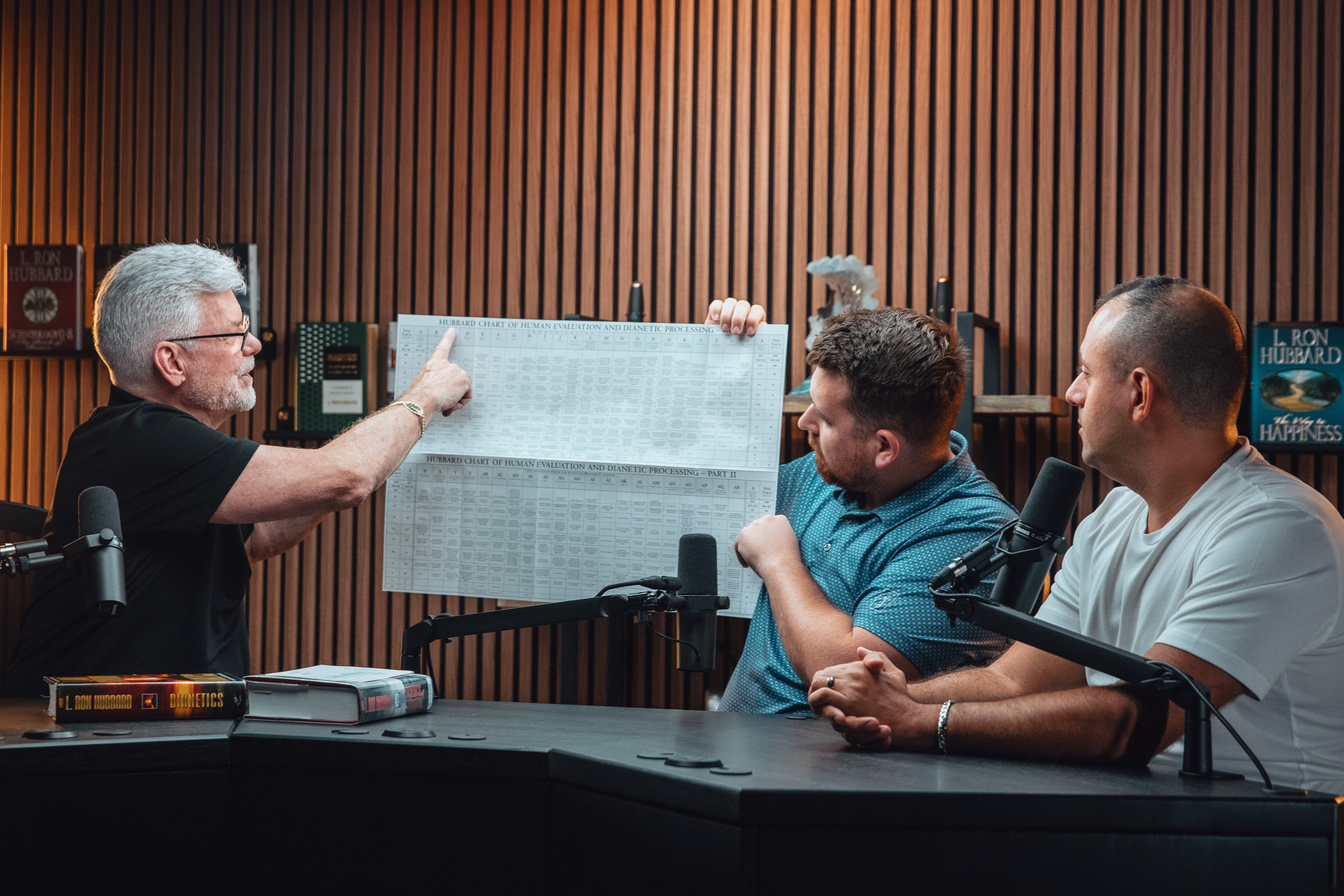
Leave a Reply