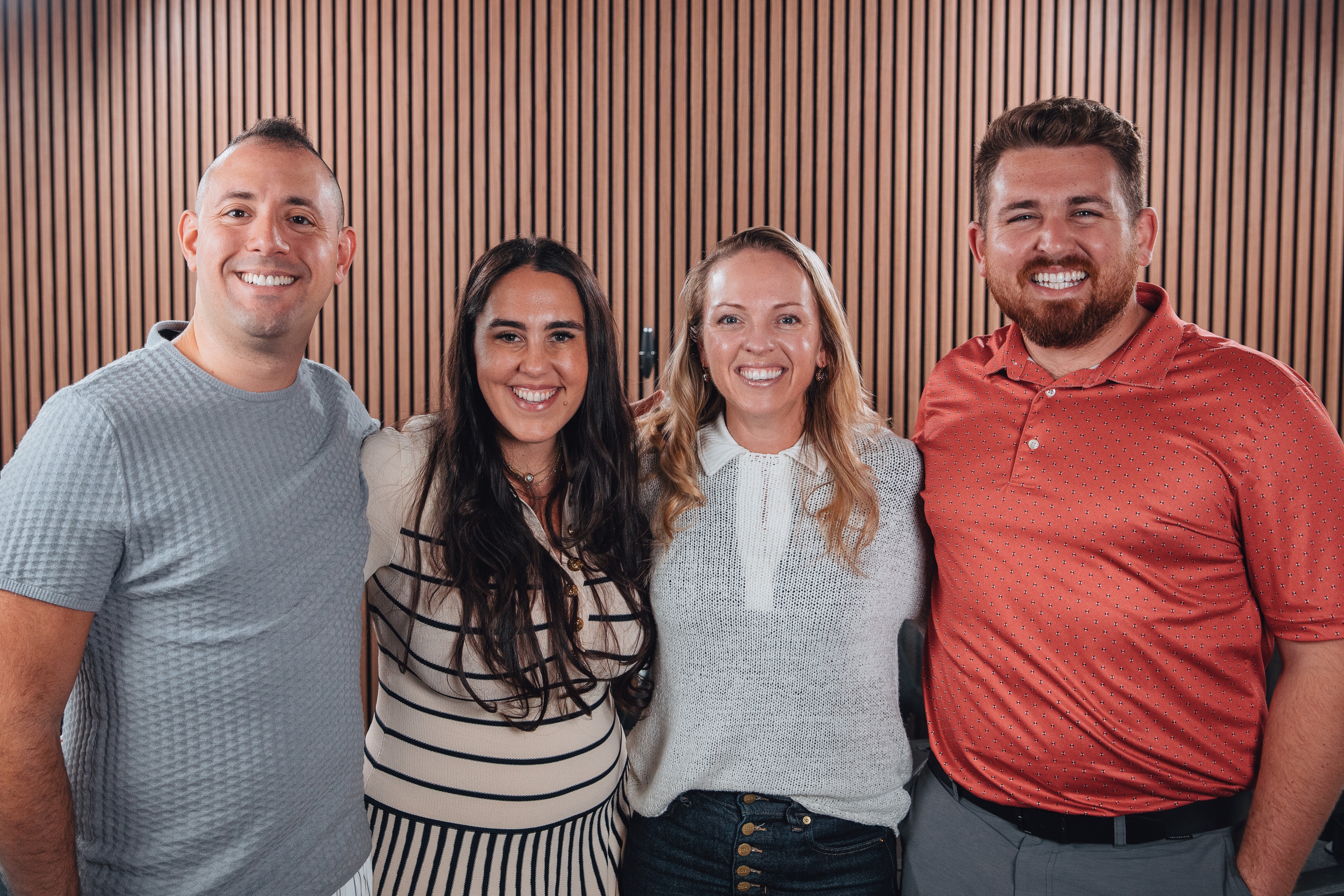
In this episode of the Don’t Do Nothing Podcast, Mariah Nagengast shares how she is raising 3 energetic kids, including twins, without turning to medication, and why she believes strong, confident children come from understanding them, not suppressing them.
Mariah is a mother of 3, a wife, a business owner, and a third-generation Scientologist who, alongside her husband, helped grow a small paintball field into a major entertainment company behind attractions like Scream-A-Geddon, TreeHoppers, and Snowcat Ridge. In this conversation, she opens up about motherhood, discipline, business building, natural birth of twins, postpartum struggles, and the practical tools from Dianetics and Scientology that helped her become a stronger parent and a more stable person.
She explains why she refuses to drug her children just for being active, how she helps them regulate naturally, and why today’s parents need real tools instead of labels and prescriptions. Mariah also shares powerful personal stories, including how Dianetics helped her through a dark period in her own life, how Scientology counseling helped her recover after childbirth, and how these same principles now help her raise dynamic children with confidence.
This episode is for parents who want to raise strong kids without medication, entrepreneurs trying to build a business and a family at the same time, and anyone curious whether Scientology actually works in real life.
Are you curious about yourself?
👉 Take a personality test: https://ddnpod.com/test
Watch the full episode here:
Audio Version:
Apple Podcast:
https://podcasts.apple.com/us/podcast/dont-do-nothing-podcast/id1846609884?i=1000754678956
Text Version
[00:00:00] Mariah: You’re raising miniature versions of yourself. So if you’re a dynamic individual, you’ll raise dynamic children too. My sons are very like hyper. I don’t want to drug them. I don’t want to give them something to suppress how they feel. You know? I want them to be able to learn and understand and then regulate based on that because they’re wrestling on the floor and they’re jumping in each other’s bed, and I’m like, go to bed.
[00:00:23] Mariah: Like, let’s just take a deep breath and let’s
[00:00:26] Mariah: just focus on calm and quiet.
[00:00:28] Mariah: How do people have more than one child? And she’s like, you’ll forget about all the pain months and you’ll get pregnant again. You’re having twins. I’m like, what? My husband turns white. He is like, well, I guess there’s no taking them back now.
[00:00:43] Mariah: I’m not doing the C-section. I’m having these babies. Naturally. This is what is going to happen.
[00:00:48] Brad: Welcome to another episode of the Don’t Do Nothing podcast. Today we have a wonderful guest who, uh, we’ve been excited to have on for a while, so. Uh, our guest today is Ms. Mariah Nagas. Mrs. Mariah [00:01:00] nagging gas.
[00:01:00] Brad: Mm-hmm. She’s a mother of three, uh, wonderful wife. She also with her husband, has built their business from a single paint ballpark in, was in Indiana. Indiana, is that right? In Indiana to, uh, a major attraction, uh, theme park company that is respon. They’re the company behind Scream Again.
[00:01:22] Mariah: Mm-hmm.
[00:01:23] Brad: Tree Hoppers and most widely known Snowcat Ridge.
[00:01:27] Brad: Yes. Which literally brings how much snow?
[00:01:30] Mariah: Uh, like 400 tons of snow every day.
[00:01:34] Brad: They bring 400 tons of snow daily for eight weeks to central Florida for all the Floridians like me to enjoy. And she’s also a highly trained and effective Scientologist. Mariah, thank you for being here today.
[00:01:47] Mariah: Thank you. Thank you.
[00:01:49] Mariah: Introduction.
[00:01:50] Aaron: I just, you know,
[00:01:51] Mariah: thank you. That was very nice.
[00:01:53] Aaron: She also has twins. I just
[00:01:54] Mariah: have to say twin. I’m a a mother. I’m a twin mom. Yes. Yeah. Yeah. That’s the thing. Other twin [00:02:00] moms will know what I’m talking about.
[00:02:01] Brad: Yeah,
[00:02:01] Mariah: yeah.
[00:02:02] Brad: Yeah. I don’t know what that means.
[00:02:03] Mariah: Yeah. It’s like you never twins. It’s peace.
[00:02:05] Mariah: Peace to tell the twin moms.
[00:02:07] Aaron: Yeah. And
[00:02:08] Brad: so,
[00:02:08] Mariah: mm-hmm.
[00:02:09] Brad: Man, I’m thinking about, I’m like thinking about the logistics of it. Okay. You’re an awesome business person.
[00:02:14] Mariah: Oh, thank you.
[00:02:15] Brad: Uh, you’re an awesome psychologist. We’re super excited to have you. Um, if, if you were to go back, where did this kind of crazy journey start for you?
[00:02:26] Brad: In terms of like,
[00:02:27] Mariah: how, how did it all begin?
[00:02:29] Brad: Yeah, go
[00:02:29] Mariah: back to the beginning. Sorry. Born. Go back to the beginning. Born, no, um, you know, no. Where were
[00:02:33] Aaron: you born then? Anointing?
[00:02:34] Mariah: I was actually born in New York. Okay. I’m a New Yorker at heart, but I was raised in Florida. But, um, so I would probably say it, it started from the beginning.
[00:02:42] Mariah: Obviously I’m a third generation Scientologist, so, um, I was actually born in New York, in, not in the church there, but my parents were. Employees of the church back in the seventies. Wow. And then they transitioned on to a church in Florida called [00:03:00] the Church of Scientology, uh, flag Service Organization, uh, back in the eighties.
[00:03:05] Mariah: And that’s kind of where I grew up. I grew up in, um, I wouldn’t say it’s a boarding school, but in a homeschool environment and, um, kind of we’re allowed to be creative. And, and that’s really where I, I learned the work ethic. And I’d probably say that is, you know, my ambition and my drive to always be advancing myself, either intellectually as a mother, as a business owner, as a business employee, as you know, uh, an individual who’s a servant to others.
[00:03:34] Mariah: That has kind of been my drive, came from my upbringing because, you know, we were. Told we needed to work and, and pull our weight. Obviously we were five and six and seven and eight year olds, so it wasn’t like you need to work, you need to pull your weight, you’re
[00:03:48] Whitney: just contributing.
[00:03:49] Mariah: But we were allowed and told to contribute and we did have things we needed to clean.
[00:03:52] Mariah: We were on a schedule. So it was a disciplined environment, but one that really catered to being creative and being [00:04:00] yourself and not being told you need to, and you have to, you know, we were, um, consulted in terms of our willingness. So that’s kind of my drive and perspective and always, you know, I love reading books.
[00:04:13] Mariah: I’m always learning, and you’ll hear more about. The college that we’re, my husband and I are creating. But it really caters to the concept that, yes, I’ve, I’ve done this, but it’s, you know, a humble humbleness in regards to what can I do to further improve and help other people or myself or my parents or my kids.
[00:04:35] Mariah: So that’s kind of what keeps me driven. But anyways, back to the, the, the, um, question, which was I met my husband in Indiana, uh, about I think 18 years ago. And it’s a funny story. I’ll just tell it really fast. So I met through a friend, I was actually just driving through, ’cause I was transitioning from la
[00:04:52] Brad: I was about to ask, how did you end up in Indiana?
[00:04:54] Brad: Yeah.
[00:04:54] Mariah: Yeah. So I, I, I left my life in la I needed a change essentially. And so I was moving back [00:05:00] down to Calif, uh, back down to Florida from California. And I was kind of driving through and I was, I was meeting up with some friends in Indiana and uh, one of my friends was like, Hey, I want you to meet this guy.
[00:05:13] Mariah: You know, I was actually fresh out of a relationship. I was not interested in meeting a guy. Like that was like the last thing from my mind. I was like, I need to get, you know, I kinda, for myself, at the time, I had hit rock bottom in the sense that I wanted to get a job. I needed stability, you know, a place to live.
[00:05:32] Mariah: Um, and I was bunky up. When
[00:05:34] Whitney: was this?
[00:05:34] Mariah: So this was like early two thousands.
[00:05:37] Whitney: Okay.
[00:05:37] Mariah: Yeah. I was kind of like, I wouldn’t say I was like a fresh out of school, but I was still young adult age, you know, kind of finding your feet. What do you like to do? What do you not like to do? Um, I knew that if I found something good, I would like.
[00:05:50] Mariah: Have the ambition to grow it, but I wasn’t really even of an entrepreneurial mindset. I was more the employee mindset of let’s take a good idea and [00:06:00] get it done.
[00:06:00] Whitney: Yeah.
[00:06:01] Mariah: Not the visionary concept, which I’ve, I’ve, I’ve transitioned more into like a visionary type of role.
[00:06:07] Aaron: Yeah.
[00:06:07] Mariah: Uh, through, uh, learning from other really good business owners and entrepreneurial type individuals.
[00:06:13] Mariah: Anyways, back to the story. So, um, she’s like, you need to meet this guy. You meant Benjamin, you need to meet this guy. So he was, you know, he owned a paintball field and she’s like, I didn’t have a job at this point. Okay. So I was like, it
[00:06:28] Brad: was like, meet him, maybe he’ll give you a job.
[00:06:29] Mariah: Yeah. I was like, we didn’t clarify what job that would be, but, um, so she’s like, meet this guy.
[00:06:39] Mariah: I am like, okay. You know, I was staying with her for a few weeks. I was like, okay, fine. I have the time. Honestly, I wasn’t really doing anything all day, um, in the sense of I had the time. So she’s like, okay, just meet him. I’m like, okay, good. Maybe he can interview you for a job. So he, he came. He actually, he came to the house and it was like eight [00:07:00] o’clock at night at by that time.
[00:07:01] Mariah: And, and he’s like, Hey. I’m like, wow, this is a, I was thinking my, this is a really late job interview, but you know what, I don’t have anything, anything better to do, so I’m just gonna go. So, uh, he pulls up an Lexus, a sports car, which to me, you know, coming from a, a very sparse upbringing, that was actually really cool.
[00:07:22] Mariah: So he pulls up, he’s like, Hey, let’s go get some sushi. I’m like, okay, great. So he started just talking like, Hey, who are you? And he also was, uh, no, he’s a second generation Scientologist in Indiana. And so we had that in common automatically. So we just started like talking and he started talking to about his business, like, Hey, I do paintball.
[00:07:39] Mariah: But it was a really interesting perspective. It wasn’t just, Hey, I do paintball for those who dunno, paintball. It’s that little ball and you like go, you go powow and you, you shoot people with it and you know, you can, uh, reenact and, and whatnot. And it’s, it’s very good for military training and. Or just having fun or just getting even with someone that’s right.
[00:07:57] Mariah: In the feel, it can be very fulfilling. [00:08:00]
[00:08:00] Brad: Okay. So have you ever been shot by paintball gun?
[00:08:02] Mariah: Oh yeah, I have.
[00:08:03] Brad: Okay. Okay. In
[00:08:03] Mariah: order to work there, you have to know what you’re going to be selling. I got bruised up, right? Yeah, I got bruised up. So it feels basically like, uh, a wet washcloth is like hitting you really fast.
[00:08:14] Mariah: Um, so it’s, it goes away. But, um, so we started talking, we kind of hit it off and he is like, Hey, listen, I want, you know, to see if you wanted to come on board and, and, or he didn’t say on board, but come work with me and help me grow, like, grow this business. And at that time he was doing, we were doing about $6,000, or he was doing six three to 6,000 a week.
[00:08:34] Mariah: Um, he was mainly working on the weekends out of his parents’ house in their front yard, and they had about 50 acres, so it was like a larger or 30 acres. So it was a larger front yard. Literally by word of mouth. And he was
[00:08:47] Brad: that the field, their front yard was the field.
[00:08:48] Mariah: The field.
[00:08:49] Whitney: Wow.
[00:08:50] Mariah: One, one of the no
[00:08:51] rent.
[00:08:53] Mariah: Well, uh, one of the reasons we ended up moving, or he ended up moving, is ’cause the complaints from the neighbors about finding paintballs in their [00:09:00] backyard. ’cause you know, the property butts up against their property.
[00:09:03] Whitney: Oh.
[00:09:03] Mariah: So, but anyway, so he is like, Hey. And I was like, what even is paintball? You know, I’m female, number one, but I, you know, I don’t, I was not into like guns or equipment or like, this is not how I grew up.
[00:09:16] Mariah: Or like, you know, so, um, he explained to me what paintball was and I’m like, you know what? Okay. You know, I, I was thinking I didn’t give him the okay yet. And I was like, okay, you know, this guy sounds kind of cool. He actually sounded very intellectual. Like he had all these big ideas and stuff. And I was like, Hmm.
[00:09:32] Mariah: And he is talking about building a custom house and you know, like sharing his dreams with me. And then he is like, Hey, I’ll tell you what, why don’t you come to New York with me? I’m like, mom. I’m like, well, when are you going to New York? He’s like, tomorrow morning. I’m like,
[00:09:47] Whitney: my gosh, why moving fast? Like what?
[00:09:52] Whitney: Did you still think this is a job interview at that point?
[00:09:55] Brad: Oh, is this still during the job interview? Yes.
[00:09:58] Mariah: In one
[00:09:59] Whitney: deal. [00:10:00] Oh my gosh.
[00:10:01] Mariah: I was like, I don’t know. And he’s like, no, come with me. You can learn what I do and I’ll, did
[00:10:07] Whitney: he get you a separate bedroom?
[00:10:10] Mariah: We’ll get to that. Oh my gosh,
[00:10:13] Whitney: I can’t believe this. I just, wow.
[00:10:17] Whitney: I can’t imagine Benjamin like that kind. This is,
[00:10:20] Aaron: yeah. This is so funny because
[00:10:21] Whitney: is so straight, so conservative. I can’t believe
[00:10:25] Mariah: this’s the kind of guy that goes after something if he really wants it doesn’t matter what it is. Um, oh yeah.
[00:10:31] Aaron: I mean, we know the end of the story,
[00:10:32] Brad: but anyway, shoot,
[00:10:33] Mariah: we’re 18 years later.
[00:10:35] Mariah: Okay. Uh, okay. So anyways, so basically he talks me into going to New York with him. So he buys me a flight. Then first I told him like, nah, you’re bolt. Like that’s not true. Like, that’s not, you’re just messing with me. He is like, no, seriously, I’m going to New York tomorrow. I’m going to see the biggest paintball field owner in the world, which is out in Philadelphia.
[00:10:53] Mariah: We still know him. He’s still a good friend of ours, and, um, he does like, uh, millions and millions of [00:11:00] players. And
[00:11:01] Aaron: Was that the first time that you guys met this guy?
[00:11:04] Mariah: Uh, was he, I mean, Hess second time meeting him. It was my first time meeting Paul Paul’s, Paul Fogle. Um, but anyways, so, so he talks me into going to him.
[00:11:15] Mariah: So he picks me up, uh, at like 4:00 AM We, we go take a flight. Um,
[00:11:19] Whitney: what time did you get home that night
[00:11:21] Mariah: after midnight? We didn’t end. I didn’t know. Oh, wow. I was like, you know what? This is like, you know, when you, when you’re handed like, not an opportunity, but like. Realized I was pretty young. I was like, I know young adult.
[00:11:33] Mariah: I didn’t know what I wanted to necessarily do with my life, and you’re having this guy like, come with me to New York.
[00:11:39] Brad: He’s like, outta a movie. No,
[00:11:42] Whitney: I mean, really? It really does sound that
[00:11:43] Mariah: way. I could do this.
[00:11:44] Whitney: And it’s very drastic.
[00:11:46] Mariah: It was very drastic. So I was like, I could use gentlemen, take notes. I can use a sense of adventure.
[00:11:52] Mariah: Wow. Um, so anyways, so he, he, the funny thing is I’m like thinking in my head, what am I to this guy? Like, am [00:12:00] I just a woman he wants to hook up with? Like, am I going to be something in his future? I was like, oh, you know, let’s kind of just going with the wind. Let’s see where this takes us.
[00:12:10] Whitney: Okay. Wow.
[00:12:14] Mariah: Um, so anyway, so we, we get to Paul’s place.
[00:12:19] Mariah: It’s like a huge, huge property. Uh, he has, uh, whitewater rafting. You can do bike rentals, but he’s known as the biggest paintball park in the world. He’s so close to New York, so he draws a huge New York crowd. Um, so we get Paul and Paul’s like, oh, who’s this? And he is like, oh, it’s my executive assistant.
[00:12:38] Mariah: Oh, that’s how he introduces me. And Paul’s like, I want an executive assistant. And I’m like, am I, I was thinking, does that mean I’m getting paid for this? I, I was like, did you guys discuss that yet? We hadn’t discussed that. You know, I was kind of just like, let’s see where this goes. Having my feelers at, we weren’t a thing either.
[00:12:57] Mariah: We weren’t like a husband, girlfriend or anything. [00:13:00]
[00:13:00] Aaron: Right.
[00:13:00] Mariah: That wasn’t a thing. So, long story short, uh, we went back and I’m like, so I’m coming to work for you. Uh, he gave me a simple, like way, like now that I look back, I’m like, oh, cheap skate, like entry level salary. Wow. Um, but you know, I, I guess it was, it was a great.
[00:13:19] Mariah: Time to learn how to build a company because, you know, like I said, he was in a transitional period. He was taking his paintball field. He had just bought a new property, closed on it, about 20 minutes. I’m sorry.
[00:13:30] Aaron: I wanna know how much, can you say how much, how much did he pay you?
[00:13:35] Mariah: Oh. Oh,
[00:13:36] Aaron: how much did he pay?
[00:13:37] Brad: Probably 15 bucks an hour.
[00:13:39] Mariah: I don’t let’s it salaried. It was salaried. What
[00:13:41] Aaron: was salaried?
[00:13:42] Mariah: So it was like $450 a week.
[00:13:44] Aaron: Okay. Okay.
[00:13:46] Mariah: Yeah. Um, like I said, it was super entry level, you know, I didn’t also, I, it was
[00:13:50] Whitney: her first job.
[00:13:51] Mariah: Well, also, also, and at that time. At that time, you gotta understand, like, from my perspective, I’m just entering the workforce.
[00:13:57] Mariah: Yeah. I, I didn’t go to college. I [00:14:00] didn’t graduate high school. I, you know, did get a GED, but so I didn’t also have a very, like, self worth and value and confidence level.
[00:14:10] Aaron: You have the highest worth position of all the companies, just so you know. You and Ben. Another, you mean you guys?
[00:14:15] Mariah: It’s 50 50. Oh, co-owners.
[00:14:16] Mariah: Yeah.
[00:14:16] Aaron: You know what I’m saying? Little, little did he know,
[00:14:17] Mariah: but no. Yeah, little did he know. 18 years later. That’s true.
[00:14:20] Brad: That’s true.
[00:14:21] Mariah: Um, but, uh, so, you know, super entry. So I started just like cleaning the paintball guns, doing like, you know, I started handling the day-to-day operations. It was him, one other employee, and then me after a week, I was kind of, you know, trying to take over everything.
[00:14:35] Mariah: So the other employee said, listen, it’s either like, his name was Matt, I’m either gonna keep doing this or are you’re going do it with her? Choose one or the other. ’cause I’m
[00:14:46] Brad: what? An idiot.
[00:14:47] Mariah: Yeah. He was like, sorry. I mean, like, i’s an easy choice. You’re fired.
[00:14:51] Brad: Yeah. Wow. Did he even have to think, was ELA just like
[00:14:54] Mariah: bye?
[00:14:54] Mariah: No, he was like, that’s an easy one. You know, I, I think that, that, you know, you’re efficient.
[00:14:59] Whitney: You, [00:15:00] your efficiency is
[00:15:02] Mariah: very high. Yes, Sonia? So I started handling the day-to-day operations and then Ben started actually building the new park. And that was kind of the beginning of our relationship, which is I handle a lot of the business end of things like the behind the scenes.
[00:15:20] Mariah: And he handles the visionary and the build and the now the parks. And like I said, we’ve, this is our, we’re we have four new parks that we’re working on. One that is, if everything goes as planned, we’ll open this new holiday season. It’s like a Christmas, um, show. Think Trans Siberian Orchestra.
[00:15:36] Whitney: Where is it gonna be?
[00:15:37] Mariah: It’s gonna be at our other property, uh, up in Dane City where we have, yeah, it’s about an hour from here where Tree, I know. It’s the one of, one of the things, and we have an exact formula for our business model
[00:15:51] Whitney: Yeah.
[00:15:52] Mariah: That we have down. But one of the things that people wanna get out of the city and kind of into a made up world.
[00:15:57] Mariah: And that’s why I think one of the reasons why [00:16:00] Orlando and, and Disney does so good, is ’cause their storytelling and their, their, they’re, they build this world
[00:16:07] Whitney: mm-hmm.
[00:16:07] Mariah: This fictional world and people like it ’cause it’s an escape.
[00:16:11] Whitney: Yeah. Wow.
[00:16:12] Mariah: From the day to day. And that’s, you know, one of the things, um, we wanna do is we create unique, engaging experiences that, you know, um, are fun and people wanna come back again and again with friends.
[00:16:24] Mariah: So we’re, we’re building this kind of, you know, adventurous, some of ’em are adventurous, some of them are horror. Like our, some of our Halloween parks, those aren’t necessarily for everyone. But like Snowcat Ridge, we literally created a Fic a Al World in the middle of Florida Yes. Of snow. So you can go snow tubing, you can go indoor and play with the snow.
[00:16:46] Mariah: And, um, you can go ice skating, you know, we do a whole Santa’s Christmas lane, so, and that operates in the holiday season, so, yeah. Yeah. So that’s kind of been our relationship. So I did start writing a book about how to work [00:17:00] with your significant other without killing them.
[00:17:02] Aaron: Brilliant. Nice.
[00:17:04] Mariah: Because, um, it’s like everything, there’s a technology behind things and if you know and understand it, you won’t be the adverse effect of it.
[00:17:13] Mariah: Right. So, and that is something that I’ve learned in Scientology
[00:17:16] Whitney: mm-hmm.
[00:17:17] Mariah: Um, through the studies of Scientology. And I think that’s important. And it can be applied anywhere you want life as a pilot, as a mom, as a, you know, as a mother, as a, a person who’s pregnant, if you understand. And that’s one of the things I do.
[00:17:28] Mariah: Like when I got pregnant, I started just reading all the books about it. Like, what has, what did this person go through? What’s the science behind this? How do you, you know, nurse and. And what is the science and what can you run into? So one of the things I like to do when I’m learning something is start reading about it.
[00:17:42] Mariah: What are other people’s perspectives? And gives you more of a dynamic comprehensive understanding than just a single focused linear duplication of something. So, so that’s kind of the story of how we met. And then today yes. We, you know, and I can say,
[00:17:55] Whitney: say, so when did you actually get together?
[00:17:57] Mariah: So we actually got together shortly after we met.[00:18:00]
[00:18:00] Mariah: Oh, okay. Yeah, we did become a thing
[00:18:02] Aaron: that was at Paul’s house. Was that at Paul’s
[00:18:04] Mariah: house? Oh, no.
[00:18:04] Aaron: Okay. Just
[00:18:05] Mariah: Aaron thought you’re being cra. But, um, no, we, we, we, uh, you know, are very ambitious, driven individuals and, uh, you know, it’s been, it’s, you know, I, I, I’ve lived with this person and I ha am raising kids with this person and we have, we work together and you know, it’s just been an interesting up and down and working through, but, you know, when you find someone that you connect with.
[00:18:32] Mariah: And not only are they your partner, but your best friend, someone you can talk to, someone you can share with someone, you know? Yes.
[00:18:39] Whitney: It’s a life partner.
[00:18:39] Mariah: They are a life partner. Exactly. And so we are building our empire and our life together, whether it’s, you know, we disagree on this, that or, or the other thing.
[00:18:48] Mariah: And, and, you know, Scientology has helped stabilize that and not just call someone else and start saying, my husband, blah, blah, blah, or, you know, um, go. And [00:19:00] not, not that I’m saying it’s bad for other people to do this, but you know, another, I do understand now why people will drink when they are stressed out.
[00:19:08] Whitney: Right.
[00:19:08] Mariah: I don’t think that that’s a good solution.
[00:19:11] Whitney: Right.
[00:19:12] Mariah: But I do understand when you’re super stressed, you find other ways to de-stress. And some people work out, some people just drink, some people hang with their girlfriends or smoke cigars or whatever. But that is one of the, the things is I have had Scientology as a means to handle my.
[00:19:30] Mariah: Without resorting to pills or, you know, um, calling up my mom or whatever. And just like downloading how much I hate my husband at that time. Right. I just wanna punch him in the face, you know, like I’m a very passionate individual when it comes to things. So some things, so I’ve
[00:19:49] Aaron: been to your house and you have a, like a punching bag thing there?
[00:19:52] Mariah: Yeah. Is
[00:19:52] Aaron: that, is that, uh, is that related or,
[00:19:56] Mariah: yes, actually we do. I do it for my kids. I, we, his name is Bob. [00:20:00] And, um, we were doing this work fitness routine. I was like, you know, this is actually really good to, you know, kickboxing is a fantastic way to get out some anger. Yeah. You’re not beating a person up, you’re just beating a bag up.
[00:20:11] Mariah: You can’t get arrested for that. So, you know, that’s a good one
[00:20:15] Brad: yet.
[00:20:17] Mariah: Um, so I do have him there and, and the kids, when they get mad, they go, I go, go punch Bob. So they go give him a few punches and then we come back and talk about it. He’s so smart. It’s just an outlet for him, you know, some people love that.
[00:20:28] Mariah: Yeah. So that’s a technique
[00:20:32] Whitney: we’re all about to have. Bobs he went to your house and saw that punching bag. He, he bought one and buy, he didn’t buy the cool one with Bob’s on Bob Bob’s head on it.
[00:20:39] Mariah: What’s the name of your call, Bob?
[00:20:40] Aaron: No, mine doesn’t look, it doesn’t have a head person. It’s just a bag.
[00:20:43] Whitney: Yeah.
[00:20:43] Whitney: Hers is
[00:20:43] Aaron: hers. Looks like a dude actually. Cool.
[00:20:46] Mariah: Yeah,
[00:20:46] Aaron: you, so now I’m gonna, now I have to redeem myself. I have to buy a punching bag that looks like a dude. Yeah. Okay. Okay. We’ll do
[00:20:52] Mariah: that. And, and you know, the funny thing is, um, we were going through just another story we’re going through, uh. A challenging moment as a [00:21:00] team.
[00:21:00] Mariah: ’cause we, we now have, you know, 44 full-time or 40 to 60 full-time staff, and then we hire up to a thousand in our, for our seasonal parks. Wow. Yeah. So we’ve gone through stuff as a group building. When you’re building a new development, essentially, you know, anyone who’s in this industry knows the challenges you face through licensing.
[00:21:20] Mariah: It’s a very, you know, uh, you know, oh yeah, you do. Building permits and Oh yeah. You know, dealing with buildings, officials and engineers and plumbers and sometimes What about
[00:21:30] Whitney: liabilities too, right?
[00:21:31] Mariah: Yeah, liabilities. Um, so anyways, um, I was gonna, there was a specific person we were dealing with at the building department in our county, and.
[00:21:42] Mariah: Everyone who got off the phone was like, ready to, I’m like, just hang in there. I was thinking, don’t quit on us now. Don’t quit on us now. We’re so close. So I was, I was gonna get them Bob, and so they can put the face, her face on there and just pound it out. I’m like, that’ll actually allow them to regain [00:22:00] their composure.
[00:22:00] Mariah: Yeah. But anyways, so, so we’re a very ex I’m very expressive, my family is very expressive and we like to express our ways through physical energy sometimes. So
[00:22:11] Whitney: that’s great.
[00:22:12] Brad: What Mariah, at what point being raised as a Scientologist, at what point did you decide I am a Scientologist?
[00:22:19] Mariah: That’s a good question.
[00:22:20] Mariah: So I think when I, I call it for my, my own life hit rock bottom. I came out of a relationship and, and violated my personal integrity to the point where I did not like myself anymore. That, and I was probably in my early twenties actually, just before I met Benjamin, that’s when I decided, okay, I need a change.
[00:22:44] Mariah: I was also dealing with, and you know, I’m a very, I can be very introspective, like as a child, as a very introspective individual, I was not as communicative, you know, I answered a lot of one syllables, uh, to my parents and my mother. Like, Hey [00:23:00] Mariah, how’s it going? Okay. Like, that was the extent of my communication.
[00:23:04] Brad: Uh, that’s two syllables.
[00:23:06] Mariah: Okay. Okay, fine.
[00:23:09] Brad: Sorry, sorry. I
[00:23:09] Mariah: couldn’t
[00:23:09] Brad: help
[00:23:10] Mariah: myself say, say
[00:23:11] Brad: Good.
[00:23:12] Mariah: That’s what Ben would say if he was, you know, I’d probably say there are different points in my life, but the time when I actually started pursuing this. Through to help myself as opposed to just through helping others.
[00:23:24] Mariah: ’cause I obviously have a big drive to help other people. And when I say help, I mean like talk to them, respect them, um, yeah, like see if I can help them buy their house, see if I can help them talk through a relationship issue. Um, see if I can get them to help read this book. To understand that money is, you know, I saw you had psychology of money.
[00:23:42] Mariah: Like there, there’s another way of looking at money and you know, there’s different things you can give to help people. So I was very driven to help others. I hadn’t necessarily done things to help myself, so I kind of felt like I imploded a little, a little bit and I was like, uh, I need to rethink my [00:24:00] existence.
[00:24:00] Mariah: And again, I was like a young adult and I was like, okay, I know that Scientology exists and I know it’s there to help others. Maybe I need to use it to start helping myself.
[00:24:08] Whitney: Mm. Yeah.
[00:24:09] Mariah: And that’s when I felt like, you know, I would call myself a Scientologist ’cause. You know, to me a Scientologist is one who improves the environment around them.
[00:24:20] Brad: Yeah.
[00:24:20] Mariah: Right. With using technologies. Um, so I’d probably say that was the time when I kind of came out of a messy relationship, you know, lost my job or, or had a change in my career. And I was like, yeah, I’m not, I don’t really like myself anymore. I was having, you know, feeling like down and out and the, the self, like, I suck and what am I doing with my life?
[00:24:42] Mariah: And, you know, this regurgitation that just happens, which does not happen anymore. Thank you to Scientology. Wow. Um, and Dianetics. Yeah. So early on in my young adult life, that’s
[00:24:55] Whitney: huge. You know, like we kind of take it for granted, but Yeah.
[00:24:57] Mariah: Oh,
[00:24:58] Brad: completely.
[00:24:58] Mariah: It is huge,
[00:24:59] Whitney: but it is [00:25:00] huge, like the number of people that, you know, have this self invalidation situation.
[00:25:04] Whitney: And so it’s
[00:25:04] Mariah: literally like, you cannot control it. And I, and I’ve been there, I’ve been to the point where I was just like. Uh, I suck and whatever. And it’s very important to know that that is not you.
[00:25:15] Whitney: Yeah.
[00:25:15] Mariah: That is not me. Right. That is coming from another source. And that source is located with Dianetics.
[00:25:21] Whitney: Right.
[00:25:21] Mariah: And that’s, that gives you actually something you can do about it. Not, you’re not suppressing it. You’re not ignoring it. You’re actually using another individual to focus your attention and find out where is that coming from and how do we get rid of it. Yeah. So Dynamics definitely saved my life.
[00:25:41] Mariah: Wow. Like a hundred percent hands down, firm, firm believer. And from that, I was able to build on enhancing my intelligence, enhancing my creativity. What do I actually enjoy doing in life? Good. How can I play to those strengths? What are my weaknesses? But, you know, so,
[00:25:56] Aaron: so for you, so when you, you know, you hit that tough point.
[00:25:59] Mariah: [00:26:00] Yeah.
[00:26:00] Aaron: And you said, Hey, I know about the Scientology thing, you know, this might be able to help me. What did you do,
[00:26:06] Mariah: do at that point?
[00:26:07] Aaron: Yeah,
[00:26:07] Wellgreen.
[00:26:08] Mariah: So I asked my husband, um, my husband, my boyfriend at the time, which was Benjamin. I said, Hey, um, ’cause he was like, Hey, why don’t you do your first service? We call it a service or training.
[00:26:20] Mariah: Mm-hmm. And so there’s some books you can read. And I was like, okay. So he connected me up with the local Church of Scientology, which was at Battle Creek in Michigan. ’cause we were based in Indiana. And he said, why don’t you do an extension course? And I was like, okay, sure. Yeah, yeah. I can read. I like reading.
[00:26:39] Mariah: So what’s an extension course? So an extension course is a book you can read. Like, um, one of the books is The Way to Happiness. That’s probably the first one I started with. And it’s a, a book that Mr. Hubbard wrote that gives you moral guidance all along your path and basic principles to follow in life to better your life and create a better like, environment around you, you, with your family.
[00:26:59] Mariah: [00:27:00] And so basically you can contact the org typically through their website or he gave me a phone number and he said, call them, do an extension course. I recommend the Way to Happiness as a book. And so basically you’re studying a chapter. Mm-hmm. And then you’re answering questions and you send that in. I think now they have it digitally.
[00:27:19] Mariah: Back then it was all through paper. Yeah. Okay. Now they probably have it online. And then basically you study in the next chapter. And the thing I liked about it is it wasn’t saying, you need to believe this.
[00:27:29] Brad: Mm-hmm.
[00:27:29] Mariah: Right. You have to do that. It actually. Talked to your own, how do you wanna apply this? What do you think about it?
[00:27:37] Mariah: Mm. And that’s what I like. That’s the, that’s probably what kept me going is I’m, I don’t like being put in a box.
[00:27:43] Brad: Mm-hmm.
[00:27:43] Whitney: Right.
[00:27:44] Mariah: You know, I don’t feel like I belong on this planet. I’m not like, you know, and, you know, I’m not like, you know, this is mean, this is how I was thinking, you know, like, I, I don’t want to live in this world and be like this person that I am right now.
[00:27:59] Mariah: So, [00:28:00] and I don’t want to be told you need to do A, B, C, and D, you’re gonna be put in a cell and, you know, because you’re mentally unstable. Like, I was like not, not interested in that as a handling. Mm-hmm.
[00:28:11] Aaron: You’re thinking more like, let me fly off to New York. You’re right tomorrow. Right.
[00:28:16] Mariah: I, I’m more dynamic and creative.
[00:28:17] Mariah: That’s a very creative solution. But, um, no, so I, I liked what I was studying and it really kind of catered to that. Ability to think for yourself and what are your thoughts and your ideas, and, and it just makes me stronger. It made me stronger as a person. And so these other thoughts I was having kind of started going away.
[00:28:37] Mariah: And so that’s kind of how I progressed. The next one I studied was, um, called the Introduction to Scientology Ethics, which is a fantastic book. Yeah. So Good. Teaches you about amazing the, the, um, conditions, states of operation, which that will take you to a powerful whatever you wanna be. Do however much [00:29:00] money you wanna have.
[00:29:01] Mariah: I mean, whatever you want, whatever your goals are, are, that book will help you get there.
[00:29:06] Whitney: Right.
[00:29:07] Mariah: And so that kind of, you know, put the foundation there for an understanding of what it was that I needed to address
[00:29:16] Whitney: mm-hmm.
[00:29:16] Mariah: And how we were going to address that. So I started with the extension course, the books, and, and then the first, um.
[00:29:24] Mariah: Service I did was called the purification Rundown.
[00:29:27] Whitney: Mm-hmm.
[00:29:27] Mariah: Which you handle the, and his mom, actually, I did it out of his mother’s house because they had what’s called a field group. And you’ll, you’ll find these all over the place, but individuals who wanna apply and help other people, but there’s not a church at Scientology organization nearby.
[00:29:43] Mariah: And so you open what’s called a field group and you get licensed
[00:29:48] Aaron: mm-hmm.
[00:29:48] Mariah: Through, you know, uh, apply the regulations. And so I did it, and it’s basically you’re getting any kind of drugs and toxins and sun, old sunburns. And [00:30:00] I, I haven’t myself explored with illegal drugs. Um, but you know, as you’re growing up around chemicals and
[00:30:06] Brad: they come out for sure, you get ’em out.
[00:30:09] Brad: I can attest.
[00:30:10] Mariah: You can attest. Yeah. So, um, so that kind of made me feel a lot cleaner. You know, I felt. Happier.
[00:30:18] Brad: Mm-hmm.
[00:30:18] Mariah: Not ’cause I wasn’t happy because of something, I was just happy. And, you know, you don’t necessarily get that. Like, what I have found when I’ve done Scientology is, is you just start becoming happier as who you are.
[00:30:31] Whitney: Mm-hmm.
[00:30:32] Mariah: Or who you can change yourself to be. And you’re not happy because of a good movie, a good show, someone gave you a compliment, you made a lot of money. Like these are all reasons and you know, they affect your mood or whatnot. Mm-hmm. But being able to have a state where, okay, cool, I’m cool with myself not having all this garbage in my head every time I’m, you know, have a self-doubt or a challenging moment [00:31:00] or someone else gives me, you know, I’ve had people come up to me that I worked with and like, sit in your face, you’re like, you’re horrible with people.
[00:31:06] Mariah: You know, like, and then you’re just like, maybe I’m stuck, maybe I’m bad. What did I say? You know, it’s like this regurgitation in your head. So the ability to just say thank you. And not have it affect you.
[00:31:18] Whitney: Right.
[00:31:18] Mariah: That is a real skill. ’cause then you are in control of your own emotion. Mm-hmm. And you’re not reacting to the environment around you.
[00:31:25] Mariah: So more of a proactive, intentional.
[00:31:27] Whitney: That’s huge.
[00:31:28] Mariah: Yeah. Which is big. Oh my gosh. And I imagine as a mother, like I, I think,
[00:31:31] Whitney: oh my goodness,
[00:31:32] Mariah: with my kids, you know, it’s so funny because you’re raising miniature versions of yourself. So if you’re a dynamic individual, you’ll raise dynamic children. If you’re a very creative, artistic individual, typically, you know, your children will be very artistic.
[00:31:45] Mariah: If you’re a muted, if you’re a pain in the ass,
[00:31:46] Brad: your children will be a pain in the ass. Like mine,
[00:31:50] Mariah: I was like dealing with my daughter and I was like, she literally is a mini introvert. I’m literally talking to myself right now. It was really cute. But, [00:32:00] um, so as a mother, you know, you, you are working there.
[00:32:04] Mariah: You know, sometimes you can, I, like I said, I’ve read books, but every child is different. Yeah, they respond to different things. They get sad because of different reasons. You know, there are certain things that in the environment stimulate or don’t. Um, and so you’re learning as a parent, how does that react on me?
[00:32:23] Mariah: How does that react on them, you know? Right. And so, um, having Scientology or an understanding of simple principles that can be applied help you to be a better mother, you know, and I have many stories of that. Like, um, you can do what’s called an assist, which is you’ll learn it in dianetics or basically you’re taking that, that, um, that cut or the whatever.
[00:32:52] Mariah: The impact
[00:32:52] Aaron: Or the birth.
[00:32:53] Mariah: Or the birth, yeah. Yeah. But with the child, you’re, you’re taking something where they, they fell down or they hurt [00:33:00] something and you’re basically retouching that point.
[00:33:03] Aaron: Oh, that’s,
[00:33:03] Mariah: yeah. Over and over. There’s different type of cysts, but basically you’re, you’re, you’re getting rid of the immediate what pain, yeah, the immediate pain that was caused.
[00:33:14] Mariah: And so I have been able to apply that. Or like my son, or I should say too, my sons are very like, can, can seem hyper.
[00:33:23] Whitney: Yeah.
[00:33:23] Mariah: Very active. I mean, they’re boys. I think most boys, what do you expect? They’re little boys. They’re, they’re now seven. And so they, you know, I don’t want to drug them. I don’t want to give them something to suppress how they feel, you know?
[00:33:38] Mariah: I want them to be able to learn and understand and then regulate based on that. Um, and so, you know, there’s, uh, an assist called the nerve assist, and you’re basically doing a very simple procedure on their back and around their body to calm the nervous system. Right. And so I do this with them before they go to bed because they’re wrestling on the floor and they’re jumping in each [00:34:00] other’s bed.
[00:34:00] Mariah: And I’m like. Go to bed. Like, let’s just take a deep breath and let’s just focus on calm and quiet, you know? And so that is something I can do as a parent. You’re amazing,
[00:34:12] Whitney: Mariah.
[00:34:13] Mariah: Yeah. You, you’re, yeah. That is something I can do as a parent that is not, that is going to help them sleep better. And that’s an example of using dianetics.
[00:34:22] Mariah: Yeah. As a procedure to improve my relationship with my kids.
[00:34:27] Aaron: By the way, if you want to, if you wanna know about that, it is in the course, it’s called scientology.org/assists, and you could learn multiple assists. Okay. Uh, but nervous assist is one of them. It’s actually, also, it’s displayed in the video.
[00:34:40] Aaron: Guys. You don’t need to become a Scientologist, but if you just want your kids to sleep a little bit better go and learn.
[00:34:46] Brad: Yeah.
[00:34:46] Aaron: Do the assist. Yeah. You don’t need to believe in any God or believe in no God. And like it’s, it’s not about God. It is about helping the child in front of you. Yeah. Or an adult in front of you to have [00:35:00] better.
[00:35:01] Aaron: Better calm states. Feel better. Yeah. Physically feel and to, and to remove hits and pains. Anyway, it’s covered in the course. I’m just saying. Yeah. You guys can do it. It’s available for free. Um, and it’s not gonna tell you anything about any religion, so there you go.
[00:35:13] Brad: Yeah. I’m gonna, I’m gonna actually add one thing to that.
[00:35:15] Brad: If you wanna witness a miracle in your child, go to, what is it? scientology.org/assist, right? Assist singular.
[00:35:22] Whitney: Yes.
[00:35:22] Brad: Great. No assist. Assist, plural. Okay, good. Uh, when, when we, so I have a 3-year-old and a 1-year-old. Mm-hmm. When we started, like, I feel like as a parent, you run into situations where you’re like, holy cow, this kid is freaking out.
[00:35:37] Brad: There’s no solution. Right. Seemingly
[00:35:39] Mariah: no
[00:35:39] Brad: solution. Seemingly it can. Right? That’s what it seems like. If you know about these assists, you can work what seemed like miracles.
[00:35:47] Mariah: Mm-hmm.
[00:35:47] Brad: To people who don’t know about this stuff.
[00:35:49] Mariah: Yes.
[00:35:50] Brad: It’s like freaking miracles.
[00:35:51] Mariah: And the thing is, it’s so simple to apply. It’s not complicated.
[00:35:54] Mariah: Yes. You don’t need to become a doctorate in blah, that it’s so simple. You can learn in attendance. You [00:36:00] know, I taught my daughter, she is now 10, I think she was eight or nine at the time. I was like, listen, mommy’s going on a date tonight. I need you to do this with your brothers if they’re not going to sleep and if they’re too hyper.
[00:36:15] Mariah: So, you know, and she’s able to do it. So it’s, it’s very simple. But yes, like you said, it’s miraculous, seemingly miraculous. And the thing is, there’s science behind it. It has been proven that it does work, so.
[00:36:27] Whitney: Right.
[00:36:28] Mariah: That’s why we continue using it.
[00:36:30] Whitney: It’s beautiful.
[00:36:30] Mariah: Yeah. Yeah. So
[00:36:31] Whitney: I was wondering, um, so obviously you got pregnant and you, you had a baby.
[00:36:36] Whitney: Yeah. The first one. Um, was it simple and easy? Easy, easy thing for you to get pregnant and all that? The pregnancy went good, or
[00:36:43] Mariah: so the pregnancy went well. Um, I had a good doctor and, uh, well, more of a midwife. I was more like kind of at home planning an at home birth, more, um, very granola, kind of like hands off, you know.
[00:36:59] Mariah: Um, but [00:37:00] afterwards it was not a good pregnancy. So I ended up giving birth, um, in a birthing center.
[00:37:05] Whitney: Okay.
[00:37:06] Mariah: And it was about, uh, it wasn’t even that long, maybe about a 12 hour, six to 12 hour labor through the night. She came pretty easily. I was not ready for how painful it was. I had heard how painful it was.
[00:37:19] Mariah: It was actually the first time I ever experienced something so excruciating.
[00:37:23] Whitney: Yeah.
[00:37:24] Mariah: And I was like talking to the midwife, I was like, how do people have more than one child? And she’s like, you’ll forget about all the pain. Six months and you’ll get pregnant again.
[00:37:33] Brad: Yeah.
[00:37:34] Mariah: She’s like, it’s just, I’m like, how do a woman give birth like, for millions of years?
[00:37:39] Mariah: But anyway, so, um, I actually. Phy, uh, mentally, physically I was exhausted, of course, but mentally I was not in a happy place. I was not, you know, I, I was not happy. I mean, I, of course I was happy to have the baby out of me, but I was not happy to have a baby. Like, I wasn’t this euphoric moment where I was like, yes, [00:38:00] motherhood, this all would’ve, you know, I wanna be a mother.
[00:38:02] Mariah: And that was not
[00:38:02] Whitney: So people
[00:38:03] Mariah: were called
[00:38:03] Whitney: this postpartum depression,
[00:38:04] Mariah: correct? Yes. That is another way of saying that. Um, yeah. So,
[00:38:08] Whitney: so how
[00:38:09] Mariah: did you
[00:38:09] Whitney: handle this?
[00:38:10] Mariah: Okay, so I was crying a lot and I was, you know, struggling with nursing the baby. I was like, determined I was gonna nurse this baby. The first thing that happened was I had a rash break out of all over my body about two or three days after I gave birth.
[00:38:25] Mariah: Oh my God. And it was mainly on the stomach. The arms started going into the legs and it literally looked like measles, but it was like about half an inch to one inch red dots.
[00:38:35] Whitney: Wow. Oh.
[00:38:35] Mariah: And I like started just researching what the heck is going on. Amongst the no sleep and trying to keep this baby alive and learn how to feed and you know, the stuff that moms will go through.
[00:38:49] Mariah: The first child at least. Yes. Um, I had all this rash, so I was just like, I was not in a good state. My husband’s like, what happened to my wife? Like,
[00:38:59] Brad: yeah. [00:39:00]
[00:39:00] Mariah: You know, and, and I was actually refusing any kind of help. Mm-hmm. I was like, I don’t want to just let me figure it out and do my thing, you know, that was just how I was and whatever.
[00:39:11] Mariah: Mother birth can do strange things to people or it can do it miraculous things to people. It’s different for every person. Yes. So, uh, I reached out to a friend and I was like, I need to know what you did. ’cause she also had, she had like three or four kids and I’m like, how did you survive this? You know?
[00:39:30] Mariah: Mm-hmm.
[00:39:30] Whitney: Yeah.
[00:39:31] Mariah: And the thing is, when you’re a new parent, you can’t see past an hour. A day.
[00:39:37] Brad: Yeah.
[00:39:38] Mariah: A week. You know, I was so focused. I hadn’t even been out of the house by that time at all. I hadn’t even contemplated taking the baby for a walk at the
[00:39:46] Whitney: first one. You never,
[00:39:47] Mariah: yeah. You don’t, you don’t even think about it.
[00:39:48] Mariah: In addition to trying to heal the body, ’cause it was a natural birth. Um, so she’s like, why don’t you go, uh, to your church down the street and just let them know what’s happening? [00:40:00] And, and I was like, okay. So I ended up going and getting counseling. Oh. Um, and the, I did a specific exact thing and what happened is the next morning the rash had entirely disappeared.
[00:40:15] Mariah: I’m not even joking. I had tried everything. By that time it was probably day four or five Mm. I hadn’t gone to the doctor because in the research I had done, it was just a reaction to birth that mm-hmm. Women go through. And I was like, okay, if it doesn’t go in, I’m kind of like, unless it’s, uh, something that’s gonna like, okay, it’s an emergency.
[00:40:35] Mariah: I will just kinda let it run its course. That’s kind of my, my own belief. It’s not a sign hall, do you believe? It’s my belief.
[00:40:41] Whitney: Right.
[00:40:42] Mariah: And so I was just trying to let it run its course. But anyways, so that was very miraculous. And, and also handled the, the mental, I got to address the mental pain and the physical pain that had happened in the birth.
[00:40:54] Mariah: Wow. And that allowed me to like, like [00:41:00] chill my own universe out. And you know, when mom is happy, typically the rest of the family is happy. Yep. Right. So my baby started sleeping through the night.
[00:41:08] Whitney: Yep.
[00:41:08] Mariah: My husband’s like, hi wife, welcome back. You know, like I said, I can be very a, a very expressive individual when I’m sad, you know, it’s like, or I’m dealing with pain.
[00:41:20] Mariah: It’s, it’s hard, you know, and, but I try to keep it in my own space and not distribute it all over social media and, and whatever. But, uh, so I just wanna tell that story in case there are other parents and mothers who are dealing with stuff. Birth does change you?
[00:41:37] Whitney: Yes. There’s there’s a reason why birth post the subject of postpartum depression
[00:41:41] Mariah: Yeah.
[00:41:42] Whitney: Is so widely known and talked about everywhere at this point.
[00:41:47] Mariah: Yeah. There are both physical and mental aspects to it, I believe. And if you can handle the mental, typically the physical will come into shape, so
[00:41:56] Whitney: to speak. And what was, what was the counseling like? Was that called a, an [00:42:00] assist of some kind?
[00:42:00] Whitney: What, what is it, what’s the name of
[00:42:03] Mariah: that? Um, it was an advanced procedure that was, that I ended up doing in, um, using an E-meter.
[00:42:09] Whitney: Okay.
[00:42:09] Mariah: But yes, it was a form of assist and it was addressing the actual delivery of the child. It was like a, you know, an assist. Beautiful. Another type of assist.
[00:42:18] Whitney: That’s incredible.
[00:42:19] Mariah: Yeah.
[00:42:20] Whitney: You know, we have, so we have so many tools that in Scientology that
[00:42:24] Mariah: can be used in all different parts of life, all different. In all different aspects. So that was the story one. But, uh, the twin birth was a whole nother story. And if you guys, I mean, I don’t know
[00:42:37] Brad: wanna hear
[00:42:37] Mariah: it. I’ll just tell you the short version.
[00:42:39] Mariah: I’ve been sitting here waiting for
[00:42:40] Brad: the
[00:42:40] Mariah: twin
[00:42:40] Brad: story. ’cause somebody mentioned it before we started.
[00:42:43] Mariah: Yeah. So I did have twin, so it was a natural, uh, I got, uh, okay. Funny story. And you may, you can take this however you want.
[00:42:50] Brad: Wait, interruption. When you give birth to twins, is it considered, do you call it a birth or a double birth?
[00:42:55] Mariah: Okay. So you, you’re, I’ll tell you that they, the hospital bills you as a [00:43:00] double birth. What? I’m not even checking. So it’s 15 or $7,000 for when, you know, and then the next one they bill you this full
[00:43:07] Aaron: amount,
[00:43:08] Mariah: the full amount. There’s no deductions. At least there wasn’t, there’s no charity in the hospitals.
[00:43:13] Aaron: No charity.
[00:43:14] Mariah: No. They’re like, listen, you delivered two babies. I’m like, okay. Mm-hmm. Um. But, um, so did they
[00:43:20] Aaron: give you a discount because there’s only one placenta? Is that, is that a discount? Like
[00:43:25] Whitney: Right.
[00:43:26] Mariah: Uh, depends on, did you have two placenta or what? I had one placenta.
[00:43:30] Aaron: Okay. That’s what I’m
[00:43:30] Whitney: saying. You shoulda have
[00:43:31] Aaron: a
[00:43:31] Whitney: discount because they’re identical.
[00:43:32] Mariah: Yeah, identical. So there’s, there’s a different, I’m so much, you can have, you can have baby baby in two different membranes and sacs and two different placenta, which is, is considered very highly, um, risk and at risk pregnancy. ’cause you’re dealing with two, or you’re gonna have a single placenta, single sac, two babies.
[00:43:51] Mariah: So that’s, I forget the exact name. There’s a technical name for it. And if anyone who’s listening that’s a doctor will know, oh yeah, that’s a mono, mono [00:44:00] or, you know,
[00:44:00] right.
[00:44:01] Mariah: Yeah. Okay. That kind of thing. I’m a little rusty on it. It’s been about seven years. But, um, uh, so I was bound and determined to give the birth to the twins.
[00:44:09] Mariah: Naturally. I had not scheduled a c-section. I think there’s only something like 25% of women who give birth naturally to one of the babies actually succeeds in giving birth naturally to the second.
[00:44:22] Brad: Are you serious?
[00:44:23] Mariah: Yeah. The reason why is because if they’re sharing a placenta, you’re basically, when you cut the baby’s corn, it’s like a fire hose going off for the second baby and they have all that room so they can do back flips.
[00:44:36] Mariah: The doctor described as basically a huge rush of water going in the second baby’s face. So what can happen is the heart rate can spike the, you know, the cord can wrap around the baby’s neck. Yeah. This is a whole its own world. Wow. Its own world. Yeah. So, um,
[00:44:50] Aaron: okay. So wait, so wait. When there’s twins, I wanna make sure I got that.
[00:44:52] Aaron: I know, but hold on.
[00:44:53] Brad: Yeah. I’m like, this is so
[00:44:54] Aaron: much new information for me. So, if, if there’s twins and the first baby, this is not two birth, this is one, [00:45:00] one day. Yes. In one day you deliver the first baby. Mm-hmm. Only one fourth of women will deliver the second baby without epidural, without emergency. Or a c-section.
[00:45:09] Mariah: Well, not the, without an emergency. Without a C-section, uh, C-section.
[00:45:13] Aaron: Oh, wow.
[00:45:14] Mariah: Okay. Okay. Yes. I don’t know what the statistic is now. That was when I gave birth, but it was considered unusual
[00:45:20] Brad: Wow.
[00:45:20] Mariah: In the medical field. And the doctors, you know, telling me this and saying, listen Mariah, I understand you wanna have a natural birth.
[00:45:27] Mariah: And he had delivered, uh, twins naturally. And I think it wasn’t, you know, peop women. I don’t have my own viewpoint on C-sections. I just believe that the body knows what to do.
[00:45:40] Brad: Mm-hmm.
[00:45:41] Mariah: And we’ve been giving birth to babies from millennia. Yes. We have healthier babies. Yes. Less babies and women die in childbirth than they did back in the 18 hundreds and 16 hundreds.
[00:45:52] Mariah: But I do think that the body knows the natural process of giving birth and will do so. Mm-hmm. So I was [00:46:00] like, don’t want, you know, and I also had never had any major surgery and c-section is a major surgery in addition to dealing with the baby. And hopefully you do have that support, but then you gotta deal with the fact that you were just cut open.
[00:46:13] Mariah: Yeah.
[00:46:14] Aaron: And your doctor happens to be a viral doctor? No.
[00:46:16] Mariah: Yeah. A um, Dr. Craft. Yes. Yeah.
[00:46:19] Aaron: I’m just trying bring out there case you mention
[00:46:21] Mariah: he’s a great doctor,
[00:46:22] Whitney: so, so you. The cut, you have to cut the cord after the first one is, is is born.
[00:46:26] Mariah: Mm-hmm.
[00:46:27] Whitney: You can’t just wait for the second one to be born and then cut it.
[00:46:29] Mariah: I’m not, I’m not a doctor, but that is the procedure at that.
[00:46:33] Whitney: Okay, so now I wanna hear,
[00:46:34] Mariah: okay, so first thing is I didn’t find out I was pregnant with twins until five months in. How did that happen? Because I was not expecting twins. Number one, I was going to midwife center. I refused to do an ultrasound to give the baby radiation and tell the required ultrasound, which was at 20 weeks.
[00:46:48] Mariah: I had done a blood test to ensure, to make sure that the baby was healthy. The baby came out healthy. I had already known through the blood test, it was a boy. So I went in for my 20 month, uh, required ultrasound in [00:47:00] this midwife center, and the woman’s like going on the belly and she’s like, wait a second.
[00:47:04] Mariah: I’m like, oh no, there’s something wrong with the baby. And she’s like, let me just double check something. I’m thinking, I’m like, what’s happening? What’s wrong? And she goes, I don’t know how to tell you this, so I’m just gonna come out and say it. You’re having twins. I’m like. What I start crying and laughing.
[00:47:20] Mariah: The husband turns white. He is like, well, I guess there’s no taking them back now. So we, so I, because I was above the, uh, considered age, which is 35. So you’re considered above 35. You’re considered a g. Ge. Geriatric. Geriatric pregnancy stop. Yeah. After over 35, it’s a thing.
[00:47:40] Brad: Stop.
[00:47:41] Mariah: So, because I was over 35 and having twins, they used the word
[00:47:44] Brad: geriatric.
[00:47:45] Mariah: They do, yes. It’s a horrible word. 35. How were you? Yeah,
[00:47:49] Brad: I won’t ask. Sorry.
[00:47:49] Mariah: So, because I was of that and I was having twins, the midwife center said, sorry, we can’t deliver you here. So they said, you need to find another doctor. So I was like, okay. So I was calling all [00:48:00] these doctors. Sorry, you’re too far along.
[00:48:02] Mariah: I don’t, I don’t accept patients that are twins that I haven’t worked with from the beginning. Finally called this my friend who worked at a hospital. I’m like, do you know any doctors who might take me for, and by this time I was like, I was in tears and I told my husband, my birth plan is calling nine one one.
[00:48:18] Mariah: Mm-hmm.
[00:48:19] Brad: Wow.
[00:48:20] Mariah: I’m not even checking. By that time, I was about six months in. I hadn’t found a doctor. So my twin, my nurse friend’s, like, why don’t you call Dr. Kraft and see if he’ll take you? I know he’s delivered. And he actually happened to be, uh, at a hospital Morton plant, which was about two to three minutes from my house.
[00:48:36] Mariah: Strange. Ironically. Isn’t it ironic? Um, so I ended up calling him, he was on vacation. Then I sent him the files and he’ll see if he take it. So luckily he did accept me. Wow. And I was able to change my insurance, but. Um, just know for any twin moms that are pregnant, there is hope. There are doctors who will come in and save the day.
[00:48:55] Mariah: So you do move to
[00:48:56] Aaron: Clearwater and see Dr. Kraft.
[00:48:57] Mariah: See Dr. He’s very [00:49:00] on demand, but, um, my god. So, uh, okay, so he took me to the hospital. So he is like, okay, come in. I’m like, listen, I wanna carry a full term. And by that time I was doing a health regimen. So we go to the hospital, I’m at 38 and a half weeks. He’s like, listen, your babies are weighing in at about eight pounds each.
[00:49:16] Mariah: We, if you want to do a birth, naturally you’re gonna need to give birth. I’m like, okay, fine. So he, he go into the hospital at nine 30 in the morning. The problem is Baby A, which was the first one out, had turned. So his shoulder and back were in the way. I couldn’t deliver them naturally. He was essentially breach at that point,
[00:49:36] Whitney: at 38 and a half weeks,
[00:49:37] Mariah: at 38 and a half weeks when it was planned to go in there.
[00:49:40] Mariah: So they come and do the ultrasound and they’re like, listen. You know, they had me all hooked up. You get hooked up to the machines heart rate, you know, and they’re like, listen, um, your baby is sideways, the first one, so we’re probably just gonna have to do a C-section. I said, no, I’m not doing a C-section.
[00:49:56] Mariah: But
[00:49:56] Whitney: you were in labor?
[00:49:57] Mariah: I was, yes. I had just started [00:50:00] labor, like he did the swipe thing. So you are activated labor.
[00:50:04] Whitney: Yeah.
[00:50:05] Mariah: Um, they hadn’t known that the baby was essentially sideways at that point. Um, so he’s like, yeah, I think, I feel, I think his, I feel his shoulder. So they do the ultrasound. They’re like, yeah, I’m so, he’s slightly sideways, so we’re gonna have to do, get you ready for a c-section.
[00:50:20] Mariah: I said, I ain’t doing like, I’m not doing a c-section. Like this is not my birth plan. Mm-hmm. Like, I’m not in trouble. The babies are not in trouble. They couldn’t legally at that point do anything because we were not in physical danger. And I was like, listen, let me just try a few things. So, long story short, between nine 30 and 4:30 PM I was.
[00:50:38] Mariah: Calling my chiropractic, I was helping doing physical things to try to turn the baby. I had had four different ultrasounds at that point in time, and the doctor was like, I’m really, you know, Mariah, we can try to deliver you, but you’re just not dilated. And if you’re not dilated, you can’t push the baby out.
[00:50:56] Mariah: I was like, Ugh. So my focus was like, okay, I need to get dilated. [00:51:00] So then I was like trying everything I tried speaking to them spiritually, okay, just start going dilate, you know, whatever. I was trying everything you can, uh, everything in the kitchen sink. And I hadn’t eaten at all. Neither had my husband or, uh, had a doula who I had called in at that point in time because the nurses were getting very afraid of me because I was like, I’m not doing the C-section.
[00:51:21] Mariah: Yeah. Trying to get me to sign these things and give ’em authorization. I was like, I’m having these babies naturally. Yeah. This is what is going to happen. And they’re like, okay. So, uh, Dr. Kraft ended up calling another doctor and I was like, good. What is the percentage of likelihood that she can deliver?
[00:51:38] Mariah: And he is like, ah, 2%. I’m like, so you’re saying there’s a chance?
[00:51:41] Brad: Yeah, yeah, yeah.
[00:51:43] Mariah: You’re saying there’s a chance. So he, he goes in there, he is like, listen, we just need to get you dilated. So, so at that point in time I was like, okay, what can I do to get dilated, bouncing on the ball, doing squats, you know, trying to activate the body and the body just was not going.
[00:51:58] Mariah: And so my doula, who is [00:52:00] also a Scientologist, started saying, Mariah, what is your, what is the issue you have with doing a C-section? Like what is your con? She started asking for considerations. What are your concerns? Mm-hmm. Yeah. So we started talking and there’s a, a simple understanding in Scientology, a technique, which is the communications cycle, where a person can tell you their problems or issues and you just acknowledge, you don’t tell them how to solve it.
[00:52:26] Mariah: You don’t tell them, Hey, you should be doing blah. Mm-hmm. You don’t do evaluation for them, you just say. Thank you. I got that. Was there anything else you wanted to share about that? So she started applying this technique to me and I, I, at this point, I said, I’ve literally had so much focus on not getting a c-section in my
[00:52:45] Brad: Wow.
[00:52:46] Mariah: Mind That it was creating a stop.
[00:52:49] Whitney: Right.
[00:52:50] Mariah: Of energy.
[00:52:51] Brad: Yeah.
[00:52:51] Mariah: For my body.
[00:52:52] Brad: Mm. Yeah.
[00:52:52] Mariah: Because I was like, I’m not doing this. Mm-hmm. You know, this was like, I’m not, so I was like, [00:53:00] oh, that’s what has been going on. I kid you not, she goes, okay, so why don’t we just, I was like, let’s just bring the doctor in one more time.
[00:53:09] Mariah: Because at this point in time, he had checked dilation. He was like, Mariah, you’re not dilated. He was like, let’s just check one more time. If I’m not dilated, I will do the C-section. Everyone can rest, you know, and, and know that the babies came out okay. And I’m okay. ’cause that was like, the nurses were like, what are we gonna do with this patient?
[00:53:27] Mariah: And so
[00:53:28] Whitney: are you having contractions while you, you
[00:53:30] Mariah: I wasn’t really having contractions. Oh, light contractions. But after the conversation with my doula
[00:53:36] Aaron: mm-hmm.
[00:53:37] Mariah: I was like, I feel something’s happening. Like, I was like, I think it’s happening. So I was like, call the doctor in. Within five minutes. He says, you’re nine centimeters dilating.
[00:53:46] Mariah: Oh my. And not even, this is not a joke. Yeah, this actually happened. And, and I said, okay, good. So can I deliver? And he is like, well, the, the first baby is still slightly turned, but what I could do is maybe while you’re pushing move him. And he, he [00:54:00] called another doctor and he is like, and he is like, okay Maria, let’s go.
[00:54:02] Mariah: Do you want the, and uh, and the nurse, I had been planning an epidural after my first birth. I was like, I’m not doing. Another birth or without an epidural. So, uh, the nurse is like, okay, uh, we’re gonna get you the, the epidural and the doctor’s like, it’s gonna add 45 minutes. We dunno what’s gonna happen.
[00:54:17] Mariah: I’m like, screw it. Let’s do it. Wow. So the thing is, when you’re giving twins, you have to deliver in the, the operating room. You can’t deliver in your room. So they’re flying me down. They give my husband scrubs, they fly me down. They ba we ended up giving, um, giving the birth. He basically moved the baby slightly and uh, gave birth to two, uh, one was uh, seven pounds, like 15 or about eight pounds, and the other one was just under naturally.
[00:54:47] Mariah: Wow. And this was so much a phenomenon in this hospital that they did a whole case study to understand. And the doctor came in afterwards to apologize for the nurses pushing on the, um, [00:55:00] c-section without me wanting to do it. And he, first, he is like, we, you gotta understand, we’re just trying to medically make sure.
[00:55:05] Mariah: You know, everything was okay. And I, I, I was like, I understand that at the same time we were never in danger. Mm-hmm. You know, we had all the machines and, and he’s like, that’s totally fine. He is like, so what happened? And I was like, it’s called Dianetics. And Sinal. He’s like, this is not a medical thing that he can prove.
[00:55:28] Mariah: I explain to him like the, the, the formula of communication, of the acknowledgement and, you know, getting off the, the worries and stuff like that. And he’s like, okay. And then he calls me up later. He is like, so the hospital’s doing a case study on your birth because it’s so unusual. And I was like, okay, fine.
[00:55:43] Mariah: So he did, he ended up doing a whole presentation to the doctors and I don’t know what he ended up actually presenting, but it was just the ability, you know, understanding that there is a technique and there is a technology to getting out of, or, or learning how to [00:56:00] navigate. Stressful situations. Mm-hmm.
[00:56:02] Mariah: Right. And knowing and understanding that from my studies in Scientology helped me navigate that so I could have the outcome that I was intending without having any kind of medical emergency Wow. Occur. So that was a cool story.
[00:56:16] Whitney: It’s incredible.
[00:56:17] Mariah: Yeah. And I did have the, the, uh, um, the pregnancies for that one was completely different.
[00:56:22] Mariah: ’cause it was a euphoric, like, oh, I love my twins. I never wanna go back to work ever again. You know, you
[00:56:28] Brad: did have it in the end, really the
[00:56:29] Mariah: second time. Wow. I did The second time I just had the, the high that comes with. I don’t know what was happening, like the body and the hormones. It could go either way.
[00:56:39] Mariah: But I didn’t have any kind of, you know, like, uh, postpartum depression on the right, the second one, and I was all euphoric and like, I love my boys and this is the best day of my life. Wow. This is what I was supposed to do with my life. And wow. You know, it, it was very special, but I was very happy that it had a good outcome.
[00:56:56] Mariah: And you know, I couldn’t walk for about four days after that, but it’s [00:57:00] okay. I made it through.
[00:57:01] Brad: Yeah. Wow.
[00:57:01] Mariah: Here
[00:57:01] Brad: I go. Was that, was all that at Morton Plant?
[00:57:03] Mariah: Yes.
[00:57:04] Brad: So what’s crazy is, so my wife Ashley gave birth to both of our daughters at Morton Plant. Oh, okay. The first one, not she started a birthing center, then wound up in an emergency C-section.
[00:57:13] Brad: But the interesting thing is both times when we’ve gone there and we’ve let them know, Hey, we’re Scientologists. Mm-hmm. So we’re gonna, we, we would like for you to do X, Y, Z in terms of not talking. While there’s like the mother’s in pain, et cetera, like just standard stuff. They were extremely ce They actually almost.
[00:57:32] Brad: Not that we were ever treated bad before them, but after we told them that each time I kind of let them know. Mm-hmm. It was almost like we were treated better than a normal patient was what we experienced.
[00:57:43] Mariah: Yeah. I’d probably say there’s certain guidelines like not chitchatting.
[00:57:46] Brad: Yeah.
[00:57:47] Mariah: While the operation or whatever is occurring.
[00:57:50] Mariah: ’cause that can actually impinge mentally in the person’s space and is traumatic. So those kind of things. Yeah. So probably a little more respectful.
[00:57:59] Brad: Yeah. [00:58:00] But I would have to imagine that your situation
[00:58:03] Mariah: mm-hmm.
[00:58:04] Brad: Probably had an impact down the line on the staff there in Wharton plant.
[00:58:07] Mariah: Yeah. Yeah. Like,
[00:58:09] Brad: because a lot of them that have been there for like 20 plus years.
[00:58:12] Brad: Yeah. Like our nurses literally worked there for like 15 years.
[00:58:14] Mariah: Yeah.
[00:58:14] Brad: Who delivered the first one?
[00:58:15] Mariah: Yeah, I could, I could see that.
[00:58:16] Brad: So, thanks.
[00:58:17] Mariah: Yeah. Yeah. So there you go. That’s my birth track.
[00:58:19] Aaron: That’s amazing. I wanna say what it, what it does, it really shows how powerful you are, how powerful all mothers are.
[00:58:26] Aaron: Mm-hmm. Through them as spiritual beings, as, as people who can make, it’s not like. The body and the mind. I mean, we believe this in this room, right? Yeah. Like you are a spirit and you have a body.
[00:58:37] Mariah: Correct. Yeah.
[00:58:37] Aaron: And which one is stronger?
[00:58:39] Mariah: Which one is in your Yeah. And that, that’s also what I found with Dianetics and ology is actually makes you as a spirit stronger
[00:58:45] Aaron: Yep.
[00:58:45] Mariah: Mm-hmm. And stronger from external forces that might come into your space and interrupt your, your focus.
[00:58:52] Aaron: Yep.
[00:58:52] Mariah: The noise.
[00:58:53] Aaron: Yep. And the, and and so like you being like, Hey, as a spirit, you can actually control your body and you can [00:59:00] make things happen. But the way it occurs
[00:59:01] Mariah: Yeah.
[00:59:02] Aaron: Is a lot of times through the communication, through just talking, right?
[00:59:04] Aaron: Mm-hmm.
[00:59:04] Whitney: Yeah. Mm-hmm.
[00:59:05] Aaron: To getting off that the thing that you’re holding so strongly mm-hmm. That makes your body react.
[00:59:10] Whitney: Yeah.
[00:59:11] Aaron: And, and it’s funny because obviously communication is the oldest therapy there is. Right. The old, all, all counseling from the beginning of time had some form of talking. Right.
[00:59:20] Aaron: Sometimes they go off and do other things too, but like generally talking is so good. And I wanna mention there’s guys, I mean, I don’t know, I’m just putting a plug here, but there’s a lady named Ina May who has a book about child. Okay. It’s called Childbirth without Fear. And literally there’s a lot of midwives that, that train on this book, and they’re like, if the baby’s not coming, hey, what’s going on?
[00:59:39] Aaron: Is there a reason you don’t want to have this baby right now? Or, or some question like that. And getting off ideas. This is, this is a technique that’s been going on for, for a while. Because that is the thing, if you sit down and you go, Hmm, what is this idea? I’m, I’m, I’m thinking on. So anyway, it’s just like, it just goes to show the power of the individual
[00:59:59] Mariah: [01:00:00] over and it works.
[01:00:00] Mariah: Exactly. Yeah. And that it works. Um, yeah. It’s, it’s physically, physically.
[01:00:05] Whitney: So another subject here is, uh, college, you, you, you, you went to college?
[01:00:12] Mariah: I’d started, I started a degree program in an online college. Yes. When
[01:00:16] Whitney: was that?
[01:00:16] Mariah: Uh, it was about three years ago.
[01:00:19] Whitney: Okay. And what, what was, why did
[01:00:20] Mariah: do that? Why, why did I do that?
[01:00:21] Mariah: Okay. So I work in business, uh. I’ve worked in business now for 18 years with my husband as a business owner, small business owner. Uh, we do, we do entertainment, recreational activities. We build them and manage them or, or whatnot. And I was exploring about going into other fields and one of the fields is higher education because my kids are getting to the point now, they’re not high school age yet, but I could see how education and learning was gonna have a massive impact on who they turned out to be.
[01:00:51] Mariah: Mm-hmm.
[01:00:51] Whitney: I see.
[01:00:52] Mariah: And so I thought, you know, I want to get my own degree so I can understand what I’m gonna, if I’m gonna send my kids to college, what am I actually gonna, like, [01:01:00] what is the product that I wanna have as a result? And also, you know, like I said, like I like to learn things. My husband had started a college at that point in time.
[01:01:08] Whitney: Okay.
[01:01:08] Mariah: And I thought, you know, if we’re gonna be. In this world, then we need to have our credentials. We need to know what’s going on. We need to drink the Kool-Aid. Essentially the concept, you know, some people like to fake it before they make it, and I’m of the frame of mind that why don’t you learn what’s going on so you can become an authority or help other people in that area?
[01:01:29] Whitney: Right.
[01:01:30] Mariah: So that’s why I started, started going as wanted to increase. And, and I also took, uh, you know, a liking to education and schools and what are they teaching my kids and how are they coming home and how is it advancing their learning and their, their logic process and computing skills. And my daughter wanted to be an architect, which means she’s gonna need to go to college,
[01:01:53] Whitney: right?
[01:01:53] Mariah: ’cause that’s where they teach that. And you know, depending on the field they’re in, you can say, oh, well, general business, you don’t really need a credential for general [01:02:00] business. And unfortunately, in the collegiate world, a credential now doesn’t carry as much weight in certain fields. Like if you’re a doctor, you need credentials, you need the training.
[01:02:11] Mariah: You’re not gonna go to a dentist or a doctor that hasn’t passed the test.
[01:02:16] Aaron: I think you can. I think it’s, it’s illegal to practice.
[01:02:18] Mariah: Exactly. It’s actually legal. Yeah. So in the business world, there’s not really that as a standard.
[01:02:24] Whitney: Okay.
[01:02:24] Mariah: But there should be because you need to learn. There’s so many thousands and thousands of industries.
[01:02:31] Mariah: You can go into business. You guys are in e-commerce, you’re in construction, I’m in entertainment. But there are simple principles that apply to all businesses.
[01:02:38] Whitney: Yeah. Right.
[01:02:39] Mariah: And that’s kind of
[01:02:40] Whitney: subject of P and Ls.
[01:02:41] Mariah: Yeah. Yeah. P and l finance and understanding a lot
[01:02:46] Aaron: of statements say how much, how much you made, or how much you lost.
[01:02:48] Mariah: Yeah, exactly. Understanding the numbers you’re dealing with. Understanding how do you get sales? Are you a sales driven company? Are you service driven company? There’s just, are you international? There’s laws, there’s, you [01:03:00] know, one of the businesses we had started, okay, this is a true story. Of why it’s good to know business is because we had started Snowcat Ridge.
[01:03:07] Brad: Yeah.
[01:03:08] Mariah: And um, we had Scream Mageddon and there were certain, um, building officials who would show up typically the day before we opened to try to find something to close this down. Oh
[01:03:19] Brad: yeah.
[01:03:19] Mariah: Yeah.
[01:03:20] Brad: Why do they do,
[01:03:20] Mariah: what do you mean
[01:03:21] Whitney: don’t, ‘
[01:03:22] Brad: cause it’s
[01:03:22] Whitney: Pasco County don’t understand.
[01:03:24] Mariah: So there are different people there.
[01:03:26] Mariah: Now I’ll say that
[01:03:28] Whitney: people want, I think the people
[01:03:29] Mariah: typically the city, they want to, it only only takes one person. It only only takes one person. And that’s the thing is this one person who was in the office at that time, thankfully they’re not there anymore and small business owners now are, have a more flourishing.
[01:03:41] Mariah: Yeah. But, um, so she would do this where she would send all the inspectors out, try to close this down, typically on opening day.
[01:03:49] Brad: Mm-hmm.
[01:03:50] Mariah: So one of the things they found was that we didn’t have a business license or a business receipt.
[01:03:55] Brad: Yep.
[01:03:56] Mariah: Which is something you need. It’s not a tax thing. [01:04:00] Mm-hmm. It’s not, it’s a county thing.
[01:04:02] Brad: Mm-hmm.
[01:04:02] Mariah: And it typically applies. And if you don’t have it, then you get fined. I didn’t even know I needed it. Like, it wasn’t something that you were told or taught. When you’re just opening a business and you’re starting a business, it’s like you have regulations depending on the city, the state, the country you’re in.
[01:04:18] Mariah: So we were so focused on building, so they decided to finance us $25,000 for it. Cost. Wait, wait 50. Wait 50. Yes. Yeah.
[01:04:27] Brad: I know
[01:04:27] Mariah: exactly what you’re talking about. But this is a way, yeah. That someone had a chip on their shoulder with my husband or our, you know, the CEO of the company. It was a way to try to undermine that business and, and cause financial hardship and stress.
[01:04:46] Mariah: We didn’t end up paying that. We worked it out. But that’s an example of knowing.
[01:04:49] Whitney: Did you, you got in there, right?
[01:04:51] Mariah: What do you mean?
[01:04:51] Whitney: Who, who ended up, who ended up
[01:04:53] Aaron: solving
[01:04:53] Mariah: it? It was, it was negotiated on the backend with lawyers.
[01:04:57] Whitney: Okay. Yeah. Mm-hmm.
[01:04:58] Mariah: So, but it, when it [01:05:00] was in the news, it was like we were looked like the worst business owners ’cause we weren’t following the laws of the county and mm-hmm.
[01:05:08] Mariah: You could Oh, they twisted
[01:05:09] Aaron: it.
[01:05:09] Mariah: Yes. It can be, I expunged
[01:05:11] Aaron: mean easily. They could have just said, Hey, could you follow your business receipt? Yes. Like the, a week before opening finally it rides in
[01:05:17] Mariah: one
[01:05:17] Aaron: day or you know,
[01:05:18] Brad: day. And it’s also a same day thing. You don’t even have to apply. You literally go pay, boom, you take it, put
[01:05:22] Mariah: it on your wall.
[01:05:23] Mariah: So the point is, there was an individual, and that’s also something you learn in psychology, is who your friends are actually.
[01:05:29] Brad: Mm-hmm.
[01:05:30] Mariah: Not who they look like they are.
[01:05:32] Brad: Mm-hmm. Mm-hmm.
[01:05:32] Mariah: By their actions. Mm-hmm. And you can learn what are the attributes that make an individual, uh. Basically who just wants to go and suppress things,
[01:05:42] Whitney: knowing who you can trust.
[01:05:43] Mariah: Yeah, there you go. Knowing who you can trust
[01:05:45] Whitney: ology.org website.
[01:05:46] Mariah: So you learn it and you drill it and you learn the techniques and you go out and you actually do interviews on people and you, you spot them using these principles and it’s like actually makes you stronger and better at it. Yeah. Mm-hmm.
[01:05:58] Mariah: Like practicing anything, like [01:06:00] you’re gonna practice become a doctor. So, um, practical application and send all du sone. So that was one of the reasons that was like, okay, I need to actually learn more about business in general to make sure there’s nothing else we’re missing. We were starting to grow, we’re looking at investing in other opportunities.
[01:06:18] Mariah: You know, we had investments. Now our financials got a lot more complicated and I just. I’m the kind of person that doesn’t necessarily, I, we will hire other people to handle it, but I wanna know what’s going on. Yeah. Right. Because you can get screwed.
[01:06:30] Brad: Yeah. Mm-hmm. It’s
[01:06:30] Whitney: true.
[01:06:30] Mariah: If you don’t know what is happening with your money.
[01:06:33] Brad: Yeah, yeah.
[01:06:33] Mariah: For instance,
[01:06:34] Brad: I’d almost say
[01:06:36] Mariah: you will get screwed if you don’t
[01:06:37] Brad: know what’s
[01:06:37] Mariah: happening with your money. Unless you have a really good person that is working with you, that is someone who you can trust.
[01:06:42] Brad: Mm-hmm.
[01:06:42] Mariah: You know? But yeah, we had people try to embezzle money from us. You know, we, we, we are in a business that has run the gamut.
[01:06:50] Mariah: Like we have a variety of things happen and we have become stronger. So we decided to, my husband decided to start a college to teach people about business and [01:07:00] more. It’s more focused on the workplace and business as of today. As opposed to an, an historic account of business. Not that there’s no history in it, but it’s a college that’s built by entrepreneurs for entrepreneurs.
[01:07:14] Whitney: That sounds incredible. What’s the name of it?
[01:07:16] Mariah: So it’s the Hubbard College of Administration of Tampa Bay.
[01:07:18] Whitney: Okay.
[01:07:19] Mariah: And it’s based on the works of, um, Mr. Hubbard. And it’s also general education, but it teaches you the principles to building and organizing an endeavor. So whether it’s a business or it could be your family or there’s basic principles, um, and it’s not, it isn’t.
[01:07:38] Mariah: You know, yes. Mr. Hubbard did found Scientology. Like he, he wrote a lot of books on Scientology. There were principles as Scientology grew, had to become more organized. And so from those principles, we applied them to our business. And you know, it’s simple things like, okay, what is the purpose of the organization?
[01:07:58] Whitney: Mm-hmm.
[01:07:59] Mariah: It [01:08:00] isn’t like some esoteric thing like this, this is taught in other places. Mm-hmm. We just have tabulated and formulated it so it can be understood by anyone.
[01:08:11] Whitney: Right.
[01:08:11] Mariah: And it can, it’s a great step up to it, young adults who are looking to advance the career, for instance, and just have a foundation of, of business and understanding.
[01:08:21] Mariah: That’s cool.
[01:08:22] Aaron: And it, and it’s not like, uh, it’s not. For Scientologists specific. Right. You don’t have, you don’t have to be a Scientologist, right?
[01:08:29] Mariah: No. Like I said, this isn’t, if you wanna learn about Scientology, study a book, go to the Church of Scientology. This is a traditional college, just like Brickham Young was founded by the Mormons.
[01:08:40] Mariah: Mm-hmm. And it’s known, and they do teach their studies at that university. You know, you have Harvard again, these other colleges have influences of religion.
[01:08:50] Brad: Notre Dame,
[01:08:51] Mariah: Notre Dame. Yes. So this is not a new concept. This has been around since I think the, I was looking, I was like, when was the first college ever built?
[01:08:59] Mariah: And it was like [01:09:00] 10,000 BC or something. Wow. Like the, the concept of education and advancing career and apprenticeship in an area.
[01:09:08] Whitney: Yeah.
[01:09:08] Mariah: That is a, a long, that is not a new concept. It’s just, I feel like it’s, it’s, there’s a pivot. In the world today because you have individuals now who wanna be TikTok stars and mm-hmm.
[01:09:21] Mariah: You know, and Instagram famous and that’s fine. But I consider them more entertainers. Um, but we still need doctors, we still need lawyers. We still need people solving these problems of society. And so through our college, we wanna give them the opportunity to do that. Mm-hmm. And this is not for individuals who wanna party life.
[01:09:43] Whitney: Mm-hmm.
[01:09:43] Mariah: This is for individuals who are gonna willing to put in the time, who wanna get ahead, who wanna be creative. This is not, you don’t, this is, it’s a very competency-based practical mm-hmm. Program. And it’s,
[01:09:56] Whitney: how long does it take?
[01:09:58] Mariah: Um, it depends on how much time. So you can do [01:10:00] full-time or part-time. A traditional bachelor’s program typically takes about four years.
[01:10:04] Whitney: Okay.
[01:10:04] Mariah: And a traditional college typically, ’cause they take one term off a year, they’re not going to school the whole time. They take the summers off.
[01:10:10] Brad: Mm-hmm.
[01:10:11] Mariah: So you can do our bachelor’s program in as well as 21 months.
[01:10:16] Whitney: Mm-hmm.
[01:10:17] Mariah: Um, so about two years, that’s full-time. So the part-time, of course, is gonna be about double that.
[01:10:21] Mariah: And again, it’s, it’s, it’s, you know, you’ll find with a lot of the higher education industry very efficient. It’s very efficient. But you’ll find that these days, like even Harvard has online programs you can do now.
[01:10:32] Brad: Yeah.
[01:10:32] Mariah: FSU does a hybrid model. So that is the trend. Mm-hmm. And AI is a whole nother thing when it comes to higher education.
[01:10:42] Mariah: Yeah. The collegiate world is trying to figure out how to navigate it. The AI industry. Mm-hmm. We incorporate AI into use in our college. Mm-hmm. We teach you how to use it. Mm-hmm. You know, we have our own. So, um, the, the point is, is it’s a changing world and you’re either gonna be at the front, the middle, or [01:11:00] the back.
[01:11:00] Mariah: So where do you wanna be? So, exactly. Yeah. Yeah. You wanna be the changer, the, the mover, the shaker. So we, that, that is the focus of our college is. You’re driven, you’re disciplined, you know, if you come on campus, you have to wear business professional clothes. So just putting that mentality and that standard and the idea that, you know, maybe, well,
[01:11:19] Brad: I didn’t know that.
[01:11:20] Mariah: Yeah. Maybe
[01:11:21] Brad: what a great move.
[01:11:22] Mariah: Yeah.
[01:11:23] Brad: Like, Hey, take yourself seriously if you’re gonna be
[01:11:25] Mariah: here. Yeah. Or, or instill the idea that there is a standard.
[01:11:28] Brad: Yeah.
[01:11:29] Mariah: Because if you go to, you know, you’ll see some of these campuses you go to, they walk around in sweats, their hair is just Yeah.
[01:11:34] Brad: You
[01:11:35] Mariah: know, they, you know, like take a little bit of pride.
[01:11:37] Mariah: That is a cultural thing.
[01:11:38] Brad: Yeah.
[01:11:39] Mariah: So what kind of culture do we want to create? Yeah. And so we wanna create, you know, the, the entrepreneurial spirit that thinking outside the box, or at least being understanding and know how to be an executive or a leader. When you’re a mom, you are an executive.
[01:11:54] Whitney: Mm-hmm.
[01:11:54] Mariah: Yeah.
[01:11:55] Mariah: That is the mentality. You have your. People you are, um, bossing [01:12:00] around or hoping to, uh, but you have to organize schedules. Me too, me too. You have to create, come up with meals and you know, this idea of leadership and it applies. Agree to anyone and get agreement. Yeah, that’s right. Get agreement. That’s a good one.
[01:12:15] Mariah: Um, so the, the idea is that we are trying to instill those values.
[01:12:21] Aaron: Beautiful.
[01:12:21] Mariah: Yeah. Yeah. So through that we are gonna change that.
[01:12:24] Brad: It’s, it’s funny that you brought up as like an example of like something that’s taught there would be like, what’s the purpose of the organization? Mm-hmm. If you look at the purpose of the higher education system in the United States, by the way, this isn’t even controversial.
[01:12:37] Brad: What I’m about to say. This is known is it was reshaped in the 18 hundreds to serve, uh, basically workers into the industrial revolution. Yep. People who were really good at. Repetitive tasks. Mm-hmm. Memorization and taking orders.
[01:12:54] Mariah: Yeah.
[01:12:54] Brad: But, but not taking orders in like a, they’re like good in an organization mindlessly [01:13:00] taking orders.
[01:13:00] Brad: Mm-hmm. Right. That, that’s, and this also, this is not even, this is not even up for debate. This is a known like Rockefeller, like Mellon, Carnegie, like John, the, like, these powerful people all came together and made that the curriculum. Yeah. And the purpose is to create generally workers mindless. Mm-hmm. Pe like people who aren’t gonna think, you know, that the
[01:13:22] Whitney: box creatively,
[01:13:22] Brad: think outside the box.
[01:13:23] Brad: I
[01:13:23] Whitney: did not like that.
[01:13:24] Brad: Right. Yeah. You tell him, Wendy, you tell him. But, but that’s what’s I disagree with this’s. Yeah, I agree. And, and that’s why I think like the hub College of Administration in Tampa Bay is awesome. Like, I’ve been there a couple times. Yeah. I’ve gotten the opportunity to, to do a couple talks and it’s, it’s be, it’s like I’ve looked through the packs.
[01:13:41] Brad: It, it’s amazing. Like it’s really,
[01:13:44] Mariah: so we’re, we’re in in early stages. Um, you know, we just launched the program like five months ago. So, um, but the point is that we wanna cater, we want to have, without having to go to a liberal arts, you know, type of program, we want to create creative [01:14:00] thinkers in the business world.
[01:14:01] Mariah: That’s right. Not just focus on it being a cap capitalistic, uh, economic system, but what can they create? How can they solve these problems even better using ai? How can they contribute? You know, that’s kind of like the focus. So we do have some really cool people on our board, um, who are versed and know.
[01:14:22] Mariah: And play games in the AI world and, um, who, who wanna also, you know, give back to the next generation, obviously. And I do feel like the youth today have so much opportunity.
[01:14:35] Whitney: Yes.
[01:14:36] Mariah: And it can be wasted a lot through this one phone where they’re, you know, doom scrolling or making cute dancing videos, which is entertaining.
[01:14:45] Mariah: So you have to say it is a form of entertainment.
[01:14:48] Whitney: Sure.
[01:14:48] Mariah: You know, there is value in that. But we are gonna keep needing doctors and lawyers and, uh, judges,
[01:14:55] Aaron: construction people
[01:14:56] Mariah: and people builders.
[01:14:58] Aaron: Yeah. And, and I wanna say, I always [01:15:00] wanna acknowledge you guys ’cause you guys have amazing speakers come to speak to you guys.
[01:15:03] Mariah: Oh, thank you. Yeah.
[01:15:04] Aaron: Um, but truthfully, look, no, I’m, I’m talking Listen, listen, listen. Brad, Brad coming and talking like, Brad runs a many multimillion dollar business. Okay. You’ve had a. Elisa speaker come there, has sold a company for hundreds of millions of dollars. Yep.
[01:15:20] Mariah: Billions,
[01:15:21] Aaron: right? Billions. Like
[01:15:22] Brad: Yes.
[01:15:22] Aaron: Oh, billions.
[01:15:23] Aaron: Sorry. Sorry. They’re cut.
[01:15:25] Mariah: Built things. They have built
[01:15:26] Aaron: things, the, the, there is a successful thing, which you could, you could bring out, but they’re in the book Shoe Dog. Okay. It’s written by Phil Knight, the founder of Nike. Okay. He says in his college, the one class and I I, this paraphrasing, okay. But the one class that made a difference for him was one class where they came and they brought actual successful business people to talk to the, to talk to the students.
[01:15:46] Mariah: That makes
[01:15:46] Aaron: sense. And they would come, like once a month, one person would come and it was like a guy who did something.
[01:15:50] Mariah: Yeah.
[01:15:50] Aaron: And that class formed his knowledge that made him build Nike. So I just wanna say, you guys are onto something. Yeah. You guys are onto
[01:15:58] Mariah: something, I think my husband and, and [01:16:00] the team, but yes, that is, that is very true.
[01:16:02] Aaron: Yeah.
[01:16:02] Mariah: And you know, Steve Jobs is the one who said if people, the, the people who are crazy enough to think they can change the world, normally do.
[01:16:09] Brad: Yep.
[01:16:10] Aaron: There you go. So.
[01:16:11] Mariah: Go.
[01:16:11] Aaron: That’s, that’s you. And
[01:16:12] Mariah: so don’t think too small.
[01:16:14] Aaron: Yeah, that’s right.
[01:16:14] Brad: Absolutely.
[01:16:15] Mariah: Yeah.
[01:16:15] Aaron: Okay. So just wrapping up there is a question we do ask all of the guests.
[01:16:18] Mariah: Oh, uh oh.
[01:16:19] Aaron: Okay. And it is in your own words, what is Scientology?
[01:16:24] Mariah: It’s the teachings of thousands of men that have been codified by Mr. Hubbard to a foundational understanding of what is life and how can you live it better? What makes you happy, and how can you get to where you would like to go? It’s a very intellectual, spiritual thing, but at the same time, it’s simple to read, simple to understand.
[01:16:48] Mariah: Um, but yeah, I’d probably say it allows you to be a happier individual with who you are.
[01:16:55] Aaron: Beautiful.
[01:16:55] Mariah: Yeah.
[01:16:55] Brad: That’s amazing.
[01:16:56] Aaron: Amazing. Love that one. I never heard that.
[01:16:57] Brad: Me either. That’s
[01:16:58] Aaron: a beautiful
[01:16:59] Brad: answer.
[01:16:59] Mariah: [01:17:00] Yeah. I’m sure you guys tell everyone this one. No,
[01:17:02] Brad: no, we don’t. Everyone’s answer is great. Obviously.
[01:17:06] Brad: Beautiful. But that’s a, a really good one.
[01:17:08] Mariah: Thank you guys.
[01:17:09] Brad: Yeah.
[01:17:09] Mariah: Yeah.
[01:17:10] Aaron: Thanks ma, for coming to the Don’t Do Nothing podcast. Thank you. Of course. It was incredible of
[01:17:14] Mariah: thank you guys.
[01:17:14] Aaron: Thank you for doing everything you do.
[01:17:16] Brad: Yeah.
[01:17:16] Mariah: Oh, you’re welcome.
Links mentioned in this episode:
Course recommendation How to choose people who you can trust:
https://www.scientology.org/suppression
Hubbard College of Administration Tampa Bay:
https://hcatampabay.org/
Follow Mariah:
https://www.instagram.com/mariahnagengast/
https://www.facebook.com/nagengastbrenner
Follow us on other places: https://www.instagram.com/dontdonothingpodcast/ https://www.facebook.com/DDNPod https://www.tiktok.com/@dontdonothingpod https://x.com/dontdonothing8
#scientology #dontdonothing #entrepreneurship #mindset #spirituality
Leave a Reply