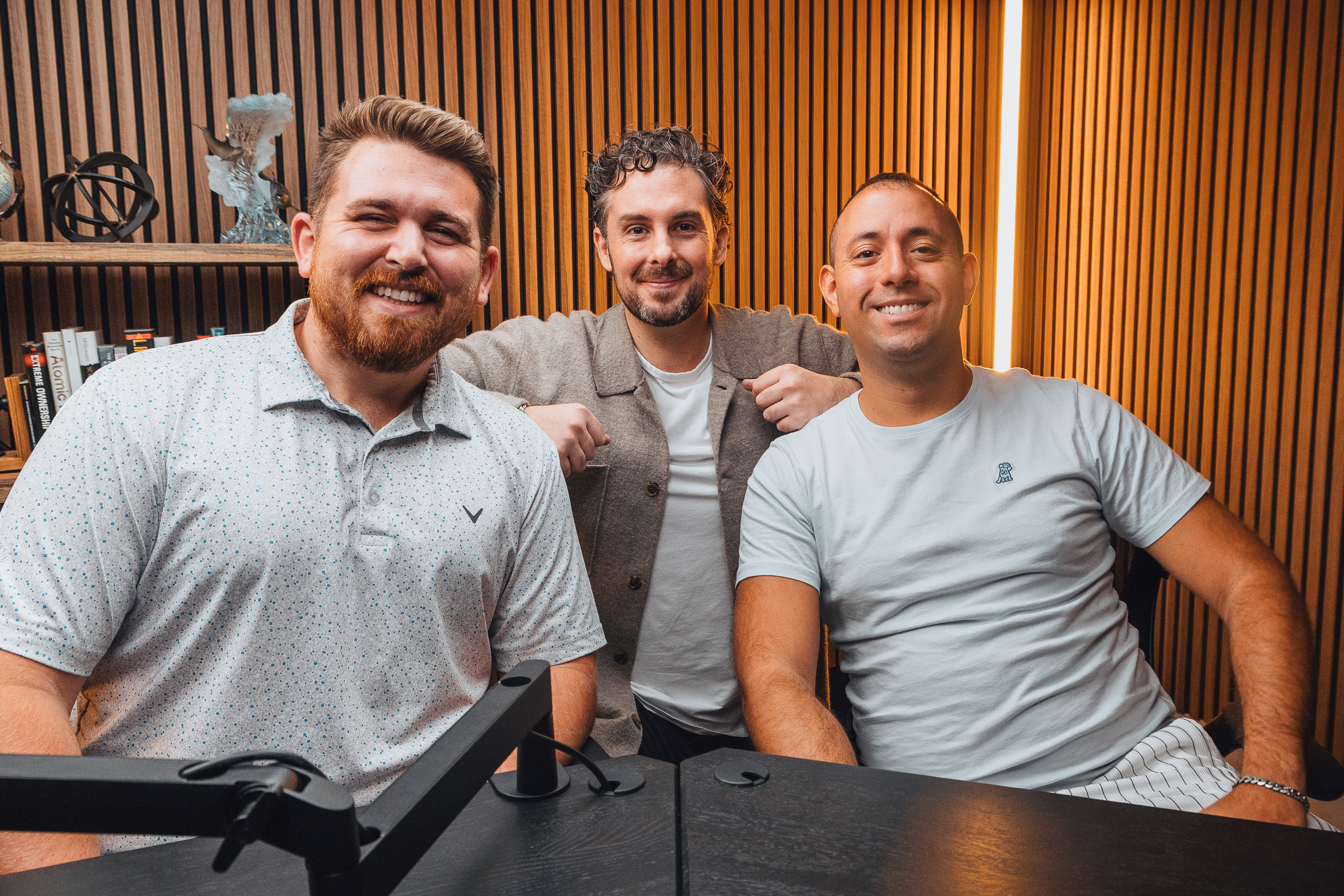
He got kicked out of school after pulling the fire alarm to win back recess. A few years later, he had his high school diploma at 14.
In this episode of the Don’t Do Nothing Podcast, Aaron and Brad sit down with Cary Green, a fourth-generation Scientologist and financial advisor who runs his own firm, Green Era Financial. Cary shares how an anxious, overweight, rebellious kid landed at a tiny boarding school in the New Mexico mountains with no TV, no video games, and no sugar, and how a program called Life Basics taught him everything from laundry to how to communicate. He explains how Educational Repair and Scientology’s Study Technology found the skipped gradients in his math, and the two study tricks that got him through high school in under a year.
From there, Cary takes us through culture shock as a 15-year-old in New York City, delivering 12-foot Christmas trees on his shoulder for tips, quitting a toxic job after five days, and taking an eight-day train to LA at 18. He talks about years as a fundraiser for the International Association of Scientologists, sitting at kitchen tables asking for anywhere from $1,000 to a couple million dollars, and how that work pulled him into the world of finance.
Cary also breaks down Roth vs. traditional retirement accounts in plain language, what financial advisors actually do all day, and how salespeople should work with a client’s advisor. Then Aaron and Brad turn the tables on his eight-year engagement with a heartfelt push to start a family.
Let us know in the comments how did you like this episode and remember:
Don’t do nothing.
In this episode:
- Growing up as a fourth-generation Scientologist
- Getting kicked out of multiple schools as a rebellious kid
- The fire alarm plan to win back recess
- Mojave Academy, a boarding school in the New Mexico mountains
- Childhood anxiety and worrying what people think
- The Life Basics program and learning how to live
- Educational Repair and Scientology’s Study Technology
- Skipped gradients and why he failed math homework but aced tests
- Two study tricks that helped him graduate high school at 14
- Taking Scientology courses in New York City at 15
- Walking away from drugs at teen parties
- What delivering Christmas trees taught him about tipping
- Fundraising for the IAS and asking for million-dollar donations
- Roth vs. traditional retirement accounts explained simply
- What a fiduciary financial advisor really does
- How to work with a client’s financial advisor in sales
- Meeting his fiancée and deciding when to start a family
- The Way to Happiness and his favorite L. Ron Hubbard quote
L. Ron Hubbard quote mentioned by Cary:
“He who would look forward into time cannot but shudder at the prospect of the future.
“But I have lived through yesterday.
“I am living through today
“Why should I should I fear to live through tomorrow?” -LRH
Source: L. Ron Hubbard Series. Early Years of Adventure Letters & Journals pg 111
Watch the full episode here:
Audio Version:
Apple Podcast:
https://podcasts.apple.com/us/podcast/dont-do-nothing-podcast/id1846609884?i=1000793700232
Text Version:
[00:00:00] Cary: I was incredibly anxious as a child. You know, I was always worried about what people were thinking about me and how people would perceive me. I had a bit of a problem at that school where every test I took I did very well, but on homework and regular classroom assignments, I failed every single one of the math one- What was the program?
[00:00:16] Cary: It was called Life Basics. Took me almost a year to get through this program. Mm. It
[00:00:21] Aaron: saved my life.
[00:00:21] Cary: Just after my 14th birthday, I graduated high school. Three days before my 15th birthday, I got my diploma. I never thought I would work as a financial advisor, ever. You look at my history and you go, “What?” One of the toughest things I’d ever done as a young adult traveling around the US, having to sit at somebody’s kitchen table and ask them for sometimes $1,000, sometimes $10,000, 100,000, a million, a couple million.
[00:00:46] Cary: Eventually became pretty good at it, and helped raise tens of millions for charity over the span of six or seven years.
[00:00:53] Brad: Welcome back to the Don’t Do Nothing podcast. Today we have actually a really good friend of mine. I don’t know if you know this, but-
[00:00:59] Aaron: I did not know.
[00:00:59] Brad: [00:01:00] Today we have Carey Green.
[00:01:01] Aaron: Yeah.
[00:01:01] Brad: Great friend of mine. He was born in South Africa. Uh, Carey, this is something I didn’t know about him, and I just learned this. He graduated high school at age 14.
[00:01:10] Aaron: Yep. That’s a record.
[00:01:11] Brad: Youngest high school graduate on the Don’t Do Nothing podcast so far. He spent a half a decade as a professional fundraiser, which I’m super excited to ask you about.
[00:01:20] Brad: He is currently a professional financial advisor with his own firm. He’s got a hefty eight figures under management.
[00:01:27] Cary: Yep.
[00:01:28] Brad: And, uh, he’s also a pretty decent golfer, as is his father, and, uh, he hit a golf ball for the first time on the same day that he learned to walk.
[00:01:36] Cary: That’s true.
[00:01:37] Brad: Which I think is pretty impressive.
[00:01:38] Brad: Yeah. He shanked it, though. And he, uh, he’s engaged.
[00:01:43] Cary: Yeah.
[00:01:43] Brad: He has a lovely fiancee, and he’s a fourth-generation Scientologist.
[00:01:47] Cary: Yeah.
[00:01:47] Brad: Carey, welcome.
[00:01:49] Cary: Thank you. Thank you both for having me.
[00:01:51] Brad: Yeah, happy- I appreciate it … happy to have you here.
[00:01:52] Cary: Yeah. Awesome.
[00:01:53] Brad: Okay, so my, my first question, what I wanna dive into is…
[00:01:57] Brad: God, I’m gonna hold off on the golfing. We’re not gonna go into [00:02:00] golfing- … at least until the end of the episode.
[00:02:01] Aaron: Uh, it’s good ’cause at least you have one non-golfer here. You know what I mean? I know. So I, I have zero interest, so you know what I mean? Like-
[00:02:06] Brad: We should fix
[00:02:07] Aaron: that. Yeah, yeah.
[00:02:07] Cary: We should fix that.
[00:02:08] Brad: Yes.
[00:02:08] Brad: Yes. That’s what I’m saying. Okay, no, my, my question is you, uh, you grew up as a Scientologist. Right. Right? Like, you grew up in Scientology. What was that experience like for you? Uh. Like, what, uh, what… Give some reality on that.
[00:02:20] Cary: You know, it’s pretty incredible. Like, when- How do I phrase this? Growing up as a Scientologist, I was surrounded by, you know, my parents, my sister, obviously a lot of people at the church, um, who all practiced the same religion, had the same religious philosophy.
[00:02:38] Cary: And so I grew up a lot with that basic understanding of life and what it means to be a Scientologist and what it is that, sort of the basic principles and understandings of this religion, what it is. And it was always so interesting to me to go out into the world and make friends who weren’t Scientologists or go to school, you know, public school, right?
[00:02:59] Cary: [00:03:00] Elementary school, et cetera. And- You
[00:03:01] Brad: went, you went to public school?
[00:03:02] Cary: Yeah, a few of, few different ones actually. Yeah. You know, another interesting data, I got kicked out of a lot of schools.
[00:03:08] Brad: Really?
[00:03:09] Cary: Hmm. Yeah, I was super rebellious as a kid. Yeah. I have quite a number of stories on that one, but yeah, I went to, uh- What was the earliest
[00:03:15] Aaron: age you got kicked out of school?
[00:03:17] Cary: I, sort, when I was seven, I think. Was it, did you bite people or what was the
[00:03:21] Aaron: deal?
[00:03:21] Cary: Six or seven. No, so- Dude, that’s pretty
[00:03:22] Aaron: young …
[00:03:22] Cary: it’s actually a really silly story, but, uh, we were, it was kindergarten.
[00:03:28] Aaron: Mm-hmm.
[00:03:28] Cary: I don’t know if I was officially kicked out, but I was certainly suspended, and then my, maybe either I got kicked out or my parents took me out of the school, but it was, um, a little elementary school.
[00:03:36] Cary: I was in kindergarten, and, um, this is really funny. If my mom watches this, she’s gonna laugh. But I, we were at recess, and we were having lunch out on some picnic tables, and I was putting some Emergen-C, remember the Emergen-C vitamin C packets? Mm-hmm, yeah. I was putting Emergen-C in my bottle of water, and a bird, like a little sparrow, came down and took my Emergen-C packet and flew away with it.[00:04:00]
[00:04:00] Brad: Sparrows.
[00:04:00] Cary: And, uh, I had seen my mom in the car a few times when she got mad at somebody, she would flip them off, right? And I didn’t know what it meant. I thought it meant, like, you’re, you’re mad at somebody. So I flipped off this bird- … that was flying away with my Emergen-C packet, and one of the kids went to the, our kindergarten teacher and said that I flipped off God.
[00:04:21] Aaron: What?
[00:04:21] Cary: And I was very, uh, confused by that, but anyway, I was brought to the principal’s office. It was a whole thing. My, I know my mom was called in, maybe my dad, too, and it turned into a whole thing, and I was… Anyway, that was the first time that I got in trouble at school.
[00:04:36] Aaron: Wh- where, where is this school?
[00:04:38] Cary: This was here in Clearwater, actually. What? When I was, uh, I was five or six years old, I think. Yeah. Yeah.
[00:04:45] Brad: Yeah. What, were you confronted with the accusation of, “Hey, you’re accused of the crime of flicking off God”?
[00:04:51] Cary: Yeah, sort of.
[00:04:52] Brad: Like, did they say that to you? Like, “Hey, it looks like you flicked off God.” Y-
[00:04:56] Cary: yeah, I didn’t know what that meant, and so I was just in [00:05:00] confusion.
[00:05:00] Cary: Oh. You know? It’s like me accusing you of something in a different language. Like, I didn’t know what those words meant, so I didn’t understand what was happening, just that I was in trouble. And I was brought to the principal’s office, but I remember I was sitting outside while my mom was talking to the principal, and then, uh, next thing you know, I was going to a different school.
[00:05:16] Cary: So I don’t know what transpired in that, in the office. Yeah.
[00:05:19] Aaron: Wow. How far have we come as a nation where if you move your hand in a certain way, you’re gonna be kicked out? Like, I just… Come on, grow- Like, I, I mean, you know- Yeah … I think if you go back a few generations, dude, you’d never get kicked out for something like that.
[00:05:32] Cary: No.
[00:05:33] Aaron: Like, what did you do? You really did nothing, honestly. Yeah. I mean, anyway, whatever. I just-
[00:05:36] Cary: I mean, you know, yeah, you’re right. It wasn’t, wasn’t very fair. Um- But yeah, I was super rebellious kid, and, uh, I just, if I didn’t understand something or I disagreed with something- Mm-hmm … then I would push back, I would fight back, you know?
[00:05:50] Cary: Um- Were you rebellious before that, that incident with the bird and that emergency? I think it’s, like, just a fundamental part of me. You were? 100%.
[00:05:58] Aaron: Yeah, I don’t even think it’s [00:06:00] rebellious at all. 100%. Telling a, a bird to, like, F off, like- No, that’s- I don’t know. I don’t think it is- Yeah, yeah … my,
[00:06:04] Brad: my curiosity
[00:06:05] Aaron: was, like- In general, in general.
[00:06:05] Brad: Okay … it, did that, like, kind of, like, confusion. ‘Cause, like, for me, I got in trouble when I was, um, in, like, I wanna say, like, fifth grade. Like, that’s the only time I ever got called in the principal’s office, and I really started to not like school after that.
[00:06:18] Aaron: Yeah. Mm.
[00:06:18] Brad: Yeah.
[00:06:19] Aaron: Mm.
[00:06:19] Brad: But I got called in for something.
[00:06:20] Brad: I was like, “I didn’t do this thing.” Well,
[00:06:21] Aaron: what did you do? What did you, they say you did, or what did you
[00:06:23] Brad: actually do? Uh, they, dude, it’s, dude, it was crazy. So I really got into blowing spitballs on the bus. Okay. I learned how to blow a spitball. It w-
[00:06:31] Aaron: like, like, in, in the straw, right? Like,
[00:06:32] Brad: yeah, yeah, with a
[00:06:32] Aaron: straw.
[00:06:33] Aaron: You get the straw, you wrap it up. Yeah, okay, spitballs.
[00:06:34] Brad: But I was doing that on the bus, like, a lot, and me and this, these two other kids were blowing spitballs like crazy. And what, one of my friends on the bus, who literally was actually my friend, he was a Black kid, and we literally, like, traded Harry Potter books and whatever.
[00:06:46] Brad: And I was accused, and I actually was told this by the vice principal, and I hated vice principals ever since then. I was told, I was accused of making fun of him and bullying him because he was Black.
[00:06:57] Aaron: Mm.
[00:06:58] Brad: Can you believe that?
[00:06:59] Aaron: But who [00:07:00] accused, who, who d- who said that
[00:07:01] Brad: about you? That it was literally an invented thing, ’cause I went and asked him.
[00:07:04] Brad: But it wasn’t even someone else. No, I, I asked him. Yeah. I was like, uh, his name was Blake. I was like, “Blake, did, did, like, what ha-” I was like, “What, uh,” I was like, “They told me that I was bullying you ’cause, like, you’re Black.” And he’s like, “No, I didn’t say that.” Wow.
[00:07:15] Cary: So it was literally, like,
[00:07:17] Brad: yeah. But it’s so confusing.
[00:07:19] Brad: I just really didn’t like it. Anyways-
[00:07:20] Cary: Injustice.
[00:07:21] Brad: Yeah, I know.
[00:07:21] Cary: Terrible. Yeah.
[00:07:22] Brad: That was my question, but you’re just rebellious.
[00:07:24] Cary: I was just rebellious. Um, a great example, one of the schools I went to in elementary school, they, uh, you know, looking back at this, this is crazy. But at the time, they told all of us students in the entire school that recess was being cut from 50 minutes down to 15 minutes.
[00:07:41] Brad: Mm.
[00:07:42] Cary: No reason given, no explanation to the kids at all, just simply, “Here’s a change.” Yeah. And to us, we had no idea why. We thought we were being punished.
[00:07:51] Brad: Mm-hmm.
[00:07:51] Cary: At the time- It certainly
[00:07:52] Brad: sounds like a punishment.
[00:07:53] Cary: Yeah. ‘Cause, I mean, it’s terrible. Like,
[00:07:54] Brad: hey, your, your
[00:07:55] Cary: one joy in your day- … is being reduced dramatically.
[00:07:58] Cary: Yeah. Right?
[00:07:59] Brad: Yeah.
[00:07:59] Cary: And [00:08:00] in hindsight, they were probably doing, you know, a school district-wide change or- Mm … you know, there was something else going on, but we thought we were being punished. And that elementary school only went up to fourth grade. Some go up to fifth grade, but this one only went to fourth grade, and I was in fourth grade at the time.
[00:08:13] Cary: Is it Clearwater Public
[00:08:14] Aaron: School again?
[00:08:14] Cary: No, this wasn’t in Clearwater. Oh. This was in, uh, Panama City Beach, Florida- Okay … which is up- No way … you know, north on the Panhandle.
[00:08:20] Brad: Wow.
[00:08:20] Cary: Yeah. Um, lived there for a few years. And, uh, you know, anyway, I was in fourth grade, so I was, like, in the oldest year in that school.
[00:08:29] Cary: And for some reason, the kids kind of got together and decided to nominate me to go talk to the principal and try to find out- No way. What? … what was happening. I remember this, this principal, his name was Mr. Armstrong, and, um, and he was a good guy. He wasn’t a bad guy. Mm-hmm. Right? I have nothing against him.
[00:08:45] Cary: I saw him too often, you know? And, uh, anyway, I don’t know exactly what happened, but they nominated me to go talk to him. Um, maybe ’cause I saw him so much. I don’t know. And so I, uh, I went to- Did he like you? I wouldn’t say that.
[00:08:59] Brad: Okay. [00:09:00]
[00:09:00] Cary: Yeah. He, uh… We… Yeah, I got sent to him too often. I get it. For him. Yeah, so I, I went to his door, and it was towards the end of the day, and, um, I think I snuck out to go to the bathroom and, like, went to the principal’s office, and I knocked on his door and he said, “Come in.”
[00:09:14] Cary: And I opened the door, and before I could walk in, he goes, “What do you want, Carey?” And I said, uh, “Mr. Armstrong, I, you know, I, I wanted to come talk to you about our recess being cut, and I wanna know why you’re punishing us.” Which is probably the wrong way to approach it, but- The wrong way to
[00:09:30] Aaron: phrase
[00:09:30] Cary: it. And so he goes- Let’s
[00:09:31] Aaron: see, let’s see.
[00:09:32] Cary: Yeah, he goes- Let’s see what happens … “Get the hell out of my office.” Immediate, you know, anger. I don’t know what was going on behind the scenes. Maybe he was annoyed about it, maybe whatever. And I was just… It was so unjust to me that I, I turned around and I walked out of his office. And a friend of mine, um, Steven, uh, you know, sort of like my, my best friend at the time, we, uh, concocted a plan.
[00:09:55] Cary: Mm-hmm. We figured out that, you know, the, the best way to handle this [00:10:00] injustice was to, through our own endeavor, give the kids back their time. And so we- … we did the math and we figured out that if we pulled the fire alarm once a week around 10:00 to 10:15 AM-
[00:10:15] Brad: Yeah …
[00:10:15] Cary: then all the kids would get sent home for the day, ’cause it wasn’t a fire drill.
[00:10:19] Cary: It was like the fire alarm went off. And that that would make up the time lost from- Good
[00:10:25] Aaron: logic. Wow.
[00:10:26] Cary: Right? You know. Good
[00:10:27] Aaron: math.
[00:10:27] Cary: I love
[00:10:28] Brad: this.
[00:10:28] Aaron: Right.
[00:10:28] Cary: And, uh, so we, we traded off a couple of times and then, um, one of those
[00:10:33] Aaron: times- Did, did it work, did it work the first time?
[00:10:35] Cary: Yeah. Oh, yeah.
[00:10:36] Aaron: So you pulled the fire alarm and everybody went home?
[00:10:37] Cary: Yeah. Yeah, the school got evacuated. The fire department came. The police ca- you know, they got to look, right? It’s an elementary school. They have to- Dude, were you
[00:10:44] Brad: loved by, like, the students there for
[00:10:47] Cary: doing
[00:10:47] Brad: this?
[00:10:47] Cary: We… No. We didn’t tell any of the other kids.
[00:10:50] Brad: Oh.
[00:10:50] Cary: Bro, you’re like Batman. This was like our… Yeah, we were literally like we’re- You’re like a fourth-
[00:10:53] Brad: fourth-grade Batman.
[00:10:55] Cary: But the thing- I love that … the thing I didn’t realize, and in hindsight now, 2020, is like [00:11:00] imagine the trouble that caused. The fire department has to come, the police have to come, the kids have to be sent home, the parents have to be called. Like- The parents are like, “Come get your kid”
[00:11:08] Cary: dude, just the waste of tax dollars, the, the trouble and, uh, everything like that. Massive- All the employees have to go
[00:11:13] Aaron: off work, right, or whatever. Yeah,
[00:11:15] Cary: yeah. Yeah, so when I got caught, ’cause I don’t know how, I don’t know if they installed cameras and I missed it, but one of the weeks when it was my turn, I think it was the third time we were doing it, uh, I got caught and, uh-
[00:11:26] Aaron: At that point they probably had someone posted at everything.
[00:11:28] Aaron: Like if it happens every Friday- You would think … at the same time, right? Week number three. We would do
[00:11:30] Cary: a random date, but yeah. No way. Just to… You know, we were somewhat clever about it. Um- But yeah, that was, uh… Yeah, I got brought home in the back of a cop car and, oh, it was a whole thing. It was a whole thing.
[00:11:43] Cary: How old
[00:11:43] Aaron: were you at the time? Did they catch you after you did the alarm or before, the third time?
[00:11:45] Cary: No, no, like right before. I basically like- You when you were- … red-handed, like hand on the… Yeah.
[00:11:50] Brad: Did they say, “Halt”?
[00:11:53] Cary: I don’t, I… Honestly, I try not to remember ’cause it was so terrifying. Yeah, yeah. The police were called.
[00:11:59] Cary: They didn’t put me [00:12:00] in cuffs, but they, you know, it was a whole thing.
[00:12:02] Aaron: Wow.
[00:12:02] Cary: Yeah, and, and totally fair in hindsight. Like imagine the trouble I caused by, by doing that.
[00:12:08] Aaron: It was not cool.
[00:12:08] Cary: And I didn’t realize that. It was not so…
[00:12:09] Aaron: I mean, like, it was bad, but like- I, I- Yeah … but like, dude, like, I mean, yeah,
[00:12:12] Cary: it’s
[00:12:12] Aaron: fine.
[00:12:13] Aaron: I actually agree
[00:12:13] Brad: with you. Yeah.
[00:12:13] Cary: Yeah. So anyway, that’s a good example of, of the rebelliousness of, “Well, fine, then we’re gonna take justice into our own hands and, you know, make good on it.” Yeah. So
[00:12:23] Brad: anyway.
[00:12:24] Cary: Oh my God.
[00:12:25] Brad: Wow.
[00:12:26] Cary: Yeah.
[00:12:26] Brad: I love that.
[00:12:27] Cary: I was a wild kid.
[00:12:27] Brad: Yeah.
[00:12:28] Cary: Yeah.
[00:12:28] Aaron: What, what age were you at this time?
[00:12:30] Cary: Oh, I was 10.
[00:12:32] Aaron: Okay.
[00:12:32] Cary: Yeah, 10, maybe almost 11, somewhere in there. Yeah
[00:12:36] Brad: And w- what, uh, like, did you go to school, l- where, where there were a lot of other kids who were Scientologists? I, I’m assume probably not at Panama City Beach.
[00:12:46] Cary: Uh, yeah, not up there. Um, after this incident-
[00:12:50] Brad: Yeah …
[00:12:50] Cary: we’ll call it an incident, I did. I, uh, went to a school in the Rocky Mountains in New Mexico.
[00:12:56] Cary: It was a boarding school called Mojave Academy. Mm. Um, doesn’t exist [00:13:00] anymore. They closed down the school. That’s a whole long story. But it was the best experience of my entire life- Hmm … at this school. It was a very small school.
[00:13:09] Brad: Hmm.
[00:13:09] Cary: Um, yeah, at any given time, we might have somewhere between 20 and 100 students- Hmm
[00:13:14] Cary: at that school, and it was incredible. When I first went, I absolutely hated it.
[00:13:21] Brad: Oh, why?
[00:13:22] Cary: Uh, because we’re in the middle of the Rocky Mountains. There’s… I didn’t even have a cellphone at the time, but there’s no cellphone reception. What, what’s, what state? In New Mexico.
[00:13:30] Brad: In New Mexico, okay.
[00:13:31] Cary: Yeah, but way up, like almost 9,000-foot altitude, like between 8 and 9,000-foot altitude- Hmm
[00:13:36] Cary: in, um, in the middle of nowhere. The closest town was a little town called Datil, New Mexico, that was quite literally just, like, a crossroad in the highway. It had a gas station that was also a hotel, that was also a restaurant- Hmm … and had a post office across the street, and a little library, and then, like, an elementary school that was, like, a couple of trailers.
[00:13:55] Cary: Like, literally there was-
[00:13:56] Brad: Wow.
[00:13:57] Cary: You could blink and miss it, essentially, [00:14:00] if you were driving through. And that town was, uh, about 13, 14 miles from the school. Um, and it was an incredible experience. When I first arrived, I absolutely hated it because there was no, no TV. Hmm. No video games. Oh. There was no sugar.
[00:14:17] Cary: Um-
[00:14:17] Brad: Oh,
[00:14:18] Cary: wow … there was, there was absolutely nothing to do to entertain yourself unless you self-generated that entertainment, which really was go outside and play or read a book, which was something that up until that point in my life I didn’t do. When I-
[00:14:33] Aaron: Wow …
[00:14:34] Cary: showed up at that school, I was, you know, a chubby little 10-year-old, almost 11.
[00:14:38] Cary: I was probably, you know, kind of obese, a good 40, 30 or 40 pounds- Hmm … overweight. For a 10-year-old, that’s- Mm-hmm … quite a bit.
[00:14:45] Aaron: Yeah, yeah.
[00:14:45] Cary: And, um, I was incredibly, um- anxious as a child. You know, I was always worried about what people were thinking about me and how people would perceive me. If I was, uh, walking on [00:15:00] the sidewalk, cars are driving by, I would be sitting there wondering what those people in the cars would think about me.
[00:15:05] Brad: Oh, wow.
[00:15:06] Cary: And, uh, or if I sneezed in public, I would be embarrassed. Like, the weirdest stuff that I had going on as a kid, and then I show up at this school and there’s, you know, 40, 50 kids there and of varying ages, mostly sort of 13 and under, for the most part, a couple of older kids. And everyone’s outside, you know, playing basketball or riding horses or going on hikes or, you know, shooting archery and-
[00:15:31] Aaron: Sounds like a resort that you’d go to now, right?
[00:15:33] Cary: Yeah, that sounds super badass. Yeah, 100%. But as a kid you’re like- Yeah … “Wh- where’s my family?” Yeah. “And I don’t have TV and I don’t have video games, and I can’t drink Coca-Cola, and there’s no, there’s no, you know… I’m just in the middle of the mountains with a bunch of strangers.” Mm-hmm. And it was, it was also pretty well-disciplined.
[00:15:54] Cary: You know, you ate at meal times, and you got up at a certain time in the morning, and all the kids would go exercise. Mm. [00:16:00] And, uh-
[00:16:00] Brad: It was like a proper boarding school.
[00:16:01] Cary: Yeah. Yeah. And it wasn’t like a, a disciplinary school. The, the school didn’t take kids who were big problem children- Mm-hmm … or anything like that.
[00:16:10] Brad: How did you get in? No, I’m just kidding.
[00:16:12] Cary: It’s a honestly good question. I maybe shouldn’t have, in hindsight, but I think, you know, they had very strict requirements for getting accepted. Um, you know, they wouldn’t take any kids who had any sort of drug history, for example. Mm. Any usage of alcohol or drugs as a teenager or younger.
[00:16:29] Cary: Um, no kids who had a history of stealing, for example- Yeah … which is something I never did. Um, or you know, no teenagers that had any sort of history of, like, sexual activity. For example, that was a s- you, if you were at that school-
[00:16:41] Aaron: This is 13 and under?
[00:16:42] Cary: No, no, you… There were also some older kids. Okay. But most of the kids were under 13.
[00:16:46] Aaron: Yeah.
[00:16:46] Cary: Okay. Um, but it was actually pretty strict on those three things, which are kind of the most common issues in that age range.
[00:16:52] Brad: Mm-hmm, mm-hmm. Mm-hmm.
[00:16:53] Cary: Um, so when it was like, “Oh, we have a kid who’s a rebellious kid and a troublemaker, fine, we’ll take him.” They’re like, “
[00:16:59] Brad: [00:17:00] Bring him on.”
[00:17:00] Cary: Yeah, 100%. And, uh- Call the fire
[00:17:02] Aaron: department.
[00:17:02] Aaron: They’re, like, tw- you know-
[00:17:04] Cary: Yeah. They’ll be here in five hours … 10 hours away. Yeah. No, 100%. And the school was really great because they, they had this- They
[00:17:10] Brad: were like, they’re… I’m so sorry. They’re like, “Pull the fire alarm, dude. Do it.” Yeah. And see
[00:17:15] Cary: what happens. 100%.
[00:17:17] Brad: Yeah.
[00:17:18] Cary: But the school is amazing because they had this program that all of the students would do f- when they first arrived, and you would go at your own pace, and you could get through it in a couple of weeks, or it could take you months.
[00:17:29] Cary: It took me almost a year to get through this program. Mm. What,
[00:17:33] Brad: what was, what was the program?
[00:17:34] Cary: It was called Life Basics. And-
[00:17:36] Brad: Life Basics …
[00:17:37] Cary: it was the first thing all the kids did. And it was… It saved my life In total honesty, it was super simple things like how to wash dishes, how to make your bed, how to do laundry.
[00:17:50] Cary: But then it was also things like, um, how to communicate with others.
[00:17:56] Brad: Mm.
[00:17:56] Cary: You know, someone says something to you, give them an [00:18:00] acknowledgement when you receive that, that, you know, that spoken word.
[00:18:04] Aaron: Mm-hmm.
[00:18:04] Cary: Um,
[00:18:05] Aaron: it
[00:18:05] Cary: was-
[00:18:05] Aaron: And, and this… Is this based, like,
[00:18:08] Cary: L. Ron Hubbard? Based on the technology of, of L. Ron Hubbard.
[00:18:10] Cary: Oh, Ron Hubbard. Yeah, 100%. Uh, we would take the precepts of the way to happiness, right? And we would do drills for those precepts, and we would even- Mm … take clay and make, uh, like demonstrations of- Mm … each one of the precepts and their sort of core concepts from the way to happiness.
[00:18:28] Aaron: Wow.
[00:18:28] Cary: Um, and we had to do things like cleaning stations.
[00:18:32] Cary: You know, after every meal you had a cleaning station. Maybe it was to sweep the dining room, or maybe it was to, you know, go clean the, the men’s dorm bathroom or whatever it was, and you would have to get a checkout from one of the teachers to make sure that you properly did your cleaning station. And these were all totally foreign concepts to me.
[00:18:49] Cary: I didn’t know how to do my laundry. I didn’t know how to, uh, communicate well with others. Mm. I, uh, didn’t understand the principles of exchange with [00:19:00] my parents or with anybody else. I didn’t know how to work. I didn’t know how to be productive or do basic things such as my own laundry, you know?
[00:19:08] Brad: Yeah.
[00:19:08] Cary: And, uh, how to brush my teeth properly, and these just basics of life And you get through that program, and I don’t know how else to put it, but you’ve arrived to planet Earth in a way.
[00:19:21] Cary: Like, you are now a person. You have your basics in, in life.
[00:19:25] Aaron: Mm.
[00:19:26] Cary: You’re not just a kid, you know, uh, sort of dramatizing whatever you’ve got going on. In my case, being super rebellious and fighting authority at every hand. And it was amazing. It was an incredible program, and in order to graduate from that Life Basics program, you sort of had to have the, the approval of all the teachers.
[00:19:47] Cary: They had to see-
[00:19:48] Brad: Oh, wow …
[00:19:48] Cary: yeah, you’ve got your basics in on life. You’ve addressed, you know, these things that maybe you didn’t know before, you were struggling with before, and, and, and you’ve handled those. And, uh, then [00:20:00] you move into the next program, which was called Educational Repair, or we called it ER for short, but Educational Repair.
[00:20:08] Cary: And basically what that was, again, based off the works of L. Ron Hubbard, but it was sort of going back to the basics of your education. Uh, for example, in math it would be addition, subtraction, multiplication, and division, and making sure that any gaps that may be missing in your education were filled.
[00:20:25] Cary: Mm-hmm. Um, any sort of skipped gradients on any subjects were repaired and fixed using the study technology. So, um,
[00:20:34] Aaron: any- And, and just as a point, the gradient, so as a gradient, it’s pretty much a technical term, as I understand. I don’t know how common it is, but- Yeah … uh, so gradient is basically the steps you take.
[00:20:43] Aaron: So you, each time you take a step it’s a little bit harder. So, like, let’s say you’re gonna, I don’t know, uh, run a marathon. Well, for sure you need to know how to tie your shoes. Yeah. Like, you need to put on socks, tie your shoes, like, so you need to put on your socks until that’s super easy, then you put, you know, put on, tie your shoes until that’s easy.
[00:20:57] Aaron: And if you do each step that’s easy, then you’ll be able to walk 10 steps. Can you [00:21:00] walk 10 steps? Good. Now you can walk 20 steps. Yeah. Can you run, blah. And you, you make it so each step is easy. That’s called a gradient. So a skip gradient is you, you, you pass a step that you missed. If you never learn how to tie your shoes, now you go to marathon, you, you won’t even make it.
[00:21:10] Aaron: Anyway. Right.
[00:21:11] Brad: Yep.
[00:21:11] Cary: Yeah, or for example, if you, you can’t run five miles, but you go try to run 26.2 miles- Correct,
[00:21:16] Aaron: yeah,
[00:21:17] Cary: yep … you’re gonna experience a failure.
[00:21:18] Brad: Yeah. Mm-hmm.
[00:21:19] Cary: And, um, that happens a lot in education. Uh- Totally … perfect example is I remember the teacher who taught me division. In elementary school, the school I got in trouble for- Mm-hmm
[00:21:29] Cary: flinging a fire alarm, right? They, uh, that teacher, I won’t say her name, but she went up to the whiteboard, drew out a division problem, like just wrote out a division problem with the, you know, the line and-
[00:21:42] Aaron: Mm-hmm,
[00:21:43] Cary: mm-hmm … how to solve it. No words were spoken. She just drew out a division problem and said, “Good.
[00:21:49] Cary: That’s how you do division.” And then we were expected to do division.
[00:21:52] Aaron: Hmm. Wow.
[00:21:53] Cary: And there was no understanding of what that line meant and what we were doing to do the work- Mm-hmm … of division. [00:22:00] And so I, I had a bit of a problem at that school where every test I took, I did very well- For every test.
[00:22:08] Brad: Hmm.
[00:22:08] Cary: But on homework and regular classroom assignments, I failed every single one of the math ones- Hmm
[00:22:14] Cary: ’cause I didn’t know how to show my work. Right. I just did it in my head.
[00:22:17] Brad: Hmm.
[00:22:17] Cary: I didn’t understand how to show my work. On tests, you didn’t have to. You just had to get the right answer. Oh, wow. So I could do the math in my head, but I didn’t know how to do the math on paper. And that was, in a way, a skipped gradient for me on math-
[00:22:30] Brad: Mm-hmm.
[00:22:31] Cary: Hmm … that we sorted out at Mojave Academy as part of that educational repair program. And the idea is to just repair anything that’s missing in your education and bring you up to where you should be at your age.
[00:22:41] Brad: Mm-hmm. Hmm.
[00:22:42] Cary: And, uh-
[00:22:43] Brad: Oh, that’s beautiful …
[00:22:43] Cary: yeah, it was so good. It was so good. And then from there you graduate into academics.
[00:22:48] Cary: And now your, your basics in life were in. You can function as a member of the school and member of society, even as a young kid. Your education’s repaired, and you’re kinda like bright and [00:23:00] shiny and bushy-tailed and, you know, ready to now learn. And, uh, so I graduated into academics and I, uh, finished high school in less than a year in academics.
[00:23:15] Cary: Whoa. Oh, wow. Yeah. I graduated just after my 14th birthday. I graduated high school, uh, three days before my 15th birthday. I got my diploma from, from the school,
[00:23:27] Brad: which was really cool. Wow. Yeah. That’s incredible.
[00:23:29] Cary: Yeah. I had a couple of tricks that helped me, but, uh, you know, we… Yeah, we don’t have to necessarily get into all the- What?
[00:23:36] Cary: No, I want, uh, you mentioned it. You wanna know? Okay. Yeah. Hello. Yeah, so basically, uh, you know, if I went to sort of any public school, um, I probably would’ve been, uh, you know, sent to the guidance counselor multiple times for this, but I was incredibly easily distracted, right? Mm. If I’m doing something and somebody says something, I’m interested.
[00:23:58] Cary: What did they say? Mm-hmm. What’s going [00:24:00] on with, with that person?
[00:24:01] Brad: Mm.
[00:24:02] Cary: And that made, even though I was a very bright kid, it made it hard to study because I might be in a textbook learning about chemistry, and then somebody else over here is having a conversation or something else is going on, and I would get distracted, right?
[00:24:14] Cary: Probably out in the world, this is that thing called ADD or ADHD, right?
[00:24:18] Brad: Sure.
[00:24:19] Cary: I don’t think I have a deficit in attention, and what kid isn’t hyperactive and wants to run around and do stuff? Mm-hmm. But for me, I figured out a solution. There were two things that I did differently with high school for myself that made it extremely easy for me to study.
[00:24:34] Cary: The first thing was I didn’t understand why we would take all the subjects in high school and only give you sort of 30 minutes or 45 minutes a day on that subject.
[00:24:44] Aaron: Mm.
[00:24:44] Cary: So you would do 45 minutes of math, then 45 minutes of- Mm-hmm, mm-hmm … English, and 45 minutes of history, whatever. I figured if I’m gonna study for eight hours, let me just put it all into one subject.
[00:24:55] Brad: Mm. Wow.
[00:24:56] Cary: So I did, uh, so basically [00:25:00] algebra half through calculus and trigonometry in three months, and I just got through all the math. Only the math. Wow. I just did math for seven, eight hours a day. And then I did the same thing with history.
[00:25:12] Aaron: Yeah.
[00:25:12] Cary: With English.
[00:25:13] Aaron: This is book driven or teacher driven, or how do you-
[00:25:15] Cary: It’s both.
[00:25:16] Cary: It was both. Um, the school was very untraditional in a lot of ways. You weren’t sitting at an assigned seat with a teacher- Mm-hmm … teaching. It was, the students moved at their own pace. They had a program laid out for them-
[00:25:27] Brad: Mm-hmm. Mm …
[00:25:28] Cary: that followed certain structures, but was more or less customized, and then you just got along with it.
[00:25:33] Cary: And if you needed the teacher’s help with something, the teachers were sort of roaming this big beautiful classroom that had, like, beanbags and random chairs and tables all over the place- Wow … and bookshelves. It was very unconventional. It wasn’t, you know, uh, as- Mm-hmm … regimented as a traditional classroom-
[00:25:49] Brad: Yeah
[00:25:49] Cary: which I think was wonderful quality. Um, so I would, if I ran into any issues, I would, you know, just go to the teacher and, uh, ask for help. And, [00:26:00] uh, pretty soon I got to a point where there was really only one teacher, especially on the math, that I could ask for help, ’cause she was the only one who understood that higher level calculus- Mm
[00:26:08] Cary: trigonometry stuff I haven’t used since school, unfortunately. Yeah, yeah.
[00:26:13] Brad: Yeah.
[00:26:14] Cary: I don’t remember the last time I solved an algebraic equation. Right. Probably can’t do it anymore. But, um, it was that one trick of just why would I spread my attention across multiple different things? Let me just do one subject until I’m done with that subject was- Wow.
[00:26:28] Cary: Wow. Immerse
[00:26:28] Aaron: yourself. That’s great.
[00:26:29] Cary: And of course, you just make more and more progress ’cause you’re, you’re- Yeah … build up momentum.
[00:26:35] Brad: Yeah. The building block, the next thing is based on, you just learned this morning, not a month ago or last year.
[00:26:40] Cary: Right. Yeah, exactly.
[00:26:41] Aaron: I’m gonna try it, by the way. Yeah. Just I’m taking that right now.
[00:26:42] Aaron: Yeah, it’s
[00:26:42] Brad: genius.
[00:26:43] Aaron: I’m gonna homeschool, I’m gonna be like, “Good, we’re doing math for a month.”
[00:26:45] Cary: Oh, that’s what I’ll do- Yeah … with my kids.
[00:26:47] Aaron: What, like, that sounds great. Yeah, it does sound great. I mean, why not? 100%. ‘Cause then you, it’s,
[00:26:50] Cary: you- I, I’m thinking about for myself, I would love that. Yeah. Yeah. Yeah. Well, think about it.
[00:26:54] Cary: I mean, that’s how any of us would learn something right now if we wanted to. Yeah, that’s right. That’s right. If we wanted to learn photography, we would just [00:27:00] do a- Dive in. Mm-hmm … photography course or- Mm-hmm … YouTube or whatever, right? The other thing that I did, and I got special permission for this, this was not a common thing at the school, but I got permission to listen to my iPod.
[00:27:12] Cary: So I would listen to music in my ears, and I had one desk I would always sit at that faced a window that looked out on the beautiful Rocky Mountains.
[00:27:20] Brad: Mm.
[00:27:21] Cary: That way, I wouldn’t get distracted by other people around me. I wasn’t actually really listening to the music, but it was sort of like white noise drowning out all the various conversations and things happening in this big beautiful classroom-
[00:27:33] Brad: Yeah
[00:27:34] Cary: so that I could just focus on what I was studying. And I blasted through, and I got through very quickly.
[00:27:40] Brad: Wow. Wow.
[00:27:40] Cary: Yeah, it was amazing.
[00:27:41] Brad: Dude, I got such a good, like, clear picture of, like, what, what that must have been like. Yeah. You know?
[00:27:46] Cary: Yeah. It was the best. I look back at that time at that school as- some of the greatest memories of my life.
[00:27:55] Cary: I got to do so many cool things, hiking the Grand Canyon three times, white water [00:28:00] rafting, horseback riding, all, becoming a volunteer firefighter, all sorts of different activities- Wow … we got to do in this, uh, in this school in the middle of nowhere- That’s amazing … in New Mexico. It was awesome. Yeah.
[00:28:13] Aaron: Um, I have a question about that, so-
[00:28:14] Cary: Sure
[00:28:15] Aaron: now I know that, so the school, they do s- they do a lot of studies based on L. Ron Hubbard.
[00:28:19] Cary: Yeah.
[00:28:19] Aaron: Now, did, had you done anything like Scientology, like with your, like your family? ‘Cause now you’re boarding. Yeah. Is there any, have you done any Scientology at this point, or, or you didn’t really know much about it, or how, how?
[00:28:31] Cary: So not really. Okay. Um, I had had many conversations with specifically my dad about the subject of Scientology and what those belief systems are.
[00:28:42] Aaron: Mm-hmm,
[00:28:42] Cary: mm-hmm. I had a pretty good understanding of Scientology, but I hadn’t really done any courses
[00:28:48] Aaron: or- And you say understanding by, because talking to your dad, basically.
[00:28:50] Cary: Yeah.
[00:28:50] Aaron: Okay.
[00:28:51] Cary: Yeah, so, you know, I would ask him a question. “Dad, blah, blah, blah, blah, blah. Why is this the way? Why is my friend now mad at me and won’t talk to me? What did I do?”
[00:28:59] Aaron: [00:29:00] Yeah.
[00:29:00] Cary: And he would explain, you know, a concept to me that was based off the works of L. Ron Hubbard that would give me answers. And I go, “Oh, God, that makes so much sense.”
[00:29:10] Cary: Um-
[00:29:11] Aaron: I think I know that, by the way. We’re gonna put, we’re gonna put a link in. Uh-huh. But what is that I was talking about right there? Yes. If you wanna be, you wanna be taught by Carey Green’s father- … uh, via L. Ron Hubbard, uh, it’s http://www.scientology.org/honesty. Yeah. Okay. Ooh. Um, or is it /integrity? I gotta check.
[00:29:27] Aaron: But it’s, uh, it’s an online course, and you will find out why people are mad with you. Yeah. Uh, yeah. Okay, good.
[00:29:32] Brad: Such a good concept.
[00:29:32] Cary: Oh, my gosh. Yeah, it dispels one of the biggest mysteries in life. Why-
[00:29:34] Brad: Totally …
[00:29:35] Cary: why does sudden- suddenly someone that you love or care for or are friends with become critical of you- Mm-hmm
[00:29:40] Cary: or, uh, decide to leave your business? Mm-hmm. And, or, you know, these mysteries. What did I do to upset this person? Mm-hmm. Well- Yeah … you can find out the answer.
[00:29:50] Brad: Yeah.
[00:29:51] Cary: And it, boy, does it make sense.
[00:29:52] Brad: Yes.
[00:29:53] Cary: Yeah.
[00:29:53] Aaron: Okay. So- So you’d done, you’d not done a single course- Not- … right at this time, basically, right?
[00:29:57] Cary: Not that-
[00:29:57] Aaron: Like Scientology course.
[00:29:58] Cary: Not really.
[00:29:58] Aaron: Okay.
[00:29:58] Cary: No. Um, [00:30:00] one thing that was pretty incredible at this school is, um- The sort of that, that headmaster of the school, um, the executive director of the school, she would, not necessarily every day, but every once in a while she would, she would do these, um, life lessons she called them.
[00:30:19] Brad: Mm.
[00:30:19] Cary: Where she would get all the kids together and a whiteboard out on the patio of this big, beautiful, um, giant log cabin schoolhouse that we had, which was really cool.
[00:30:28] Cary: And we’d all- Dude, this is
[00:30:28] Brad: so badass.
[00:30:29] Cary: Dude, it was- The school is like- It was the coolest experience … LA. Yeah It was the coolest… And she would grab a whiteboard and, uh, do, do a lesson on life, and it was usually based off of the works of L. Ron Hubbard, and it could be something like what you just mentioned- Mm
[00:30:44] Cary: about honesty, um, or it could be on the subject of personal integrity.
[00:30:48] Brad: Mm-hmm.
[00:30:48] Cary: Or it could be on the subject of how to improve relationships with others- Mm-hmm … using something, you know, based off of that technology. I don’t wanna say too many words that- Yeah, yeah, yeah … people watching may not [00:31:00] understand.
[00:31:00] Cary: Um, but that was incredible because I, I really gained a very good foundation on the subject of just the basic principles of- Mm. … Scientology- Mm-hmm … and, uh, what it was all about And it ended up being pretty perfect because when I graduated high school, um, three days before my 15th birthday, was… I, I didn’t know what to do.
[00:31:27] Cary: I definitely didn’t wanna go to college.
[00:31:29] Aaron: Mm-hmm.
[00:31:29] Cary: Mm-hmm. I was so done with school at that point. Even though I had a great- … time at Mojave Academy, I’d had so many horrible experiences before-
[00:31:37] Brad: Mm-hmm …
[00:31:37] Cary: that school, getting in trouble, getting kicked out. I just… Boy, the last thing I wanted to do was, was go to college or university- Mm-hmm
[00:31:43] Cary: at that point, and I didn’t really know what I wanted to do with my life. Mm-hmm. You know?
[00:31:47] Brad: Yeah.
[00:31:47] Cary: I just knew I didn’t want a nine to five in some cubicle in some office building wasting my life. Um- Yeah … and so the, the next thing I did was I, I went home to New York. [00:32:00] That’s where we were living at the time.
[00:32:02] Cary: Um, basically New York City. Shortly after that, we moved to New Jersey, but just right across the river and, and, uh, we would go into New York City every day, and I just at that point wasn’t going to school anymore, didn’t have a job yet either. Mm-hmm. So I just went into the Church of Scientology and started taking courses.
[00:32:21] Cary: And that was probably the second-best thing I ever did.
[00:32:26] Brad: Yeah.
[00:32:26] Cary: Yeah, it was great. You know, learning the basics of, of Scientology and, you know, what L. Ron Hubbard has to say about life and how to take this, this philosophy and apply it to your life to improve the conditions-
[00:32:42] Brad: Mm …
[00:32:43] Cary: in your life and those around you.
[00:32:45] Cary: And, um, that was tremendous, especially as a teenager.
[00:32:49] Brad: Yeah.
[00:32:49] Cary: Living in New York, and you got free rein. As long as you have a subway card- Oh, man … you can go anywhere.
[00:32:53] Brad: Yeah.
[00:32:54] Cary: And to really get a good grounding in a-
[00:32:58] Brad: You’re like 15, [00:33:00] 16 years old-
[00:33:00] Cary: Yeah …
[00:33:00] Brad: at this time?
[00:33:01] Cary: Yeah. Yeah, 15. Oh, that’s
[00:33:02] Brad: dangerous.
[00:33:03] Cary: Yeah, basically from like 15 until end of 16.
[00:33:06] Cary: Yeah. You know? And of course, I had just come back from a boarding school too, where you’re pretty sheltered from life and social media and movies and TV and video games. You know, you’re, you’re out in this, in the mountains. Mm-hmm. And you come back and discover a pretty- You go- … wild world …
[00:33:23] Brad: you go from a very non-stimulative environment to an extremely s- re-stimulative environment.
[00:33:30] Cary: As, as rough as it can be.
[00:33:32] Brad: Yeah.
[00:33:32] Cary: Yeah.
[00:33:33] Brad: What, what was that experience like for you? It was- And what, what did you feel occurred for
[00:33:36] Cary: you? It was like culture shock.
[00:33:37] Brad: Mm.
[00:33:38] Cary: It was incredibly shocking to see what was considered okay. Um-
[00:33:44] Brad: Mm. Like the ethics level?
[00:33:46] Cary: Yeah.
[00:33:47] Brad: Mm.
[00:33:47] Cary: Yeah, the drug use, the, the promiscuity, even among teenagers, 15, 16-year-olds.
[00:33:52] Cary: It was I had a couple of friends who were also Scientologists, uh, who lived in New York City, New [00:34:00] Jersey area, and we were around the same age. We became very good friends, and we were known as the kids who were not okay with others doing drugs. And-
[00:34:09] Brad: Really?
[00:34:10] Cary: So if we went to a, a get-together or, or a house party or something like that- Yeah
[00:34:15] Cary: it was sort of a known thing in all the various friend groups we had in the area-
[00:34:21] Brad: Yeah …
[00:34:22] Cary: that the second anyone would light up a joint or introduce anything like that, we would leave.
[00:34:29] Brad: Yep.
[00:34:29] Cary: And no one wanted us to leave, and it sort of built a little bit of a reputation in that-
[00:34:34] Brad: Wow …
[00:34:34] Cary: in that community of, “Oh, wait.
[00:34:36] Cary: No, no, no. Hey, hey, don’t, don’t do that around them,” which was pretty cool.
[00:34:40] Brad: That’s nice,
[00:34:40] Cary: yeah. It was unintended. Dude, that’s
[00:34:41] Brad: awesome.
[00:34:42] Cary: Yeah, it was an unintended thing. I don’t think we were really brave enough to go and, you know, try to get people not to do drugs. Yeah. Just as soon as somebody would, would pull out a bong or something, we would just go, “Nah, I don’t wanna be around this,” and we would leave.
[00:34:53] Cary: Yeah. And, um, and that helped kind of [00:35:00] uh, put in ethics- Mm-hmm … a little bit with people- Mm-hmm … going, “Oh, wow, interesting.” Mm-hmm. And we were known as, like, the kids who weren’t cool with that. Wow. Which was kinda cool.
[00:35:09] Brad: You know- Yeah … it’s funny, actually, in my… So obviously kind of a different situation. I found Scientology a bit later in life, um, but I, having been in the Army, the drug use thing, I wasn’t super-
[00:35:22] Cary: Right
[00:35:22] Brad: like, even bef- like, pre-Scientology but after being in the Army, it was, like, not a thing for me. So I- Yeah … kinda same situation. My now wife and I, we would just leave if there was, like, a drug thing started happening at, like, a party or an outing or somebody’s house or whatever.
[00:35:34] Cary: Totally.
[00:35:35] Brad: And literally, I experienced the same exact thing, where people would not do drugs in front of me.
[00:35:41] Cary: Yeah. ‘
[00:35:42] Brad: Cause they’d, like… You’re their friend, they want you to be around- Yeah … and they know that if they do that, you’re gone.
[00:35:47] Cary: 100%.
[00:35:48] Brad: You don’t e- and you don’t… I experienced the same thing. I didn’t even have to say anything.
[00:35:51] Cary: Yeah.
[00:35:51] Brad: Like, it’s just, like, an automatic, like, like you were saying, like, you kind of like, uh, ethics presence is what comes to mind.
[00:35:58] Cary: Correct. Yeah. It’s as simple [00:36:00] as just showing your disapproval of it.
[00:36:01] Brad: Yeah.
[00:36:02] Cary: Not in a way to upset the other person or make them wrong or upset with you. It’s just simply, “Hey, I’m not, I’m not cool with that. I’m not gonna be around that. Goodbye.”
[00:36:12] Brad: Yeah.
[00:36:12] Cary: And it surprisingly made a difference. I’ve run into or reconnected with some of those people from back in the day, and they often would bring it up to me whenever we would talk of, uh, just how cool that was.
[00:36:24] Cary: Really? Yeah. And so it was, it was wild. It was very interesting coming back to society in a way, and having access to the internet and TV and video games and World of Warcraft and RuneScape and Grand Theft Auto: San Andreas and-
[00:36:43] Aaron: Both of those, both of those two for- RuneScape … I mean, RuneScape huge, World of Warcraft- Oh, yeah.
[00:36:47] Aaron: Oh, yeah … I, I probably spent, no joke, like, equivalent of, like, two and a half years of game time on, on those two combined. I get it. Yeah.
[00:36:55] Brad: I totally get it. He was out farming in the Badlands.
[00:36:57] Aaron: Yeah, yeah.
[00:36:58] Brad: 100%. [00:37:00] Did you
[00:37:00] Aaron: get into those or what?
[00:37:01] Cary: A little bit. It was… I think, uh, my dad did a really smart thing where he pretended to be super non-technically Capable.
[00:37:11] Aaron: Mm.
[00:37:11] Cary: And so when I was like, “Dad, we need, we need internet at home,” “Oh, I don’t know how to set that up, son. Just y- you know, use the neighbor’s.” And this was before people really locked their, their internet access. Mm-hmm. I would-
[00:37:24] Aaron: Oh,
[00:37:24] Cary: my neighbor’s computer … on my little computer, I would lo- yeah, on the neighbor’s Wi-Fi.
[00:37:28] Cary: And, um, it wasn’t strong enough to really be able to play any video games. Oh. You know? So-
[00:37:33] Aaron: Yeah, you can’t play with that kind of lag. Wow. Dude.
[00:37:34] Cary: No. So I would go to a friend’s house, my, my buddy Zach, who lived a couple of miles away, and he was super into World of Warcraft, or I’d go over to his house and we might play a little bit.
[00:37:44] Cary: Um, but
[00:37:45] Aaron: yeah. You can’t play that game a little bit. You don’t get anywhere.
[00:37:48] Cary: No. No, no, no. You gotta go all
[00:37:49] Aaron: in. No,
[00:37:49] Cary: that’s true. I mean, honestly. That’s right. That’s true. Yeah. Yeah. Or we’d go to my friend Robert’s house and play Halo or Call of Duty in his basement, you know, et cetera. Um- But yeah, thankfully, I [00:38:00] never really got into it, into video games.
[00:38:02] Cary: I was when I was younger, but then after that- Mm … not es- not especially. But it was, it was a crazy culture shock
[00:38:08] Aaron: for me. So, so what happened with your life then? What are you doing? Okay, so you, you, you did courses, stuff, right? You did like, uh, you did that. Yeah. And then when did you… What’s the next move?
[00:38:17] Cary: Okay, so then I, uh, got a couple of random odd jobs selling Christmas trees in New York City, you know, around Christmas, which was, by the way, one of the most brutal- Love that. It was, it was awesome, except I was, like, the young 6’2″ teenager who was in good shape, so my job was to deliver the Christmas trees.
[00:38:37] Cary: And we had a, we had a truck that would make deliveries for anything greater than 20 blocks away.
[00:38:43] Brad: Ah.
[00:38:43] Cary: And we had carry, who would deliver anything within 20 blocks.
[00:38:47] Brad: What, like walking?
[00:38:48] Cary: Oh, yeah. I would take a- Shut up … 10-foot-tall Christmas tree, 12-foot-tall Christmas tree, and put it on my shoulder and walk in the New York winter, which could be 20 degrees outside and- Snow,
[00:38:58] Brad: sleet.
[00:38:59] Aaron: Oh, yeah. [00:39:00] Dude.
[00:39:00] Cary: For-
[00:39:00] Aaron: That sounds so horrible. It
[00:39:02] Cary: was- That actually
[00:39:02] Brad: sounds horrible …
[00:39:03] Cary: it was atrocious, but the money was phenomenal.
[00:39:08] Brad: Really? ‘
[00:39:08] Cary: Cause I would get to keep the tips from the people that I was delivering the Christmas trees to.
[00:39:12] Brad: Oh, and it’s Christmas so they’re tipping super well. Did, do you
[00:39:13] Aaron: show them your frostbite?
[00:39:14] Aaron: Like, “Look at me. Give me a tip.”
[00:39:16] Cary: I was a young teenager. Nose all red. Yeah. It was definitely a thing.
[00:39:22] Brad: Did, did people tip really well?
[00:39:23] Cary: It was a very interesting experience. I went to some of the wealthiest buildings in New York City-
[00:39:29] Brad: Yeah …
[00:39:29] Cary: you know, on Central Park West, looking out at, you know, Central Park- Mm
[00:39:34] Cary: with beautiful m- $10 million condos, et cetera, and some of those people tipped very well. But surprisingly, a lot of those people didn’t. Wow. It was almost one for one. The best tippers-
[00:39:47] Aaron: Mm …
[00:39:47] Cary: were maybe an old couple in, like, a basement apartment-
[00:39:52] Aaron: Mm-hmm …
[00:39:52] Cary: who, you know, were living out their last golden years, would tip me 50 bucks, which was, like, a lot of money back in [00:40:00] 2008 or 2009.
[00:40:01] Cary: Mm-hmm. Yeah. Right? Uh, or it would be, like, a big Hispanic family. Yeah. Or, you know, there’s, there’s, um, there’s a lot of ethnicity in New York City, right? There’s a lot of Cubans, there’s a lot of Dominicans, there’s… Et cetera, and it was normally the people you wouldn’t really expect to have money or be extremely generous who were the ones that were the most generous, and it really gave me an appreciation for the service industry.
[00:40:25] Cary: I tip way too much nowadays when I go to a restaurant, or I go get a haircut, or I-
[00:40:30] Aaron: Yeah …
[00:40:30] Cary: you know, uh, do anything related to service industry where a tip is expected. I’m, you know-
[00:40:37] Aaron: What’s
[00:40:37] Cary: your tip? What’s your tip? … financially irresponsible. What’s your tip?
[00:40:38] Aaron: Or what is a good tip in your eyes when you go and tip?
[00:40:41] Cary: Like 30%. Yeah, insane, but I have that appreciation from- Is
[00:40:45] Aaron: that, is that almost always 30%, or is that if you have great service, the 30%?
[00:40:48] Cary: There are times where I’ll, I’ll reduce it depending on the service.
[00:40:52] Aaron: Okay.
[00:40:53] Cary: Of course. Um-
[00:40:54] Brad: You’re like, “Not so good. Only 22%.” Like…
[00:40:57] Cary: No, I definitely… You could ask my fiance. I tip way, [00:41:00] way, way, way too much.
[00:41:00] Cary: I’m very generous. I’m a- So 30% is, like, your
[00:41:01] Aaron: standard?
[00:41:02] Cary: Yeah, I would say 25 to 30%.
[00:41:04] Aaron: Okay.
[00:41:04] Cary: It also depends. If I- If, you know, for example, I go, I go get my hair cut.
[00:41:10] Aaron: Mm-hmm.
[00:41:10] Cary: Um, and this lady’s been cutting my hair for years and years, and she’s awesome, and I love her to death, and the hair… I got a haircut and I got my nose waxed, which by the way is awful and I…
[00:41:21] Cary: But I love it ’cause I can breathe finally-
[00:41:23] Brad: Oh,
[00:41:24] Cary: wow … after doing it. The inside of the nose? The inside of my… Yeah, not the outside.
[00:41:29] Aaron: I don’t, I don’t know.
[00:41:30] Cary: Furry nose. I
[00:41:30] Aaron: don’t know. I don’t know what, like …
[00:41:33] Cary: Yeah, when you hit, you know, 30 plus- Oh, no … your nose starts getting bushy. Um, but you know, the haircut’s 45 bucks.
[00:41:39] Cary: You’ve never seen
[00:41:40] Brad: people with hair on the outside of their nose?
[00:41:41] Cary: Dude, but he’s not getting it waxed, bro. I have, like, old guys. It’s, it’s the hair
[00:41:44] Aaron: on the inside, bro.
[00:41:45] Brad: Yeah, but you would have to get that off with wax. You can’t shave it, it’s a nose. You
[00:41:48] Cary: pluck it. But anyway,
[00:41:48] Brad: sorry. Please continue.
[00:41:50] Cary: I don’t, I don’t even know how much the haircut costs.
[00:41:51] Cary: I think it’s either 45 or 55, but I pay 70, and that’s what I always pay is 70, because to me that’s what it’s worth and her service, and she’s [00:42:00] wonderful, and we have a good time every single time. And so yeah, anyway, I’m not trying to toot my own horn on tipping so well, but it just gave me- No, but it’s good
[00:42:06] Cary: such an appreciation.
[00:42:07] Aaron: Yeah. Listen, the Europeans normally don’t, don’t tip at all.
[00:42:09] Cary: I know. When I- There’s
[00:42:10] Aaron: no tip.
[00:42:10] Cary: It’s- When I go to Europe
[00:42:11] Aaron: or- For real … or the UK. Except I think, no, in Europe, in Europe tipping is not a thing, dude.
[00:42:14] Cary: Yeah.
[00:42:15] Aaron: They don’t, they… Well, it’s… Look, American culture, like Western- Yeah … has kinda creeped in- Kinda bled into it
[00:42:18] Aaron: some, some cases and like, in the very- ‘Cause I was gonna say, I was in Scotland
[00:42:20] Brad: and it was like-
[00:42:21] Aaron: In the very tour- tourist kind of places- Mm. Mm … they’ll expect it ’cause they have all these people coming from America- Yeah. Yeah … and from oth- elsewhere. But European in general, like if you’re in like London- Like legit
[00:42:32] Aaron: dude, and you’re, and it’s like a pl- a lot of places don’t even have, there’s no option to tip.
[00:42:35] Cary: Wow.
[00:42:36] Aaron: There’s not, it’s not, it’s literally not expected. Yeah. Oh, and people come to America and… Anyway.
[00:42:41] Cary: No, it’s totally a thing. I kinda love it. When I’ve been to Europe, when I’ve been to the UK, it’s a very different culture around that you got a, a, a taxi ride somewhere.
[00:42:48] Cary: Mm-hmm. And from New York City I’m used to, you know, okay, it’s this much, I tip the guy a couple of extra bucks, whatever. Yeah. Not a thing out there. You go get a haircut and it’s 50 pounds. 50
[00:42:59] Brad: quid. [00:43:00]
[00:43:00] Cary: 50 quid. Then, you know, that’s what it costs. They don’t- Yeah. Sometimes they refuse the tip, which is- Oh … you know, an interesting thing.
[00:43:07] Cary: But anyway, that job really gave me an appreciation. Oh my gosh, an appreciation. ‘Cause it sucked when I would go to an extremely high-end building with a 12-foot tree, bring it all the way up, set it up in someone’s home with the stand and the water.
[00:43:22] Brad: Oh, you would bring it and set it up?
[00:43:23] Cary: Oh, yeah. And then sometimes get no tip or get $2 or maybe $5, and I just spent the last 45 minutes or an hour carrying this tree on my shoulder, you know?
[00:43:35] Cary: It was, uh, yeah, it was a thing. So that, that was both a horrendous job- Yeah … but also a great job in a lot of ways. It was good money, you know, as a, as a teenager. Yeah. Earning sort of 500 bucks a weekend kind of thing, delivering these Christmas trees.
[00:43:51] Brad: Holy cow. Really?
[00:43:52] Cary: Yeah.
[00:43:52] Brad: Oh, that’s pretty good.
[00:43:53] Cary: Yeah. I worked at an Applebee’s for a week.
[00:43:55] Cary: I did various jobs. I was just sort of- Only ’cause he got [00:44:00] fired. No, I- Interestingly, again, a culture shock thing. Mm-hmm. I was so surprised by what was generally sort of the, the level of what was okay-
[00:44:11] Brad: Mm …
[00:44:12] Cary: amongst the other staff in the restaurant. Um, and I just wasn’t cool with it. A lot of-
[00:44:17] Brad: Like what? Like what kind of stuff?
[00:44:17] Cary: A lot of the servers on their break would go out back and, and smoke weed. Um- Mm. A lot of the kitchen staff would cut corners on the food. Now this is, this is many years ago. I’m not trying to say anything- … against Applebee’s. I still- Applebee. Yeah, no, no, don’t come at me. Um, but I just-
[00:44:35] Aaron: And it’s only one location obviously.
[00:44:37] Aaron: I
[00:44:37] Cary: mean,
[00:44:37] Aaron: like, who
[00:44:37] Cary: knows that- It was one location. Yeah. And this is-
[00:44:40] Aaron: New York?
[00:44:41] Cary: Well, it was actually in New Jersey.
[00:44:42] Aaron: Okay. ‘
[00:44:42] Cary: Cause when the Great Recession happened in 2008, we moved out of New York City across the street, or across the, the river into Jersey, uh, you know, basically to save some money. Um, and so this was in New Jersey and, uh, yeah, it was just, it was [00:45:00] shocking to me what was okay and-
[00:45:02] Aaron: Yeah
[00:45:02] Cary: uh, I didn’t wanna be a part of that. I don’t know
[00:45:05] Aaron: how else to explain that. What were your concerns with the food, though? Like you don’t put sugar on it or something? You’re like, “Well, I don’t, I don’t understand,” like-
[00:45:09] Cary: No, it was more, um… Trying not to hate on Applebee’s.
[00:45:14] Aaron: But- No, I, I mean, it’s o- it’s, it’s one person though, ’cause it’s…
[00:45:17] Aaron: I’m sure their policy probably said something else. It’s one person- 100%.
[00:45:20] Brad: Yeah, yeah. If it makes you feel better, I’ve hated more on Applebee’s than you ever could- … on this one episode of the Don’t Do Nothing podcast, so don’t worry. Okay. It’s fine.
[00:45:26] Cary: Yeah, no, it was things, microwaving food that wasn’t supposed to be microwaved.
[00:45:30] Cary: Okay. Okay. Um, you know, steaks, that kind of thing.
[00:45:32] Brad: Oh.
[00:45:33] Cary: Yeah. It was- Dude. It was just- That matches my experience … intentionally sort of doing things to raise the, the ticket price on the receipts to get tips, um- And one thing that was surprisingly hard for me to overcome was how horribly the staff talked about working there.
[00:45:53] Aaron: Mm.
[00:45:53] Cary: They were extraordinarily critical of management and of Applebee’s and how much they [00:46:00] hated it, and that’s all they talked about. And this was one of my very first jobs. I think I was 17. Um, it was, it was a shock to me because I’d never experienced something like that, working somewhere where all the other staff ab- absolutely hated it-
[00:46:16] Aaron: Wow
[00:46:16] Cary: and were very open about how much they hated their job, and I didn’t like it. I was just not a fan of that environment. Yeah. And, uh, so I worked there for five days, and then a friend sent me a text and said, “Hey,” buddy of mine, uh, drove up to visit with me over the, over the weekend. A family member died. He flew out, but he left his car here and is offering to pay for me to bring his car all the way back down to Florida.
[00:46:46] Cary: Uh, “I don’t wanna do the trip on my own. Do you wanna come with me?” And so I quit my job and hopped in the car with him, and we drove down to Florida. That’s incredible. That’s
[00:46:52] Brad: awesome.
[00:46:53] Aaron: Yeah. I, I, I wanna comment on, like, this, the Applebee’s thing. I mean, that’s what you call- Yeah … toxic environment. Right. Yeah.
[00:46:57] Aaron: That is, like, the best… I mean, [00:47:00] listen, it’s… Uh, and also what you were saying earlier about the, uh, people are smoking and you leave, it’s called don’t do nothing for a reason. That’s right. Right? Right. It, you know, you don’t have to get in an argument. Just like, just like, “I don’t need to be there.” Yeah. I walk away.
[00:47:10] Aaron: It’s fantastic. But even in, in a job like- There, there’s this, um, I, you guys have both read Grant Cardone books, but, uh- Yeah … Grant Cardone in, in his book, he talks about, um, so it’s like this guy that worked, uh, he was working at this McDonald’s. He was working at McDonald’s.
[00:47:24] Brad: Dude, I just
[00:47:24] Aaron: listened
[00:47:24] Brad: to this three days ago.
[00:47:25] Aaron: You did, for real? Yes. And so he’s working at the McDonald’s, and like every- like not everyone, but a lot of people were complaining. Yeah. But there was one dude who’s gonna be like, “I’m gonna be the McDonald’s manager,” and he’s- Yeah … running everything, this, and, and he ends up growing this and then having the franchise, and-
[00:47:39] Brad: Mm-hmm
[00:47:39] Aaron: that job for him was incredible. He did the best work. He ended up learning every single part of the McDonald’s, becoming a manager, owning McDonald’s- Owning a franchise, yep … multiple.
[00:47:47] Cary: Yep.
[00:47:48] Aaron: And you go, “Dude, that’s what you’re supposed to do with a job.”
[00:47:50] Cary: 100%.
[00:47:51] Aaron: Appreciate the job. Don’t bite the hand that feeds you, right?
[00:47:53] Aaron: Yeah, that’s right. Mr. Trent Reznor. Um, so like the, you just… It’s ridiculous. Yeah. [00:48:00] And, and even on the last podcast, we had, uh, uh, uh, Rafferty came on, he’s like, “People are treating their jobs like prison.” Dude, it’s not prison.
[00:48:05] Brad: Dude, that warped my mind when he said that- It, it, it- … ’cause it, it’s so true.
[00:48:08] Aaron: Like- People act that way.
[00:48:09] Aaron: They, they- Yeah … don’t realize, dude, this person is paying you.
[00:48:12] Brad: Yeah. Yeah.
[00:48:13] Aaron: So I just, anyway, I appreciate like, dude, like, ’cause there’s two things. You, you’re in a group, you can try to fix the group, or you can just go to a different group. Mm-hmm. Like that group, why, why, dude? Why not just get out of there?
[00:48:22] Aaron: That’s right. So anyway, I- You know, it’s- … I think that was a really cool, cool thing to talk about. And it’s- Like just leave, dude. If everybody- Yeah … just left the job they hated after five days, dude, people would have jobs that they liked, and they- Yeah … worked on things that they liked and are, are… We would be in a better place.
[00:48:32] Cary: Yeah,
[00:48:33] Aaron: that’s true. Just go find something that you can do-
[00:48:35] Cary: Totally …
[00:48:35] Aaron: and apply yourself.
[00:48:36] Cary: Mm-hmm. And here’s the thing, it’s, it’s all a matter of perspective.
[00:48:39] Brad: Yep.
[00:48:39] Cary: It is quite literally just what you decide to-
[00:48:42] Brad: Yeah …
[00:48:43] Cary: think about something or approach something. It’s your perspective. It’s your viewpoint on that thing.
[00:48:48] Brad: Yep.
[00:48:49] Cary: Um, you know, I never thought I would work as a financial advisor, ever. You look at my history and you go, “What?” I never thought I would be- Yeah, I’m kind of curious how we’re gonna arrive there- Yeah … from where we are in [00:49:00] the
[00:49:00] Brad: story. I’m like- True
[00:49:01] Aaron: delivery Applebee’s …
[00:49:02] Brad: let’s see. Let’s see. Yeah,
[00:49:03] Aaron: yeah, yeah.
[00:49:03] Aaron: Go.
[00:49:03] Brad: Then the CEO of Applebee’s comes to me.
[00:49:07] Cary: No, it’s… Well, okay, so then let me- Go for it. Yeah, yeah … back up and, and I’ll tell the story. So anyway, long story short, I worked a bunch of odd jobs and then, um- Without getting too much into details, I had, you know, a couple of girlfriends, couple of relationships.
[00:49:22] Cary: Things, you know, obviously didn’t last very long. I think my longest relationship was six months as a 17-year-old or something like that. And then one day I decided, you know, I’ve never been to LA. I’ve lived in Texas, I’ve lived in New Mexico, I’ve lived in Florida, in New York, in Connecticut, in New Jersey, but I’ve never been to California.
[00:49:40] Cary: I didn’t have enough money for a plane flight, but I did for a train. So I took a train all the way to LA. And I didn’t- That exists? Yeah. From New York
[00:49:49] Aaron: or…?
[00:49:50] Cary: Uh, from New Jersey. New Jersey?
[00:49:51] Brad: Okay.
[00:49:51] Cary: Yeah.
[00:49:52] Brad: Okay. I’m sorry for this minute detail, but what train line?
[00:49:57] Cary: I don’t- Like
[00:49:57] Brad: Amtrak?
[00:49:58] Cary: Yeah, it was an Amtrak.
[00:49:58] Brad: It’s just a train, just boop, [00:50:00] there you go.
[00:50:00] Brad: How long
[00:50:00] Cary: did that take? I mean, it took, I think eight days or something, or seven days. Damn. Yeah. Yeah. It was a really cool- Yeah … experience. What, yeah. Um, I remember it was $260 for the train ticket, and that included some food or something. Yeah. I didn’t have a bed, I had a chair, you know. Um-
[00:50:18] Aaron: Eight days?
[00:50:19] Cary: Yeah.
[00:50:19] Aaron: Okay.
[00:50:20] Cary: Yeah. So I took a train to, to LA, and I only knew one person really in LA. And so I sent this person a text and asked them to pick me up from the train station, and they helped me. They knew somebody else who had a couch, and so I went and I… You know, I’m 18 years old, right? And I crash on this guy’s couch for a week as I start figuring out my life.
[00:50:45] Cary: And, uh, I had absolutely no idea what I wanted to do. I just knew I didn’t wanna work a nine to five in some cubicle, dead-end job doing data entry or something that didn’t have a purpose for me.
[00:50:59] Aaron: Mm. [00:51:00]
[00:51:00] Cary: And it just so happened that that person who I knew in LA was working for nonprofit, uh, working for sort of, uh, helping raise funds for different charitable endeavors- Mm
[00:51:13] Cary: such as educating kids on the harmful effects of drugs or, uh, teaching people about human rights, um, helping with disaster relief efforts in Nepal when there’s an earthquake, or in Louisiana when there’s a hurricane, et cetera. Yeah. And I thought, “Wow, that’s-” That’s a cool way to spend your life, helping others.
[00:51:35] Cary: And I wanted to do something like that. And so I kind of came on board, and I was 18 or 19 years old at the time, just this young kid who was too smart and still kind of rebellious and didn’t know what he wanted to do with his life, and I started learning fundraising. Mm. And, you know, you hear fundraising and you think, “Oh, maybe a car wash,” or, you know, [00:52:00] tables at an event, and people pay 500 bucks for a seat or five grand for a table of 10, or what have you.
[00:52:08] Cary: This was a little bit different. This was traveling around the US and sometimes in Canada and other countries, um, raising donations through one-on-one conversations with people who were fairly successful and philanthropic at heart, you know, w- had a history of helping other people and- Mm … giving to charity, et cetera, and asking them to open their checkbook and do something incredibly selfless, like donate half a million dollars to a charity that doesn’t benefit them in any way, shape, or form except maybe a tax deduction and the proud knowingness- Mm
[00:52:47] Cary: and knowledge of maybe having helped other people’s lives that they’ll likely never meet.
[00:52:52] Aaron: Mm.
[00:52:53] Cary: And it was an incredibly cool job. Yeah. At first, I absolutely sucked at it.
[00:52:58] Aaron: I was
[00:52:59] Cary: terrible [00:53:00] at it. But I kept persisting because I believed in the purpose and read so many books, uh, had a great opportunity to work with people who had been working in fundraising, some of them 30, 40 years, and learning from them and how to approach that sort of side of sales.
[00:53:17] Cary: In a way, it’s like sales. Mm-hmm. It’s a bit different, but it’s a, it’s a similar technology or, uh, approach, you could say. And eventually became pretty good at it and helped raise, I don’t know how much, tens of millions for charity over the span of six or seven years as a young adult.
[00:53:36] Aaron: And is this, uh…
[00:53:38] Aaron: You’re raising money for International Association of Scientologists?
[00:53:41] Cary: That’s right.
[00:53:42] Aaron: Okay.
[00:53:42] Cary: Yeah.
[00:53:42] Brad: And,
[00:53:43] Cary: uh- The IAS, yeah? The IAS, yeah. And it was- One of the toughest things that I’d ever done as a young adult traveling around the US, you know, in LA or around sometimes up to Canada, Vancouver, et cetera, and [00:54:00] having to sit at somebody’s kitchen table and ask them for sometimes $1,000, sometimes $10,000, sometimes 100,000, a million, a couple million, and that’s tough as a young adult to go do that.
[00:54:15] Cary: I mean, imagine anyone watching this, if I go, “Hey, y- go knock on strangers’ doors and, uh, try to get them to do a survey.” That’s hard to do. Yeah. That’s hard to face doing. Get them to
[00:54:26] Aaron: answer a question. Door, door knocking, I think historically is one of the things that people have the most like, “
[00:54:30] Cary: Ugh.”
[00:54:30] Aaron: Yeah.
[00:54:30] Cary: Yeah, it’s like cold calling.
[00:54:31] Aaron: Yeah.
[00:54:32] Cary: It’s hard to bring your, your, uh, bravery up to do something like that. Mm-hmm. This was a lot like that for me, was having to… Not having to, but being engaged in the work of asking people to donate sometimes huge sums of money out of their own goodwill- Yeah … to something that they believed in.
[00:54:53] Brad: Mm-hmm.
[00:54:54] Cary: And that is where I started to fall in love with finance.
[00:54:59] Brad: Hmm. [00:55:00]
[00:55:00] Cary: Because through, through doing something like that, you ask somebody for $100,000 or a million dollars That’s when I started to learn about all the different types of investment accounts and tax laws, and it was fascinating to me how people could do something like donate to a charity, but do it in such a way that would benefit them the best.
[00:55:24] Brad: Hmm.
[00:55:24] Cary: For example, just to dispel a mystery, if you are 75 years of age or older in the US right now, you have to, every year, you’re required to take a minimum distribution out of any IRA accounts you have-
[00:55:41] Aaron: Hmm …
[00:55:41] Cary: that are, uh-
[00:55:43] Aaron: And what’s IRA?
[00:55:44] Cary: Individual retirement account.
[00:55:45] Aaron: Okay. Hmm.
[00:55:46] Cary: That are non-Roth accounts.
[00:55:49] Cary: Okay, I’m getting a little bit ahead of myself. Basically, if you have- Is a Roth a hack program,
[00:55:53] Aaron: or is it just a name of something?
[00:55:53] Cary: No, Roth was a, was a, a senator in the ’70s who- Oh, you don’t know Roth?
[00:55:57] Aaron: I’m just kidding. I’m just kidding. I’ve heard of him. I’ve heard of him. I’m just kidding. I’m just kidding.
[00:55:59] Aaron: But I, you [00:56:00] know, I mean…
[00:56:00] Cary: Let me explain. Yeah, yeah. So I can sort of dispel the mystery. No,
[00:56:02] Brad: that’s good. I don’t know what it means either.
[00:56:03] Cary: Okay. Essentially, in the world of retirement accounts, there’s, there’s fundamentally, and this is an oversimplification, but there’s fundamentally two types. There’s Roth accounts.
[00:56:12] Cary: Sorry, I hit the mic. There’s Roth accounts, and then there’s traditional accounts. Mm-hmm. There’s a bunch of other nuanced ones, but this is just the basics. The way that a Roth retirement account works, and it’s called a Roth account because the senator who pushed the bill through Congress was Senator Roth.
[00:56:28] Cary: Okay. And so it just became known as that type of account, just like a 401is called a 401because it’s IRS tax code subsection 401, and that’s what describes that type of account. Yep, yep. So it’s just become known as a 401. So there’s Roth accounts and there’s traditional. A Roth account is a retirement account that you have put money into that you’ve paid taxes on.
[00:56:54] Cary: So if you make $100,000 in a year and you put $5,000 into a Roth account, [00:57:00] you have to pay taxes on that $5,000 in the year you contribute it.
[00:57:03] Aaron: Yep.
[00:57:04] Cary: But down the road, when you’re 65 years or older, uh, depending on the type of account, some, in some case 59 and a half, et cetera, et cetera, you can take that money back out totally tax-free, and the idea is you pay taxes on the money that goes in, then you invest that money, hopefully smartly.
[00:57:23] Cary: It grows and compounds, and grows and compounds. Maybe you put in 200,000, 300,000 over your lifetime, but now in retirement you have $2 million, and now you can pull that $2 million out of that account to help fund your retirement, your cruises and vacations and jet skis or whatever-
[00:57:41] Brad: Jet skis …
[00:57:42] Cary: without having to pay taxes on that money.
[00:57:45] Cary: On the other side, you have the exact opposite type of account from a tax perspective. It’s called a traditional account or a tax deferred account. If you make 100 grand in a year and you put $5,000 into a traditional retirement account, [00:58:00] you can deduct that $5,000 from your income. So even though you made 100- Meaning
[00:58:05] Brad: you just don’t pay taxes on that
[00:58:06] Aaron: 5,000.
[00:58:06] Aaron: You lo- your taxable income goes down by 5,000.
[00:58:08] Cary: That’s right. In, in simple terms. But down the road in retirement when you take that money out of that account, now it’s taxed. So you can basically, with a tr-
[00:58:19] Aaron: Which is probably way worse.
[00:58:21] Cary: In some cases. But it
[00:58:21] Aaron: depends, right? Who, I mean, yeah.
[00:58:23] Cary: It, there’s a lot of debate amongst my industry of what’s better, what’s worse.
[00:58:27] Cary: Generally Roth is the way to go unless you make a lot of income. If you’re married or an individual making, I don’t wanna give any rules of thumb, but making significant income, it’s probably better to use the traditional accounts because you get that tax deduction now when your taxable income is so high, and in retirement it might be lower.
[00:58:49] Aaron: Okay. Interesting. Okay.
[00:58:50] Cary: Whereas for most regular folk who make maybe 100 or 150 or 200,000, it’s probably better to go with the Roth. Again-
[00:58:59] Aaron: [00:59:00] Mm …
[00:59:00] Cary: there’s no hard rules of thumb. It’s always personal to each individual because then they’re gonna have that tax free bucket down the road. For most people, it’s best to do a little bit of, a little bit of both.
[00:59:11] Cary: Okay.
[00:59:11] Aaron: But what you’re saying, I know this is a little bit off the thing, but I’m actually interested in this. So If you’re… ‘Cause a tax bracket, so the highest tax bracket in the US I think currently is around, like, 390,000, something like that, that you pay 38%, 36%.
[00:59:23] Cary: Uh, it depends on if you’re single or married
[00:59:25] Aaron: or if you’re head of household.
[00:59:26] Aaron: Or, yeah, but married, married, head of household, uh, joint, filing jointly, I think it’s, like, 380. I don’t know. Some- it’s somewhere around there. In that ballpark. It’s between 3 to 400,000, something like that.
[00:59:35] Cary: Mm-hmm.
[00:59:35] Aaron: So that’s your highest tax bracket. If you’re in a very high tax bracket- Mm-hmm … you can make it where you pay the taxes now, but then maybe later when you’re saying when you’re retired or something or whatever, if your tax bracket’s much less, you’re gonna take it and it’s, “Oh, yay, it’s not taxable, but your taxes were low anyway.”
[00:59:54] Aaron: So if you’re t- if you’re in a very low tax bracket, you might, you should pay the tax now.
[00:59:57] Brad: Mm-hmm.
[00:59:59] Aaron: Generally- It’s kind of like [01:00:00] maybe, is that kind of what you’re- Yes … you’re kind of alluding to a bit? Right.
[01:00:02] Brad: Yeah.
[01:00:02] Aaron: If your tax bracket is low-
[01:00:03] Brad: Yeah …
[01:00:04] Aaron: take it now because later your tax bracket might be high.
[01:00:05] Brad: Yeah, correct.
[01:00:06] Aaron: If your tax bracket’s already very high, maybe you wanna, like, wait and pay the tax later- Yeah … ’cause maybe it’ll be lower. Yeah. So- But that’s also terrible ’cause then you’re thinking you’re gonna have low income later. I wanna have high income forever.
[01:00:16] Brad: Yeah, it’s true. Forever. I mean, forever.
[01:00:17] Aaron: Yeah, it’s true.
[01:00:17] Aaron: It’s true. I’m just saying.
[01:00:18] Brad: Okay. It’s true.
[01:00:18] Cary: And there’s also no way of knowing will taxes be higher or lower in the future. That is-
[01:00:22] Brad: No, no, no. Wait, wait, wait, wait, wait, wait, wait, wait, wait, wait, wait. If you put it in now tax-free and you just never t- oh, they force you to take it out.
[01:00:30] Cary: So that’s what I was getting to.
[01:00:31] Cary: These are s- some
[01:00:32] Brad: of the tricks- I was gonna say, you just never take it out, you get a loan against it, and then you don’t pay taxes on a loan because you don’t pay taxes on loans.
[01:00:38] Cary: So there’s… That’s where- Bang. Then
[01:00:40] Aaron: what about the estate? I mean, then when you die, there’ll be estate tax
[01:00:42] Brad: or- Well, you gotta put it in your
[01:00:43] Cary: trust
[01:00:43] Cary: it depends on how much you have. Okay, fine. I’ll keep walking. Yeah, yeah. So f- that’s where- Come on, keep
[01:00:46] Brad: coming.
[01:00:46] Cary: What about next life kinda … that’s where finance gets super interesting. For example, the reason why I was explaining all of this is if you have a Roth retirement account, then you can take that money out after age 59 and a half 100% tax-free, as long as you’ve had [01:01:00] the account open for five years.
[01:01:00] Cary: And you paid tax.
[01:01:01] Aaron: You paid tax or you didn’t pay tax.
[01:01:02] Cary: You’ve already paid taxes- Okay, yeah. Okay, good … on the contributions. But
[01:01:04] Brad: now- I just wanna make a prediction. I think this conversation will probably the, be the most, uh, contentious and people being like, “That’s not the way it works,” in the comments of any- No, they’re not
[01:01:13] Brad: Doing Nothing episode ever. It’s totally cool
[01:01:14] Aaron: though. It’s cool though. It’s cool though. ‘Cause people are s- I can already
[01:01:16] Brad: hear. Anyways, please do this. This is so interesting. I
[01:01:18] Cary: mean, these are basic concepts. Yeah. Any-
[01:01:20] Brad: with a, with
[01:01:21] Cary: a quick ChatGPT or a Google, all of this will-
[01:01:24] Brad: Yeah, yeah …
[01:01:24] Cary: make total sense. But what I, what I was saying is with that Roth account, it’s, it’s tax-free.
[01:01:30] Cary: You can pull that money out after age 59 and a half anytime you want, as long as you’ve had the account open for five years, and there’s a couple other nuances, but they’re very simple. With a traditional account, any money you take out in retirement is taxed as ordinary income, the highest tax rate we pay in the US.
[01:01:46] Cary: Yep,
[01:01:47] Aaron: yep.
[01:01:47] Cary: Sales tax is much lower, gasoline, you know, et cetera. Income tax is your highest tax rate, like you were talking about. Well, one thing that I learned fundraising is when you reach a [01:02:00] certain age, nowadays it’s 75, but for a lot of the older generation it was 73, the IRS requires you to take required minimum distributions, they’re called RMDs, from those traditional retirement accounts every year once you reach a certain age.
[01:02:19] Brad: So they can tax your
[01:02:20] Cary: ass. So they can finally get their taxes, ’cause you didn’t pay taxes on it when you put it in, and now you’re in retirement, and maybe you have enough money from a real estate portfolio or a business or, or some other source- Hmm … and you might have a large chunk of money sitting in this traditional retirement account, this pre-tax, tax-deferred retirement account.
[01:02:41] Cary: It reaches a certain point where the IRS says, “Hey, you gotta start taking money out so we can finally get our taxes on
[01:02:46] Aaron: you.” Yeah, yeah.
[01:02:47] Cary: That’s called a required minimum distribution, and the amount you have to take out depends on- A percentage? … a whole calculation. But it’s percentage. It’s a percentage based off- Hmm
[01:02:55] Cary: your age and the account balance on December 31st, at the [01:03:00] close of market on December 31st of the previous year. It’s a whole-
[01:03:02] Aaron: Okay, okay.
[01:03:03] Cary: Of course, they make it complicated. Mm-hmm. Right? But there’s calculators online you can use to figure it out. But one thing I learned is you can take money from a traditional pre-tax, tax-deferred retirement account, donate that money to charity, and use that as your required minimum distribution So that you don’t have to now take that- What?
[01:03:25] Cary: Right. So let’s say your required minimum distribution for 2026 is 50 grand.
[01:03:31] Brad: Mm-hmm.
[01:03:32] Cary: You don’t need that 50 grand. You have other income sources, other retirement accounts, other investments that cover your cost of living. But this year, you’re required by the government to take that 50 grand out. Maybe you don’t want to because that’s gonna bump you into a higher tax bracket.
[01:03:46] Cary: Maybe you don’t want to because that’s gonna make your, your Medicare premiums for insurance as a senior citizen go up into your s- co- I’m getting into, like, nuanced- Sure, sure, sure … data for financial advisors. [01:04:00] Uh, one of the ways you can, you can take that 50 grand out is instead of taking it to you personally, you can do what’s called a qualified charitable distribution, a QCD, where that goes to charity and it doesn’t count as income for you.
[01:04:15] Brad: Hmm.
[01:04:16] Cary: It’s sort of a loophole. It’s not really. It’s totally legal. But these were things that I was learning as a fundraiser. So
[01:04:24] Brad: you can take the whole amount you have to distribute and boom, just point it at your favorite charity, and then
[01:04:28] Aaron: you’re not, you’re not taxed on it. As long as it’s, as long as it’s not more than 60% of your income or something, right?
[01:04:32] Cary: Yeah, there’s, there’s- Or something like that … there’s rules- Yeah, yeah … for it, for sure. Um, but, you know, these were things that I was learning. Mm-hmm. Or setting up certain types of accounts that are for charity specifically, certain types of trusts that are for charity specifically. Mm-hmm. Uh-
[01:04:47] Aaron: Yeah, I know, actually, I know one of these accounts, uh, and, and I was thinking of setting one up, but you…
[01:04:53] Aaron: This is a type of account, it’s called… Man, I don’t know. If, you probably know the name. You can re- tell me if, if you know the name. Um, [01:05:00] but you set up as a sort of a, a, it’s a trust. And let’s say I’m, I, I wanna donate 10,000.
[01:05:06] Cary: Mm-hmm.
[01:05:06] Aaron: Okay? I basically say I donate to this trust a 10,000.
[01:05:10] Brad: I’m sure you do.
[01:05:11] Aaron: Okay.
[01:05:11] Aaron: But instead of… Yeah. So instead of that going to a charity right away, that is a charity, and that, that one will invest the money.
[01:05:19] Cary: Mm-hmm.
[01:05:20] Aaron: That money then grows, and th- that, that income is never taxable ’cause that money was already donated.
[01:05:28] Cary: Yeah.
[01:05:28] Aaron: And then that final figure, you can donate. It’s not a problem.
[01:05:31] Aaron: Yeah, I think that’s- You know, like the right way.
[01:05:32] Cary: Wow.
[01:05:33] Aaron: Something like that?
[01:05:33] Cary: Probably something called a donor-advised fund-
[01:05:36] Aaron: Right …
[01:05:36] Cary: or a DAF. Okay. Um, there’s some nuances to that. At some point, I’m happy to talk to you about it. But, uh, they… Yeah. That’s an example of one of these sort of higher finance things that I had no idea about as an 18-year-old walking into-
[01:05:51] Aaron: Yeah, yeah
[01:05:52] Cary: philanthropy and fundraising and this world, and I started learning about all these different types of investment accounts and [01:06:00] wire transfers and, uh- I don’t wanna start using a bunch of words people won’t know Yeah, yeah,
[01:06:05] Aaron: seriously, there’s a bunch of stuff
[01:06:06] Cary: But it, it piqued my interest. I went, “Whoa, there’s this whole world here I had no idea about.”
[01:06:12] Cary: You know, in school I learned how to balance a checkbook, which of course by the time I was an adult, we didn’t really use checks anymore. Yeah,
[01:06:19] Brad: yeah, yeah.
[01:06:19] Cary: Um, but that, that and under- having a basic understanding of credit cards and a credit score, that was what I knew about finance. Mm-hmm. I didn’t know that there were different types of investments, stocks and bonds and mutual funds and- Yeah
[01:06:32] Cary: real estate and a million other things. I didn’t know that there were over 50 different types of investment accounts you can open. Hmm. There’s over 50 of them. Wow. Oh. Which is wild. Or-
[01:06:44] Brad: When you say 50 different types, in the eyes of the IRS, 50 different types? Yeah. Oh, wow.
[01:06:48] Cary: Just investment accounts. Yeah.
[01:06:49] Cary: Then you have the world of, of private investments, real estate- Yeah … funds that raise capital for, for investing in non-public [01:07:00] companies or endeavors. There’s this whole beautiful, incredibly complex, intricate, interesting world of finance.
[01:07:06] Brad: Mm.
[01:07:07] Cary: And I started to learn little bits as I was doing fundraising.
[01:07:11] Cary: You ask a guy for half a million dollars, and he goes, “Yes, I will do that donation.” And now it’s, well, how is the guy going to do that donation?
[01:07:19] Brad: Mm-hmm.
[01:07:20] Cary: Normally it’s not as simple as, “Let me grab my checkbook and write a half a million dollar check,” though that happened a few times, and that was cool.
[01:07:27] Cary: Oftentimes it was, “Okay, I need to call my advisor and my banker and I need to make this move and that move and set this thing up over here and da, da, da,” and, and it was just, it was fascinating. I started to nerd out on it.
[01:07:39] Brad: Mm.
[01:07:40] Cary: And I went down that rabbit hole of learning a lot about finance. I was reading a lot of books.
[01:07:44] Cary: Um, I was-
[01:07:46] Aaron: Did you also get into the, the fundraising side? Like, did you ever read a book called Asking?
[01:07:49] Cary: Oh, yeah.
[01:07:50] Aaron: Yeah?
[01:07:50] Cary: Yeah.
[01:07:51] Aaron: Have you ever read this book?
[01:07:52] Cary: No, I
[01:07:52] Aaron: haven’t. Oh, dude, this book is incredible.
[01:07:54] Cary: I’m gonna get it. What about,
[01:07:55] Brad: what about Big League Sales by Les Dane?
[01:07:57] Cary: Big League Sales was- The Bible … the Bible.
[01:07:59] Brad: [01:08:00] Yeah.
[01:08:00] Cary: I have probably read that book 20 or 30 times. Yeah. Mm-hmm. Um, incredible book.
[01:08:05] Brad: I wanna, I wanna read Asking. That’s
[01:08:06] Aaron: recommended- I’ve had that recommended to me many, many times …
[01:08:07] Brad: Ellen
[01:08:08] Aaron: Hart, Ellen Hart recommended the book.
[01:08:09] Cary: That’s right. Yep.
[01:08:09] Brad: Asking?
[01:08:10] Aaron: No, no,
[01:08:11] Cary: no. Oh, Big League Sales. Big League Sales. Oh, yeah, yeah, yeah.
[01:08:12] Cary: Yeah.
[01:08:13] Brad: I was
[01:08:13] Cary: like, “There’s
[01:08:13] Brad: another one?”
[01:08:16] Cary: Asking is a great
[01:08:16] Aaron: book. It’s all about fundraising. Dude, Asking is, is incredible. I will tell you, I, I just wanna say, like, Jerry Panas, who’s the author of that book. Mm. He actually did a seminar when I was working for the church in New York.
[01:08:27] Cary: Mm.
[01:08:29] Aaron: He came and did a seminar for fundraising.
[01:08:31] Brad: Mm.
[01:08:31] Aaron: And it was like a bunch, I don’t know, it was probably, must’ve been 300 people in, in, in the room, and he just talked about how to raise money. This guy is a genius. He’s passed now. Mm. Um, he’s an older guy. Uh, but, uh, just… That guy’s raised many, many, many billions. Yeah. I don’t know if you know the thing, but it’s probably hundreds of billions, if not more.
[01:08:50] Aaron: Like he might- Wow … even raised a trillion. Like the guy- What? … has raised so much money- Yeah … for hospitals this, St. Jude, whatever. Like every, every hospital, every nonprofit, Yale, Harvard, you name, like [01:09:00] donors fund, like this guy-
[01:09:01] Brad: Yeah …
[01:09:02] Aaron: is like the master fundraiser. Mm.
[01:09:04] Cary: He’s like the Tiger Woods of fundraising.
[01:09:06] Aaron: Mm.
[01:09:06] Cary: Wow. Yeah. The Michael Jordan.
[01:09:08] Aaron: Wow. Unbelievable.
[01:09:08] Cary: Yeah, just the best of the best.
[01:09:10] Brad: Huh.
[01:09:10] Cary: And he wrote, he wrote that book. I think he wrote another book as well. Um, and they were sort of the bible of fundraising, and it was a very ethical approach. It was all about- Mm-hmm … granting someone the-
[01:09:22] Brad: Im- importance
[01:09:23] Cary: the importance to just be who they are.
[01:09:25] Brad: Mm-hmm.
[01:09:26] Cary: And being patient with people and understanding and realizing that sometimes when you ask somebody for a large sum of money, that you might run into some interesting reactions to that, and how to, on a, just a human level, really approach that subject from, from a, a manners and a patience and, uh, uh, a perspective of understanding.
[01:09:50] Cary: Mm. It was not about how to get the close and how to sell and tricks of the trade or- Yeah. The opposite … any of that nonsense. It was the total opposite. It was about really cultivating and building [01:10:00] relationships and understanding the person in front of you and, and how to approach that subject and- Mm.
[01:10:06] Cary: Great, great books. Yeah.
[01:10:08] Aaron: You ever met him?
[01:10:09] Cary: No.
[01:10:09] Aaron: No?
[01:10:09] Cary: Okay. No. I wish. That would’ve been, that would’ve been great. Um- What was I saying? Oh, okay. So back to, back to that. I started to fall in love with the subject of finance. And then- Yeah … you know, at some point as a, still a fairly young adult in my mid-20s, I realized that, you know, “Hey, okay, cool.
[01:10:28] Cary: I’m working as a volunteer for the most part. I’m doing something that I love doing. Um, but one day I wanna have a family. You know, I have an older dad who I might have to take care of later on in life.” I needed to sort of figure out what I was gonna do with the rest of my life and how I was gonna support my family.
[01:10:50] Cary: And I decided to kind of move from nonprofit to for-profit, and it was a pretty natural segue over into finance, ’cause this was an area that I [01:11:00] already had this deep interest in.
[01:11:02] Brad: Mm.
[01:11:03] Cary: You know? And I started… I had a friend who, who sold insurance, and I was like such a cliche story of how someone gets into this industry, but she was just so good at it.
[01:11:18] Cary: She did a, she did a great job at helping people with insurance. She was very honest, very ethical, very high integrity. She was not, you know, an insurance salesman or a car salesman. She didn’t have that, that sort of personality. And, uh, I basically asked her to, to teach me how to do that. And I went and I got licensed in California for life, accident, and health insurance, and then I started helping people with that.
[01:11:44] Cary: And very quickly I realized that that is a very small Um, s- area of finance. In this, there’s many billions of dollars made with insurance, but-
[01:11:55] Brad: Sure, yeah …
[01:11:56] Cary: it’s just one thing. It’s kind of like if you’re gonna help [01:12:00] construction companies- Mm-hmm … with their, with their supplies and tools, but the only thing you sell is hammers.
[01:12:06] Brad: Mm-hmm.
[01:12:07] Cary: Well, okay, good. There’s lots of construction guys who need hammers, and that’s awesome. Mm-hmm. But sometimes you show up at the job site and the guy needs a saw.
[01:12:12] Brad: Mm-hmm.
[01:12:13] Cary: But all you’ve got is a hammer.
[01:12:14] Brad: Or a leaf blower.
[01:12:14] Cary: Or a leaf blower, yeah. Or a screwdriver- Yeah, yeah … and all you have is a hammer.
[01:12:20] Cary: And I started to realize as I got more knowledge in the area of not fundraising-
[01:12:25] Brad: Hmm …
[01:12:25] Cary: but personal finance and- Hmm … helping people with their finances, that I needed to expand what I could do for people. And so then I went and sought all the other licenses that I needed to obtain to be able to help people with different aspects of the job, right?
[01:12:40] Cary: That’s how it basically works in finance. Like, if you want to help somebody with mortgages, you gotta go get your mortgage loan officer license or your broker license, or you wanna sell houses, you need your real estate agent license or broker license. If you want to help people with their taxes, you probably need your CPA certification or your enrolled agent certification, or some of the other ones.[01:13:00]
[01:13:00] Cary: In my world of finance, it’s a similar thing where there’s tons of different licenses you can get that allow you to do different aspects of the business. And so I went and studied my butt off and, uh, basically got those licenses that I needed to get to be able to essentially help people with anything and everything, except I’m not an attorney, so I don’t do estate planning for people, though I can kind of help advise and work with a client’s attorney.
[01:13:27] Cary: And I’m not a CPA or an enrolled agent, so I don’t file taxes. But again, we can do some degree of tax planning with our clients and work with their- Yeah … tax professional and, and make sure we’re all in alignment. Otherwise, pretty much everything else we can help our clients with, which really opened the door to just being able to help people with their finances- Yeah
[01:13:46] Cary: which is a purpose of mine.
[01:13:48] Brad: Yeah.
[01:13:49] Cary: Yeah.
[01:13:49] Aaron: And so how, um, how many people do you have in your business now?
[01:13:52] Cary: It’s just myself and my business partner.
[01:13:54] Aaron: Just you, okay. Okay.
[01:13:55] Cary: Yeah. I’m just wondering. It’s something Brad and I have talked quite a bit about, is [01:14:00] hiring and that subject of things. And it’s been, it’s been pretty interesting because with the– with technology going the way it’s going, we’ve been able to find tools to help handle the things that we run into or that take up a lot of our time, and we haven’t needed to hire anybody yet.
[01:14:15] Cary: But we’ve been growing like crazy. Last year, we tripled our business in- Wow … 2025.
[01:14:20] Brad: It’s amazing. Yeah, it’s amazing. That’s
[01:14:20] Aaron: great.
[01:14:21] Cary: Yeah. This year, we’re on track to have a similar growth for, from last year. Um, and it- we’ve just been able to do it with my business partner and I, and we sort of divided up the, the various responsibilities and job titles, and he does what he does, and he’s so damn good at it, and then I do what I do, and we, you know, consult with each other on all the various things that we need to consult on.
[01:14:45] Cary: But I think pretty soon we’ll need to start bringing people in.
[01:14:49] Aaron: Yeah.
[01:14:49] Brad: Hmm.
[01:14:50] Aaron: And what, what’s the name of the business?
[01:14:51] Cary: It’s called Green Era Financial.
[01:14:53] Aaron: Green Era.
[01:14:54] Cary: It is a registered investment advisor. Um, we, you know, we’re registered here in [01:15:00] the state of Florida, but we also have clients kind of all over the US, so we’re registered in some other states.
[01:15:05] Cary: Um, and what we do is we help people who are close to or in retirement to get the most out of life with their money. Uh, we do financial planning and wealth management for our clients who are sort of in that bracket, um, of life where they’re a few years away or a few months away or a few days away- Mm-hmm
[01:15:26] Cary: or in retirement, ’cause that’s where we feel we can bring the most value to our clients. Mm. Um, is that transition from, “Okay, the last 20, 30, 40 years in business, I’ve been just saving money and putting away money into my 401or my IRA or whatever. Now, all of a sudden, I’m gonna retire next year,” and there’s so much complexity that suddenly shows up.
[01:15:48] Brad: Mm.
[01:15:48] Cary: When should I take Social Security? How should I take Social Security? What about my spouse’s Social? Okay. And then there’s healthcare planning and Medicare planning and estate planning and having a strategy for withdrawals and how [01:16:00] to invest the money into a proper portfolio, and there’s so much that suddenly becomes…
[01:16:06] Cary: It hits you in the face soon as you are on the brink of retiring, and that’s what we help people with, is navigating that transition and understanding what the best course of action is for them to have the– basically to sleep at peace at night.
[01:16:23] Aaron: Mm.
[01:16:23] Cary: You know? And, uh, that’s our thing. I love it. Cool. We love it.
[01:16:27] Aaron: Yeah, I’m, I’m glad you love it.
[01:16:28] Cary: Yeah.
[01:16:29] Aaron: Um, it sounds, it sounds so like, oh my god, boring for me. I mean, you know, number- Totally … I don’t know. But
[01:16:36] Cary: okay. So, well- So go … let me, let me speak on that. Go, go, go. Because that’s actually a very interesting thing you brought up There’s a common misconception that being a financial advisor means that you are just in the background at a computer screen with an Excel spreadsheet crunching numbers and analyzing portfolio, you know, graphs and all sorts of stuff, and there’s a little bit of that.
[01:16:57] Cary: But unlike a [01:17:00] doctor and most attorneys, um, and other technical fields, like an engineer, those people in those fields have to really know their industry. If you’re a contract lawyer or a business attorney, boy, you better know the law in that sector, in that area, or know how to educate yourself in that area.
[01:17:20] Cary: Same thing with a doctor, a surgeon, a, um, an engineer, et cetera. And it’s the same thing in my industry. There is a never-ending quantity of things to learn and to become more expert and knowledgeable in. But the one thing most people don’t realize is that 50% of our job, if not a lot more, I think it’s more like 80%, is not number crunching.
[01:17:44] Cary: It’s interacting with other people.
[01:17:47] Aaron: Right.
[01:17:47] Cary: It is the human side of finance and the advice that we give.
[01:17:52] Aaron: And what they’re gonna do with their numbers.
[01:17:54] Cary: Yeah, so-
[01:17:55] Brad: Yeah. I’m just- And is that, is that, is that, like, handling them to not do the stupid [01:18:00] thing that you’re telling them not to do? Not
[01:18:01] Cary: necessarily-
[01:18:01] Brad: Oh, okay
[01:18:02] Cary: ’cause ultimately, the client’s the boss, right? Yeah, yeah. Yeah. My job is to be their advisor. I give them advice. I educate them on their options- Mm … so they understand the pros and cons of the different decisions until they reach a point where they can decide for themself what the best course of action is.
[01:18:17] Brad: Mm.
[01:18:18] Cary: So for example, I was having a conversation with, um, with a potential client, husband and wife, a couple of days ago. They inherited a house from the wife’s parents, and they’re going, “What should we do, Kerry? Should we sell our current house and move into this new house which is bigger and nicer and worth more, but we would have to fix it up?
[01:18:38] Cary: Or should we just sell that house and keep our current house?” Well, you would think, okay, the answer to that comes down to, well, what makes the most financial sense? What’s gonna give you the biggest bang for your buck- Mm … the biggest return on your money? No, it doesn’t come down to that. That’s only a piece of the equation.
[01:18:57] Cary: ‘Cause there’s also [01:19:00] maybe selling the current house, renovating the new house, and living there is the right thing to do, but do they want to go through all that work?
[01:19:07] Brad: Mm-hmm.
[01:19:07] Cary: Do they have the time, energy, patience, the, the stress level, whatever you wanna call it, to sell their existing house, have to move houses, have to renovate a whole, a whole house to make it-
[01:19:18] Brad: Yeah
[01:19:19] Cary: to make it better, and then live in that house, and maybe they don’t like where that house is located. Maybe it’s a big, beautiful house in a place that they don’t like.
[01:19:25] Brad: Yeah.
[01:19:25] Cary: There’s a lot more that goes into every single decision than just simply what makes the most sense financially.
[01:19:31] Brad: Mm-hmm.
[01:19:31] Cary: And so my job is not just to help them understand what makes the most sense financially, but then also talk through and understand the implications of, of the various other factors in that decision so that they can then make that decision for themselves.
[01:19:47] Cary: Maybe they wanna do that, maybe they don’t wanna do that.
[01:19:50] Brad: I have a, I have a question- Yeah … on that point. ‘Cause, uh, in my business, we actually run into this a good amount. Um, we work with a lot of people who are well off. Mm-hmm. Most of [01:20:00] them have a financial advisor.
[01:20:01] Cary: Yeah.
[01:20:01] Brad: So I would love to… I’d love to know your take on if somebody is trying to sell something to somebody who is in a position where they have enough money to have a financial advisor-
[01:20:14] Cary: Sure
[01:20:14] Brad: and they get the, I wouldn’t even call it an objection, but they get the, the consideration of like, “Well, I need to run this by my financial advisor”- Mm … what can the salesperson do- … to help make sure the financial advisor doesn’t torpedo their deal? Yeah , that’s a great- That’s my
[01:20:27] Cary: honest question. That’s a great question.
[01:20:28] Brad: That’s my honest question. Dude, and if we, and if we get a good answer, s- this will help salespeople the world over.
[01:20:33] Cary: Yeah, so that’s a… Well, that’s a good question, ’cause the way that we approach things is probably different than a lot of other financial advisors.
[01:20:40] Aaron: Um- I w- I kinda figured
[01:20:41] Brad: that might be the case.
[01:20:42] Cary: Yeah, you know, our sorta slogan, our motto, is educate, don’t persuade.
[01:20:47] Brad: Yeah.
[01:20:47] Cary: Right? We don’t tell our clients what to do. We educate them on their options so that they understand the pros and cons, so that they can make a decision for themself, for their life, for their finances.
[01:20:57] Brad: Yeah.
[01:20:58] Cary: That’s our job as an [01:21:00] advisor.
[01:21:00] Cary: Um, now there’s some times where I’ll tell a client what to do in a very niche, complicated thing that- et cetera. But again, it’s up to the client.
[01:21:09] Brad: Yeah.
[01:21:09] Cary: What I would say would be the best thing to do in that situation is to lay out two things. If you can get on the phone or on the Zoom or, or whatever with that financial advisor so that you can explain it- Hmm
[01:21:22] Cary: that is, of course, gonna be the best thing. And the financial advisor should be interested and willing to do that because ultimately they should want what’s best for their client.
[01:21:30] Brad: Mm-hmm.
[01:21:30] Cary: That’s our job as fiduciaries with our clients, which means we have a legal responsibility to put the best interests of our clients ahead of our own or anybody else’s, and to give them the best possible advice we can give them and, uh-
[01:21:41] Brad: Regarding their money
[01:21:42] Cary: r- on anything.
[01:21:44] Brad: Oh,
[01:21:44] Cary: really? But especially on- Yeah … on their money.
[01:21:46] Brad: Mm.
[01:21:46] Cary: And to, you know, disclose any potential conflicts of interest that may or may not arise or exist. And so as a financial advisor, I just want whatever’s best for my client.
[01:21:55] Brad: Mm-hmm.
[01:21:56] Cary: And that’s something I really take to heart. So if I get on a [01:22:00] phone call with a f- with a client who’s meeting with a contractor- Mm
[01:22:04] Cary: about a potential $50,000 basement bathroom renovation or whatever the- Mm-hmm … the thing may be, I’m going to want to understand what are, what are– why is it a good idea for that client? Mm-hmm. And maybe that’s the client telling me. Maybe it’s the contractor explaining why it is that price and how that makes sense, et cetera.
[01:22:26] Cary: But I just wanna know Is this all I care about? Is this my client getting ripped off or not? Is this something they really want- Mm … or not?
[01:22:34] Aaron: Yeah.
[01:22:34] Cary: But I
[01:22:34] Aaron: wanna say, I wanna confirm, I wanna confirm what Kerry just said. Fiduciary involving trust, especially- Oh … in a situation where a person or company controls money or property belonging to others.
[01:22:44] Aaron: So it is true. It’s actually- Hmm … trust is the core, not the money. I had the same- Wow. I thought it was the money thing. I had the same confusion as you. Yeah. Wow. Yeah. It actually is based on inspiring trust, fiducia from trust, fidei to trust.
[01:22:54] Cary: Yeah. And in- Fidei … in my industry, it’s actually a legal standard.
[01:22:59] Brad: Yeah.
[01:22:59] Cary: With [01:23:00] some of the licenses- Mm-hmm … I hold, I am required to act as a fiduciary- Mm-hmm … for my clients or for people who are consulting me for financial advice.
[01:23:09] Brad: In other words, you’re required to be trustworthy.
[01:23:11] Cary: That’s right. Man, that’s good. I have to give them the best advice I can- Yeah … based off the data they’ve provided to me-
[01:23:16] Brad: Yeah
[01:23:17] Cary: and my own knowledge and expertise. I have to put their interests ahead of my own or anybody else’s. I have to disclose any potential conflicts of interest. But really, the simplicity of it is I look at, if I were them, what would I do?
[01:23:28] Brad: Mm.
[01:23:29] Cary: And that’s the advice I give.
[01:23:30] Brad: So what I hear from that is I hear don’t assume that the financial advisor’s gonna torpedo your deal.
[01:23:36] Brad: In fact- Yeah … try to actually get in communication with him or her, the financial advisor- Mm-hmm … and treat them as a party to the decision.
[01:23:43] Cary: Yeah.
[01:23:43] Mm.
[01:23:43] Brad: That’s what I
[01:23:44] Cary: heard. Yeah. And if you can’t for some reason-
[01:23:46] Brad: They’re definitely an advisor at a minimum.
[01:23:49] Cary: Yeah. And-
[01:23:49] Brad: Just big league sales, you should read Big League Sales if you’re in sales.
[01:23:52] Cary: 100%.
[01:23:53] Brad: Yeah.
[01:23:54] Cary: If you can’t get a meeting with the financial advisor, with the client, or a phone call, or what have you-
[01:23:59] Brad: Send them a video …
[01:23:59] Cary: then [01:24:00] a video or a proposal.
[01:24:02] Brad: Yeah, yeah, yeah.
[01:24:02] Cary: Just a very clear cut- Totally … proposal of, “Hey, here’s what we’re looking at. Here’s how much it costs. Here’s, here’s the reasoning.
[01:24:08] Cary: Here’s what’s been explained to me.” And yeah, you know, financial advisors are people. Some of them are gonna be-
[01:24:14] Brad: Yeah …
[01:24:15] Cary: w- some of them may not act properly as a fiduciary.
[01:24:19] Brad: Yeah, yeah.
[01:24:20] Cary: People are people, right?
[01:24:21] Brad: Yeah.
[01:24:21] Cary: Uh, but most of us are in this industry because we wanna help people with finances, and we’re good people, and we like people ’cause that’s 80% of our job is interacting with, with our clients and with people.
[01:24:32] Cary: So, you know, I would say a financial advisor’s usually gonna be pretty reasonable-
[01:24:37] Brad: Mm-hmm …
[01:24:37] Cary: and pretty understanding Except for maybe a very small minority-
[01:24:42] Brad: Of course … that are just
[01:24:42] Cary: in it to make money and-
[01:24:44] Brad: Yeah …
[01:24:44] Cary: whatever.
[01:24:45] Brad: Yeah.
[01:24:45] Cary: You
[01:24:46] Brad: know?
[01:24:46] Aaron: Uh, I, I wanna get into, uh, another topic-
[01:24:48] Cary: Hmm …
[01:24:48] Aaron: uh, which is, uh, your relationship.
[01:24:51] Aaron: You are- Yeah …
[01:24:52] Cary: engaged. Yeah.
[01:24:53] Aaron: Um, how did you meet your fiance?
[01:24:56] Cary: Okay, so I was, um, [01:25:00] working in… This was just before I sort of made that transition and segue into the private sector. And we kind of met in the… Like, we, we hadn’t really ever spoken. Um, I was-
[01:25:14] Brad: And I looked at her, and she looked at me- … and I knew.
[01:25:17] Cary: That, that is almost exactly what happened. Oh, really? Yeah, 100%. We’d sort of see each other around for sort of that last month or so before I stopped working there and moved over into- Mm-hmm … the private sector. And, you know, we’d kinda, like, give each other the eyes and look at each other. And she’s gorgeous, and incredible, and brilliant, and I love her to death, and I’m gonna marry her and be with her for the rest of my life.
[01:25:42] Cary: But at that time, she was just this mysterious, this mysterious woman who I didn’t really know yet. Anyway, so we never really spoke that much. Then I moved on, and I was doing something else, and, um- One day, it’s such a cliche story, but one day [01:26:00] she followed me on Instagram. And, uh, I’m- I’ll never forget, I was sitting at my desk working, and I get a little notification.
[01:26:07] Cary: I look at my phone and it says, you know, uh, her name’s Alexia. Yeah. It said, “Alexia has followed you.” And I went, “Oh.” And I clicked and I saw her picture, and I DM’d her instantly. So just sent it to the
[01:26:21] Aaron: DMs immediately. I just
[01:26:21] Cary: messaged her right away. And, you know, I probably said something like, “Hey,” you know, whatever.
[01:26:26] Cary: And, uh, we started… You know, she answered, and we started chatting back and forth, and I, uh, asked her out on a date, and this was in LA at the time, and she was born and raised in LA. Her whole family’s from LA and, um, we, we went out to, you know, uh, basically met up in Santa Monica right by the beach and chatted for a little while in the lobby of this hotel called The Georgian Hotel, which is quite well known if you’re- Mm
[01:26:55] Cary: if you’ve been to Santa Monica, and then we walked down to the beach late at night and [01:27:00] walked in the sand in Santa Monica and started to get to know each other. And we were both obviously pretty enthralled with one another. Um, we ended up going on a date the next- It wasn’t
[01:27:09] Aaron: obvious to me. I mean, I’m just saying…
[01:27:11] Aaron: I mean, if
[01:27:14] Cary: you’re probably- Yeah, we, uh- Oof … well, we ended up going on that date, and then the next day we went on a date, and then the day after that we went on a date, and then we just kept every single day going out on a date. As soon as we’d stop working for the day, uh, we would meet up and, and just spend, spend the rest of the day or evening together, and we went out on 14 dates in a row over the span of two weeks.
[01:27:40] Cary: Nice. And made it official. A month later, we moved in together. We’ve been together for over eight and a half years now, and, uh-
[01:27:49] Aaron: Oh, wow.
[01:27:50] Cary: Yeah.
[01:27:50] Aaron: Is she younger or older?
[01:27:51] Cary: She’s two years younger.
[01:27:52] Aaron: Okay.
[01:27:53] Cary: Yeah. So I’m 34, she’s 32. Yeah. She was born in ’94, I was born in ’92.
[01:27:58] Aaron: Okay.
[01:27:58] Cary: Um, yeah. [01:28:00] And, uh-
[01:28:01] Aaron: And you haven’t gotten married yet, dude.
[01:28:03] Aaron: It’s been eight
[01:28:03] Cary: years. What’s going on? No, I know. I know. Trust me. Here comes, here comes the pressure. Every, every one of our family members, all of our, all of our friends, you know, my siblings, et cetera-
[01:28:09] Aaron: What about the children, bro? … um, Aaron. Are you guys going for children?
[01:28:12] Cary: Oh, yeah. We’re gonna
[01:28:12] Aaron: have kids.
[01:28:12] Aaron: Yeah. So it’s time to roll. Yeah. It’s time to go. I
[01:28:15] Cary: know.
[01:28:15] Brad: I will say, yeah, you’re,
[01:28:17] Aaron: the clock’s ticking, but- Dude, you gotta, tonight, bro.
[01:28:19] Cary: Yeah. Yeah. Go ahead. Wait, the children
[01:28:22] Brad: or the marriage?
[01:28:22] Cary: Guys, I gotta go.
[01:28:23] Aaron: I’m just kidding. The, the children.
[01:28:25] Cary: Yeah, no, we’re, we… It’s, it’s a funny thing, ’cause very early on we talked about, um, wanting to sort of reach certain goals in our personal lives before we decided to officially get married and have kids and do all of that.
[01:28:39] Cary: And then
[01:28:39] Aaron: this, um- Are, have
[01:28:40] Cary: you met
[01:28:40] Aaron: all them, have you met them all now? Are you guys done?
[01:28:42] Cary: Pretty much.
[01:28:43] Aaron: Dude, not pretty much. Yeah. You need to go… Like, look, dude, let me just tell you this right now, and this is like-
[01:28:47] Cary: Listen …
[01:28:47] Aaron: this is even more important for the women, but-
[01:28:50] Cary: Papa Aaron …
[01:28:50] Aaron: dude, your life is all together.
[01:28:53] Aaron: Okay, I’m gonna, I’m gonna do a lesson, okay, dude?
[01:28:57] Cary: I’ve been ambushed. [01:29:00] This was planned the whole time. My fiance hired Aaron. It’s fine.
[01:29:02] Aaron: I’m gonna take you back to this, dude, okay? Take it back to the eight parts of life, okay? The dynamics. You know this, bro. Here we go. I’m gonna do it, I’m gonna do it in this one.
[01:29:08] Aaron: This is more- Boom … appropriate for the grown man.
[01:29:11] Cary: There we go.
[01:29:12] Aaron: Um, but I wanna just talk about this one thing, and I’m gonna show the picture. Please. Okay? I’m gonna show the picture Okay, here we go. Here’s the picture. Okay, it’s called the eight dynamics.
[01:29:25] Brad: Hmm.
[01:29:25] Aaron: The eight dynamics, the series of concentric circles there within each other, okay?
[01:29:29] Aaron: They all go together.
[01:29:30] Brad: Concentric means
[01:29:32] Aaron: they’re all within each other. They have the same center. There we go. They all have the same center, okay? And you grow, right? You grow. Here’s a picture. You’ve seen this- Yeah … probably since you were a very little child. You cannot wait to work on your second dynamic, meaning- Sure
[01:29:45] Aaron: family. There’s no… That you can’t… Don’t… Stop it. Just listen. The children will make everything be more bright, more brilliant. Yeah. It’ll make you work harder- And faster … it’ll make you be a better human being.
[01:29:56] Cary: Mm-hmm.
[01:29:57] Aaron: And th- they rely on each other.
[01:29:59] Cary: [01:30:00] Hmm.
[01:30:00] Aaron: There’s no… Like, bro, my, my cousin, my cousin, uh, accidentally got pregnant at 16 years old, okay?
[01:30:07] Aaron: And everybody thought the world was over, and it’s, oh my gosh, like, it’s out of the mo- all the movies will tell you, like, the worst thing you do is have a child young because this and that. But she literally is, has four kids now. She’s, uh, super successful in her career. Th- she got her life started early.
[01:30:22] Aaron: And, like, I’m not saying promoting everyone should get pregnant at 16. That’s actually not what I’m trying to say. Sure. But if, if someone who literally doesn’t have a job can make it at 16-
[01:30:31] Cary: Hmm …
[01:30:31] Aaron: and it’s very common, it’s been for the history of time, like- Yep … that’s been very common.
[01:30:35] Cary: Yeah.
[01:30:35] Aaron: Bro, at 32, bro, you, you-
[01:30:38] Cary: 34
[01:30:38] Aaron: she’s ready, bro. She’s ready, and it only will make everything else go better.
[01:30:43] Cary: Yeah.
[01:30:43] Aaron: Right? You as a good father, her as a good mother. And, and I will tell you the unfortunate thing is there are people who start trying at, you know, at 36, 38, and then they never have a pregnant, and they’ve been married for 10 years, 20 years, and they never have a baby.
[01:30:55] Cary: Totally.
[01:30:56] Aaron: bro. Sorry.
[01:30:57] Cary: I, I just- No, you’re, you are 100% right, and I have no [01:31:00] disagreement with anything you say. We, um, we haven’t tried to have kids yet, but we also haven’t not tried to have kids. You know what I mean? You need to start trying. You’re a virgin? Um- How’d you know? Sorry we had to cut that.
[01:31:11] Brad: I couldn’t
[01:31:11] Cary: help it.
[01:31:11] Cary: We don’t need to cut it. It’s sort of… No, um, it’s, uh, it was just sort of an a- an agreement. We saw a lot of our friends, and this was a, a wrong viewpoint to have- Yeah, yeah. Talking about viewpoints.
[01:31:21] Brad: Hmm.
[01:31:22] Cary: We saw a lot of our friends put their, their other goals in life, their personal goals in life on pause- Hmm
[01:31:30] Cary: for years to, to get through pregnancy and those first couple of years with a kid and then pregnant again and et cetera, et cetera. And we wanted to just accomplish those goals first and then create and have that big family.
[01:31:42] Aaron: Hmm. Mm-hmm.
[01:31:44] Cary: Was that correct? Probably not.
[01:31:46] Aaron: Yeah, I was gonna say no. No, but listen, hold on.
[01:31:49] Aaron: Hold on. Yeah. But if you’re on… Here’s, here’s the reason, here’s the thing is, there are the same examples you could see of people who had kids and did everything.
[01:31:56] Cary: Yeah. Totally,
[01:31:57] Aaron: right? Like-
[01:31:57] Cary: Great example …
[01:31:58] Aaron: like it’s just who you, who you look [01:32:00] at, right? Yeah. There’s, there’s a, there’s a… This is in the Dianetics jingles, right?
[01:32:03] Aaron: But it is what you can see, you can be.
[01:32:05] Cary: Mm-hmm.
[01:32:05] Aaron: Okay? Oh, God damn. So if you, if you, if you see a couple who sacrificed everything for the kids and never got anything done- Yeah … you, you could do that. You could follow that. That’s not very good. You could see someone who, a couple who never had kids and achieved a lot of their goals.
[01:32:21] Cary: Mm-hmm.
[01:32:21] Aaron: But follow that family to when they’re older, and a lot of times they will regret- Sure … not having the children. And then you could also see- Mm-hmm … examples of people who have children, and, um, when Luna was born, I was 24 years old. Uh, my wife was 31. So y- like the timing, I will tell you, she wishes we would’ve had children earlier.
[01:32:41] Aaron: Mm. ‘Cause we would have more than four.
[01:32:43] Cary: Mm.
[01:32:43] Aaron: Right? We have four now, and again, she’s like, “Dude, we should have had more babies.”
[01:32:47] Cary: I love that.
[01:32:47] Aaron: And, and, and she started again at 31, so already one year, uh, younger than your wife, if you guys start now, or two years. Yeah. Dude, and I will tell you like later on, I mean, you guys could have having kids s- seven years ago.
[01:32:58] Cary: Yeah.
[01:32:58] Aaron: And maybe everything wouldn’t be the same. Who [01:33:00] knows?
[01:33:00] Cary: Sure.
[01:33:00] Aaron: But you can’t control the past changing- Yeah … but you can control when it happens. And I will tell you, sometimes it takes time.
[01:33:07] Cary: Mm-hmm.
[01:33:08] Aaron: Like it, sometimes it might take time, so I will show you how to start trying. No, listen, listen.
[01:33:13] Cary: Perfect. Hold
[01:33:14] Aaron: on.
[01:33:14] Aaron: Hold on, hold on, hold on. So are you, but are you, are you ready? Like have you guys already decided like you’re done or what are you waiting… Are you waiting, dude? Are you in waiting or are you in action mode right now?
[01:33:23] Cary: No, we’re, we’re still a little bit in the waiting mode.
[01:33:25] Aaron: Okay, no waiting mode,
[01:33:25] Cary: bro. Yeah.
[01:33:26] Cary: But this is int- this is a perspective. I just realized that the, the perspective I had was the couple of examples that I had that I was looking at were people who put their life on pause to have kids. But you’re right. For example, both of you have had kids and achieved incredible success and a lot of your goals, and obviously you have more.
[01:33:45] Cary: You guys are both very ambitious people and-
[01:33:47] Brad: Oh,
[01:33:47] Cary: yeah … that’s why I appreciate you so much. Yeah, exactly. Yeah. Uh, but it wasn’t a one or the other. Mm-hmm. It was just do everything. Yeah. Just… It’s sort of something that actually Grant Cardone talks about a lot. Mm-hmm. And something that resonates [01:34:00] with me tremendously is if you’re gonna do something, do it and be a professional at
[01:34:05] Brad: it.
[01:34:05] Brad: Mm-hmm.
[01:34:06] Cary: Do it as a professional. Yes. If you’re gonna go learn how to play poker, like approach it, sure, maybe it’s a hobby. You’re not gonna do it necessarily for money, but take a professional viewpoint- Mm-hmm … and don’t be kind of lame at it. You, there’s, there’s that viewpoint too on life as well, and I think it’s something that both of you actually do a very good job of setting an example and representing, and I just realized that I was looking at it from an, from a wrong perspective.
[01:34:35] Cary: Mm-hmm. And I appreciate you showing me that. Dude,
[01:34:37] Aaron: absolutely. Yeah. It’s one of my life purposes.
[01:34:39] Cary: Yeah.
[01:34:39] Aaron: Hold on, but-
[01:34:40] Brad: He’s really good at this.
[01:34:41] Aaron: Yeah, I will say. Dude, the po- yeah, just look at the good examples and if j- as you said- Yeah … you’re gonna be a father, be a fantastic father- Mm-hmm … who is extremely successful in both his personal life and his business life and his marriage.
[01:34:50] Aaron: Totally. And has a thriving marriage while having children.
[01:34:53] Cary: Mm-hmm.
[01:34:53] Aaron: Which doesn’t always happen.
[01:34:55] Cary: Yeah.
[01:34:56] Aaron: But that’s a h- that’s a job, a hat-
[01:34:58] Cary: Mm-hmm …
[01:34:58] Aaron: that is a big part of [01:35:00] your life. It’s a part of- Yeah … your dynamics.
[01:35:01] Cary: Oh, it’s a huge part of your life.
[01:35:03] Aaron: And
[01:35:03] Cary: I will- And it’s a drive.
[01:35:04] Aaron: It is. It’s, it’s- Dude, it’s a game changer.
[01:35:06] Cary: Yeah. Man, I can’t, I can’t wait- And it’s the
[01:35:08] Brad: create- … to be that It’s the night- … dynamic. Like the, the, the dynamics- It’s the night, yeah … it’s the create dynamic.
[01:35:12] Cary: Totally.
[01:35:12] Aaron: You know? It’s go- and it’s, and it’s the future.
[01:35:14] Brad: Yeah.
[01:35:14] Aaron: Yeah. Right? It’s the future and, and again- Yeah … as Scientologists, like that’s- Mm-hmm
[01:35:17] Aaron: where we’re gonna come back to. We need to- Mm-hmm … we need to create, and I will t- dude, when you have your baby in your arms or as they’re growing, and you can see that they’re here because of you, and what they learn and the things that they end up doing, it’s like, wow, that’s really because of me. And it’s a seed that you’re planting.
[01:35:34] Aaron: And I will tell you, when you’re done with this life, like that is the continuation that will be there.
[01:35:39] Cary: Totally.
[01:35:40] Aaron: Regardless of i- you become a, have a legacy in your business or not, which you might, right? Sure. You might, and hopefully you do. You can have a legacy in your business, but the legacy of your children-
[01:35:49] Brad: Mm-hmm
[01:35:49] Aaron: will be there.
[01:35:50] Brad: Mm-hmm.
[01:35:51] Aaron: And like, and it tries you in ways that you never knew. ‘Cause if you have an idea and you don’t fully understand the idea, and you try to teach the idea and they’re like, “Huh? What are you talking about?” And then you try to explain yourself and [01:36:00] you’re like, “Wait, maybe I had the wrong idea.”
[01:36:01] Brad: Yeah.
[01:36:02] Aaron: Dude, it sharpens you- Mm-hmm … as a human being, and it is, it is, it is a part of life that you… Like, the earlier you do it, the better as, of course- Yeah, yeah … like, as you’re, as an adult. I mean, but you for sure. Like-
[01:36:12] Cary: Well, it sounds like- Yeah … I need to have a conversation- … with my fiance. ‘Cause I don’t disagree with a single thing you’re saying.
[01:36:18] Cary: It actually, I think, is very true. 100%, that’s, that’s true for me, what you’re saying. And, you know, it, it, we are not in a position where we couldn’t afford or have the time- Mm-hmm … to raise a fam. Of course we can. And I can’t wait to have… My kids are gonna be so kickass. They’re gonna be- Maybe greens Yeah, they are
[01:36:37] Brad: awesome.
[01:36:37] Cary: I hope they’re- Maybe greens. I… Yeah, I hope they’re just as rebellious and wild as, as I was.
[01:36:43] Brad: Yeah. I wanna add some good news to everything that Aaron said, is- Yeah … what I’ve, what I’ve noticed is, like, take, Grant is a great example.
[01:36:50] Cary: Sure.
[01:36:50] Brad: If you look at, like, I’ve been to seminars where he’s shown, like, the trajectory of, like, his business and whatever.
[01:36:55] Brad: The ki- Having the kids is the start of the… Like, sure, he was doing okay before [01:37:00] then, but it’s nothing compared to what he did after. Nothing. Not even close. It’s like the uptrend actually starts after he has the kids. You know?
[01:37:07] Aaron: Yeah. It was that way for me, dude.
[01:37:09] Brad: Yeah, it’s that way for me, too. Yeah. It’s literally, had the first kid, boop.
[01:37:12] Brad: Like-
[01:37:12] Aaron: Interesting. Like, 100%.
[01:37:14] Brad: Yeah. For me, it
[01:37:16] Aaron: wa- For me, it was,
[01:37:16] Brad: it was like a wake-up call. For me, it was a wake-up call.
[01:37:18] Aaron: And it was a combination, again- Mm-hmm … ’cause I w- I was-
[01:37:20] Brad: Oh, it was
[01:37:21] Aaron: a total
[01:37:21] Brad: wake-up call …
[01:37:22] Aaron: my wife was pregnant.
[01:37:23] Brad: Yeah.
[01:37:24] Aaron: My, my wife was pregnant- Mm-hmm … and I-
[01:37:24] Brad: I love this story …
[01:37:25] Aaron: and that, and, and that was part of it, but I was doing, uh, a, a service, okay?
[01:37:29] Aaron: It’s called a, um, we call it processes, a thing that you do, okay, at the church.
[01:37:32] Brad: Yeah.
[01:37:33] Aaron: And you’re getting in communication with the environment and, you know, and I, and I was just in the middle of church doing a, a very spiritual thing, and I realized I am a father ‘Cause my wife was pregnant. She was like six months pregnant.
[01:37:46] Cary: Yeah.
[01:37:48] Aaron: And it was like a, such a shift. Like what I do will 100% determine the future of this child.
[01:37:56] Brad: Yeah.
[01:37:57] Aaron: And, and it just, it just brought me to like this, [01:38:00] this realization that like, oh, I can’t, I can’t do nothing. I have to like- Don’t do nothing … don’t do nothing. Yeah. You know what I mean? Like, but seriously it was like that baby’s gonna look up to me.
[01:38:11] Brad: Mm-hmm.
[01:38:12] Aaron: And it, and it’s, it’s crazy because almost anything in life, I, I feel, in life there’s so many things where you could easily blame someone else. Mm. I didn’t make it because I wasn’t born to the right family. I wasn’t born in the right country. Uh, I didn’t have the right connections. I, whatever. I, I got abused as a kid.
[01:38:30] Aaron: W- whatever thing that you, story you wanna tell yourself, but you could just have an outcome of saying, “I didn’t become a doctor because blah,” or whatever it is. Sure. You always have something. I didn’t win this game because blah. I didn’t become a master chess player because, you know, uh, I wasn’t allowed to play more chess.
[01:38:44] Aaron: I d- Mm. Always there’s a reason. Mm-hmm. But I think when, when my wife got pregnant and I had this moment, I realized this is something where I have full responsibility for what occurs. [01:39:00]
[01:39:00] Brad: Mm-hmm.
[01:39:02] Aaron: To realize like where we are, the school, the teacher, the bla- uh, the entire future of this human being will be a certain way only because of what I do and how I act.
[01:39:12] Aaron: Totally. And it was, it was a bit scary.
[01:39:16] Brad: Mm. ‘
[01:39:16] Aaron: Cause I never… Like, I almost… Not, I don’t wanna exaggerate, but it almost felt like I’d never taken responsibility for a single thing in my life.
[01:39:24] Brad: Mm.
[01:39:25] Aaron: Because everything- I- … you could just have an excuse, dude. Yeah. Like, “Oh, I had a bad grade.” Well, the teacher was mean.
[01:39:29] Aaron: I had a similar experience. “I, I, I didn’t have a good job.” Well, dude, jobs are hard to get. Like, I don’t have connections. Yeah. You… There’s always an excuse, but dude, that baby’s life, if, if, if the child doesn’t, I don’t know, turn out well, dude, there, who are you gonna blame?
[01:39:44] Brad: Mm-hmm.
[01:39:44] Aaron: Your great-grandmother for not teaching you a lesson?
[01:39:46] Aaron: Like-
[01:39:47] Brad: Mm.
[01:39:47] Aaron: Dude, and, and, and it’s, it’s, it’s a, it is a, a burden to carry, to carry. Okay. Um, but like-
[01:39:55] Brad: Jeez. You’re a pro father.
[01:39:56] Aaron: We’re all for that. It’s just- Wow. It, it, it, it is a shift.
[01:39:59] Brad: Yeah.
[01:39:59] Aaron: And, [01:40:00] and I think being a father teaches a responsibility that what we do matters. Yeah.
[01:40:05] Brad: Mm-hmm.
[01:40:05] Aaron: And every action that you do matters.
[01:40:08] Cary: Yeah.
[01:40:08] Aaron: And that is such a shift, and I’ll tell you, that’s something that, uh, that changed for me, you know, having a child. So I’m just, I’m just sharing with you. I, I think you’re gonna love it. I think it’s gonna be incredible, but there you go.
[01:40:15] Cary: You know, I totally- Yeah … I totally see that. It’s, it’s an interesting thing also being a business owner.
[01:40:21] Cary: I’ve had a couple of different little things over the years, but for the last decade plus, I’ve worked for myself. And now I have a firm with a business partner, and we have many clients, and we, you know, we have a business worth a lot of money if we decided to exit, which we never plan to. But- Mm-hmm … how you described feeling about, about being a father is similar, probably on a much lower level.
[01:40:44] Aaron: Mm-hmm.
[01:40:45] Cary: Like, I’m sure it’s nowhere near as intense, but how it feels to have your own business. Mm-hmm.
[01:40:49] Aaron: Mm-hmm. Yep.
[01:40:50] Cary: I, I had- Oh, yeah … I had someone who, I won’t name the name, but a very wealthy person who approached me about taking a job to work for them in the area of finance. Mm-hmm. And I, [01:41:00] I said, “Absolutely not.”
[01:41:01] Aaron: Yep.
[01:41:01] Cary: And they said, “Well, how much would you have, would I have to pay you to, you know, to come work for me?” And I said, “Well, probably at least a couple million a year.” Right. Which, and if I’m totally honest, I don’t make a couple million dollars a year right now, right? And, uh, this person laughed and said, “No, no, come on.
[01:41:19] Cary: What’s your answer?” I said, “No, a couple million dollars a year.”
[01:41:21] Brad: Yeah.
[01:41:22] Cary: For it to be worth- Yeah … me to give up my baby, my business- Yeah. That’s right … my, my… What I’ve invested so much of my time and attention and love into, and what I’m so passionate about to go do something else, I would, it would have to be enough to justify that.
[01:41:37] Cary: And honestly, I don’t even know if it would be worth it. Now, this was- Mm-hmm … six months ago. Um, but I can imagine that same joy, that same level of, of, of just total investment, not to use- Yes … a finance word. Yeah. Yeah, yeah, yeah, yeah. Must be 100 times more so as a, as a- Let me, let me give you-
[01:41:56] Brad: You’re opening your most
[01:41:57] Aaron: important account.
[01:41:57] Brad: Yeah, let me, let me give you a, a… This is so perfect that you [01:42:00] just said that. Your best portfolio. Dude, we’re working on- We’re working on adopting a kid right now, and so we’re- Are you really? Yeah,
[01:42:05] Cary: yeah. We haven’t talked about this? No.
[01:42:07] Brad: Yeah. So it’s a whole cycle. Okay. Basically, we’re at the point now where we send a book about ourselves to pe- to women who are, have a, a ba- who are pregnant who are considering- Wow
[01:42:16] Brad: giving the baby up for adoption. And so it has to go through a lawyer thing, whatever, blah, blah, blah. Sure. It’s a bit of an odd… It’s not how you would think it goes down. Like, it’s a bit of a weird thing. And I was talk- I was talking to Aaron about it, and he gave me some actually awesome advice. You a- actually, he kinda actually hi- I was almost about to be like, “No, we’re not doing this,” ’cause it, there’s a, there’s a lot of expense that goes along with it, and it wasn’t even so much about the expense, it was I didn’t feel good about how it was being handled and where the money was going, et cetera, et cetera.
[01:42:40] Brad: But, uh, my wife gave me a cr- she, like, I was, like, on the floor after she said this. She’s so smart. She’s like… Yeah. She says to me, she’s like, “Listen,” like, “Yes, it’s gonna be a lot of money.” She’s like, “How much would you pay for Penelope?” Who’s our first, our firstborn daughter. Oof. And I was like-
[01:42:57] Cary: That hits.
[01:42:57] Cary: Wow. It’s like a needle straight- Ooh … in the heart [01:43:00] on that one.
[01:43:00] Brad: I was like- Yeah. Wow.
[01:43:02] Cary: Yeah.
[01:43:02] Brad: Wow. Yeah.
[01:43:04] Cary: Yeah.
[01:43:04] Brad: It’s crazy. Uh, to, to bring it to, like, more, more lighthearted, the other cool thing that I’ve noticed, and I know you’ve noticed this as well with your kids, ’cause I, I see it, they wanna roll with you. Yeah.
[01:43:13] Brad: Like, they wanna go do the stuff you’re do- like, they don’t wanna be in your way. They want to help, actually.
[01:43:17] Aaron: Sure.
[01:43:18] Brad: You know, they wanna contribute. And, uh, you can fi- you know, you can, you can work it in
[01:43:24] Aaron: Totally
[01:43:24] Brad: Yeah
[01:43:24] Cary: Yeah, you’re not wrong.
[01:43:25] Aaron: I just- Yeah
[01:43:27] Cary: In all honesty, we made a decision at the beginning of our relationship that we would get sort of these couple of things done, then we would officially get married and- Yeah.
[01:43:35] Cary: Yeah, yeah, yeah … do the ceremony and have kids. We- They’re handled And then we haven’t reevaluated that since then Yeah And now I’m sitting here going, “Time to reevaluate.” Yeah,
[01:43:42] Aaron: yeah, yeah. That’s pretty good advice. Not having babies is- Wow … is doing nothing, so you need to have babies and do something.
[01:43:46] Cary: Yeah, there we go.
[01:43:47] Brad: Don’t not have babies. The point of the podcast,
[01:43:48] Cary: yeah.
[01:43:49] Brad: Okay. Um, so we, we are running out of time a little bit here. Yeah.
[01:43:52] Aaron: Um, but I wanna ask a question-
[01:43:54] Cary: Please …
[01:43:55] Aaron: which is, what is your favorite L. Ron Hubbard book [01:44:00] or L. Ron Hubbard quote to share?
[01:44:03] Cary: Yeah. So I, I wish I had the quote with me. Um, it’s a
[01:44:07] Aaron: beautiful- I can probably put it up later and, and put it in the notes, so if you, if you…
[01:44:10] Aaron: Name a sprinkle.
[01:44:11] Cary: It’s a beautiful quote from one of the Ron magazines.
[01:44:16] Aaron: Okay.
[01:44:16] Cary: Yeah, I think it’s the earlier, early explorer one. Yeah.
[01:44:20] Aaron: Okay, okay.
[01:44:20] Cary: It’s an excerpt from either a diary entry or a letter that L. Ron Hubbard wrote when he was, when he was quite young. And, um, I’ll, I’ll get it for you and I’ll send it to you so you can put
[01:44:34] Aaron: it- Get it and we’ll put it in.
[01:44:34] Aaron: If you wanna paraphrase it, and we’ll put the actual notes in the thing. There we go. It’s all good.
[01:44:36] Cary: Beautiful. Yeah. It’s, it was… It’s something to the effect of, uh, when one looks to the future, you cannot help but shudder-
[01:44:44] Aaron: Mm …
[01:44:45] Cary: and be afraid of the future. But you have lived through the past, you’re living through the present, why should you fear to continue?
[01:44:56] Cary: Mm. Is sort of… That’s not the exact words, but that’s the quote. And for some [01:45:00] reason, that just… I love that ’cause it’s true. When any of us look at the future, it’s, boy, this world is a pretty wild place right now, and there’s a lot that seems to be wrong with it, and there’s a lot of chaos and craziness and, and politics and- Mm
[01:45:15] Cary: economics and wars and things that are happening, and you go- But then you also look at it and go, “Well, I’ve lived through the past.” Yeah. “I’m living through the present. Why should I fear to live through the future?” And it just, it’s calming, and I love that quote. It resonates with me. My favorite book for sure is…
[01:45:37] Cary: Well, it’s a bit of a toss-up, but I would have to say it’s probably The Way to Happiness- Yeah.
[01:45:41] Brad: Mm …
[01:45:41] Cary: from L. Ron Hubbard. I have read that book, it would be not an exaggeration to say 100 times. Yo. Oh, yeah. Wow. And every single time I get so much more out of it, and it is filled with so much wisdom. And [01:46:00] if you just could take that book and go through each one of the precepts from The Way to Happiness and work out how you could just do a little bit of a better job applying each one-
[01:46:13] Brad: Mm-hmm
[01:46:13] Cary: it really is the way to happiness. It is how to live a great life and a happy life and a moral life, and it’s, it’s beautiful. In my opinion, it’s arguably the most powerful book he’s ever written-
[01:46:29] Aaron: Amazing …
[01:46:29] Cary: to me. Um, yeah.
[01:46:32] Aaron: Thank you.
[01:46:33] Brad: Wow.
[01:46:33] Cary: Absolutely.
[01:46:34] Aaron: Yeah. All right. Great book. And in, in your own words- Yeah … what is Scientology?
[01:46:38] Cary: Oh, great question. Here’s how I would explain it if someone asked me in the, in the, uh, you know, in Home Depot or something like that. Scientology is an applied religious philosophy. It’s a religion because we believe in spirituality. We believe that you are, you are a spirit, you are a soul. There is more to life than you live [01:47:00] once and you die, and you’re just a hunk of meat with electrical currents and veins and arteries on, you know, a speck on a speck in the middle of this giant universe, and when you die, nothing really matters.
[01:47:13] Cary: And all of that perspective that’s portrayed by modern society is, in my opinion, um, the most depressing viewpoint in the world to have. Imagine truly believing that nothing mattered, that you are just a, a sack of meat and flesh, and that when you die, that’s it, and… Oh my God, that’s the most apathetic thing- Mm
[01:47:38] Cary: I’ve ever heard. Mm-hmm. Scientology is an applied religious philosophy in that we believe that you are a soul, that you are aware of being aware, that you are a personality, you are a person yourself, and that there are things you can do to improve your life and the lives of others around you. And by using the, [01:48:00] just the basic principles and the courses and the processing that the church offers, you can figure out and work out what- I’m, this is my long-winded explanation, but what has affected your life in negative ways in the past, and get to the root cause of those things.
[01:48:23] Cary: Address and get rid of those things, and live a much better, much calmer, much more satisfying and enjoyable life, and help others to do the same thing. And to me, that’s what, what Scientology is all about. It’s the, it’s the goal of helping other people to improve their conditions and improving your own.
[01:48:45] Cary: And, um, it’s something that I’m forever grateful to have been born in this body with a family of Scientologists, and my parents and my grandparents and my great-grandma, who was the original, and have the chance to be so blessed by being [01:49:00] introduced to this religion.
[01:49:01] Brad: Wow. Amazing. Amazing response.
[01:49:03] Cary: Thank you.
[01:49:04] Brad: Mr. Kerry Green, thank you so much, bro.
[01:49:06] Cary: Thanks for
[01:49:06] Brad: having me. Appreciate you being here. Appreciate you guys. Remember, don’t not have babies.
Are you curious about yourself?
👉 Take a personality test: https://ddnpod.com/test
Links mentioned:
The Way to Happiness: https://www.thewaytohappiness.org
Scientology’s Study Technology: https://www.scientology.org/study
Applied Scholastics: https://www.appliedscholastics.org
Drug-Free World: https://www.drugfreeworld.org
Scientology online course Aaron mentions: https://www.scientology.org/integrity
The Eight Dynamics (from book: Fundamentals of Thought): https://www.scientology.org/fot/
What is Scientology: https://www.scientology.org/what-is-scientology/
Follow Cary:
- https://www.instagram.com/carypetergreen/
- https://www.facebook.com/cary.green.923
- https://www.tiktok.com/@carypetergreen
- https://www.greenerafinancial.com/
Follow us on other places:
https://www.instagram.com/dontdonothingpodcast/
https://www.facebook.com/DDNPod
https://www.tiktok.com/@dontdonothingpod
https://x.com/dontdonothing8
#dontdonothing #carygreen #scientology

Leave a Reply