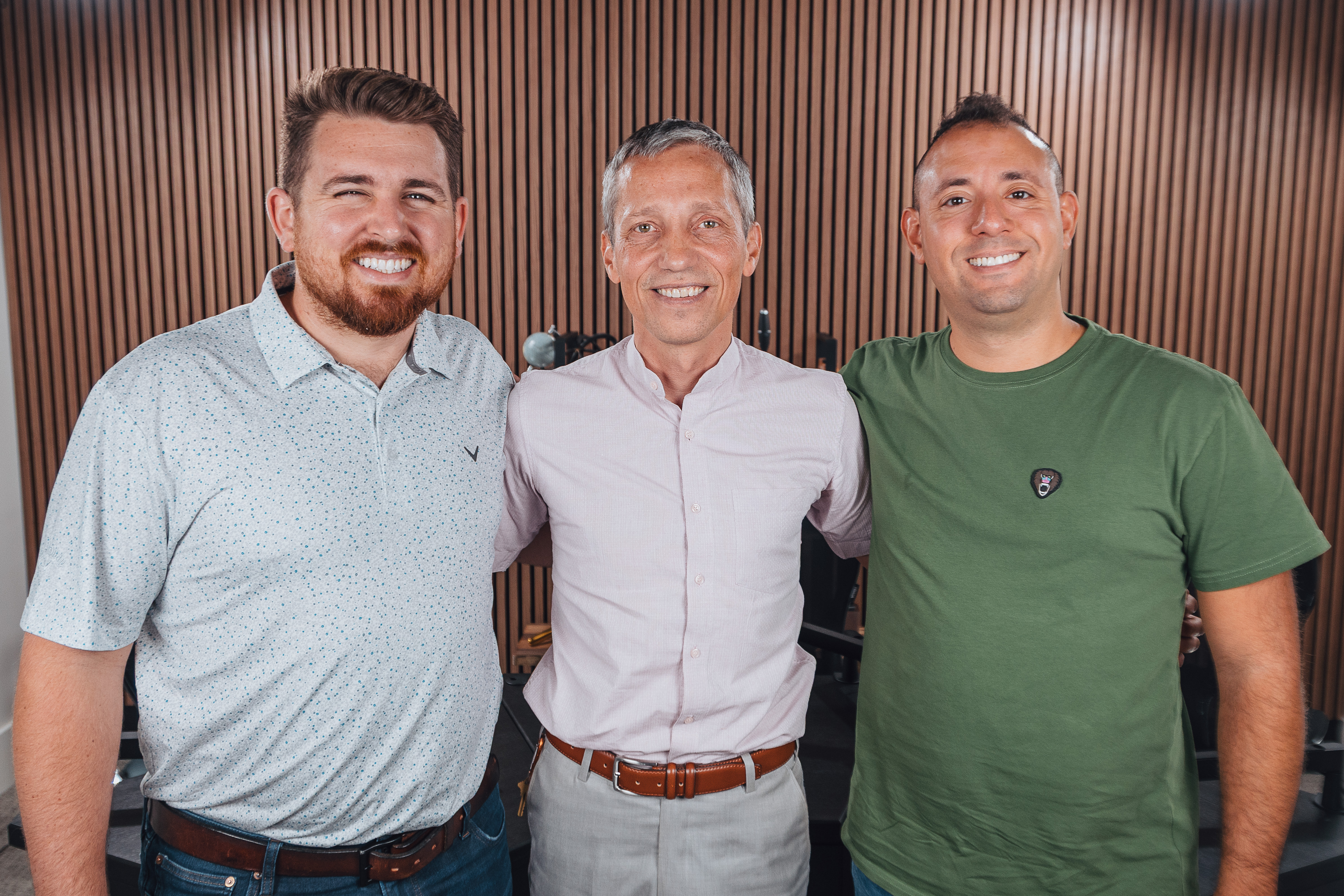
Most people think struggling in school means you’re not smart. William Tucker believes the exact opposite.
William is the co-founder of Charity United, an organization focused on solving one of the biggest problems in the world: literacy. His work has taken him from refugee camps in Europe to the slums of South Africa and India, where he discovered something surprising, people weren’t asking for money. They were asking for education.
In this episode, William explains why literacy is the foundation of civilization, why so many children fall behind in school, and why the modern education system often mistakes memorization for real learning. He shares what he learned teaching thousands of children in some of the toughest environments on Earth, why there are no “stupid kids,” and how mastering language changes the way we think.
The conversation also explores homeschooling, the history of education, the hidden reason civilizations rise and fall, and the remarkable story of helping a 73-year-old American learn to read for the first time.
Whether you’re a parent, teacher, business owner, or simply someone who wants to understand how people truly learn, this episode will change the way you think about education.
Don’t do nothing.
Watch the full episode here:
Audio Version:
Apple Podcast:
https://podcasts.apple.com/us/podcast/dont-do-nothing-podcast/id1846609884?i=1000775028327
Text Version
[00:00:00] William: Our literacy has been heavily under attack since the 1950s. I went to a slum called eTwatwa. That’s Zulu for machine gun fire. 15 minutes later, they’re like, “Okay, we like you. We make sure nobody kills you.” Then we started going, “Okay, so what is it that’s gonna help you?” Now, what do you think they answered?
[00:00:17] William: Literacy and education. Not one of them asked for food. Nobody wanted a handout. Once we’ve seen people break out doctors into a knife fight over a warm cup of tea because that was the last warm thing. If you have no literacy, you cannot develop civilization.
[00:00:34] Aaron: Okay, guys, today I have William Tucker, okay? He has lived in some of the darkest places on earth, lived in the slum of slums where children do not even get fed hardly.
[00:00:51] Aaron: Mm. And sometimes dogs get fed before the children, okay? Yeah. Um, he’s living there to solve literacy, to solve education. [00:01:00] He’s a co-owner of Charity United, a charity dedicated to helping the future of children, okay? He has community literacy programs all over the United States and Europe. Just in central Florida alone last year, his charities have delivered over 10,000 hours of classroom literacy education primarily to children.
[00:01:23] Aaron: Um, thank you for everything you’re doing to help people learn how to read. My daughters are now on his program. Uh, it’s a beautiful program. And welcome to the show, William.
[00:01:34] William: Well, thank you very much, and thank you for having me. Uh, uh, thank you for the great introduction Mike, you know? Uh, I’m just trying to help kids really, and that’s, that’s, that’s all, all I’m about.
[00:01:48] Aaron: Amazing.
[00:01:48] William: Yeah.
[00:01:49] Aaron: Um, so I wanna, I wanna just start with, like, how did you get your passion of helping [00:02:00] kids learn to read, learning to understand the, the, the spoke- the written word, right, as well as the spoken word, as well as everything? Like, why are you in this field and dedicating so much time and effort into this project?
[00:02:16] William: Now that’s a very good question, right? ‘Cause the last thing that I ever figured I’d be doing was literacy, right? If you’d asked me as a kid, you know, um, “What are you gonna be?” right? I’d be, “Well, I’m gonna be an astronaut,” right? I’m gonna be a pilot, right? Mm-hmm. Uh, uh, um, I, I did want to do something, you know, fireman, right?
[00:02:36] William: Poli- Mm-hmm … right? Standard things. Yep. Right? I wanted to help the world, but in a boy way, right? Uh, so how did I get up in literacy? Oh my God, right? Uh, crazy. Uh, it didn’t start that way, right? And, um, a- as you mentioned, I’m the co-founder of Charity United. My wife founded it. Mm-hmm. Mm-hmm. Right? And, and, um, probably about 10 years ago, um, [00:03:00] she was traveling in Eastern Europe and ran across, uh, all these war refugees.
[00:03:04] Mm-hmm.
[00:03:04] William: These children fleeing war, right? Um, Syrians, uh, but they were coming from a, uh, a warm climate into a snow zone.
[00:03:14] Aaron: Mm-hmm.
[00:03:15] William: So there’s all these kids walking with shorts, T-shirts, no shoes, sandals, and into the snow. Um-
[00:03:24] Aaron: Crazy.
[00:03:24] William: Yeah, crazy.
[00:03:25] Aaron: Was this a specific war that was happening, or is
[00:03:27] William: this general? Yes, it was the Syria, uh, and this in, uh, 2015.
[00:03:32] William: Mm-hmm. Right? Syria, uh, war, right? And even that was like, why was it happening? Good question. Mm-hmm. You know- Mm … Syria was the only secular state in the region. Mm-hmm. So it’s, it’s, it’s a little funny that it got involved in war. Anyway.
[00:03:47] Yeah.
[00:03:51] William: When, when kids are suffering, right? Uh, kids are, aren’t political, right?
[00:03:56] Mm-hmm. Mm-hmm.
[00:03:57] William: Kids aren’t religious, right? Mm-hmm. Mm-hmm. They, [00:04:00] they aren’t ideological, right? Mm-hmm. Mm-hmm. And then they may be religious, but they aren’t ideological, right? Mm-hmm. Mm-hmm. Leave them out of it, right? Mm-hmm. Um, make sure the kids are safe.
[00:04:10] William: Uh, and that’s really the main viewpoint. So we started helping kids, um, uh, um, and we did that for about two years, helped 100,000 of them. But we realized very, you know, after, after- Can
[00:04:23] Aaron: you clarify, like what does that mean helping kids?
[00:04:25] William: Well, uh, we were doing emergency relief at the point, right? So if a kid is coming into a snow zone-
[00:04:30] Aaron: Mm-hmm
[00:04:31] William: right, in shorts and T-shirts, they’re gonna die.
[00:04:34] Mm-hmm.
[00:04:35] William: Right? Yeah. Yeah. You’ve got three or four days, right, uh, in that climate, unless you can package them up and warm them up. So, so my wife actually gave me a call. I was in the US, she was- Mm … you know, just panic across like an endless stream of kids and said, “We gotta do something.”
[00:04:50] William: Mm. I said, “Okay.” Right? That’s how we started. Yeah. She set up a table, went to the market, bought all of their clothes, mittens, socks, shoes.
[00:04:59] Mm-hmm.
[00:04:59] William: Mm-hmm. [00:05:00] Um, and overnight she just set up a booth and started, you know, uh, warming up kids. Mm-hmm. If you go to charityunited.us, you can actually see pictures of this.
[00:05:08] William: Yeah. Right? Um, and you know, the stream of kids didn’t stop.
[00:05:15] Brad: Mm. Yeah.
[00:05:15] William: Right? So you can’t abandon them, right? Mm-hmm. As, as adults, we are responsible for the future-
[00:05:22] Brad: Yeah,
[00:05:22] William: 100% … generation, right? And again, leave the kids out of it, right? I’m not pro-immigration necessarily. I’m not pro, uh, a lot of things, right? But I am pro kids, like leave the kids out of it, right?
[00:05:36] Brad: Yeah.
[00:05:37] William: You’ve gotta give them a safe place-
[00:05:39] Brad: Mm-hmm. Mm-hmm …
[00:05:40] William: while the adults sort things out.
[00:05:42] Brad: Yeah.
[00:05:43] William: You know? Um, yeah, that’s just the way it is. Anyway, so seeing that going on, uh, one war ends, a new one starts.
[00:05:53] Mm.
[00:05:54] William: Right? It’s just a revolving door.
[00:05:56] Yeah.
[00:05:57] William: Uh, and you see this on, on the, uh- [00:06:00] volunteer. There’s a lot of good volunteer organizations, right?
[00:06:03] William: Especially small private ones that people just help, you know, because they’re passionate about helping. And what’s, what’s, um, really interesting is that, uh, in those emergencies you’ll see Muslims, uh, Jews, uh, Christians all working together.
[00:06:24] Mm.
[00:06:25] William: Right?
[00:06:25] Mm-hmm.
[00:06:25] William: Uh, Buddhists, Scientologists. Uh, like you meet any, like, like, like everybody bands together.
[00:06:33] William: The good people band together- Mm-hmm … to help those in need. Mm-hmm. Right? Yeah. And, and that’s really beautiful to see, but it’s a revolving door. So, so we see burnout, right? People can’t keep doing emergency aid. And rather than burning out myself, I went, “Okay, I’ve gotta find out, is there an underlying issue that can be addressed?”
[00:06:53] Mm-hmm. Yeah.
[00:06:54] William: Now, one of the most interesting things was we would always ask the refugees, “Okay, [00:07:00] why do you think this is happening,” right? We’d always get in, in, in, in, in touch with them-
[00:07:04] Mm-hmm …
[00:07:04] William: uh, with parents, um… And it was shocking. They never knew why they were at war. Oh, wow. Right? Wow. They actually, the actual regular people didn’t know.
[00:07:15] Brad: Wow.
[00:07:16] William: They had no clue why they were at war.
[00:07:18] Brad: Hmm.
[00:07:19] William: They didn’t understand why they were at war. You follow?
[00:07:24] Brad: Mm-hmm. Yeah.
[00:07:24] William: Uh, and what the media was saying had no semblance of, uh, with reality.
[00:07:31] Brad: Yeah. Like the media’s reason why. Shocker.
[00:07:33] William: Yes.
[00:07:34] Brad: Yeah.
[00:07:34] William: Right? The media’s reason why. Right. Right? Right. Had no semblance- Imagine
[00:07:37] William: to reality, right? So, so I’m talking to parents, dentists, uh, doctors, right? Um, uh, bakers. Would
[00:07:47] Aaron: they generally come, parents with the kids? Or are they
[00:07:50] William: just like- Yes, yes. And you’ve asked the parents, “Why are you fleeing?” It’s like, well, you, you know, you’re running to kids whose hairs have turned white.
[00:07:56] Aaron: Mm.
[00:07:56] William: Right? So they didn’t wanna leave home, right? [00:08:00]
[00:08:00] Yeah.
[00:08:00] William: But they couldn’t handle their kids living in terror.
[00:08:04] Mm.
[00:08:05] William: Right?
[00:08:07] Aaron: Mm-hmm.
[00:08:07] William: So that’s, uh, that’s why… Well, if bombs start falling over here, what’s the first thing you’re gonna do?
[00:08:13] Aaron: Yeah, run away. Go somewhere else. Yeah.
[00:08:14] William: Yeah, yeah. Yeah. You’re gonna take care of your kids, right?
[00:08:16] William: You’re not gonna stick around and let your kids get-
[00:08:19] Aaron: Mm-hmm …
[00:08:20] William: blown to bits. Mm-hmm. Mm-hmm. Right? It’s the right action.
[00:08:25] Aaron: Yep. Mm-hmm.
[00:08:25] William: Right? It’s not the action we want to take- Mm-hmm … but, but… So, so, so, but what is interesting is these people had no clue why they were at war. The
[00:08:36] Aaron: parents or the children or both?
[00:08:37] William: The parents
[00:08:38] Aaron: Okay.
[00:08:38] Aaron: Mm-hmm.
[00:08:39] William: The parents, right? And then this is, we started to see, oh, wow. You know, people are being manipulated, right? ‘Cause the average person doesn’t understand why they’re at war.
[00:08:48] Brad: Mm-hmm. Yeah.
[00:08:49] William: Right?
[00:08:50] Brad: Mm-hmm.
[00:08:51] William: They have no clue what’s going on. They’re mothers, they’re fathers, they’re bakers, they’re doctors, you know, they’re carpenters and they, um, you know, [00:09:00] but, but they don’t know, right?
[00:09:01] William: And we went, “Okay, so, so, so how come people don’t know these basic things?” Right? Like, we’d assume that if we are at war, we know why we’re at war, right? Mm-hmm. Mm-hmm. Uh, and we’d know what our government is doing to a degree.
[00:09:13] Mm-hmm.
[00:09:13] William: Right? And we’d understand the situation. But you find most refugees, they just don’t understand, right?
[00:09:20] Yeah.
[00:09:20] William: Uh, so, so we went, “Okay, we’ve got to find… Let’s, let’s start digging in.” And so we decided, my wife and I decided, “Let’s go to the slums of the world. Let’s go to some of the worst places to see if you can find an underlying problem,” right? So we can actually stem, like, start to calm down the scene-
[00:09:38] Mm-hmm
[00:09:39] William: so you’re not constantly dealing with, with terror, um, and, and emergency aid.
[00:09:46] Mm.
[00:09:46] William: Right? ‘Cause emergency aid just goes on and on and on and on- Yeah. Yeah … and it doesn’t stop. Right. Yeah. And it doesn’t change. And it doesn’t change. Mm. Right? So it’s, it, uh… And, and, and we needed something that co- you know, [00:10:00] co- created actual change, right?
[00:10:03] William: We didn’t know what it was. Mm-hmm. Okay? And, and, and that’s… I’m still on this, like, how did you get literacy, right? Sure, sure. Yeah, yeah, yeah. That’s fine. But we had a clue. We’re like, “Hey, people don’t know,” right? People don’t know why they’re at w- like, you know, and it’s… And we, so we started looking, right?
[00:10:19] William: And we started noticing, like, relatively low literacy levels- Mm … amongst the most confused.
[00:10:24] Mm. Yep.
[00:10:25] William: Right? So, uh, then we decided, okay, let’s go to some of the slums of the world to see, you know, that’s a good testing ground. Let’s ask them over there. So we went to South Africa, um, and I went to a slum called, uh, eThekwini, right?
[00:10:42] William: Now, that’s Zulu for machine gun fire.
[00:10:44] Brad: Oh, wow.
[00:10:45] William: Right? That is
[00:10:46] Brad: crazy.
[00:10:46] William: Right? That’s, that’s… Yeah. Thekwini, right? Yeah. eThekwini, right? That’s Zulu for the machine gun fire. That’s what it means, right? Um-
[00:10:56] Aaron: The entire city is named after that.
[00:10:57] William: The slum, right? Uh, you wouldn’t call it a city. Oh, okay. Like [00:11:00] a neighborhood.
[00:11:00] William: Yeah, okay. Yeah. Like a neighborhood kind of thing. Yeah. Like, but it’s in like a barrio or, or, or- Yeah, yeah.
[00:11:03] Aaron: Like, so how big or how many people are there? What’s the, the area?
[00:11:07] William: A couple of thousand, right? Okay. Okay. But, but like- Pretty big … yes, yes. And, and next to it is another one. Have you seen District 9?
[00:11:14] Brad: Yeah.
[00:11:15] William: Okay. Neill Blomkamp. Oh, yeah. It’s South African movie, District 9, right?
[00:11:19] Brad: It’s a great movie.
[00:11:20] William: It’s a great movie.
[00:11:20] Brad: It’s, it’s weirdly hilarious. Okay.
[00:11:22] William: Yes. But at the same time, like, oh my God, that’s what it’s like. Mm. Like, District 9 is, is, is, is an art- artistic satire-
[00:11:31] Brad: Mm …
[00:11:33] William: on the actual scene of slums.
[00:11:35] Brad: Mm. Mm.
[00:11:36] William: Right? You should watch it, right? Because you’re gonna be like, ho- they’re like, like, to you it seems fantasy. No, that’s real life.
[00:11:42] Brad: Mm-hmm.
[00:11:43] William: Right? Like, it… How the, the, the aliens are in District 9-
[00:11:47] Brad: Yeah, yeah, yeah …
[00:11:49] William: how they live, that’s, that’s the scene.
[00:11:52] Brad: Yeah.
[00:11:53] William: Right? Like, that is reality.
[00:11:55] Brad: Mm-hmm.
[00:11:56] William: Right?
[00:11:56] Brad: In the South African slums.
[00:11:58] William: Yes.
[00:11:58] Brad: Yeah.
[00:11:59] William: Like, [00:12:00] that is reality, right? And, and, and whenever I see that movie, I’m like, “Oh my God, this is so realistic.”
[00:12:06] Brad: Mm-hmm.
[00:12:06] William: Right? It doesn’t feel sci-fi to me. I’m like, “Finally somebody telling the truth.”
[00:12:11] Brad: Yeah.
[00:12:12] William: Okay?
[00:12:13] Brad: Yeah.
[00:12:13] William: Uh, ’cause that’s what it’s like. Anyway, so, so, so, so we go to this place called eThekwini.
[00:12:18] William: Why? Well- That’s where you’re gonna find out of what their problems are, right? ‘Cause we can say, like, like, poverty is the cause of, of all problem. No, it does- no, it’s not. Right? Um, I’ve met very, very honest poor people, right? I’ve met very happy poor people. I’ve met very intelligent poor people, right?
[00:12:44] William: Poverty is not the root, right? Uh, we know that, right? Um, uh, yes, it ties in. It- I’m not saying there isn’t a
[00:12:54] Aaron: factor. So, but, like, how do you just get up and just go, “I’m gonna go l- I’m gonna go live or stay…” How long were you [00:13:00] in Itua-Itua?
[00:13:02] William: That was… I, I, I was only there a few weeks in that case,
[00:13:04] Aaron: right? Okay, but, okay.
[00:13:05] Aaron: But still- “I wanna go spend a few weeks- … for a few weeks … in a place called Machine Gun Fire.”
[00:13:07] William: Yeah.
[00:13:08] Aaron: Like, how, like, you wake up one morning and say, “You know what, honey? Let’s go- Romantic getaway … to live in Machine Gun, uh, uh, town.” You know what I mean? Like, like- Yeah … how do you, how did that ha- like, why? It
[00:13:19] William: was my wife’s idea.
[00:13:20] Aaron: Okay. Okay, there you go.
[00:13:22] William: Also, she showed
[00:13:22] Aaron: me- Men are crazy … “Honey- Men are crazy … I have
[00:13:24] William: this romantic getaway for you in Itua-Itua.”
[00:13:27] Brad: No. “Doesn’t that
[00:13:27] William: sound so
[00:13:27] Brad: good?”
[00:13:28] William: No, n- you know, my wife’s like, “Hey, there’s poor kids over there. They need to be fixed.” I’m like, “Okay, sweetie.” Okay. Right? Oh, I got it. What am I getting into, right?
[00:13:37] William: Okay. S- serious, right?
[00:13:40] Yeah.
[00:13:40] William: Um, my, my wife’s fearless, right? She’s a cutie, right? And nobody would think that of her, right? But, but, but if you want to, to, to change society, right, you have to be willing to go to the worst places.
[00:13:57] Mm-hmm.
[00:13:58] William: Right? ‘Cause if you can [00:14:00] handle the worst place, if you can fix it in the worst places, then you know you can fix it all the way up.
[00:14:04] Yeah. Mm-hmm.
[00:14:05] William: Right? There’s no art in fixing something if you have all the money in the world, if you have all the amenities, uh, a- and, and, and everything is available, right? You’re gonna learn nothing, right? Go to somewhere where you have nothing
[00:14:26] William: Now, now you have to start figuring out solutions, right? And now you can see the real problems. ‘Cause it, it, like UN, United Nations likes to, like, issue statement, “Oh, it’s the poverty,” you know, “and the parents force their kids to, to, to, to work,” right? “That’s why they can’t go to school and learn.” Mm. Right? Uh, this is UN, uh- That’s what
[00:14:46] Brad: the UN says.
[00:14:47] William: That’s UN propaganda, right?
[00:14:49] Brad: Wow.
[00:14:50] William: That’s UN propaganda. Mm-hmm. Right? No, the real deal is you go there and you find out, like I s- okay, so I went to a tuatha’an and, and then I asked them, [00:15:00] “Okay, guys, what’s gonna help you?” Okay, this is after we get in touch. I actually bought a car- car load of oranges, right? And I started handing out oranges together with my wife to every kid as our first entrance point, right?
[00:15:11] William: Mm-hmm. That’s how you’re gonna stay alive. Mm-hmm. Right? Um, and by handing oranges to all the kids, uh, and then the moms, right? They got in touch and we started talking. About 15 minutes later, they’re like, “Okay, we like you. We make sure nobody kills you,” right? Relief. Relief. Uh, that, uh, that is very nice, right?
[00:15:34] William: Nobody they need to protect me from except themselves- Yeah … you understand. Yeah. So, but that’s the polite way of, like, okay, you, you, you know, you’re accepted, right?
[00:15:42] Aaron: Yeah.
[00:15:43] William: But then we started going, “Okay, so what is it that’s gonna help you?” Now, what do you think they answered?
[00:15:51] Aaron: I, I would guess maybe food or maybe, um- What do I think they answered?
[00:15:55] William: Yeah. Uh- What do you think they want most? [00:16:00] Ah, I feel like I’m wrong, but money
[00:16:03] Aaron: Oh, probably. I would bet. Hopefully. Yeah. I don’t know. I think, I mean, it sound probably why wouldn’t it?
[00:16:07] William: You know? And, and I, I would’ve said those things myself as well. Yeah. But, you know. Yeah. But absolutely wrong. Mm. Do you know what they asked for?
[00:16:15] Aaron: What was it?
[00:16:17] William: Literacy and education.
[00:16:20] Aaron: Mm.
[00:16:21] William: Mm. Crazy.
[00:16:25] Aaron: Now, now if that’s… Is it you were asking the parents?
[00:16:27] William: No, I’m asking- Just the- … the parents, the kids, everybody.
[00:16:29] Aaron: Everybody.
[00:16:30] William: Mm. Right?
[00:16:31] Aaron: Okay.
[00:16:32] William: Not one of them asked for food.
[00:16:34] Aaron: Mm.
[00:16:34] William: Oh, wow. Right? Mm-hmm. Not that they weren’t hungry, right?
[00:16:41] Aaron: Yeah,
[00:16:41] William: yeah. Not one of them asked for food.
[00:16:43] William: And how did
[00:16:43] Aaron: you word your question? Like, what did you ask them exactly?
[00:16:46] William: I asked them like, “Okay, what would help you?”
[00:16:49] Aaron: Oh. “
[00:16:50] William: What is it that would help you? If there’s some help I could give, what would help you?”
[00:16:57] Aaron: What was the second most common answer? [00:17:00]
[00:17:00] William: Work.
[00:17:01] Aaron: Work, okay.
[00:17:02] William: Oh, wow.
[00:17:03] Aaron: Mm.
[00:17:03] William: Makes sense. Nobody wanted a handout.
[00:17:06] Aaron: Mm.
[00:17:07] William: Mm-hmm. They wanted literacy, education, literacy and education, and work. Okay. And when I asked them literacy-wise, what… or education-wise, what do you want to learn?
[00:17:19] Aaron: Mm-hmm.
[00:17:20] William: They said English.
[00:17:22] Aaron: Oh.
[00:17:23] William: Wow.
[00:17:25] Aaron: Learning English.
[00:17:26] William: Yes.
[00:17:26] Aaron: That makes sense. I, I believe in that. That’s- Yeah … that is, uh… Listen, in, in South America, everywhere, they all wanna learn English, right?
[00:17:33] Aaron: Yes. They’re saying like, “Hey, if I know English, I can make it.”
[00:17:35] Brad: Yes. Oh, wow. Because you
[00:17:36] Aaron: can- The… Wait, wait, another thing. There’s another, there’s a famous, uh, Alex Hormozi. You may not know of. You know Alex Hormozi? Okay. Big business guy. Social media
[00:17:43] Brad: guy.
[00:17:44] Aaron: Yeah. Uh, number one business book seller of all time, basically.
[00:17:47] Aaron: One day… Anyway, fine. There’s an interesting video. There’s a guy calling, and he’s like, “How do I increase my sales?” And he said, “You need to speak…” This is, like, maybe some Indian [00:18:00] call center guy. Yeah. Like, he’s making… Call center guy. Yeah. And he’s like, “How do I make more sales?” He says, “You need to sound American.”
[00:18:05] Brad: Yeah.
[00:18:06] Aaron: Like, ’cause if someone’s call- like, if someone calls you from somewhere that’s not the US, you could probably tell, but you could tell from the voice.
[00:18:12] Brad: That’s-
[00:18:12] Aaron: And if you, if you make yourself… If you could speak exactly-
[00:18:16] Brad: Yeah …
[00:18:17] Aaron: like an, like an American, you would think you’re getting a call from the US.
[00:18:20] Brad: Like me.
[00:18:21] Aaron: Like, like an American. Yes. Anyway, fine, I just think what’s interesting, but, like- … I, that’s very real to me- Yeah … because I’ve seen, like, I ta- my cousins, whoever, that’s like, “I wanna learn English. I wanna learn English.” Everyone wants to learn English. Absolutely. Mm-hmm. And if you could sound English, that’s even better.
[00:18:32] William: Yes. Sorry,
[00:18:33] Aaron: keep-
[00:18:33] William: No, it’s, yeah, exactly, right? ‘Cause they know that with English- They can go to university or they can get educated.
[00:18:41] Brad: Oh.
[00:18:43] William: And they can get a job.
[00:18:44] Brad: Mm-hmm.
[00:18:45] William: Right?
[00:18:46] Brad: Mm-hmm.
[00:18:47] William: Um, so, so, so that’s what they asked for. Didn’t ask for clothes, didn’t ask for, you know, and they didn’t have running water, right?
[00:18:58] Brad: Yeah.
[00:18:59] William: Uh, [00:19:00] the kids were eating one meal a day.
[00:19:01] Brad: Mm-hmm.
[00:19:02] William: Right? And, and that’s why I said, “Charity United, we ask what help do you need?”
[00:19:06] Brad: Yep.
[00:19:07] William: Right? We don’t assume.
[00:19:09] Brad: Mm.
[00:19:09] William: Right? ‘Cause that’s the big-
[00:19:11] Brad: Find out what’s needed and wanted.
[00:19:12] William: Find out what’s needed, yes. Yeah. Right?
[00:19:14] Brad: Yeah, yeah.
[00:19:15] William: What do they need or what do they want?
[00:19:17] William: Very nice way of phrasing it. Yeah. Right?
[00:19:19] Brad: Yeah.
[00:19:22] William: Because what you may think they need, uh, you know, could be based on false information.
[00:19:30] Brad: 100%.
[00:19:31] William: Can be based on fake news. Mm. Yeah. Right?
[00:19:34] Brad: Yeah.
[00:19:34] William: Uh, it could be based on… Right? So, so, so every slum we went to, this was the answer. Mm. Right? So this was… And, and so we started setting up some projects in South Africa.
[00:19:48] William: We didn’t know what we were doing at the time, yeah. Right? Because now I’m all of a sudden switching from, um, emergency aid-
[00:19:57] Yeah …
[00:19:58] William: right, which is [00:20:00] easy, right? You know, here’s a bag of food. Here’s some gloves, mittens, right? And now you’re having to figure out, okay, so now education, right? Um, um-
[00:20:15] Aaron: And why, why even, like, why did you wanna serve those people?
[00:20:21] Aaron: Like, like, why, like, you know, people also need, you know, as you’re, as you’re doing now, like you’re now here serving the community here, like helping them with education or whatnot, but like why go over there and find out what they want? Like, I just don’t know. Like I, I, I just… I’m trying to understand what kind of person says, “I’m just gonna go and find the, the hardest, most difficult challenge-
[00:20:45] Aaron: and I’m gonna go serve the people who probably can’t give you anything,” right? Because it’s not a money play- Not a money play … ’cause they literally, I mean, they can give you their entire everyth- There’s, there’s not, you know, they’re not gonna pay for- They make a dollar
[00:20:58] William: a day.
[00:20:58] Aaron: Yeah, yeah. They make a
[00:20:59] William: dollar
[00:20:59] Aaron: a day.
[00:20:59] Aaron: A [00:21:00] dollar a day, right? Yeah,
[00:21:01] William: yeah.
[00:21:01] Aaron: You’re, you’re not gonna charge. Like, like, like, like why did you go to serve those guys? I, I’m trying to understand if there’s something that you decided as a kid or you, or, or I don’t know
[00:21:17] William: Um, well, first of all, I wanted to find out, like, a solution.
[00:21:22] Aaron: Mm.
[00:21:22] William: Right? Like, I wanted, like, how do you solve this, this, this inner city, the like, like, like this war, this, this, this-
[00:21:29] Aaron: Mm
[00:21:31] William: constant strife, right?
[00:21:33] Aaron: Oh, you’re living in it. You’re living in that.
[00:21:36] William: Yes. Right?
[00:21:36] Aaron: The, the, the war thing-
[00:21:36] William: Yeah, yes … seeing it every day. Yeah, I’m seeing it every day on the refugee trail, right? And, and, and it’s like I- I’ve volunteer friends that are burning out, right? Mm. You know? Um, we were supporting a school, right?
[00:21:49] William: That, uh, you know, a small nursery, right? That was hit by a missile, right? Uh-
[00:21:56] Brad: Yeah.
[00:21:56] William: Right? So, so right, that, you know, that’s the [00:22:00] end of your education budget there, right? Uh-
[00:22:04] Brad: Yeah.
[00:22:05] William: You understand.
[00:22:06] Brad: Oh. Mm.
[00:22:06] William: Right? So, so when you see what it does- Mm … when you see the actual misery, right? Uh, are you familiar with the Good Samaritan?
[00:22:20] Brad: Yeah, of course.
[00:22:21] William: All right. What does that mean to you?
[00:22:24] Brad: Uh, I mean, it would be the guy who helps the people who he sees who are fallen down and, and need help getting back up. That’d be the… That, that would be my elementary concept. And, and, and, yeah, and,
[00:22:34] William: and that’s
[00:22:35] Brad: not bad,
[00:22:36] William: right? Yeah, yeah. And, and I will say it’s one of the most confused concepts there is-
[00:22:39] Brad: Yeah, yeah
[00:22:39] William: you know, from a biblical perspective. Yeah. Right? Yeah. And just gonna talk Bible for a second, right? Yeah.
[00:22:44] Brad: Mm-hmm. Yeah.
[00:22:44] William: But just to explain the concept.
[00:22:47] Brad: Mm-hmm.
[00:22:48] William: Right? Um, ’cause you’re right, most people think the Good Samaritan is somebody who’s willing to help a stranger.
[00:22:53] Brad: Mm-hmm.
[00:22:54] William: Mm-hmm. All right? I’m like, “Yeah, okay.”
[00:22:58] William: The-
[00:22:58] Brad: No, actually, the Good Samaritan [00:23:00] helps his enemy.
[00:23:01] William: Very good. Ah.
[00:23:04] Brad: Yes. Ah.
[00:23:04] William: He
[00:23:04] Brad: told me this already. He told me this already. Oh, yeah, yeah, yeah. Okay, okay, okay. Yeah, yeah.
[00:23:07] William: Very good.
[00:23:08] Brad: Yeah.
[00:23:08] William: Right? Yeah. Now, this is one of the most misunderstood concepts. Mm.
[00:23:12] Brad: Mm-hmm.
[00:23:13] William: Right? Are you willing to help your enemy?
[00:23:16] Brad: Yeah.
[00:23:17] William: Right?
[00:23:19] William: Right? I- so if, if people could just strive to be, um, you know, uh-
[00:23:25] Aaron: Could you give the story, though? I wanna go into the, the biblical part a little bit ’cause- Yeah … you told me about it earlier- You should, you should … and I thought it was- Yeah, yeah … I thought it was quite a… So, like, he got the concept.
[00:23:33] William: Yeah.
[00:23:33] William: Great. Yeah, yeah. Great. Good on you, Brad. Yeah, yeah. So, so, so- Uh, but,
[00:23:35] Aaron: uh,
[00:23:36] William: yeah … so, so look, if you read the Bible, you get- Mm-hmm … the Good Samaritan story. Mm. Right?
[00:23:40] Brad: What’s the other, what’s the other nationality that they’re, they’re warring with at the time? I don’t remember.
[00:23:45] William: Well, it’s the Samaritan, right? That’s, that’s, the, that- Mm
[00:23:48] William: that is the enemy. The Samaritan is the enemy.
[00:23:53] Brad: Yeah, and what nationality
[00:23:54] William: is that?
[00:23:54] Brad: It’s Samaritan … who’s being helped.
[00:23:56] William: Uh, it’s- He’s something else, isn’t he? It, it, it’s, it’s the Hebrew. Yeah, [00:24:00] yeah, yeah. The Jew. Okay, yeah. It’s, it’s the person- Yeah … from the Bible. Yeah, yeah, yeah. Right? Yeah. So he, you know, his religious figure comes by.
[00:24:06] William: His own people come by and leave him by the side of the road after he’s been robbed. So he’s been robbed and bleeding. Yeah. His own people don’t help him.
[00:24:13] Brad: Yeah.
[00:24:14] William: Right? Yeah. His own people don’t help him, but somebody from the enemy-
[00:24:18] Brad: Mm-hmm …
[00:24:21] William: um, you know, walks by, sees him, you know, beaten up and bleeding And helps him Mm.
[00:24:29] William: Right? So are you willing to help your enemy? You know what? That takes real, real strength of faith. Mm-hmm. Right? That’s not easy. That’s not easy, right? ‘Cause the first thing you wanna do to an enemy is destroy him.
[00:24:46] Brad: Yeah, of course.
[00:24:47] William: Right? You know, fire gets… Fi- fire with fire. Wonderful, right? Anyway, I’m, uh, bringing up that point like that Good Samaritan, right?
[00:24:56] William: Um, like, w- why, why do I wanna help? I [00:25:00] don’t know. I, I don’t treat anybody as my enemy.
[00:25:02] Brad: Mm.
[00:25:04] William: Right? Yeah, yeah. Like, like if there’s one thing I’m trying to live up to, it’s like Why not put some goodness in the world, right? Mm-hmm. Mm-hmm. I’m not saying I always succeed, but- Sure. … I get irritated too, right? You know, uh, uh- Yeah
[00:25:17] William: and, and, and, and, but it’s something I strive to-
[00:25:20] Yeah …
[00:25:20] William: do, right? Like, why make enemies, right? Why not make friends, right? Why not… Like, if there’s one example, if there’s one precept, you know, y- y- you know, that you’re gonna follow, right? Like Buddhism have a similar thing. Don’t do unto others, uh- You wouldn’t
[00:25:39] have
[00:25:39] William: want done to you
[00:25:39] William: as you would, wouldn’t have done unto you, right? Yeah. Like, these are, these are, uh, very ancient philosophical concepts that, that most great philosophies and religions share.
[00:25:50] Mm-hmm.
[00:25:50] William: Right? I’m sure you have something similar, right? So, so, so- And again, once you’ve seen the real [00:26:00] misery of what war does, right?
[00:26:03] William: Once you’ve seen crying kids, right? Hundreds and hundreds and hundreds of them, and parents who had nothing to help them-
[00:26:10] Mm …
[00:26:11] William: right? Who’ve been walking for days in the freezing cold, right? And you’ve seen the misery up close, right? Once you’ve seen people break out, doctors, right? Break out into a knife fight over a warm cup of tea-
[00:26:26] Brad: Oh, wow
[00:26:27] William: because that was the last warm thing.
[00:26:29] Brad: Mm-hmm.
[00:26:30] William: Right? Changes your perception of reality.
[00:26:36] Brad: Mm-hmm.
[00:26:37] William: Right? So with that in mind, I’m like, “Okay, no. You know, if I’m tired of it. Tired of the media. I’m tired of the media badmouthing everybody against each other, right? I’m not saying there isn’t bad people in the world, right?
[00:26:54] William: I have my own little black book, right?
[00:26:57] Brad: But they’re pretty obvious.
[00:26:58] William: But they’re pretty obvious.
[00:26:59] Brad: Yeah, it’s, [00:27:00] like, not hard to spot those people. It’s
[00:27:01] William: not hard to spot those people, right? Right? So, y- yes, there are criminals, right? Yes, there are sadists, but it’s not the vast majority- Mm … and it’s not a population, and it’s not a group, right?
[00:27:14] William: Uh-
[00:27:15] Aaron: And they need to be taught, I guess, right? If that’s the case with
[00:27:17] William: the Samaritans- They n- n- n- and, and, and, yeah … ’cause those were the
[00:27:19] Aaron: Samaritans.
[00:27:19] William: Uh, yeah.
[00:27:20] Aaron: You, I mean… No, it…
[00:27:22] William: No, we were just- Yeah, yeah. N- now, now, now, now, no, no, no. I don’t
[00:27:24] Brad: think those are the Samaritans.
[00:27:25] William: The, no, no,
[00:27:26] Brad: no,
[00:27:27] William: no. I think the Samaritan was, like, a normal guy-
[00:27:28] Brad: But, but, but get, uh-
[00:27:28] Brad: who’s just part of the enemy camp.
[00:27:30] William: Yes. Yes
[00:27:32] Brad: But the point
[00:27:32] William: is, he was still a normal dude. Yeah, he was still a normal du- but, but- Yeah … but let’s get back to this, okay? So-
[00:27:36] Brad: He’s, he wasn’t a two-and-a-half percenter.
[00:27:38] William: So, so, so here’s another good question for you, right? ‘Cause, ’cause, um, um, if you’ve read The Story of Civilization by Will Durant, right?
[00:27:47] Aaron: Only little parts of it.
[00:27:49] William: Okay. Yeah.
[00:27:49] Brad: Never read it at
[00:27:50] William: all. Yeah. Unbelievable- Mm … uh, unbelievable work.
[00:27:54] Aaron: Yeah.
[00:27:54] William: Right? Just the, like, yeah, many great- Are
[00:27:57] Aaron: you familiar with it, Eric?
[00:27:58] William: Yeah, I’ve heard of it.
[00:27:59] Aaron: Do- Yeah … do you [00:28:00] know, do you know why, like… Do you know the connection? Can I sh- can I show it? Can I- Yeah … I’m gonna show the connection.
[00:28:05] Aaron: Yeah. Okay, check this out. Who is the book Dianetics dedicated to?
[00:28:09] William: Oh, Will Durant.
[00:28:10] Aaron: There you go.
[00:28:10] William: Yeah.
[00:28:10] Aaron: That’s it. It’s right behind you.
[00:28:11] William: Oh,
[00:28:11] Aaron: there you go. But it’s n- that’s the cover. Will Durant is the author of The Story of Civilization. It’s right… But it’s fine. You can, you can see it, but that’s- Oh.
[00:28:18] William: Yeah, okay,
[00:28:18] Aaron: okay.
[00:28:19] Aaron: That is the author of this book.
[00:28:20] William: Yes. Mm. Right. So, so, so n- I understand why it’s dedicated to him, right? Because it’s just an unbelievable work, right? Mm. Um, and it, it takes you from beginning to end. You know, it takes you through barbarisms and explains, like, in a very rational way, why, right? And I ask you this, right, what civilizations…
[00:28:45] William: Like, what’s the one thing that stops a civilization from progressing, right?
[00:28:50] Brad: That stops it from progressing-
[00:28:51] William: Yeah … or
[00:28:51] Brad: causes it to start going down?
[00:28:52] William: Like, like, like, what, what, what, what, like, how does a, a civilization civilize and get, get, get into-
[00:28:59] Brad: [00:29:00] Writing, isn’t it? They, they learn, they learn things. I mean, they would have, there would have to be some sort of thing that they learn how to do.
[00:29:05] William: Yeah, okay, good. ‘Cause, like,
[00:29:05] Brad: agrarian-
[00:29:06] William: Yeah … like, they learn how to farm, so. Yeah. So w- yes, okay. That, true. Yeah. But, but which civilizations didn’t progress?
[00:29:12] Aaron: Without any writing.
[00:29:14] William: No. Right. Yeah. Writing. Yeah, without writing- Yeah … without an alphabet. Correct. So any civilization- Mm … that doesn’t develop an alphabet, that doesn’t develop literacy- stays stuck.
[00:29:25] Brad: Yeah. Mm-hmm,
[00:29:26] William: mm-hmm. All right? So you take the ambrosianese- Well,
[00:29:28] Brad: yeah, that makes sense ’cause they’re having to figure out the same things every lifetime Over and over and over.
[00:29:33] William: You can’t progress. Yes, you’re having to figure out- You can’t change your- You can’t accumulate knowledge Yeah … you can’t evolve, you can’t civilize.
[00:29:37] William: Mm-hmm. I- I’m not saying that we are that civilized, but, but-
[00:29:40] Aaron: Yeah, but I mean, by, by most definitions, right, this is a civilization, you know?
[00:29:44] William: It’s a civilization.
[00:29:45] Aaron: Yeah. Um, and, and, and the truth is We all know this telephone game
[00:29:51] Brad: Mm.
[00:29:52] Aaron: At least, you know- Yeah … here in America- Yeah … it’s a common thing you teach where it’s like, “I’ll tell you something.”
[00:29:56] Aaron: I’m gonna be like, “Brad,” if you have 30 people, you’re like, “I will [00:30:00] give this group $1 million if I give you this sentence and go to the end and make it this exact sentence.”
[00:30:04] Brad: Mm-hmm.
[00:30:05] Aaron: Somehow pe- they’ll mess it up.
[00:30:07] Brad: They, 100%, yeah. Oh,
[00:30:07] Aaron: yeah. Like, even, like, even, like, for, for sums of money. Yeah. I mean, like, it’s ridiculous.
[00:30:11] Aaron: You cannot get one idea unaltered- Yeah … through even 10 people.
[00:30:15] Brad: Yeah. That’s right.
[00:30:16] Aaron: 20, like- Yeah … let alone multiple generations. Yeah. So anyway, I think that’s the key- Yeah. Yeah … that’s the key thing. Yeah. The verbal story, um, is, is, is very, uh, very difficult. Funny- Yeah … I just finished reading Fahrenheit
[00:30:30] William: 451.
[00:30:30] William: Okay.
[00:30:31] Aaron: Uh, phenomenal book. Yeah. Really phenomenal book. Um, and in fact, uh, from my understanding… Anyways, like, no, we’re not gonna get into it. But in the book toward the end, when they’re burning all books and nobody can read anything, they try to do that. That’s, like, the solution, like, try to get someone to, like, you know, memorize it and know it, and then- Memorize the book
[00:30:50] Aaron: live on that way. Yeah, because they’re- Oh … burning it.
[00:30:53] Yeah.
[00:30:53] Aaron: But you see, that’s, that’s the second attempt. The first attempt is the books, but if the books fail, you try to do the verbal, and you’re gonna try to do it- Mm … [00:31:00] you know, uh, uh, the Native American Indians, okay, like stories and stories and stories, but there, there’s not a vast…
[00:31:06] Aaron: There’s not tomes of knowledge.
[00:31:07] William: Yeah.
[00:31:08] Aaron: And so it’s gonna be only filtered. You’re gonna get little pieces of it. Yeah. You’ll never get the full thing.
[00:31:12] William: Yeah. You’re absolutely right. And, and, and, and it’s mainly history that gets preserved that way.
[00:31:17] Aaron: Right.
[00:31:18] William: The stories. Mm-hmm. Yeah. Mm-hmm. But you don’t make advancement.
[00:31:21] Aaron: Mm.
[00:31:22] William: Right? So it, it… Y- So, so, so a, a… And, and not all languages have alphabets, you understand.
[00:31:29] Oh.
[00:31:30] William: Right? I didn’t
[00:31:30] know
[00:31:31] William: that. Right? Oh, yeah, most languages don’t.
[00:31:33] Mm.
[00:31:34] William: Mm. Right? The vast majority of languages on Earth- Like Chinese,
[00:31:36] right? No. Chinese
[00:31:36] William: doesn’t have a- No. Like, like, like- No, they have an alphabet … take, take, take the tribal languages.
[00:31:41] Aaron: Hm. Yeah.
[00:31:42] William: Of In- you know, I- In- India has, what, 21 major languages, right?
[00:31:47] Aaron: Is, is, is Chinese, is that considered an alphabet? ‘Cause it’s
[00:31:50] William: symbols. Yes. Well, like, uh, symbols. But let, let’s take anything, ev- a written character-
[00:31:54] Aaron: Okay …
[00:31:55] William: right?
[00:31:55] Aaron: Okay,
[00:31:55] William: okay. Like, we’ll, we’ll count it as alphabet. Yeah. Okay, okay. We’ll count it as alphabet right now.
[00:31:59] William: Okay, okay.
[00:31:59] Aaron: Yeah.
[00:31:59] William: But [00:32:00] the vast majority of languages on Earth don’t have alphabets. Mm.
[00:32:02] Aaron: Mm.
[00:32:03] William: Right? And then, and I say vast majority. Palm. Yes. Yeah. ‘Cause
[00:32:07] Aaron: that’s by numbers, because there’s probably, like, a thousand languages- Yeah, one in every country … in one area.
[00:32:10] William: Yes. Yeah, yeah, yeah. Yeah. Yeah, like you go to, you go to Africa, you can take a certain territory, right?
[00:32:15] William: And there’s the, there’s, like, a thousand dialects.
[00:32:18] Brad: Mm-hmm. Mm-hmm.
[00:32:19] William: Right? And then they have no alphabet, right? And that’s why they don’t progress.
[00:32:25] Brad: So they don’t write anything down.
[00:32:27] William: No, they have no alphabet
[00:32:28] Brad: Wow
[00:32:29] William: Right?
[00:32:29] Brad: Yeah, it’s like what would they even write in?
[00:32:31] William: Well-
[00:32:31] Brad: Like, what language would they write in?
[00:32:32] Brad: They haven’t invented
[00:32:33] William: letters.
[00:32:33] Brad: Yeah. Yeah.
[00:32:34] William: Like, they don’t know what letters are.
[00:32:36] Brad: I don’t know if I should be laughing, but Yeah, that’s rough. But, so do you go where- Well, you don’t need them … did you go there? Did you go there? So they don’t even like l- think about what they’re missing out on. They can’t even sing their ABCs.
[00:32:44] Brad: How do they know how long to brush their teeth for?
[00:32:47] William: They
[00:32:48] Brad: have a different song, right? Yeah. But, but- Different song …
[00:32:52] William: but, but yeah, now you’re getting it- Yeah … right?
[00:32:55] Brad: Yeah.
[00:32:56] William: Right? Now you’re getting it.
[00:32:57] Brad: Yeah.
[00:32:57] William: It’s like the vast majority of [00:33:00] languages on Earth don’t have written alphabets. Mm-hmm. You don’t know what a difference it makes-
[00:33:05] Brad: Mm-hmm
[00:33:07] William: to have an alphabet Right? Yeah. It’s cra- yeah,
[00:33:12] Brad: it’s crazy to think about.
[00:33:14] William: Right?
[00:33:15] Brad: Yeah, yeah.
[00:33:16] William: So that civilization which doesn’t develop an alphabet does not progress.
[00:33:21] Brad: Mm-hmm, mm-hmm.
[00:33:23] William: Doesn’t mean they’re bad, right? Mm-hmm. It, it just means it doesn’t progress.
[00:33:28] Brad: Yeah, yeah.
[00:33:29] William: Right? Literacy is the key to all progress, right?
[00:33:33] William: Mm-hmm, mm-hmm. Right? And the evidence is right in front of- Mm. Yes. Right?
[00:33:37] Brad: Yeah.
[00:33:37] William: Um, you know, um-
[00:33:41] Brad: And progress in this situation meaning, like you have some technology, like let’s say in 1800- Uh-huh … there’s some technology created- Yeah … by some guy.
[00:33:51] William: Yeah.
[00:33:51] Brad: Right? And then in 1850, the technology is further along and c- can create more results than they could in 1800.
[00:33:57] Brad: Yes. Like, they would get more result [00:34:00] in 1850- Farming or- … than 18… Yeah. Mm. Farming. Yeah. Producing s- Buildings. Yeah, exactly. Yeah.
[00:34:05] William: That’s- Or even philosophy or, or, or mental concepts, right?
[00:34:09] Brad: Yeah. Yeah,
[00:34:09] William: yeah. Right?
[00:34:09] Brad: Yeah.
[00:34:10] William: Uh, law, right?
[00:34:12] Brad: Mm.
[00:34:12] William: Right?
[00:34:13] Brad: Yeah, law
[00:34:13] William: doesn’t exist without- You can’t have law if there is no written alphabet.
[00:34:17] William: Mm. Right? Why do you think some areas are lawless? Well, they… Oh, wow. ‘
[00:34:22] Brad: Cause
[00:34:22] Aaron: no one knows, no one knows-
[00:34:23] Brad: Yeah, they literally don’t have laws. This, that’s actually just a statement of
[00:34:26] William: facts. There’s no way to record them.
[00:34:28] Brad: Yeah.
[00:34:29] William: How?
[00:34:30] Brad: Yeah.
[00:34:31] William: You can’t develop civilization.
[00:34:33] Brad: Yeah.
[00:34:34] William: Right? Nothing wrong with the people. Uh.
[00:34:36] William: Right? Yeah. But if you have no literacy, you cannot develop civilization.
[00:34:40] Aaron: Mm. Mm.
[00:34:42] William: Right?
[00:34:43] Aaron: And so then let me just put it this one. Yeah, yeah. This is a, a, a corollary-
[00:34:46] William: Yes …
[00:34:46] Aaron: then, okay?
[00:34:47] William: That’s a big word.
[00:34:48] Aaron: If you want to get rid of a civilization, you would take out their literacy.
[00:34:54] William: Absolutely.
[00:34:55] Aaron: Correct?
[00:34:55] William: You destroy their literacy-
[00:34:56] Aaron: 100.
[00:34:57] Aaron: I mean, that is the, the, again, the- 100% … the, the opposite, [00:35:00] uh, datum.
[00:35:00] William: Yeah. Yeah. And, and, and that’s what’s been happening in the United States, right? We can get to, to that separately, right? But, but our- Oh, we need
[00:35:07] Brad: to get to that …
[00:35:07] William: our, our, our literacy has been heavily under attack since the 1950s.
[00:35:13] Brad: Mm.
[00:35:14] William: Right?
[00:35:15] Brad: Mm-hmm.
[00:35:15] William: Right? What people could read easily in the 1950s, right, people cry about today.
[00:35:20] Brad: Mm-hmm.
[00:35:21] William: Right? You have no idea. It’s true. Right? Yeah. No, no, I, yeah. It, it- I have an
[00:35:25] Brad: idea …
[00:35:26] William: you have a… Okay, good. Yeah. Right? You know? Uh, but how bad it is, is, is- Yeah … is, it, and, and, and it’s been destroyed, right? Yeah. Our universities have been infiltrated, right?
[00:35:38] William: Um, and there’s been a battle going on underneath everything. Anyway, we’re digressing. Let me finish, finish- Right … finish, right? But we’ll get back to that. Well,
[00:35:48] Brad: we’re not gonna go into that. We need to come back to that.
[00:35:50] William: Yeah, yeah. ‘Cause I- We’ll get back to that. Yeah. You know? Um, um, anyway, so, so literacy i- is your great equalizer.[00:36:00]
[00:36:01] William: Right?
[00:36:01] Brad: Mm-hmm.
[00:36:03] William: Right? Like, you wanna give somebody human rights? Give them literacy Give them
[00:36:05] Brad: literacy.
[00:36:06] William: Give them literacy.
[00:36:08] Brad: Mm. Mm-hmm.
[00:36:09] William: Right? Now you’re putting people in a state where they can evolve, where they can make it, right? Um, and, uh I’m a strong believer in human rights, right? But a right is a freedom to obtain It’s not an entitlement
[00:36:32] Mm-hmm.
[00:36:32] Mm-hmm.
[00:36:33] William: Right? It’s a freedom to obtain
[00:36:38] Mm-hmm.
[00:36:39] William: And, and that I like to make very clear I don’t owe anybody anything, right? But I’m a big believer in human rights, meaning I want them to have the freedom to obtain- Yeah … right? I want to remove the barriers, but I’m not gonna teach anybody who [00:37:00] doesn’t want to know.
[00:37:01] Yeah.
[00:37:02] William: Right? It’s like help those who help themselves, right? Mm-hmm. Yep. And then my help is limitless, right? Uh, but somebody must want to. Um, and, and you find that most people, once you give them a way out, they are really willing, right?
[00:37:19] Yeah.
[00:37:20] William: All the kids I’ve worked with in the slums, and I’ve worked with hundreds and hundreds, right?
[00:37:25] William: Uh, super easy to work with.
[00:37:29] Yeah.
[00:37:29] William: Mm. Right? They wanted… We had a little girl, five-year-olds, that would walk six miles every day to come to class, and we were, um… I’ve taught on many freeways, right? Just put down a blanket, right? And, and say, “Okay, there’s class over here,” right? After finding out that that’s what they want.
[00:37:49] William: You know, I’ll give you two hours a day, and every day I’d come for two hours and go from one spot to the next spot and do two hours while I was figuring out literacy.
[00:37:58] Brad: And what, what were you [00:38:00] teaching them?
[00:38:01] William: English.
[00:38:02] Brad: Yeah.
[00:38:02] William: And, and literacy, right? This is what they wanted.
[00:38:05] Brad: Yeah. Right? How, how do you… How… I mean, maybe this is a, a, a silly question, but how do you teach English to somebody who has…
[00:38:13] Brad: Like, how would you, how would you do it?
[00:38:16] William: Okay, so now, now it gets very interesting, right? Um, in the beginning, I didn’t know.
[00:38:21] Brad: Yeah.
[00:38:22] William: Right? I actually didn’t know, because I came out of the field of emergency aid- Um, but, um, and, and in the beginning we actually didn’t know literacy was the problem.
[00:38:38] Brad: Mm-hmm.
[00:38:39] William: Right?
[00:38:39] William: We actually tried to teach them subjects.
[00:38:43] Brad: Oh.
[00:38:44] William: Right?
[00:38:44] Brad: Like what? Like geography or-
[00:38:46] William: Geography, right. Um, uh, any- you know, anything they asked for.
[00:38:54] Brad: Yeah.
[00:38:54] William: Right? We tried to make do with the schoolbooks they had. Um-
[00:38:58] Brad: Mm. You tried to make do with [00:39:00] the schoolbooks that they had, ’cause they had schoolbooks. Yes, they, they,
[00:39:02] William: they had some schoolbooks, right?
[00:39:04] William: Right? And, um-
[00:39:07] Brad: I’m just thinking of all these charities that raise money to send books to, to African countries, to, like, l- you know, I think they would call them typically underprivileged areas. Yes. You know, whatever.
[00:39:19] William: Yeah.
[00:39:19] Brad: They’re sending books to people who can’t read an effing book.
[00:39:24] William: Exactly, right? And I was like- It’s crazy.
[00:39:26] William: Right? Like, I sat down- And they
[00:39:28] Aaron: would have English books. I mean, like in India or Yeah,
[00:39:30] William: they, yeah, they, they’ll
[00:39:30] Aaron: have books …
[00:39:30] William: some English books. They’ll, they’ll have books. I mean, not necessarily boatloads, but they have access to the materials, right?
[00:39:36] Mm-hmm.
[00:39:36] William: Mm-hmm. And then you find out they can’t read, and you’re trying to teach people who can’t read.
[00:39:45] William: Right? So the very first thing we had to do is we actually took the alphabet, right? Uh, and we made big let- you know, uh, letter sized and, and we hung the alphabet on a string, right?
[00:39:58] Mm-hmm.
[00:39:59] William: Where’s [00:40:00] the A? Good. Where’s the B? Right? Mm-hmm. And have the whole class answer, right?
[00:40:05] Mm-hmm.
[00:40:05] William: Um, building vocabulary, right?
[00:40:09] William: Um- Do you know how the French Foreign League with- Legion teaches French?
[00:40:15] No.
[00:40:17] William: So the French Foreign Legion has a very rough method. This is the table. What is it? Right? La table, right? Yeah. And then, and they just repeat the word. They tell it, and then they ask, “What is it?” Right? And they force people to speak.
[00:40:33] William: They… the French Foreign Legion does it a little roughly, right? Mm-hmm. Mm-hmm. But they’re successful.
[00:40:38] Aaron: Mm.
[00:40:38] William: Mm. Right? They’re successful. So, uh, how does a par- how, how do you teach your child to speak?
[00:40:46] Aaron: Right, that’s a, that’s a, that’s a light. Good. All right, so you say it, you repeat it.
[00:40:49] William: Yes.
[00:40:50] Aaron: I’m Dada or-
[00:40:51] William: Yeah …
[00:40:51] Aaron: this
[00:40:51] William: is Mama.
[00:40:52] William: Yeah. A- and, and the child points at the light and they say, “White.” And you go, “What? No, no. Light.” Right? Yeah. So you point at objects. Yeah. [00:41:00] All right? The French Foreign Legion, like, adds it, like, this is, where is, right? Mm. Um, you can watch the documentaries, right? They’ve been doing it since the 1800s, right?
[00:41:11] William: They drill it. So we just thought, you know, start pointing at objects is the easiest thing. You know? Mm. Where’s the tree?
[00:41:19] Brad: Yeah.
[00:41:20] William: Right? Tree, tree, tree, and the whole class will point at the tree, right?
[00:41:24] Brad: Mm-hmm.
[00:41:25] William: And say, “Tree.” That’s how you build vocabulary. You know? And actually, in, in a room like this, I could teach probably 300 or 400 words.
[00:41:32] William: Yeah. Right? In about eight or 10 hours, right? ‘Cause it’s super fast ’cause it’s repetitive, right? It is so simple, right? You just have to have patience.
[00:41:42] Brad: Mm.
[00:41:43] William: And, and we actually give the kids homework to go, “Okay, here. You know, point at objects. What’s the word?” Right? So that, that, that you have, like, a visual connected with the word, right?
[00:41:54] Brad: Yeah, like a real thing. A real thing. Yeah.
[00:41:57] William: Right? Um, you know, we’re [00:42:00] not going for rote memorization. We’re going for comprehension. Anything you understand, you don’t have to remember. That’s
[00:42:06] Brad: right.
[00:42:07] William: Anything you don’t understand, you have to try and memo- uh, remember.
[00:42:10] Brad: Yeah.
[00:42:10] William: All right? So in India, the kids call it mugging up, right?
[00:42:14] William: Everybody is mugging up for exams, and what they mean is cramming or, like, somehow trying to rotely memorize- Keep
[00:42:21] Aaron: it in your mug? Is that from, like, like, a little mug, or is it mugging? Do you know the origin?
[00:42:26] William: Mu- no, mu- mu- I mean mugging … like, you know, it, it, it… I’ve never, uh- Stick it in the mug, put it in your head
[00:42:32] William: it, it, it probably comes from, from, from, from British English, right? Where mug can be the head. Yeah. Right?
[00:42:39] Brad: Oh.
[00:42:39] William: Yeah. Okay,
[00:42:40] Brad: okay, okay.
[00:42:40] William: Don’t show me your ugly mug. Uh- Sorry … don’t show your ugly mug around here. Okay. No, okay. I’ll
[00:42:44] Brad: throw it in the… pick it… okay. Back it up, back
[00:42:45] William: it up. Right? So mugging up, like, cramming it in your head, right?
[00:42:48] William: Yeah. That’s… I’m assuming. Yeah. Right? Sure, sure. You know, I’m not- Sure, sure … vouching for this. Yeah. Uh- But all the kids are mugging up, right? They’re rotely trying to [00:43:00] memorize without comprehension
[00:43:01] Brad: Mm.
[00:43:02] William: Right? To try and pass an exam, right? Uh, you know, and, and yeah, you get a lot of kids that fail, right? And, and as a result you get suicide, right?
[00:43:13] William: So, so we go with an entirely different philosophy, right? Comprehension. Everything must be comprehension-based, right? Um Every great work, every-
[00:43:27] Aaron: Okay, so- Yeah … so you’re teaching these guys, they’re learning English, they’re learning- Yeah … they’re learning nouns. Yeah. ‘Cause you can’t point so much to a verb.
[00:43:33] William: That, yeah, that’s the question I was gonna ask. You’re
[00:43:34] Aaron: gonna learn a verb-
[00:43:35] William: No, but you can do mimicry, right?
[00:43:37] Aaron: Okay, so-
[00:43:37] William: So mim- …
[00:43:38] Aaron: slap, and you sl-
[00:43:39] William: Yeah, slap, right? Slap. Slap. No, no Mop. No, you do wave, right?
[00:43:43] Aaron: Wave.
[00:43:43] William: Wave. Yeah. Jump. Yeah, yeah. Jump, right?
[00:43:45] Aaron: Okay.
[00:43:46] William: And then you combine it with physical exercise, right? You got it.
[00:43:49] William: Oh, the kids love it, becomes a game, right? Baseball.
[00:43:52] Aaron: Okay.
[00:43:52] William: Yeah, yeah. So, so, so, so there is so much basic vocabulary that you can teach in a few hours. When I, when, [00:44:00] uh, you know, uh, and again, I went to India where I actually lived in a slum for a year and a half. Mm-hmm. Right? So I got to India after South Africa, right?
[00:44:07] William: ‘Cause I needed to, okay, let me find another slum. I need to know that it’s the same in different parts of the world. Mm-hmm. Is it just that one slum or is- So
[00:44:14] Aaron: which, uh, the, meaning what they wanted or that it would work? Or, like
[00:44:16] William: this- What they wanted and what, and what’s gonna work.
[00:44:19] Aaron: Okay.
[00:44:19] William: Right? So this is a n- like progressive journey.
[00:44:21] William: Mm. I didn’t have, uh, you know, I found out that, okay, uh, you know, in Africa I start and I like, okay, now we’re teaching, right? We’ve switched to teaching ’cause they want English, right?
[00:44:31] Brad: Yeah.
[00:44:31] William: And then I found out they can’t read, right? They’ve got books, right? But they can’t read, right?
[00:44:36] Brad: Yeah.
[00:44:36] William: Like, like we’re progressing.
[00:44:38] Brad: Yeah.
[00:44:39] William: Visa for South Africa ran out, so then I’m going to India now, right? Mm.
[00:44:44] Brad: Yeah.
[00:44:45] William: Right? Um, went to India, walked into the slums, exact same questions. And, and now I’m like, “Okay, uh, what do you guys want?” “Ah, literacy in English.” “Okay, be here tomorrow, 1:00.” I show up, [00:45:00] uh, the next day at 1:00 for the first English class, got 100 kids waiting for me.
[00:45:05] Brad: Oh, wow. Wow.
[00:45:07] William: Right? None of them speak a word of English.
[00:45:11] Brad: You, so you
[00:45:12] William: just say- And I don’t speak a word of Hindi at
[00:45:14] Brad: the time. Yeah. Right? So you just say, “Put the word out, English class here tomorrow- 1:00 … I’m gonna come at 1:00.” And boom, there’s just a crowd waiting. Wow. That is an indicator that it is wanted.
[00:45:24] William: Yes, right?
[00:45:25] Brad: Yeah.
[00:45:25] William: Like, like, like- Yeah … I didn’t have to search for any- Like,
[00:45:27] Brad: that’s the button.
[00:45:29] William: That’s the button.
[00:45:29] Brad: Yeah.
[00:45:30] William: Right? Mm-hmm. From a marketing perspective, right?
[00:45:32] Brad: Yeah, yeah, yeah, yeah,
[00:45:33] William: yeah. Yeah, m- that’s the button.
[00:45:34] Brad: Button meaning like the thing that you would, the press the button to get a response.
[00:45:36] William: Yeah, yes, absolutely.
[00:45:38] William: Yeah. Right? So, so, so that’s what the… I said, “Pe- English class, 1:00,” 100 kids.
[00:45:45] Brad: Mm.
[00:45:46] William: I don’t speak a word of Hindi at the time. I speak a little bit now, but-
[00:45:48] Brad: Yeah …
[00:45:49] William: right? They don’t speak a word of English. And I’m like, “Wow, what am I gonna do? Oh, here we go,” right?
[00:45:54] Brad: Free.
[00:45:56] William: Think, ah, floor. Yeah. [00:46:00] Floor. Yeah. Right? Our kids are loving it.
[00:46:01] William: Yeah. To them it’s a game, so we make a game out of it.
[00:46:04] Brad: Yeah.
[00:46:05] William: Within half an hour, they have a 20-word vocabulary.
[00:46:08] Brad: Mm.
[00:46:10] William: Right? Right? So, so we start this going. Now I recruit twen- 20 teenagers from the slum and said, “Hey, okay, I’m gonna give you guys three hours of private tutoring a day, and in exchange you’re gonna hold a class in your slum for me, right?
[00:46:24] William: And I’m gonna provide the materials.” Right? Mm. And that was the start. And it was the slums. Nobody cares about the slums, right? Nobody cares what you do in the slums. No, you know, just people don’t care. There’s no money.
[00:46:38] Mm-hmm.
[00:46:39] William: Right? And in a way, the kids are very sane. Right? Because they’re always having to do stuff.
[00:46:48] William: There’s no screens, right?
[00:46:49] Brad: Yep, yep. Mm.
[00:46:50] William: Right? Uh. Wow, yeah. Yes. Yeah. There’s no screens, right?
[00:46:54] Brad: The solution to too much screen time, move to the
[00:46:56] William: slums. Move to the slums, right? Solved. S- solved, right? [00:47:00] Um, you know, and so, so, so, so, so they’re always doing stuff. Uh, you know, they’re outside- Mm … or, and they’re working, they’re contributing, right?
[00:47:10] Brad: Yeah.
[00:47:10] William: Uh, they’re taking care of each other. But then I found, okay, what materials do you have, right? And we start looking at the materials from school, and it is terrible. I can’t understand them.
[00:47:23] Brad: In Eng- they’re written in English?
[00:47:24] William: And they’re written in English. Oh my God. Now, so you have to understand this.
[00:47:27] William: If you c- if you as a parent, right, look for your, through your children’s education materials and you don’t get it-
[00:47:38] Aaron: Something’s wrong, obviously … it’s
[00:47:39] William: a situation. There is something wrong, right? Or your kid is a genius. Or your kid is a genius, or yes. You know.
[00:47:46] Aaron: I mean, like, uh, whatever
[00:47:47] William: the case might be. But, but y- yeah, but if you don’t get it, how’s the kid supposed to understand?
[00:47:52] Brad: Yeah.
[00:47:53] William: Right? So we, we, we set the viewpoint in place, right?
[00:47:59] William: There are no [00:48:00] stupid kids.
[00:48:00] Brad: Mm-hmm.
[00:48:01] William: Right?
[00:48:02] Brad: Mm. That’s true.
[00:48:03] William: Right?
[00:48:03] Brad: That’s absolutely
[00:48:04] William: true. Right? There are no stupid kids.
[00:48:05] Brad: Yeah.
[00:48:05] William: There’s only stupid teachers, right? And I was the teacher. Mm-hmm.
[00:48:10] Brad: Yeah.
[00:48:11] William: Or stupid materials, right? Yeah. Right? It- to put it in simple terms.
[00:48:16] Brad: Yeah. Um- You know what, you know what you’re making me remember?
[00:48:19] Brad: Uh. Is there was a time when I was, uh, when I was probably, like, 13 years old, and I was really good. I w- got really good grades in school, s- you know, smart kid, blah, blah, blah. And, uh, I had a friend who had, was labeled by his parents, geez, my parent, like everybody around him, as a dumb kid. So, but he’s a really good friend of mine.
[00:48:39] Brad: And, uh, so one day, I, I forget, I think his parents may have asked me, like, “Hey, could you help him with his math homework? Like, could you help him out?” And I was like, “Absolutely.” I knew what Matthew was doing. I had done it, like, three years before. I think it was, like, basic algebra or something like that.
[00:48:52] Brad: Yeah. And I loved algebra. And so I sit down with him, and I’m like, we’re, we’re working out this equation. I’m like, “Okay, do you understand why, like, what you’re trying to do here?” And he’s [00:49:00] like, he did actually understand it. I’m like, “Okay, so there was, like, a something plus something,” and we’re, like, working on algebra.
[00:49:07] Brad: I’m like, “Okay, so what’s some, I don’t know, six plus five?” And he’s like, “I don’t know.” And I was like, “You don’t know?” And I realized he was trying to learn algebra, but he didn’t even know how to add.
[00:49:19] Yeah.
[00:49:20] William: Yeah. So he didn’t know basic arithmetic.
[00:49:21] Brad: Right.
[00:49:22] William: Yeah.
[00:49:22] Brad: Right. So it’s like the earlier thing, and I remember I realized this back when I was 12.
[00:49:27] Brad: I was like, oh, he has to go back and learn the earlier thing, ’cause until he learns the earlier thing, there’s no point in having him learn any more math. Yeah. He won’t understand it.
[00:49:34] William: And
[00:49:34] Brad: you’re so correct. And he’ll sure as hell not be able to use
[00:49:36] William: it. And, and you’re so correct, right? And, and, and- The education system knows this, by the way.
[00:49:43] Brad: Yeah. They
[00:49:45] William: know this, right? Mm-hmm. And, uh, uh, look, there’s a, uh-
[00:49:49] Brad: I’d agree with that. Yeah.
[00:49:49] William: Yeah. Well, I’ve… I’ll tell you- Just ignore it … there’s a study. Yeah. There’s a study published-
[00:49:53] Brad: Yeah …
[00:49:54] William: in, uh, 1968. Benjamin, uh, Bloom, [00:50:00] okay? Educational psychologist, all right?
[00:50:04] Brad: So they- Love those …
[00:50:06] William: yes. Right? But- Just kidding.
[00:50:08] William: Well, a psychologist, right? They… Some of them are pretty smart, right? Yeah, yeah, yeah,
[00:50:11] Brad: yeah. Yeah.
[00:50:12] William: Right? E- like, seriously, ’cause they point out that 95% of students can master a subject.
[00:50:19] Brad: Mm-hmm.
[00:50:20] William: Right? Yeah, yeah.
[00:50:20] Brad: Yeah.
[00:50:21] William: Right? That, that- Can
[00:50:23] Brad: master …
[00:50:24] William: can. Yeah. Right? Yeah, yeah. Uh, but only if you let them study at their own speed.
[00:50:34] Brad: Yeah.
[00:50:35] William: Right? 100%. And at
[00:50:36] Aaron: their own level
[00:50:36] Brad: would be
[00:50:37] William: the- And at their own level … yeah. At their own level. And at their own level, right? They s- they talk about micro steps, right? It’s learning for mastery is what it’s called, right? Yeah. Um, so, so the… And it’s published by the Department of Education.
[00:50:51] Brad: Mm.
[00:50:51] William: Right? So we know that if you do people on time-based- Mm
[00:50:54] William: like, they all have to move class, we already knows that that’s damaging to their mental health- [00:51:00] Mm-hmm … and that 90% is gonna fail. Mm. Right? It’s this, the, the current education system is a system designed for failure. Mm-hmm. We know it. It’s in the studies published by the Department of Education.
[00:51:13] Brad: Mm-hmm. Yeah, and it’s also incredibly obvious if you’ve been to school.
[00:51:18] Brad: Yes. Like, you just, you… Like, I went to public school here in America- Same … here in Florida. Yep.
[00:51:24] William: Yeah.
[00:51:24] Brad: And it’s like, it’s complete- what you’re saying is completely obviously true to not only the kids there, but the teachers as well.
[00:51:31] William: Yes.
[00:51:31] Brad: Yeah. Yeah. Yeah. But it’s, it’s such a big, big system, there’s kind of like a- Yeah, the teachers’ hands are bound
[00:51:37] Brad: well, so what? Nothing, nothing can be done about it. Yeah. Well, they think their hands are bound.
[00:51:39] William: Yeah. Right? They think they’re-
[00:51:40] Brad: You know?
[00:51:40] William: Yeah.
[00:51:41] Brad: Yeah.
[00:51:41] William: Well, you know, I,
[00:51:42] Brad: I’m not a teacher,
[00:51:44] William: right?
[00:51:44] Brad: Yeah, yeah, yeah.
[00:51:45] William: Right? Fair. So I went to the slums. Fair. Fair. No, but you can do what you want.
[00:51:48] Brad: Yeah.
[00:51:49] William: Right? Nobody cares about the kids there.
[00:51:51] Brad: Yeah.
[00:51:52] William: Right?
[00:51:53] Brad: Yeah.
[00:51:53] William: They don’t.
[00:51:54] Brad: Yeah.
[00:51:55] William: Nobody will do a welfare check.
[00:51:57] Brad: Do you call… You don’t call yourself a teacher, you call yourself a [00:52:00] literator?
[00:52:00] William: I call myself an- No way. Now, I call myself an educator, right?
[00:52:04] Brad: If I were you, I would call myself a literator.
[00:52:06] William: A literator, uh- Just confusing. Just get- …
[00:52:07] Brad: liberating,
[00:52:08] Aaron: liberating
[00:52:08] William: people.
[00:52:09] William: Oh,
[00:52:09] Aaron: liberator. Literator.
[00:52:11] William: A literator. Liberating
[00:52:12] Brad: with literacy. Okay.
[00:52:13] William: Okay.
[00:52:14] Aaron: So- A good in- good
[00:52:14] William: invented word. We’re all gonna invent a word, right? Yeah, yeah. Um, um, where was I? No, so, so, so, so, so if you understand that 95% of people will master any subject- Right?
[00:52:30] Aaron: No, believe it.
[00:52:31] William: This is also called the two sigma problem, right?
[00:52:33] William: This is also another study in education. Don’t know that one. Well, they know that if you private tutor somebody, you can get an- ev- anybody to an A grade No matter who, right?
[00:52:45] Brad: Ah,
[00:52:46] William: yeah. But yes, private-
[00:52:47] Aaron: And that’s why, that’s why, the, that’s why I’m so happy with this homeschooling thing going on
[00:52:50] William: right now.
[00:52:50] William: Yes. Mm. Yes. Yeah. So private tutoring- But the
[00:52:53] Brad: kids…
[00:52:54] Aaron: But you know my, my…
[00:52:56] Brad: Why’s it called the two sigma problem? ‘Cause it’s two standard deviations better? That’s [00:53:00] right. Okay.
[00:53:00] William: Right? Yeah. Yeah, you got it. Yeah. Yeah. It’s two s- two standard deviation better, right? Like you have
[00:53:05] Brad: a bell curve?
[00:53:06] William: Yeah. The standard
[00:53:06] Brad: deviation is- One sigma is one standard deviation outside of the bell curve.
[00:53:10] Brad: Mm-hmm. One, one…
[00:53:12] Aaron: It’s above average. But what is it? But how mu- I don’t know how much wi- what is one standard
[00:53:14] William: deviation? That’s basically n- 98% of students will pass with an A.
[00:53:18] Aaron: Oh, I got it. I got
[00:53:18] William: it. Right? I- is, is what it works out to- Roughly … roughly. But it’s called the two sigma problem because it’s, it’s a scientific way of saying-
[00:53:26] Aaron: 98%
[00:53:27] William: of people, roughly
[00:53:28] William: uh, w- well, this is how much better. It’s t- performs twice better outside the standard bell curve.
[00:53:33] Aaron: Oh
[00:53:33] William: my gosh. Right? Yeah. And it’s called- Yeah … sigma. When you’re- You’re gonna
[00:53:35] Aaron: send me to like a- Yeah … a YouTube video study now.
[00:53:38] William: I’ll explain. I’ll, I’ll, I’ll
[00:53:39] Aaron: show you after. Yeah, well,
[00:53:40] William: geez. Yeah. But that’s the name of the study, right?
[00:53:42] William: Okay. Yeah, yeah, yeah, yeah. And, and what, and, and, and what does it cover?
[00:53:44] Brad: So the study says 98% of people can get an A if they have private tu- okay.
[00:53:47] William: Yes. Yeah. Yes. Got it. Yeah. We know, and then we, for centuries we’ve known that private tutor- tutoring is the way to go. Mm. But the two s- the problem about two sigma is- Mm
[00:53:55] William: that it’s economically unviable with current methods. [00:54:00]
[00:54:01] Aaron: Meaning one teacher, 30 kids, is that what
[00:54:03] William: you mean by- They haven’t figured out how to get the same standard-
[00:54:07] Aaron: Yeah …
[00:54:08] William: in a classroom setting. How do you get the same setting, right? Uh, now there are solutions, right? There, the, the, there are solutions, um, um, you know, a- and, and one of the solutions we use is peer to peer coaching.
[00:54:27] Mm-hmm.
[00:54:27] Brad: Mm.
[00:54:28] William: Right? Um, letting the st- so, but, but solving, you know, if you let the student study his, at his own speed-
[00:54:35] Brad: Yeah … this
[00:54:36] William: is why homeschooling, right, you know.
[00:54:38] Brad: Yeah.
[00:54:38] William: He’s gonna have a, you know, he’s most- he’s gonna master the subject, you know? And if he has a tutor on top of that, somebody to ask questions, right?
[00:54:47] William: Uh, people talk about aptitude, right? Well, what is aptitude in, in the field of learning, right?
[00:54:52] Aaron: Quick learning.
[00:54:54] William: Yeah. It’s not can you or can you not, it’s just the time needed to learn a subject. Right. Mm. Right, right. So when they measure you [00:55:00] for aptitude, they say, “Oh, you have zero aptitude for being a pilot,” all they’re trying to say is, well, it’s- Take you
[00:55:05] Aaron: a while
[00:55:05] William: it’ll take you a while. It’ll take a while. Yeah. Right? Doesn’t mean you can’t be a great pilot. Yeah,
[00:55:09] Brad: yeah,
[00:55:09] William: yeah. Yeah. It means the expected time and, uh, that, that you’re gonna take to- Did you
[00:55:13] Brad: deter Tom Cruise?
[00:55:15] William: Yeah. Right? Uh,
[00:55:18] Brad: uh- He was dyslexic when he studied to be a pilot.
[00:55:19] William: But, um, p- yeah, yeah. You got- So probably, so he had to put in a lot more effort, right?
[00:55:24] Brad: That might not be true. That’s my understanding. Yeah.
[00:55:26] William: Yeah, no, I- I- Yeah … exactly. So, so that’s aptitude only measures how long to success, not-
[00:55:34] Brad: Can you do it …
[00:55:34] William: can you do it, right? Mm. And this is another one of the, the, the, the big lies, right? “Oh, you don’t have the aptitude for it.” But doesn’t mean you can’t do it.
[00:55:44] Brad: Yeah, yeah, yeah. Mm. Mm-hmm.
[00:55:47] William: Right? Oh.
[00:55:48] Brad: Wow, that’s a great point.
[00:55:49] William: Yeah. Doesn’t mean you can’t do it.
[00:55:50] Brad: The, the other thing that actually I’ve n- you just made me realize is, uh, I’ve never heard learning compared to sports, but it actually should be. Like, you hear business compared to sports. Yes. And what I mean [00:56:00] by that is somebody will say, “Hey, if you’re the one thousandth, 1,000th best basketball player, you won’t be in the NBA.
[00:56:07] Brad: But if you’re the 1,000th best business owner, you would own, like, UPS.”
[00:56:13] Right. That’s
[00:56:14] Brad: true. Yeah?
[00:56:14] Yeah.
[00:56:15] Brad: If you’re, like, the… And you can also do- The 1,000th
[00:56:17] best learner.
[00:56:18] Brad: If you’re the 1,000th best, best l- ugh, I can’t say that today. Best learner, you’d be like freaking Albert Einstein or something. Absolutely. You know what I mean?
[00:56:26] Brad: And also in terms of sports, you have a, you have a, a, there’s an expiration date basically ’cause the body can- Yeah … only take extreme exertion for s-
[00:56:34] William: Yes …
[00:56:34] Brad: up to a certain age.
[00:56:35] William: Yeah.
[00:56:36] Brad: You can learn forever.
[00:56:37] William: Absolutely.
[00:56:38] Brad: You can learn forever. J- absolutely. There’s no
[00:56:39] William: limit. I like, like- Yeah … like, like the human potential- And
[00:56:42] Brad: it is legitimately never too late to start.
[00:56:44] William: That’s right. That’s true. Right? And, and the human potential is boundless. Yeah. Right? You have an unlimited capacity to learn and understand. Right?
[00:56:53] Brad: Yeah, that’s
[00:56:53] William: true. Everybody has an unlimited capacity to learn and understand.
[00:56:57] Brad: Yeah.
[00:56:58] William: Are they all doing it at the same speed? [00:57:00] No.
[00:57:01] Brad: No.
[00:57:01] William: Right?
[00:57:01] Brad: Do you think, do you think a psychologist or a psychiatrist would agree with that statement, that a human has unlimited, uh, like, capacity to learn?
[00:57:09] Brad: Uh,
[00:57:09] William: it depends which one you ask, right? Yeah. But, but absolutely, like, like, like- That’s a good answer … yeah, they’re like the- That’s
[00:57:16] Brad: a good answer. Right? Yeah,
[00:57:16] William: yeah, yeah. Good answer. Yeah. Right? Like, um, y- you know, and the, uh, psychology is an entirely different subject than, than- That’s- … than psychiatry. That’s true.
[00:57:26] William: Right? I agree. Right? Yeah, yeah, yeah. So, so psychiatry is mainly into labeling. Fair. You know? Yeah.
[00:57:31] Aaron: And, and, and like- Yeah … severe insanity and keeping them at bay. I mean, it started with… So if we go back to the, the founder of that, uh, kind of movement or one of the, the heads of… For the American one, it was a guy named, uh, Benjamin Rush.
[00:57:43] William: Mm.
[00:57:43] Aaron: And that guy actually was hired to deal with people, and he just stuck them in-
[00:57:47] William: Mm …
[00:57:48] Aaron: rooms, and they put them in water, and they stretched them, and they literally tortured them to keep these crazies off of other people’s plates. That was the origin. Yeah. Yeah, yeah. That’s like the origin of American psychiatry.
[00:57:56] Aaron: Anyway.
[00:57:56] William: Yeah. Yeah. Like, and, and so, so, so but, but when it comes [00:58:00] to aptitude, right? Um, because aptitude testing is used by the Army, right? Yeah. It’s used, it’s used, you know, by organizations. You have leadership tests. Like, you have all sorts of tests, right? Uh, IQ tests, right?
[00:58:14] Brad: Mm-hmm.
[00:58:15] William: You know, and that’s psychology, right?
[00:58:16] William: It’s, it’s, it’s how we determine, uh, you know, how f- you know- Problem-solving.
[00:58:24] Brad: It’s
[00:58:24] William: mostly problem-solving … problem-solving. It’s mostly problem-solving. It’s problem-solving s- Yeah. Yeah, yeah. IQ testing is… And, and again, it’s so relative, right? Uh, it doesn’t actually mean anything, right? Um, uh, be- because an IQ test is heavily, uh, related to the literacy level of an individual.
[00:58:39] Brad: 100%. That’s true.
[00:58:40] William: 100%. Right? If you understand how an IQ test is, uh, are designed anyways, is they take questions which the average population knows, then they test, like, how people score in the average population-
[00:58:54] Brad: Mm …
[00:58:55] William: right, um, based on that knowledge. A- and [00:59:00] now you have an arbitrary IQ test, right? Mm. But, but you take that test and perform it in a different area of the world where they don’t have the same history or, or…
[00:59:08] William: Right?
[00:59:09] Brad: Yeah.
[00:59:09] William: People are gonna perform very poorly.
[00:59:11] Brad: Yeah.
[00:59:11] William: Right? They may be surviving much better than you.
[00:59:15] Aaron: Yeah.
[00:59:15] William: Yeah, that’s true. Right?
[00:59:16] Aaron: No, there’s, there’s very wealthy people that-
[00:59:17] William: Yeah, yeah … are 100 or 110. So anyway, so anybody has an unlimited capacity to learn. Mm-hmm. Right? It’s just how long are they gonna take?
[00:59:25] Aaron: So with all this stuff, like you’re learning a lot of stuff, and, and I know ’cause I’ve been over to the, uh, Clearwater Community Center-
[00:59:30] William: Yeah …
[00:59:31] Aaron: on your program there, which is incredible.
[00:59:32] William: Yeah.
[00:59:33] Aaron: Um, how or when did you develop your program? ‘Cause you have your program-
[00:59:41] William: Yeah …
[00:59:42] Aaron: and that teaches people, like, h- w-
[00:59:44] William: Well, I, I realized, yeah, yeah, I realized that I gotta get people to literacy, right?
[00:59:48] William: ‘Cause I was seeing all these books that nobody understand. Mm. They couldn’t read. Yeah. And I’m like, “Okay, I gotta get them to literacy,” right? ‘Cause then education should be, uh, setting a child or an individual up for the [01:00:00] goals they want to achieve. True.
[01:00:02] Brad: True.
[01:00:02] William: Right?
[01:00:02] Brad: Yeah.
[01:00:03] William: Right? That’s why I love homeschooling, right?
[01:00:06] William: Mm-hmm. So I’m a big fan of homeschooling- Yeah, yeah. Mm-hmm … right, because, because parents are the ones that are the most interested in the success of their child.
[01:00:12] Aaron: That’s right. Yep. Yeah.
[01:00:13] William: Right?
[01:00:13] Aaron: Most of them.
[01:00:14] William: Yes, and, and, and I’m maybe a nice guy, and I, I teach, right, quote, or educate. Sorry, when my family members are along, I give more attention to my…
[01:00:25] William: I give special- Of course … attention to- Yeah, of course … my, my niece.
[01:00:27] Brad: Yep. Yep.
[01:00:28] William: Right? Right? I’m biased.
[01:00:31] Brad: Mm-hmm.
[01:00:31] William: Right?
[01:00:33] Brad: That’s
[01:00:34] William: fine. It’s his family, right? Yeah. Right? And-
[01:00:36] Brad: Yeah, you can take advantage of that-
[01:00:37] William: Yeah. Yes …
[01:00:38] Brad: with, with homeschooling.
[01:00:39] William: Yes, yes. And the- It’s literally leveraging that You’re
[01:00:40] Brad: leveraging
[01:00:42] William: the love of a parent- Mm
[01:00:43] William: for the s- you know, and, and, and, right. It’s a pretty good idea. R- yes, right? So, so, so… And it doesn’t mean that there aren’t good teachers, right? I’m a very good teacher, and I’m like, everybody be like, “Oh, William, you’re so awesome. You’re so helpful,” right? Yeah, okay, I’m never gonna give a, an, a… [01:01:00] You know, uh, but still never gonna be the same as if it’s my own kid or, or- Yeah
[01:01:04] William: or… right? The parents are the most incredible teachers there are, right? They really are. Right, so if you give them the tools-
[01:01:13] Yeah …
[01:01:13] William: then they will make their children successful, right? And that’s, that’s, that’s the job of a parent. Mm-hmm. Right? That’s also your life insurance.
[01:01:21] Yeah.
[01:01:24] William: Anyway, um, so, so we do literacy, and we found out because they couldn’t read, right?
[01:01:30] William: The literacy levels were so poor, so we started looking at their grammar and, and, and, you know, what are the literacy programs? And we found out there wasn’t a literacy program. Mm. Right? Now, go ask people, “What is a literacy program?”
[01:01:46] Aaron: You mean there wasn’t one?
[01:01:47] William: No, there wasn’t one.
[01:01:49] Aaron: Not even a, not a good one?
[01:01:49] William: No, not a good one.
[01:01:51] Aaron: None.
[01:01:51] William: None, right? Mm. Because, yeah, you know, uh, and there’s different f- educational philosophies, and I have my own opinions, right?
[01:01:59] Aaron: [01:02:00] I’ve seen a… You know, I, I… Back when I was growing up, on TV, you’d get this, uh, like, Hooked on Phonics. Have you seen that? Yes. Is that, is that for reading? Is that to learn to reading, or no?
[01:02:08] Aaron: Is that, that’s not a-
[01:02:09] William: I’m not a fan of phonics-
[01:02:10] Aaron: Yeah …
[01:02:11] William: because phonics doesn’t rely on comprehension Phonics is, you know, making you read out loud, making you pronounce perfectly.
[01:02:22] Brad: Mm-hmm.
[01:02:22] William: And it doesn’t require any comprehension. Hmm. All right? And, you know, I- Yeah,
[01:02:28] Brad: you don’t have to understand what you’re reading in order to
[01:02:30] William: read it out loud.
[01:02:30] William: You just, you just, you just say- Yeah … yeah, yeah, yeah. So you’re teaching the kid to be a good parrot.
[01:02:34] Brad: Hmm.
[01:02:35] William: Right? And, and, and kids that read- He’s not a good parrot. Parrot.
[01:02:41] Brad: Yeah, parrot.
[01:02:42] William: Yeah. Yeah. Polly want a cracker kind of a thing. Polly want a cracker. Yeah. Yeah. Right? Yeah. ‘Cause you’re teaching them to make sounds.
[01:02:45] William: You can
[01:02:45] Brad: read it. Yeah.
[01:02:46] William: Right? You’re not teaching … M- Education is to instill knowledge and wisdom.
[01:02:50] Aaron: And I have, I have to say one thing, which is really, like, this, this is just a, a story from me in school, and this was seventh grade possibly. And it [01:03:00] was amazing, amazingly bad. Uh- … but it was quite amazing ’cause the teacher w- this is a reading class, right?
[01:03:06] Aaron: Or like a, a English class, and what the teacher would do is he would have different people read out loud.
[01:03:12] Hmm.
[01:03:13] Aaron: And that was it, right? And I promise you- They pick on the popcorn reader … after about a month, he discovered nobody could read out loud except one kid. Uh, his name was Alberto. And, uh, and at one time I tried, and I did okay, but h- he’s like, “Let’s go back to Alberto.”
[01:03:31] Aaron: Uh, and some other guys read, like, har- they couldn’t read, but not even make the sounds. Yeah. But he was checking can you say the words, and at that … Like, this was in school, and I, I kid you not, I probably was second place or third place.
[01:03:44] Brad: Yeah.
[01:03:44] Aaron: Half of the class, like, they would, could, could not even say anything.
[01:03:48] Aaron: Wow. This is, these are- Yes … kids that definitely should be reading by now. Yeah.
[01:03:51] Brad: So, so, so-
[01:03:51] Aaron: And, and, and, and the one guy could read it, and I remember one day he had trouble. And I’m like … I, and I never understood, but later on when I learned a little bit more about words [01:04:00] and stuff like that, I’m like, okay, well, he, something happened there and he wasn’t getting the story.
[01:04:03] Aaron: But they, if you understand it, you probably could read it, but it’s not the same as the opposite. If you can read it, doesn’t mean you understand it. That’s right.
[01:04:10] William: Okay, sorry. Sorry about that. That’s right. That’s, that’s right. Just an interesting- Yeah. And, uh, so, so, and, and, and, and, you know, comprehension-based education, right?
[01:04:16] William: Uh, like e- every great, great philosopher, right? You want to, to, to, to, you know, Sir Francis Bacon, right? His first article, right? And he was a brave man at the time, right? Because he basically wrote an article, and it’s written in Latin, right? But hey, stop using all these big pretentious words. Yeah. Yeah.
[01:04:36] William: Right? You’ve got to understand, right? Right?
[01:04:42] Brad: Yeah.
[01:04:43] William: Right? And we cannot, we shouldn’t, um, you know, study things based on faith. We should study based on observation.
[01:04:52] Brad: Mm. Mm-hmm,
[01:04:53] William: mm-hmm. Right? And we should strive to understand-
[01:04:59] Brad: Yeah …
[01:04:59] William: you know-
[01:04:59] Brad: [01:05:00] Yeah …
[01:05:00] William: what we’re reading and not take it on authority, right? Mm. Sir Francis Bacon was the first anti-fascist.
[01:05:06] Brad: Mm-hmm,
[01:05:07] William: mm-hmm. Right? But a true anti-fascist, right? Yeah, yeah, yeah. Right? It’s like against authority-
[01:05:12] Brad: Yeah …
[01:05:13] William: as a, uh, replacement for logic.
[01:05:18] Brad: Right.
[01:05:19] William: Right?
[01:05:19] Brad: Yeah. I just keep… You hear say anti-fascist, I just keep hearing anti-vax.
[01:05:26] William: Yeah. You know? And, and even then, it’s like- Well,
[01:05:28] Brad: but
[01:05:28] Aaron: it, but the- there you’re supposed to go on authority.
[01:05:30] Aaron: You can’t question. I know. I know,
[01:05:31] William: right? Yeah, you know? And you, and you, and, and-
[01:05:33] Aaron: Well, let’s, let’s move on. Okay. So,
[01:05:36] William: Bacon- And you’re supposed to be able to question everything … I love this guy That’s right. That’s true. Right? Yeah. Question everything. Yeah.
[01:05:40] Aaron: That’s true. Yeah.
[01:05:41] William: Believe nothing.
[01:05:42] Aaron: Yes.
[01:05:43] William: Right?
[01:05:44] Aaron: Yes.
[01:05:44] Aaron: Observe, look for yourself. Yeah. Look. Yeah. Um, and, and, and so now, you… Good. Great ideas. Sounds all great. So now, hey, you created this thing. Yeah, yeah. So, so- I wanna,
[01:05:56] William: I wanna get
[01:05:56] Aaron: into there …
[01:05:56] William: yeah, yeah. So, so now we went, [01:06:00] “Okay.” Uh, like reading program. Okay, we said, mentioned Hooked on Phonics. Now I’m not saying you can’t do some phonics- Mm-hmm
[01:06:06] William: right? Obviously you need to know how to pronounce the letters, right? Yeah. Yeah, yeah. Right? ‘Cause the definition of a letter is a symbol that represents a sound.
[01:06:12] Aaron: Mm-hmm.
[01:06:13] William: Right? So you gotta know the sounds. But phonics is not reading.
[01:06:16] Aaron: Hmm.
[01:06:17] William: Right? Reading is understanding- Mm … what’s on a page.
[01:06:20] Aaron: Okay.
[01:06:20] William: Mm-hmm. Right?
[01:06:22] William: Reading is, literacy is understanding what’s on the page.
[01:06:25] Aaron: True.
[01:06:26] William: Right? If you can’t understand what you’re reading, right? I can take a Russian text, you know, and drill the Cyrillic sounds- Mm-hmm … right? And I can probably pronounce it perfectly after I drill that for 10 hours. Hmm. Right? Would
[01:06:38] Brad: have no
[01:06:39] William: idea what you were reading.
[01:06:40] William: I would have no idea what I’m reading. And everybody will be like, “Oh, your Russian is so, so, so wonderful.” Yeah. Hmm. Right? Right? I can do a few- Oh, interesting … Northern European languages, right? We can do this right now. I can in, in half an hour have you reading German, right? Mm-hmm. You’d have no idea what you were saying.
[01:06:57] William: Oh,
[01:06:58] Brad: I see. Especially since I know the [01:07:00] alphabet already.
[01:07:00] William: Yeah, you already know the alphabet. There’s only a few- Gotta learn the
[01:07:02] Brad: umlauts.
[01:07:03] William: Yeah, you’ve got to learn a little extra- Yeah … right?
[01:07:05] Aaron: You c- yeah, okay, so that would be phonics, learn to read it. Like, just that’s the idea. Learning the sounds. That’s the idea.
[01:07:10] Aaron: To make the sounds, right? The
[01:07:11] William: sounds.
[01:07:12] Aaron: But if you know… Yeah, literally. Making the sounds is not the same as reading. So we, we could, we could be learning… You could probably read Spanish. I actually could read Portuguese. For
[01:07:17] William: sure I
[01:07:18] Aaron: could read Spanish. So Portuguese and Spanish, like, a lot of similar- Yeah
[01:07:21] Aaron: like, the sounds I could read it, but I don’t understand it. And that- I understand about
[01:07:23] William: 5%. Yeah. You know? Yes, yes. Yeah, yeah. And, and, and with a little bit of coaching, right? I could probably read a Spanish text wonderfully- Yeah, yeah, yeah … for you, and you’d be like, “Oh, William is such a fluent Spanish speaker.”
[01:07:32] William: And you would know nothing. And I’d have no idea what I’m saying. Okay. Okay, good. Right? But I’d get a star, right? Okay. And a certificate, right?
[01:07:38] Aaron: So literacy in the terms of reading something, understanding what it is, that does not exist.
[01:07:44] William: That doesn’t exist. Okay. Right? And I’m telling you,
[01:07:46] Aaron: like- I mean, I, look, I-
[01:07:47] William: Look,
[01:07:48] Aaron: right
[01:07:48] Aaron: I don’t know of a… I, if you could name one, Brad, I’d love to hear it, but I, I don’t-
[01:07:51] William: Mm …
[01:07:51] Aaron: I don’t know. Right?
[01:07:52] William: Maybe. You, you, you know, as, as k- Like, you’d be surprised. I went to universities in India, ’cause I was in and out of… You know, I’d also go [01:08:00] to uni- I’d actually started getting invited to universities ’cause I was doing projects in the slums, right?
[01:08:04] William: Mm. ‘Cause I was the white guy living in the slums, right? Mm-hmm. Uh, actually the Delhi Police started helping me, right? I became quite famous, uh, you know, while, while there Uh, and, and so I was asked to do an introductory speech, uh, at a symposium. Right? And I simply mentioned, like, “Hey, you know, you should understand what you’re reading.”
[01:08:26] William: Right? When you’re reading, reading is understanding what’s on the page, right? Mm. You’re understanding the words, you’re understanding what you’ve read. It’s not a big blank, right? I got a standing ovation.
[01:08:38] Mm.
[01:08:42] Mm-hmm.
[01:08:43] William: And I’m like, “What?”
[01:08:45] Yeah.
[01:08:46] William: And people came up to me, right? Professors. That was such a novel view, right?
[01:08:54] Wow.
[01:08:55] William: Reading is understanding what’s on the page. [01:09:00]
[01:09:00] Aaron: Wow. Wow.
[01:09:02] William: Right?
[01:09:03] Brad: Yeah.
[01:09:05] Aaron: This was in India, right?
[01:09:06] William: I wasn’t… Yeah, yeah, this was in
[01:09:07] Aaron: India. I wanna mention, if that’s novel, I wanna mention this statistic that I might have shared.
[01:09:10] Aaron: Now, I’ve shared- Yeah … definitely before, I don’t know about on this podcast, but I’ll share it with you. Uh, the total production of a country is normally, uh, uh- Mm … on a, on a figure is called the gross domestic product, right? Yeah. That’s how much it produces, right? Um, and so we call, that’s called GDP.
[01:09:25] William: Yeah.
[01:09:25] Aaron: Okay. GDP per capita would be the amount of production that an average, the, the average of all the people in the country make.
[01:09:32] William: Yeah.
[01:09:33] Aaron: So United States GDP is roughly something like 90,000 a year.
[01:09:38] William: Yeah. Okay, per capita. Per
[01:09:39] Aaron: capita. Per capita, yeah. Yeah, yeah. Correct. 90… Every person produces about that much.
[01:09:42] William: Yeah.
[01:09:42] Aaron: Uh, guess what it is in India
[01:09:47] Aaron: For the whole country
[01:09:47] William: For the whole country?
[01:09:49] Aaron: Per person
[01:09:50] William: Per person. What, uh, a thousand?
[01:09:53] Aaron: It’s about, like, 2,800
[01:09:55] William: 2,800. Okay, yeah. That makes sense, right?
[01:09:57] Aaron: Yeah. So, so if, like, it’s 30 [01:10:00] times less- Yeah … I guess, you know- Yeah … quote production, however they measure it. Yeah. And even if it’s inflated- Yeah … okay, fine, how much it can be inflated.
[01:10:06] Aaron: Yeah. Let’s say call it half or whatever. Yeah. That means there’s 30 time more, or let’s call it 15 times more production per person here in the United States than in India. Now, over there, obviously that idea of it’s such a new idea to be able un- to understand something, maybe that could be part of the reason.
[01:10:21] William: Yeah. Well, I’ll tell you the reason behind it, right? Okay. ‘Cause you make a very interesting point. So India used to have 20% of the world’s GDP.
[01:10:28] Aaron: Wow.
[01:10:29] William: Oh, wow. Right? So let’s defend India for a second, right? Yeah, please.
[01:10:32] Aaron: Let’s
[01:10:32] William: do that. Because, because- I think
[01:10:33] Aaron: right now the US is about 25%, by the way. Yeah.
[01:10:35] William: Yeah.
[01:10:35] William: So, but at one point in history, right?
[01:10:38] Aaron: Yeah.
[01:10:39] William: This is why the British got so interested in it, right? Oh. India had 20% of the world GDP. Wow. Hm.
[01:10:46] Aaron: That’s crazy.
[01:10:46] William: Yes. And it’s something you touched upon earlier- Mm-hmm … that’s gonna make sense to you, right? Um, so, so, so India became part of the British Empire. Mm. At a [01:11:00] certain point, they started to lose control of India.
[01:11:03] William: India was fighting for its independence, right?
[01:11:07] Aaron: So wait- And, and when- So wait, when it, when it had this high GDP, was it already part of B- Britain?
[01:11:11] William: No, it was, it was- Before … India’s in its own state.
[01:11:13] Aaron: And, and was Britain higher than the 20%?
[01:11:16] William: I, I- No … I, no, I, no- It was less … not less. It was less. Right? This is- No, it had to be less
[01:11:20] William: Brit- Britain is becoming a colonizer,
[01:11:23] Aaron: right? So how does, how does Britain take over a place if they’re so, like, because they have no military? Like- Military.
[01:11:28] William: Military.
[01:11:28] Aaron: Yeah. Oh, I see. So they had a lot of GDP. If they just had- They had consumer, they could do stuff, but they weren’t actually strong military.
[01:11:35] Brad: Historically, if you just get one step- Yes … ahead in terms of weapons technology-
[01:11:38] William: Yes …
[01:11:39] Aaron: then you can
[01:11:39] William: take them over. You can, you take over. Boom. Right? Yeah.
[01:11:41] Brad: Okay. The musket? Dude.
[01:11:43] Aaron: Disaster.
[01:11:44] William: That, that, yes. Yeah. So, so, so it’s technology, right? Mm. Literacy. Mm. Right? Um-
[01:11:50] Aaron: Okay, so the, so the UK or, or, or, or Britain takes over
[01:11:53] William: India.
[01:11:54] William: India, right? Okay. And I’m not going t- into the whole history, but, so in the 1800s, right, early 1800, l- [01:12:00] or, you know, 1826, right? They’re losing control of India, right? They kept it for another century, right? Mm-hmm. They only lost it, you know, they, like, in the ’40s, late ’40s is when India gained its independence.
[01:12:13] William: 1940s? Yeah.
[01:12:15] Aaron: Wow.
[01:12:16] William: Yeah.
[01:12:16] Aaron: Really?
[01:12:17] William: Yes. Wow. Right? I’ll have to check that out. But in 1826, they’re- Yeah … having a disaster- Uh-huh … because India is fighting, like, its population is claiming its independence.
[01:12:26] Mm-hmm.
[01:12:27] William: So they do a study, and they realize that, um, it’s India’s education system-
[01:12:35] Mm …
[01:12:36] William: right, uh, that has brought it into power, and unless, like, if they do not destroy their education system, they, uh, they will not be able to keep control of India.
[01:12:51] William: Oh. This is an official published paper.
[01:12:55] Aaron: Can we- if you send the link to that, please send me
[01:12:57] William: that link. Yeah, like- It’s something I can read … 1826, right? Yeah. We’ll have to, uh, [01:13:00] I’ll research it online, right? Yeah. But it’s a known study. Yeah. Right? And you correctly stated earlier, right? Yeah, the way to destroy a civilization is to, to destroy their education system- Mm-hmm, mm-hmm
[01:13:11] William: to destroy their literacy.
[01:13:12] Mm-hmm.
[01:13:14] William: So, so they destroyed India’s, uh,
[01:13:19] Aaron: edu-
[01:13:19] William: ed-
[01:13:19] Aaron: Education system. Do you know what they did? Do you know what the, what were the actions?
[01:13:22] William: Yeah. Well, they used to do gurukul, right? Guru- What? … kul. Guru, teacher; kul, place. Place of teaching.
[01:13:27] Mm.
[01:13:28] William: Right? Anybody in India was allowed to teach.
[01:13:31] William: Anybody with knowledge or wisdom could simply sit, put a mat out and- And
[01:13:35] Aaron: your guru.
[01:13:36] William: Well, guru is just teacher. No, I
[01:13:37] Aaron: know. It’s
[01:13:38] William: a- Right? … little play on words. Yeah. Yeah. Everybody’s like, “Guru.” Well, it’s like calling somebody teacher, okay? Yeah. Right? Yeah, yeah. Come on, right? Yeah, yeah, yeah. Right? Uh, it’s the Hindi word or Sanskrit word for teacher.
[01:13:48] William: Mm-hmm, mm-hmm. Yeah. Kul, place. Gurukul, place of teaching.
[01:13:51] Yeah.
[01:13:51] William: Right? So they had a wonderful system because it was all based on comprehension.
[01:13:55] Mm-hmm.
[01:13:57] William: It was based on questioning. [01:14:00] Right? Uh, right? So, so, and anybody could teach, right? And teachers were very well respected.
[01:14:09] Mm-hmm.
[01:14:09] William: They were like, like a respected caste.
[01:14:12] William: Yeah, yeah.
[01:14:13] Mm-hmm.
[01:14:14] William: Right? So, so, you know, they decided to defund all the schools, all the Hindi schools, and they replaced it with a Western or British colonial education system- Mm … and forced people to flip to English.
[01:14:32] Brad: Hmm.
[01:14:33] William: Right? Um, and now, you know, English is one of the official languages of India. But they destroyed- Yeah
[01:14:41] William: an education system that was entirely built and designed around comprehension and understanding.
[01:14:47] Brad: Mm. And replaced it with something I’d have to imagine based on rote memorization.
[01:14:50] William: Rote memorization. Yeah, yeah. Yeah. Rote memorization. And on top of that- And it was
[01:14:54] Aaron: literally an attack.
[01:14:55] William: Yeah. Yes. It was literally- Yeah.
[01:14:56] William: Well, it was a dis- yeah. Well, it was a, an, an, an, an, an, an… As-
[01:14:59] Aaron: [01:15:00] Your
[01:15:00] William: enemy … that was- yes. That was
[01:15:01] Aaron: a bad Samaritan.
[01:15:01] William: That was a bad Samaritan act, right? It, it w- it was how to prevent, you know, um, India from gaining its independence. Mm-hmm. And it set them back over 100 years.
[01:15:12] Mm-hmm.
[01:15:13] William: Right? So the irony is that now they have had independence since ’48, I think, right?
[01:15:17] William: Don’t quote me on that. Mm-hmm. Uh, and they still use the same education system designed to, to lock up their minds- Mm … and they haven’t returned to their comprehension-based-
[01:15:27] Brad: Yeah …
[01:15:27] William: education system, and they used to have 20% of the world GDP.
[01:15:32] Aaron: Hmm.
[01:15:32] William: Right? That’s insane. Yeah, it’s an insanity, right? But it was purposely destroyed.
[01:15:38] William: Anyway.
[01:15:38] Aaron: Okay.
[01:15:39] William: So- Okay … so we knew that comprehension-
[01:15:41] Aaron: Mm-hmm …
[01:15:42] William: comprehension is key, right? That’s, uh… So looking into, to, to, okay, how do you teach English? You know, we… Like, you get handed a grammar book, right? Go to any English place over here. They talk about conversational English, hand the people a grammar book.
[01:15:59] William: Holy [01:16:00] moly. If I handed you a Russian grammar book right now- Mm-hmm … would you learn Russian?
[01:16:03] Aaron: Hmm. Definitely not. No. Right? Definitely
[01:16:05] William: not. No. I
[01:16:06] Aaron: do. I, I, I, I speak a little bit of Russian, actually.
[01:16:09] William: Oh, okay.
[01:16:10] Aaron: I speak about, like, probably, like, 30, 40 words.
[01:16:12] Brad: Dasvidaniya. Yeah.
[01:16:13] Aaron: Yeah.
[01:16:14] William: I, I know glagol, right, which is verb-
[01:16:16] Aaron: Okay.
[01:16:16] Aaron: Okay …
[01:16:17] William: in Russian. Okay. Okay. Right? Just ’cause I speak lots of… But, but, uh, but, um, right, so you can’t hand somebody a grammar book and expect them to learn a language. No,
[01:16:27] Aaron: no. You need a, you need Ollie, guys.
[01:16:30] William: Yeah. You need a system. Anyway. You
[01:16:31] Aaron: need
[01:16:32] William: Ollie. So, so, so, so we
[01:16:33] Aaron: actually- You know who Ollie is? Brian, do you know who Ollie is?
[01:16:34] Brad: I actually do know who Ollie is.
[01:16:36] Aaron: You do? Yeah. Oh,
[01:16:36] William: yeah. Anyway, so, so the next thing we looked into- Big, big guy … the next thing we looked into, right- Mm-hmm … is, okay, um- The w- I, I speak several languages, right? Um, but we did an analysis of words used, right? And, and, you know, there’s some authors and I, you know, the, that, that, you know, and I think you guys know this, right?
[01:16:58] William: That simple words of a language [01:17:00] are very important.
[01:17:01] Aaron: Absolutely. 100%. Right? It’s the most used, right?
[01:17:03] William: Mm-hmm. It’s most used. But nobody looks at it- Yeah … right? Nobody really looks at it, right? So, um, you know, we did a little bit of math, you know, and found, yeah, 50 words. That is, um, 50% of every spoken sentence.
[01:17:20] Mm.
[01:17:23] William: Right?
[01:17:23] Yep.
[01:17:24] William: Words like to, uh, is, on, in, at. The. The, right?
[01:17:31] Mm-hmm. Mm-hmm.
[01:17:31] William: Uh, right? Uh, and what makes it worse, like English has a different grammar than all other languages, right? We have a contextual grammar.
[01:17:43] Brad: Mm.
[01:17:43] William: Right? English is contextual. I- i- the word’s meanings base- change based on context.
[01:17:50] Brad: Mm.
[01:17:51] William: Right? Is it not the same in other languages, right?
[01:17:54] William: So to teach English is, to a foreign language person, or even to an English person, [01:18:00] right? Is sometimes very hard, right? Um, in the 1700s, scholars uh, English scholars decided to import the Latin grammar system and fit it to English
[01:18:22] Mm.
[01:18:23] William: This is why English grammar doesn’t make sense, because you’re not actually learning English grammar, you’re learning Latin grammar-
[01:18:31] Mm
[01:18:31] William: in most school books, right? And there’s a lot of, you know, if you take, take all grammar books, you know, dating back from 1700s to present time, uh, there’s so much disagreement and contrary facts-
[01:18:48] Mm …
[01:18:49] William: that if you ever thought you were confused about grammar when, you know, uh, right, when you were in school, right?
[01:18:56] William: No, you weren’t confused. You were observing the confusion [01:19:00] Mm … of English grammar, right? And, and, and, and I’ll ask you a little demo question, right? Just to illustrate something. I know this is horrible, right? But if I were to mention the word tree-
[01:19:12] Brad: Yeah …
[01:19:12] William: or dog- Mm-hmm … or house, what part of speech would you assign to that?
[01:19:17] Brad: Noun.
[01:19:18] William: Okay, good. Every, every grammar book says so, right?
[01:19:21] Brad: Yeah, yeah,
[01:19:21] William: yeah. Okay, good. So what if I told you that’s completely false information that destroys your ability to think with English grammar?
[01:19:28] Brad: Mm. Hmm. All
[01:19:32] William: right? And I will demonstrate.
[01:19:35] Brad: Mm-hmm.
[01:19:35] William: Right? ‘Cause English is contextual.
[01:19:37] Brad: Mm-hmm.
[01:19:39] William: I have a dog. Okay, I’m using dog as a noun.
[01:19:42] Brad: Yeah.
[01:19:42] William: But if I dog you for money-
[01:19:44] Brad: Yeah, yeah, yeah …
[01:19:45] William: I’m using dog as a verb.
[01:19:47] Brad: Sure.
[01:19:47] William: All right? Yeah,
[01:19:48] Brad: yeah.
[01:19:48] William: And, uh, you know, uh, you know, uh, you know, if I don’t bring flowers every now and then, uh, uh, to my wife, I will be in the doghouse. Mm-hmm. Right? Now I’m using dog as an [01:20:00] adjective. Mm-hmm. Right? Uh, I have a house.
[01:20:03] William: Okay, I’m using house as a noun. I house my friend, I’m using it as a verb.
[01:20:07] Mm-hmm.
[01:20:08] William: A house party or a house cat, we’re using it as an adjective.
[01:20:11] Brad: Mm-hmm.
[01:20:11] William: Right? And I’m staying with the sim- Yeah, yeah, yeah … like, you can put any English words- Yeah … through about 10 parts of speech.
[01:20:16] Brad: Yeah.
[01:20:16] Aaron: Right? The reason, the reason that it’s, for, for if you only know English-
[01:20:20] William: Mm-hmm
[01:20:20] Aaron: it, it’s a little funny because that’s how it always is.
[01:20:23] William: Yes.
[01:20:23] Aaron: I, I always, ’cause when you told me this, I’m like, “Well, of course house and then house verb, there’s, there’s various ways.”
[01:20:29] William: Yeah.
[01:20:30] Aaron: But I j- I just did it in my head right now. In Spanish, there is not a word that is interchangeable. That’s right. That I’m, I’m thinking of it right now and, like, I, I can’t.
[01:20:38] William: Well, like-
[01:20:39] Aaron: The, the, the, they don’t change.
[01:20:42] William: Hmm. Yes, English grammar is
[01:20:44] Aaron: very particular. Like, I, like, I’m, I’m thinking about it and I can’t. Like-
[01:20:48] William: Mm-hmm …
[01:20:49] Aaron: you know? Like, you know- What if, what if- … hand me that thing. It’s a hand. It’s a verb but it, it’s just my hand.
[01:20:54] Brad: Yeah.
[01:20:54] Aaron: But dar is to give. There’s no-
[01:20:57] Brad: Yeah …
[01:20:57] Aaron: dar, like, there’s nothing.
[01:20:58] Aaron: I don’t know. The, the, the [01:21:00] word’s d- Yeah … you don’t… I have to keep thinking. I, I, I did, like, 20 words. Is- Like, they, they can’t, they’re, they’re always a noun.
[01:21:06] Brad: Yeah. Is this grammar though, or is this just colloquial
[01:21:09] William: use of-
[01:21:10] Brad: No, this
[01:21:10] William: is grammar.
[01:21:11] Yeah?
[01:21:12] William: Like, oh, this is grammar. This is the whole point. You’ve been given-
[01:21:14] Brad: But you can turn any noun into a verb.
[01:21:16] William: Well, the, no, no. English only has words. Yeah,
[01:21:20] Brad: yeah.
[01:21:20] William: Right? Mm-hmm. In English, you have words.
[01:21:23] Mm-hmm.
[01:21:23] William: You have base words, and you have to decide how you’re going to use them.
[01:21:29] Aaron: Do it in Spanish- Yeah … it’s not like-
[01:21:30] William: Yeah, yeah. Right? Right? Yeah. That’s because English is contextual. Okay, let me
[01:21:34] Aaron: do this one.
[01:21:34] William: Yeah.
[01:21:35] Aaron: There’s a word I. Yeah. Ojo in Spanish.
[01:21:37] Brad: Ojo.
[01:21:37] Aaron: Ojo. Mm-hmm. If I’m gonna look at somebody, you, you can say, um, “Ojar,” is like to look at
[01:21:47] Brad: Mm-hmm
[01:21:47] Aaron: But you wouldn’t be, uh… That’s, that’s it. That’s not a-
[01:21:50] Brad: You wouldn’t eye someone?
[01:21:51] Aaron: No. No. Eye someone. Exactly. You can’t, you can’t, like if- Mm-hmm But if you can, you can eye someone, but “Lo estoy ojeando.”
[01:21:57] Brad: Yes.
[01:21:58] Aaron: You, it wouldn’t, you, [01:22:00] the word doesn’t say the same.
[01:22:01] Brad: Mm-hmm. The word- See … exactly, right? And it, it-
[01:22:03] Aaron: Like jump.
[01:22:04] Brad: I’m gonna learn a bunch of different languages and speak them like
[01:22:06] Aaron: sh- Dude, I, I, again-
[01:22:07] Brad: Yeah …
[01:22:08] Aaron: so because you told me there’s a thing, and I, it didn’t really mean much to me, but when I changed it to Spanish, I go, “Dude, the words don’t change.”
[01:22:13] Brad: That’s right.
[01:22:14] Aaron: Like camisa. Dude, it’s a shirt.
[01:22:16] William: Yes.
[01:22:17] Aaron: Like a-
[01:22:17] William: There’s only
[01:22:18] Aaron: one
[01:22:18] William: way- A skirt … to use-
[01:22:19] Aaron: So skirt is a skirt, but also you could skirt the edge. You could- Yes … you know what I mean?
[01:22:23] William: Yeah.
[01:22:23] Aaron: Yeah. And in Spanish, it’s camisa. That’s, that’s it.
[01:22:26] Brad: Yeah.
[01:22:27] William: Yeah. And, and, and,
[01:22:28] Aaron: and- Anillo is a ring, like I can’t ring the, you know- Yes
[01:22:31] Aaron: ring it into the… No, you can’t ring the doorbell. You can’t ring that around the, the bottle, like- You
[01:22:36] Brad: can’t ring around
[01:22:36] Aaron: the bottle … bro, ring is anillo.
[01:22:38] William: Yes.
[01:22:39] Aaron: That, that’s it.
[01:22:40] Brad: Yeah.
[01:22:41] William: Right.
[01:22:41] Aaron: That’s crazy.
[01:22:42] William: It is crazy- That’s crazy … isn’t it, right? Yeah. That’s crazy. And this is ’cause English grammar is totally unique, and we don’t know it.
[01:22:47] William: Mm-hmm. Nobody teaches you this.
[01:22:49] Brad: Mm-hmm.
[01:22:49] William: Right? Like, you’ve been told house is a noun. No, it’s not.
[01:22:53] Brad: Mm-hmm.
[01:22:54] William: It’s not.
[01:22:55] Aaron: Mm-hmm. Yeah, because the dictionary has, there’s four- Yeah … four noun uses, and three verb uses, and one adjective
[01:22:59] William: use- Yes, yes … or whatever. Yeah. [01:23:00] You open a dictionary. That’s why in, when you open a dictionary-
[01:23:03] Brad: Yeah
[01:23:04] William: you get all the different uses of it. Mm-hmm. You’d list all the part of speech.
[01:23:08] Brad: Yeah.
[01:23:09] William: So English grammar is how are you using the word-
[01:23:14] Brad: Mm-hmm …
[01:23:14] William: not what is the word, right? Mm. Because if you tell a seven-year-old that a house is a noun- Mm … a thing, in the next sentence where you’re using it as a verb-
[01:23:26] Brad: Yeah
[01:23:28] William: Right?
[01:23:28] William: They can’t think with it.
[01:23:30] Brad: Mm-hmm.
[01:23:30] William: Right?
[01:23:31] Brad: Mm.
[01:23:32] William: And all our testing is done in such a way as to fail the child because we’re giving them false information, because in the 17th cen- century, uh, scholars decided to put Latin grammar onto English because it’d be so much more precise.
[01:23:50] Mm-hmm.
[01:23:51] William: And it isn’t.
[01:23:52] Mm.
[01:23:52] William: Right?
[01:23:53] William: So now you get things like, you know, you see this with Spanish again and, and, and like [01:24:00] they can never figure out when we use articles.
[01:24:03] Brad: Mm.
[01:24:05] William: The and a. Ask a Russian when to use the or a, right? They have a, an, a, you know, a total meltdown, right? Because articles are foreign in their language.
[01:24:18] Brad: Mm.
[01:24:18] William: But why do we have articles in English?
[01:24:20] Brad: When you say article, you mean like-
[01:24:22] William: The,
[01:24:22] a …
[01:24:22] Brad: the cat.
[01:24:23] William: Yeah, the cat. Yeah. A cat.
[01:24:24] Brad: Yeah. Why do you have it in English? Uh, if you’re referring to a specific-
[01:24:32] William: Yeah, so that’s one of the meanings, right? Yeah.
[01:24:34] Brad: Yeah,
[01:24:34] William: yeah. So, so that doesn’t answer why.
[01:24:36] Brad: Yeah.
[01:24:36] William: Why not just-
[01:24:37] Brad: Oh, why do you have it?
[01:24:38] William: Yeah.
[01:24:39] Brad: Because the English gods decreed it so.
[01:24:41] William: Right, and so, so, so I understand, right? And, and this is a craziness, and I f- Yeah … figured this out in the slums, right? Mm-hmm. Right? Well, if you read the Oxford Dictionary, take the big Oxford Dictionary, I’ll give you verbatim def- definition. Um, articles are the words the, a, and an. The is a definite article, a and an are indefinite [01:25:00] articles, and they go with nouns.
[01:25:01] Brad: Yeah.
[01:25:01] William: Right? That’s verbatim definition. Yeah. Do you feel any smarter?
[01:25:04] Brad: I mean, a little bit, ’cause you said Oxford.
[01:25:06] William: Yes. Right? Oxford, right? Does it make any sense to you?
[01:25:12] Brad: Well, indefinite, indefinite… So I mean-
[01:25:13] William: Wait, wait, wait … I gotta
[01:25:14] Brad: say ’cause I’ve been using it for so long-
[01:25:16] William: Yeah, but does it- … I just kind of take it- But, but does the-
[01:25:17] William: take it for granted … yeah, I understand. Yeah. But the, the, do you see the logic of it?
[01:25:28] William: You don’t have to, right? I don’t, I don’t
[01:25:30] Brad: really get, I- He’s trying to get you to say no … I don’t really get the
[01:25:32] William: question.
[01:25:32] Brad: Yeah. Yeah. He’s trying to get you to say no.
[01:25:33] William: Yeah.
[01:25:34] Brad: Yeah. Yeah.
[01:25:35] William: Well, that definition mean, means nothing. Yeah. It’s the description of it, right?
[01:25:41] Brad: Give me the definition again.
[01:25:43] William: Articles are the word the the- Yeah
[01:25:45] William: a, and an. Yeah. The is a definite article. A and an are indefinite articles, and they go with nouns. Oh, yeah, it doesn’t say what they do. That’s right.
[01:25:54] Brad: Yeah, it just says what they are.
[01:25:55] William: So what does an article do?
[01:25:57] Brad: Hmm. Precedes. [01:26:00]
[01:26:01] William: All right. So, so, now, and here you have to understand, I, I’m leading into what my English is a contextual language.
[01:26:07] Yeah.
[01:26:08] Brad: Mm-hmm.
[01:26:09] William: Okay, if I said, um, duck under the table, what does the word duck, uh, how is the word duck used?
[01:26:15] Brad: Depends on what I hear under the table.
[01:26:17] William: If I say, “Duck under the table.”
[01:26:19] Brad: I…
[01:26:22] Aaron: You, there’s, you can’t…
[01:26:23] Brad: Well, because we’re talking about it being contextual, I’m wondering if there’s a duck under the table. No, the
[01:26:28] Aaron: verb.
[01:26:28] Aaron: Like, I mean, does… How about- You could, you could either, you could either go under the table or there’s actually a physical duck there
[01:26:32] Brad: Yeah, if you shout, “Duck under the table,” you s- yeah. But it, but it could be both. There’s a duck under the table. It could
[01:26:36] William: be both.
[01:26:36] Brad: Yeah, yeah.
[01:26:36] William: Wait, wait, wait, wait, wait. Yeah.
[01:26:37] William: So
[01:26:37] Brad: if you
[01:26:37] William: say, “Duck under the table”-
[01:26:39] Brad: Yeah …
[01:26:39] William: it cannot be a noun because it’s the verb usage, right? Fine. But, but- I don’t even have it as- But, but if you say-
[01:26:48] Brad: No, it could be, it could be a statement …
[01:26:49] William: duck- No, it could be a
[01:26:50] Brad: statement … duck
[01:26:50] William: under the table. Yeah. Right? No, you could shout- A
[01:26:52] Brad: duck … “Duck under the table.”
[01:26:53] William: Uh, yeah. Yeah, yeah, yeah. Yeah. A duck. So articles- Yeah … are used to make nouns. Oh, okay. Right? Yeah, that makes sense. Yeah. You use the article to make the noun. Mm-hmm. A duck, oh, now[01:27:00]
[01:27:04] William: I know- Mm … that you’re talk, that you’re using duck as a noun.
[01:27:08] Brad: Or the duck under the table.
[01:27:09] William: Or the duck. It
[01:27:09] Brad: goes there.
[01:27:10] William: Yes, so now a and the- Yeah … articles make nouns.
[01:27:14] Brad: Mm.
[01:27:15] William: Because if I wanna show you I use it as a verb, I’ll say to duck.
[01:27:20] Brad: Mm-hmm.
[01:27:20] William: I run, to run.
[01:27:21] Brad: Mm-hmm.
[01:27:22] William: Right?
[01:27:22] Brad: Mm-hmm.
[01:27:23] William: I run. Run is being used as a noun.
[01:27:26] William: Mm. To run, the word to indicates- Mm … the word following to is an action. Mm-hmm. To is used as a verb.
[01:27:33] Brad: Mm-hmm.
[01:27:34] William: Or, uh, uh, run is used as a verb.
[01:27:35] Brad: Yeah.
[01:27:36] William: I ring or the ring, right? Okay, the word ring is being used as a noun.
[01:27:42] Brad: Mm-hmm.
[01:27:42] William: To ring, oh.
[01:27:44] Brad: Yeah. Yeah, yeah, yeah. Yeah,
[01:27:46] William: yeah, yeah. Ding-dong, right? Yeah. Right?
[01:27:47] Brad: Yeah.
[01:27:47] William: So articles are used to make nouns.
[01:27:49] William: Mm-hmm. We use it to show that the na- the word is being used as a noun.
[01:27:53] Brad: Mm-hmm.
[01:27:53] William: And you don’t use it otherwise.
[01:27:55] Mm-hmm.
[01:27:56] William: All right?
[01:27:57] Mm-hmm.
[01:27:58] William: So that’s the real meaning. [01:28:00] Articles are used to make nouns, right? Mm. Uh, because if I say-
[01:28:04] Aaron: Well, and I mean, there’s the other part, like obviously which one of this, ’cause there’s the three, and each one of those has a different purpose.
[01:28:09] William: Yeah. Mm-hmm. Yeah, yeah. Right? So there’s definitions- And those are different things. Yeah, yeah … but grammar-wise, right? Yeah,
[01:28:12] Aaron: yeah.
[01:28:13] William: I like to paint. I like the paint.
[01:28:17] Aaron: Mm.
[01:28:17] William: Yeah.
[01:28:18] Aaron: Yeah, you need to do, otherwise if you say, “I like paint”-
[01:28:20] William: Or you could say, “I like and paint.” Just kidding.
[01:28:24] Aaron: And- I like- I’ll, I’ll paint … I like
[01:28:28] William: and paint.
[01:28:28] William: Yeah, yeah. Or whatever, right? I like the… Okay. Whatever. Okay. You know, the, the, so, so, so, so my- Verbs. … my, my, my whole point, my point is English is contextual. Yeah. Right? Yeah, yeah. None of this is explained. Yeah. Right? In other languages, like there is only one word for-
[01:28:42] Aaron: Yeah, it, it blows my mind. Like, I literally never…
[01:28:44] Aaron: Like, I’m- dude, I cannot think of one.
[01:28:46] Mm.
[01:28:47] Aaron: I-
[01:28:47] William: Like, you have some few exceptions, and I can tell you after, right? Yeah, yeah. But, but-
[01:28:51] Aaron: Well, funny enough- … th- there is one, like you just mentioned. Like, ojo-
[01:28:54] William: Mm …
[01:28:54] Aaron: actually does mean eye. There is a saying which is like, “Listen to me,” which is, [01:29:00] “Ojo,” like pay attention.
[01:29:00] William: Yeah.
[01:29:01] William: Mm.
[01:29:02] Aaron: But it’s almost, it’s kind of a different word. You just say the word ojo? It- Yeah. Yeah, yeah. Ojo, blah, blah, blah. It’s kind of like pay attention.
[01:29:07] William: Yeah.
[01:29:08] Aaron: But it’s, it’s almost like a-ha. Like, it’s kind of almost not exactly a wor- I don’t know, whatever. Yeah, yeah. But there’s, so
[01:29:14] William: there’s a few exceptions. So yeah, yeah.
[01:29:14] William: But like, whatever. So, so, so, so basically seeing that, seeing that, that nobody understood these, the, these principles, like these foundations that like, you know, and that everything was contradictory- Mm … right, in the books. We went, “Okay, let’s start fresh,” right?
[01:29:29] Mm.
[01:29:29] William: And, and, and, you know, I wrote an original grammar, and then actually my wife took over, right?
[01:29:35] William: And we do all of this together, just so you know.
[01:29:37] Mm-hmm.
[01:29:38] William: But she took every, we took every grammar book from the 17th centes- century to present time And just started comparing and cross-indexing, right? And if, and, you know, you go, “Okay, no wonder everybody’s confused.” Okay, let’s start with the basics. English is a contextual language.
[01:29:56] William: Nobody t- nobody teaches this.
[01:29:58] Mm.
[01:29:58] William: Right? That’s where my kids are [01:30:00] s- You know, grammar is probably the most hated subject in English.
[01:30:03] Mm.
[01:30:04] William: Right? How can grammar be the… Like, how can your own language, how, how you speak, be the most- Mm-hmm … hated subject? Mm. That’s illogical.
[01:30:10] Brad: Mm-hmm. Yeah.
[01:30:11] William: Right? It must, it must mean that it’s being taught wrong.
[01:30:14] Brad: Mm-hmm.
[01:30:15] William: Right? And if you hated grammar or dis- disliked grammar or thought it was confusing, guess what? You were right.
[01:30:20] Brad: Yeah.
[01:30:20] William: Right?
[01:30:21] Brad: Yeah. Yeah.
[01:30:22] William: Proof of sanity. Yeah. It’s being taught in a completely illogical way.
[01:30:27] Brad: Yeah.
[01:30:27] William: Right? And they’re teaching it like Spanish. Yeah. Like Latin because s- s- Right? And so anyway, uh-
[01:30:35] Brad: Yeah
[01:30:36] William: right? And so we have functional grammar. How does it act- how do English, does ex- English actually work? Mm. What are the logic of it, right? So you use a word in a part of speech. Now you have the 50 small words or, or simple words that are 50% of any sentence. Wow. Right? The word “to” has 10 basic definitions.
[01:30:54] Brad: Mm-hmm.
[01:30:55] William: Right? Changes the entire meaning. These are the fundamentals of literacy.
[01:30:59] Brad: [01:31:00] Mm-hmm.
[01:31:00] William: Right? If you give this to a child or an adult, right, and we have spe- we have a whole literacy program. We have 164 booklets, one for each meaning of one of these simple, basic words-
[01:31:10] Brad: Mm. Mm-hmm …
[01:31:11] William: that are the fundamentals of our language- Mm
[01:31:13] William: that nobody teaches.
[01:31:15] Brad: Yeah.
[01:31:15] William: Right? Because our education system was destroyed, right? And then religion has been under attack in our country for a very long time, right? They wanted to get rid of family, religion, and pit religions against each other. Mm-hmm. Right? Utter stupidity, right?
[01:31:33] Aaron: And what faster way to get of religion than get people to stop being able to read?
[01:31:38] William: Yes. Yeah.
[01:31:38] Aaron: I mean, really.
[01:31:39] William: Yeah, because
[01:31:40] Aaron: religion- Like, how, how, how can you follow- Yeah … the Bible, the Quran, whatever- Whatever … holy book if you cannot read?
[01:31:45] William: That’s right.
[01:31:46] Aaron: I mean, really.
[01:31:46] William: Yeah.
[01:31:47] Aaron: Just heard, “Oh, I don’t like what that guy said. I’m not gonna do that.” Like, well, that’s not actually the knowledge passing down-
[01:31:52] William: No
[01:31:52] Aaron: in religion is through the- Mm … text.
[01:31:54] William: Yes.
[01:31:55] Aaron: And these texts, most people these days cannot read them.
[01:31:59] William: That’s right. Yeah. [01:32:00] Exactly. Right? It’s why I also work with pastors and literacy- Mm-hmm … programs.
[01:32:06] Aaron: Mm-hmm, mm-hmm.
[01:32:06] William: Right? It’s because, like- Um, you know, somebody who, who, who’s illiterate, you know, can never be connected to, to, to their own reli- religion.
[01:32:18] Mm-hmm.
[01:32:18] Brad: Yeah.
[01:32:19] William: Right?
[01:32:19] Brad: Yeah.
[01:32:20] William: Right? Because you always have to have it through somebody else. Yeah,
[01:32:23] Brad: you’re on a via. Yes.
[01:32:24] William: Yes, you’re on a via. It’s
[01:32:25] Brad: religion- Yes … on a via.
[01:32:26] William: It, yeah. Yeah, yeah. Yeah. Yeah. And, and you have to take somebody else’s word for it.
[01:32:29] Brad: Mm-hmm.
[01:32:30] William: Right? Uh, uh, you know, well, that’s not how I want my relationship with the Creator.
[01:32:36] William: Mm-hmm. Yeah. Right?
[01:32:36] Brad: Mm-hmm. Yeah, yeah. Direct.
[01:32:39] William: Yeah. You know, that, as direct as possible. As direct as
[01:32:41] Brad: possible, exactly. Yeah,
[01:32:41] William: yeah.
[01:32:42] Brad: Yeah.
[01:32:42] William: So, so, um, but anyway, so and we found that it’s these small words that, that like w- when, when everybody’s pushed past them without understanding- Mm … that’s where you lose, lose literacy, right?
[01:32:56] William: Totally. The fundamentals are completely gone. So we built a fundamental literacy [01:33:00] program. We called it Oli the El- Elephant Learning Made Easy.
[01:33:02] Brad: That’s Oli?
[01:33:03] William: Yeah, that’s Oli, right? Yeah. Oli the Elephant- Okay … Learning Made Easy. Yeah. And I originally made it for kids, right? Yeah. Because I built it in slums in, in- I
[01:33:09] Brad: heard it works for adults.
[01:33:11] William: I, I have like a ton of adults on it right now. Yeah, yeah. Right? Like, it’s crazy, but we have, we have a gentleman, his name is, um, Cosmo, right?
[01:33:18] Brad: Mm-hmm.
[01:33:20] William: 73 years old, right? Grew up in New York. You know, so, so American born. Couldn’t read.
[01:33:28] Mm-hmm.
[01:33:28] William: Yeah, he could not read anything. You could actually barely understand what he said-
[01:33:33] Mm-hmm
[01:33:33] William: because his grammar and English were so messed up, right?
[01:33:39] Yeah.
[01:33:39] William: Um, it, probably one of the, the, the worst cases of illiteracy I, I had seen.
[01:33:46] Yeah.
[01:33:46] William: Right? Super awesome guy, just so you know, right? Like, like helpful, kind, like you, like you like… But trying to understand what he was saying in the beginning, right?
[01:33:57] William: You’re like, “What language are you [01:34:00] speaking?” “Well, English, right?” Right?
[01:34:03] Aaron: You know, I just, I just had a little realization
[01:34:06] William: there. Yeah.
[01:34:07] Aaron: And it made… It’s so f- interesting. But if you don’t understand any language well- Sure, you can’t speak to somebody or maybe you can’t get someone’s message, but even thinking.
[01:34:24] William: That’s right.
[01:34:25] Aaron: Even collecting your thoughts.
[01:34:27] William: Yes.
[01:34:28] Aaron: And describing and th- like, how do you… If you can’t understand the words-
[01:34:34] Brad: Yeah …
[01:34:34] Aaron: how, like even observations, ’cause I, I mean, when I’m thinking I’m, I have, it’s for me, um, it’s through words. Yes. I could kind of think in Spanish. I kind of think in English. I normally do it in English.
[01:34:45] Aaron: But like, if you have a problem with English, probably you’re gonna have a problem with your own thoughts.
[01:34:51] Yeah. Yeah.
[01:34:52] Aaron: Like, how do you put the pieces together about what you observed here, what you observed with this person, what you observed in the business? Like, if you have a problem with English, you’re [01:35:00] gonna have a problem with your own thinking.
[01:35:01] William: Oh, absolutely. Yeah.
[01:35:02] Aaron: Yeah. I never, I never considered that. Yeah.
[01:35:04] William: Oh, oh, oh, it, it’s crazy, right? And what we see, right, we, we see exactly that, right? We see people’s thinking improve, right?
[01:35:11] Brad: Yeah.
[01:35:11] William: Um, but IQ is very much related to literacy. Mm-hmm. Mm-hmm. Right? And literacy is understanding what you read, right?
[01:35:20] Brad: Yeah.
[01:35:20] William: Now, and, and, and, and get, you know, understanding what you read is like a deep concept, right? ‘Cause you can think you understand what you read.
[01:35:28] Brad: Mm-hmm.
[01:35:30] William: Doesn’t mean- Yeah … that you do, right? Yeah, totally. ‘Cause you’re always gonna be… Like, people are smart, so they’re gonna make sense of whatever they read.
[01:35:37] William: Is that what’s actually on the page- Mm-hmm … or is it something entirely different, right? Mm-hmm. Uh, different story. Anyway.
[01:35:42] Brad: They call that context clues.
[01:35:44] William: Yeah, context clues, right? So, so, so, yeah, so, so- Yeah … so, so these context clues, like, like, like that’s my part of the destruction of education.
[01:35:53] Brad: Yeah.
[01:35:53] William: Yeah.
[01:35:54] William: Right? Like, Noah Web- That’s
[01:35:55] Brad: how I was taught to read-
[01:35:58] William: Yeah,
[01:35:58] Brad: I understand … in, in elementary school. Most, I think, I, I think most people. Yeah.
[01:35:59] William: Yeah. [01:36:00] Yeah. So Noah Webster, right?
[01:36:02] Brad: Yeah.
[01:36:03] William: Made the dictionary.
[01:36:04] Brad: Yeah.
[01:36:05] William: Right? In what, uh, 1700, 1800, right? Mm-hmm. The first American language dictionary. It’s what’s used for, for, for, for, you know, studying the Bible.
[01:36:14] William: Mm-hmm.
[01:36:14] Brad: Right? Mm-hmm. That’s why it was made, is so people
[01:36:17] William: could study the Bible. That’s why it was made. Yeah. Yeah. Yeah. Yeah. Right? But also to standardize the language.
[01:36:23] Brad: Mm-hmm.
[01:36:23] William: Right? So people could, could understand each other and be in agreement with i- each other.
[01:36:27] Brad: Yep.
[01:36:28] William: Right? And so that people can think, right?
[01:36:30] William: You look at these golden age, the Renaissance, like the explosion of knowledge, right? Yeah. It all comes with literacy and dictionaries. Mm-hmm.
[01:36:38] Mm-hmm.
[01:36:39] William: Right? So this has been long known, right? Like, you know, the, the church- Made the first grammar school in AD 600
[01:36:51] Mm.
[01:36:52] William: Right? Mm-hmm. Now, I’m not saying the church was always right about everything, right?
[01:36:55] William: You know, we’ve had Inquisition and, like, you know, I disapprove of that, right? But [01:37:00] still, right? It was one of, you know, religion, you know, was one of the main driving forces behind literacy.
[01:37:08] Mm-hmm.
[01:37:09] William: Right? And allowed a thinking age.
[01:37:13] Mm-hmm.
[01:37:14] William: Right? So, yeah, okay. Uh, but, but, but, you know- Brilliant … so, so, so, so literacy and thinking, like, we see it.
[01:37:21] William: And I mean, this Cosmo, you know, he, he just gobbledygook out his mouth, right? Very rude of me to say so, but, but the nicest guy, you know. He could figure out anything with his hands, right? Mm. Just an amazing individual, right? He’d fix anything, right? Don’t ask him to read the instruction manual, right? Mm-hmm.
[01:37:39] William: But he’d fix, right? So you know that the intelligence is actually extreme.
[01:37:43] Mm-hmm. Yeah.
[01:37:43] William: Right? But you can’t understand what he’s saying and he can’t read. Okay, he’s through the program now. Now he’s one of our top instructors. Yeah. Right? And I’ve actually sat him down with somebody who w- worked in the space industry, right?
[01:37:57] William: And he’s coaching that person into literacy, actual [01:38:00] literacy-
[01:38:00] Mm …
[01:38:01] William: all right? And getting their fundamentals in. And the guy is reading now, and he’s writing a children’s book.
[01:38:07] Mm.
[01:38:07] William: All right? 73 years old.
[01:38:09] Aaron: That’s
[01:38:09] William: amazing. And, and he, and he’s a volunteer. All right? Yeah. So he’s helping others, right? And we have a, you know, a 67-year-old gentleman in, in right now.
[01:38:17] Aaron: Yep.
[01:38:17] William: All right?
[01:38:17] Aaron: So I wanna do a, I’m gonna do a little plug-
[01:38:19] William: Yeah …
[01:38:19] Aaron: okay, which is a shout-out. Um, so in, in the school that you’re basically, you’re free tutoring- Yeah … uh, to learn English- Yeah … this is Real Learning English, and it’s basically in the Clearwater Community Center. And it’s… I, I wanna say it’s free, although it’s not.
[01:38:34] Aaron: It could be free. It’s kind of… This is how it works. If you can’t pay, you don’t pay. But if you can pay, it’s, like, $50 for, like, months. I mean, it’s almost free. Like, even if it’s not free, like, give the guy some money. But anyway, um, you can go there, and it’s Monday through Friday from 7:00-
[01:38:53] William: Monday through Thursday
[01:38:54] Aaron: Monday through Thursday. What times?
[01:38:55] William: From 6:30 till
[01:38:57] Aaron: 9:00. 6:30 till 9:00 at the Clearwater [01:39:00] Community Center-
[01:39:00] William: Yeah …
[01:39:01] Aaron: you could learn English, improve your English- Yeah …
[01:39:03] William: learn grammar. 14- 1411 Northworth Harrison.
[01:39:06] Aaron: There you go. That’s the- Mm. That is the, the address. Yeah. And, uh, he’s there. I went there with my kids, and he was there.
[01:39:11] Aaron: He’s teaching. Uh, it’s a great place literally just to learn English. You wanna learn English? Go there, and you will learn English.
[01:39:18] William: Yeah.
[01:39:19] Aaron: And we also- And y- if… I hope you can pay something, pay for at least the materials, please. But, uh, otherwise, i- it’s for anybody, um, whether you know English or no, no English or whatever.
[01:39:30] William: Yeah.
[01:39:30] Aaron: So that’s a, it’s a big deal. Um, and then if you wanna get the materials and do it in your house, they can do that, right?
[01:39:35] William: They can do that, yeah.
[01:39:36] Aaron: Um, I’ll make sure to put the link below- Yeah … to get, uh, to get that program. Yeah. Okay. And, uh, that… Where, where was that found, by the way? Like, what’s the-
[01:39:43] William: The, the-
[01:39:44] Aaron: Where do they find the, the books and the program- Yeah
[01:39:46] Aaron: and to get it? Like, if they’re not
[01:39:47] William: here. If they’re not here? Okay. It’d be, um, ollieelephant.com.
[01:39:51] Aaron: Okay, good. Mm-hmm. So go to ollieelepha- Ollie the Elephant … ollieelephant.com.
[01:39:54] William: Com. Yeah.
[01:39:54] Aaron: And again, the link will be there.
[01:39:55] William: Yeah.
[01:39:55] Aaron: But I’m just saying it is a great thing, and I, and I, and I truly believe if you [01:40:00] can deeply understand w- the small words, your life will improve.
[01:40:03] William: Yeah.
[01:40:03] Aaron: Uh,
[01:40:03] William: yeah. Yeah, just the fundamentals of literacy, and we’re trying to set people up for whatever they want to study.
[01:40:08] Aaron: Yeah.
[01:40:08] William: Right? Uh, but we know that anybody can learn, right? ‘Cause we also run it in Sarasota-
[01:40:14] Aaron: Yep …
[01:40:14] William: uh, in All Saints Mission-
[01:40:16] Aaron: Mm-hmm …
[01:40:17] William: uh, together with Pastor Jan Underwood.
[01:40:19] Aaron: Mm-hmm.
[01:40:19] William: Um, you know, we have, uh, lessons, uh, on, uh, Wednesdays in Sarasota Memorial, uh, Hospital-
[01:40:28] Aaron: Mm-hmm
[01:40:28] William: where there’s a community classroom available. Um- Um, and All Saints Missions, you know, get the address later. They, they run it, uh, four mornings a week. Mm-hmm. Right? So, uh, yeah, there you go.
[01:40:43] Aaron: Brilliant.
[01:40:44] William: Wonderful.
[01:40:44] Aaron: Thank you for all the work you’re doing to educate and keep our future educated-
[01:40:52] William: Yes …
[01:40:52] Aaron: uh, our children to know things- Mm-hmm
[01:40:55] Aaron: and to not be able to be pushed ideas that are against basic fundamental truths.
[01:40:59] William: [01:41:00] Yeah, and we’re just trying to unite the community-
[01:41:01] Aaron: Yes.
[01:41:02] William: Really. Yeah. Right? It’s like if we can learn to work together as a community, right? Not saying you have to agree with each other, but at least understand each other.
[01:41:10] Aaron: Yep.
[01:41:10] William: Yeah. Right? And if you can understand each other-
[01:41:12] Aaron: You probably will agree with each other … you probably
[01:41:13] William: are gonna. Yeah. You’re gonna find out that, you know, you don’t have so many- Places of agreement … don’t have so many disagreements in the first place, right? So, so anyway, but so, and, and that’s what we’re here for, the community, right?
[01:41:25] William: It’s all about the community. We work with the community. If you want to set up your own volunteer program in your community, contact us. We’ll help you. We’ll help set you up. Mm. Right? Um, yeah, I run something called the Community Literacy Coalition.
[01:41:39] Mm-hmm.
[01:41:41] William: And, and, and it’s because we call it a coalition because if we all work together as a community-
[01:41:47] Aaron: Mm-hmm
[01:41:47] William: we can tackle the problems.
[01:41:49] Brad: Yeah.
[01:41:49] William: Right? If we set aside our differences and just go, “Hey,” right, “let’s actually work together.”
[01:41:54] Brad: Yeah.
[01:41:55] William: Right? Then we’ll get somewhere.
[01:41:57] Brad: Beautiful.
[01:41:57] William: Right?
[01:41:59] Aaron: All right. Thank you for [01:42:00] coming, Mr. William. Yes, sir. And, uh, remember everybody, don’t do nothing.
[01:42:03] William: All right. Peace.
Are you curious about yourself?
👉 Take a personality test: https://ddnpod.com/test
Literacy Program:
https://ollietheelephant.com/
Follow us on other places:
https://www.instagram.com/dontdonothingpodcast/
https://www.facebook.com/DDNPod
https://www.tiktok.com/@dontdonothingpod
https://x.com/dontdonothing8
#dontdonothing #music #mindset #education
Leave a Reply