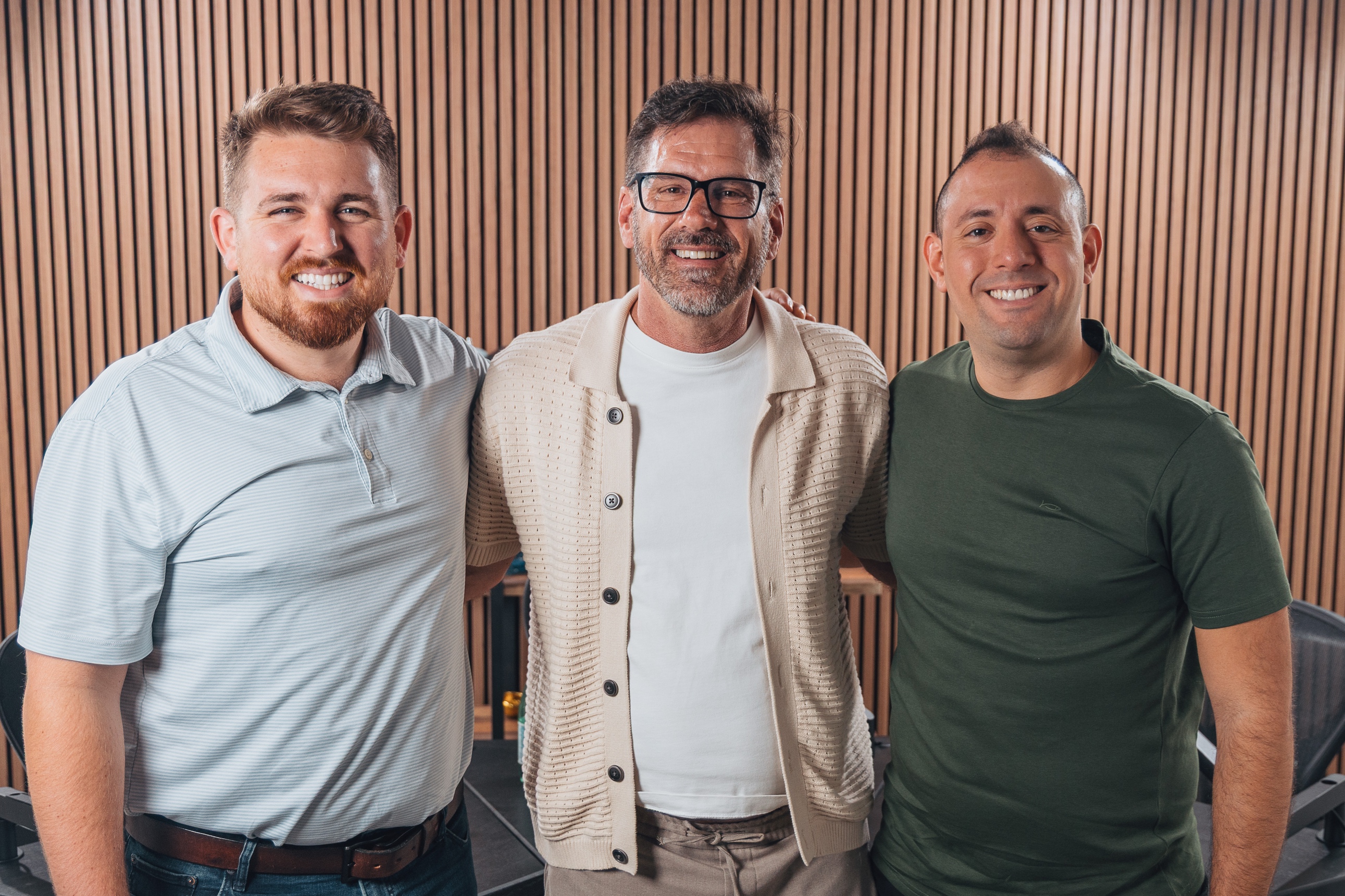
In this episode, Aaron and Brad sit down with Jim Zwers, Head of Clearwater Academy, to break down what’s really happening inside today’s education system and why more families are leaving public schools than ever before.
Jim has spent 25+ years running a school built on a completely different model… one that focuses on mastery, real understanding, and helping students succeed based on their own goals, not just pushing them through a system.
They get into the real differences between public and private education, including why traditional schools often create gaps in learning, how students can go years without fully understanding the basics, and what happens when education becomes more about the system than the individual.
Jim explains how their approach flips that model, focusing on mastering subjects before moving forward, rewarding production, and giving students a reason to actually want to learn.
The conversation also dives into why more parents are pulling their kids out of public schools, the rise of homeschooling, and the growing concern around technology and its impact on children’s ability to think and learn.
And beyond education, Jim shares how tools he learned from Scientology, especially study technology developed by L. Ron Hubbard, helped him personally overcome struggles in school and build a system that produces confident, capable students.
If you’re a parent, educator, or business owner who’s ever wondered why people coming out of the school system struggle to think, communicate, or produce… this episode will give you a completely different perspective.
Watch the full episode to understand what’s really happening in education today and what alternatives actually work.
Are you curious about yourself?
👉 Take a personality test: https://ddnpod.com/test
Watch the full episode here:
Audio Version:
Apple Podcast:
https://podcasts.apple.com/us/podcast/dont-do-nothing-podcast/id1846609884?i=1000757336470
Text Version
[00:00:00] Jim: The kids that are growing up with computers are the first generations dumber than their parents. Any rules you make, any guidelines, the kids will use it against you. Right.
[00:00:07] Aaron: I know a few people that have graduated from Clearwater Academy mm-hmm. That have either sold a company for Multimillions. Yeah. Or have a company worth for many, many millions very smart business people.
[00:00:16] Jim: The way our school structure is, it rewards production. It’s a natural state for human beings to want to learn. If you can learn anything, you can do anything.
[00:00:25] Aaron: Why are people leaving public schools?
[00:00:27] Brad: Alright, welcome back to another episode of the Don’t Do Nothing podcast. Today we have, uh, an amazing guest who I just found out.
[00:00:34] Brad: I’m just gonna lead with this is 62 years old. Look at this guy. This
[00:00:38] Jim: is not where we wanna lead. No guys wants to leave with their age.
[00:00:41] Brad: That’s, but you should honestly No, no. It’s impressive.
[00:00:44] Jim: I always, whoa. I try. I try.
[00:00:47] Brad: Yeah. You look great.
[00:00:48] Jim: Lots of vegetables.
[00:00:49] Brad: Okay, so Jim is, uh, he’s, he’s a world traveler.
[00:00:52] Brad: He’s been to 65 countries. He, uh, had a background in hedge fund and then 25 years ago, he also has three kids by the way. And 25 years ago, [00:01:00] and for the last 25 years, he’s been the head of Clearwater Academy, which is a school here in Clearwater that uses Applied Scholastics to teach kids really how to actually learn.
[00:01:11] Brad: Uh, my, I, one of my kids goes there.
[00:01:13] Jim: Mm-hmm.
[00:01:14] Brad: And, uh, Jim, super happy to have you with us
[00:01:16] today.
[00:01:16] Jim: That’s great. Thank you.
[00:01:17] Brad: Yeah. Happy to
[00:01:17] Jim: be here. Yeah. Oh, for sure.
[00:01:18] Brad: First question, how do you look so good
[00:01:20] Jim: of I I nude? I have, I have, I have a protocol. I have a definite protocol.
[00:01:24] Brad: Do you?
[00:01:24] Jim: Yeah. No, I mean, just different, different like supplements, vitamins, get my, get my blood work tested all the time, like a couple times a year.
[00:01:32] Jim: Hormone stuff. I’ll do, I’ll do, uh, lots of sleep. Yeah, lots of sleep. Lots of water. Exercise. Try to eat healthy. Yeah. Not like crazy stuff. Mm-hmm. But just, but just, it’s, just do the basic, so, okay. Just hold on, hold
[00:01:46] Brad: on. One other ingredient that I forgot to mention in the intro, Scientology as
[00:01:49] Jim: well, that has helped me a lot.
[00:01:50] Jim: That’s true. It takes, takes a lot of stress outta the body. Keeps me feeling like ready to take on life. Keeps my energy levels up. It’s very, very important part. Yes. [00:02:00]
[00:02:00] Aaron: Amazing. Amazing. No, I was gonna say like, you know, everyone has a different definition of what a lot of sleep is.
[00:02:05] Jim: Yep.
[00:02:05] Aaron: Okay. What, uh, enough or good vegetables are,
[00:02:08] Jim: right.
[00:02:08] Aaron: Uh, what eating healthy is like all these things that we we’re, I, I, I just feel like there’s not like a. If anybody’s listening to this and they’re like, let me do something, there’s not something actionable there.
[00:02:18] Jim: Okay, fair
[00:02:18] Aaron: enough, fair enough. So, so I wanna, so I wanna like ask like if, was there a turning point?
[00:02:22] Aaron: Have you always been like this or was there a turning point you said, Hey, I’m gonna take these specific things, or like, wow, this one vitamin, anything that’s like, dude, one thing that a person could do.
[00:02:30] Jim: Okay. So one, one thing I like, uh, I like, um, most of the supplements I take are from this guy Brian Johnson, if you ever heard of him.
[00:02:37] Jim: So I’m drinking the Kool-Aid with Brian Johnson. I like his stuff. Right. So that’s, that’s good then. Um, yeah, and then like, like again, that’s his stuff. He stresses really good sleep. He’s got his own supplement products. He’s got his own like nutritional meals, stuff like that. I take a lot of those and, but,
[00:02:56] Aaron: but that’s new dude, because that, that’s in the last like what, two years?
[00:02:59] Jim: That’s [00:03:00] true. That’s true. But,
[00:03:00] Aaron: but you, I mean, I met you whatever, yeah. Maybe four or five years ago, whatever it was. And you look the same. So like, I don’t think that was the’s.
[00:03:07] Jim: So, so yeah. So specifically, I mean. I mean, I do think I, I just partially genetics. Okay. For sure. For sure. Right. So don’t, you can’t do anything.
[00:03:16] Jim: It’s all good. I can, sorry. Like I wish I, if, if that’s actionable, nothing can
[00:03:19] Brad: be done about
[00:03:20] Jim: it. It’s actionable. That’s an actionable for my children. Yeah. Right. My children have a, have, have that advantage. Yeah. But, um, yeah, I mean, I think, I think really, I don’t really do anything weird or special or anything on it, you know, just, yeah.
[00:03:34] Jim: Little Clinique skin cream at night, you know, that’s about it, you know? Okay. So it’s part of the secrets, you know.
[00:03:39] Aaron: Right. Fair enough.
[00:03:40] Jim: Yeah.
[00:03:41] Brad: Yeah.
[00:03:41] Aaron: Okay. So let’s get into like why you’re here on this podcast. Yeah. And I think primarily is your leading, uh, one of the top applied scholastic schools in the world.
[00:03:51] Jim: Yep,
[00:03:51] Aaron: for sure. And, uh, how, how and why? Did you decide to get into education and even further in this [00:04:00] specific, uh, type?
[00:04:00] Jim: Yeah. So that’s, that’s interesting. So just to clear up something in Applied Classic School is a school that uses study technology by El Ron Hubbard.
[00:04:07] Aaron: Yep.
[00:04:08] Jim: Okay. El Ron Hubbard. And in the church, he had to train people, he had to train staff members, he had to train counselors.
[00:04:15] Jim: And you know, he discovered that like, people can’t study, people have trouble understanding simple instruction, simple, simple processes, things like this. And so he developed a method of study called study Technology. We adopted that. Our school is not religious, but we do, we just think study technology is brilliant, so we want to use it.
[00:04:33] Jim: We always, we’re always looking for good ideas, good, good methods of teaching. So we grabbed that and, um, yeah, so, so we had, so study technology. We’re part of a network of schools called Applied Scholastics, and this has been, this is a big, big part of our identity as a school. Mm-hmm. Uh, I started the school, like I said, 25 years ago.
[00:04:51] Jim: The, my background was more in marketing and finance. And I was a parent at the school [00:05:00] and became like involved as a active parent doing different things. Now, when you say the
[00:05:04] Aaron: school, this already was a school,
[00:05:05] Jim: Clearwater Academy already existed. Okay. Yep.
[00:05:07] Brad: How long ago was Clearwater Clearwater
[00:05:09] Jim: Academy founded?
[00:05:10] Jim: It was founded in 1998, you could say. So the, like the building its in was built in open in 1998. Prior to that it was three smaller schools. It was a to B school, Jefferson Academy, and Renaissance Academy. So
[00:05:20] Brad: you’ve been there 25 of the 28 years?
[00:05:22] Jim: Yes. It’s pretty
[00:05:23] Brad: pivotal.
[00:05:24] Jim: No, I feel like it’s my school. Yeah.
[00:05:25] Jim: Yeah. Really. Like I feel like it’s got my, my, my signature on it, you know? Mm-hmm.
[00:05:29] Brad: Yeah.
[00:05:29] Jim: And the, um, yeah, so how I got there is I was an active parent and then the former head of school was leaving.
[00:05:37] Brad: Mm-hmm.
[00:05:37] Jim: And I had just kind of like ended off at a job I was working on. I said, well, I can kind of fill in for a little bit, you know, take a little gap Right.
[00:05:44] Jim: Until, until right. I literally, literally, I said I, I’ll fill in for like six months a year till we find somebody who could do the job. Right. Yeah. So we’re still looking, you’re still looking, still looking. This is why I’m here recruiting HR Core Academy, accepting applications, head [00:06:00] of school, no problem.
[00:06:01] Jim: You know, but, um, no, but it is really interesting because, um, most people, most people in the field of education come from the field of education. I didn’t, I came more from the business world.
[00:06:11] Brad: Mm-hmm.
[00:06:12] Jim: So I think that gave me a little bit of a unique perspective in terms of, um, you know, it’s a, a school is a school, it’s a nonprofit organization.
[00:06:20] Jim: It’s a charity, but it’s also has a lot of business stuff, right? Mm-hmm. So you still gotta pay the bills and take care of staff and all that stuff. So, um, so it brought, I brought a lot of those skills with me, and I learned the education side as I went along. It’s been been pretty good. We’ve doubled in size since I took over the school.
[00:06:37] Jim: We have a big expansion plan to double again. Yeah. We’ve got like a lot of stuff happening. It’s like, it’s pretty exciting actually.
[00:06:42] Brad: Amazing.
[00:06:43] Jim: Yeah.
[00:06:43] Brad: One thing you said when you were talking about the applied scholastics that really the study technology Yes. Is uh, when you said like. L Ron Hubbard realized he needed to train people and people couldn’t follow simple instructions.
[00:06:55] Brad: That’s probably incredibly real to any business owner or manager who’s [00:07:00] watching this. Yeah.
[00:07:00] Jim: Yeah.
[00:07:01] Brad: Like what, what has, obviously you’ve had a lot of kids come through the school,
[00:07:05] Jim: right.
[00:07:06] Brad: Have you, have you seen, and by the way, Scientologists and non Scientologists as well?
[00:07:10] Jim: Absolutely. Yeah. Like
[00:07:11] Brad: it’s,
[00:07:11] Jim: it’s both.
[00:07:11] Jim: We do not teach Scientology at school. Right. We do not expect somebody to be a Scientologist. I have non Scientology staff. I have non Scientology students. Yeah,
[00:07:18] Brad: for
[00:07:18] Jim: sure. Yeah.
[00:07:19] Brad: And so in terms of the, the, the product, which is the kid graduated mm-hmm. Right? What, what have you seen, like is there, is there a, like what have you seen in terms of like them versus maybe somebody who goes to a traditional like public school?
[00:07:31] Jim: Yeah. So first of all, I would say with our kids, um, a big core principle of ours is what we call goals ED education. So this is not necessarily a part of study technology, but it’s part of our school and it’s basically we wanna educate the kids along their goals, along what they wanna accomplish. So then what this does is this gives their education meaning.
[00:07:49] Jim: If they have a reason to study, they have a reason to learn. So just having a purpose rather than my purpose is just to get out of school. Yeah. Like, makes a huge difference. Mm-hmm. So the kids get more out of the education and they’re, they’re [00:08:00] studying with a goal in mind. So then when they, when they do leave school, whether they go to university or start a business or work in the family business or whatever they’re gonna do, they’re like ready to go.
[00:08:11] Jim: And, and I’m super proud of my guys because so many different pathways they’ve taken and pretty much like a hundred percent success no matter what they wanna do. And, you know, and it, and it’s, it’s, you know, it’s the difference between like, you know, following your purpose versus just doing a job. Mm-hmm.
[00:08:26] Jim: You know? And, and it’s, it’s amazing to see how our guys do when, when they graduate for sure. That’s
[00:08:31] Brad: awesome.
[00:08:31] Aaron: I’ll comment that I, I know a few people that have graduated from Clearwater Academy mm-hmm. That have either sold a company for Multimillions. Yep. Or have a company worth for many, many, many millions, uh, like a lot of very smart business people have come outta that school that I have seen.
[00:08:47] Aaron: And only because I have to be like, oh, where did you go to school? And they’re like, oh, Clearwater Academy. I’m like, wow.
[00:08:53] Jim: Yeah.
[00:08:54] Aaron: That’s
[00:08:54] Jim: amazing. Yeah.
[00:08:55] Aaron: It’s quite a
[00:08:56] Jim: system. Yeah, for
[00:08:57] Aaron: sure. I have heard probably from there more than, [00:09:00] I mean, more than a lot of other schools, more than any other school, actually, for me personally.
[00:09:04] Jim: Sure.
[00:09:04] Aaron: But that’s because I, I don’t know why that was a coincidence, or I just happened to ask a few people that I knew.
[00:09:08] Jim: Yeah.
[00:09:09] Aaron: Um, but, but it’s quite impressive.
[00:09:11] Jim: That’s, yeah. Thank you. Thank you. Yeah. No, it’s, it’s a good formula. It’s really, you know, it’s, it’s, it is interesting. One of the, one of our core principles is we’re, we’re like student centric, like we start with the student.
[00:09:21] Brad: Mm-hmm.
[00:09:22] Jim: Right? A lot of schools, they, they start with a teacher or they start with the curriculum, or they start with, you know, whatever the, the administration. And so we go, okay, so what is this? What, like, each student is a person. You know, a person likes to be treated and educated in a certain way. It’s, it’s a na, like it’s a natural state for human beings to want to learn, right?
[00:09:46] Jim: Mm-hmm. Mm-hmm. Like the absorption of knowledge is a, is something we all love, right? Mm-hmm. And so if you take that as a, as a, as a core principle and go, good. So how do we, how do we give this student enough, you know, the right amount of education? Again, not too much. I’m not trying to keep ’em there till they’re [00:10:00] 35.
[00:10:00] Aaron: Mm-hmm.
[00:10:00] Jim: Right? Mm-hmm. Um, and then, you know, give them the right amount of education. Give ’em what they need to be successful for the next stage in life, and really just treat them, treat them like a decent human being, you know? Yeah. And, and kind of work around that. And I mean, I, I’ve got great staff, great, super tolerant, super understanding staff.
[00:10:19] Jim: It’s, it’s amazing. Yeah.
[00:10:20] Brad: Yeah.
[00:10:20] Jim: Yeah.
[00:10:21] Brad: Very lucky. One, one other thing that I always find so interesting, like. So I, I, uh, I became a cytologist relatively recently, like about five years ago. Yeah. And one thing that was so interesting to me when I learned about what applied Scholastic schools were like when my, my wife and I had our first daughter, and we’re like, okay, well we’re gonna figure out a school, like eventually at some point, like we have to like, actually look at this.
[00:10:42] Brad: You know, me having gone to public school, like I went to just a public, like, like golf high up inchi. Mm-hmm. And, uh, it was literally like, you come in, you do your time, and then you go onto the next grade, everybody moves together and, and applied Scholastic school is completely different from that. Yeah.
[00:10:57] Brad: It’s actually self-paced.
[00:10:59] Jim: Right. [00:11:00]
[00:11:00] Brad: Whether you need more time or less time.
[00:11:02] Jim: Yeah.
[00:11:02] Brad: Which is like, so how, how, I guess like my question on that would be, well one, I just wanted to make a statement of, I think that’s, so if I had had that as a kid, I would’ve been so much happier in school.
[00:11:14] Jim: Yeah.
[00:11:15] Brad: Like, I would’ve not.
[00:11:16] Brad: Dis you would’ve stayed
[00:11:17] Aaron: back already Really good. You would’ve stayed back a long time or what?
[00:11:19] Brad: No, no. I would’ve been, dude, I, I literally, I got pushed ahead of grade in, in kindergarten. What? Okay. And then they pulled me back if they made me do fifth grade twice, because I wasn’t mature enough. So I guess that’s, that’s kind of where too many far jokes question was gonna go.
[00:11:32] Brad: Too many
[00:11:32] Aaron: part jokes,
[00:11:33] Brad: bro. Just, I just didn’t talk or Okay.
[00:11:35] Jim: Wouldn’t speak or you’re a fifth grader and no fifth grader mature enough. Right. That’s Yeah,
[00:11:39] Brad: exactly. Exactly.
[00:11:41] Jim: Yeah. Yeah, yeah. I’ll tell you something. So, so, so about that, that concept of, of, so like we, you know, we’ve, we, for years said we were like self-paced education, right?
[00:11:50] Jim: And, and I kind of like. I kind of knocked that out. Now I don’t say that anymore. I say, well go go as fast as you can with full understanding education. Wow. Yeah, yeah, yeah. Because self-paced, [00:12:00] a lot of kids start to use that. Like any rule, this is one thing that’s just funny about school. Any rules you make, any guidelines, the kids will use it against you.
[00:12:06] Jim: Right. So kids, hundred percent. Oh, self-paced. This is my pace. I’m gonna take it easy. Just chill. I’m gonna relax. What’s the big deal? Right. That’s what I would’ve done. Right. For sure. Like
[00:12:15] Brad: why is my 12-year-old in third
[00:12:17] Jim: grade? Exactly. Exactly right. So, so I just kind of twisted that stuff for my staff and No, no, we go, do go as fast as you can with full understanding.
[00:12:25] Jim: That’s our, that’s our thing. But there’s a even bigger concept, and this isn’t just even for applied Scholastic schools, but there’s a, a, a trend in education, which is called mastery based education.
[00:12:35] Brad: Mm-hmm.
[00:12:35] Jim: So Elron Hubbard discovered it years and years ago, but mod a lot of modern schools and innovative schools are employing that now and kind of finally figured it out, which is basically graduate the student when he’s mastered the course.
[00:12:47] Brad: Mm-hmm.
[00:12:47] Jim: Like, could you imagine, like if you, if. Had like driving school and you go like, okay, well that guy’s a d but it’s passing, so we’re gonna let him go drive, right? Mm-hmm. And this guy’s an A, so we’re gonna give him a Ferrari or whatever. Like, you know, like, like, like, like, [00:13:00] like basically that is, that is what we see on the roads.
[00:13:02] Jim: A hundred percent. ’cause we have DD student drivers and a student drivers on the same road. And it’s, it is dangerous, right? But like, so our idea is like, good. So when you’ve mastered, you know, third grade math fully, then we’re gonna put you on fourth grade math. When you’ve mastered fourth grade math, we’re gonna put you on, on fifth grade math.
[00:13:17] Jim: Mm-hmm. You know, just like that really. And then what that does is it builds a super strong foundation for the student. Whereas otherwise, if you just push ’em on, push ’em on, like you were talking about, they wind up having gaps and holes in their education. Can you imagine if you only got, like, if you were like a C student, which means you, you missed 30% of the grade.
[00:13:33] Jim: Mm-hmm. Like you got 70% average score, that means you’re missing 30%. Now we’re gonna compound that next year, miss another 30%, which compounds, which is, so, it’s more like you’re missing 60% of your education. Oh my gosh. You know, and it’s, it’s, it’s brutal. It’s, it’s, it’s a. Again, it’s because, because a lot of education is kind of a machine right?
[00:13:53] Jim: Out of efficiency. As an organization, you’re gonna run this, everybody moves in the same class, everybody graduates at the same age, da da da, [00:14:00] and like, so the machine is, the machine is flawed to push people through kind of at the same pace. So it’s, the idea is push ’em through at the same pace, with the different outcome.
[00:14:08] Brad: Yeah.
[00:14:09] Jim: Whereas what we are saying is get the same outcome, but just push ’em at a different speed.
[00:14:13] Brad: Yeah.
[00:14:14] Jim: So it’s, it’s a different philosophy and other schools are starting to catch onto it, which is great.
[00:14:19] Brad: Yeah. It’s good.
[00:14:19] Jim: Yeah.
[00:14:20] Brad: That’s, so the, um, missing the 30% thing Yeah. Every year. That made me think of, uh, when I was in, like my freshman year of high school, I had a friend who was two grades behind me, but a, a really good friend of mine, good kid, but he was doing just terrible in school.
[00:14:34] Brad: And, and his parents were really close to my parents. They were like, Hey, could you help him with his math? Mm-hmm. Like, could you help, could you help him? Like, learn math? Yeah. And I went and I sat down with him and, and he was doing like, simple algebra, like just simple, like solving for X or something like that.
[00:14:45] Jim: Sure.
[00:14:46] Brad: And I’m like, okay, well I just go through and I’m like, okay, well you just start over here. What’s, what’s four plus seven? And he just like sits there and is like, and I realized, I was like, oh my God, this guy can’t do this. ’cause he doesn’t know how to add and subtract.
[00:14:59] Jim: Right.
[00:14:59] Brad: [00:15:00] It’s not that he doesn’t know algebra.
[00:15:01] Brad: Yeah. Yeah. He doesn’t know what the numbers mean.
[00:15:03] Jim: Yeah.
[00:15:04] Brad: I, I was like, and I remember, that’s so funny. I haven’t thought about this in so long, but I remember having that realization, not really attributing it to anything.
[00:15:12] Jim: Mm-hmm.
[00:15:13] Brad: But it was just like, it’s, it’s the idea of like the gradient, right? Like he had, he had a skipped grad.
[00:15:18] Brad: He’s, you know, trying to go up the steps. Yeah. But this step was missing, so.
[00:15:21] Jim: Yeah.
[00:15:21] Brad: But he’s being asked to do something up here. Yeah. Yeah. When really he’s down here.
[00:15:24] Jim: Yeah. It’s like building your house with weak foundation. Fall down eventually, right?
[00:15:27] Brad: Yeah, absolutely.
[00:15:28] Jim: You know, um, yeah. No, that’s, yeah, that’s good.
[00:15:32] Jim: We had a, we had a student, um, um, like, and we see it a lot with kids who transfer to the school. So kind of like our, our kids who start with the school, they’re all like. Great. They all got it all figured out. They’re all moving along smoothly. And then you’ll have a kid come from another school, another school system, and then you start to see like, oh yeah, like, like you really see what we’re doing different, you know, when, when you get somebody in, ’cause one of the first things we’ll do with the new students is we different, do different exams and things.
[00:15:55] Jim: So we had like, um, exactly that phenomenon where, [00:16:00] where I’ve had like mm-hmm. High school students come in and they don’t know Ian, subtraction division, basic fractions, stuff like that. So we gotta fix that with them so that they can really fully understand algebra and higher concepts. We had one student who was like so angry with us, he transferred us to high school.
[00:16:16] Jim: He was like, he was a, like a stud football player. We had a great football play team for a long time. And he, he was like coming to school, he’d already been in high school elsewhere and we’re like, okay, we’re gonna put you back on like, like middle school math and we’re gonna, we’re gonna fix up what you were missing.
[00:16:32] Jim: Mm-hmm. He like, oh, this is so stupid. This is baby work, da da da. And then finally, then when he got to college. He was like, he came back to school and he goes, oh my God, you guys were so right. I’m smarter than everybody in my math class. Wow. Like, just because, because I had the opportunity to go back and fix what I didn’t understand.
[00:16:48] Jim: Wow. It was like,
[00:16:49] Brad: that’s incredible.
[00:16:50] Jim: That was huge. That was great. What a win. Yeah. Huge. Yeah. It’s good validation for the system, you know? That’s
[00:16:54] Aaron: amazing.
[00:16:54] Jim: Yeah.
[00:16:55] Aaron: Have, you know, we had a, we had kind of a viral moment on one of our other podcasts mm-hmm. Uh, [00:17:00] of a mother talking about when a kid was basically being misdiagnosed and mis, you know, put on different medication, recommended medication by a teacher.
[00:17:11] Jim: Yeah.
[00:17:12] Aaron: Um, which are people Was Bar Barbie by any chance? Yes. Love Barbie was. Yeah. Yeah. Good. Okay, friend. Okay, good. So, uh, that went like very viral.
[00:17:18] Jim: Yeah.
[00:17:19] Aaron: And then people in the comments were like, oh, teachers can’t do that. And all of a sudden I’m like, oh yeah. Sure. You think all teachers follow all the rules all the time?
[00:17:25] Aaron: Yeah.
[00:17:25] Jim: Yeah, yeah.
[00:17:25] Aaron: So I wanna know, is there any like, story of like. Someone who’s like, I need to go to your school because, and then a terrible thing that happened to them in a prior school. Right. Maybe a public school, maybe. Something like that.
[00:17:37] Jim: Absolutely. I mean, there, there’s only, there’s only two reasons somebody’s gonna change a school.
[00:17:42] Jim: One is they want a better school.
[00:17:43] Aaron: Mm-hmm.
[00:17:44] Jim: Two, they’re in trouble where they are. Yep. Right. So all the time we have people coming in who are like, oh, my kid. Like, I don’t know what’s wrong. My kid’s smart kid struggling in school, discipline issues, whatever happening and, and, uh, [00:18:00] you know, so, so often it’s the environment, right?
[00:18:02] Jim: Mm-hmm. It’s the culture. It’s the culture of the school. It’s culture of the school district. And like I said, we’re very student centric, so we’re very focused on how is each individual kid doing stuff like that. I don’t know that you get that in a larger school environment. Mm-hmm. Right? We have about 300 students, so it’s kind of like, okay, we’re very personal that way.
[00:18:18] Jim: But, um, yeah. I mean, we, we’ll, we’ll get that, we’ll get that from time to time. Um, we’ll, we’ll, it, it, it’s interesting. We have a kind of an entrance examination when students arrive, but it’s not really used as a point of qualification. We don’t go like, oh, you failed your entrance exam, so we’re not gonna take you.
[00:18:35] Jim: It’s more to understand where the student’s at academically, we do have acceptance rules, but it’s not, it’s not based on that. But the thing is, because so many kids are educated in a poor environment, that when they come to our environment, suddenly the discipline issues will, will melt away or academic issues.
[00:18:51] Jim: They’ll get figured out and caught up.
[00:18:52] Brad: Discipline issues will melt away. Isn’t that like they will have had discipline issues, but then all of a sudden it’s just like him?
[00:18:57] Jim: Yeah. Yeah. It’s a different culture. It’s a different thing. [00:19:00] Like, like it’s not like all the kids trying to see who’s the, who’s the toughest guy on campus or whatever.
[00:19:04] Jim: Like, it’s just like, it’s a more friendly environment. It’s warmer, it’s more caring, and people kind of like, just kind of, oh, okay, well I, I gotta play a different game.
[00:19:11] Brad: Mm-hmm.
[00:19:11] Jim: Like, like, like being cool is defined differently here. So like. Gotta change my behavior and stuff like that, so That’s cool.
[00:19:18] Brad: What do, what do you observe that, you know, I mean obviously it’s, it’s like, you know, my daughter’s in like the, the preschool class, so obviously it’s a lot different like older, but what do you think in preschool, there are some bugs.
[00:19:30] Brad: She’s actually, she’s probably the, it’d be full, full honesty. Uh, but what is the, uh, what would you say, like the middle schoolers and high schoolers like, think is cool? Like what, like to what you were saying, he probably
[00:19:43] Aaron: doesn’t know.
[00:19:47] Brad: No,
[00:19:48] Jim: not
[00:19:48] Brad: like that. Not like that, but like culturally,
[00:19:50] Jim: no, no. Yeah, it’s a good question. It’s a good question, right?
[00:19:51] Brad: Like if it’s not who’s at the top of the pecking order or whatever, like
[00:19:54] Jim: what is it? Yeah. Yeah. I’m not saying there’s no social dynamic like that. There is for sure. Yeah, of course, of course.
[00:19:58] Jim: Any group, right? [00:20:00] But, um, I’d say, I’d say first of all, the way, the way our school structure is, is it’s. It rewards production, it rewards students moving along well. So the kind of game is like getting through school, getting through your, getting through your grade program and stuff like that. So that’s, that’s a, a thing.
[00:20:16] Jim: And then I’d say the second motivation is just having friends and hanging out. You know, they’re like, just like every other kid, they’re not like super, I mean, I can’t say my kids are like super, oh, they’re all super nerdy, studious kind of guys, right? They, they are, but not like in a social way. Like they’re still just normal kids having fun, hanging out on the weekend, playing video games, doing whatever, you know?
[00:20:38] Jim: So,
[00:20:39] Brad: yeah. Yeah. How, what, what, what have you built into kind of like, make that culture be like, Hey, get through, like Yeah. Complete.
[00:20:46] Jim: Yeah, so there’s, there’s a couple different things we do. So, um, as part of our personalized approach to education, each student has their own academic program. Okay? So this student might be like, super.[00:21:00]
[00:21:00] Jim: Super talented in the area of math. He might have extra math on his, his program than another student who needs to catch up on earlier grades or something like that. So there’s a lot of customization that happens. Actually built software to run the school, to do this, to monitor, to track student progress and things like this.
[00:21:15] Jim: Right. And the, um, the, so, so the first thing is, is every student wants to get a certain amount of progress done every week. So that’s kinda like, and if you do that, you’re kinda like what we call like student of the week and you kind of get acknowledged and there’s kinda like maybe some rewards or something like that that go with it, right?
[00:21:32] Jim: Yeah. So kinda rewarding good production, right? Yeah. So that’s one thing. Um, and then, and then the other thing is sort of like. Just the kids, like the kids understand, like they, they kind of have a little bit of control of their education. They go, okay, this is my program. When I’m done with this, I’m done with my grade.
[00:21:49] Jim: This is what I need to do to get done. So there’s a little bit of like a self, self-determined control over their program. They’re not just be like, well this day we’re learning this and this day we’re learning this. And it’s kind of a fog of like whatever happens at [00:22:00] school. Right? Yeah. So, so there’s a little bit
[00:22:02] Brad: of
[00:22:02] Jim: a understanding Oh
[00:22:02] Brad: my god.
[00:22:02] Jim: Understanding.
[00:22:02] Brad: So true. When I think about like high school and middle school. Yeah. Literally. It’s just a fog of
[00:22:06] Jim: Yeah.
[00:22:07] Brad: What happened.
[00:22:07] Jim: Yeah. No, really
[00:22:08] Brad: I learned something, but I like, luckily
[00:22:11] Jim: Yeah, for sure. For sure. You know, study technology was the first thing that really got me interested in Scientology. Is, is interesting.
[00:22:18] Jim: Is one of the first things I studied in Scientology.
[00:22:20] Brad: Yeah.
[00:22:20] Jim: You know, I, I started in Scientology, in Hawaii, oddly enough. Wow. Wow. Yeah. Like right after high school. Are you
[00:22:26] Brad: from Hawaii?
[00:22:27] Jim: No, I was from California.
[00:22:29] Aaron: He was
[00:22:29] Jim: partying. I was, I was, um,
[00:22:33] Brad: like in a grass skirt.
[00:22:34] Jim: Exactly. Hula, you know, but, um. I grew up in California, and a week after I graduated high school, I moved to Hawaii.
[00:22:42] Jim: Oh, wow. Yeah. And then, uh, my, my brother was living there, so I was staying with him. He was a Scientologist. He introduced me to Scientology. And, um, the first thing that really like cracked for me was like when I, when I learned about the study methods. Yeah. Because I was like, smart guy, but didn’t do well in school.
[00:22:57] Aaron: Mm-hmm.
[00:22:57] Jim: I mean, I did Okay. Up to a point. And then [00:23:00] I sort of like, as, as I went further, further in school, I got worse and worse and worse. And it was because of the things I’m telling you today. Like, I had holes in my education. There were earlier subjects I didn’t understand. There was some specific things that were done with me.
[00:23:15] Jim: Like, like when I was in middle school, there was a program I was part of that was for gifted kids. Mm-hmm. But part of that, part of that thing was they put us in a videography class for a year instead of English. So I missed a full year of English where we were learning. Oh wow. We were learning a lot of grammar points and stuff like that.
[00:23:32] Jim: And this was when I was in seventh grade and when I came back in eighth grade, like I was seventh grade, I was like top student. And when I came back in in eighth grade, I was just confused. There are all these turns and grammar and things that were just missing. They were just gone. You know, it was some sort of like, like it was an experiment.
[00:23:48] Jim: I mean, I have to say I was part of it, so I was part of an educational experiment, you know, and, and ever, ever since then, it was kinda like I started to struggle, especially in English and everything to do with grammar was a complete mystery to me and stuff like that. [00:24:00] And one of the first things when I was studying in Scientology is I, I cleared up certain words like that related to grammar and subjects and study.
[00:24:08] Jim: I was able to, to learn the definitions of these things, how they, how they fit in the language, stuff like that. And I was like, whoa, I can actually understand this. I like, it’s kinda like I got smart again, which was freakish like, like in like, to give you an example, like in high school I failed outta Spanish and I failed out a French.
[00:24:25] Jim: I was in, I was in Spanish. I was like, oh, I’m failing that. Like pull the rip chord, bailed outta that. I said, well, I’ll try French. Same story. I couldn’t study ’cause And it was the grammar. Yeah. Like I didn’t understand the English grammar, so I couldn’t understand the foreign grammar. Mm. Wow. I cleared all this up with, with using Scientology study methods.
[00:24:41] Jim: I moved to Switzerland later on. I studied German and I was the top student in my German class. Wow. And it was all foreigners. They were all like bankers, doctors, people who moved for business purposes to Switzerland. I was like the top student just because of this. So from failing French and French and Spanish to be like the [00:25:00] top German German’s.
[00:25:01] Jim: Not an easy language either.
[00:25:02] Brad: Mm-hmm.
[00:25:02] Jim: Right. So this is really like. One of the things what, why I like, love this study method, so it’s so personally real for me.
[00:25:09] Brad: Yeah.
[00:25:10] Jim: Yeah.
[00:25:10] Brad: What did, what did you think when you moved, you, you were staying with your brother in Hawaii?
[00:25:14] Jim: Yeah.
[00:25:15] Brad: What did you think when he was like, did you know he was a Scientologist?
[00:25:17] Jim: Yeah. And we knew he was a Scientologist for, for a while. Yeah. And he’d kind of talked to me about different concepts of it and stuff like that. Yeah. And that was kind of cool and whatever. And you
[00:25:24] Brad: were just like, cool. Take me there.
[00:25:25] Jim: Yeah. Basically. Not a little, not exactly, yeah.
[00:25:30] Brad: I’m like, wow, you’re the first person ever.
[00:25:32] Jim: I was like, I was eight, 18 years old and I just moved to Hawaii. My intention was not to, to, to join a new church. Okay. I had another, another agenda. Right. But, um, I
[00:25:40] Aaron: can’t
[00:25:41] Jim: imagine. Exactly right. So, but I, um, but it was cool because I, I, I’m, you know, loved my brother hung out with some of his friends, stuff like that.
[00:25:49] Jim: And it was
[00:25:49] Aaron: older brother?
[00:25:50] Jim: Older brother, yeah. Yep. Eight years older than me. Yeah. Oh yeah, yeah, yeah. Chunk older. Yeah. And then, um, yeah, and then just kind of. Explain some concepts and [00:26:00] whatever, but he’s kinda like my brother, so I didn’t really listen to him. Yeah. But like, he had some really cool friends.
[00:26:03] Jim: I’m like, oh, these guys are cool. I’ll, I’ll listen to them more. Right. And stuff. So, so, uh,
[00:26:07] Brad: and they were Scientologists.
[00:26:08] Jim: And they were Scientologists, so I was like, oh, okay, cool. Yeah. They’re, they’re doing it. Okay, I’m gonna do this and stuff. And, and, and then kinda got involved at
[00:26:14] Brad: what, what was like the concept where that actually like got, like got you interested that like one of his friends
[00:26:20] Jim: talked
[00:26:20] Brad: to you
[00:26:20] Jim: about?
[00:26:21] Jim: Yeah, I remember, well, I, I remember exactly when it clicked for me, when I, when I was kind of asking questions like, what is Scientology? You know, it’s like, like it’s really hard to know tests. You’ve really studied it or been involved. Right. So True. Right. And, and so I, and, and one of the guys explained to me that it was like, this is a technology for life.
[00:26:40] Jim: Just like, there’s a way to fix a car, there’s a way to fix a computer, there’s a way to fix life. There’s a way to run your life, and these are the, the, the technical steps and the things you follow to improve your life to, to be more successful and stuff like that. And I was like, well, okay, I’m in. I wanna, I wanna know that technology.
[00:26:56] Jim: I wanna know what those successful actions are. So,
[00:26:58] Aaron: yeah.
[00:26:58] Jim: And
[00:26:59] Aaron: what [00:27:00] did you start with? Like what
[00:27:01] Jim: was your first course study? My first study action? Uh, or,
[00:27:02] Aaron: yeah,
[00:27:03] Jim: yeah, yeah. My first, my first thing was, um, was again, going back to education was a course they called the Student Hat, which is, that was your very first course.
[00:27:09] Jim: That was
[00:27:09] Aaron: first course,
[00:27:10] Jim: yes.
[00:27:11] Aaron: You took the
[00:27:11] Jim: dive. It was, it was a, it was tough. It was not great. Yeah. That course is not a joke. No, no, no, no, no, no. Yeah. And they actually wound up taking me off of it halfway through, and I did what was called successful communication course, which was a much easier level. Much easier, yeah, exactly.
[00:27:26] Jim: So I did that, and then they put me back on student half. I was like, okay. I mean, since then I’ve done it like three or four times. Again, getting more and more understanding of it, you know? But, um,
[00:27:35] Aaron: I do know someone else who started with that.
[00:27:37] Jim: Yeah.
[00:27:37] Aaron: And they’re one of the smartest people that I know.
[00:27:39] Jim: Yeah. I
[00:27:40] Aaron: mean, it’s like, it, you start with that and then boom, you get through it.
[00:27:42] Aaron: Like
[00:27:42] Jim: Yeah,
[00:27:43] Aaron: dude, there
[00:27:43] Brad: Yeah.
[00:27:44] Aaron: That course for me, they changed everything.
[00:27:46] Jim: Yeah.
[00:27:47] Aaron: Now I didn’t do it until I was in Scientology for about, uh, maybe three years. Mm-hmm. Right. And at that point, then I got through it and I, you know, I already practiced some studying. Yeah,
[00:27:54] Jim: yeah.
[00:27:54] Aaron: But it was a game changer. Yeah, for sure.
[00:27:58] Jim: Yeah.
[00:27:58] Aaron: And I don’t know anybody these days [00:28:00] who starts with that as the first thing. Yeah. But like you could. I think if someone got that and did it
[00:28:05] Jim: right,
[00:28:05] Aaron: that would be huge.
[00:28:06] Jim: No, I mean, literally life changing. Yeah. Like there’s so much information in there that if you, if you only knew that you’d be, that’s, that’s all you need.
[00:28:13] Jim: Your life would be changed forever. Damn
[00:28:14] Brad: near human.
[00:28:15] Jim: Yeah.
[00:28:15] Brad: You can just learn.
[00:28:16] Jim: Yeah. If you can learn anything, you can do anything. Yeah. That’s right. That’s kind of my realization. That is like, that is like, that is the key. That is that, that is the key to a good education. Mm-hmm. It’s not just volume of education.
[00:28:27] Brad: Mm-hmm.
[00:28:27] Jim: It’s not just how many years were you in school, how many years in university, but what was the quality of education and what did you take away from it? Mm-hmm.
[00:28:33] Brad: And
[00:28:33] Jim: this is what I love with study technology. ’cause it really gets you at a high level of understanding of what you’re studying and it’s,
[00:28:39] Brad: yeah.
[00:28:39] Jim: Open so many doors. It’s great.
[00:28:41] Brad: What are, what are the, what are the projects that you’re working on? Like education related at the school, right? Yeah. Like what’s the, like in terms of like the, like the actual learning and education itself. Like what, what are the things you wanna. Push for.
[00:28:54] Jim: Right. Okay. So, um, I mean, first of all, we’re always trying to improve as a school.
[00:28:59] Jim: I would say just in [00:29:00] general where there’s always things you can fix and do better and like that, that that’s normal. That’s always the program for any good organization. Right? Yeah. Um, specific initiatives we’re, uh, I wouldn’t say we we’re a ton focused on the, like, academic changes or improvements and stuff.
[00:29:14] Jim: Again, like I always wanna add more, I wanna add more arts and more study and more, more different, different like elective things and stuff like that. Always looking to do stuff like that. Um, we’re doing a big project to grow the school. I want, like, we bought the land already, we’re, we’re fundraising to build and we’re gonna do all that.
[00:29:32] Jim: So that’s exciting. And then, um. I mentioned, I developed some software for the school, and one of the things I, I’m trying to do is help other people start schools like around, around the world.
[00:29:43] Brad: Smart.
[00:29:43] Jim: So they can use my software and basically get a building and some students and get a school going. So, um, when I said I’ve traveled a lot of countries, a lot, a lot of that in the last years has been to help people start, start school, start start scholastic schools.
[00:29:57] Jim: Wow.
[00:29:58] Brad: Yeah. Okay. What, what kind [00:30:00] of person starts a school? I just, I just have to ask That’s a, a good question. That’s like kind of unreal to me.
[00:30:04] Jim: Yeah, yeah. No, like,
[00:30:06] Brad: I would never think to start a, just personally
[00:30:07] Jim: No, no. It’s, it’s definitely like, you know, so the funny thing is, like, Mo one, one of the things that, that I’ve discovered is that schools will go through a natural evolution.
[00:30:19] Jim: Okay. Most schools will start out basically kind of like in somebody’s living room or somebody’s garage. It’s maybe five, six kids. Mm-hmm. But usually, usually mom and dad are trying to solve a problem with their kid. They don’t like the local school, or he is having trouble, or they have a different vision for education.
[00:30:34] Jim: So they go, we’re gonna start our own study thing. Mm-hmm. Mm-hmm. For, for our child. Then a few other parents go, oh, cool, what are you doing there? And they start dropping off kids and stuff like that. Then it’ll usually grow in, so that’s kinda like a little extended homeschool kind of school situation.
[00:30:48] Jim: Then it’ll usually evolve into sort of like, um, kind of like a, a basic school I would call it. So it’s just kind of like, maybe that gets up to 50 kids may, you’re renting some space, you’re renting a, you know, maybe some [00:31:00] old storefront or something like that. Um, and then from there you get to like maybe academy level, which is,
[00:31:05] Aaron: and, and, and just to, just to kind of, um, to understand.
[00:31:08] Aaron: ’cause I don’t know. And, and of course it’s different probably in Florida and it’s different in other countries. Yeah. But in Florida, which is obviously where, you know, probably the best, what do you need to start a school? Like do you need to have a person who graduated in education or Right. What, what, what’s the minimum requirements to have like that school?
[00:31:24] Aaron: Okay. You have 20 kids, you have. Even 10 kids. Well, what is it? What is your
[00:31:27] Jim: purpose? Yeah, yeah. Good question. So finish me, finish what I was saying with yours Yeah. Is because you, the answer is you sort of need different leadership levels at the different level of school.
[00:31:36] Brad: Mm.
[00:31:36] Jim: So when you’re just kind of like a mom and pop, and you got a few kids and a few friends kids, that’s usually just a parent who’s just trying to educate their kids.
[00:31:42] Jim: Mm-hmm. Right? And then when it kinda gets into a more formalized situation, then you’re hiring somebody. Usually it’s like somebody’s with a teaching experience, it’s active parent. It’s a very active parent. It’s an active, extremely active parent, active motivated parent. Right? Yeah. It’s a parent who’s trying to, trying to get stuff done.
[00:31:56] Jim: Right. Yeah. But that’s kinda like, that’s that, that’s that seed that grows, [00:32:00] right? Mm-hmm. Is that kind of like, I, like I as a parent am trying to solve a problem, right?
[00:32:04] Brad: Yeah.
[00:32:05] Jim: And so the, you know, but the qualities are needed. You, I mean, you need a lot of persistence. You need a lot of care. You need a lot to be able to stick, stick, stick with things.
[00:32:13] Jim: ’cause it’s very, um, it’s a tough business because it’s not just the business. Right. And there’s a lot of emotions and things like this. Mm-hmm. Like, like I remembered, like my first couple days. At the school, and I was like thinking to myself like, oh my God, people cry at my work now. Like, this is the first time where people are crying at work.
[00:32:33] Jim: Like whether it’s a, like a parent or a child or something like that. Like I’ve never worked in a place where people, people cried. I was like, okay, well this is a different environment. Right? So,
[00:32:41] Brad: yeah,
[00:32:41] Jim: again, it’s a very emo emotional, a lot of motions connected with the business and stuff like that. But, um, so it takes a, like a lot of kind of tolerance and understanding for, for that.
[00:32:51] Jim: And then, yeah. I mean, gotta be kind of tough. You gotta be able to be a leader and hold, hold to policy and do different things like that, you know? But, [00:33:00] um, yeah, I, I think there’s, I think a lot more people could do it if they knew how, and that’s kind of one of my missions to kind of teach people how, and to kind of expand the pool of people working in education.
[00:33:11] Jim: ’cause it’s such an important
[00:33:13] Aaron: mm-hmm.
[00:33:13] Jim: Such an important piece of society.
[00:33:15] Aaron: Yeah.
[00:33:15] Jim: It’s, you know, good schools, good education is, is the building block for society really. Totally. Yeah. Yeah.
[00:33:22] Aaron: Okay, so minimum requirements for a school.
[00:33:25] Jim: Okay. Good. Minimum requirements for a school. It’s kind of funny, like, I’m not totally up to date on that ’cause I kind of took over an existing school.
[00:33:32] Jim: Okay. He’s like, I
[00:33:32] Brad: already got a school piece.
[00:33:33] Jim: I know. Not my problem. But No, but, but it varies also, it does vary from state to state. Florida’s one of the easiest places to start a school. You could basically start a school with almost no qualifications.
[00:33:44] Brad: Okay.
[00:33:44] Jim: Okay. Um, other schools, other areas, like I helped start school in Maryland and it was very strict and you needed all kinds of degreed staff and things like this.
[00:33:53] Jim: Um, and, and then other countries, again, it’s even often even more, more [00:34:00] difficult, more strict, you know? Yeah.
[00:34:01] Aaron: Okay. Fine.
[00:34:02] Jim: Yeah. Yeah.
[00:34:03] Aaron: Okay. And these days, like there’s a lot of education that is going to, you know, the iPads, the apps online. How is online education and AI shaping. How children learn things.
[00:34:20] Jim: Okay.
[00:34:21] Jim: So, so first of all, the apparent research that has been coming out is that the kids that are growing up with computers are the first generations dumber than their parents.
[00:34:32] Aaron: Mm.
[00:34:32] Jim: So it’s actually lowering the iq. Unfortunately, we all thought it would like raise the iq. Right. The whole idea was like, give everybody a laptop in school.
[00:34:40] Jim: So this started like around 2000.
[00:34:42] Aaron: Mm-hmm. Yeah.
[00:34:42] Jim: Right. So it was like, get a laptop in every kid’s hands. Every student needs technology to learn, you know, we’re gonna open up the whole internet so they have access to all this data.
[00:34:50] Brad: Yeah.
[00:34:51] Jim: So like, more data, like more data did not equal smartness. Right. It’s like, it’s not the same.
[00:34:56] Jim: Right.
[00:34:57] Brad: Yeah.
[00:34:57] Jim: Um, and so like, so there’s a, there’s, you’ll [00:35:00] see a trend pushing a bit back on this in the next, next years as this data becomes more known. Oh, wow. Because now we have a generation, we have like Gen Z, like the Gen Z is kind of in trouble. They literally, like down
[00:35:12] Brad: Gen Z is
[00:35:12] Jim: like, what?
[00:35:13] Brad: Like, so I’m, I’m 32.
[00:35:14] Brad: I think I’m a millennial. Gen Z is after me.
[00:35:17] Jim: Um, yes. After you,
[00:35:18] Brad: yeah. Okay.
[00:35:18] Jim: So like, I’m 32,
[00:35:20] Brad: so like 20,
[00:35:21] Jim: yeah. Twenties, like 15 to 15 to 30 probably. Oh,
[00:35:23] Brad: wow.
[00:35:24] Jim: Okay. Yeah, yeah. I know, right? Just missed it. Just missed that bullet. Right. But, um, exactly. So, um, yeah, and so, so, and the plus all the influence By the way, could you, could you,
[00:35:35] Aaron: could you include that please?
[00:35:36] Aaron: Uh, you send me the link to whatever that study is or whatever thing. Absolutely, absolutely. And then we can put it in an episode.
[00:35:40] Jim: Yeah. Great. Yeah. Yeah. It’s, it, it’s blowing up. It’s, it’s been on, like if you, if you follow education, you would just see it a lot at places, right. Because it’s, it’s a big deal, right?
[00:35:47] Jim: People are talking about it and, and a lot of older educators are like, ah, see, I told you, you know. But like, the funny thing is, the conflict I have is I’m a super tech nerd guy. Mm-hmm. Like, I have all the toys, all the gadgets I like, I [00:36:00] know how to computer program. I help build a tech lab at my school.
[00:36:03] Jim: Like I’m super into tech, so I’m kind like, oh, come on, tech. You know? In fact, even just this year, we, um. We’ve implemented a AI math program. So for, for our kids, basically can do their, do their math, get it graded by the, by the computer, get feedback immediately what they got right or wrong, and then go on to the next thing.
[00:36:21] Jim: You know, it’s, it’s still our curriculum, it’s still our same math book, but they’re using kind of like an AI tutor to help ’em go through it, to speed up the process and instead waiting for the teacher every time.
[00:36:30] Brad: Mm-hmm. Nice.
[00:36:30] Jim: Yeah. So, um, so the, here the emphasis, the, like, ’cause I also, there’s one, one of my topics that I, that I will lecture on when I’m traveling a lot is, is that concept of digital addiction, right?
[00:36:43] Jim: Mm-hmm. Kids are digitally addicted and it’s ruining their lives and stuff. And, um, you know, one of the things I emphasize is that, you know, are you using technology or are you just consuming technology?
[00:36:54] Aaron: Mm-hmm.
[00:36:54] Jim: Right? So that’s the difference, right? Like if you are, if you’re out there being a TikTok or, and you’re filming and you’re making [00:37:00] reels, great.
[00:37:00] Jim: That’s a good, that’s a good use of the technology. If you’re just sitting there scrolling for hours and hours and hours, that’s not, you are the
[00:37:06] Brad: product.
[00:37:06] Jim: Yeah, exactly. A hundred percent. That’s right. Yeah. Exactly.
[00:37:09] Brad: We’ll call that.
[00:37:10] Jim: Exactly right. So, um, yeah, so this, so this, this is, this is a problem. We, we have, you know, I think we’re probably one of the few schools in the area that still teach cursive writing.
[00:37:22] Jim: Mm, really? Yeah. So we have like, oh wow. Yeah. So we have like real, like traditional penmanship and stuff like that. But at the same time, you know, we try to be modern and, and up to date with a lot of things.
[00:37:32] Brad: Yeah.
[00:37:32] Jim: But in terms of the broader influence,
[00:37:34] Brad: honestly, I, I gotta say, I’m sure, I’m sure the parents actually love that.
[00:37:38] Jim: Yeah.
[00:37:38] Brad: Like, that’s probably really loved by parents. ’cause there’s probably like all these other kids who can probably barely write. Yeah. And then your kid can freaking write in beautiful scripts.
[00:37:46] Jim: Yeah.
[00:37:48] Brad: I, I mean it’s a, like,
[00:37:49] Jim: it’s not me. I didn’t, I education
[00:37:51] Brad: a
[00:37:51] Jim: bit, write well, but when I see it, I appreciate it now me.
[00:37:55] Brad: Yeah. Yeah. Well, I, I think we all kind of do. So, sorry I interrupted. But like, those, [00:38:00] those, I can see what you’re saying in terms of like the, what’s, what’s. Considered more traditional.
[00:38:05] Jim: Yeah.
[00:38:06] Brad: You’re thinking that’ll have a huge resurgence. Is that
[00:38:08] Jim: what I do think that, I do think so.
[00:38:09] Brad: Yeah.
[00:38:09] Jim: I do think so. And, and it’s tough.
[00:38:11] Jim: It’s tough. ’cause now you’re fighting technology and you’re fighting technology companies and like, can you, can you, can you beat AI at this point? Right? Can you beat Google? Can you beat Apple? Like there’s a lot, these are big companies with a lot of power. Right. And, and a lot of influence. Um, they, you know, like who’s behind, like every kid having a laptop or iPad in the classroom, you know, it’s probably right.
[00:38:35] Aaron: Yeah. Yeah. Probably the, the windows, you know, it’s probably like, uh, uh, bill Gates, uh, Michael Dell, uh,
[00:38:41] Jim: Steve
[00:38:41] Aaron: Jobs.
[00:38:41] Jim: Right. Exactly. Like the guys
[00:38:42] who makes
[00:38:42] Jim: computers. Hundred percent. Hundred percent. Yeah. And, and for me, like the quote that I like to use a lot is like Steve Jobs himself, didn’t let his kids have iPads.
[00:38:51] Jim: He, he was, he was like, no. When, when asked about it, he says, oh, well we limit the use of technology in our house. I’m like, okay. Yes. Yeah. Very [00:39:00] quote of his.
[00:39:01] Brad: Wow. I
[00:39:01] Jim: did not know that. Yeah. Yeah. So that’s kind of like,
[00:39:03] Aaron: yeah. It wasn’t made for children. Mm-hmm. He didn’t make that his, his target audience wasn’t children.
[00:39:08] Aaron: Right.
[00:39:08] Jim: No,
[00:39:08] true.
[00:39:08] Aaron: I mean, he’s like released an iPad. It’s
[00:39:10] Jim: for the Yeah. He’s trying to change the world through technology, not just entertain people into a state of stupidity. Yeah. Yeah. So, wow. Yeah. So it’s, it’s, it’s, it’s tough. I, I think, um, for, for me, you know, having done the job a long time, I see, I would say since, you know, in the last 10 years, it’s, it’s harder to get kids more active and involved.
[00:39:30] Jim: ’cause they’re used to just scrolling and having all their, their dopamine supplied through a device, you know, instead of through active play and stuff like that. So it’s a little more, creates a little more challenging thing with kids. Yeah. But, um.
[00:39:44] Aaron: I was tough in school and I was on the computer, you know, 20 hours a day, pretty much.
[00:39:48] Aaron: So
[00:39:48] Brad: you were
[00:39:48] Aaron: maybe not 20, but 18.
[00:39:50] Jim: Sure.
[00:39:51] Aaron: You know, that’ll be, it’ll be a lot, at least during summers where I don’t have to go to school.
[00:39:54] Brad: Yeah.
[00:39:54] Aaron: Okay.
[00:39:55] Brad: I’m thinking back, I was like, I was, I, I was. Yeah. Yeah. I mean, for a bit. But then once I [00:40:00] got into, really, when I, when I went to college, I went to a military school, so then it was not, I was like outside doing stuff, interacting with people that kind of like, broke that.
[00:40:08] Brad: Yeah. Yeah. And I never really went back to like, playing video games or anything. There you go.
[00:40:11] Aaron: Amazing. Um, so when you’re saying you want to expand the school currently, you need, there’s 300 kids in the school. Mm-hmm. Are you guys at capacity with a waiting list or like, do you need to find more students?
[00:40:23] Jim: Most, most classes have a waiting list.
[00:40:25] Aaron: Okay.
[00:40:25] Jim: Not every classroom
[00:40:26] Brad: I can attest there’s a waiting list.
[00:40:27] Jim: Yes,
[00:40:27] Brad: exactly. For younger kids there’s a waiting list. Yeah, for sure.
[00:40:30] Jim: For sure.
[00:40:30] Brad: Yeah.
[00:40:31] Aaron: So then currently, like if there’s a waiting list for, for most, uh, uh, classes and whatnot. Your, your current goal to, to grow the school is not like, get more people interested.
[00:40:41] Aaron: ’cause you already have people interested who wanna be part of the school, who want a different type of education than it’s, you know, the public school. So then you just need to, you need to build more. Right. That’s, that’s kind of like the simple way of it.
[00:40:50] Jim: I mean, that’s just capital. It’s just capital.
[00:40:52] Aaron: Yep.
[00:40:52] Jim: You know, and, and, and you know, our, our goal is to affect as many kids and as in a positive [00:41:00] way as possible. Right. So if I have more space and more, more more classroom space, I can, I can change more lives. So
[00:41:06] Brad: yeah,
[00:41:06] Jim: that’s kind of the whole point.
[00:41:08] Brad: That’s awesome.
[00:41:08] Jim: Yeah. Yeah. I mean, it’s not like I, I, we could very comfortably just be at the level we’re at, you know?
[00:41:13] Jim: But. It’s not who I am. I want to, you know, I want to keep going, do more and keep, keep grinding. So, yeah. Yeah.
[00:41:19] Aaron: And this is, uh, I would assume so, right? I mean, you, you, you, you get paid for this, right? You have a salary from the school. Um, just as any other principal or, I dunno if you know, the principal or head of school, I don’t know, head of school, but
[00:41:28] Jim: yeah, same thing.
[00:41:29] Aaron: Um, are
[00:41:30] Brad: you the same as a principal?
[00:41:31] Jim: Um,
[00:41:32] Brad: like in,
[00:41:33] Jim: so, so principal applies mostly to, to, to public schools? Yeah.
[00:41:36] Brad: Yeah,
[00:41:37] Jim: yeah. So like for us, like a head of school has a lot more responsibilities than a principal does. Like a principal in a public school really just kind of runs the school, runs the classrooms, runs the teachers, whereas like a head of school, like, I’m responsible for the building and the finances and the fundraising and HR and marketing and like all these things beyond what a, a principal would be responsible for.
[00:41:55] Jim: Got it. Got it. Got it. Yeah.
[00:41:57] Aaron: Okay. So as, as being, you know, head of school, [00:42:00] right? The, as the, the school itself is a nonprofit, correct?
[00:42:04] Jim: Correct. Yes.
[00:42:05] Aaron: So that means, you know, any. What does that mean in the day? Okay, good,
[00:42:09] Jim: good, good question. ’cause a lot of people ask that question because a lot of people think I run the school because I’ve been there for so long.
[00:42:14] Jim: I say now, no, I’ll be buried at the school, but I do not own this. Yeah. But like the, um, so, so basically a nonprofit is, is a corporation that’s set up for the good of good of the society.
[00:42:26] Brad: Mm-hmm.
[00:42:26] Jim: Yeah. Okay. So technically the owners of klo our academy are the people of the state of Florida. ’cause we’re a Florida nonprofit corporation.
[00:42:34] Jim: Oh, wow. So if for example, if for some reason we said we’re closing it down and we’re gonna just sell off all the assets, those assets would go to the state. Okay.
[00:42:43] Aaron: Oh, wow.
[00:42:43] Jim: Yeah. And that, or to the people of Florida, we would say. But, and,
[00:42:46] Aaron: and, but what would that mean? We’ll go through the government.
[00:42:48] Jim: Yeah. Like, like it, it, it never happens, so we don’t really know.
[00:42:52] Jim: Right. Yeah.
[00:42:53] Aaron: Yeah. That’s not the plan.
[00:42:54] Jim: That’s not the plan usually. And if they’re, if they’re shutting down, they’re usually bankrupt and there’s no assets. Right. Okay. Okay. But, but [00:43:00] like, if, if, for, if. Theoretically that that’s how it would happen. Wow. So, so what it is, so we have a board of trustees mm-hmm.
[00:43:08] Jim: Who is entrusted by the state to manage, to manage Clearwater Academy in a responsible way for the good of the good of the community.
[00:43:17] Aaron: Okay.
[00:43:17] Jim: Okay. So, and then that, then the board of trustees hires me, the head of school to run the school.
[00:43:21] Aaron: Mm-hmm. Mm-hmm. Mm-hmm.
[00:43:22] Jim: So that’s kind of the structure.
[00:43:23] Aaron: Okay.
[00:43:24] Jim: Yeah. And so that’s why we’re tax exempt.
[00:43:26] Jim: ’cause we’re kind of technically a benefit organization for the state of Florida. Yeah. Yeah. Nice.
[00:43:32] Aaron: So the, if the, if the school makes like extra money, let’s just say, I don’t know.
[00:43:35] Jim: Yeah.
[00:43:35] Aaron: Tuition. So board of who decides like the tuition, who, who decides how much the tuition is?
[00:43:40] Jim: Yeah. It’s me.
[00:43:41] Aaron: Okay.
[00:43:41] Jim: Yeah.
[00:43:42] Aaron: So you decide, you go, okay, hey, we, we don’t want to lose money.
[00:43:45] Jim: Right. ‘
[00:43:45] Aaron: cause if you lose money, then, then you, you can’t, I mean, you can’t lose,
[00:43:48] Jim: well then you’re a loser.
[00:43:49] Aaron: Okay.
[00:43:50] Jim: Yeah. Literally. Okay, then, then, then I should be fired. No. But, but no, it’s, it’s just like, like we manage the school to keep it [00:44:00] like. Sustainable as far into the future as possible.
[00:44:03] Aaron: Okay.
[00:44:04] Jim: Okay. So we wanna make enough money to cover, to cover all the expenses, to pay the staff to pay me, to fix the building, to pay electric bill, all that sort of stuff, right?
[00:44:12] Jim: So normal operations expenses, um, keep a little bit of reserve for emergencies and other money we put towards expansion, and that’s basically it. So any kind of extra profits will go into reserves or Yeah, basically projects, fufu, future capital growth and stuff.
[00:44:32] Brad: Yeah.
[00:44:33] Aaron: Okay.
[00:44:34] Brad: Okay. Question?
[00:44:35] Jim: Mm-hmm.
[00:44:35] Brad: This is, I’m, I’m thinking about like, since, since you hold the obviously principle and head of school is different.
[00:44:41] Jim: Yeah.
[00:44:42] Brad: Same, same organizational structure.
[00:44:43] Jim: Yeah.
[00:44:44] Brad: I never liked my principles.
[00:44:47] Jim: Okay.
[00:44:47] Brad: Do the kids at Clearwater Academy like you?
[00:44:49] Jim: Okay. Well, they act like the, like and I and I believe some of them do. Yes. Um,
[00:44:58] Brad: you’re a pretty likable guy. I,
[00:44:59] Jim: [00:45:00] I’m, I’m, I think I, I think, I think because I don’t have
[00:45:02] Brad: to actually, you know what, I’m gonna modify my statement.
[00:45:04] Brad: I actually like my principles. I despise my vice. Oh my gosh.
[00:45:08] Jim: Exactly. See, I don’t have to be the discipline area. So vice principals were like the worst. Yeah, yeah, yeah, yeah. Yeah. I remember Mr. Adams when I was in middle school, man. Yeah. Mr. Adams my vice principal. He was, he was, it was something to be reckoned with.
[00:45:19] Jim: Yeah.
[00:45:21] Brad: Other vice principals at Clearwater Academy?
[00:45:23] Jim: No, but I have, I, I do have staff that handle, like, discipline issues with kids and stuff like that, so I don’t have to be the be the bad guy all the time. Nice. So, yeah. Nice. It’s
[00:45:30] Brad: nice. Yeah. Oh, that’s good. Yeah. What a resource. It is a
[00:45:34] Jim: huge, huge. Yeah. But,
[00:45:36] Aaron: so, and, and, and like, what are these troubles?
[00:45:39] Aaron: I kind of feel like, you know, a story of someone that came in that something bad happened to him at a school. You kinda really go into it. Are there like stories that you could think of, or at least one of, like, did they come to you like crying, like, I really need you to get me the school take, like forget the waiting list.
[00:45:53] Aaron: I miss kids to the front because my kid blah. Something just happened at some school. Like
[00:45:57] Jim: Yeah, I mean, I mean, [00:46:00] so very much case by case basis, right? Because if if, if it’s really a problem with a kid, that’s a problem. Yeah. And he’s gonna bring that with him, right?
[00:46:08] Aaron: Yeah. Mm.
[00:46:08] Jim: Um, but, but I can think of very good example from a few years back where we had a kid who was just like having a lot of problem in, in, in his school where he was at his public school, he would get very upset.
[00:46:20] Jim: Kids would push his buttons, he’d freak out, he’d get all this stuff. So, so, um, we, we brought him in and this is, he was like second, third grade at the time. And he would have these fits sometimes where he’d just be crying or screaming. We had take him outta the classroom, get him chill out, stuff like this.
[00:46:37] Jim: Eventually he just kind of got over it. He just kind of felt like safe enough that he didn’t have to like, put on, put on that. Big traumatization and that, you know, and freak out and stuff like that. He was like, okay, good. So this is okay. I can be safe here. You know? And then, and then he wound up being like, you know, one of our valedictorians when he finally graduated, and he’s a kid.
[00:46:55] Jim: He’s a kid who would’ve just been labeled and drugged and everything. Had he not [00:47:00] had the opportunity to come to Clearwater Academy for sure. Yeah. Yeah.
[00:47:02] Brad: Amazing. Does, does it ever, sorry,
[00:47:04] Jim: as Isaiah wound up gonna technical college and the, the whole deal, so
[00:47:07] Brad: that’s awesome.
[00:47:07] Jim: Yeah.
[00:47:08] Brad: Do you ever find that kids transfer into the school, uh, having already been put on psychiatric medication?
[00:47:14] Brad: Does that, does that ever occur?
[00:47:15] Jim: I haven’t seen that a lot now. Most of, most of the things I would say, most of the kids who are on psychiatric medication, um. They kind of, they, they, they’re not gonna make it in our environment.
[00:47:32] Brad: Yeah.
[00:47:32] Jim: Okay. ’cause we’re a very high dynamic, we, the kids moving at a very fast pace, stuff like this.
[00:47:36] Jim: Yeah. The kids we’ve had who’ve had, um, psychiatric medication before and stuff like that, they tend to be a bit lethargic and Yeah. And, and low energy and different things like that. Well, that’s
[00:47:45] Brad: the point of the medication, right? It’s a really like suppress Yeah. Them and their, their dynamic
[00:47:49] Jim: drive. Yeah. I, I think so.
[00:47:51] Jim: I think so. So I don’t, I haven’t had a lot of experience of like, well, there’s a kid who was on, maybe on a, a psychiatric medication and then taken off of it, and how do we, like that has not been an [00:48:00] experience we’ve gone through. But, um, I would say that they’re, it’s very clear when a, when a kid is in that situation and, and it’s very difficult for a parent because they’re just taking, you know, the best advice from their doctor or psychologist, psychiatrist, or whatever.
[00:48:14] Jim: They don’t, they don’t know. Parents are usually not educated on this. They’re just like, I have a problem with my kid. You know? Rarely is it like, well. Maybe your kid just needs a different school environment or different friends or stuff like that, you know? So,
[00:48:26] Brad: yeah.
[00:48:26] Jim: So it’s tough that that becomes such a quick solution.
[00:48:30] Brad: Yeah.
[00:48:30] Jim: You know, we’re not, we, we’re not fans of labeling. ’cause I feel like when you start to label, then you feel like you’ve solved the problem. Mm. You know, as soon as you label, oh, that kid’s a, DH, D, okay, well that means there’s nothing we can do. So he’s just gonna be that way. Versus, oh, that kid’s got a lot of energy, we gotta like, keep an eye on him and like, keep him active and keep him motivated and keep him focused and stuff like that.
[00:48:49] Jim: Yeah. It’s just a different, it starts to open the door when you don’t have the label for that, you know?
[00:48:53] Brad: Yeah. Yeah. So that is, that is the, the route that’s used. Who, if you have a kid who’s just like freaking bursting at the seams?
[00:48:59] Jim: Oh, absolutely. No, we have, we [00:49:00] have the full range of kids, so we got, they’re very chill kids and very wild kids.
[00:49:03] Brad: Yeah.
[00:49:04] Jim: Personally, I kind of like the wild ones, you know, like, I’m like, okay, cool. Like you’re, you’re, you’re a pain right now, but you’re gonna do great when you’re an adult. You know, you’re gonna start ripping stuff up. So, for sure.
[00:49:15] Brad: And the, and the idea is to, to, uh. Well, what, like what’s the, what’s the handling for like, you know, ’cause obviously there’s like a super energetic kid can be super disruptive to a class.
[00:49:25] Jim: Yeah. Well there are, there are guidelines, you know? Yeah. And it’s sort of like, you know, I just kinda go, okay, well, you know, if, if, if you are, if you’re having trouble with your study and you put your head down on the table and you fall asleep, we’re gonna, we’re gonna use our academic tools and sort you out.
[00:49:39] Jim: Right. If you have trouble and you’re having trouble in class and you’re flipping over tables, well, you gotta leave the class, you know? Yeah. Then, then you gotta go, you know, talk to somebody about it or get sent home or stuff like that. So it’s like, it’s like, you know, it’s kind of like, again, it’s a group, right.
[00:49:53] Jim: I wanna keep the, the best environment possible for the majority of the students.
[00:49:57] Brad: Yeah.
[00:49:57] Jim: But at the same time, we still wanna keep our, our [00:50:00] care and, uh, attention for, for all of the students.
[00:50:03] Brad: Yeah.
[00:50:03] Jim: Right. So knowing that some kids, some kids might take more work than others.
[00:50:07] Brad: Yeah. Yeah, it makes total sense.
[00:50:09] Jim: Yeah,
[00:50:09] Brad: for sure.
[00:50:10] Brad: And, and how does, uh, obviously you’re a Scientologist, how does, how does your, your life as a Scientologist play into your, your life as an educator now at the point of where you’re at?
[00:50:19] Jim: Yeah, I think for, for one thing, it’s sort of like, I would say I don’t have a lot of problems that I would’ve had if I wanted a Scientologist or before as a Scientologist.
[00:50:29] Jim: Just, you know, stuff you get into troubles in life and problems and this and that. So it kind of keeps my, keeps my what’s, what’s
[00:50:36] Brad: any, what’s any, like, what are you thinking of when you
[00:50:38] Jim: say like, relationship problems, you know, financial problems, just not handling your business, not filling your obligations, getting in trouble, stuff like that versus like, okay.
[00:50:49] Jim: Kind of, you know, you have your, have your, have your act together and then, then that frees up a lot of attention and energy to do something positive. I’m not like, I’m not like operating, I’m not like, I’m not trying to get up to zero all the [00:51:00] time. I’m like, I’m past zero. So I can like be, be putting my energy out in the world and be more creative and be more productive that way.
[00:51:07] Jim: So I think that’s a big thing. I, I think a lot in those terms of like, you know, I’m not worried about my survival. I’m worried about how can I help others? How can I help more students and more people create schools and, and more people survive at a, at a high level. This is more my motivation. ’cause I, ’cause I I’ve got me, I’ve got me figured out.
[00:51:27] Jim: Yeah. So I think that’s, that’s a big, a big, uh, a big effect that Scientology has had in my life for sure.
[00:51:34] Brad: Yeah. Yeah. Nice. It’s having the, that air mask on the, the airplane thing. Yeah. Because I have the oxygen on. It’s literally, it’s like, come here kid. Like I’ll put yours on. Right,
[00:51:43] Jim: exactly. Exactly. Yeah, for sure.
[00:51:45] Jim: For sure.
[00:51:46] Aaron: Um, recently in the last little bit, and I’m, I’m kind of not kind of, I’m part of this movement, right? There’s this big. Resurgence and, and, uh, uh, new swath of families joining the [00:52:00] homeschool group. Yes. There’s a lot of people beginning homeschool.
[00:52:03] Jim: Yeah.
[00:52:03] Aaron: I, I, I read some number. It was like some millions of kids are now homeschooling.
[00:52:08] Aaron: It’s kind of, I think, the highest on all record. Yeah.
[00:52:09] Jim: I’m sure it is.
[00:52:11] Aaron: Yeah. And so,
[00:52:11] Jim: and it was illegal 20 years ago, you couldn’t homeschool. Right, right, right, right, right. In certain areas. Yeah. Oh, wow. It was, it was like a problem. Yeah. Now it’s opened up a lot since then. Yeah.
[00:52:20] Aaron: And so what do you see, like for the people who wanna homeschool and like, and a lot of people that like, they think whether it’s true or not, or valid or not, whatever, like, hey, I don’t have an opportunity to homeschool because, you know, hey, I’m a single parent, um, with working two jobs and I literally do not, like, I cannot do that.
[00:52:39] Jim: Right.
[00:52:39] Aaron: And so. How do you, how do you think this homeschool movement ties into, you know, this type of school that you have, Clearwater Academy, um, with a different method, not a public school.
[00:52:49] Jim: Yeah.
[00:52:49] Aaron: What do you see the relationship between that, those kind of choices, and why would somebody make one choice versus another one?
[00:52:54] Jim: Yeah, that’s a good question. So first of all, you, you’re seeing a mega trend happening where basically people are leaving the public [00:53:00] school mm-hmm. In general, yeah. Right? That’s right. So it’s gone from ma, you know, 99% public school education or whatever it was to, between private schools and alternative people have options.
[00:53:10] Jim: Yeah. And I think also, like, you know, millennials, they’re, they’re, they, they know they have options. So they, they, they explore those options. They want to, they wanna do that. Right. So there’s, there’s sort of like just a, like a family decision that gets made. Like, I’d rather homeschool my kid for whatever reasons, scheduling academic choices, different reasons.
[00:53:30] Jim: Right. Um, so I, I guess. I don’t, I don’t see it as like, I mean, I think it’s, I think it’s very interesting. I mean, I’ve seen, I’ve seen the whole range of kids who were homeschooled come back to our school and some have been great and some have been like an academic disaster. Like I don’t think every parent should homeschool just ’cause they want to.
[00:53:53] Jim: Right. I think, I think you are taking on a job. Mm-hmm. Are you prepared to take that job? A lot of times it’s a ho like, would
[00:53:59] Brad: you say [00:54:00] it’s a it’s a full-time job. Like,
[00:54:01] Jim: I mean, it depends. I, I don’t know. I didn’t homeschool personally, so I mean, it’s, but it’s certainly, it’s a half day job. Fine. Yeah. You know, and then what do you doing the rest of the time?
[00:54:08] Jim: Then you’re being a parent, so you’re half the time being a teacher and the rest of the time being a parent. Right.
[00:54:12] Brad: Yeah.
[00:54:12] Jim: So that’s certainly a full-time job. Yeah. So I, anyways, I, so it’s so, it, so it really comes down to, again, like I, I, I’ve seen people who’ve like homeschooled their kids just ’cause the kid was doing so poorly in school or getting in lots of trouble in school and the parents’ like, forget it, I’ll just do it myself.
[00:54:27] Aaron: Mm-hmm.
[00:54:28] Jim: Usually that’s not really confronting, that’s not a good reason to do it.
[00:54:31] Aaron: Mm-hmm.
[00:54:31] Jim: Because usually if the kid’s having trouble or they got discipline issues or something like that. That’s not gonna get solved just by taking them outta there and like homeschooling them. You know, I think good reasons to homeschool again are like, you know, if you have a parent, if you have a a, a family situation that has a very, like, unusual schedule or a lot of travel or something like that, or if parents are just, just super motivated and be like, I could do a better job than, than the school.
[00:54:55] Jim: Like, good, go for it. You know, if, if, as long as you’re that, you know, that kind of a high standard person, [00:55:00] great. I think it’s um, uh, I think it’s sometimes it’s oversimplified like, oh yeah, I could homeschool ’cause this guy, these guys are homeschooling. Yeah. But, but those guys have like, you know, dad makes a ton of money and mom’s home all day.
[00:55:12] Jim: Yeah. You guys have two working parents. How are you gonna homeschool your kid with two working parents? Mm-hmm. Mm-hmm. You’re not gonna just hire a nanny to do homework with your kid. That’s not the same thing. You know? So I think, I think, uh, homeschooling is a great option for the right people with the right purpose, you know?
[00:55:26] Jim: For sure.
[00:55:27] Brad: Yeah.
[00:55:28] Aaron: And so you’re seeing a, a, a bi, a big exodus out of the public schools. Now why?
[00:55:32] Jim: I mean, like, I’m not losing anybody to homeschool. I mean, lost some people homeschool, but it’s not like it’s, they could, oh my God. Where’s all the kids going? Or something. Yeah. Yeah.
[00:55:39] Aaron: So what are you seeing? Why are people leaving public schools?
[00:55:44] Jim: Um, I think public schooling. I think, I think there, there’s a fundamental problem with public schooling, which is, is that it’s, it’s too much, too much management and too much politics.
[00:55:58] Aaron: Mm.
[00:55:59] Jim: I think too much [00:56:00] power is held above the school in terms of the way it’s controlled with funding and, and curriculum standards and different things like that.
[00:56:06] Jim: And they, they need to put more, more control in the power of the, the teachers and principals or in the school then directly and kind of le like, kind of like, it’s kind of interesting I think, um, kind of an analogy is, is is like, um, you know Barnes and Noble, right? Barnes and Noble is dying. Mm-hmm. So they got a new CEO and he says, no, we’re gonna make each Barnes and Noble have their own personality.
[00:56:28] Jim: Yeah. Their own, their own thing, their own. Kind of brand, their own local favorites and style. So each, so each Barne Noble feels like, like a local bookstore Yeah. Instead of a chain. And I think public schooling needs to do that a little bit, like where they kind of, with this local staff can kind of control and have a little more influence.
[00:56:44] Jim: So
[00:56:45] Brad: that makes a lot sense. Yeah. I have a dumb guy Question.
[00:56:47] Jim: Yeah.
[00:56:47] Brad: What is Common Core?
[00:56:49] Jim: Good Common Core? Common Core is a, a, a collection of standards that was developed by the Department of Education, which is basically saying like, these are the [00:57:00] standards every student in America needs to learn. Mm. Okay.
[00:57:04] Jim: Um, I read through all of them. Most people haven’t, they’ve just seen some snippets about them and stuff like that. Yeah. It’s, I, I think there, I think specifically the common core math, I think there’s a couple key problems with it. First of all, they brought it out and they, they, they didn’t pilot it. They didn’t say, Hey, let’s run this.
[00:57:24] Jim: In some schools
[00:57:25] Brad: it wasn’t
[00:57:25] Jim: tested anymore. It was not, it was just like, oh, it was experts in education developing their and their opinion what it should be. Yeah. So I think a lot of the math concepts are, are correct, but they’re designed by PhDs who are judging other PhDs on what’s a good math program.
[00:57:43] Brad: Mm.
[00:57:43] Jim: So they, they didn’t have enough kindergarten teachers in there on the team, you know? Wow. So I feel like that’s a bit of a thing.
[00:57:49] Brad: Yeah.
[00:57:50] Jim: Like the principal isn’t bad. Like the idea that we have a standardized education standard in America isn’t, isn’t a bad concept. I mean, a lot of countries do that and [00:58:00] stuff like that, but the, that’s what
[00:58:01] Aaron: people say about communism.
[00:58:02] Aaron: Right,
[00:58:02] Jim: exactly. It works everywhere. Try,
[00:58:06] Aaron: yeah. Yeah, yeah.
[00:58:08] Brad: I’m gonna lean further in the
[00:58:09] Jim: dumb guy
[00:58:09] Brad: things isn’t the way that math is done on a common core, super odd.
[00:58:13] Jim: Well, this is the thing, right?
[00:58:14] Brad: To somebody who
[00:58:14] is,
[00:58:14] Jim: no, it, it’s
[00:58:15] Brad: went through public schools.
[00:58:16] Jim: I don’t, 20 years. I don’t think it’s. I, it’s not the best way to teach math for sure.
[00:58:21] Brad: Yeah.
[00:58:21] Jim: Like, like our, our, like our math is similar to the how it was taught in the 1950s where people didn’t have math problems. Mm-hmm. It wasn’t an issue. Nobody was like trying to figure out how to teach math. They just taught math, you know? Yeah. It was like, easy peasy. But the thing is like, yeah. So this is why, this is why I think it’s been, been, been, been overthought.
[00:58:39] Jim: Yes. Thought over.
[00:58:39] Brad: Is it because it’s disconnected from the physical universe? Trying to disconnect that.
[00:58:43] Jim: I think it’s a lot of ivory tower. Yeah. A lot of people in the ivory tower saying, this is what it should do, rather than like, and then, and then implementing it without going like, oh, we’re gonna try it in this school district and see what happens in math scores we’re going before.
[00:58:55] Jim: No, we’re just gonna throw it out to the whole country.
[00:58:57] Brad: Mm-hmm.
[00:58:57] Jim: And force it as a standard without e ever being [00:59:00] tested. I don’t know if it’s ever even been revised since it was released. Oh, wow. Mean it’s, it’s like I, but
[00:59:04] Brad: that’s what’s being taught in public schools right now, right?
[00:59:06] Jim: Largely, yeah. Yeah. I think a lot of, I mean, I think the good schools say they’re doing it, but they’re really cool school, I think.
[00:59:12] Jim: Yeah.
[00:59:13] Brad: I’m thinking about how I learned math. Sorry for interrupting. Yeah, go. I like my first, my, I remember like the first time that I learned math, the teacher brought in apples. Mm-hmm. And she was explaining addition.
[00:59:22] Jim: Yeah.
[00:59:23] Brad: She was like, you have two apples. Yeah. Then you add two more. Yeah. Now how many do you have?
[00:59:27] Brad: Just count it up and we’d be like, 1, 2, 3, 4. Oh crap. Or she’d use pictures of apples and it’s like, okay, that represents a real thing.
[00:59:34] Jim: Right.
[00:59:35] Brad: And when you have the PhD and the PhD, there’s like, there’s no, it’s not representing something real, like math is useless if it doesn’t represent real things at the end of the day.
[00:59:43] Jim: Right, exactly. Yeah.
[00:59:45] Brad: If that’s
[00:59:45] Jim: not,
[00:59:45] Brad: not
[00:59:45] Jim: the intention, that’s, yeah, exactly. That’s the thing. And it’s, and it’s a bit like saying like, it’s also a bit like saying like, you know, like you’re gonna teach science to a kid, so now we’re gonna get three college professors to come teach science to the kid. Well, they’re gonna.
[00:59:59] Jim: [01:00:00] Like, they may be teaching the correct science, but it’s not the right science for that age. Right, right, right, right. So it’s not like, it’s not the way you teach a child the best math. Even, even if at the college level that’s, that makes sense. Mm-hmm. It doesn’t make sense for a 3-year-old. Yeah.
[01:00:13] Aaron: Are, are you guys required to teach any specific common core pieces in the school?
[01:00:18] Jim: We’re not. No. As a private school, we have a lot of latitude in Florida. Um, and we, we have, we have different state guidelines of what we’re teaching in different grade levels, stuff like that, that we follow, but we’re given a lot of freedom, which is awesome. Yeah. Which is one of the great things about Florida.
[01:00:32] Brad: Amazing. Also, as a plug for the state of Florida, there’s something, I think it’s at, at age five, doesn’t the state like subsidize private education at, from like, from age five? Yeah. That’s something like
[01:00:42] Jim: that. Yeah. We have a, a system, it’s called, um, um,
[01:00:45] Brad: step Up.
[01:00:45] Jim: It’s Step Up is the common name. But there, there’s a, like, not to get like too technical, but there’s, there’s a, there’s a, there Florida Tax Credit education fund.
[01:00:58] Jim: Step Up is a kind of like a private company [01:01:00] that helps service it. Okay. But everybody calls it Step Up, so we used to call it Step Up, right. Because there’s, there’s a second company that does it also, but they’re so small, nobody knows about them. But anyway, yeah. So step ups, the big one that does it. And yeah, so basically companies sort of put in, put in tax dollars into this education fund that gets distributed back to parents to, to use for private education.
[01:01:19] Jim: You can even use it as a homeschool or you can, you could cover your homeschool expenses with it as well.
[01:01:22] Brad: Oh, that’s cool.
[01:01:23] Jim: Yeah,
[01:01:23] Aaron: it, it is actually. It’s a great program. I’m just gonna put a plug. Thank you for mentioning that. Yeah, yeah. Uh, you can apply, I’ll see if I can put the link into the description.
[01:01:30] Aaron: But, um, even if you’re, again, if you’re at a private school, um, public school, I don’t think so. I think if you’re at private school or homeschool. You can apply and the government will give you a, a good amount of money to put the kids into. You wanna put ’em in UFC gym? You wanna put ’em in a, a, a whatever ballet class our you put Yeah.
[01:01:46] Aaron: You wanna put ’em in Clearwater Academy? Yeah. You wanna put, you wanna put in in any education? ’cause when Ted educate someone, you need a person who’s there and the person who’s there. Yeah. They’re gonna just not do their job to do that job. So they need to get paid. Yeah.
[01:01:56] Jim: Yeah.
[01:01:56] Aaron: So like that, that is a huge problem.
[01:01:58] Aaron: I’m, that application is crazy. It’s, [01:02:00] it’s a give amount, like mm-hmm. And, and you don’t need, I don’t think you need to be poor. So we applied for it
[01:02:05] Jim: used to be, it
[01:02:05] Aaron: used
[01:02:05] Jim: to be
[01:02:06] Aaron: used to be
[01:02:06] Jim: more, and then since about 2001 or two it, the income
[01:02:11] Aaron: Yeah. We, we, we qualified for it last year. Yeah. Um, I think we applied for this year.
[01:02:15] Aaron: So we’ll get it. Yeah. And we’re definitely not poor, so I just have to say like, anybody could apply and you get money from the government. So if this, if you listen to this podcast, hey, and you have a school, uh, uh, and you’re in Florida,
[01:02:24] Brad: I think your kids just have to be a certain age, right?
[01:02:26] Jim: Uh, yeah, like kindergarten.
[01:02:27] Jim: Yeah.
[01:02:27] Aaron: They can’t be 30,
[01:02:28] Jim: 45 years old.
[01:02:29] Aaron: They can’t be 30 for, they can’t be
[01:02:30] 30,
[01:02:30] Aaron: they 32, no.
[01:02:33] Jim: 7,000. You can cover about $7,000 of education for your. For a year,
[01:02:37] Aaron: which is That’s awesome. A lot, dude. It’s a lot. That’s chunk. It’s a lot. That’s chunk. It’s huge.
[01:02:41] Brad: Yeah.
[01:02:42] Aaron: Um, amazing. Okay, so what is one amazing story that you’ve seen firsthand at your school?
[01:02:51] Jim: I had a student name was Connor, very active class clown kind of kid. Right. [01:03:00] So kind of annoying. Didn’t, didn’t all, it’s like every time there’s a thing he’s making faces, he’s doing a thing. It’s like, okay, okay. It’s, it’s kind of a, kind of a pain, kind of quirky whatever, but fine, we just kinda let him roll, you know?
[01:03:14] Jim: And then around like, you know, middle school, he actually starts kinda getting into acting and stuff like that, right? And then in high school he is doing more acting. He actually directed a play for the school. And then one of the cool things. I did is I taught a Shakespeare class that he was in. So I personally taught the Shakespeare class, which was, which was fun for me to do.
[01:03:35] Jim: And then, um, and then he wound up graduating. He wound up going to, uh, Tisch Tisch School of Performing Arts, which is part of the, uh, New York University. It’s like the most prestigious, or one of the most prestigious acting schools in America. Wow. Like Scorsese went there, lady Gaga went there, like tons of famous people went there.
[01:03:54] Jim: He goes there, he winds up, um, he winds up doing really well while, and while he was there, he wound [01:04:00] up studying everything Shakespeare wrote. And then he came back and he started for us a Shakespeare program at the school. So now every summer we do a Shakespeare play.
[01:04:09] Brad: Wow.
[01:04:09] Jim: That was, that was kind of really cool to see this.
[01:04:12] Jim: And now he’s off doing, he’s out in LA doing acting gigs and stuff like that. So. That’s kind of a, a nice full, full cycle
[01:04:19] Brad: to add.
[01:04:20] Jim: Yeah.
[01:04:20] Brad: To add to the story. Yeah. I know exactly who you’re talking about. Yeah. Because he actually, when he was training as an auditor
[01:04:26] Jim: mm-hmm.
[01:04:26] Brad: Audited me.
[01:04:27] Jim: Oh wow.
[01:04:28] Brad: Okay. Fantastic guy.
[01:04:29] Jim: Yeah. He’s super
[01:04:29] Brad: cool guy. Yeah. Fantastic guy. Helped me. Yeah. Really handle some like serious, like I had some amazing wins, uh, with, with what he was helping with doing that counseling. That’s fantastic. Yeah. He’s amazing.
[01:04:39] Jim: Yeah. That, that’s so
[01:04:40] cool.
[01:04:40] Brad: Shout out to Connor.
[01:04:41] Jim: Yeah, exactly. My boy. Yeah.
[01:04:44] Aaron: Amazing, amazing, good product.
[01:04:45] Aaron: Um, we have a question we ask everybody. Sure. We’ll move on. Sure. And in your own words, what is Scientology?
[01:04:51] Jim: Yeah. Okay. So for me, like I, like I said before, like, it’s kinda like Scientology technology of life, right? So if you, if you wanted to understand everything about [01:05:00] life and how to live life better, Scientology has those tools and answers and guidelines for you.
[01:05:06] Jim: So that’s my answer.
[01:05:07] Aaron: Sweet.
[01:05:08] Brad: Amazing.
[01:05:08] Aaron: Amazing. Awesome. Awesome, brother.
[01:05:10] Brad: Yes, sir. Jim, thank you for being here today.
[01:05:12] Jim: Hey, thank you guys. We really
[01:05:13] Brad: appreciate it.
[01:05:13] Aaron: Amazing. Great. All right. Three sound, everybody.
[01:05:16] Brad: Boom. Boom.
Links mentioned in this episode:
https://www.clearwateracademy.org/
Generation Z is the first generation to be less intelligent than their parents:
https://www.msn.com/en-us/news/technology/a-leading-neuroscientist-explains-why-generation-z-is-the-first-generation-to-be-less-intelligent-than-their-parents/ar-AA1VHuoh
Follow us on other places:
https://www.instagram.com/dontdonothingpodcast/
https://www.facebook.com/DDNPod
https://www.tiktok.com/@dontdonothingpod
https://x.com/dontdonothing8
Follow Jim:
https://www.instagram.com/jimz1000/
https://www.facebook.com/jim.zwers
Follow Clearwater Academy:
https://www.instagram.com/clearwateracademyint/
https://www.facebook.com/ClearwaterAcademy/
https://www.clearwateracademy.org/
#scientology #dontdonothing #entrepreneurship #mindset #spirituality
Leave a Reply