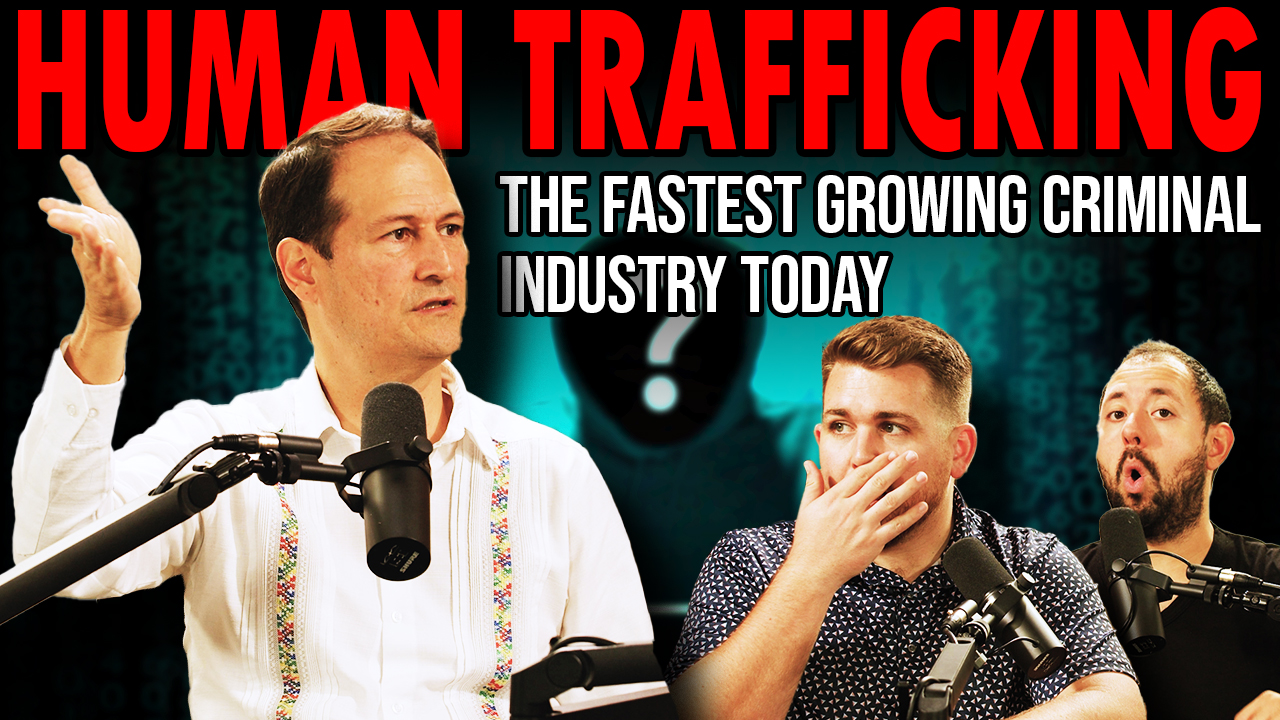
What’s really happening in the world of human trafficking, and how does Scientology play a role in defending human rights?
In this eye-opening episode, Raúl Arias, international human rights advocate, President of Youth for Human Rights Mexico and a Scientologist, reveals how education, not protest is ending abuse and saving lives.
He shares how he’s worked with police, governments, and schools to shut down trafficking networks, and how Youth for Human Rights programs helped him reach over a million students worldwide.
Raúl also breaks down what human rights actually mean, why most people can’t name them, and how understanding them could change our future.
Are you Curious about yourself?
👉 Take a personality test: https://ddnpod.com/test
Watch the full episode here:
Audio Version:
Apple Podcast: https://podcasts.apple.com/us/podcast/dont-do-nothing-podcast/id1846609884?i=1000734881060
Text Version
[00:00:00] Raúl: Human trafficking, modern day and slavery is the second largest criminal industry in the world, and it is the fastest growing one.
[00:00:05] Aaron: What, what
[00:00:06] Raúl: 90% of what we call, uh, prostitution is in fact human trafficking.
[00:00:10] Aaron: 90%
[00:00:11] Raúl: we are tolerating this. If there wasn’t customers, there wouldn’t be an That’s right. Industry.
[00:00:15] Raúl: So if anybody says, oh, I just watched the legit, uh, adult entertainment, there’s no such statistic of what percentage is legit and what percentage is, uh, human trafficking, like on the videos you might. Be witnessing a crime against humanity and you don’t know it.
[00:00:29] Brad: Oh my God, I never considered that.
[00:00:31] Raúl: 90% of the population of the world is unable to name not even three of the 30 universal human rights.
[00:00:36] Raúl: When does slave trade happen from Africa? Taking people in boats chain like animals and being sold probably was about 12, 13 million people that they took right in the
[00:00:45] Brad: whole time,
[00:00:46] Raúl: three centuries. Today the estimation is 48 million people.
[00:00:50] Aaron: Guys, today I have one of the most incredible human beings that have ever been on this podcast, and actually one of the most incredible heroes of humanity since the beginning of [00:01:00] time.
[00:01:00] Aaron: Guys, Raul Arias, who is the president of Youth for Human Rights in Latin America. He also is a massive, amazing businessman and TikTok sensation. Okay, over. A hundred million views on TikTok. Okay. Bringing happiness through
[00:01:16] Brad: basically 150. 150. We found it.
[00:01:18] Aaron: That’s great. One video of 46 million views. That’s with the bloop markers.
[00:01:22] Aaron: They’re amazing. My daughter has ’em. They are incredible. But this guy is a human rights activist for more than 20 years. Literally saving people from. Slavery. Literally. No, no exaggeration. So Raul Aria, welcome to the show, bro.
[00:01:36] Raúl: Thank you. Thank you very much for that introduction. I feel, wow,
[00:01:40] Brad: that was a hot introduction,
[00:01:41] Aaron: dude.
[00:01:41] Aaron: That was one of the best, because he’s, I mean, dude, look at this guy.
[00:01:44] Raúl: They’re
[00:01:44] Brad: not always that good dude. That was the,
[00:01:47] Aaron: I just wanna say. I met you, just so someone knows, like I met this man at an event where literally a lady who was in a, in a forced uh, environment, she was a, she was being human trafficked and the [00:02:00] story of how she got in there and she told the story, the thing.
[00:02:03] Aaron: And you were involved in getting her out.
[00:02:04] Brad: Yeah. Wow.
[00:02:05] Aaron: And, and. I will still touch that moment. ’cause I go, there’s good guys. There are good guys. We’re in a fight right now. We’re in a battle. And you don’t see it because most of this stuff is hidden. So today we wanna reveal the cover of how intertwined
[00:02:20] Brad: mm-hmm.
[00:02:21] Aaron: This, the, the, these industries are and how we can do something about it.
[00:02:25] Brad: This is the pulling the curtain back episode, we could call it.
[00:02:28] Aaron: That’s right.
[00:02:28] Brad: Yeah.
[00:02:30] Aaron: So tell me like, how bad is human trafficking? In the United States and Mexico, which are, I’m sure you know, but like, how bad is it?
[00:02:40] Raúl: It’s very bad in the world.
[00:02:41] Raúl: Uh, human trafficking is obviously a human right violation. I’m a human rights activist, so I promote human rights education, and there’s one human right that says that every human being is born with a right of not being a slave of anybody in any way, shape, or form. But human trafficking, modern day and slavery is the second largest [00:03:00] criminal industry in the world.
[00:03:01] Raúl: Only second to drugs.
[00:03:02] Brad: Mm-hmm. Wow.
[00:03:03] Raúl: That’s $245 billion estimation per year.
[00:03:06] Brad: The, the drug or the,
[00:03:07] Raúl: no, the human trafficking drugs. Two
[00:03:09] Brad: $45,000,000,245
[00:03:10] Raúl: billion estimated per year. And an estimated 70% of that comes from sexual exploitation. Mm-hmm. That’s the girl you were talking about. Sexual exploitation is Can
[00:03:20] Brad: I ask a question already?
[00:03:21] Brad: Yeah. Who? Who’s paying for this?
[00:03:23] Raúl: There you go. That’s the problem. Where is that
[00:03:24] Brad: money coming from?
[00:03:25] Raúl: The society, you know, we, the individual
[00:03:28] Brad: individual,
[00:03:29] Aaron: nobody listening to this podcast though.
[00:03:30] Raúl: Yeah. Uh,
[00:03:31] Aaron: but, but the, the people who are saying, Hey, don’t listen to this podcast. These guys are jokes. That guy.
[00:03:35] Raúl: Yeah, yeah, yeah.
[00:03:36] Aaron: That guy.
[00:03:36] Raúl: Yeah.
[00:03:36] Aaron: Okay. Sorry.
[00:03:37] Brad: Yeah. Yeah. Wow.
[00:03:38] Raúl: No, but you, you hit the,
[00:03:39] Brad: sorry, I just got it.
[00:03:40] Raúl: You hit the right spot. Yeah. Is, um, the society, we, as a society have learned to tolerate this. So we, we don’t, we’re not customers, we’re not traffickers, but we tolerate it in a way, you know, who pays for that? Customers who walk in the streets, wear ties, drive cars, eat in restaurants.
[00:03:59] Raúl: Yeah.
[00:03:59] Brad: Wow.
[00:03:59] Raúl: [00:04:00] That is the, I think that’s the biggest problem. Wow. And that’s why raising awareness. If not, if it’s not all the solution is the first step for the solution. Yeah.
[00:04:08] Brad: So you, sorry, you were going over numbers. I totally interrupted.
[00:04:11] Raúl: Yeah. So to $245 billion estimated, uh, 70% of that comes from sexual exploitation.
[00:04:17] Raúl: And it’s not only the second largest criminal industry in the world. Some, some people say third, some people say second, but it’s the fastest growing. What,
[00:04:26] Brad: what
[00:04:26] Raúl: fastest growing ones. So
[00:04:28] Brad: my initial reaction to that is, no way. Yeah, I know. I, I believe you. I know who you
[00:04:32] Raúl: are, but I know that was also my initial reaction.
[00:04:33] Brad: Fastest growing criminal enterprise
[00:04:37] Raúl: on the
[00:04:37] Brad: planet.
[00:04:37] Raúl: Human trafficking. Yeah.
[00:04:39] Brad: Okay. Is there a, a, sorry, continue.
[00:04:42] Raúl: So
[00:04:42] Brad: I’m already like,
[00:04:43] Raúl: no, I mean a, a ask the the question because that itself, that’s why I got involved in this because
[00:04:48] Brad: how can that be, how can that be?
[00:04:49] Raúl: Because, um, like, like I said, there’s a lack of responsibility I think.
[00:04:54] Raúl: In the world.
[00:04:55] Brad: Mm-hmm.
[00:04:55] Raúl: Um, you know, no, nobody talks about it. It happens somewhere [00:05:00] else, you know? But I have seen cases in, in my family, the, my sister-in-law, eh, on Facebook, she had this, uh, boyfriend, you know, she was 15 years old. Mm-hmm. And, and, uh, I was packing my back to go on tour to give seminars on human rights.
[00:05:16] Brad: Yeah. Yeah.
[00:05:17] Raúl: And my wife was telling me, uh, you know, my daughter has a boyfriend, my sister has a boyfriend now. I said, really? Oh, cool. I’m packing my bag. And yeah. But she doesn’t know him. She met him on Facebook. What? And let me see the photo. No, there’s no photo. What? No, but, but he sent her a necklace as a gift, uh, yesterday, and it’s a Swarovski necklace.
[00:05:40] Raúl: So, so she gave him her address. I said, don’t, don’t, you
[00:05:42] know what I do for,
[00:05:44] Raúl: so we, we actually, uh, call, uh, people that I know in, you know, in the authorities and the police, and, and they did an investigation and they catch the guy
[00:05:52] Aaron: what,
[00:05:53] Raúl: and it was a potential human trafficking, uh, scenario, you know. So, and,
[00:05:59] Aaron: and so [00:06:00] hold on.
[00:06:00] Aaron: In catching that guy in, catching that guy. So he had, it was only potential with your sister-in-law, but it had happened with others.
[00:06:07] Raúl: Yeah.
[00:06:08] Aaron: Right. So
[00:06:08] Raúl: this guy, so
[00:06:09] Aaron: what was, I mean,
[00:06:10] Raúl: well, they, they had an investigation. I don’t know if he remained there or not. Okay. But they catch him. They knew who he was. Yeah.
[00:06:15] Raúl: And he was presented for an investigation. I don’t know the results, but at least. My sister-in-law was, uh, safe.
[00:06:21] Aaron: How did that
[00:06:22] Raúl: Wow. You know, but it can happen anywhere. I, I know people, uh, here, unfortunately in Clearwater, Florida who have gone through, I know at least or two cases. That, uh, they have been victims of it.
[00:06:33] Raúl: You know?
[00:06:34] Aaron: Can I, I, there’s, and, and I’ll tell you, I have so many questions. One thing that, one thing that I’m very surprised about, Brad, that I wanna share, because this story to me, it shook me to my core. Okay?
[00:06:43] Brad: Yeah.
[00:06:44] Aaron: And this is a person, I don’t know them okay. But it’s like friend of a friend of a friend or whatever, some person who is, uh, here in this area, greater Tampa Bay.
[00:06:54] Aaron: A guy.
[00:06:55] Brad: Mm.
[00:06:55] Aaron: Okay. Meets a girl on some app. Not like a Tinder, but [00:07:00] something Like a Tinder. Yeah. Whatever. But like international, right? Mm-hmm. Meet some like Mexican hot lady or something and talk, and they were talking to this girl for, I don’t know, like a month.
[00:07:08] Brad: Mm-hmm.
[00:07:09] Aaron: And talking this blah. I’m gonna go see you.
[00:07:12] Aaron: And I believe it was Mexico. If it wasn’t, it was Columbia. And I’m sorry, I don’t, again, I don’t have all the details. I dunno. This person. But they came outta the airport to meet them. So they arranged everything, this FaceTime videos, everything, the whole deal. And this lady like, she’s like, I’m here. Okay.
[00:07:29] Aaron: She’s the guy. They grab him, put him into a van with the lady that he leaves. That guy gets taken and he gets raped for like three days straight. Takes all his stuff, raped, attacked. Then they make him log into all of his accounts. Transfer all the money out, do all the verification, like the whole, like every single penny to his name, every bank account, every statement, everything, transfer everything over to save his life.
[00:07:56] Aaron: And then they left him on the side of the road totally naked after getting, you [00:08:00] know, violated. Not just super after, not just sexually, but like everything, every single pen, everything the neighbor has, and just lit him on side of the road. And he lived, I mean, he went, he made it back to wherever society, and he did this.
[00:08:11] Aaron: But this is. Wow. A dude. It’s not just women, like of course, probably the vast, vast majority is women, but like, no,
[00:08:17] Brad: there’s also
[00:08:18] Aaron: men. But this is,
[00:08:19] Brad: when I heard that story, I’m like, is there a known, like split? Like is there a known men?
[00:08:23] Raúl: Uh, I, I’ve seen, uh, statistics of 90% women. Yeah.
[00:08:27] Brad: Yeah. That makes sense. That makes sense.
[00:08:28] Brad: Yeah.
[00:08:28] Raúl: Yeah,
[00:08:29] Brad: dude,
[00:08:29] Raúl: wow. I don’t know how they do this estimations, but whatever, you know? Yeah. It’s like big. Um, I was in, in Germany because, no, there’s an organization in France called Shields Foundation. I read a study they did Shields, shields, uh, S-S-C-H-I-L-L-E-S, shields. And, um, they did a study in 70 nations, seven, zero.
[00:08:51] Raúl: And they say that 90% of what we call, uh, prostitution is in fact human trafficking.
[00:08:56] Aaron: 90%.
[00:08:57] Raúl: 90%. And [00:09:00] um, when I went to Germany one time, uh, to this organization that rescues, uh, survivors yeah. Of, uh, human trafficking. This woman told me that in Germany where prostitution is legal since the year 2000, eh,
[00:09:16] Aaron: I didn’t know that.
[00:09:17] Raúl: Yeah.
[00:09:17] Aaron: Prostitution is legally
[00:09:19] Germany,
[00:09:19] Raúl: so yeah, Germany, Switzerland, Denmark. And in theory is to control it better. No. And there has less human trafficking. But what she told me, this woman, it was 2019 that in Germany, 60% of the prostitutes come from Eastern Europe. 35% come from Africa. Only 5% on German.
[00:09:40] Brad: Oh yeah.
[00:09:41] Raúl: That rider is an indicator of human trafficking. That rider, you know? And, um, so, uh, you know, the, the way they get these statistics, I don’t understand. They know how to do it. There’s systems
[00:09:53] Aaron: to, they maybe do sampling, you know, like Yeah. They, they, they get and they just survey
[00:09:56] Raúl: exactly.
[00:09:57] Aaron: Out of a hundred that we got.
[00:09:58] Aaron: How, how something
[00:09:58] Raúl: exactly. But [00:10:00] the point is that I’ve been doing this for 20 years, and everywhere I go, I, I visited more than 30 countries. Mm-hmm. You know, talking about it. And I hear stories, personal stories. I, I met mothers that lost their daughters. Yes. Never found them or found them dead. I, I met, uh, girls who survive, like the one.
[00:10:15] Raúl: Mm-hmm. You met Nelly. I, I met, uh, Carla, you know many girls who told me their stories. This, uh, girl, she was, uh, sexually exploited from age 12 to 16 years old. She said she did an average of 30 to 40 customers per day for four years. When she told me that
[00:10:33] Aaron: 12 years old, what kind of sick guy?
[00:10:35] Raúl: Yeah.
[00:10:36] Aaron: Do you understand?
[00:10:36] Aaron: Like,
[00:10:37] Raúl: yeah.
[00:10:37] Aaron: The problem is not just the, the traffickers, but
[00:10:40] Raúl: like mm-hmm.
[00:10:41] Aaron: Dude, who does that? Ruth.
[00:10:42] Raúl: There
[00:10:42] Aaron: you
[00:10:42] Raúl: go.
[00:10:42] Aaron: Wisconsin
[00:10:43] Raúl: again. W Yeah.
[00:10:44] Aaron: How,
[00:10:44] Raúl: again, you’re hitting the right spot. Yeah. Because, you know, when I started doing this, I, I thought, how can I help? Yeah. How can I help? I was not a father then. Today I have two daughters.
[00:10:55] Raúl: You can imagine. Yeah,
[00:10:56] same.
[00:10:57] Raúl: But, um, how, how can I make, [00:11:00] make a difference? You know? I cannot go to all the criminals and, and say, Hey, stop doing that. Yeah. Mm-hmm. I cannot go to the girls and save them all.
[00:11:07] Mm-hmm.
[00:11:08] Raúl: Yeah. But I can go to the society. Make them aware that we are tolerating this.
[00:11:12] Aaron: Mm-hmm.
[00:11:12] Brad: Yeah.
[00:11:13] Raúl: If there wasn’t customers, there wouldn’t be an industry.
[00:11:15] Raúl: That’s right.
[00:11:16] Brad: Yeah.
[00:11:16] Raúl: Hundred percent. You know, this is the, the truth. And, um, you know, for example, there’s this organization, uh, fight the New Drug. You can look at their website, fight
[00:11:24] Aaron: the
[00:11:24] Raúl: new Drug. The new drug.
[00:11:25] Aaron: And is that trafficking?
[00:11:26] Raúl: It’s about, uh, not only trafficking, it’s about the, I don’t wanna say the word, but the, the thing on the internet that some men watch.
[00:11:34] Aaron: Oh,
[00:11:34] Raúl: yeah, yeah, yeah. Adult entertainment. Adult, the hub. Yeah, yeah, yeah. The adults entertainment. Exactly. And, and there they say, there’s no such sta statistic of what percentage is legit and what percentage is, uh, human trafficking,
[00:11:46] Aaron: like on the videos,
[00:11:47] Raúl: uhhuh on the videos, right? Yeah. Why there’s not such statistic?
[00:11:50] Raúl: Because it’s impossible to tell the difference.
[00:11:52] Aaron: Yes.
[00:11:52] Raúl: So if anybody says, oh, I just watched the legit, uh, adult entertainment, uh, it’s impossible. You might be witnessing a [00:12:00] crime against humanity and, and you don’t know it, you know, it’s, uh, you don’t know. So. Yeah.
[00:12:05] Brad: Oh my God, I never considered that
[00:12:08] Aaron: exactly.
[00:12:09] Raúl: Because some people think, oh
[00:12:11] Brad: dude,
[00:12:11] Raúl: I’m, I’m, I’m just messing up my mind or whatever. I’ll, I’ll make it up later, or whatever.
[00:12:16] Brad: Right, right, right.
[00:12:16] Raúl: Yeah, no, you, you might be wi witnessing a crime against humanity. There’s, oh my God, there’s so many ex adult entertainment artists that come out and say that the abuse is in the industry.
[00:12:26] Brad: Yeah. You
[00:12:26] Raúl: know?
[00:12:27] Brad: So it makes total sense.
[00:12:28] Raúl: The, the main point here, you know what human rights all about, respect and dignity.
[00:12:32] Brad: Mm-hmm. Mm-hmm.
[00:12:33] Raúl: Respect. One definition that we can use is the golden rule that has been in mankind mm-hmm. In humanity forever. No. Don’t do to others what you want to mm-hmm. Be done to yourself.
[00:12:42] Raúl: Mm-hmm. That way, you know, is something is good or bad without going deep into philosophy or I think so. Yeah. Dignity comes from the Latin word ness, which means value.
[00:12:52] Aaron: Mm.
[00:12:52] Raúl: And is the value a, a, a human being has for the simple fact that it’s a human being?
[00:12:57] Aaron: Yes. Yeah.
[00:12:58] Raúl: Right. Yeah. So it’s [00:13:00] impossible to put a price on a human being.
[00:13:02] Brad: Yeah. Wow.
[00:13:02] Raúl: Anything that puts a price on a human being.
[00:13:04] Brad: Yeah. Yeah.
[00:13:05] Raúl: Call it any platform app where probably they make a lot of money. Yeah.
[00:13:08] Brad: Mm-hmm.
[00:13:09] Raúl: Even there, there’s things going on that are not okay. ’cause there’s not a price. For a human, you cannot buy a human being. Yeah, yeah. Right. In any way. Yeah. You know, so, uh, I always, when I give my seminars, put this example of a video that I saw on TikTok that this guy told to another guy, Hey, what will you do if, what would you say if I say, I’m gonna give you a million dollars?
[00:13:29] Raúl: And he said, oh, I’ll be happy. Okay. What if I told you that the only condition is that you don’t wake up tomorrow? Then I don’t want it. Mm-hmm. Oh, what if it was 5 million? No, 10 million. Okay. So you’re telling me that waking up tomorrow is more valuable than having $10 million in that? Yeah. Yeah. So that’s the dignity of the human being has no price.
[00:13:47] Brad: Mm-hmm. Wow.
[00:13:48] Raúl: You know, who, who is more, um, uh, who has more value here of the three of us? No one. Is is the same value. Of course your mom loves you more to you than you know.
[00:13:58] Brad: Well, since
[00:13:58] Raúl: you’re guess, I think
[00:13:59] Brad: to say, [00:14:00] I think they have to say you relevant,
[00:14:01] Raúl: but that’s, um, particular case. It’s
[00:14:03] Brad: our responsibility to say you.
[00:14:05] Raúl: But you know, when you understand that and we communicate now, why did I dedicate my life to teach human rights when I found Youth for human rights? You know, the purpose of Youth for Human Rights is to teach human rights. To youth?
[00:14:18] Brad: Yeah.
[00:14:18] Raúl: I say of all ages, right? 13 to 99 after 99. No, because it’s too, too much excitement.
[00:14:25] Raúl: It can be dangerous for the health, but to teach human rights, uh, specifically the United Nations Universal Declaration of Human Rights
[00:14:34] Aaron: mm-hmm.
[00:14:34] Raúl: Is the most accepted, uh, human rights document in the world.
[00:14:37] Aaron: Right.
[00:14:38] Raúl: And to inspire them to become advocates for tolerance and peace.
[00:14:41] Aaron: Mm-hmm. Mm-hmm.
[00:14:42] Raúl: So then you have people getting together.
[00:14:46] Raúl: Pushing an idea of freedom, of dignity. Yeah. And an idea cannot be stopped. Not a wall, not a bullet. Not a bomb. You’re right. Nothing can stop an idea.
[00:14:56] Brad: An idea can go through.
[00:14:57] Raúl: Exactly. Steal. Exactly.
[00:14:59] Aaron: And it’s [00:15:00] an, it’s a battle of ideas.
[00:15:01] Raúl: Yeah.
[00:15:01] Aaron: Because there’s this idea, you’re right,
[00:15:02] Brad: yeah, you’re
[00:15:03] Aaron: right. This harmless, whatever.
[00:15:05] Aaron: And you’re actually creating an industry that literally is creating slavery.
[00:15:08] Brad: Mm-hmm.
[00:15:09] Aaron: At levels. Probably right now higher than there ever has been in the history. Yeah. No.
[00:15:13] Brad: You know what I realized higher than
[00:15:14] Raúl: ever before.
[00:15:14] Brad: Yeah. What, what you, what I realized while you were talking is I asked earlier, like how, how can that be that it’s the fastest growing industry, but I it you made it make sense.
[00:15:22] Brad: The internet is the answer.
[00:15:23] Raúl: Yeah.
[00:15:24] Brad: The internet is literally that. The wow. It literally is a battle of ideas. If you look at the, it’s a battle of
[00:15:29] Aaron: ideas.
[00:15:30] Brad: The whole internet is just ideas. Like ideas. Fighting for the attention of the populace.
[00:15:36] Raúl: Exactly.
[00:15:36] Brad: That’s basically what the internet has become at this point.
[00:15:38] Brad: Exactly. And if you look at where the traffic is on the internet, we gotta redirect.
[00:15:43] Aaron: Yeah. Listen, if, if you ask, I’m sure if you ask chat, GPT or some other ai, like, Hey, is, are these websites like good or acceptable? And they’ll be like, yes, of course. Mm-hmm. There’s people and they make money and. Because these things, they just feed off whatever has the most articles.
[00:15:59] Aaron: Correct. Whatever. [00:16:00] And the money Correct. Isn’t exploiting. That’s where, that’s where money is. Yeah. And so the, the mass is gonna have an agreement unless we battle. Yeah. And we say, Hey, no one human life. Worth more than whatever you’re gonna make. Yeah, exactly. And you cannot, and you, and it’s these two ideas.
[00:16:17] Raúl: Exactly.
[00:16:17] Aaron: And you bring, bring awareness.
[00:16:19] Raúl: Yeah.
[00:16:19] Aaron: Yeah. Like the way of changing is to get people not so obsessed with that topic Yeah. That are gonna stop valuing lives.
[00:16:26] Raúl: Yeah. I think that’s why this organization fight a new drug. It’s called Fight a new drug. Mm-hmm. Because it’s a drug. You, you start going down, you, you, you try to get this.
[00:16:34] Raúl: Sensation of whatever it is. Yeah. And they have done research on the keywords that people look in that area.
[00:16:42] Brad: Yeah, yeah.
[00:16:44] Raúl: No, you, you wouldn’t imagine it. It’s just per pervert it sick. Yeah, sick. Trust me. It’s like, so if that creates a market, they need someone to fulfill that demand, you see? Mm-hmm. And that’s why human trafficking.
[00:16:57] Raúl: It’s, it’s so insane. It’s hard to
[00:16:58] Brad: get someone to willingly [00:17:00] do
[00:17:00] Raúl: exactly
[00:17:00] Brad: what people are
[00:17:01] Raúl: search for. Would, who would wanna do 40 customers a day? Got
[00:17:05] Brad: it.
[00:17:05] Raúl: So that’s why, you know, they need to fulfill that demand. So we need to reach the society because I believe most of the society is, is good people, but we need education.
[00:17:15] Raúl: When the, uh, universal Declaration was approved, it was 1948 and it was written inspired in the atrocities of World War ii. Mm-hmm. So it’s been more than 75 years.
[00:17:26] Brad: Wow.
[00:17:27] Raúl: And, uh, in World War I. More than 90 million people died, you know? And so the, the, it ended in 1945, the United Nations were formed a month after, and the purpose was to prevent humanity, to suffer the horrors of war.
[00:17:40] Aaron: Mm-hmm.
[00:17:41] Raúl: And then they realized that there wasn’t a universal document about human rights. Mm-hmm. There were some documents that would inspire humanity, like, uh, Cyrus, the great one, he conquered Babylon. He wrote, uh. A piece of human rights on a, a clay cylinder.
[00:17:55] Brad: Mm-hmm.
[00:17:55] Raúl: In this Cyrus cylinder, and it’s still in the museum in London.
[00:17:58] Raúl: You know, that’s [00:18:00] the first written, uh, record we have on human rights, uh, in, in, in Greece in, uh, England, the, the Carta Magna. Mm-hmm. There’s many document, the Declaration of Independence of the United States. It’s based on human rights, but there wasn’t a universal document. So there was a commission led by one woman, uh, American Eleanor Roosevelt.
[00:18:20] Raúl: 19 people from different countries. Seven of them wrote this document, and it was adopted in December 10th, 1948 in Paris.
[00:18:28] Mm-hmm.
[00:18:29] Raúl: And after the United Nations adopted it, every nation in the UN today is 193 nations. They said they should be taught in schools.
[00:18:37] Brad: Mm-hmm.
[00:18:37] Raúl: So that the future generations learn and don’t make the same mistakes.
[00:18:40] Raúl: Right. Yeah. You know, how many countries, to my knowledge, have put this in schools? Two zero. Oh my God. To my knowledge, hopefully someone will correct me. But I have done research for 20 years, so, but we are trying to in Mexico. Mm-hmm. You know, what has been, what happens when you fight in this way? I don’t wanna say [00:19:00] fight, but work hard mm-hmm.
[00:19:01] Raúl: To, to raise the awareness. Now in Mexico, we were part of a historic, um, uh, constitutional reform that included human rights education. Constitution. Mm. You know. Wow.
[00:19:12] Aaron: It’s in there.
[00:19:13] Raúl: Yeah. Yeah. It’s in there. It’s a law. It’s in the Constitution. Then
[00:19:15] Brad: what happened?
[00:19:15] Aaron: Did
[00:19:16] Raúl: it, well, what Now you can see. What does the
[00:19:18] Brad: Constitution say about it in terms of human rights education?
[00:19:20] Raúl: It, it says that the subject of education should cover human rights.
[00:19:24] Brad: Okay. Good.
[00:19:24] Raúl: Big win. No, I mean’s That’s great.
[00:19:26] Brad: Yeah. That’s
[00:19:26] Raúl: great. And then, eh, uh, now in the textbooks of the public education. There is a mentioning of the Universal Declaration of Human Rights. We’re trying to make it more deep.
[00:19:38] Brad: Yeah.
[00:19:38] Raúl: You know, like put in the They have that one sentence.
[00:19:41] Raúl: Yeah, exactly. We have these. No, and, and they talk about human rights in many ways, which is great. Yeah. And I’m sure many countries do it. Yeah. But this, uh, I show this because this is a simplified version of the universal equation. We put it in a simplified version in a language that anybody can read and understand.
[00:19:58] Raúl: Yep, yep. So I hope they can put this [00:20:00] there.
[00:20:00] Brad: Yes.
[00:20:00] Raúl: It’s very simple.
[00:20:01] Brad: Yeah.
[00:20:01] Raúl: Because it focus on the responsibility of each human being that, um, to recognize that I’m born. Just because the fact that I was born, I have rights,
[00:20:10] Aaron: yes.
[00:20:10] Raúl: But I also have responsibilities and, and one of my responsibilities to make sure that everybody enjoys these rights.
[00:20:17] Raúl: Not just me. Because if everybody don’t, don’t enjoy them, they will never be a reality for me. That’s it. That’s a reality. You know, other thing that happen in Mexico that I would like to think that we had some. Credit on it. Yeah. Is that a, you know, like eight years ago or 10 years ago, there was a change in the human trafficking law.
[00:20:35] Raúl: Mm-hmm. Who was not, uh, that was not really, uh, working very well and that started, um, a operation of rating. Places where they were doing human trafficking.
[00:20:46] Brad: Yeah.
[00:20:47] Raúl: And many of them were shut down. Mm-hmm. Many girls were rescue, you know, of course there’s many things involved in that. And I cannot say, Hey, no.
[00:20:54] Raúl: But you know, we’ve been pushing the same message for many years.
[00:20:58] Brad: Yeah.
[00:20:58] Raúl: And that happened. So [00:21:00] why not? Why not dreaming in a world where we can respect each other, when, when people say, no, I, I don’t wanna buy that because I don’t wanna be part of. Hurting the dignity of a human being.
[00:21:11] Brad: Yeah, yeah, yeah.
[00:21:12] Raúl: You know, so that’s my dream.
[00:21:13] Raúl: That’s why I, uh, work every day. Of course, my daughters are my main motivation.
[00:21:20] Aaron: Yeah.
[00:21:20] Raúl: I, I told my, my, my wife that, um. You know, we have two daughters and we love them.
[00:21:27] Aaron: How old?
[00:21:28] Raúl: Uh, 10 and seven.
[00:21:29] Aaron: Wow.
[00:21:29] Raúl: But I said, same
[00:21:30] as
[00:21:31] Aaron: my daughter, by my daughter’s
[00:21:32] Raúl: 10 and seven. The artist. Yeah. Yeah.
[00:21:33] Aaron: Actually it’s the same.
[00:21:35] Raúl: Wow.
[00:21:36] Raúl: But I, I told her that it’s like we adopted 2.5 billion children that Yeah. You know, we have two biological, 2.5 billion adopted. You know, if you look at it from that perspective, ’cause who is, who is fighting for them? Who is making sure they’re gonna have a right future? Not
[00:21:51] Brad: enough
[00:21:51] Raúl: people. Not enough people.
[00:21:52] Raúl: Not enough
[00:21:52] people.
[00:21:52] Brad: Yeah.
[00:21:53] Raúl: By teaching human rights, like planting soil, um, seeds in a fertile soil.
[00:21:58] Brad: Yeah.
[00:21:58] Raúl: That will give us those fruits of [00:22:00] people who are gonna become heroes tomorrow. Mm-hmm. Yeah. There’s the next, uh, superhero that’s probably gonna change the situation, you know?
[00:22:06] Brad: Wow.
[00:22:07] Raúl: Yeah. Yeah.
[00:22:07] Brad: It’s amazing.
[00:22:08] Brad: So how, how did you become involved in this sector of the world in the first place? Well, how did you become interested in this?
[00:22:15] Raúl: I found Youth for Human Rights in my church ’cause it’s sponsored by the Church of Scientology. And, uh, they receive an invitation to attend a, a human trafficking conference.
[00:22:25] Aaron: Yeah.
[00:22:26] Raúl: They said, Raul, do you wanna go? ’cause you’re a volunteer? I said, yeah, yeah, I’ll go, I’ll do some networking. You know, and I didn’t know much about human trafficking at the time. It was 2009.
[00:22:34] Aaron: 2009.
[00:22:35] Raúl: Yeah. And I, um, attended the place, it was the National Auditorium of Mexico. There were about 7,000 people there, and most of them were parents carrying photos of missing children.
[00:22:46] Raúl: That was a scene that I saw. Yeah. Oh my
[00:22:48] God.
[00:22:49] Raúl: There was this lady, uh, sitting on the sidewalk outside the venue with a picture of a 3-year-old girl. Holding the picture, you know, she looked tired and the picture had a date [00:23:00] when the girl went missing. It’s in 1994, so it was already 15 years. No. And I looked at this woman and I thought, you know, w would she ever find her?
[00:23:09] Raúl: Is she still alive? Uh, if she finds her, would she ever recognize her? I was just going crazy, you know? And then I enter the, the conference and I receive all this data that I’m telling you, you know, statistics, figures, who could mean nothing or could mean that each number is alive. One life that was most likely deprived of every human.
[00:23:28] Raúl: Right?
[00:23:28] Brad: Yeah.
[00:23:29] Raúl: You know?
[00:23:29] Brad: Wow.
[00:23:30] Raúl: Eh, by the way, I told you, well, can I ask
[00:23:32] Brad: you a
[00:23:32] Raúl: question, Uhhuh,
[00:23:33] Brad: how you’re, you’re a very, um, you, you’re a very positive guy. You deal with you, you’re, you’re just del you just delve and just dive in and just confront and are like, head on with such a, I feel, I literally feel like me and Aaron as you’re saying this stuff, we’re like, like I, I’m, I’m having trouble even like confronting that this is a real thing.
[00:23:55] Brad: Like I totally, like, you’re bringing my website. I
[00:23:58] Raúl: understand
[00:23:58] Brad: completely. How, how do you, [00:24:00] how do you stay so positive? Dealing with this stuff. I’m like, that’s a
[00:24:05] Raúl: very good question
[00:24:06] Brad: for what you’re doing, man.
[00:24:08] Raúl: That’s a very good question.
[00:24:09] How
[00:24:09] Brad: do you do that?
[00:24:09] Raúl: Thank you.
[00:24:10] Brad: Yeah,
[00:24:10] Raúl: I have total. Certainty on the power of education, because I understand that one, one thing that I learned in Scientology is that when you raise the awareness on something, knowledge by natural law, you raise the responsibility level.
[00:24:25] Raúl: And, and I observed the world, you know, we did a survey, uh, youth for human Rights internationally, and uh, our group did the part of Mexico, uh, 90% of the population of the world.
[00:24:37] Brad: Yeah.
[00:24:37] Raúl: It’s unable to name not even three of the 30 universal human rights.
[00:24:41] Brad: Mm.
[00:24:41] Raúl: So the level of awareness on human rights is literally less than 10%.
[00:24:45] Brad: Wow. Mm-hmm.
[00:24:46] Raúl: So the level of responsibility, I believe, has to be at the same level
[00:24:49] Brad: and those universal
[00:24:50] Aaron: human rights. Hold on. Brad, how many can you name?
[00:24:54] Brad: I can name
[00:24:56] Aaron: the right to privacy. Good. [00:25:00]
[00:25:00] Brad: Probably That’s it.
[00:25:01] Aaron: No, come on
[00:25:02] Brad: dude. I’m, it’s, it’s,
[00:25:03] Aaron: come on. Come on. It’s a fuck you’ve never seen. I mean,
[00:25:04] Brad: I could. No.
[00:25:05] Brad: Have you never seen? I could probably guess. I could probably guess. Pretty accurate. Guess. Can guess A few. Okay. So right to right to privacy. I know. ’cause I’ve, I’ve done some, some training on that.
[00:25:12] Aaron: Okay.
[00:25:12] Brad: Uh, so it would also have to be, um, I mean I saw one about, about. Uh, family, but I don’t, I don’t know what it’s, yeah.
[00:25:23] Brad: Yeah. It would, it would’ve to be speech. Uh, yes. Free freedom of movement.
[00:25:27] Aaron: Yes.
[00:25:27] Brad: Uh, there’d have to be like, some sort of like a freedom to like say no to unwanted, uh, like you can’t be physically forced to do something you don’t want to do.
[00:25:38] Aaron: No slavery.
[00:25:38] Brad: No slate. Yeah. There you go. There you go.
[00:25:40] Aaron: Boom. We got four, bro.
[00:25:40] Brad: Not off
[00:25:41] Aaron: five. That’s amazing, bro. You passed? Yeah, you passed.
[00:25:45] Raúl: When we did the survey in Mexico, 92% done.
[00:25:49] Aaron: Youse mee. Okay, you. That’s me.
[00:25:51] Brad: Okay. You
[00:25:51] Aaron: okay? The right to play this is my favorite one. The favorite one right to play because check this out, dude. Life. That’s beautiful. What is life? Life? Yeah. Without playing.
[00:25:58] Aaron: What do you, what do you, what are you, [00:26:00] you’re a slave. You gotta be able to play and have fun. It’s the right to free, free time.
[00:26:03] Brad: Relax.
[00:26:03] Aaron: Yes, dude. Right To play right to life. You have the right to live, uh, the right to, um, move, like you said.
[00:26:10] Brad: Yeah. Yeah.
[00:26:10] Aaron: The right to live without, like coercion, right? Mm-hmm.
[00:26:13] Aaron: Either slavery or some sort of coercion like that. Uh, the right to food?
[00:26:17] Brad: Yeah. Oh yeah.
[00:26:18] Aaron: Right to shelter.
[00:26:18] Brad: Mm-hmm. Well, it’s the same
[00:26:20] Aaron: Right. Off food and shelter. The same one? Mm-hmm. Okay. Well, I got, I got both
[00:26:23] Brad: 0.5.
[00:26:23] Aaron: Um, right. To I said no torture. Yeah. You’re not no torture.
[00:26:27] Brad: I just saw this. There you go.
[00:26:28] Aaron: Um, right.
[00:26:29] Aaron: To, uh, move to, to another country, not just move like physically, but like to go to another country if you need to, like, to not be stuck in a country.
[00:26:36] Brad: Mm.
[00:26:37] Aaron: Um,
[00:26:38] Raúl: oh, that’s
[00:26:38] Brad: violated all the time.
[00:26:39] Aaron: Yeah. Right. To,
[00:26:41] Raúl: that’s violated constantly.
[00:26:42] Aaron: Yeah. Yeah. Absolutely. Yeah. I mean, obviously not like a specific one. Like if you can’t come to the United States, that’s one thing, but like you can’t go anywhere.
[00:26:47] Aaron: Like if you’re stuck, you’re forced to stay in a
[00:26:48] Raúl: place. The right is you have the right to leave your country whenever you want. Yes,
[00:26:51] Aaron: exactly. Leave
[00:26:52] Raúl: to enter another people’s house. You have to get the permission from them. Yeah,
[00:26:56] Brad: yeah, you can. Yeah. But, but be able, but aren’t there countries [00:27:00] that, that you have the right, I’m thinking of like countries that you cannot leave right now.
[00:27:03] Brad: Like my, that’s a violation. That’s a violation from my understanding is kind of tough.
[00:27:08] Aaron: It is a violation. No, that’s a violation. Right. So, okay. Right to, oh, I thought of one and then I lost it, bro.
[00:27:13] Brad: Sorry.
[00:27:14] Aaron: That’s okay. The right to Oh, work. The right to work. You able to have a job, right? Is that one, that’s good.
[00:27:19] Aaron: One or no.
[00:27:20] Raúl: The right to work. Yeah.
[00:27:20] Aaron: Yeah. Yeah. 23.
[00:27:22] Raúl: Great.
[00:27:23] Aaron: Uh, right workers, right through expression, right. Speech, talking about that.
[00:27:26] Raúl: Wow.
[00:27:27] Aaron: Um, to Right. Ah. To, uh, you’re born free. Free and equal. No. Yeah. Is that right? Yeah. We’re all born free and equal. Um, the right to know your respons, to right to know your rights.
[00:27:41] Aaron: Right. Yeah. The right to know your rights.
[00:27:43] Raúl: Well, that’s responsibility.
[00:27:44] Aaron: Yeah.
[00:27:44] Raúl: Yeah. There is the right to take the re That’s how we translated it. No, but okay. It is the responsibilities. We have responsibility. Yeah.
[00:27:50] Aaron: Okay. Uh, I’m gonna, I’m gonna, I’m gonna, I’m gonna hang
[00:27:53] Raúl: right. You did great. I’m gonna, you did.
[00:27:55] Raúl: I’m see
[00:27:56] Aaron: a documentary at least three times.
[00:27:57] Raúl: I think you did more than 10. I’m just gonna keep, when we did the [00:28:00] survey in Mexico to everybody. 900 people. Yeah. About 900 people. 92% weren’t able to name three, uh, less than 7% weren’t able to name five.
[00:28:09] Aaron: Mm-hmm.
[00:28:10] Raúl: Wow. Not a single individual. Mm-hmm. Of 900, including lawyers was able to name 10.
[00:28:14] Brad: So you were Wow.
[00:28:15] Raúl: Above. Wow.
[00:28:16] Aaron: Because I’ve seen, I’ve seen this one. The thing is, I, I, I studied it.
[00:28:19] Raúl: Yeah. Yeah.
[00:28:20] Aaron: I’m sad. I, I could probably do more if you like, sat me room for a long time, but it’s fine.
[00:28:23] Raúl: Me too. I didn’t know. Before this. Yeah. So in, in that event, when I heard these stories, and I, that’s where I met that girl that talk about her experience being trafficked from 12 to 16 years old.
[00:28:34] Raúl: I said, wow, I, I need to do something. I need to know. That I’m doing something. Mm-hmm. I cannot just exist and know that the world is that crazy.
[00:28:43] Brad: Mm-hmm.
[00:28:44] Raúl: And so I, I tried to understand what’s the point of this program? And, and that’s, that was my realization that when we are raising awareness, we, we are raising the responsibility level of the society and then that society wouldn’t tolerate it.
[00:28:57] Aaron: Yeah,
[00:28:57] Raúl: the power of, that’s why Nelson Mandela [00:29:00] said that the most powerful weapon you can use to change the world is education.
[00:29:03] Aaron: Yes.
[00:29:04] Raúl: Is education. You know, I, I, I think we, we cannot underestimate its power. So that’s why I stay positive.
[00:29:11] Aaron: Yeah. Mm-hmm.
[00:29:11] Raúl: I, it’s beautiful and I’ve seen it. I’ve, I’ve seen stories of, there’s this guy in Mexico, in the government in one state, uh, called, and he took the, the campaign.
[00:29:23] Raúl: He was doing it, you know, went to every city in the state teaching, and he told me that there was this young guy that had, uh, left his house run away and start selling drugs, you know, and then he came to the seminar that he gave, and he, he had this realization that he had rights and, and he had the responsibility to make this a reality for everybody.
[00:29:42] Raúl: So somehow he stopped selling drugs. He went back home, he went back to school. He’s now going to high school. Uh, and then he’s a volunteer of, uh, youth for human Rights. Wow. He wrote me this letter, you know, the, the guy said, wow.
[00:29:58] Brad: Wow.
[00:29:58] Raúl: That, that was a, a, a [00:30:00] seminar that I didn’t give. Yeah. It was someone else who I teach how to give them.
[00:30:03] Brad: Yeah.
[00:30:03] Raúl: And then he got this,
[00:30:04] Brad: what an amazing product.
[00:30:05] Raúl: So how can I not believe in magic? And Yeah. And Superman. That is magic.
[00:30:09] Brad: You know, like, yeah.
[00:30:10] Raúl: I think the world can change. We have to believe it can change. Yes. Otherwise,
[00:30:15] Aaron: you’re right. What we want.
[00:30:16] Raúl: You’re right
[00:30:17] Aaron: that that brings me to a question, right? Wow.
[00:30:19] Aaron: What do you think is more important, and I think I know the answer to this, but what do you think is more important? Catching and arresting the bad guys that are the worst violation, you know, for human rights or teaching the good people what to do and how to do it. To make a different future. What do, what do you think is like more important?
[00:30:41] Raúl: Great question. I think both are the same as important. Mm-hmm. But catching the, uh, criminals are, uh, you know, that that’s the authorities. I can’t do much about that. Oh, right. I’m a simple person, you know, A simple citizen, eh. But I think that’s very important.
[00:30:58] Brad: Mm-hmm.
[00:30:58] Raúl: And the more aware [00:31:00] we are as a society, more pressure we put on them to do it.
[00:31:02] Raúl: Yeah. Mm-hmm. Right. So I think that’s very important. That’s right. I cannot say, oh, that’s not, no, it is super important. Mm-hmm.
[00:31:07] Brad: Yeah. Because if people are watching and recognize Exactly. These, these are also indicators.
[00:31:11] Raúl: Yeah.
[00:31:11] Brad: If you see one of these being violated
[00:31:13] Raúl: Yeah.
[00:31:14] Brad: There’s a decent chance there’s more going on there.
[00:31:17] Raúl: Exactly.
[00:31:17] Brad: Yeah.
[00:31:18] Aaron: That’s
[00:31:18] Raúl: natural. So with awareness, we put pressure on them, so. Me personally, what’s more important? Teaching? Yes. Because that’s what I can do. Yes, yes, yes. And, and, and that’s why I have decided to dedicate my life
[00:31:27] Brad: to, and one feeds the other two.
[00:31:29] Raúl: Exactly.
[00:31:30] Brad: Because if a citizen goes, goes and sees, like, for example, uh, like freedom of expression, right?
[00:31:37] Brad: They, if they, if they’re noticing, like let’s say there’s somebody being mo like moved, you know, obviously some parents do this, but there’s, they notice somebody being moved along in their neighborhood and it’s like they try to say something like. Shut. You know, shut up or whatever. Like, right. Like their freedom expression is being cut.
[00:31:52] Brad: That’s an indicator of like, oh, what’s going on over there? At least they’ll look. Yeah. Yeah. At least if they know that that’s a human right. They’ll at least look.
[00:31:58] Raúl: Yeah. Yeah.
[00:31:58] Brad: Right. And [00:32:00] people looking is, in my experience, what leads to things being uncovered.
[00:32:04] Raúl: Yeah.
[00:32:04] Brad: If no one’s, if no one’s willing to look, ’cause they don’t see it as, as an out point.
[00:32:08] Brad: ’cause they don’t know that people have basic human rights.
[00:32:10] Raúl: Yeah.
[00:32:11] Brad: You’re never gonna catch anybody doing anything wrong.
[00:32:13] Raúl: Exactly.
[00:32:14] Brad: Yeah.
[00:32:14] Raúl: Exactly. Yeah. And you know, like, like I said, when I work and I see results, that’s what keeps me going. In Mexico, uh, since 2022, we’ve been working with a federal agency of, of the government that is, um, it’s called the system for the development of the families.
[00:32:31] Raúl: Mm-hmm. And they have branches in every city. It’s a great. System a great agency. You know, they see for the, yeah. I love the name wellbeing for of the families. Yeah, me too. And, and the people that turned out to be really sensible to these things. And, and even though that’s their job and they get paid to do it.
[00:32:46] Brad: Yeah.
[00:32:47] Raúl: Uh, I tell them, they ask me, how, how much do you get paid? Well, I have to pay to do this, you know, I. I have to sell many lupus so that I can be able to do this. And they don’t believe it at first, but then when they see the [00:33:00] consistency and, but they became part of it from their heart. Now the, the term ended, we continue the alliance because it’s with, we have a, a partnership.
[00:33:10] Raúl: Yeah. New sign. And they took us to 17 states of Mexico. In each state, they would bring officials of almost every city of that state. Mm-hmm. They would choose, you know, who are really involved with children and families and stuff. And then we’ll give them a, a seminar. Six hours, no, like three hours on how to use these materials.
[00:33:28] Raúl: And then we will give them an online course all sponsored by the Youth for Human Rights. All the materials were free.
[00:33:34] Aaron: Mm-hmm.
[00:33:34] Raúl: I mean, you know, at the end of the day, sponsored
[00:33:36] Aaron: And who’s sponsored at the end of the day, who sponsors Youth through Human
[00:33:38] Raúl: rights, the Church of Scientology. Yeah.
[00:33:39] Aaron: This is, that’s why all this material
[00:33:41] Raúl: Yeah, exactly.
[00:33:41] Aaron: Is sponsored by the Church of Scientology. Yeah. And by us. By you. And me And you as well. Exactly. All the three of us. Me too. And all of my friends, like. We literally put our money. And work like you’re saying. Oh, how much you get paid? No. We put money to make this happen. Yeah. This is, and we don’t care what religion you are, who you believe in this is,
[00:33:57] Raúl: it has
[00:33:58] Aaron: no non denominate.
[00:33:58] Aaron: We just want you to [00:34:00] have your rights.
[00:34:00] Raúl: Mm-hmm.
[00:34:01] Aaron: That’s it.
[00:34:01] Raúl: Mm-hmm. That’s it. No tism. Yeah. You, you cannot find the name of Scientology here anywhere. Nope. Yeah. And uh, like you said, we accept all, really, all political parties, like we’re non-political. Mm-hmm. All religious are welcome everybody. In controversial topics.
[00:34:16] Aaron: Yeah.
[00:34:16] Raúl: We don’t get involved. Our position is we don’t have position because we want both parties to learn their rights. Both
[00:34:21] Aaron: parties should have rights.
[00:34:21] Raúl: Exactly, exactly. That is it. Exactly. And so we did this story in 17 states. We trained more than 6,000 government officials. Wow. You know, and they send us their success stories.
[00:34:32] Raúl: Hey, come on. This is what keeps me positive. You know? Yeah, yeah, yeah, yeah. I, I end my seminars giving the inspirational quote to. To make them, you know, become advocates. Right? And I said, listen, maybe you’re thinking right now that you cannot change the world. You’re just a government worker or a family mother or student or whatever.
[00:34:50] Raúl: Okay, let, let’s acknowledge that maybe it’s possible that one person cannot change the world.
[00:34:54] Brad: Yeah.
[00:34:54] Raúl: But let’s also acknowledge that it’s also true that everything that ever changed the world always [00:35:00] started with one person.
[00:35:00] Brad: That’s right.
[00:35:01] Raúl: And let that person be you. You know, and one day I received this letter from one of the officials said, you said that, uh, one person cannot change the world, but today you, you change 600 people that were listening to you.
[00:35:11] Raúl: Wow.
[00:35:13] Brad: Oh my God.
[00:35:14] Raúl: That’s what keeps me going.
[00:35:15] Brad: Yeah.
[00:35:15] Raúl: You know, uh, life is beautiful. The, the human being is beautiful. I mean, we see our daughters, the artistic things. The, the, the people who do sports, the, you know, not only arts and sports, like, like when you create a business and the life, the, that, the creation that a human being is capable of.
[00:35:33] Raúl: Mm-hmm. Let’s just have a, a world, you know, what’s human right? Number 28. The right for a fair and free world. Mm-hmm. That doesn’t mean, uh, a pink, uh, color
[00:35:43] Brad: planet. Lemme read, lemme read A Fair and Free World. This is number 28. There must be proper order so we can all enjoy rights and freedoms in our own country and all over the world.
[00:35:52] Raúl: There you go.
[00:35:52] Brad: Yeah.
[00:35:53] Raúl: That’s it. And then if you work hard for your goals, then you accomplish ’em. If you don’t, you don’t, you know? Sure. Mm-hmm. It is not that everybody loves each other. Everything [00:36:00] is free. Everybody kisses each. No, no. It’s, there’re gonna be differences. There’re gonna be, you know, problems.
[00:36:05] Raúl: Mm-hmm. But at least there’s gonna be dignity. We’re not gonna kill each other because we, we don’t agree.
[00:36:09] Brad: Mm-hmm. Yeah.
[00:36:10] Raúl: We can get to that point, you know?
[00:36:11] Brad: Yeah, totally. Yeah. Wow.
[00:36:13] Aaron: That’s amazing. Now, I, I wanna also, uh, talk about. The b bloop pea briefly. Right, because what I wanna say, you, you, you mentioned to me the other day when we met that like, sometimes you’re doing this human rights convention and like kids will come up to you, Hey, you’re the guy from the bloop pea.
[00:36:27] Aaron: Yeah. I was like, what? You’ve been giving lectures on human rights for 20 years and they’re recognize you from a, a thing on TikTok.
[00:36:33] Yeah.
[00:36:33] Aaron: Right? Yeah. It’s unbelievable. So tell me how, how did you get into
[00:36:37] Yeah.
[00:36:38] Aaron: That business? How did you, how did you do this?
[00:36:40] Raúl: You know, um, I, I saw some friends selling them and, and me and my brothers decided to bring this to, because we saw them here.
[00:36:47] Raúl: In the United States. So we brought ’em to, to Mexico and we did this demonstration. That is is very cool. You know, that’s why I got that many views. ’cause it’s cool, you know, and, and I honestly like to draw. When I was a kid, I always liked [00:37:00] drawing. You know, I’m not very good at it, but I like it, you know, so you can see that I can to play that.
[00:37:04] Raúl: I enjoy it to play. Yeah. Right. To play. And, you know, we have this business selling, uh, online and malls in a kiosk doing demonstrations at home shows, fairs, you know, and one day we were doing very good because, uh. I always travel with human rights, and I say like, I have many wives, you know, human rights is my wife and my business is my wife, and they’re very jealous, the two of them.
[00:37:26] Raúl: And my wife is at least jealous. She’s the one giving me away, you know? And so, uh, the business was not doing very good, and my wife told me, you know, uh. We had a, a home show. And I said, look, I’m going to the home show. You want me to do a video for TikTok? Like I can do a little dance or something. And she said, no, no, do the demonstration.
[00:37:45] Raúl: I said, no, we’ve done the demonstration many times. It’s, it’s not gonna work. Let me do a dance or something for TikTok. ’cause that’s what people like. Mm-hmm. And she said, no, do the demonstration. I did a demonstration, it was a Friday and I gave it to her. She went to visit her mom and she put it up at 7:00 [00:38:00] PM you know.
[00:38:00] Raúl: We went to sleep. And Saturday at five in the morning, my phone was, and I saw the sales and too many sales. And I was like, wow, what’s going on? And by that time it was 2 million views. No.
[00:38:11] Brad: Wow.
[00:38:12] Raúl: One night it ended up with 47 million views. Oh goodness. And that changed our life.
[00:38:17] Brad: Yeah.
[00:38:18] Raúl: And yeah, I go to the school of my kids and, Hey, Mr.
[00:38:20] Raúl: Bloo, hey. They take photos with me and I’ve been giving human rights seminars. Excuse me. Are you the guy of the blue piece? Can I take a photo with you? Yeah. And, and that opened the, the door for a new, brighter future, you know? And that, that’s why I believe in magic also. You know, that’s why I stay positive.
[00:38:37] Raúl: ’cause I think if you,
[00:38:38] Aaron: one moment.
[00:38:39] Raúl: Yeah,
[00:38:40] Aaron: one moment. That’s the thing. Like
[00:38:41] Raúl: one moment
[00:38:42] Aaron: and one woman. Wow. And one woman. One woman. That’s right. Your wife’s wife. Wife. Your I,
[00:38:47] Raúl: I love you.
[00:38:48] Aaron: Listen. Yes. These women,
[00:38:49] Raúl: she lived
[00:38:50] Aaron: in me. They do one like, do this thing. And you’re like, what? What? Okay. And then the magic happens.
[00:38:54] Raúl: Yeah. Yeah. She’s very good at that. Well done for finding wife. Thank you. Thank you. Yeah. Yeah, yeah. It was, it was [00:39:00] great. And she helped me also with human rights and, uh, with the business. So, uh, you know, I, I am pleased to say that I wake up every morning. Feeling like I have $10 million in the bank, you know, like that, even though I don’t, but yeah.
[00:39:13] Raúl: Feeling like, wow, I, you know. Yeah. Thank you. Exactly. But I, I feel excited about every day because everything I, I do, I try to do it in the best intention to help other people, including Blue piece, you know? Mm-hmm.
[00:39:24] Yeah.
[00:39:25] Raúl: Like sometimes, uh, um, you know, uh, a woman wrote us an email, said, look, uh, I ordered the blue piece for my daughter’s, uh, birthday.
[00:39:34] Raúl: And Mercado liver in Mexico didn’t, uh, deliver. And they gave me the money back, but I didn’t want the money back. I wanted this, I said, you know, tell your daughter that Mr. Blo is gonna send her, uh, some blois for her birthday and I send them for free. You know, and those moments for me are priceless. Like the fact that they can feel this, uh, you know, excitement.
[00:39:54] Raúl: So, um, I really enjoy what I do.
[00:39:56] Brad: Your name’s not actually Mr. Bloy?
[00:39:58] Raúl: No, no. Like your male name is [00:40:00] not Bloo. No. That’s just her brand. Who,
[00:40:05] Aaron: how’d you make up that name? Because you made that
[00:40:05] Raúl: name, you know? Yeah, I made it up. Um, eh, when I used to draw, when I was a kid in elementary school, I liked to draw cartoons that were rounded, like chubby.
[00:40:15] Raúl: So for me, in my mind, that was like bloop, bloop, bloop. And from there, bloop piece.
[00:40:20] Ah, the bloop piece. Yeah. That is so funny. Amazing.
[00:40:24] Aaron: That’s brilliant. That’s amazing.
[00:40:26] Raúl: Oh my God.
[00:40:27] Aaron: Okay, so I wanna segue into, uh, you know, this podcast, a lot of what we talk about is Scientology. Mm-hmm. Scientology ideas, Scientology concepts.
[00:40:34] Aaron: And I’m curious, how did you. Find the church. Like how did you get into Scientology?
[00:40:41] Raúl: My parents, my dad bought dietetics when I was five years old, 1978.
[00:40:46] Aaron: Wow.
[00:40:47] Raúl: I made in Mexico in 1973 and, uh,
[00:40:50] Brad: said I made
[00:40:51] Raúl: in Mexico. Well, that’s what I think. And, uh, eh, I grew up in Scientology, you know. Mm-hmm. That’s, uh, all I knew.
[00:40:59] Raúl: And, and when [00:41:00] I, you know, it, it was good ’cause, uh, I, they taught me how to study.
[00:41:04] Aaron: Mm-hmm.
[00:41:05] Raúl: You know, that helped me a lot in my life. Pretty,
[00:41:07] Aaron: pretty important
[00:41:07] Raúl: to do a clear words in a dictionary that opened the world for me.
[00:41:12] Aaron: Mm-hmm.
[00:41:12] Raúl: So, but until that event in 2009 that I saw that thing that I never saw. ’cause I, in a way, I grew, grew up in a bubble.
[00:41:20] Raúl: Mm-hmm. You know, I grew up in a, in a church. Every week. And, you know, but when I saw that happening, I realized that I didn’t have to find Scientology. I didn’t have to buy a book or watch a commercial on the Super Bowl. My parents gave it to me on a silver tray.
[00:41:33] Brad: Mm.
[00:41:34] Raúl: I took it.
[00:41:34] Brad: Yeah.
[00:41:35] Raúl: You know, they never forced it on me.
[00:41:36] Raúl: I took it, but still I, I said, wow, I need to know. There’s a good reason why I got so lucky. You know, there’s gotta be a good reason why I got so lucky. They gave it to me on a silver tray. So I felt this need to be in exchange with life, you know?
[00:41:51] Brad: Wow.
[00:41:51] Raúl: At that moment, but yeah. Oh
[00:41:53] Brad: my God, that’s amazing.
[00:41:54] Brad: That’s amazing. Wow.
[00:41:54] Raúl: Thank you.
[00:41:55] Brad: Geez.
[00:41:56] Aaron: So born and raised basically.
[00:41:58] Raúl: Yeah. Yeah, yeah. Born and raised. [00:42:00] Born and raised. I met my wife in the church of Scientology.
[00:42:03] Aaron: Yeah,
[00:42:03] Raúl: she was, um, uh, given there’s a therapy, uh, the church that is called auditing.
[00:42:08] Aaron: Yeah. Uh,
[00:42:08] Raúl: it is not like a therapy, but it is like a, a spiritual counsel counseling.
[00:42:12] Aaron: Mm-hmm.
[00:42:12] Raúl: And, uh, she was given to my dad. So we met and we fell in love. We got married. At the church.
[00:42:18] Brad: Yeah.
[00:42:19] Raúl: Nice. That’s where we, uh, also did a welcoming ceremony. Christening of our daughter
[00:42:25] Brad: Yes.
[00:42:25] Raúl: Of the two daughters, you know? Yeah. So that’s part of our lives, that’s part of our life. Yeah. I, what I like about Scientology very much is that it teaches me, or it motivates me to take responsibility.
[00:42:38] Brad: Mm.
[00:42:39] Raúl: For the civilization.
[00:42:41] Brad: Yeah.
[00:42:41] Raúl: Makes me feel I am part of that civilization, so I, I have a responsibility and I haven’t seen that in any other place, even though I respect all, all beliefs and everything and, and we get along with, you know, we have friends from all religions.
[00:42:54] Brad: Yeah.
[00:42:55] Raúl: But I like that part of the responsibility.
[00:42:57] Raúl: Mm-hmm. I, I think it’s very important.
[00:42:59] Brad: Yeah. Totally
[00:42:59] Aaron: [00:43:00] amazing. Brilliant.
[00:43:00] Brad: Yeah.
[00:43:01] Aaron: And in your own words, what is Scientology?
[00:43:05] Raúl: Ah, that’s very good. I think it’s, um,
[00:43:07] Brad: question.
[00:43:08] Raúl: It’s an applied philosophy. It’s a, a study of life, taking life from the spiritual point. It recognizes the spiritual existence, meaning there’s a creator, there’s a higher force or something, and it’s applying the scientific methods of study to that study.
[00:43:29] Brad: So some, somebody’s watching this and they’re, you know, they’re like one, one thing. I mean, you’re, God, you’re so, you’re so positive. I’m gonna, I’m gonna maybe, maybe speak for more like humanoids here, right? If, if they see this and they’re like, either they’re pissed off or they’re inspired, or whatever the emotion is, but they want to actually do something.
[00:43:50] Brad: What, like if somebody sees this and they’re like, wow, I, I need to help with that. What do they do?
[00:43:56] Raúl: Well, anybody can order this. This is what we call, uh, in info kit No. Or a [00:44:00] portfolio.
[00:44:00] Brad: Yeah. Mm-hmm.
[00:44:01] Raúl: And they, um, use for human rights.org. It’s available in 17 languages.
[00:44:07] Brad: Nice. Mm-hmm.
[00:44:07] Raúl: So they can just order it and they get the booklet, they get um, uh, you know, this is an old version ’cause I have it in my luggage.
[00:44:13] Raúl: But now we have a cure code to download all the videos ’cause no one has activity anymore. This is for a museum. Okay. But there’s a cure code here. Cool. Where they can download all the, uh, videos that we have, and
[00:44:25] Aaron: we’ll put that, we’ll put that here in
[00:44:26] Raúl: the link. Oh, yeah, yeah, yeah.
[00:44:27] Aaron: Okay. So we’ll put that on the links in the show notes.
[00:44:29] Aaron: Download all the human human rights videos
[00:44:30] Raúl: for every of the, each of the 30 human rights. There’s a, a public service development’s a spot of one minute. Some of them are 30 seconds. Amazing. So beautiful. Yeah. Yeah. So beautiful. You know, it’s inspiring.
[00:44:41] Brad: And they get this, like, what, what would you tell them?
[00:44:44] Brad: To actually do with this
[00:44:45] Raúl: Well, in what’s you do in this, um, uh, here it tells them ideas of steps they can take, you know? Uh, but I, what I would do is put the videos on the social media. You know, there’s a documentary called The Story of Human Rights, nine Minutes and 30 Seconds.
[00:44:59] Brad: Yeah.
[00:44:59] Raúl: And it gives [00:45:00] you, uh, you know, a summary of more than 3000 years from Cyrus the great to today, how mankind has always, uh, fought for these liberties.
[00:45:08] Raúl: You know, respect and dignity, and that fight still continues today, and how you can do something about it. Be part of it, you know, like, uh, let’s never stop dreaming that a better life is possible.
[00:45:19] Aaron: Mm-hmm.
[00:45:20] Raúl: Because that’s what keeps us going. If not, what would be the point of being here?
[00:45:23] Brad: Yeah.
[00:45:24] Raúl: What would be the point of being here?
[00:45:25] Raúl: That’s right. You know?
[00:45:26] Brad: Yeah. Amazing. Good.
[00:45:28] Aaron: So what, I mean, this seems so like common sense and so good. Like, hey, you should have human rights. Oh. Or you have human rights. Yeah. But like, we all should have human rights and let’s fight for them and like. Do you how, like, are there any objections someone says like, Hey,
[00:45:46] Brad: yeah, why
[00:45:46] Aaron: should know?
[00:45:46] Aaron: You should know your human rights. Right? That’s a
[00:45:48] Brad: great question.
[00:45:49] Aaron: You should know your human rights. You go like, what are the objections that people say? Or there’s no objections. Like, you were like, yes, you’re right. It’s good. Yeah, that’s a
[00:45:55] Raúl: great, what if
[00:45:55] Aaron: people, does anybody like say like, no, this is terrible.
[00:45:58] Aaron: I think no one should have human rights, [00:46:00]
[00:46:00] Raúl: you know?
[00:46:01] Brad: Yeah, that’s a good point. How do you even do
[00:46:03] Raúl: it? That that’s a good point. I, I don’t have anybody said no, you know, uh, I, I believe that even if they do have objections. They’re, they’re afraid to say it. Yes. Because they’re gonna, you know, uh, look very bad.
[00:46:15] Raúl: Yeah. But I, I’ve heard for example, that Yeah, yeah. We, we, we already do. We already do. Just because human rights, it could be so wide. Mm. There’s hundreds of human rights, you know? Yeah. Like, there’s children’s rights, women’s rights. Mm. Elderly people rights, totally indigenous, you know? Mm-hmm. So you can get confused in all that thing.
[00:46:31] Raúl: Yeah. And, but we’re talking about the universal, uh, declaration because it’s. Um, you can see it’s a lot of common sense on it. It was inspired in the tragic events of World War ii, and he’s the mother of all the other instruments of human rights from the Universal declaration. There’s more than 80 international documents that have come up, you know?
[00:46:50] Raúl: Mm-hmm. So before you get overwhelmed and studying every, we don’t want you to become an expert on human rights. Just read the base and then you can see how that [00:47:00] applies to the decisions you make every day in your life. How to treat others. Your wife, your mom, your brother, your boss, your teacher. You know?
[00:47:08] Raúl: And, but I, I’ve had that kind of objection that Yeah. Yeah. We know. We know, we know. Mm-hmm. There’s nothing to teach me because we know, well, we do it. You know, that’s the most common, that’s
[00:47:16] Aaron: the most common one. Most common
[00:47:16] Raúl: one.
[00:47:17] Brad: So, so follow up to that. Somebody, somebody’s interested in this, like, for me, for example, and, and I, you know, other, other people are just kind of like complacent by, they’re like, oh, we already have human rights.
[00:47:27] Brad: That’s what the UN’s for. That’s where blah, blah, blah is for. How do you approach getting them to actually say like, no, no, no. We as individual citizens need to actually take this up and do something about it and actually get people more aware of the fact that there are human rights and they’re not actually being protected.
[00:47:45] Raúl: Right. Well, unfortunately, I, I use human trafficking because I know that people are not aware of it.
[00:47:53] Brad: The data.
[00:47:54] Raúl: Yeah, the data.
[00:47:54] Brad: Yeah.
[00:47:55] Raúl: So I use that to wake, like a wake up call, you know? No, no, but it’s fine,
[00:47:59] Brad: you know, everything
[00:47:59] Raúl: [00:48:00] is
[00:48:00] Brad: good.
[00:48:00] Raúl: I I don’t need that. Or
[00:48:01] Aaron: does it happen with like, government people? They’re like, no s good.
[00:48:04] Raúl: It happens with government people, uh, uh, academics, uh, uh, uh, day-to-day people like they’re not in the government or the professors, you know, like engineers. With anybody, it can happen. But when you talk about, uh, something that is a problem, you make it real for them.
[00:48:22] Brad: Yeah.
[00:48:22] Raúl: Then they’re, they’re more aware.
[00:48:24] Raúl: So they come to, oh, oh, wait a minute. So what can we do about it? Mm-hmm. You know,
[00:48:28] Aaron: that always works. So let’s discuss. I’m gonna pretend that I’m. I don’t know. Or that’s France role play. Yeah. I’m in France. Oh, yeah. And you’re trying to get human rights, uh, implemented and I’m in charge of, uh, I don’t know, whatever human rights, uh, I’m in charge.
[00:48:41] Aaron: What is, what is the, what’s the normal government per person that should be doing this? What would be like the role? The ministry, the
[00:48:46] Raúl: department. I would hope that the Ministry of Education.
[00:48:49] Aaron: Ministry of Education? Yeah. Okay. So I’m in the Ministry of Education. And you just booked a meeting with me?
[00:48:53] Raúl: Yeah.
[00:48:55] Aaron: Okay. Start a meeting.
[00:48:56] Raúl: Okay. So thank you for the meeting. Thank you for seeing me. So I wanted [00:49:00] to talk to you about Youth for Human Rights International.
[00:49:02] Aaron: Mm-hmm.
[00:49:02] Raúl: It’s a nonprofit organization with presses in more than 150 countries in the world. And our purpose is to teach human rights to youth, specifically the United Nations Universal Declaration of Human Rights.
[00:49:13] Aaron: Okay.
[00:49:13] Raúl: To inspire them to become, uh, advocates for tolerance and peace.
[00:49:17] Aaron: Mm.
[00:49:19] Raúl: Today, you know, if we take these 30 human rights and we read them, we can see they’re just an, an ideal.
[00:49:25] Mm.
[00:49:25] Raúl: The from the ideal to the reality. There’s a big gap.
[00:49:29] Mm-hmm.
[00:49:29] Raúl: You know, for example, human trafficking is the second largest criminal industry in the world.
[00:49:34] Raúl: $245 billion. Wow. You know, you, you, before you were asking how many people are victims of that walk free, uh, is an organization from Australia. They estimate there’s 50 million people. 55 million, five zero.
[00:49:48] Brad: Sorry, I’m not in the
[00:49:49] Raúl: media. Yeah, yeah. That, so 50 million, that’s the estimation. 48 50. When does slave trade happen from Africa?
[00:49:57] Raúl: Taking people in boats chain like animals and being [00:50:00] sold from the 1500 to the 1800, it probably was about 12, 13 million people that they took.
[00:50:06] Aaron: Mm-hmm.
[00:50:07] Raúl: Right. And
[00:50:07] Aaron: the whole time,
[00:50:08] Raúl: three centuries. Today the estimation is 48 million people. You know? Um, there’s a, um, according to unicef, every day 16,000 children die of starvation.
[00:50:21] Aaron: Mm.
[00:50:21] Raúl: Every day. Not war, not cancer, not eight starvation food.
[00:50:25] Aaron: Mm-hmm.
[00:50:26] Raúl: You know, that’s one child every five seconds. Um,
[00:50:29] Aaron: wow.
[00:50:30] Raúl: There’s an estimation, 1 billion adults that they don’t dunno how to read or write. 1 billion adults. Half of the population of Earth lives with less than $2 a day. So, you know, but the point is not how bad it is.
[00:50:46] Raúl: The question is who is gonna handle that? Who’s gonna solve those abuses? You know, I think the answer starts with education. I think it’s the first step for the answer. So if you would like, I can give [00:51:00] a seminar to your staff just to see how it works. Because the way we do it is focus on the responsibility everybody has and uh, it’s free of charge.
[00:51:07] Raúl: Free of charge. Yeah. Yeah.
[00:51:10] Aaron: Oh, okay. Okay. And how long is this seminar?
[00:51:13] Raúl: It’s two hours.
[00:51:15] Aaron: Okay, good. Well, I mean, thank you.
[00:51:16] Raúl: There you go.
[00:51:16] Aaron: Thank you. So there you go. Just as a boy for me, when I, I love when you said, Hey, we’re gonna change you with education. I feel like that’s me. Yeah. That’s my job. So I’m like, okay.
[00:51:24] Aaron: Let’s roll. Let’s go baby.
[00:51:25] Raúl: Yeah.
[00:51:25] Aaron: You know? Exactly, because that’s, I, I think that’s the the thing where people, people don’t know they can do something. But again, I mean, if you’re in charge of edu, like each family’s in charge of the education of their own kids. Really, it should be, I mean, I don’t know.
[00:51:38] Aaron: Obviously it changed.
[00:51:39] Raúl: Yeah.
[00:51:39] Aaron: Yeah. A lot of times. Okay. You maybe think the school’s gonna educate your kid.
[00:51:42] Raúl: It actually, it’s, it’s here. Yeah. In the right to education, lemme see 26.
[00:51:52] Raúl: Every, everyone, everyone has a right to education. Education shall be free, at least in the elementary and fundamental stages. Elementary education [00:52:00] shall be compulsory. Technical and professional education shall be made generally. Generally available, and higher education shall be equally accessible to all on the basis of merit.
[00:52:08] Raúl: Two education shall be directed to the full development of the human personality and to the strengthening of respect for human rights and fundamental freedoms. It shall promote understanding, tolerance and friendship among all nations, racial or religious groups, and shall further activities of the United Nations for the maintenance of peace.
[00:52:25] Raúl: And three, parents have a prior right to choose the kind of education that shall be given to their children.
[00:52:30] Aaron: See,
[00:52:31] Brad: wow.
[00:52:31] Raúl: Boom. 1948. Wow.
[00:52:33] Aaron: Amazing. Yeah. In Florida. In Florida that we have that. Yeah. By the way, like, uh, I just started homeschooling my daughter. Oh,
[00:52:40] Raúl: wow.
[00:52:40] Aaron: And in, in Florida, you actually can decide what they should learn.
[00:52:44] Brad: Mm-hmm.
[00:52:45] Aaron: Yeah. My, that’s not in every state. It’s like that, or not in every country for sure. But I, I, I think that if starts the parent educating their kids because if every, like if every parent did that, the world has changed immediately.
[00:52:56] Brad: Yeah.
[00:52:57] Aaron: Because everybody was a child.
[00:52:59] Mm-hmm.
[00:52:59] Aaron: To [00:53:00] somebody, well obviously some maybe don’t have their parents alive ever.
[00:53:02] Aaron: Right? Of course. Like, yeah, that happens. But most people are raised by By a parent. At least one. Yeah. And the change can be that fast, and then there’s levels because then it’s like then the school. So, hey, can we get education in the schools?
[00:53:13] Brad: Uhhuh?
[00:53:13] Aaron: Then there’s at the, at the. TikTok level where social media, some viral thing.
[00:53:17] Aaron: I don’t know how, but some way we’ll figure out some viral video. Mm-hmm. Right. Because I know, oh, there was a, there was a campaign, I want to say, for human rights in Latin America where there was like this artist and each artist adopted one of the rights Uhhuh.
[00:53:31] Raúl: Yes, yes,
[00:53:31] Aaron: yes. And that was a big campaign. I have that.
[00:53:33] Aaron: That was so cool. Because. Imagine you see every, like here in the United States, I don’t know you have, who’s the most famous? Like, I don’t know, famous people, most famous person. Let let, dude, I don’t wanna get into Tom. Tom
[00:53:44] Brad: Brady. There you go.
[00:53:45] Aaron: Okay. So Tom Brady goes and he has the right to play. Yeah. And he takes it on.
[00:53:48] Aaron: Oh, that’s a good, oh, that’s one
[00:53:50] Brad: for Tom Brady.
[00:53:51] Aaron: Yeah. Would you like to represent the right to play
[00:53:53] Brad: Universal? Right?
[00:53:54] Yeah, that’s a pretty good one.
[00:53:55] Aaron: Then you take, I don’t know, uh, Keanu Reeves and Keanu Reeves goes, [00:54:00] I dunno, the right to move. You can move anywhere you want.
[00:54:03] Brad: Right. Like in the matrix
[00:54:04] Aaron: and like, but I’m serious.
[00:54:05] Aaron: Like you do that.
[00:54:07] Brad: Yeah. Yeah.
[00:54:07] Aaron: And it could, everything can change so fast. Mm-hmm. Because it each, there’s that power, there’s a reach online, there’s a reach. Just how the bad guys can reach really fast.
[00:54:16] Brad: Yeah.
[00:54:16] Aaron: That’s what we’re doing here. So I wanna say thank you for, for bringing awareness to this.
[00:54:19] Brad: Yeah.
[00:54:20] Aaron: Um, we’ll do what we can, obviously to push it.
[00:54:21] Aaron: Guys, if you wanna further human rights, please share this episode, share this QR code the human rights, because it’s almost impossible for someone to say like. No, you shouldn’t have human rights. Exactly. It’s all hidden. So the, the, I think the, the attack to things that are hidden is to reveal them.
[00:54:38] Brad: Yeah.
[00:54:38] Brad: That Right, exactly. ‘
[00:54:38] Aaron: cause when they’re revealed and people are known, they will not, it will not thrive, cannot survive.
[00:54:43] Brad: Yeah.
[00:54:43] Aaron: So that’s what we’re doing.
[00:54:44] Brad: Sunlight is often the best disinfectant.
[00:54:47] Raúl: Wow. You heard that one before? No? Mm-hmm. That’s amazing. It’s true.
[00:54:51] Brad: Yeah.
[00:54:52] Raúl: Yeah. That’s
[00:54:53] Aaron: true.
[00:54:53] Raúl: It’s true.
[00:54:54] Aaron: So, uh, is there any parting words that you wanna say to like, someone listening to this.
[00:54:58] Aaron: Um, [00:55:00] what do you want to, what’s the, what’s the message? I guess say you have the message, somebody knows something about you, nothing like what should people really, really know?
[00:55:07] Raúl: Well, first of all, thank you very much for the opportunity. Absolutely. Thank you. Because you’ve helped me a lot. Even with your course, if they haven’t done your course, they should do it because it is amazing.
[00:55:15] Raúl: And, uh, um, I, I wanna say that the, the reason I do this is ’cause I, I believe that things can be better. So if, if you. Feel something when you’re seeing injustice, if you feel something inside that when, when you see pain, you know, and, and you don’t agree with it, I think that’s normal. I think, you know, and, and if people say that’s not normal, it’s because they’re not normal, you know?
[00:55:37] Raúl: That’s right. But it’s normal to fear indignation and sometimes we don’t know what to do, but there’s always something we can do. And I think education is an investment. We are, like I said, planting, uh, seeds in a fertile soil. So I hope this, uh, can help you. It has helped me a lot to, uh, give other people an opportunity.
[00:55:58] Raúl: You know, it’s, it’s [00:56:00] a responsibility. I, I like talking about that responsibility because, like you said, education, you know, we as parents, we have the right, but it’s also the responsibility. Mary Shuttleworth, the founder and president of Youth for Human Rights, says that she, um, for example, I have the right to education.
[00:56:16] Raúl: No, but if I go to school and I don’t do my homework, I, I don’t pay attention. I don’t take responsibility. Yeah, yeah. I lost my education, not because anybody hid the books for me, but because I didn’t take responsibility for my rights. That’s, so it’s very important, and the best way to raise responsibility is through education and raising awareness.
[00:56:32] Raúl: So believe in yourself, belief in what you feel as a human being, and believe that you can do something about it.
[00:56:38] Brad: Amazing.
[00:56:38] Aaron: That’s right.
[00:56:39] Brad: Wow. Thank you so much for being
[00:56:40] Raúl: here. Thank you.
[00:56:40] Aaron: And you know, the title of this podcast is called The Don’t Do Nothing. That’s
[00:56:45] Raúl: right. Oh, wow.
[00:56:46] Aaron: Yeah. So don’t do nothing guys.
[00:56:47] Aaron: Share it, watch the videos, do something. ’cause the wrong thing to do is nothing. All right. Thank you, UL.
[00:56:54] Raúl: Thank you.
[00:56:55] Aaron: Yes, Gracia.
Links mentioned in this episode:
https://www.youthforhumanrights.org/
Get a free demo kit: https://www.youthforhumanrights.org/request-info/free-portfolio.html
More about Raúl: https://www.scientology.tv/series/voices-for-humanity/raul-arias.html
Follow Raúl (and his Bloopys Brand):
https://www.instagram.com/bloopysmx
https://www.tiktok.com/@bloopysmx
https://www.scientology.tv/series/voices-for-humanity/raul-arias.html
Follow us on other places: https://www.instagram.com/thedontdonothingpodcast/ https://www.facebook.com/DDNPod https://www.tiktok.com/@dontdonothingpod https://x.com/dontdonothing8
#scientology #dontdonothing #entrepreneurship #mindset #spirituality
Leave a Reply